
REVIEW · TOURS
Bicycle tour through the “other” Hamburg (min.4)
Strange Hamburg feels surprisingly readable. You get a guided bike route that moves from Sternschanze and Schanzen district street life to the polished contrasts of St. Georg and Inner Alster, with bilingual help and practical pointers. The one thing to watch is that the ride expects moderate physical fitness and runs best with good weather.
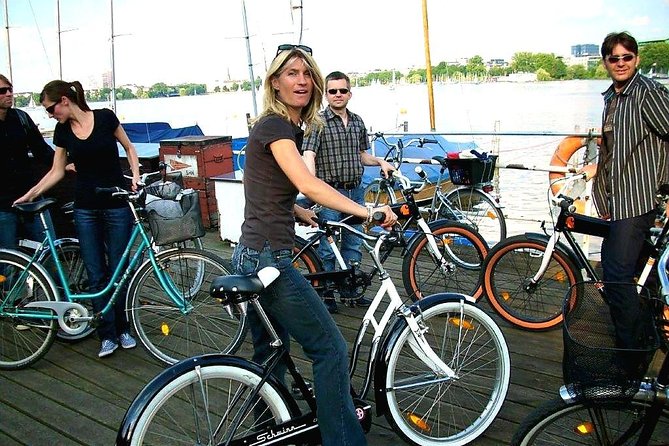
You’ll spend about 3 hours 30 minutes cycling through neighborhoods that many visitors skip, including areas tied to grassroots democratic life and the autonomous and artists’ quarters vibe. Along the way, the guide keeps the pace approachable, and asks and answers as you go, which makes a big difference when you’re navigating places with real, lived-in complexity.
Logistics are simple: you start at Schlüterstraße 11 and end back at the meeting point. It’s a mobile ticket, it’s near public transportation, and the operator plans for a small group (max 20), so you’re not stuck waiting for a big pack to regroup.
In This Review
- Key highlights on this Hamburg bike route
- Starting at Schlüterstraße and riding into other Hamburg
- Sternschanze, the symbolic crossing, and Schröderstift
- Sternschanzenpark to the Schanzen district: street life with context
- St. Pauli harbor road and the Portuguese quarter to the new town
- Chilehaus and the 1920s office towers: why this stop feels like a pause
- St. Georg and Inner Alster: multicultural contrasts at street pace
- Kennedy Bridge to Lombards Bridge: consulates and rowing clubs in one frame
- Price and pace: is $40.52 worth it?
- Who should book this Hamburg bike tour
- Quick tips to get the most from the ride
- Should you book Other Hamburg by bike?
- FAQ
- Where does the tour start?
- How long is the bicycle tour?
- How much does it cost per person?
- Do I receive a mobile ticket?
- Is this tour near public transportation?
- What fitness level do I need?
- What is the group size limit?
- How far in advance is it typically booked?
- What happens if the tour is canceled due to poor weather?
- Is there free cancellation?
Key highlights on this Hamburg bike route
- Bilingual guide support and responsive Q&A so you can ask what you actually want to know
- Small group size (max 20) for a smoother ride and more personal attention
- Fast contrast ride, from Sternschanze and Schanzen district to St. Georg
- Major waypoints with meaning, including Schröderstift, Chilehaus, Inner Alster, Kennedy Bridge, and Lombards Bridge
- A route designed for an easier city pace, suited to people with moderate fitness
Undecided? The closest Hamburg write-ups we have are these.
- Hamburg: Sex and Crime in St. Pauli Tour for Ages 18+★ 4.7 · 15,447 reviews
- Hamburg: 1.5-Hour Harbor and Speicherstadt Day Cruise★ 4.6 · 14,200 reviews
- Hamburg: 90-Minute Evening Lights Harbor Cruise★ 4.5 · 7,728 reviews
- Hamburg: 2-Hour XXL Port of Hamburg Cruise Tour★ 4.7 · 6,979 reviews
Starting at Schlüterstraße and riding into other Hamburg
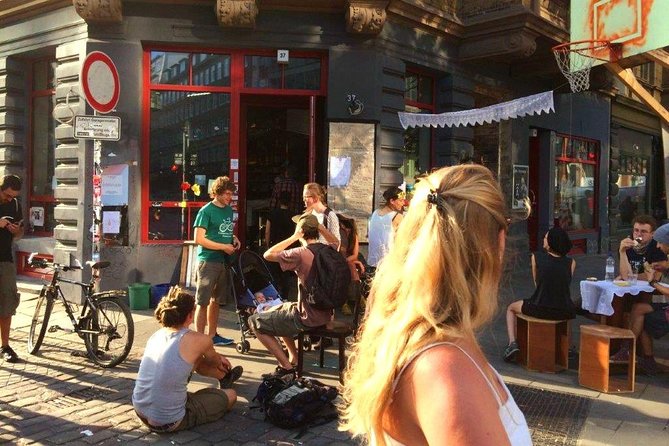
Hamburg can look orderly from far away. This ride gets you closer to the city’s lived texture, right from the start at Schlüterstraße 11. The route is designed to keep you moving through neighborhoods that don’t have one single “tourist story.” Instead, you get a real cross-section of what Hamburg is, at street level.
What I like is how the ride frames those contrasts as part of the same city puzzle. You’re not just passing by. You’re crossing from areas tied to fine society feel into areas associated with drug, prostitution, autonomous scene, and artists’ quarters. That sounds like a grab bag, but the point is clarity: you’re learning how different communities share the same streets, just with different rhythms and rules.
The only drawback worth stating up front is that you should be comfortable with a steady bike pace for a few hours. This is not described as a super-strenuous excursion, but it does expect moderate physical fitness. If you’re unsure, pick this only if you can handle an urban ride without needing long stops every few minutes.
Sternschanze, the symbolic crossing, and Schröderstift
The ride aims you first toward Sternschanze, which is where the “other Hamburg” label starts to make sense. You’ll pass through the area that acts like a hinge between more formal parts of the city and the neighborhoods with stronger alternative culture influence.
A notable beat is the symbolic crossing connected to grassroots democratic living. Even if you don’t know local terms yet, you’ll understand the concept as soon as you start moving, because the city’s physical layout and the street-level feel do the explaining. This is one of those guided bike moments where context matters. Without it, you’d just see streets. With it, you see how communities organize.
Then there’s Schröderstift, followed by cycling on toward Sternschanzenpark. A park stop matters on a bike tour because it resets your body and your attention. You can look around, spot what’s changing in the neighborhood, and mentally switch from one “Hamburg mood” to the next.
Practical note: when you ride through mixed-use areas like this, keep your phone put away unless you’re sure you can do it safely. The guide will be pointing out themes, and you’ll get more from watching and listening than trying to film every storefront.
Sternschanzenpark to the Schanzen district: street life with context
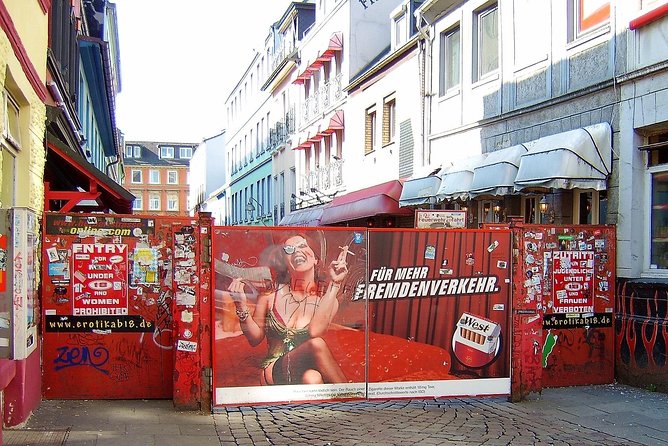
After Sternschanzenpark, the route transitions into the actual Schanzen district. This is where the bike tour becomes less about famous postcards and more about how a neighborhood operates. The ride focuses on the diversity of alternative cultural offerings, including places tied to artists’ quarters and the broader scene.
The value here is not just seeing street art or colorful signs. It’s learning how to interpret the streets without turning it into a caricature. You’ll likely notice how people use public space differently: where they linger, what kinds of businesses cluster together, and what “normal” looks like for local residents.
This section is also where your guide’s approach really pays off. One review highlight called out fundiertes Wissen and the way the guide gives easy explanations with good tips, plus bilingual support. In practice, that means you’re more likely to leave with understanding you can reuse, not just facts you forget when you change streets.
If you’re sensitive to uncomfortable topics, keep this in mind. The tour is candid about the existence of drug and prostitution areas. That doesn’t mean you’re thrust into anything graphic, but it does mean you should go in with respectful expectations.
St. Pauli harbor road and the Portuguese quarter to the new town
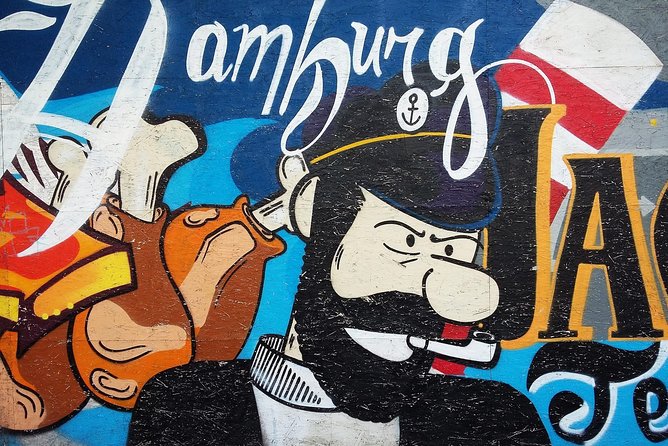
Next comes St. Pauli harbor road and then the Portuguese quarter before you reach the new town area. This segment matters because it shifts the tone from alternative culture density into a more varied urban mix, where maritime influence and immigrant community presence can both be felt.
The Portuguese quarter piece is especially useful for a first-time Hamburg visitor. You get a glimpse of how the city extends beyond its best-known tourist center. You’re seeing neighborhoods that support daily life, not just sightseeing routes.
Then you roll toward the new town and the rhythm changes again. That’s the key takeaway: the bike tour doesn’t treat the city like one museum floor. It treats it like a functioning place with multiple centers of gravity.
You’ll also feel how the route timing works. About halfway through, your brain starts expecting the next contrast. That’s why this tour design is strong. You’re not slogging through “one thing.” You’re getting a sequence of meaningful switches.

Chilehaus and the 1920s office towers: why this stop feels like a pause
One of the smartest parts of the route is the move to 1920s-era office buildings, especially Chilehaus. This is where Hamburg becomes more architectural and less street-scene. And that matters, because it shows you how the city’s identity holds both serious business landmarks and grassroots street culture in the same urban system.
Even if you don’t go deep on architecture terms, you’ll appreciate the contrast. The Schanzen area can feel like it’s driven by creativity and subcultures. The office districts feel driven by power, planning, and legacy. Seeing them in one connected ride helps you understand that Hamburg is not just one type of city.
For you, this stop also provides breathing room. On a bike, you can’t always stop for long photos, but you can take in scale. Chilehaus is the kind of landmark where standing and looking makes the differences obvious, even with limited time.
If you’re the kind of traveler who likes to connect dots, this is one of the moments where the dots actually connect: you’re seeing how Hamburg’s built environment and social environment influence each other.
St. Georg and Inner Alster: multicultural contrasts at street pace
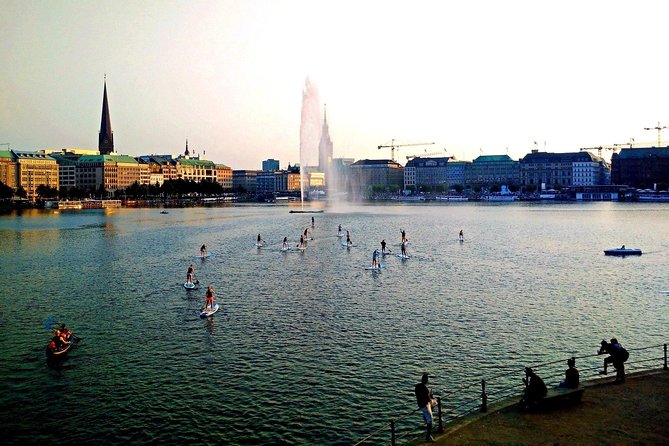
The ride continues toward St. Georg, which is described as one of the strongest multicultural contrasts you can find in another Hamburg district. This is not the “same city block, different shop” kind of variety. It’s a genuine change in tone.
St. Georg also helps you understand Hamburg beyond a single tourist narrative. It’s a district where different communities share space, and the street texture reflects that. You’ll likely notice the density of activity and the variety of storefronts and street scenes.
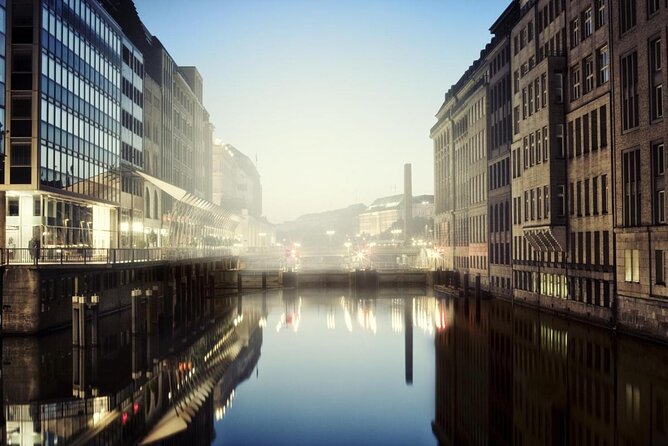
From there, the route flows to Inner Alster. This is a gift on a bike tour, because water creates an immediate mental reset. You get an open-air view moment after cycling through denser neighborhoods. Even better, the tour keeps the pacing so you’re not stranded at one spot for too long.
Then you cross toward Kennedy Bridge, which sets up a broader city panorama view. Think of it as the “visual stitching” part of the ride. You see how the pieces of your tour connect across the city.
Kennedy Bridge to Lombards Bridge: consulates and rowing clubs in one frame
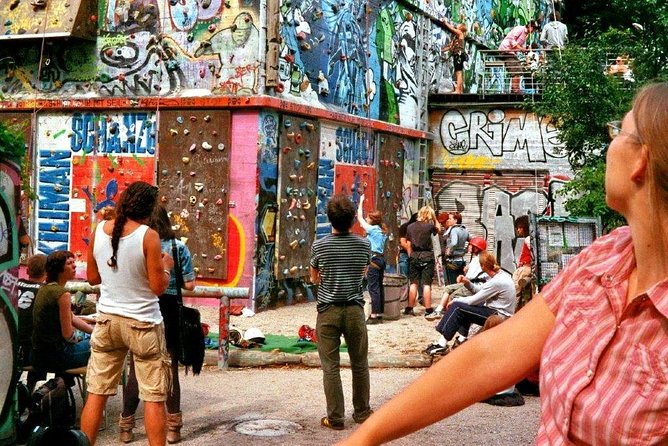
After Kennedy Bridge and the city panorama segment, the route goes on to Lombards Bridge. This bridge area is framed by fine rowing clubs and consulates, which is a clever contrast to everything you’ve already seen.
It’s not just another pretty crossing. It helps you place Hamburg in a wider context. Rowing clubs signal long-term sport culture and social continuity. Consulates signal international connections. Together, they broaden the meaning of “where you are” beyond neighborhood identity.
The best way to enjoy this part is to slow your own pace mentally. You’ll move fast on the bike, but you can choose to look longer at key view angles. Watch how the water edge, bridges, and surrounding buildings form a coherent city image.
Finally, you head back toward the bike station, returning to the start area. Ending where you started matters on a short day tour, because you don’t have to figure out the next logistics step right away.
Price and pace: is $40.52 worth it?

At $40.52 per person for about 3 hours 30 minutes, this tour sits in the “value guided experience” zone, not the luxury category. The biggest reason it feels fair is the coverage. In a half-day ride, you get multiple neighborhoods and multiple landmark types: alternative culture areas, a major landmark like Chilehaus, and classic city geometry like bridges and Inner Alster.
You’re also getting small-group treatment (max 20) and bilingual guide support, plus a guide who engages with questions and gives useful tips. That combination often matters more than adding an extra stop. It turns the tour from sightseeing into interpretation.
The “moderate physical fitness” requirement is also part of the value equation. If you’re physically comfortable with city biking, you benefit from seeing more ground than a walking tour. If you’re not, you might feel like you’re spending more energy coping than learning.
One more practical point: the experience requires good weather. If you’re traveling in a season where rain is common, plan to be flexible. Bad weather can change everything, and Hamburg bike days are best when the streets are dry and predictable.
Who should book this Hamburg bike tour
This works best for you if:
- You want to see Hamburg as real neighborhoods, not just one highlighted district
- You like guided context, especially about how different communities share a city
- You’re comfortable with a moderate cycling pace for several hours
- You want a small group outing rather than a big bus tour
It may not be the best fit if:
- You’re looking for a purely “pretty sights only” day
- You need frequent long breaks and a very slow pace
- You strongly prefer not to pass through areas described as involving drugs or prostitution
The fact that the guide is described as bilingual and responsive is a major plus. When you have questions, you want answers in plain language, and you want the guide to handle them without rushing you.
Quick tips to get the most from the ride
- Go in with curiosity, not assumptions. These neighborhoods are complex, and a good guide will help you read them responsibly.
- Keep your expectations realistic. This is a bike tour that moves through a lot in 3.5 hours, so you’ll get snapshots rather than long, museum-style time at each spot.
- Bring your question list. One review praise called out that the guide responds to questions, which is exactly when you’ll learn the most.
- Since the tour is weather dependent, dress for quick changes and expect an outdoor ride.
Should you book Other Hamburg by bike?
Yes, if you want a focused, half-day way to understand Hamburg’s contrasts. The route links major landmarks like Chilehaus and Inner Alster with neighborhoods that many visitors skip or misunderstand. And with bilingual guidance plus an easy, approachable pace, you’re likely to feel informed rather than lost.
If you’re only interested in postcard Hamburg or you’re worried about cycling for a few hours, consider a slower format. But for travelers who like cities with layers, this is a smart use of time and money.
FAQ
Where does the tour start?
The tour starts at Schlüterstraße 11, 20146 Hamburg, Germany.
How long is the bicycle tour?
It runs for approximately 3 hours 30 minutes.
How much does it cost per person?
The price is $40.52 per person.
Do I receive a mobile ticket?
Yes, the tour includes a mobile ticket.
Is this tour near public transportation?
Yes, it is near public transportation.
What fitness level do I need?
You should have a moderate physical fitness level.
What is the group size limit?
The tour has a maximum of 20 travelers.
How far in advance is it typically booked?
On average, it is booked 41 days in advance.
What happens if the tour is canceled due to poor weather?
If it is canceled due to poor weather, you will be offered a different date or a full refund.
Is there free cancellation?
Yes. You can cancel for a full refund up to 24 hours in advance of the experience start time.
Everything else we filed on Hamburg
- Hamburg Private Food Tours with a Local: 100% Personalized
★ 5.0 · 3 reviews - The Beatles on St. Pauli
★ 5.0 · 3 reviews - Short walk St. Pauli – the St. Pauli quickie
★ 5.0 · 3 reviews - Hamburg: Safari Tour in St. Pauli
★ 5.0 · 3 reviews - Hamburg Like a Local: Private and Personalized Experience (3hrs)
★ 5.0 · 3 reviews - Private Hamburg rickshaw tour for 2 people
★ 5.0 · 3 reviews
Tours, side by side.
 ★ 4.7Berlin: Reichstag, Dome and Government District Guided TourFrom $1818,288 reviews
 ★ 4.3Berlin: 1-Hour City Tour by Boat with Guaranteed SeatingFrom $2516,993 reviews
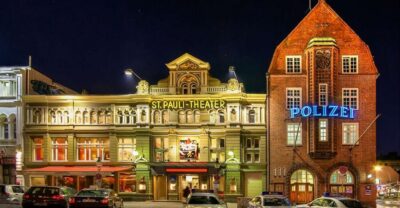 ★ 4.7Hamburg: Sex and Crime in St. Pauli Tour for Ages 18+From $29515,447 reviews
 ★ 4.7Dresden: Semperoper Tickets and Guided TourFrom $1812,102 reviews
 ★ 4.4Berlin: Boat Tour Along the River SpreeFrom $3411,252 reviews
 ★ 5.0Discover Berlin Half-Day Walking TourFrom $249,624 reviews
 ★ 4.3Berlin: Hop-on Hop-off Bus Tour with Live CommentaryFrom $228,579 reviews
 ★ 4.7Berlin: Government District around the Reichstag Guided TourFrom $2848,447 reviews