
REVIEW · LOWER SAXONY
Bremen: Walking Tour of Historic Schnoor District
Schnoor feels like stepping into a storybook street map. In just one hour, you follow Bremen’s winding lanes and spot how buildings evolved from medieval edges to 17th and 18th-century life, plus the 15th-century profane houses that still stand. I love that the tour focuses on what you can clearly see from the sidewalk, and I especially like the way guides connect architecture to everyday characters. One consideration: you only view buildings from the outside, so if you want interiors, plan something else.
You’ll meet at Die Glocke concert hall on Domsheide 6 and walk at a relaxed pace through the Schnoor quarter, where small houses are strung together like pearls. The guide talks in German, and the tour can be private if you prefer a calmer, more flexible feel. Tip: bring comfortable shoes, because the lanes are narrow and the walk is right up close.
In This Review
- Key things that make this tour worth your time
- Why Schnoor works so well in a 1-hour walking tour
- Meeting at Die Glocke and setting up your walk
- From monastery edge to Schnoor’s first written roots
- St. John’s Church: redbrick Gothic you can spot while you stroll
- Haus Schnoor 15 and Packhaus Schnoor 2: profane buildings with medieval backbone
- Half-timbered lanes near the Weser, and what to watch for outside
- Reconstructions, facades, and the architectural languages you’ll hear
- Goldsmiths and handcrafted shops: when the tour becomes a real street stroll
- Price and value: $14 for an interpretation hour
- What to bring, and how the outside-only format shapes your experience
- Who should book this tour, and who might skip it
- A note on guide style, based on real feedback
- Should you book Bremen’s Schnoor Walking Tour?
- FAQ
- How long is the Bremen Walking Tour of Historic Schnoor District?
- How much does it cost?
- Where do I meet the guide?
- What language is the tour guide?
- Is food included?
- Is private booking available?
- What is included in the price?
- Can I see buildings from the inside?
- Is the tour suitable for wheelchair users?
- What should I bring?
Key things that make this tour worth your time
- Schnoor’s medieval start: the written roots go back to the 13th century and a Franciscan monastery edge
- St. John’s redbrick Gothic: a 14th-century landmark you’ll pass as you wander
- Profane stars from the 15th century: Haus Schnoor 15 (Brasilhaus) and Packhaus Schnoor 2
- Outside-only viewpoints done well: you learn what to look for even without entering buildings
- Lots of architectural variety: classicism, historicism, Baroque, and Renaissance influences along the way
- A human pace: guides tell entertaining, practical stories, including humor and real context (one guide you might hear about is Sönke)
More of Lower Saxony on foot
- Bremen: Walking Tour in German with Night Guard★ 4.7 · 2,922 reviews
- Bremen: Underground Guided Tour★ 4.1 · 1,408 reviews
- Bremen: 3-Hour Beck’s Brewery Tour★ 4.6 · 1,091 reviews
- Bremen: Walking Tour of Historic Schnoor District★ 4.8 · 429 reviews
Why Schnoor works so well in a 1-hour walking tour
Schnoor in Bremen is the kind of place where you could wander for hours, then realize you forgot what you were looking at. This short tour fixes that problem. You get an efficient route through the quarter, with commentary that explains why the lanes feel the way they do, and why certain buildings mattered when the city was forming its identity.
I like that the format is simple and focused: a walking tour where the “museum” is the streetscape. You’re not pushed along, and the time is tight enough that you stay energized instead of worn out. For most people, that means a better chance you’ll actually remember details afterward.
The other big win is value. At about $14 per person for a guided hour, you’re paying for interpretation, not just movement. If you’re already in Bremen and want a quick upgrade to a self-guided stroll, this is one of those low-stress buys.
Meeting at Die Glocke and setting up your walk
Your meeting point is in front of Die Glocke concert hall at Domsheide 6, Bremen 28195. The guide is waiting with a sign that says Bremen Tour Guide. That’s helpful because it removes the common travel anxiety of, Who is my guide?
Once you find the group, you’ll get underway through Schnoor right away. Plan to start with a clear mindset: this is an outside viewing tour. That doesn’t make it less fun, it just means you should slow down for visual clues, not expect doorways and rooms to be part of the experience.
Also, come ready to walk. Comfortable shoes matter here. The lanes are narrow and the vibe is “close-up,” so you’ll want stable footing.
From monastery edge to Schnoor’s first written roots
The tour’s story often begins in the 13th century, when Schnoor’s written references first show up. Back then, a Franciscan monastery was built on the edge of the area that’s now Schnoor. Today, only the monastery church remains from that original chapter.
Even if you’ve seen plenty of old-town Europe, this detail gives you a fresh lens. Schnoor isn’t just pretty houses. It’s a neighborhood shaped by institutions, borders, and the way Bremen grew. When you hear that the monastery church is what’s left, you start noticing the surrounding streets differently, like you’re seeing the neighborhood’s “starting point” through time.
If you like walking tours that actually explain why the area looks the way it does, this is one of the tour’s strongest moments.
St. John’s Church: redbrick Gothic you can spot while you stroll
As you move through the quarter, you’ll pass St. John’s Church. The present Catholic church dates to the 14th century, and it’s in a redbrick Gothic style. That combination matters in Bremen: redbrick gives you a distinct look compared with some northern cities where stone or different materials dominate.
Since you’re viewing from the outside only, the goal here is to train your eye. Look for the church as an anchor. When you can orient yourself around a major building, the rest of the Schnoor lane maze makes more sense. The tour uses that kind of orientation well, so you don’t feel like you’re just collecting random views.
Other walking routes through Bremen
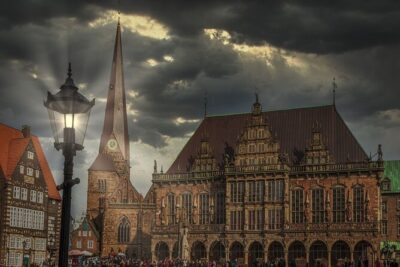
Haus Schnoor 15 and Packhaus Schnoor 2: profane buildings with medieval backbone
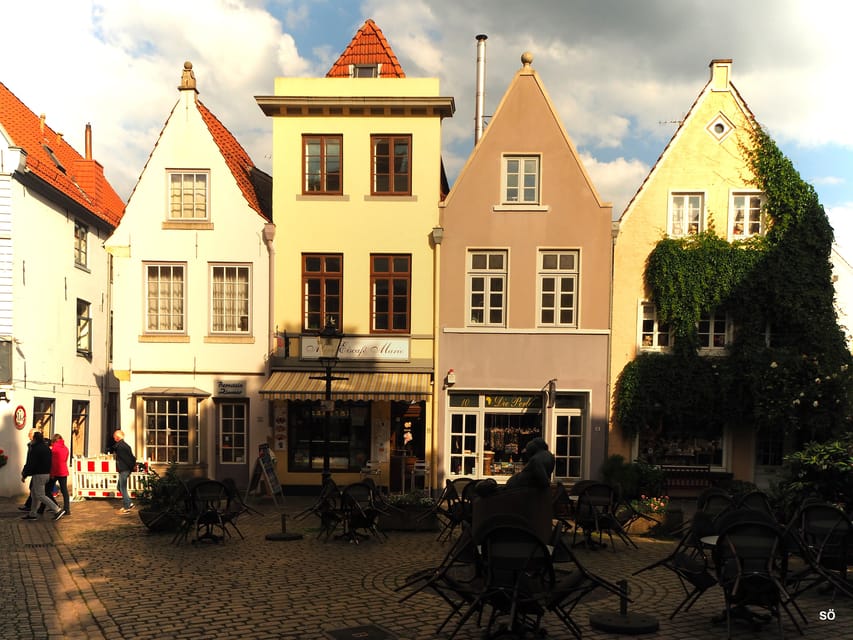
One reason people love Schnoor is the density of old structures. In this tour, you get pointed toward some of the oldest remaining profane buildings. That word matters. Profane means non-religious, and it helps you understand how everyday life was built alongside church influence.
Two standouts:
- Haus Schnoor 15, also known as Brasilhaus
- Packhaus Schnoor 2, dating back to the 15th century
These aren’t just “pretty old” stops. They’re evidence that Schnoor was not only a religious zone. It was also about trade, property, and daily business. When a guide highlights specific buildings like this, the neighborhood feels less like decoration and more like a working city in earlier centuries.
You’ll see them from the outside, so don’t rush the details. Spend a moment matching what the guide mentions with what you’re seeing on the street. It’s the simplest way to make the tour stick in your brain.
Half-timbered lanes near the Weser, and what to watch for outside

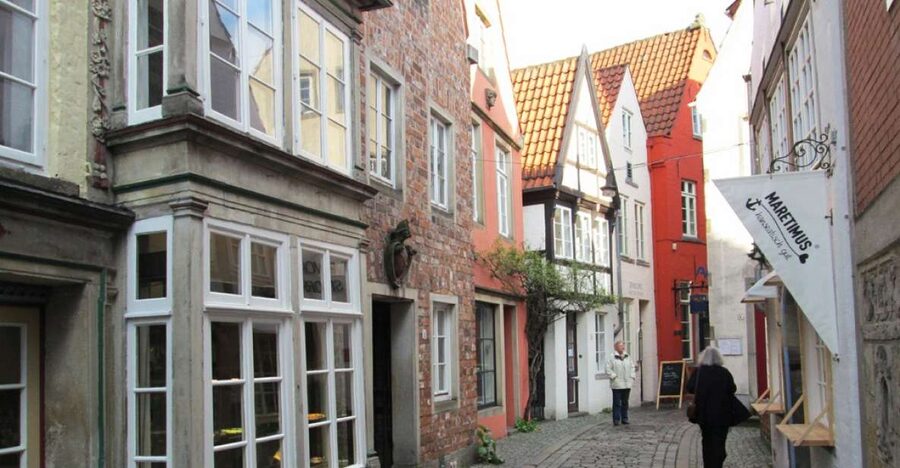
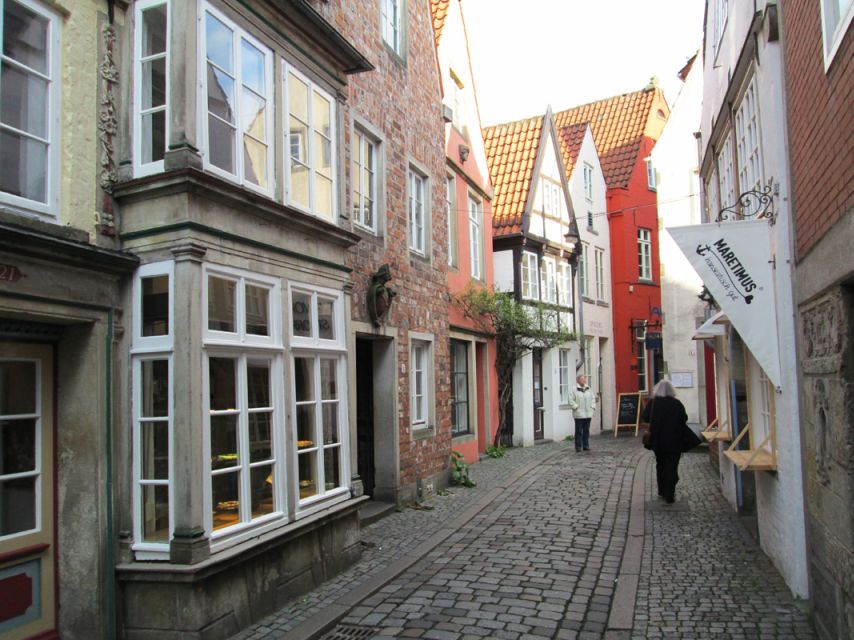
As you continue, the tour focuses on the look that Schnoor is famous for: the narrow half-timbered houses and the way structures line up close to each other near the Weser River. The proximity to the water is part of the quarter’s character, because it shaped trade and building patterns.
You might notice houses with details that suggest older uses, including places connected to everyday services like a tea room. Even if you don’t go inside, the tour helps you read the street layout, especially how half-timbering creates that patterned rhythm.
Here’s what makes this portion practical: the guide doesn’t ask you to guess. They point out what to notice, so you leave with a “map” in your head, not just photos on your phone.
Reconstructions, facades, and the architectural languages you’ll hear
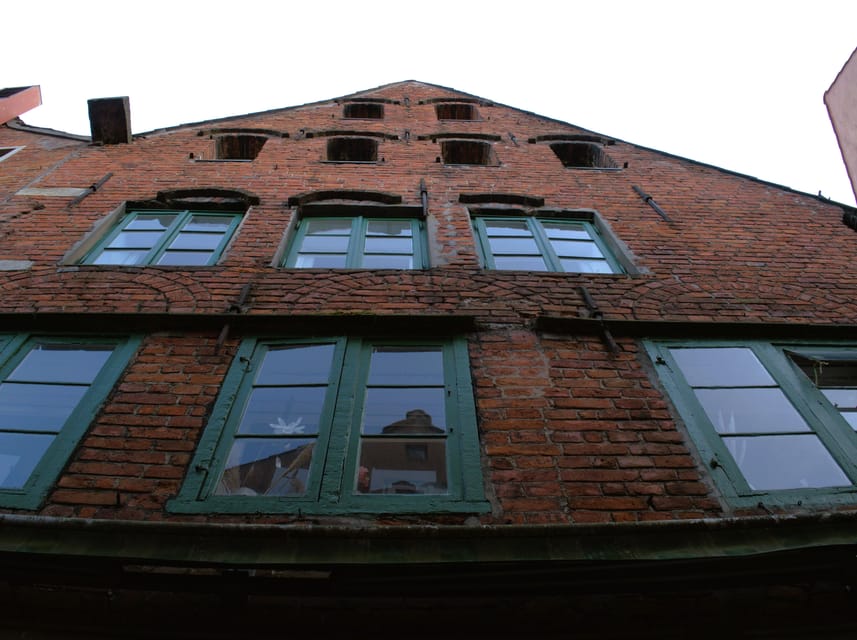
Schnoor is one of those places where time is layered. Some houses have been recreated according to historical specifications, and some buildings now exist as facades that once stood elsewhere. That might sound odd at first, but it actually helps you understand how heritage is preserved in a working neighborhood.
On this walk, you’ll hear about a mix of architectural styles, including Baroque and Renaissance, plus later classicism and historicism influences. The point is not to memorize style names. The point is to see how tastes changed while the street form stayed recognizable.
When a guide points out that certain buildings are recreations or facades, it also protects you from disappointment. You know what you’re looking at and why it’s there, which makes the whole quarter feel more honest, not less.
Goldsmiths and handcrafted shops: when the tour becomes a real street stroll
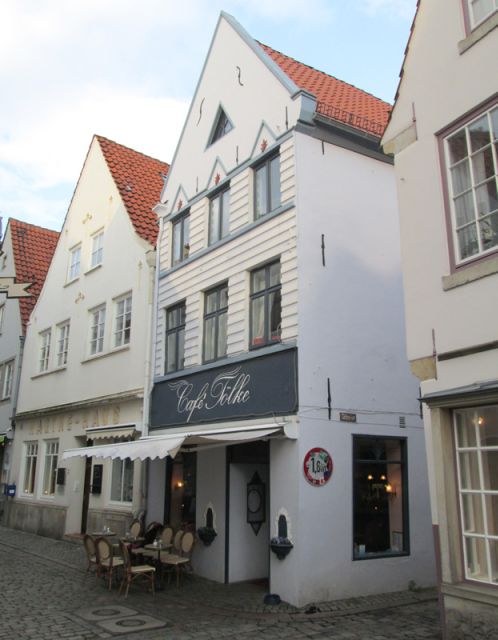
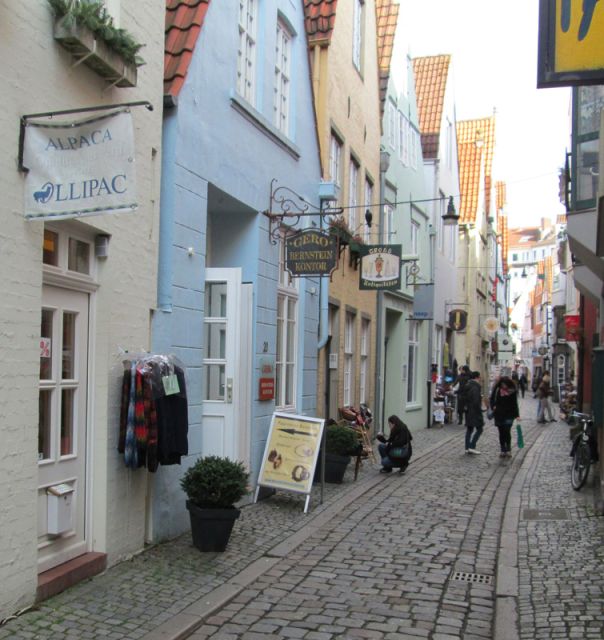
A good walking tour ends with you wanting to walk some more. In Schnoor, that’s easy, because the tour route passes goldsmiths and shops selling local handicrafts.
This is where you can personalize your visit. If you enjoy browsing handmade goods, keep a little buffer time after the tour ends. If you’re not shopping, you can still enjoy the street rhythm: small storefronts, detailed work, and the sense that old lanes still support local crafts.
A practical approach: take what the guide tells you about the neighborhood’s past, then watch for how modern craft life fits into the same lane structure. It’s one of the simplest ways to connect history to what’s happening now.
Price and value: $14 for an interpretation hour
At $14 per person for a one-hour guided walk, this is a strong value play. You’re paying for:
- A guided route through the dense quarter
- Historical context that’s hard to piece together quickly on your own
- Specific building references, like Haus Schnoor 15 and Packhaus Schnoor 2
- A “what to look for” lens for outside-only viewing
If you’re the type who likes to understand a place rather than just see it, this price makes sense. And the duration is perfect for people who want a historic stop without committing a half day.
Also, you can go private if you want. That’s useful if you’re traveling as a small group and want the guide’s attention on your pace, not just a set group rhythm.
What to bring, and how the outside-only format shapes your experience
This tour is not about stepping inside buildings. The key note is that buildings will be seen from the outside. That changes how you should prepare mentally.
Bring:
- Comfortable shoes (you’ll be on your feet and the lanes are tight)
And do this:
- Look for contrast and patterns. Half-timbering, brickwork, and facade lines all become easier to spot when you slow down for them
- Use the church landmark as your orientation anchor, then scan the surrounding lanes for the building names you hear
Language is German. If you’re not fluent, the tour still works because architecture is visual, but you may catch fewer nuances if you don’t speak any German. For the best experience, you can brush up on basic phrases or go with a pocket translation app.
Who should book this tour, and who might skip it
This tour is best for you if:
- You want a short, guided introduction to Bremen’s Schnoor district
- You enjoy learning how streets and buildings connect to earlier centuries
- You like architecture and want specific references, not vague “old town” talk
You might consider skipping or supplementing it if:
- You want interior visits, because the tour explicitly stays outside
- You need wheelchair access, since it is not suitable for wheelchair users
A note on guide style, based on real feedback
The tour’s reviews point to a consistent theme: the guides make the walk feel lively and understandable. One person mentioned guide Sönke as funny and engaging, with lots of stories around Schnoor that kept them wanting to listen longer. Another praised the tour for being interesting and well paced, plus good price-to-experience fit.
That matters because the Schnoor area can be visually overwhelming on your own. A guide who keeps the commentary flowing helps you enjoy it rather than just take photos and move on.
Should you book Bremen’s Schnoor Walking Tour?
If you’re in Bremen and you want the Schnoor story without spending a long time wandering without a plan, I think this is an easy yes. It’s short, guided, and it points you toward specific buildings that turn “pretty alleys” into something you can explain.
Book it if you like outside-only street viewing with a clear historical lens, and if comfortable shoes plus a 1-hour commitment works for your day.
Skip it if you’re craving interiors or accessibility that requires wheelchair-friendly routes. Otherwise, this is the kind of practical old-town tour that makes your time count, even when you’ve already walked Schnoor once.
FAQ
How long is the Bremen Walking Tour of Historic Schnoor District?
The tour lasts 1 hour.
How much does it cost?
The price is $14 per person.
Where do I meet the guide?
Meet in front of Die Glocke concert hall at Domsheide 6, Bremen 28195. The guide will be waiting with a sign that says Bremen Tour Guide.
What language is the tour guide?
The live tour guide speaks German.
Is food included?
No. Food and drinks are not included.
Is private booking available?
Yes. A private tour is available if you select that option.
What is included in the price?
The included items are the guided walking tour, with a private tour option if selected.
Can I see buildings from the inside?
No. Buildings are viewed only from the outside.
Is the tour suitable for wheelchair users?
No. It is not suitable for wheelchair users.
What should I bring?
Bring comfortable shoes.
Pavements of Bremen
Lower Saxony, Town by Town
Everything else we filed on Bremen
- Bremen: Full-Day Kayak Rental on the Wümme River
★ 4.8 · 14 reviews - Above the rooftops of Bremen
★ 4.1 · 19 reviews - Truth or lie? – A special tour through Bremen’s Old town
★ 4.3 · 20 reviews - Bremen: Private pub crawl with insider-guide & free shots
★ 4.5 · 22 reviews - Bremen: Private Walking Tour with a Professional Guide
★ 4.2 · 22 reviews - e-Scavenger hunt Bremen: Explore the city at your own pace
★ 4.0 · 24 reviews
Hanover Bremen and Lower Saxony Tours, side by side.
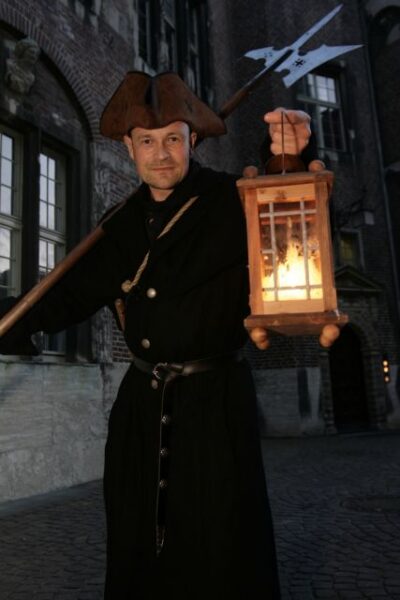 ★ 4.7Bremen: Walking Tour in German with Night GuardFrom $182,922 reviews
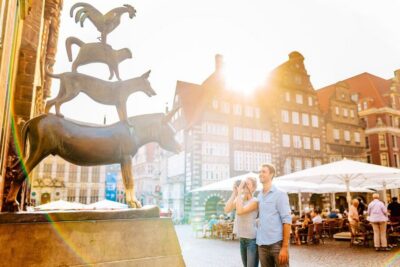 ★ 4.5Bremen: City Center Guided Walking TourFrom $142,709 reviews
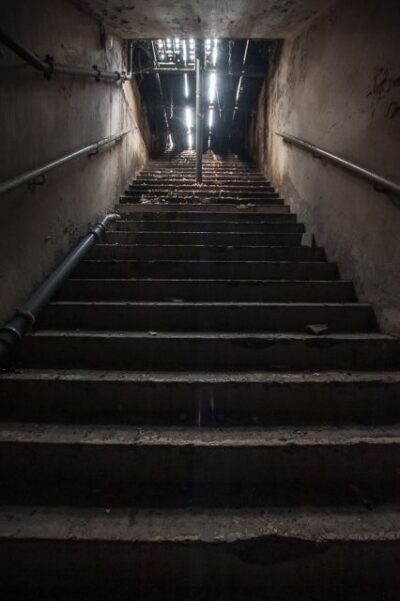 ★ 4.1Bremen: Underground Guided TourFrom $181,408 reviews
 ★ 4.6Soltau: Heide Park Resort Day TicketFrom $421,160 reviews
 ★ 4.6Bremen: 3-Hour Beck’s Brewery TourFrom $281,091 reviews
 ★ 4.5Hannover: Guided Old Town Walking TourFrom $13338 reviews
 ★ 4.6Bremen: Universum Science Center Entrance TicketFrom $21324 reviews
 ★ 4.2Hannover: 24-Hour Hop-On Hop-Off Sightseeing Bus TicketFrom $28298 reviews
Other lists this tour is on