
REVIEW · CITY TOURS
Discover the Heart of Frankfurt – City Tour in German
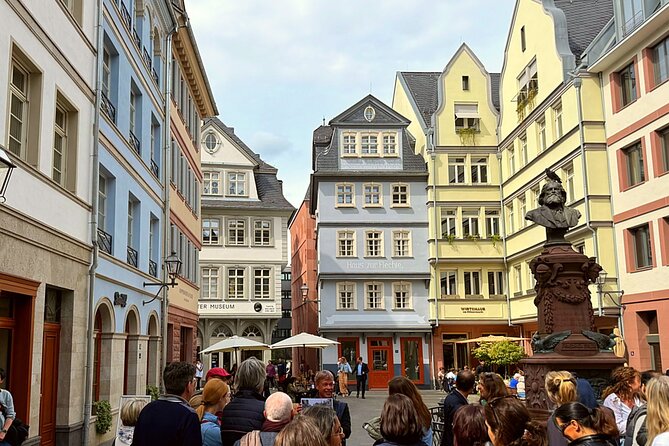
Frankfurt looks different on foot. This 2-hour German city tour led by Dimitri ties together the big landmarks you came for, plus quieter lanes off the main routes, so the city feels personal instead of postcard. You start in the shadow of Paulskirche, then work your way through the Römer area, river views, and the reconstructed Neue Altstadt, all with a guide who has lived in the Main metropolis for 35 years and calls it the smallest city in the world.
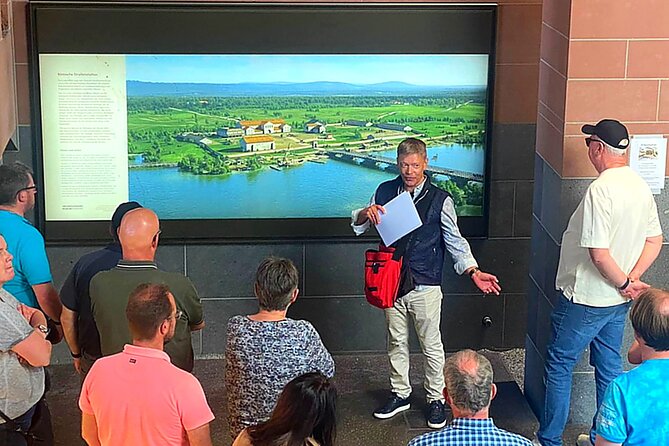
What I like most is the balance: major sights like Römerberg and Eiserner Steg are covered, but you also get stories and side-path viewpoints that make Frankfurt feel lived-in. I also love Dimitri’s style, humor mixed with clear, specific explanations, including printed pictures showing what the old town looked like before rebuilding.
One thing to consider, especially if you like interiors: a lot of the tour is exterior viewing. Paulskirche is usually outside, and the Römer’s inner areas are only included if parts are open when you go.
In This Review
- Key points to know before you go
- A 2-hour Frankfurt Old Town walk with Dimitri’s rhythm
- Starting at Paulskirche, where democracy has a home
- Römerberg and the Römer complex, Frankfurt’s “center of gravity”
- Inside access that depends on openings
- Mainkai and Eiserner Steg, river views that break up the old town
- Haus Wertheym, where sweet Frankfurt comes with stories
- A quick archaeological peek at Historisches Museum Frankfurt
- Römerberg again, plus balcony history and parade-scale celebrations
- Alte Nikolaikirche, Schirn, and Dom St. Bartholomaus by foot
- Neue Altstadt, Frankfurt’s 2012 to 2018 rebuilding story
- Price and value of a German walking tour at $21.97
- Who should book this Frankfurt tour
- Practical tips so the walk feels easy
- Should you book the Frankfurt Old Town City Tour?
- FAQ
- What language is the tour conducted in?
- How long is the Frankfurt city tour?
- Is this tour mostly outside viewing or are there interiors too?
- Is the tour ticket mobile?
- Where do I meet and where does the tour end?
- Are pets allowed on the tour?
- Can I cancel for a full refund?
Key points to know before you go
- Dimitri runs the show with humor, flexible answers, and printed visual aids.
- Big-name sights, plus side routes, so you see more than the main walk loop.
- Mostly exterior viewing, with some interior access only when open.
- Old Town meets river life, with Mainkai and Eiserner Steg for great city-and-water views.
- Sweet Frankfurt details appear through Haus Wertheym stories and classics like Frankfurter Kranz.
- Neue Altstadt reconstruction gets explained clearly, including standout buildings like Haus zur Goldenen Waage.
The wider Frankfurt sightseeing pile
- From Frankfurt: Heidelberg, Castle and Old City Guided Tour★ 4.5 · 677 reviews
- Heidelberg Castle and City Day Tour from Frankfurt★ 4.5 · 292 reviews
- Frankfurt: Discover the heart of Frankfurt – a city tour in German★ 5.0 · 196 reviews
- Frankfurt Old Town & Emperors: City Game & Walking Tour★ 4.5 · 39 reviews
A 2-hour Frankfurt Old Town walk with Dimitri’s rhythm
This is the kind of tour that helps you get your bearings fast, without turning Frankfurt into a checklist. In about two hours, you move through the tight historic center where the city’s identity is strongest: churches, town-hall power, medieval streets, and post-war rebuilding that you can literally see.
The guide matters here, and Dimitri is a big part of the appeal. He uses humor, but he also answers questions with real details. I like that it stays lively, with no long lectures that wipe out your attention.
If you are the sort of traveler who gets bored by monuments without context, this tour is built to prevent that. You are not just looking at buildings, you are hearing why they mattered and how Frankfurt got from then to now.
Starting at Paulskirche, where democracy has a home
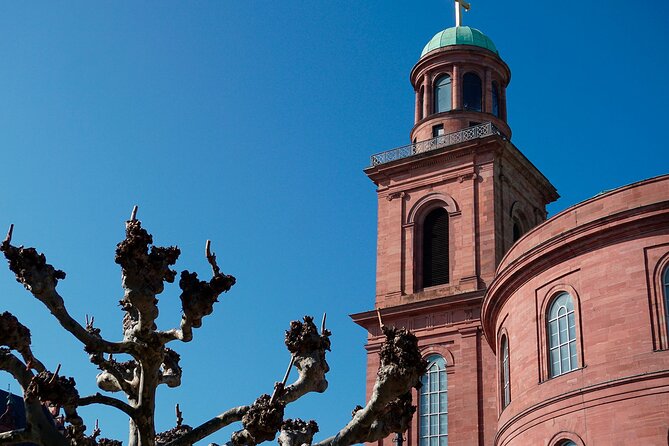
You begin at St. Paul’s Church (Paulskirche), usually viewed from the outside. The building was constructed between 1789 and 1833 and later became the meeting place for the Frankfurt National Assembly in 1848, often described as Germany’s first freely elected parliament.
After World War II, the church was destroyed and later rebuilt in 1948, and today it functions as an exhibition, memorial, and meeting place. You will also hear that Paulskirche is well known for the annual Peace Prize of the German Book Trade.
The main practical note: the tour typically does not take you inside. If you want to see the interior exhibits, plan to return on your own right after the walking tour, or later the same day if your schedule allows.
Römerberg and the Römer complex, Frankfurt’s “center of gravity”
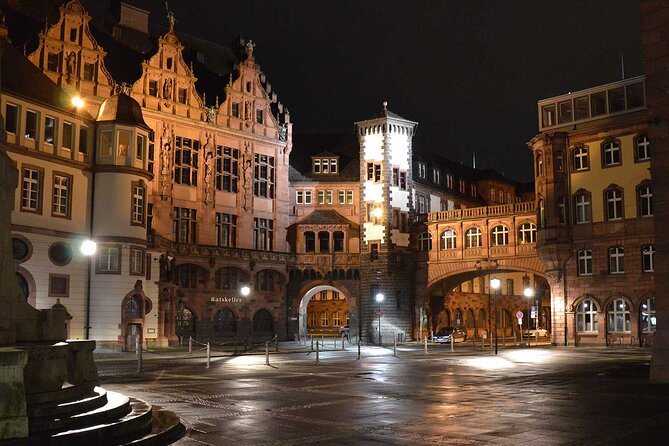
Next comes the heart of the old town: Römerberg and the Römer town-hall complex. Römer is one of Frankfurt’s most famous landmarks, and it has served as the town hall since 1405. The stepped-gable façade is the visual signature you keep seeing in photos, but on this walk you also get to understand how the different buildings in the complex connect.
You start with a look at the inner courtyard area of the Römer, between the Bürgersaal and the south building. If you time it right, you can also get a longer stop around the Römer’s ceremonial spaces, including the Kaisersaal, which is described as the jewel of the Römer for official receptions and medal or social events.
A nice detail I appreciate: the Kaisersaal is tied to imperial history, because it was once used for coronation ceremonies of Roman-German emperors. You might not be going inside every space every day, but the stories make the exterior feel more like a living stage.
Inside access that depends on openings
The tour includes short interior visits tied to the Imperial Hall in the Roman Empire and the Palatinate Franconofurd (only if open). That means if those spaces are accessible on the day you go, you will get an extra layer beyond exterior sightseeing.
If they are not open, you still get the important context from outside. And since this is a short, 2-hour format, you are not losing your whole morning waiting around.
So think of the interior time as a bonus, not a requirement. Plan your day so the main value does not depend on it.

Mainkai and Eiserner Steg, river views that break up the old town

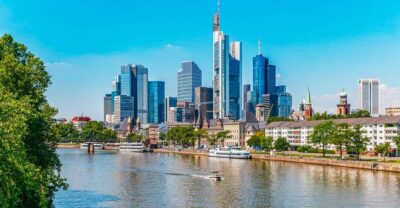
After the Rathaus area, you head toward the Mainkai stretch on the right bank of the Main. Mainkai runs between the Old Bridge and the Untermainbrücke and now works as a popular promenade for pedestrians and cyclists.
This stop is not just for photos. You also get the backstory that the area was originally used as mooring and landing ground in the Middle Ages, then transformed into a modern street in 1826 by filling and widening. That detail helps you read the riverfront as engineering and city planning, not just scenery.
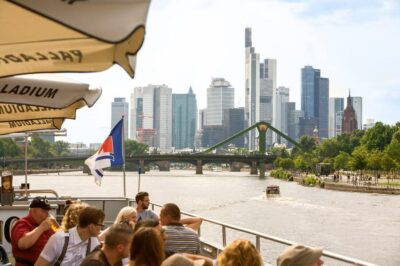
Then you cross to the Iron Footbridge (Eiserner Steg), which opened in 1869. It was financed by a citizens’ initiative because the Old Bridge could not handle rising traffic. World War II destroyed the bridge, but it was rebuilt in 1946, and later renovation in 1993 raised it slightly for modern requirements.
I like that you get a sense of Frankfurt as a city that solves problems with its own energy, not just with top-down decisions. The bridge is also a very natural photo spot, because the crossing gives you layered views of the Main.
Haus Wertheym, where sweet Frankfurt comes with stories
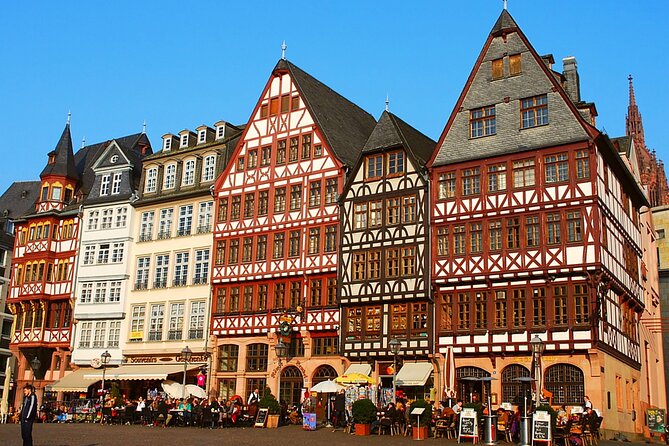
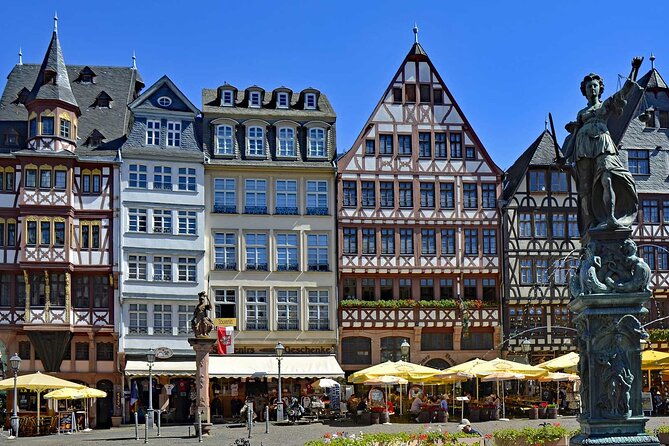
One of the most charming stops is the outside view of Haus Wertheym. This half-timbered house dates to around 1600 and is described as the only half-timbered house in Frankfurt’s old town that survived the air raids of World War II almost unscathed.
It started life as a customs house and lodging for the city guard. After a renovation in 1926, the first floor became a café and restaurant, and today it is a listed building and a tourist destination for historic architecture.
Here is what makes this stop more fun than it sounds: you get short stories about classic Frankfurt sweets, including Frankfurter Kranz and Bethmännchen. There is no food included on this tour, but the way the guide connects the pastries to the city’s culture makes the old town feel less formal.
If you like dessert culture as part of travel, this is a great moment. Even if you skip snacks, you will know what to look for later in cafés.
A quick archaeological peek at Historisches Museum Frankfurt
You also stop near the Historisches Museum Frankfurt area, but not for a full museum visit. Instead, you take a brief look at the Staufer wharf, the highlight of the “Stauferhafen” archaeological find, which is displayed in the museum foyer.
This is a smart way to keep the tour moving. You get a taste of how much of Frankfurt’s story is under your feet, without turning the walk into a long indoor detour.
If you end up wanting more, you will know what to look for later. But during the 2-hour tour window, this short stop works well to add depth.
Römerberg again, plus balcony history and parade-scale celebrations

Römerberg is where Frankfurt’s historic identity becomes very visible again, and your walk gives you another angle on it. You will hear how in the Middle Ages it functioned as a central market square and hosted major events, including imperial coronations. In the 16th century, the square was considered one of the most beautiful in the Holy Roman Empire.
World War II damaged the old town, but the square was rebuilt after the war. Today it is a popular meeting place for locals and tourists, and it is especially known for the Frankfurt Christmas market.
A fun layer you get around the Römer: the Römerbalkon was a venue for public speeches and celebrations. It is described as a place where emperors were crowned and where successful soccer teams were welcomed too. That mix of imperial ceremony and modern sports fandom keeps it human.
Alte Nikolaikirche, Schirn, and Dom St. Bartholomaus by foot
As you move through the old center, you pass the Old Nicholas Church (Alte Nikolaikirche) from the outside. This late Gothic church was originally built in the 12th century as a court chapel and later became the city’s council chapel in the 15th century.
It also ties to the Hohenstaufen emperors, who used it as a worship space. World War II left the church largely undamaged compared to surrounding areas, and after restoration it became an important monument with church services and cultural events.
One detail I like from this stop is the carillon: it has 51 bells and can be heard regularly. You might not catch it at the exact moment, but knowing it is there makes you listen as you walk.
After that, you walk past Schirn Kunsthalle Frankfurt from the outside, plus the Saalgasse street area with its postmodern houses. Schirn was opened in 1986 and is described as a leading venue for contemporary art in Europe, with changing exhibitions.
Then you make your way toward Dom St. Bartholomaus (Frankfurt Cathedral). This part is mostly about location and context, not interior tours, because the tour format keeps you moving. Still, passing the cathedral gives the walk its anchor, since you are shifting between old town reconstruction zones and monumental religious architecture.
Neue Altstadt, Frankfurt’s 2012 to 2018 rebuilding story
The final stretch is Neue Altstadt, also known as the Dom-Römer-Quartier. This is not just a pretty redevelopment. It was completed between 2012 and 2018 on about 7,000 square meters between the Römer and the cathedral.
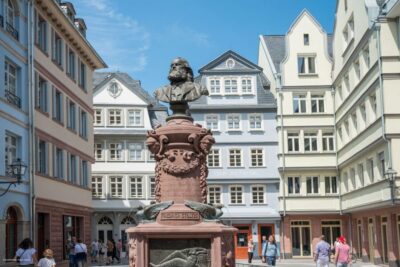
The project includes 35 buildings, including 15 faithful reconstructions and 20 modern new structures. You hear why this matters: Frankfurt chose to rebuild with recognizable historic forms while still allowing contemporary planning and uses.
Specific standouts you will hear about include Haus zur Goldenen Waage, which is described as the showpiece, plus the Rote Haus and Goldene Lämmchen. As you walk through the area, you can see the mix of apartments, stores, and cafés in the same compact zone.
I especially like ending here because it turns the earlier wartime destruction and rebuilding stories into something visible. The past is not only referenced, it is physically represented.
Price and value of a German walking tour at $21.97
At $21.97 per person for about 2 hours, this tour is priced like a practical, low-cost way to get context in a concentrated area. You are paying for a certified German-speaking guide, a focused route, and the chance to hear stories you would miss if you just wandered.
Also, many listed stops show admission as free for the viewpoints you get on the walk. That helps keep the total cost predictable. There can be extra costs only if you choose to enter museums or interiors on your own, since Paulskirche interior is not part of the guided viewing.
One more value point: the tour has a maximum of 25 people. That usually means you can ask questions without feeling like you are shouting into a stadium crowd.
If you know you want this tour, booking ahead is smart too. It is noted as commonly booked about 27 days in advance, which tells me it is not something you want to leave to the last minute if your dates are tight.
Who should book this Frankfurt tour
This fits best if you want history that feels explained, not recited. It works for visitors who are new to Frankfurt because the route covers the essentials fast, and it works for people who already know the city because you get side viewpoints and extra context in the details.
It is also a good option for mixed groups, since the humor and approachable explanations can work for adults and children. If you like city planning and rebuilding stories, Neue Altstadt and the Paulskirche rebuild details give you plenty to think about.
If you are expecting a long interior-heavy tour with lots of museum time, adjust your expectations. This is a walking tour with mostly exterior viewing and short inside access only when places are open.
Practical tips so the walk feels easy
Bring comfortable shoes, because you are on your feet for about 2 hours. Dress for the weather since the tour is outdoors for most of the route, including riverfront and open squares.
If you use walking aids, they are allowed, but you need to bring them with you. The tour also is designed so most travelers can participate, and it has a group cap that keeps things manageable.
Your ticket is mobile, so you will just show it on your phone. And the meeting point is near public transportation, which helps if you want to combine this walk with other plans before or after.
Pets are not allowed, except assistance or medical assistance dogs.
Should you book the Frankfurt Old Town City Tour?
Yes, if you want a tight German-language introduction to Frankfurt’s historic center with a guide who has real energy. Dimitri’s mix of humor, printed pictures, and flexible storytelling makes the walk feel like a conversation, not a lecture.
Book it especially if you care about how Frankfurt rebuilt itself after World War II. Ending in the Neue Altstadt gives you a satisfying payoff, because you can see the result, not just hear about it.
Skip it only if you mainly want interiors and museums for the full experience. This tour is built around outside viewing, with interior extras only if they happen to be open that day.
If you are doing just one guided walk in Frankfurt, make it this one. It is a smart way to get oriented, learn the city’s key landmarks, and leave with specific ideas for what to do next.
FAQ
What language is the tour conducted in?
The tour is in German with a certified German speaking guide.
How long is the Frankfurt city tour?
It takes about 2 hours.
Is this tour mostly outside viewing or are there interiors too?
Paulskirche is usually visited from the outside. There are short interior tours included only if certain spaces are open, such as parts in the Römer, and the imperial hall or palatinate area may be included only when open. Other stops are also described as outside viewing, with only brief looks at places like the historical museum foyer.
Is the tour ticket mobile?
Yes, you receive a mobile ticket.
Where do I meet and where does the tour end?
The tour starts at Paulsplatz 11, 60311 Frankfurt am Main, Germany, and ends at Römerberg, 60311 Frankfurt am Main-Innenstadt I, Germany.
Are pets allowed on the tour?
Pets are not allowed, except assistance dogs or medical assistance dogs.
Can I cancel for a full refund?
Yes. You can cancel for a full refund up to 24 hours before the experience starts. If you cancel less than 24 hours before, the amount paid is not refunded.
Seeing Frankfurt in One Go
Everything else we filed on Frankfurt
- Airport Transfer: Airport FRA to Frankfurt by Luxury Van
★ 4.0 · 11 reviews - Munich City Tour and Dachau Concentration Camp Memorial Site Day Trip from Frankfurt
★ 3.5 · 11 reviews - Frankfurt: Private Sightseeing Tour in Retro Ape Calessino
★ 5.0 · 11 reviews - Heidelberg and Baden-Baden Tour from Frankfurt
★ 3.5 · 11 reviews - Frankfurt: Private custom tour with a local guide
★ 4.6 · 12 reviews - Frankfurt: Private Skyline Sightseeing Boat Tour
★ 4.9 · 12 reviews
City Tours, side by side.
 ★ 4.3Berlin: 1-Hour City Tour by Boat with Guaranteed SeatingFrom $2516,993 reviews
 ★ 4.7Leipzig: City History Canal Sightseeing Tour on a MotorboatFrom $186,232 reviews
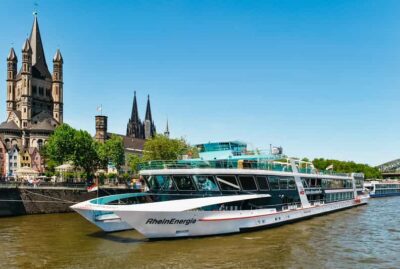 ★ 4.3Cologne: Panoramic City CruiseFrom $235,698 reviews
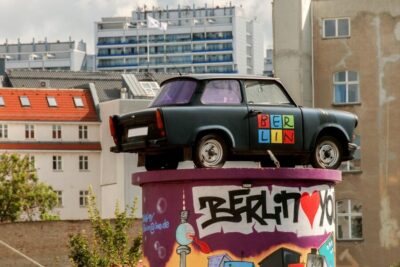 ★ 4.1Berlin: City Sightseeing Hop-On Hop-Off Bus TourFrom $254,233 reviews
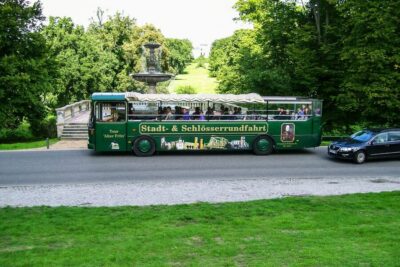 ★ 4.7Potsdam: City and Castles TourFrom $293,721 reviews
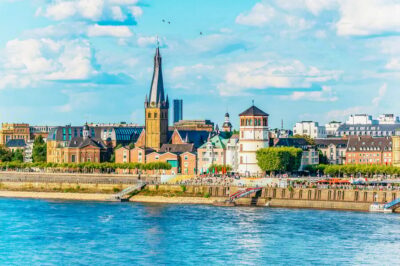 ★ 4.1Düsseldorf: City Sightseeing Cruise on the RhineFrom $232,954 reviews
 ★ 4.5Bremen: City Center Guided Walking TourFrom $142,709 reviews
 ★ 4.7Freiburg: Gässle, Bächle and More City TourFrom $132,632 reviews
Other lists this tour is on