
REVIEW · HEIDELBERG
Eltville: Eberbach Monastery Entry Ticket
Monastery halls feel like a movie set. I like the way Eberbach’s rooms line up with The Name of the Rose filming atmosphere, and I also love the wine cellar world, from giant presses to long storage barrels. One thing to plan around: entry can be technical, so bring a backup of your ticket if your phone scan acts up.
If you can handle a walk through historic stone corridors, this ticket gives you a lot for the money. You’ll move at your own pace, including the abbey’s basilica, cloister, and even the small details that make the place feel lived-in. The possible drawback is simple, it is not wheelchair friendly, so you’ll want to check your comfort level with uneven floors and lots of indoor walking.
In This Review
- Key highlights to watch for
- Eberbach Abbey entry: what your ticket really buys you
- Start at the main entrance, then set your own pace
- Basilica and cloister: medieval calm with a modern artist’s touch
- “The Name of the Rose” filming atmosphere you can actually spot
- Wine cellars, giant presses, and barrels that show scale
- Monks’ bedrooms and dining hall: picture the daily routine
- Abbey Museum: documents, art, and objects preserved on site
- Optical illusions exhibition note (only if your dates match)
- Eberbach wine house stop: taste what you learned
- Practical logistics: getting there, parking, and timing smart
- Who this visit fits best
- The best way to handle ticket tech glitches
- Should you book the Eberbach Abbey entry ticket?
Key highlights to watch for
- Name of the Rose movie locations linked to specific rooms you can recognize on site
- Historic wine cellars with presses, barrels, and a “treasure chamber” feel
- Monks’ daily-life spaces like bedrooms and a dining hall that help you picture the past
- Abbey Museum art and sacral objects preserved on site, plus loaned works
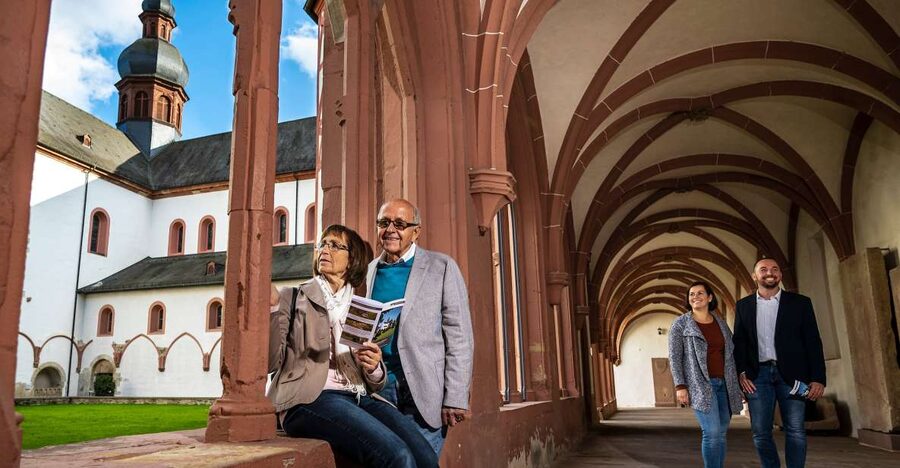
- Cloister arcade window by Thomas Bayrle that adds a modern edge to medieval architecture
- Local wine at the monastery wine house after you’ve finished exploring
Eberbach Abbey entry: what your ticket really buys you
For about $18 per person, this is one of those rare day trips where you do not just look, you also understand. Your ticket is the core of the experience, because it opens the doors to a full abbey visit at your own pace. That matters here. Eberbach is big enough that you want freedom to slow down when something catches your eye, then keep moving when you are in “let’s see everything” mode.
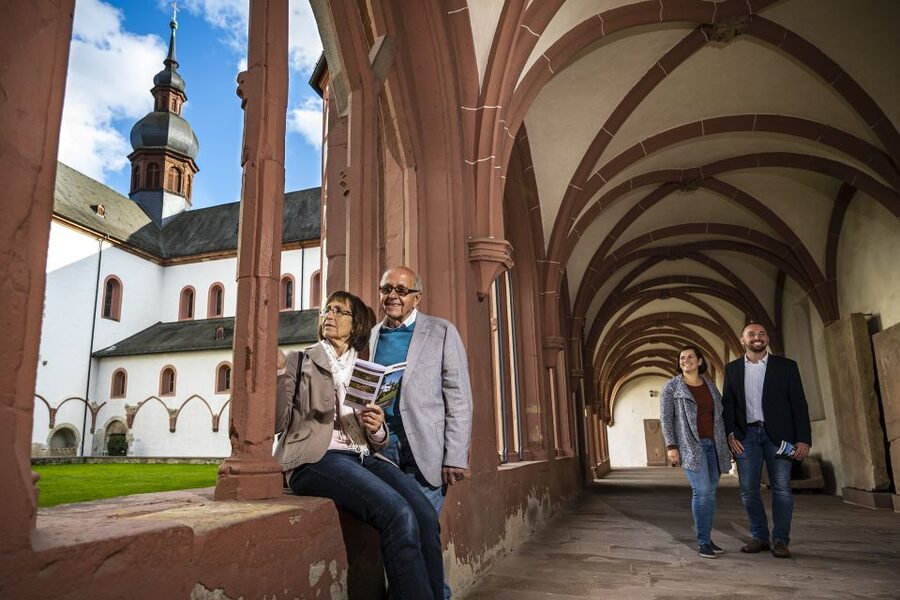
You can think of the visit as four layers. First, the architecture and sacred spaces: basilica and cloister, plus the arcade window designed by Thomas Bayrle. Second, the wine side: cellars with huge presses and old storage barrels, plus the ice cellar and the “treasure chamber” vibe in the cellar. Third, daily life history: monks’ bedrooms and dining hall. Fourth, context: the Abbey Museum with documents, sculptures, paintings, artworks, and religious objects preserved in place.
It also helps that the site is visually memorable. Even if you are not a die-hard wine person, the scale of the press rooms and the look of the cellar corridors give you a real sense of how much work went into monastery production.
Start at the main entrance, then set your own pace
Your meeting point is straightforward: enter Eberbach Abbey at the main entrance and show your paper or digital ticket. The best practical tip is to have your ticket easy to reach, because you want to get in fast and stop standing around.
Now, a heads-up from real-world experience: there can be ticket scanning hiccups, especially with QR codes. I recommend you do two things. Keep the ticket accessible on your phone, but also save a paper screenshot or printed copy. If the scanner refuses your code, staff can still help, but you do not want to burn time while other things close behind you.
Once inside, plan your route as a loop rather than a back-and-forth shuffle. You will likely spend time moving through sacred rooms, then shift toward the wine areas, then use the museum to tie it all together. When you do it this way, the museum does not feel like “one more room,” it feels like the key that unlocks what you just saw.
Basilica and cloister: medieval calm with a modern artist’s touch
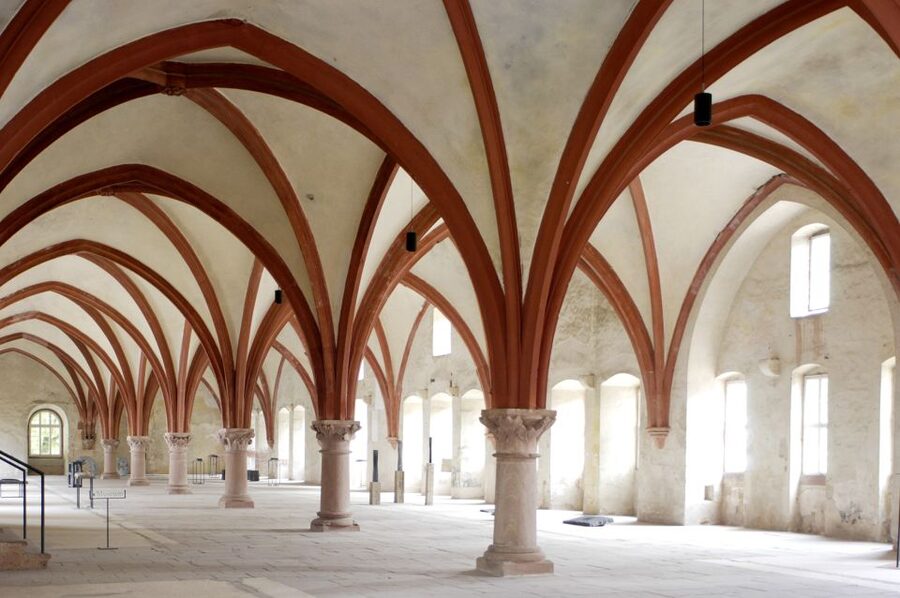
The basilica and cloister are the backbone of Eberbach’s atmosphere. These spaces give you the religious rhythm of the abbey, with stonework and layout that make the place feel older than your map app.
What I like most is the contrast inside the cloister. You get a classic monastery feel, then you notice the arcade window designed by Thomas Bayrle. That single detail changes how you see the cloister. It is not just preservation, it is a living connection between old stone and modern art.
If you like taking photos, this is where you will get your best angles. The cloister arcades frame light in a way that makes even simple views feel planned. If you hate crowds, come early in the day if you can, because these are the spaces people naturally slow down in.
“The Name of the Rose” filming atmosphere you can actually spot
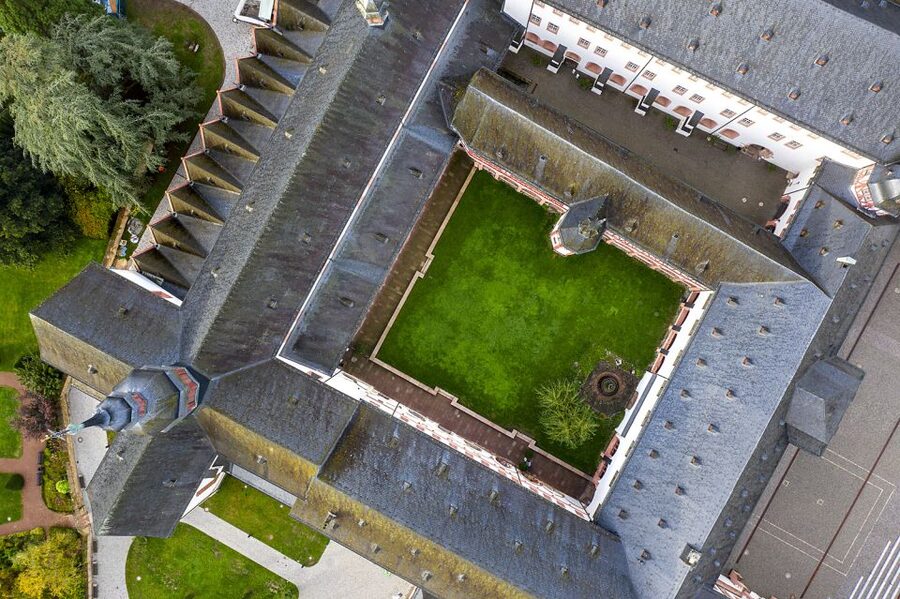
One of the big reasons I think film fans should come is that Eberbach does not feel like a generic old building. It can feel like sets you have seen before. The site has served as a filming location for The Name of the Rose starring Sean Connery, and the rooms are distinctive enough that you can start linking moments you remember to specific areas on site.
Even if you did not watch the movie recently, the experience works. The architecture gives you the right mood: quiet stone, long corridors, and spaces that look built for secrets and debates. It also helps you “read” the abbey as more than a tourist stop. You start understanding why filmmakers picked it.
Practical note: spend a little time just walking slowly before you sprint toward the wine rooms. If you rush, you miss the best part, which is learning the place by moving through it.
Wine cellars, giant presses, and barrels that show scale
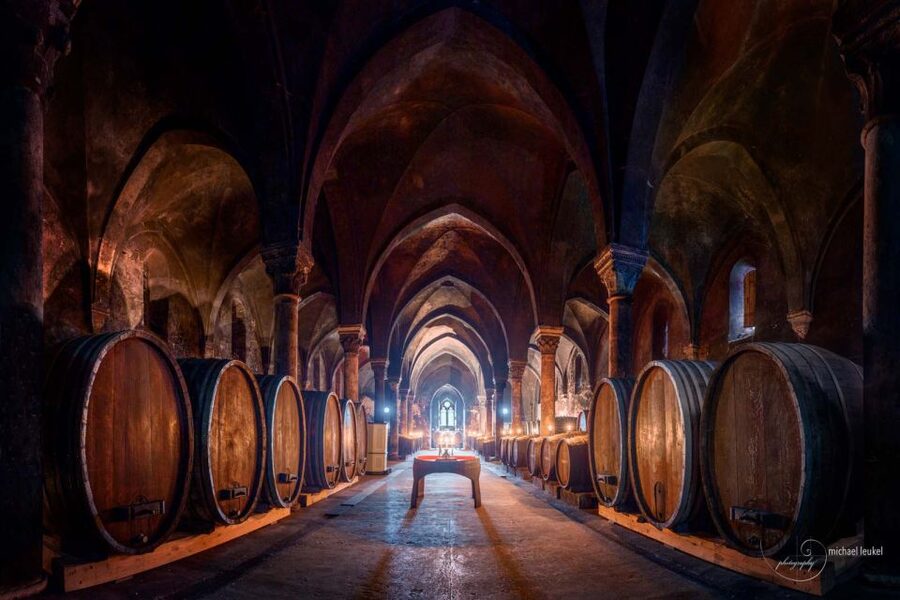
This is the section that makes Eberbach feel different from most abbeys. You are not just looking at relics, you are walking through the infrastructure of production.
In the Baroque dining hall, you can see giant wine presses. That size is hard to picture until you stand in front of them. It changes how you think about the monastery economy. This was not a small hobby, it was serious work.
Then you move into the wine cellars where you will see the barrels and the deeper storage areas. One memorable stop is the ice cellar, and from there you get a look at the treasure-chamber feeling in the cellar full of wine bottles. It is the kind of detail that turns “history visit” into “I can feel the routine.”
If you enjoy food and drink history, pair the wine cellar visit with a slow look at how rooms connect. It is one thing to read about monastic wine making, and another to see how storage, processing, and ritual spaces relate to each other.
Monks’ bedrooms and dining hall: picture the daily routine
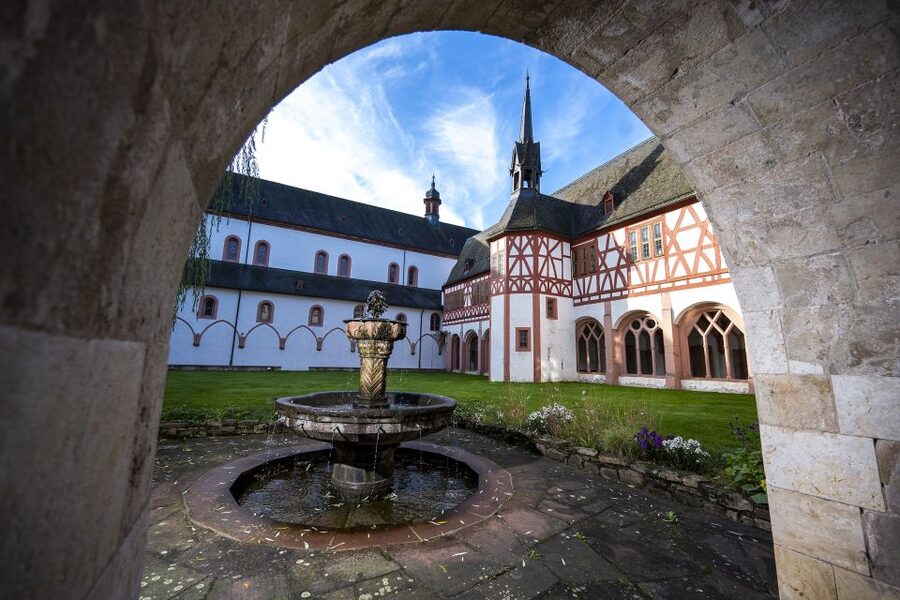
Eberbach also helps you imagine the people behind the stone. You can step back in time as you stroll through monks’ bedrooms and the dining hall.
This is where you get something subtle but powerful: the abbey stops being only architecture. It becomes a home with routines. Even without a guided explanation, the layout does the work for you, because you can sense where people slept, ate, and moved.
If you are visiting with kids or teens, this is a good “make it real” zone. You can ask what kind of schedule someone might follow, what kind of weather they dealt with, and how the cellar work would have fit into a day. You are not changing the history, you are just making it understandable.
Abbey Museum: documents, art, and objects preserved on site
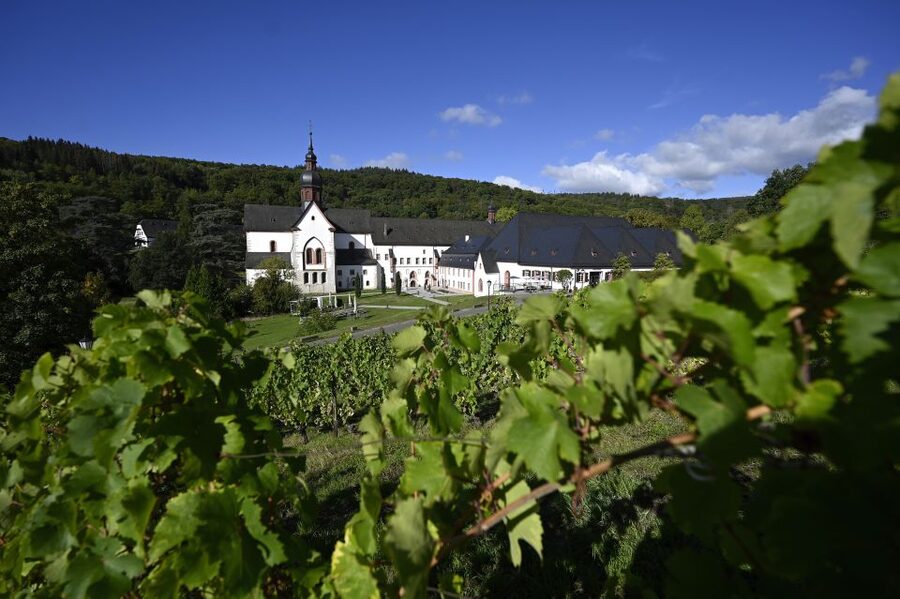
After the wine and living spaces, the Abbey Museum becomes your translator. It uses documents, sculptures, and paintings to explain what the monastery was and how it functioned over time.
What I like here is that you are not only seeing generic religious art. You see art and sacral objects preserved on site in Eberbach, plus loaned objects from public, ecclesiastical, and private collections. That gives your visit both rootedness and variety.
If you like museums, you will appreciate the mix of formats. You can look at religious objects next to historical records, which makes the story feel less like a single chapter. You start to understand how the monastery’s power and daily life shaped what survived.
Optical illusions exhibition note (only if your dates match)
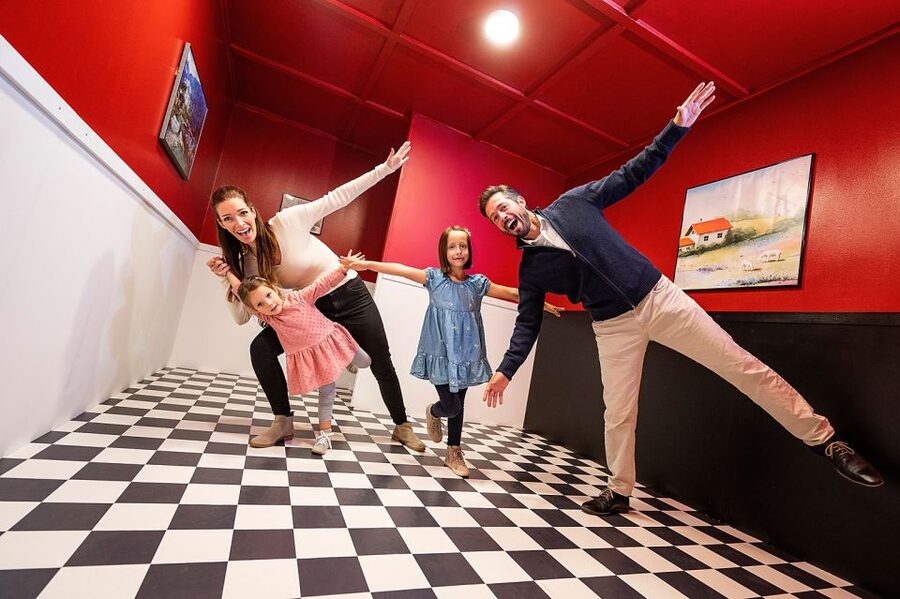
The Abbey Museum has featured a special exhibition called VERTRICKST!, built around optical illusions and perception research. It ran starting September 24, 2022, for one year, with themes like inclined planes, mirror rooms, and whimsical birds, plus moving images, kaleidoscopes, augmented reality, and installations including work by Mexican artist Yunuen Esparza and black-light 3D worlds by Martin Hartmann. If you are visiting during a similar special exhibit window, it can add a playful layer to the visit, especially for younger visitors. If not, the permanent museum content still stands on its own.
Eberbach wine house stop: taste what you learned
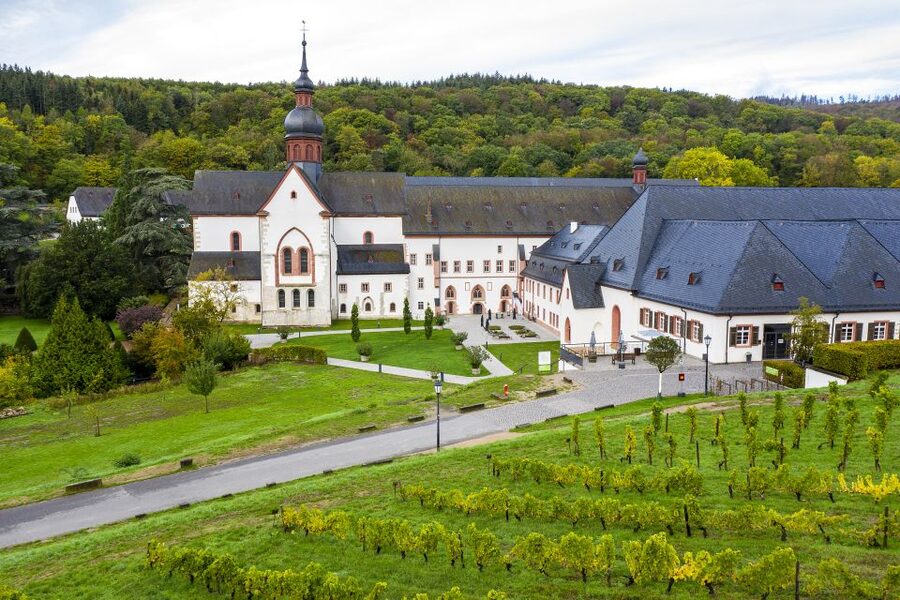
Your entry ticket covers the abbey grounds, and the highlights also include tasting local wine at the monastery wine house. This is not just a sales stop. It is a chance to connect the cellar rooms you toured with something you can actually experience on your palate.
I like treating the tasting as a “finish line.” After seeing barrels, presses, and storage logic, your brain already has a story. Even if you are not a super-technical wine critic, the tasting helps you remember the abbey as a living food and drink place, not only a preserved monument.
If you plan to taste, pace yourself. Do not rush your cellar rooms, because you will want your legs and your attention before you stand at a bar for explanations.
Practical logistics: getting there, parking, and timing smart
Getting to Eberbach is easiest if you base yourself around Eltville. From the Eltville train station, you can take public transport on line 172, which runs hourly to the Kloster Eberbach (Barockpforte) stop. For long-distance arrivals, it is recommended to connect from Wiesbaden, Mainz, or Frankfurt.
Parking exists, but on-site parking facilities are limited, especially during larger public events. If you are coming by car, this is a key consideration. Plan extra time, or consider arriving early so you can park before the rush.
As for timing, this is listed as a 1-day experience, and that feels accurate in practice. Give yourself enough room to do the sacred spaces, wine cellars, bedrooms and dining hall, and the museum without turning it into a sprint. If you try to “power through,” you may miss the details that make the place click, especially the Bayrle cloister window and the way the cellar rooms change in feel.
Bring comfortable shoes and water, plus comfortable clothes. If you want to linger without stress, pack a lunch too, since a longer day tends to work better here than a strict hour plan.
Who this visit fits best
Eberbach Abbey is a strong match if you like any of these:
- Wine and food history, especially production and storage
- Medieval architecture with room-scale details you can actually walk through
- Film locations, especially The Name of the Rose fans
- Museums that explain the site, not just objects behind glass
It is also a solid choice for a mixed group. Someone can get their fix in the wine cellars, another person can focus on the museum and religious objects, and both can feel like they had a satisfying experience.
One constraint: it is not suitable for wheelchair users, so plan an alternative if mobility access is a requirement for you.
The best way to handle ticket tech glitches
There is no way to guarantee phone scans will work perfectly every time, but you can reduce the chance of a frustrating entry moment. I suggest:
- Keep your ticket copy ready as a paper or digital option.
- If you booked through a third-party, take a second moment before you go in to verify your QR code loads clearly.
- If your code fails, ask staff for help right away. The process tends to move quickly once someone is at the counter.
This is the kind of place where a short delay does not ruin the day, but why risk it if you can prevent it.
Should you book the Eberbach Abbey entry ticket?
I think you should book if you want a one-day visit that mixes architecture, museum storytelling, and serious wine infrastructure in the same route. The price is reasonable for how much ground you cover, and the site has a repeatable “wow factor,” from the huge presses to the feeling of stepping into The Name of the Rose atmosphere.
Skip or reconsider if you need step-free accessibility, or if you prefer attractions where everything is strictly timed and handled by a guided schedule. Eberbach rewards your pace, not your rush.
If you are flexible, come earlier, wear comfortable shoes, and bring a backup ticket copy. Do that, and you will spend your day seeing why this abbey is remembered, not just photographed.
Heidelberg Castle and Neckar Tours, side by side.
 ★ 4.2Heidelberg: Neckar River Sightseeing Cruise with a DrinkFrom $261,884 reviews
 ★ 4.6Heidelberg: Walking Tour of the Old TownFrom $151,742 reviews
 ★ 4.7Heidelberg: Night Watchman Historic Adventure TourFrom $3051,186 reviews
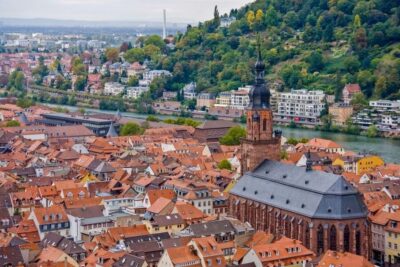 ★ 4.5From Frankfurt: Heidelberg, Castle and Old City Guided TourFrom $152677 reviews
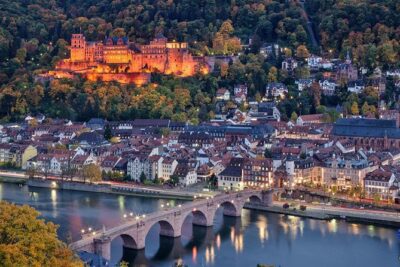 ★ 4.0Heidelberg Castle and Old Town Tour from FrankfurtFrom $154587 reviews
 ★ 4.6Heidelberg: On the trail of the Night WatchmenFrom $305546 reviews
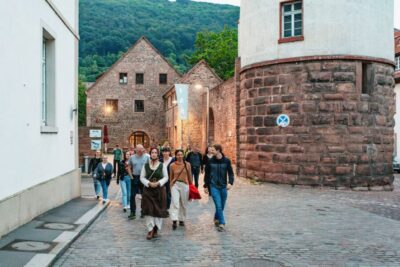 ★ 4.6Heidelberg: Scary Tour with Hangman’s DaughterFrom $434533 reviews
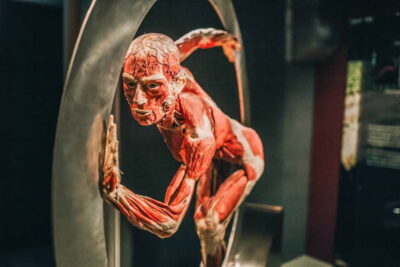 ★ 4.6Heidelberg: BODY WORLDS Museum Entry TicketFrom $22338 reviews
Other lists this tour is on