
REVIEW · LEIPZIG
Federal Administrative Court Leipzig: A journey into the heart of German justice
Justice has better rooms in Leipzig. This certified tour walks you through Germany’s highest administrative court and makes the story of justice feel solid and real, not textbook. I especially love the historic meeting rooms and courtroom details, and I like how the guide keeps the judicial history moving with clear examples from famous trials. One thing to consider: it runs just 1.5 hours, so if you want slow, museum-style pacing or extra Q and A, you may wish it were longer.
You’ll start outside at Simsonplatz 1, then step into a building that was created in 1879 during the Wilhelmine era as the Imperial Court of Justice. Along the way, you’ll see national coats of arms, imperial paintings, and the kinds of spaces where big legal decisions were argued. The tour also includes a visit to the former president’s apartment, which adds a surprising personal angle to an otherwise formal world.
In This Review
- Key things you will notice on this court tour
- Why Leipzig’s Federal Administrative Court feels like living history
- Where your visit starts at Simsonplatz 1 and what 90 minutes really means
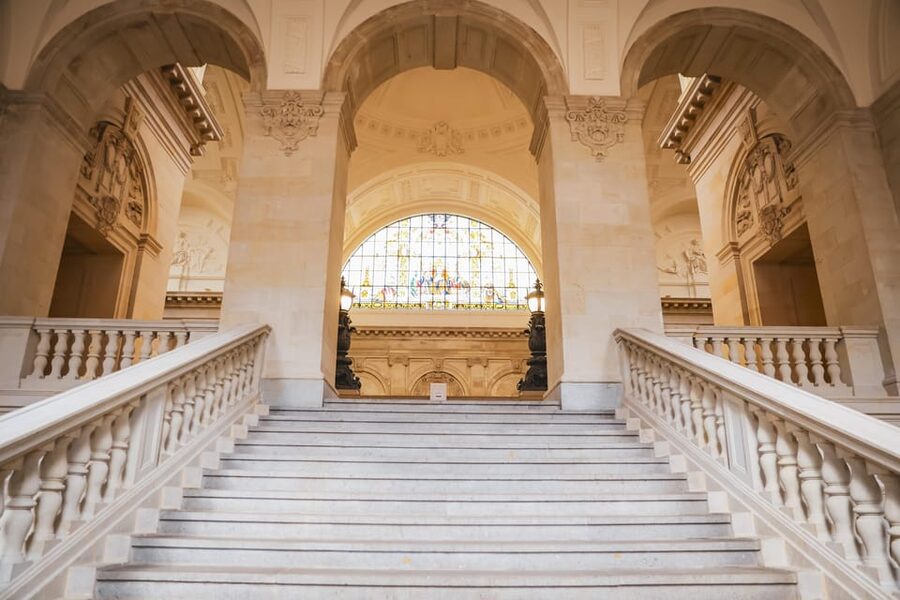
- 1879 Imperial Court design: court power in stone and paint
- Inside the historic meeting rooms and courtrooms
- Landmark trials and turning points you will hear about
- How the court’s role changed over time, from GDR to 2002
- The judges’ visual code: crimson robe and beret
- Former presidential apartment: power viewed at human scale
- Price and value: why $14 can make sense here
- Language, pacing, and rules that affect your planning
- Who this tour suits best in Leipzig
- Should you book the Federal Administrative Court Leipzig tour?
- FAQ
- Where is the meeting point for the tour?
- How long is the tour?
- What is the Federal Administrative Court responsible for?
- What languages are tours offered in?
- Is the tour wheelchair accessible?
- Are pets allowed?
- What age group is this tour suitable for?
Key things you will notice on this court tour

- Imperial-era architecture from 1879, plus courtroom art and national coats of arms
- Historic meeting rooms and courtrooms that show how legal power was staged in space
- Law explained through landmark cases, including the 1933 Reichstag fire trial
- A practical time-jump from Imperial Court to GDR art museum, back to a federal seat in 2002
- Federal judges’ visual identity, including the crimson robe and beret
- Former presidential apartment for a rare look at the building beyond procedure
Other Saxon towns we have written up
- Leipzig: City History Canal Sightseeing Tour on a Motorboat★ 4.7 · 6,232 reviews
- Leipzig: 1.5-Hour Public Tour with Night Watchman Bremme★ 4.6 · 3,116 reviews
- Combo Tour in Leipzig: Guided City Tour & City Sightseeing★ 4.7 · 2,317 reviews
- Leipzig: 1.5-Hour Historical Walking Tour in German★ 4.7 · 2,217 reviews
Why Leipzig’s Federal Administrative Court feels like living history
The Federal Administrative Court in Leipzig is the place where Germany handles disputes in administrative law at the top level. It is organized across 14 senates, so you are not just touring one room or one theme. You’re seeing a system.
What makes this tour more interesting than a standard building walk is the way it links architecture to decisions. The court spaces were designed to project authority. Once you understand that, you start noticing things like symmetry, scale, and how the rooms are meant to guide attention. Then the tour adds context about landmark judgments and historical decision-making, so you can picture law being argued in real time.
Where your visit starts at Simsonplatz 1 and what 90 minutes really means
You meet in front of the Federal Administrative Court at Simsonplatz 1. Aim to arrive about 10 to 15 minutes early so you can start calmly and not rush through the exterior orientation.
A 1.5-hour tour is short, but that’s part of the value. It’s long enough to move through multiple meaningful stops, including courtrooms and the former president’s apartment. It’s also short enough to fit into a tight Leipzig day without turning into your whole itinerary.
Still, be honest with yourself. If you prefer long, unstructured time in each room, you may feel the pacing is fast. The upside is that you get a well-shaped route through the most memorable parts of the building.
1879 Imperial Court design: court power in stone and paint

The building you visit dates back to 1879, when it was constructed as the Imperial Court of Justice during the Wilhelmine era. That timeframe matters, because the court was meant to look permanent, impressive, and unquestionably official.
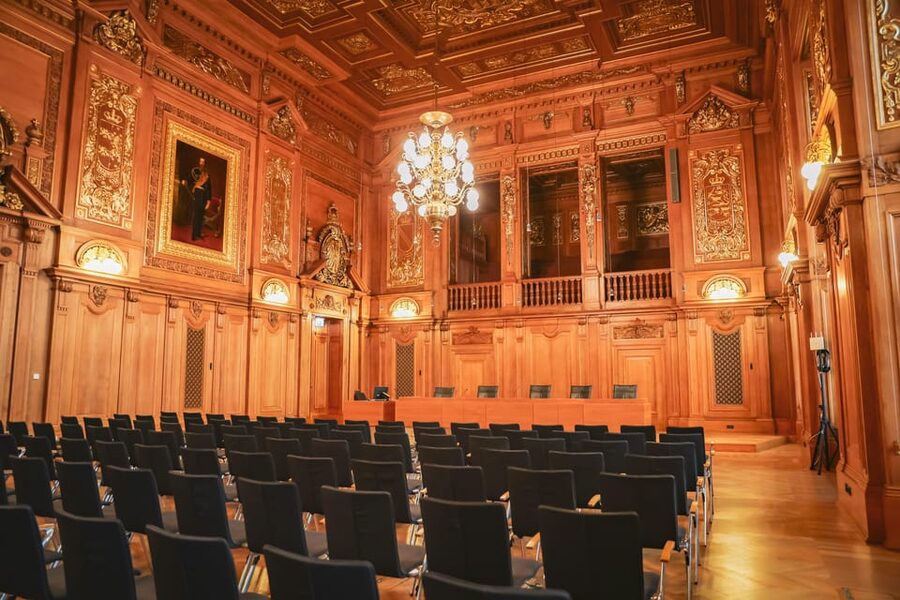
Inside, you’ll see features that reinforce that message. In the larger courtroom, the tour points out national coats of arms and imperial paintings. Even if you are not a “history person,” these details help you understand how authority was displayed.
And yes, the architecture is a major draw on its own. The rooms have presence. You get the sense that legal proceedings were meant to be more than procedural, they were also public theater for the state. That’s why this tour works so well for anyone who likes how design shapes behavior.
Practical note: the tour’s content can be intense for the eyes and ears in a short time. Comfortable shoes help. You’ll likely stand and look up more than you expect in court buildings.
Inside the historic meeting rooms and courtrooms
One of the best parts of the experience is moving from one historic space to another. Instead of simply pointing out plaques, the tour guides you through historic meeting rooms and active-looking courtroom layouts, so the building becomes a map of how discussions and decisions were structured.
These are the moments where you start connecting dots. In administrative law, the process is about reasoning, interpretation, and limits of state action. In old court architecture, those same ideas get translated into physical space: where people sit, how the room frames proceedings, and how formal separation is built into the layout.
Guides also tend to keep this section clear and lively. Based on the overall pattern of feedback, the tour is designed to avoid the slow, lecture-only style. You should expect an explanation that mixes “what you’re looking at” with “why it mattered.”

Landmark trials and turning points you will hear about
This tour does not treat history as background wallpaper. It uses famous cases and historical decisions to show how law evolves.
Two examples highlighted during the visit are:
- The Reichstag fire trial of 1933, often discussed as an infamous legal turning point during the Nazi era.
- The trial from October 1907, connected with Karl Liebknecht, who had to defend himself for publishing his writings.
Even if you already know the names, it’s useful to hear them explained in the setting where courts operated. Context changes how you remember events. When you understand the type of court, its role in law, and the era’s legal climate, the stories become more than dates.
You may not walk away with a new timeline you could recite for a quiz. But you will come away with better instincts about how administrative justice fits into Germany’s broader legal history.
How the court’s role changed over time, from GDR to 2002
One of the most practical “wow” shifts on the tour is learning how the building changed jobs with the political eras.
The building was used as an art museum during the GDR era, then returned to its court role when it became the seat of the Federal Court in 2002. That change is a reminder that architecture can outlast regimes, yet the meaning of the space can flip completely.
Seeing that transition while standing in the same halls helps you understand why legal buildings carry more than function. They carry symbols. When the building became an art museum, the same rooms effectively served a different kind of authority, cultural rather than judicial. Then the return to federal court reactivated the original symbolism.
For you, the benefit is simple: you learn the building as a living object, not a static monument.
The judges’ visual code: crimson robe and beret
Here’s a detail that makes the tour feel grounded in real professional life. The tour explains the official dress that still makes federal judges recognizable: a crimson robe and a beret.
Why this matters, beyond costume trivia: law is a ritual system. Dress codes set expectations about role and status, and that affects how proceedings are perceived, both by participants and by the public. When you learn what judges wear, the formal tone of the rooms starts to make more sense.
Even if you are not into legal symbolism, this is one of those “small fact, big effect” moments. It turns the building from an artifact into a workplace.
Former presidential apartment: power viewed at human scale
The tour includes a visit to the former presidential apartment. That stop is smart because it adds variety. Courtrooms are formal, and administrative law can feel abstract. The apartment gives you a different angle, one closer to everyday presence.
This doesn’t mean it becomes touristy or sensational. Instead, it helps you understand the hierarchy and the personal responsibilities behind the institution. It’s a reminder that the court is made of people and decisions, not only paperwork and statements.
If you like experiences that show both the official face and the behind-the-scenes face, this stop is one of the reasons the tour earns strong ratings overall.
Price and value: why $14 can make sense here
At about $14 per person for 1.5 hours, this tour is priced like a practical city experience, not a long premium attraction. The value comes from how much you see in a compact time: multiple historic rooms, courtroom highlights, a look at the former president’s apartment, and story-driven context tied to major legal moments.
The building itself does not require you to “buy context,” but context is what turns a pretty interior into a meaningful visit. That’s exactly what you get here.
If you are on a budget and want an experience that feels distinctly German and distinctly Leipzig, this is a solid pick. It also works well for couples, solo travelers, and anyone who likes architecture with a purpose.
Language, pacing, and rules that affect your planning
Tours are in German, with English on request. If you need English, plan to confirm ahead so you do not show up hoping it will happen last minute.
The tour is also wheelchair accessible, which is a meaningful plus in older buildings. Pets are not allowed, though assistance dogs are allowed. The experience is also not suitable for children under 14.
There are also restrictions that tend to matter if your group is party-oriented, since party groups are not accepted. If you are traveling for a calm cultural visit, you are in the right category.
Who this tour suits best in Leipzig
This is a great fit if you:
- enjoy architecture with specific historical context
- want a clear, story-driven look at how German justice developed
- like museums where a guide actually connects space to meaning
It may be less satisfying if you:
- want only casual sightseeing with minimal facts
- prefer long unstructured time inside buildings
- strongly need an English-led tour with no planning
Should you book the Federal Administrative Court Leipzig tour?
I recommend booking if you want a short, high-impact experience in Leipzig that mixes historic court architecture, major legal references, and a real look at how the institution operated across eras. At $14 for 1.5 hours, it’s good value, and it’s the kind of visit that leaves you with details you can use later when you read about German legal history.
If language access is your top concern, make sure you arrange for English support in advance. And if you love slow museum pacing, go in knowing the time is tight, so focus on what you want to absorb most.
FAQ
Where is the meeting point for the tour?
Meet in front of the Federal Administrative Court at Simsonplatz 1.
How long is the tour?
The duration is 1.5 hours.
What is the Federal Administrative Court responsible for?
It is the highest administrative court in Germany, with 14 senates that decide disputes in administrative law and help develop the law further.
What languages are tours offered in?
The tour guide speaks German, and English is available on request.
Is the tour wheelchair accessible?
Yes, the tour is wheelchair accessible.
Are pets allowed?
Pets are not allowed, but assistance dogs are allowed.
What age group is this tour suitable for?
It is not suitable for children under 14.
Saxony Beyond Dresden
Everything else we filed on Leipzig
- Mulled wine ride in the Leipzig New Zealand
★ 4.6 · 12 reviews - Wittenberg Private Walking Tour With A Professional Guide
★ 5.0 · 12 reviews - City tour on foot, by S-Bahn and tram
★ 4.5 · 12 reviews - The classic – experience Leipzig’s city centre
★ 5.0 · 13 reviews - Corpses, Leprosy, Lucifer 75-minute Tour at the Old Cemetery
★ 5.0 · 16 reviews - Leipzig’s Communist Past: A Self-Guided Audio Tour
★ 5.0 · 16 reviews
Leipzig and Saxony Tours, side by side.
 ★ 4.7Leipzig: City History Canal Sightseeing Tour on a MotorboatFrom $186,232 reviews
 ★ 4.6Leipzig: 1.5-Hour Public Tour with Night Watchman BremmeFrom $173,116 reviews
 ★ 4.5Dresden: Elbe River Cruise to Pillnitz CastleFrom $372,411 reviews
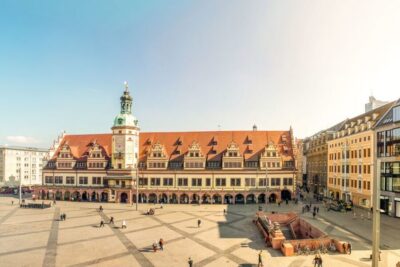 ★ 4.7Combo Tour in Leipzig: Guided City Tour & City SightseeingFrom $252,317 reviews
 ★ 4.7Leipzig: 1.5-Hour Historical Walking Tour in GermanFrom $172,217 reviews
 ★ 4.8Leipzig: 2-Hour Guided Walking Tour in GermanFrom $181,612 reviews
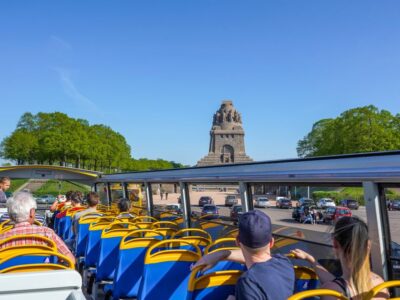 ★ 4.6Leipzig: 13-Stop Hop-on/Hop-off Bus TicketFrom $281,468 reviews
 ★ 4.5Gruseltour Leipzig: A Haunted Guided TourFrom $211,385 reviews
Other lists this tour is on