
REVIEW · CITY TOURS
Frankfurt: Discover the heart of Frankfurt – a city tour in Russian
Frankfurt can feel like a pile of glass at first glance. This tour adds warmth, humor, and sharp details, with Dimitri turning the old streets into a story you can follow. I especially like the mix of major landmarks plus the off-the-beaten-path alleys and courtyards, and I also like that you get visual help through photos during the walk. One thing to consider: it is Russian-language, and the tour is mostly outside with only short interior options depending on opening times and city events.
You’ll start at St. Paul’s Church and end in the Römerberg area, so you can quickly get your bearings in a city that has layers on layers. The stops are packed, but the pace stays manageable, and the walk is typically under about 2 km, which makes it a solid choice even on a cool or rainy day. The only drawback I’d flag is that interior access is not guaranteed, so plan to treat churches or halls as bonus moments rather than the main event.
If you want a structured walk with an expert who clearly loves Frankfurt, this is a great way to spend two hours. Dimitri has Russian roots and has lived in Frankfurt for 35 years, and that shows in the way he connects past and present without turning the city into a textbook. Just bring comfortable shoes and an umbrella, because you’ll be outside most of the time.
In This Review
- Key things that make this Frankfurt tour work
- Why Dimitri’s Russian-guided walk feels so personal
- Getting oriented fast: from Paulskirche to the Römerberg finish
- Paulskirche and St. Paul’s Church: where politics meets architecture
- The Römer complex and Römerberg: Frankfurt’s civic heart
- Kaisersaal and the imperial vibe, with optional interiors
- The Iron Bridge and Eiserner Steg: reading Frankfurt across the water
- Medieval remains you can spot: Kaiserpfalz area and Roman traces
- Hidden alleys and courtyards: the “small streets” advantage
- House Wertheym, Schirn, and the city’s visual rhythm
- Justice, courtyards, and symbolism at Fountain of Justice
- Krönungsweg and New Old Town: the past re-shaped
- Coffee house stop, small markets, and the street-level wow factor
- Pace, distance, and what to pack for a comfortable 2 hours
- Price check: is $20 good value for this format?
- Who should book, and who might want a different option
- Should you book this Frankfurt Russian city tour?
- FAQ
- What language is the tour guide speaking?
- Where is the meeting point?
- How long is the tour?
- What does the tour price include?
- Are interior visits guaranteed?
- Is it suitable for wheelchair users?
Key things that make this Frankfurt tour work
- Dimitri’s friendly, funny delivery turns big sights into clear stories you can remember
- Outside sightseeing with smart detours to hidden alleys, courtyards, and small streets you’d skip on your own
- Imperial-era stops in walkable sequence, from Paulskirche to the Römerberg finish
- Iron Bridge and Museumsufer context, so you understand what you’re seeing, not just where it is
- Short interior visits when open, including options in the Römer and the Franconofurd imperial palace area
- A compact route designed for a 2-hour visit, with guidance that keeps the pace comfortable
The wider Frankfurt sightseeing pile
- From Frankfurt: Heidelberg, Castle and Old City Guided Tour★ 4.5 · 677 reviews
- Heidelberg Castle and City Day Tour from Frankfurt★ 4.5 · 292 reviews
- Frankfurt: Discover the heart of Frankfurt – a city tour in German★ 5.0 · 196 reviews
- Frankfurt Old Town & Emperors: City Game & Walking Tour★ 4.5 · 39 reviews
Why Dimitri’s Russian-guided walk feels so personal
This tour works because the guide is not just listing sights. Dimitri brings humor, then supports it with specifics, from how Frankfurt formed to what remains visible today. He also uses photos during the route, which makes the history easier to picture when you’re standing in front of modern facades.
I like that the experience is built around connections: a church leads to civic power, a river crossing leads to museum settings, and a plaza leads to the medieval imperial footprint. That approach helps you remember the city layout instead of collecting random photo spots.
There’s also a clear attitude of caring about your time. It’s designed as a tight, 2-hour overview, not a half-day marathon, which suits people who want value without burnout.
Getting oriented fast: from Paulskirche to the Römerberg finish
You meet at the main entrance of St. Paul’s Church, look for the Experience Frankfurt sign. The guide will be there with a pass, so you can spot them quickly and start without delay.
The route is structured like a gentle “walk and understand” loop. You begin with the most public, symbolic spaces, then move into the older medieval fabric of the center, and you finish where the city’s story feels most concentrated, at the Römerberg.
If you’re visiting Frankfurt for the first time, that end point matters. Römerberg is a natural anchor for future exploring, because you can branch out toward the river museums or toward modern districts without losing your bearings.
Paulskirche and St. Paul’s Church: where politics meets architecture
The tour starts at Paulskirche, with a photo stop and a short visit at St. Paul’s Church. This is your first “big statement” of the day, the kind of place that signals Frankfurt is more than just commerce and highways.
From there, you move toward the Römer area, with a quick shift in atmosphere. You’re going from a space of historic significance to a zone where the city center still feels medieval, even when modern layers cover parts of it.
You should expect a mix of walking and stopping. The guided timing is tight, so if you like to linger at statues or zoom in on details, plan to save extra time for later, after the tour ends.
The Römer complex and Römerberg: Frankfurt’s civic heart
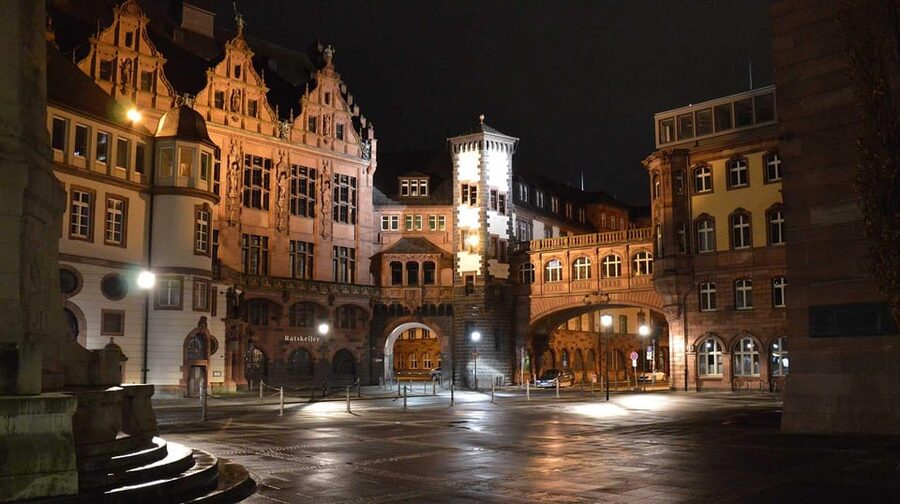
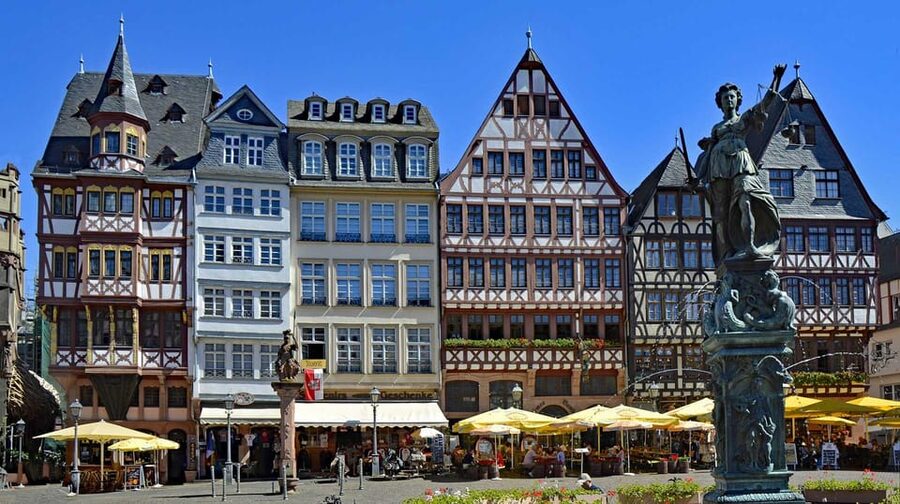
Next up is the Römer and the Römerberg zone, including the Römerberg itself for photos, guided explanations, and sightseeing. The Römer is the historic town hall complex, so this is where city governance, ceremony, and public life intersect in a very visible way.
The highlight isn’t only the famous skyline. The tour also points out courtyards and smaller passages that help you see how the town hall and adjacent streets function as a lived-in neighborhood, not a frozen monument.
This is one of the best parts of the experience if you like “how cities actually work.” You’re learning how people once moved through this area, and you’re spotting places where medieval patterns are still readable.
Kaisersaal and the imperial vibe, with optional interiors
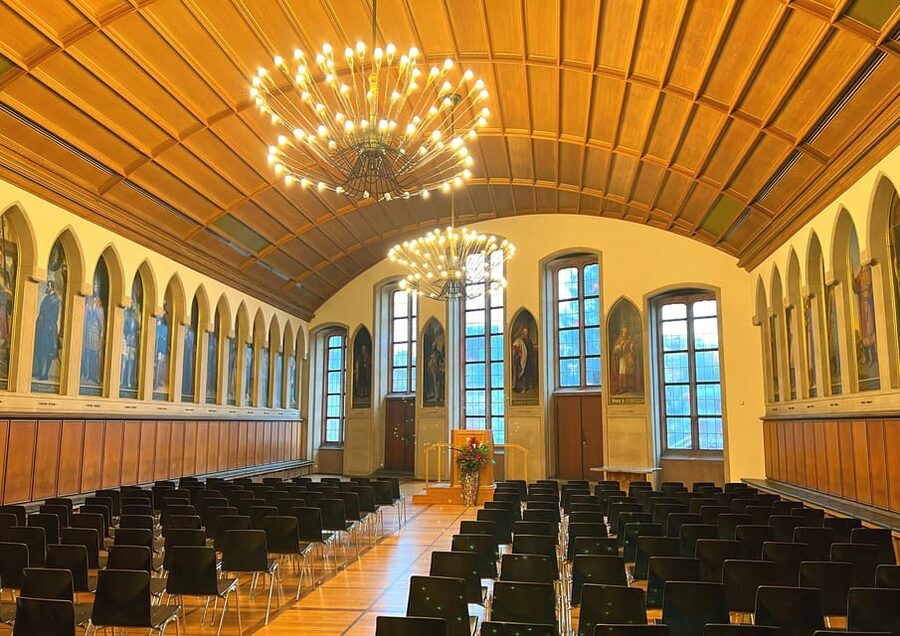
A key stop is the Kaisersaal, with a photo stop and guided visit. The tour description also notes that short interior time may be possible if openings line up, and that the guide can include one or two interior moments when timing allows.
Here’s the practical reality: the St. Paul’s Church and the Kaisersaal in the Römer are not guaranteed obligatory parts, since city events can close access. That does not ruin the tour, because the route still explains the significance outside. But if interior access is a top priority for you, build in flexibility.
When interiors do open, the value is that you get brief, focused explanations in the right place, not a scattered walk through rooms you can’t fully interpret. It’s a nice bonus rather than a core gamble.
The Iron Bridge and Eiserner Steg: reading Frankfurt across the water
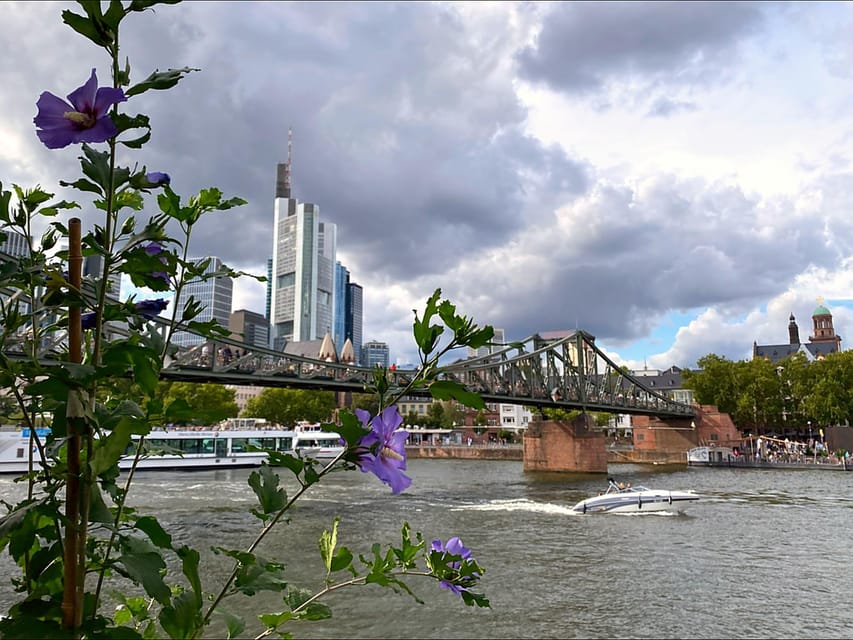
One of the tour’s themes is how the river shapes the city. You cross or stop by the Eiserner Steg, with photo time, guided sightseeing, and explanation.
What I like about this stop is that it’s not presented as a simple photo location. You get the stories behind the Iron Bridge and the Museum Embankment area, which helps you connect the bridge to Frankfurt’s cultural geography along the river.
If you’re the type who likes to understand a city’s layout at street level, this is a strong “lightbulb” moment. The river stops give you perspective so later monuments make more sense in context.
Medieval remains you can spot: Kaiserpfalz area and Roman traces
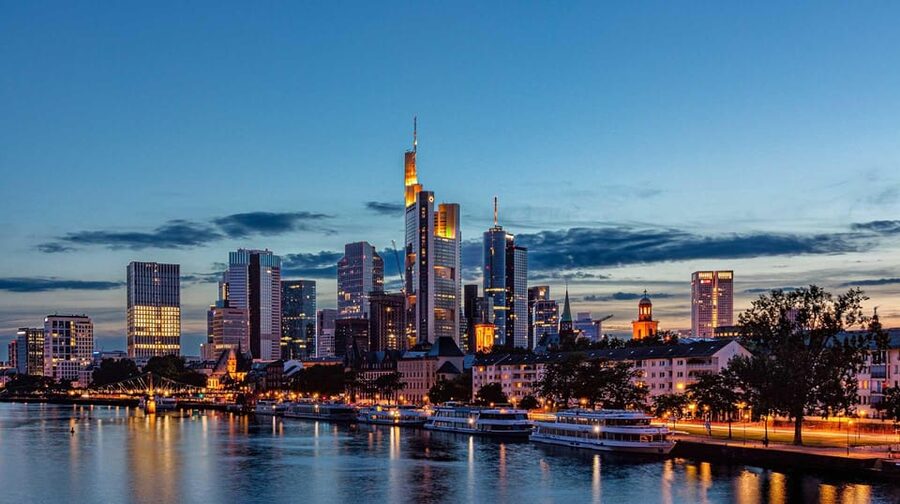
A major selling point is seeing the remains linked to the medieval imperial palace. During the walk, the route includes Roman Ruins, which adds a different time layer and gives you a visible reminder that the city’s story did not start in the medieval period.
You also visit places tied to the cathedral and imperial setting. The itinerary includes Frankfurt Cathedral, plus other imperial landmarks such as Kaiserdom and Kaiserpfalz as part of the overall theme.
Here’s how to get value from these stops: look for transitions. From one street to the next, the city shifts in design language, and the guide’s explanations help you notice that shift instead of missing it.
Hidden alleys and courtyards: the “small streets” advantage
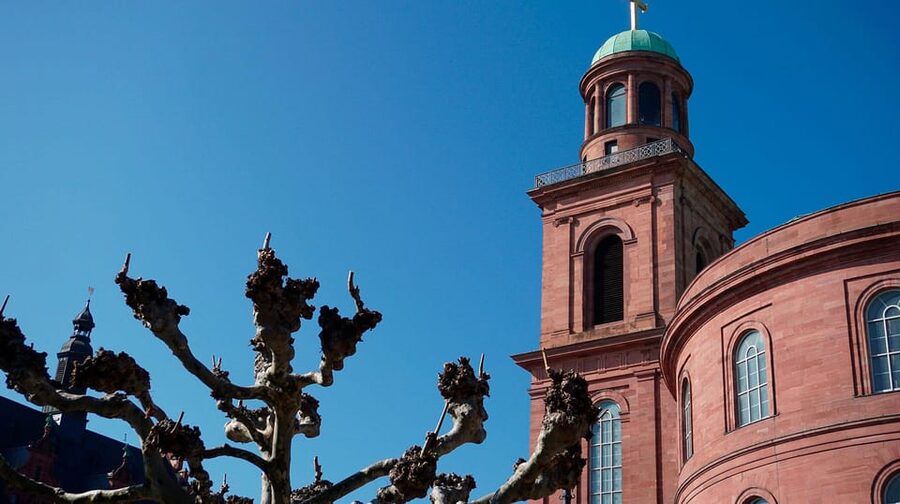
A big reason this tour earns high praise is the way it leaves the main drag. You’re not only seeing famous squares like Römerberg. You’re also getting led into smaller streets and passageways that feel like local shortcuts.
Several stops reinforce this: Saalgasse, Schirn Art Gallery, and the small clusters around Hühnermarkt. Even when a modern building dominates the view, the guide helps you read what used to be there, or why the street layout matters.
I think this is the best use of a guided hour. You get the “why” behind the space and the tip for how to notice it later on your own.
House Wertheym, Schirn, and the city’s visual rhythm
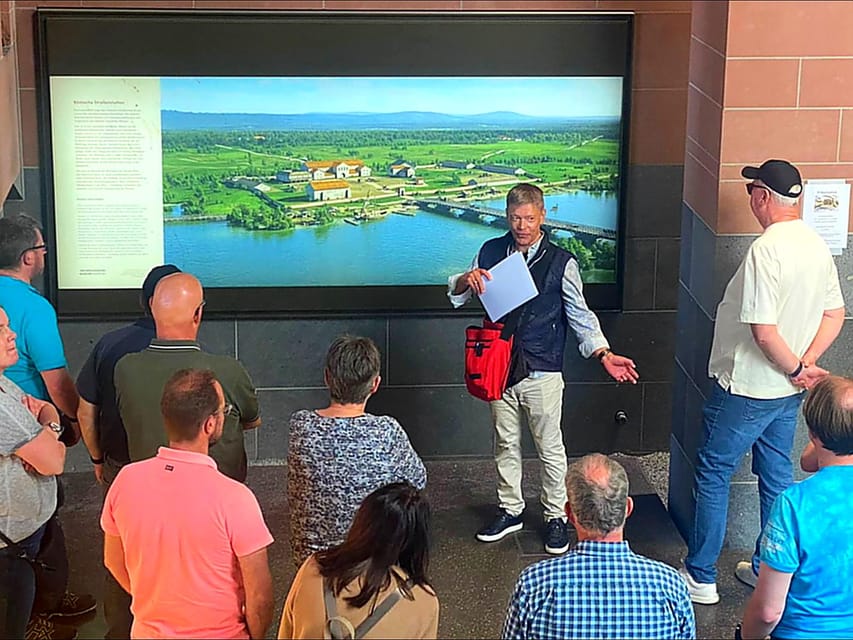
The route includes Haus Wertheym, with a short photo stop and guided walk-by visit. It’s the kind of place that can look decorative from far away, but becomes interesting once someone points out the details and explains the role of these older structures in the center.
Schirn Art Gallery is another quick stop. Even if art galleries are not your usual focus, this works because you’re still grounded in city life, not just monuments. It’s one more waypoint in the rhythm of streets around the historic core.
Then the tour continues along other small stops that help you feel the continuity of the old center. Goldenes Lämmchen and Struwwelpeter Museum are included as brief sightings, which is perfect if you like seeing what’s on street level, not only what’s on a postcard.
Justice, courtyards, and symbolism at Fountain of Justice
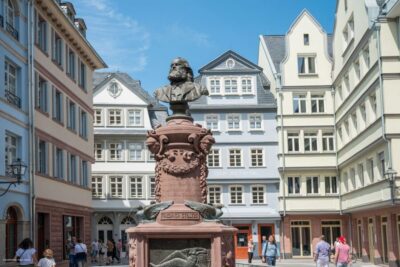
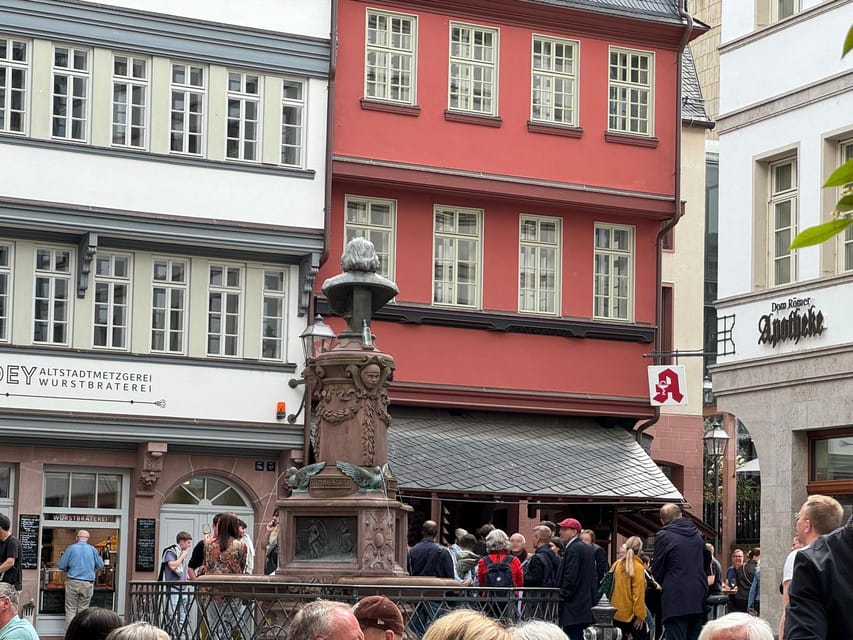
The Fountain of Justice is a short but meaningful stop, with photo and guided explanation. It’s quick, but that’s exactly the right approach here, because you’re moving through many key areas and you want each interruption to feel purposeful.
This is another example of the tour’s style. The guide doesn’t only say what something is. He frames why it sits where it sits, and how it fits the civic identity of the area.
If you’re the type who enjoys symbolism in public spaces, you’ll probably find this one of the most memorable micro-stops.
Krönungsweg and New Old Town: the past re-shaped
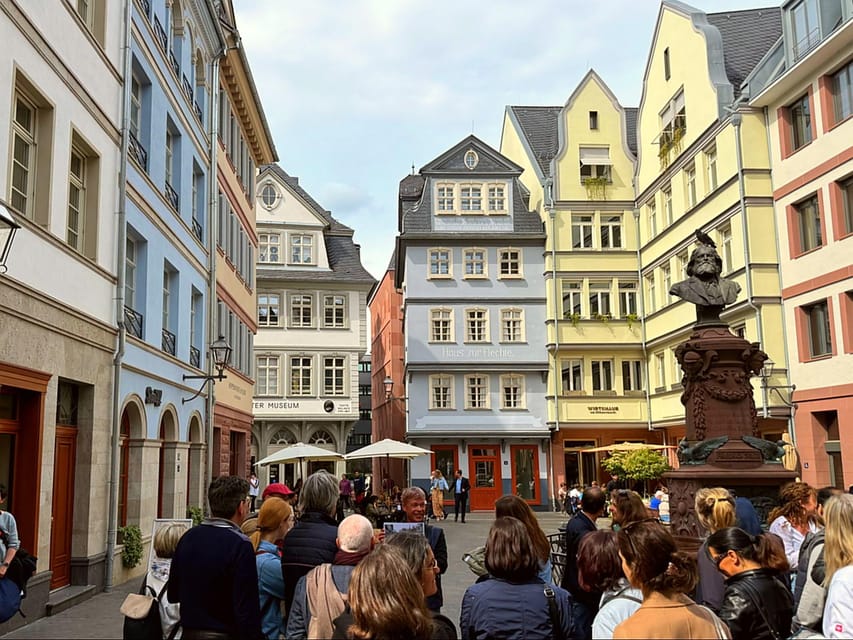
Toward the end, you transition into New Old Town Frankfurt, with guided sightseeing and a longer photo segment. The tour also includes Krönungsweg, which connects the story threads of the city’s ceremonial past with what you can still walk today.
There’s also a stop called Neues Rotes Haus and a mention of the New ECB area as part of the overall sight list. That contrast is useful. It shows you how Frankfurt layers modern finance next to historical identity, and it helps you understand why the center can feel both traditional and experimental.
The practical takeaway: use this section to reset your mental map. After these stops, you’ll have a clear sense of where the old-town story is strongest, and where you can step out into modern areas on your own.
Coffee house stop, small markets, and the street-level wow factor
The itinerary includes Coffee House to the Golden Scale, plus Hühnermarkt. Even with short time, these stops matter because they teach you how the center once worked as a social and commercial space.
Markets and small streets give you a different kind of knowledge than monuments do. You start noticing patterns: where people paused, where they gathered, and which corners feel designed for interaction. That’s the stuff that makes a city feel human.
If you’re traveling with teens or curious adults, this is also a good section because the landmarks are readable without needing a deep background lecture.
Pace, distance, and what to pack for a comfortable 2 hours
The tour is listed as 2 hours, and the pace is structured for a compact loop. One helpful real-world clue from the experience is that it often stays around a couple of kilometers total, so you are unlikely to feel wiped out after.
Still, treat it like an outside walk. Bring comfortable shoes because cobblestones and old streets can be uneven. Bring an umbrella, since weather can change quickly in central Europe and you’ll be outside for most stops.
Also, plan your expectations: meals and drinks are not included. If you want coffee or lunch afterward, schedule time right after the tour so you don’t rush the next part of your day.
Price check: is $20 good value for this format?
At about $20 per person for a roughly 2-hour guided route, you’re paying for three main things: a professional guide, a guided route that connects many key sights, and brief photo-driven explanations that make it easier to understand what you see.
This is not a bargain-only “see the famous stuff” tour. It includes guidance plus short interior options if openings allow, and it finishes in a high-value location like Römerberg. For many first-time visitors, that means you lose less time wandering and you get more from your limited sightseeing window.
If you enjoy history but don’t want long lectures, the value is in the structure. You get a dense overview without feeling trapped.
Who should book, and who might want a different option
This tour is a strong fit for:
- First-time visitors who want orientation fast
- People who like guided stories more than self-guided wandering
- Anyone comfortable walking through older streets for a short time
It’s also a nice family option in practice, since the route is compact and the guide’s style is entertaining, not dry.
One mismatch: it is not suitable for wheelchair users. Also, if you don’t speak Russian, you might still benefit from photos and pointing, but your experience may depend more on your visual interpretation than the spoken narration.
Should you book this Frankfurt Russian city tour?
I’d book it if you want a guided walkthrough of Frankfurt’s core with a guide who makes the city feel alive. The combination of major imperial-era landmarks, clever detours into side streets, and photo-supported storytelling is exactly the kind of value that makes a short visit feel longer and more satisfying.
I would skip it or choose another option if you need guaranteed interior access or if you cannot handle mostly outdoor walking. Otherwise, meeting at St. Paul’s Church and ending at Römerberg gives you a clean, memorable arc through the city center.
If your goal is to leave Frankfurt with a mental map and a few stories you can repeat at dinner, this tour does that job well.
FAQ
What language is the tour guide speaking?
The tour is guided in Russian.
Where is the meeting point?
The meeting point is at the main entrance of St. Paul’s Church, at the sign that says Experience Frankfurt.
How long is the tour?
The tour lasts 2 hours.
What does the tour price include?
You get a guided tour with a certified Russian-speaking guide, plus short visits to the Imperial Hall in the Römer and the Imperial Palace Franconofurd if open.
Are interior visits guaranteed?
Not always. The tour notes that St. Paul’s Church and the Kaisersaal in the Römer are not obligatory if they are closed due to city events, and interior time depends on opening times.
Is it suitable for wheelchair users?
No, this activity is not suitable for wheelchair users.
Seeing Frankfurt in One Go
Everything else we filed on Frankfurt
- Frankfurt to Prague – Private Transfer with 2 hours of Sightseeing
★ 5.0 · 3 reviews - Castle Braunfels Day Trip from Frankfurt
★ 5.0 · 3 reviews - Frankfurt – Private tour with Licensed guide
★ 5.0 · 4 reviews - Arrival by Luxury Vehicule from Frankfurt Airport to Frankfurt
★ 4.0 · 4 reviews - Frankfurt MAIN TOWER with Tickets, Guide and Old Town Tour
★ 5.0 · 4 reviews - Discover Frankfurt’s most Photogenic Spots with a Local
★ 5.0 · 4 reviews
City Tours, side by side.
 ★ 4.3Berlin: 1-Hour City Tour by Boat with Guaranteed SeatingFrom $2516,993 reviews
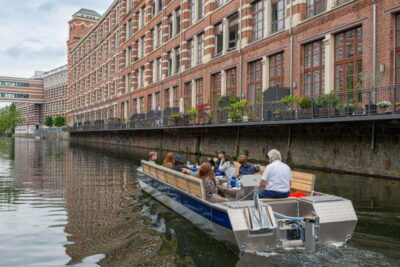 ★ 4.7Leipzig: City History Canal Sightseeing Tour on a MotorboatFrom $186,232 reviews
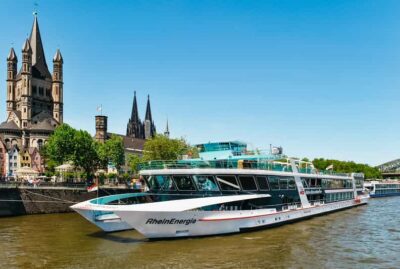 ★ 4.3Cologne: Panoramic City CruiseFrom $235,698 reviews
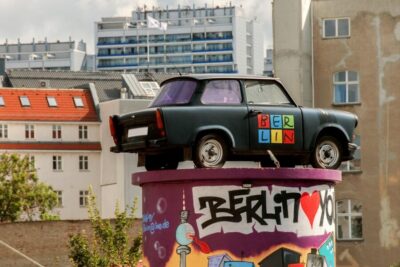 ★ 4.1Berlin: City Sightseeing Hop-On Hop-Off Bus TourFrom $254,233 reviews
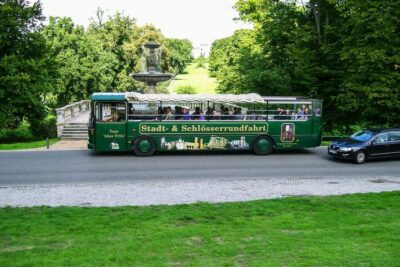 ★ 4.7Potsdam: City and Castles TourFrom $293,721 reviews
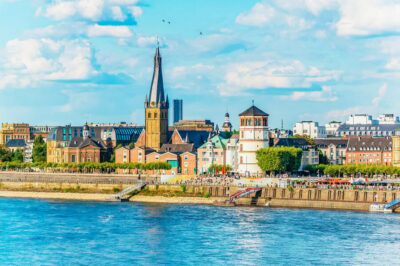 ★ 4.1Düsseldorf: City Sightseeing Cruise on the RhineFrom $232,954 reviews
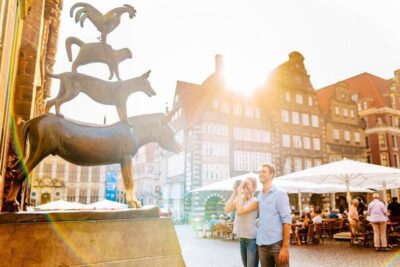 ★ 4.5Bremen: City Center Guided Walking TourFrom $142,709 reviews
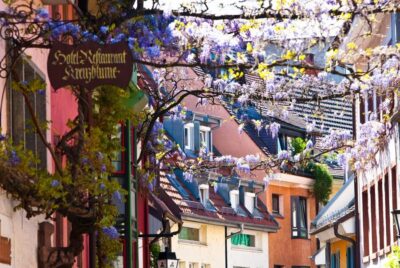 ★ 4.7Freiburg: Gässle, Bächle and More City TourFrom $132,632 reviews
Other lists this tour is on