
REVIEW · HAMBURG
Hamburg: 2-Hour Harbor Cruise
Seeing Hamburg from water hits different. In just 2 hours you get HafenCity and the Elbphilharmonie in one sweep, plus a moving look at how the Port of Hamburg works as ships come and go on the Elbe. I like that the experience mixes big-picture structure with real port details, so it feels like more than sightseeing.
One key consideration: the boat is unfortunately not wheelchair accessible, so plan an alternative if mobility is a factor. Also, you will spend a good portion of the ride outdoors, so dress for cool river air and wind.
In This Review
- Key moments you should expect
- Why this 2-hour cruise gives you the Port of Hamburg in one go
- Price and time: what you are really paying for at $40
- Meeting at Landungsbrücken, Bridge 2, and getting comfortable
- HafenCity and the Elbphilharmonie, seen from the waterline
- Speicherstadt canals and the historic warehouse district from a new angle
- Köhlbrand Bridge and the industrial harbor that keeps changing
- Live port talk in German, plus English support
- Itinerary flow, stop by stop: what you are likely to notice
- Should you focus on photos, or on the story?
- Who this Hamburg harbor cruise is best for
- Should you book this Hamburg 2-hour harbor cruise?
- FAQ
- How long is the Hamburg harbor cruise?
- How much does it cost?
- Where do I meet the tour?
- Is the commentary available in English?
- Is the boat wheelchair accessible?
- Can I buy drinks during the cruise?
- Is free cancellation available?
Key moments you should expect
- HafenCity and the Elbphilharmonie from the Elbe, with perspectives you do not get from street level
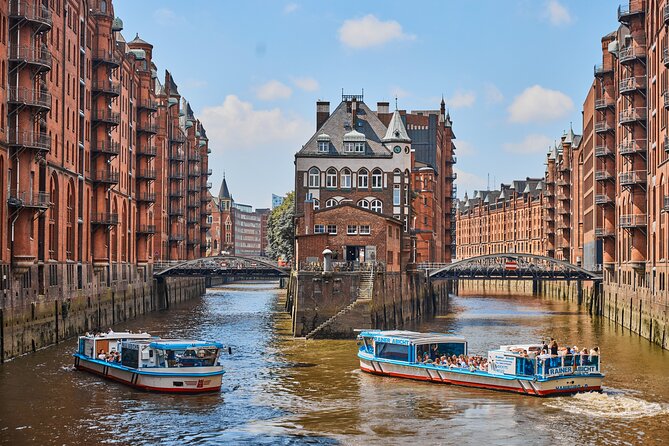
- Speicherstadt’s canal views, where the historic warehouse district looks totally different from water
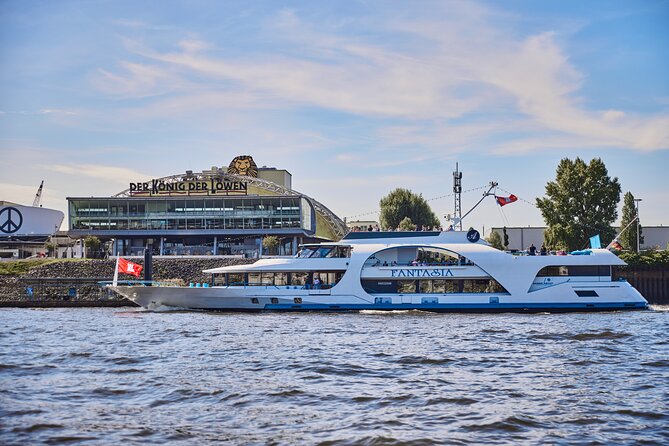
- Working harbor views, including container ships and shifting scenes around bridges and docks
- Köhlbrand Bridge viewpoints, useful for “where am I in the port” context
- Trade and port-modernization talk, tying ship activity to global connections
A few more trips out past the cranes
- Hamburg: 1.5-Hour Harbor and Speicherstadt Day Cruise★ 4.6 · 14,200 reviews
- Hamburg: 2-Hour XXL Port of Hamburg Cruise Tour★ 4.7 · 6,979 reviews
- Hamburg: 1-Hour Harbor Evening Lights Cruise★ 4.4 · 4,861 reviews
- Hamburg: 1-Hour Harbor Sightseeing Cruise with HafenCity★ 4.4 · 3,067 reviews
Why this 2-hour cruise gives you the Port of Hamburg in one go
Hamburg’s port is not a static postcard. It is a living machine. That is why I like this format: a 2-hour cruise is long enough to absorb the layout and short enough to stay sharp, especially if you only have a day or two in the city.
The big value is the way the cruise turns the port into something visual. From the water you can see how container ships and industrial facilities are arranged along waterways, how bridges slice through the transport lines, and how the skyline changes as you move. Even if you know Hamburg is a major port, seeing scale from the Elbe makes the numbers feel real.
A second thing I like is the balance between classic sights and practical explanation. You are not just watching buildings go by. Your onboard host talks about how the commercial metropolis performs and why the port keeps expanding and modernizing. That means you leave with a clearer mental map, not only photos.
Price and time: what you are really paying for at $40
At $40 per person for a 2-hour cruise, you are paying for three things: boat access through a working harbor, guided context that helps you interpret what you are seeing, and English support through an audioguide app.
If you are the type who hates expensive rides that feel like they go nowhere, this one is built to do the opposite. The port is the destination, and the guide’s job is to connect visuals to port operations, including how cargo moves and how the harbor links to other countries. That is why the money can feel like value rather than a simple ticket fee.
You should also think of it as time efficiency. Walking HafenCity and Speicherstadt on your own is great, but it does not give you the same industrial waterline perspective or the moving “system view” you get from the Elbe. In other words, you are buying an angle you cannot easily replicate from land.
Meeting at Landungsbrücken, Bridge 2, and getting comfortable
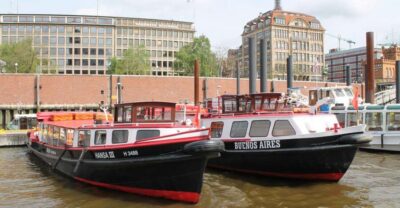
You check in at the Barkassen-Meyer ticket counter at Landungsbrücken, Bridge 2. If you are arriving by transit, plan to get there a bit early so you can find the counter without rushing.
Once you are on board, you have two layers of language support. There is a live guide speaking German, and there is also an audioguide app in English. That matters because harbor details can be technical. The English app helps you follow along even if your German is limited.
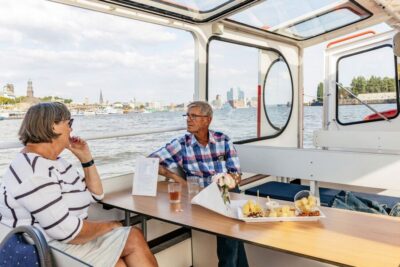
A practical note: drinks are not included, but you can purchase them onboard. That is convenient if you want a coffee or something to sip while you watch the harbor slide by. If you prefer to travel light, you can skip onboard drinks, since the tour length is manageable.
HafenCity and the Elbphilharmonie, seen from the waterline
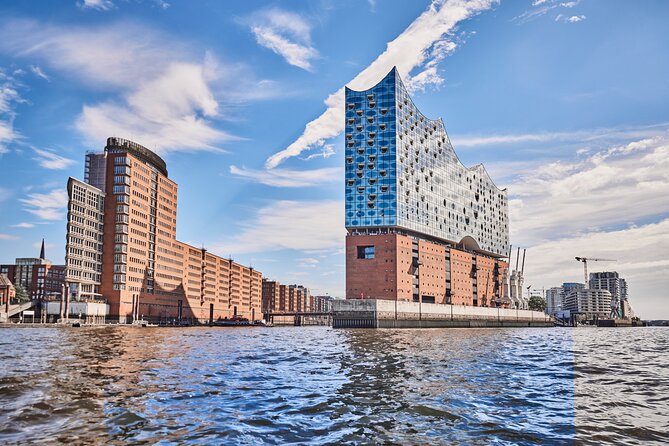
HafenCity is one of the places where Hamburg’s modern face is easiest to understand. From the Elbe, HafenCity looks purposeful and geometric, and you get a sense of how new urban areas connect to old port infrastructure.
The Elbphilharmonie is a highlight of this cruise because the view changes as the boat moves. From water, the concert hall does not feel like a background landmark. It becomes part of the city-port relationship, standing beside canals and commercial zones instead of sitting alone in a photo frame.
Even if you have seen the Elbphilharmonie before, the harbor perspective adds scale. It is the same building, but your brain reads the surroundings differently when you are watching ships and bridges in motion. That is the core reason this cruise works as an overview.
More decks and gangways around Hamburg
Speicherstadt canals and the historic warehouse district from a new angle
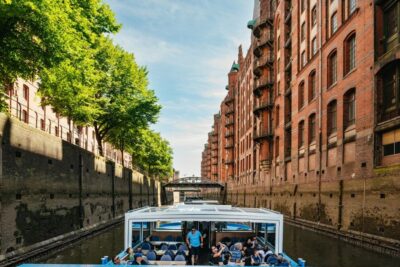
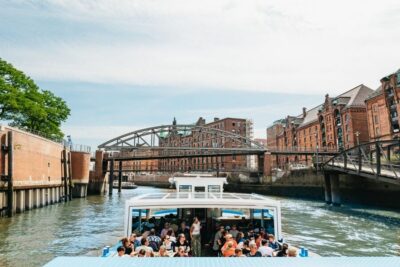
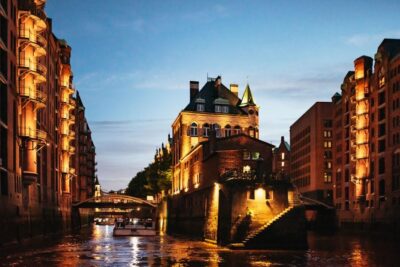
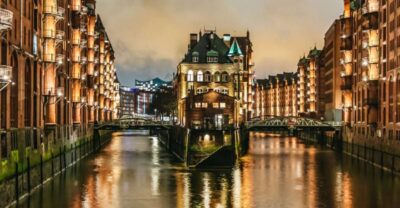
The Speicherstadt warehouse district is often described with words like historic, but from the water it clicks in a more immediate way. You see the canals and the canal edges in context, and the area feels designed for shipping and logistics rather than just architecture.
What I find useful about this section is the contrast. You have modern HafenCity visuals on one side of the river view, then you move into Speicherstadt’s older industrial logic. Watching it from the Elbe helps you understand how Hamburg used waterways as highways long before today’s container systems.
The cruise also helps you notice sightlines. Some angles make the canals look like corridors, and bridges frame the district differently than street views. You end up with a mental picture you can later reference if you choose to walk parts of Speicherstadt after.
Köhlbrand Bridge and the industrial harbor that keeps changing
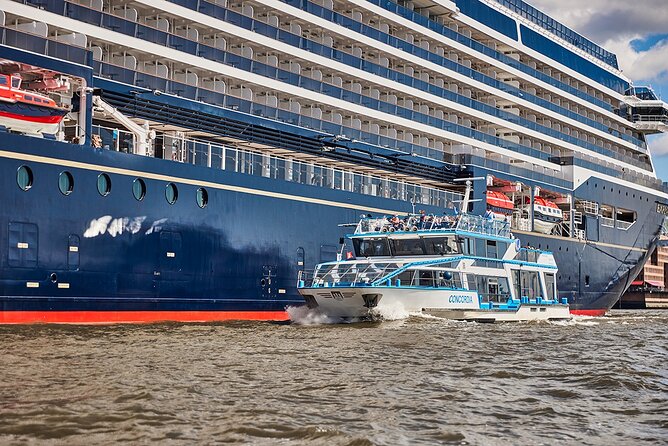
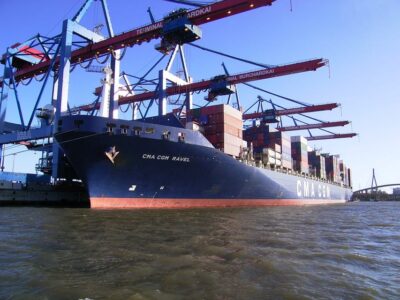
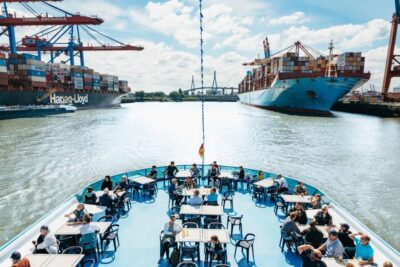
One of the strongest parts of the experience is the shift to a more industrial harbor view. You will pass the Köhlbrand Bridge area and get a look at the industrial part of the port. This is where Hamburg stops looking like a city and starts looking like international infrastructure.
The harbor is also dynamic. The view changes rapidly as different ship types arrive. That is not just a nice surprise. It keeps your attention because your guide can point out what you are seeing in real time: different vessels, different movements, and the ongoing rhythm of a working port.
If you like photography, this is where you can work on framing. Bridges give you strong reference points for scale, and container ships help you judge distance and size. Even if you do not shoot photos, those reference points make the port easier to understand.
Live port talk in German, plus English support
This cruise earns its high rating because the commentary has substance. Your guide explains the trade background of Hamburg and how the harbor operates. You can expect discussion of transshipment figures, trade relations with other countries, port expansion areas, and modernization of shipyards and ships.
This kind of storytelling matters because it gives you a way to interpret what you are seeing. A port is not only cranes and containers. It is also planning, investment, and global supply chains. When the guide connects cargo movement to bigger economic patterns, the whole cruise stops feeling like a ride and starts feeling like orientation.
One more detail worth noting: live commentary is German, but you also get an English audioguide app. That is a smart setup for mixed-language groups, and it helps you catch terms that might be hard to follow in spoken German alone.
In some departures, the ship captain approach is used, and one named captain, Joel, was praised for mixing humor with solid port knowledge. Even if you do not get the exact same voice, the overall style is clear: friendly, practical, and focused on what you can see right now.
Itinerary flow, stop by stop: what you are likely to notice
You are cruising on the River Elbe, moving through HafenCity and Speicherstadt and looping past key bridge and harbor-view points. There are no separate timed “attractions” where you get off, so the value is in what you notice from the moving boat.
Here is the way the ride typically reads in your brain:
First, you orient. HafenCity and the Elbphilharmonie show up early enough to establish the modern side of Hamburg’s waterfront. This is the moment you learn how the city meets the port.
Then you shift. Speicherstadt comes into view with canal geometry and warehouse-district atmosphere. This is where the cruise helps you understand older trade methods and why waterways mattered.
Next, you go working-harbor. The Köhlbrand Bridge area and industrial docks show you how the port looks when it is doing its job. You are paying attention to size and movement, and your guide ties it to modernization and port expansion.
Finally, you keep watching change. As new ships arrive, the scenery evolves. That means the cruise does not feel repetitive, and the explanations feel connected to real events rather than a fixed script.
Should you focus on photos, or on the story?
You can do both, but it helps to decide your priority.
If your goal is photos, watch for reference points like the bridge and the way skyline elements shift as the boat changes direction. HafenCity and Elbphilharmonie are ideal for establishing shots, while the industrial harbor is better for scale shots with ships.
If your goal is learning, your best move is to listen closely during the guide’s trade and modernization sections. The more you pay attention to transshipment and shipyard modernization talk, the more your visuals will make sense later.
This is also why the English audioguide app is useful. If the German spoken narration gets technical, the app helps you keep up so you do not miss the key ideas.
Who this Hamburg harbor cruise is best for
This is a strong fit if you are:
- A first-time visitor who wants a practical overview of the Port of Hamburg
- Curious about how cargo and shipping connect to global trade
- Someone who enjoys learning explanations while you sightsee
- Looking for a 2-hour activity that is efficient but not shallow
It may not be your best choice if:
- You rely on wheelchair access, because the boat is not wheelchair accessible
- You want a quiet, purely scenic nature boat. This is a commercial harbor experience with industrial views and port operations as the focus
Should you book this Hamburg 2-hour harbor cruise?
I would book this if you want your first taste of Hamburg to include real context. For a modest length of time, you get HafenCity, Speicherstadt, the Elbphilharmonie view, and working-harbor scenes on the Elbe, plus an explanation of trade and modernization that makes the whole place click.
If you are traveling with someone who prefers city architecture only, I would still consider it. The modern highlights are there, but the port story gives the experience more meaning than a simple walk.
Just make sure you can handle the main practical constraint, no wheelchair access, and dress for the outdoor portion of the ride. If that works for you, this cruise is one of the most efficient ways to understand why Hamburg matters.
FAQ
How long is the Hamburg harbor cruise?
The cruise lasts 2 hours.
How much does it cost?
It is priced at $40 per person.
Where do I meet the tour?
Check in at the Barkassen-Meyer ticket counter at Landungsbrücken, Bridge 2.
Is the commentary available in English?
There is live commentary in German, plus an audioguide app in English.
Is the boat wheelchair accessible?
No, the boat is unfortunately not wheelchair accessible.
Can I buy drinks during the cruise?
Yes, drinks can be purchased onboard.
Is free cancellation available?
Yes, you can cancel up to 24 hours in advance for a full refund.
On the Water Near Hamburg
Back Out Among the Cranes
Everything else we filed on Hamburg
- Hamburg: Safari tour in St. Pauli
★ 4.9 · 11 reviews - Hamburg: Party Bingo with the Bingo Gringos
★ 4.8 · 11 reviews - Hamburg Harbor: 3.5-Hour Guided Tour by Bike
★ 4.7 · 11 reviews - Hamburg: 2-Hour St. Georg Walking Tour
★ 4.8 · 11 reviews - Hamburg: Guided Walking Tour in Danish
★ 5.0 · 11 reviews - Discover Hamburg in a retro Bulli
★ 3.0 · 12 reviews
Harbor and Port Cruises, side by side.
 ★ 4.6Hamburg: 1.5-Hour Harbor and Speicherstadt Day CruiseFrom $4014,200 reviews
 ★ 4.5Hamburg: 90-Minute Evening Lights Harbor CruiseFrom $277,728 reviews
 ★ 4.7Hamburg: 2-Hour XXL Port of Hamburg Cruise TourFrom $476,979 reviews
 ★ 4.4Hamburg: 1-Hour Harbor Evening Lights CruiseFrom $304,861 reviews
 ★ 4.4Hamburg: 1-Hour Harbor Sightseeing Cruise with HafenCityFrom $303,067 reviews
 ★ 4.6Hamburg: 1-Hour Harbor CruiseFrom $282,283 reviews
 ★ 4.2Hamburg: 1.5h Grand Harbor Evening Lights CruiseFrom $281,316 reviews
 ★ 4.5Hamburg: Hop-On Hop-Off Bus with Alster or Harbor CruiseFrom $44812 reviews
Other lists this tour is on