
REVIEW · HAMBURG
Hamburg: City Tour by Bike with Elbphilharmonie
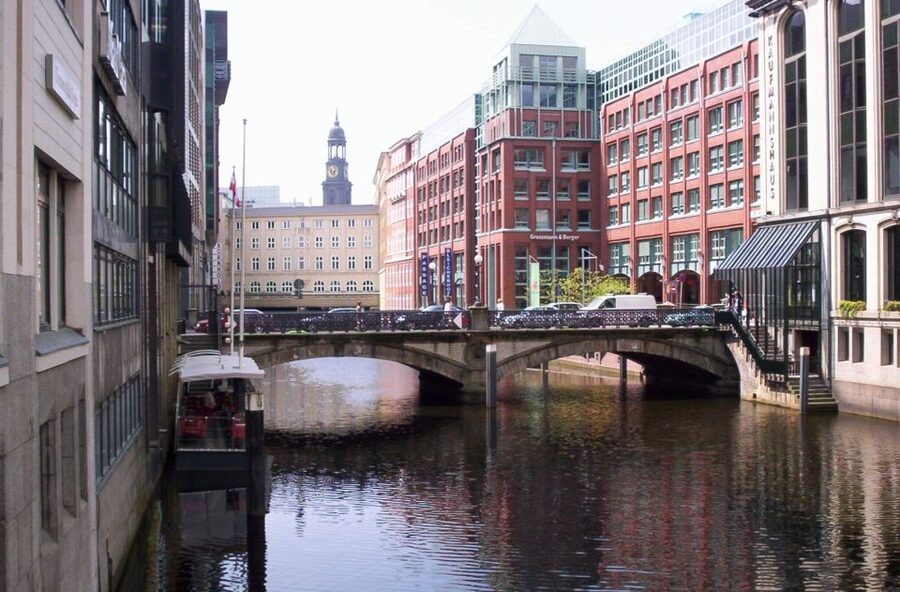
A bike ride that strings Hamburg together fast. In 3.5 hours you pedal from Rotherbaum past the Alster waters to Speicherstadt, HafenCity, and the Elbphilharmonie area, guided in English or German. I love the way this route mixes old port character with modern Hamburg angles, so the city changes mood every few minutes. I also like that the guide gives lots of context as you go, not just quick photo stops.
One thing to keep in mind: access to the Elbphilharmonie plaza can be limited or closed on major event days, and the time you spend there depends on what is possible on the day. That said, you still get great views from the nearby flood protection area.
You start at Schlüterstraße 11, outside the Fahrradstation of the University of Hamburg, and you roll back there at the end. If you get a guide like Bernhard, you can expect a lively flow of facts, and plenty of answers while you’re riding.
In This Review
- Key highlights that make this tour work
- Why a Hamburg bike loop is the right kind of sightseeing
- Meeting at Schlüterstraße 11, then rolling into Rotherbaum and the Alster
- Außenalster to Binnenalster: the panorama you actually want to see
- Gängeviertel, Brahms birthplace, and the art-scene in old working-class streets
- Fleet-Island, the 1842 fire trail, and the city’s port logic
- Speicherstadt and Fleete waterways: UNESCO brick warehouses on oak poles
- HafenCity and Elbphilharmonie: modern architecture with a point of view
- Baumwall, St. Michael’s Church, and passing through Neustadt feeling “in between”
- Peterstraße, Brahms and Telemann Museum, and the ride toward St. Pauli piers
- Price, pacing, and what to bring for a 3.5-hour bike day
- Is this the right tour for you?
- Should you book Hamburg City Tour by Bike with Elbphilharmonie?
- FAQ
- How long is the Hamburg bike tour?
- What does it cost?
- Where do I meet for the tour?
- What languages are available for the live guide?
- Will I definitely be able to access the Elbphilharmonie plaza?
- What is included in the ticket price?
Key highlights that make this tour work
- Alster lakes, old and new panoramas: You ride from Außenalster to Binnenalster for the classic Hamburg postcard view, then keep rolling.
- Gängeviertel working-class lanes: The 18th-century district is now an art scene, with a memorial stone marking Johannes Brahms birthplace.
- Port storytelling by bike: You pass Deichstraße, hear about Alt-Hamburg port operations, and follow the footprints of the Great Fire of 1842.
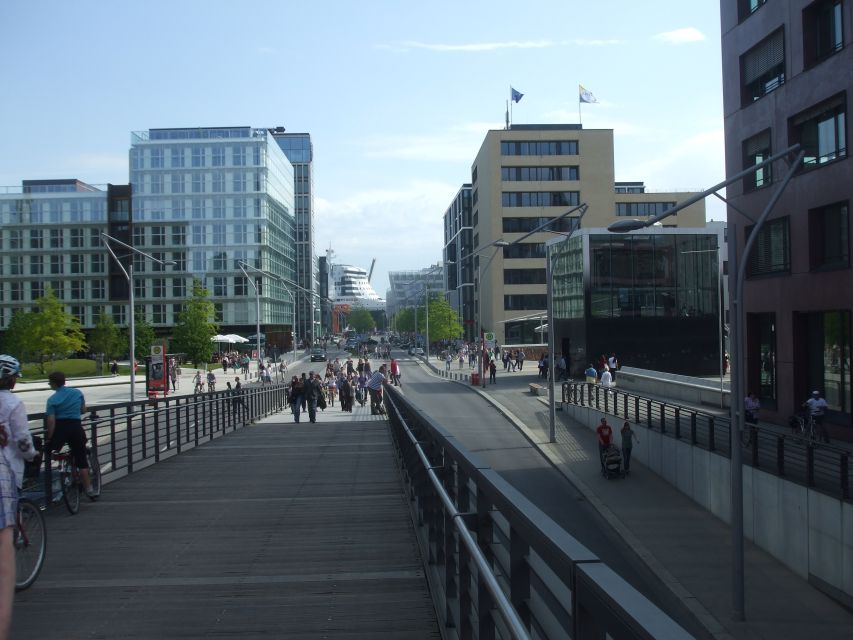
- UNESCO Speicherstadt on Fleete waterways: Massive brick warehouses rise on millions of oak poles, right over the canal network.
- Elbphilharmonie views without drama: Even when plaza access is tricky, the flood protection path gives angles from below.
More Elphi and Alster time to compare
- Hamburg: Elbphilharmonie Plaza Guided Tour★ 4.7 · 5,882 reviews
- Hamburg: Elbphilharmonie Plaza, Highlights & Surroundings★ 4.6 · 2,270 reviews
- Hamburg: Elbphilharmonie Plaza and HafenCity Food Tour★ 4.7 · 1,711 reviews
- Hamburg: Hop-On Hop-Off Bus with Alster or Harbor Cruise★ 4.5 · 812 reviews
Why a Hamburg bike loop is the right kind of sightseeing
Hamburg is one of those cities where the best scenes are spread out, but you do not want to spend your day hopping in and out of transit. A bike tour solves that by keeping you moving between major neighborhoods: waters, canals, historic warehouses, and the modern harbor scene in one steady ride.
What I like most is how the route tells a story you can feel in your legs. You get the maritime smell of the old ports, the open-air pause of the parks and lakes, and the “business city” energy around the shopping and city center areas, all without needing to plan transfers.
At $39 per person for about 3.5 hours, this is strong value if you want guidance and structure. You are paying for a live guide, a bicycle, and a city map, plus an email photo series after the tour. If you are the type who appreciates context while you walk or ride, you will likely feel you got your money back quickly.
Meeting at Schlüterstraße 11, then rolling into Rotherbaum and the Alster
The tour starts outside the Fahrradstation of the University of Hamburg at Schlüterstraße 11. That location is convenient because it sets you up for an easy glide toward the lake system, rather than starting deep in the old harbor logistics.
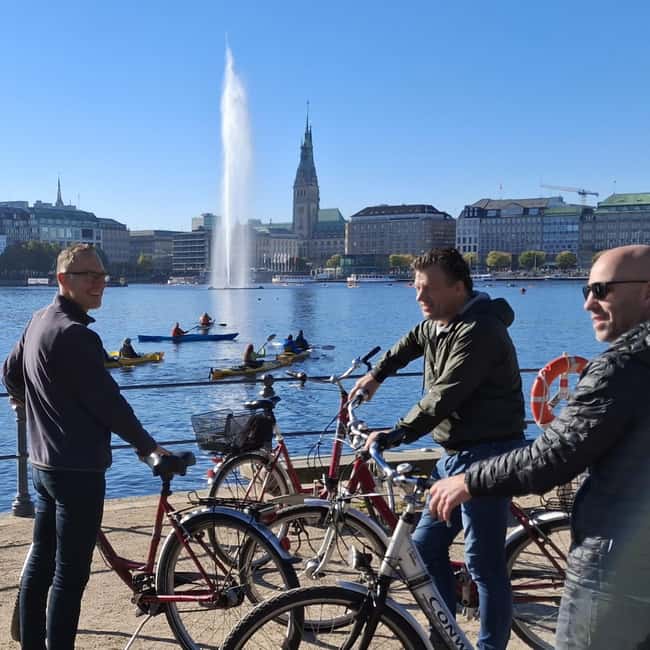
From there, you head along the Außenalster and then to the Binnenalster. This is the point where Hamburg’s look clicks into place: water on one side, city buildings on the other, and a clean line of sight that helps you understand where everything sits.
Early in the ride, you also get a guided rhythm that helps you stop only when it matters. Expect some guided segments plus photo stops, so you are not just pedaling through scenes. You are learning how to read the city as you ride.
Außenalster to Binnenalster: the panorama you actually want to see
This section is about the classic Hamburg view, but with enough guidance to make it meaningful. As you drive along the Außenalster to the Binnenalster, you get those old-and-new contrasts that make the city famous.
The Binnenalster area gives you an overview of how the old town and the modern city sit side by side. You also get a mental map for the rest of the ride, because you see the water lines that shape the streets and districts you will visit later, especially the port and canal zones.
Practical tip: if you care about photos, come prepared to take a few shots while you are stopped. You will likely do a mix of guided looking and short photo moments, so keep your camera or phone accessible.
Gängeviertel, Brahms birthplace, and the art-scene in old working-class streets
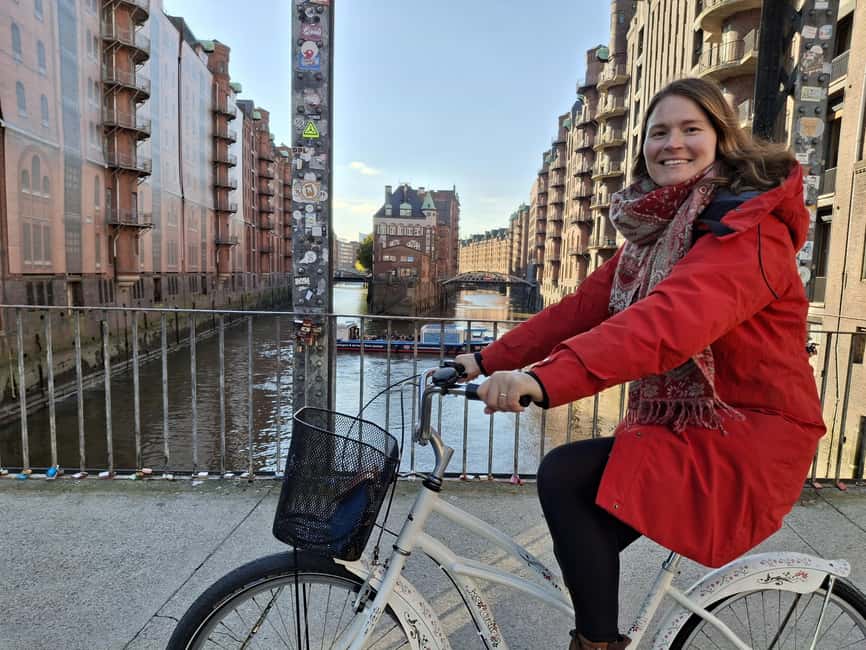
After the Alster, you head through the newer town and into Gängeviertel. This is where Hamburg’s “kept spaces” idea becomes obvious. The district preserves a working-class 18th-century feel, but today it hosts an art scene.
One of the most memorable details here is a memorial stone marking the birthplace of Johannes Brahms. It is the kind of stop that makes you look slower, even if you are not usually a museum person. You are connecting a composer’s story to a specific place in the city you can picture later.
This is also a good reminder that Hamburg is not only warehouses and grand architecture. You get streets, corners, and the human scale of neighborhoods that feel lived-in, even while you are on a bike.
The wider Hamburg sightseeing pile

Fleet-Island, the 1842 fire trail, and the city’s port logic
Next comes a shift from lakes and lanes to harbor geography. You cross Fleet-Island, a former harbor area, and the guide ties the route to the Great Fire of 1842.
That part matters because it gives you a reason for why certain areas look the way they do today. When you hear how a fire reshaped the city, you start noticing rebuilding patterns and the logic of neighborhoods instead of just admiring buildings as individual snapshots.
Then the ride moves through parts of the modern city, including Neuer Wall. You get a sense of the business and shopping side, with passages and plenty of designer storefront energy, which helps balance the older port zones you have already seen.
As you roll along Deichstraße, you go back toward the port origins of Alt-Hamburg. This stretch gives you the sense of where the working city began, before you reach the big UNESCO flagship: Speicherstadt.
Speicherstadt and Fleete waterways: UNESCO brick warehouses on oak poles
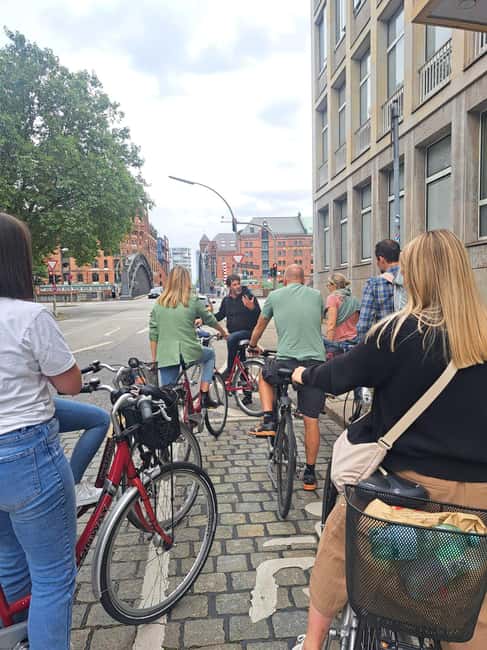
Now you hit the centerpiece of the old port. Speicherstadt is a UNESCO world heritage site, and the architecture is instantly recognizable once you see it in person: massive 19th-century brick buildings sitting over waterways.
The tour’s framing helps here. You are not just hearing that it is UNESCO, you are learning how it works. Speicherstadt sits on millions of oak poles within the Fleete, the canal-like waterways that run through the area.
That technical detail changes how you see the place. It stops being only a pretty backdrop and becomes a real engineering solution tied to the maritime environment. When your guide connects the building style to the water system, you understand why the whole district feels so tightly controlled and purposeful.
Photo note: this is a great area for photos because the brick and water create strong lines. If the route timing is tight, focus on capturing the structure and the canals rather than chasing every single angle.
HafenCity and Elbphilharmonie: modern architecture with a point of view
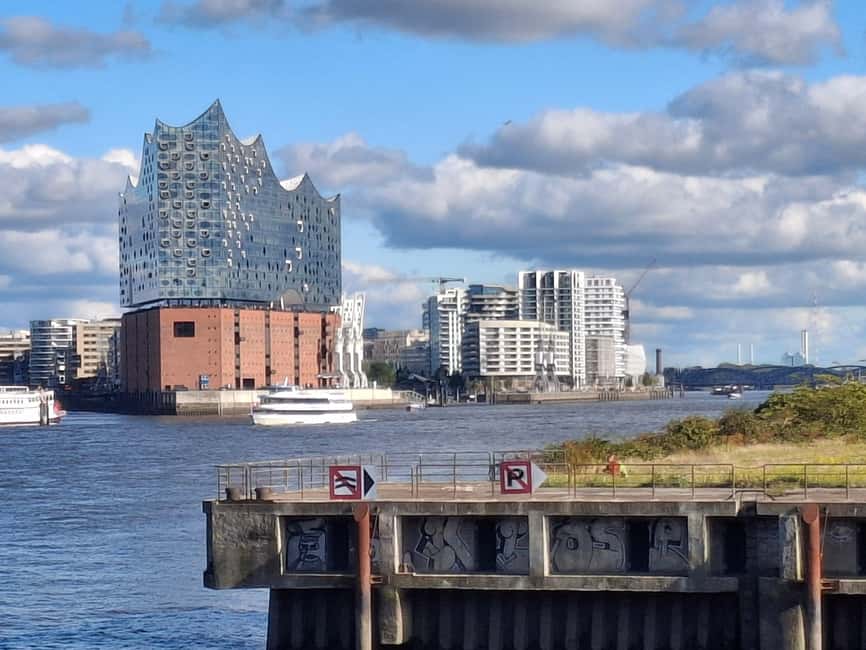
After Speicherstadt, you roll into HafenCity, the postmodern harbor district. This is where the city keeps changing its mind about what the waterfront should be, and you can see it immediately in the mix of shapes and styles.
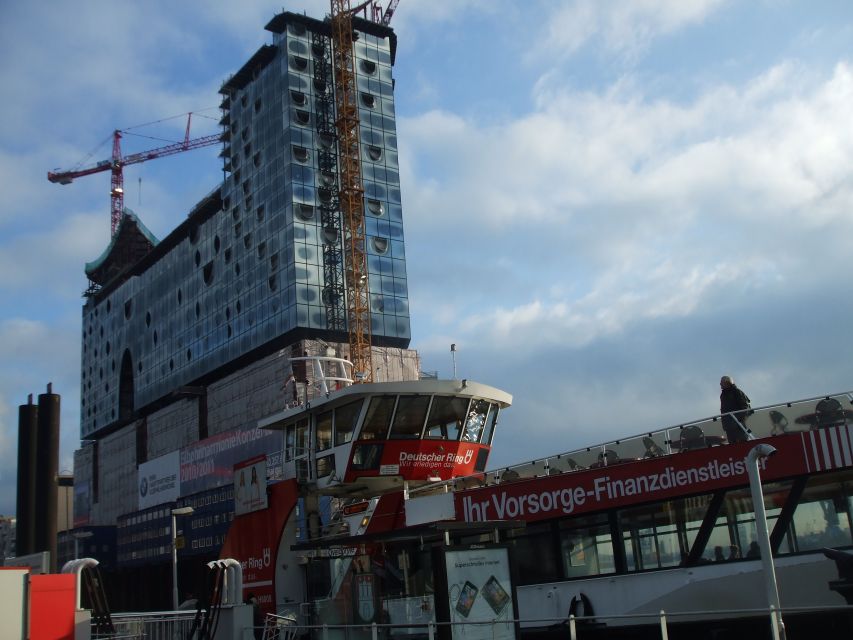
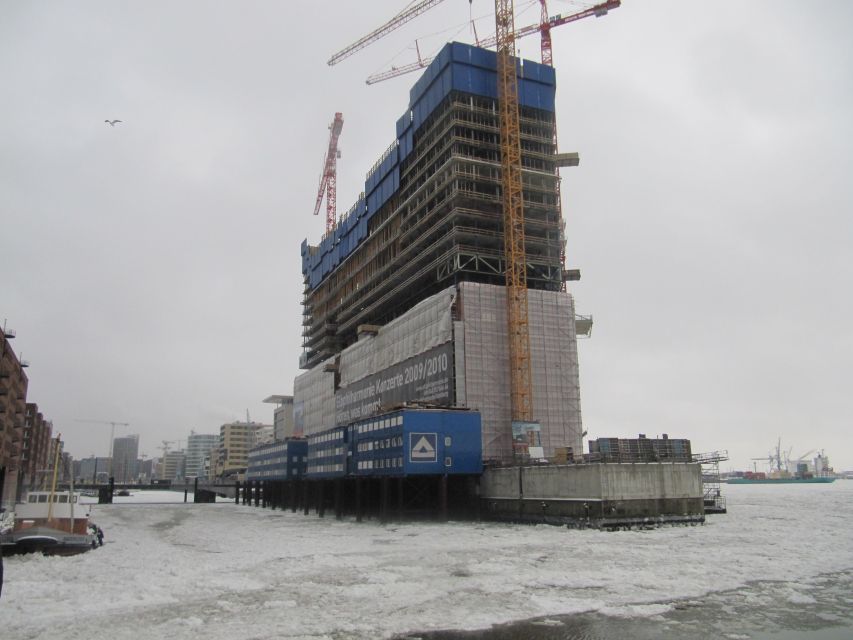
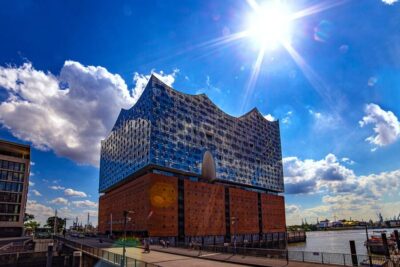
Then comes the Elbphilharmonie, the 110-meter-high performance landmark that has also been described as controversial. Even if you are not a classical music person, this is still worth seeing because it represents how Hamburg brands the future while standing on top of the working harbor reality.
There is an important practical note: the tour includes time to drive to the Elbphilharmonie plaza, but it is subject to accessibility and unpredictable situations. On event-heavy days, the Elbphilharmonie area may be restricted or closed, and you will have to accept an alternate plan if you cannot reach the same exact spot.
The good news is that the tour also includes a path across the new flood protection system. From there, you can get splendid views of the Elbphilharmonie from below. That is a smart backup because it gives you a different perspective anyway, not just a consolation prize.
Baumwall, St. Michael’s Church, and passing through Neustadt feeling “in between”
As you continue through the HafenCity transition zones, you pass areas tied to modern industry and city institutions. One highlight in this stretch is the publishing building made of steel at Baumwall, which you see as part of the overall skyline shift toward newer construction.
You also pass St. Michael’s Church. This is one of those moments where Hamburg’s identity feels religious and civic at the same time. The church becomes a visual anchor that helps you re-ground after the futuristic waterfront scenes.
Then you make your way toward the Neustadt side of the city. Even when you are only moving through streets for a short time, the guided flow helps you understand the relationship between the waterfront districts and the broader city fabric.
Peterstraße, Brahms and Telemann Museum, and the ride toward St. Pauli piers
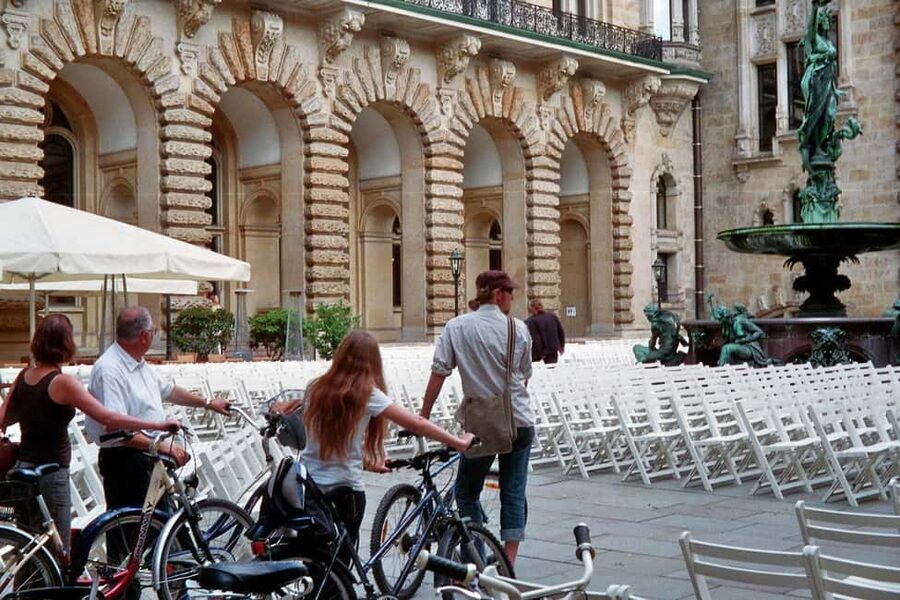
Near the end, the tour includes a path across Peterstraße, with the Brahms- and Telemann Museum as part of what you pass. Since Johannes Brahms also shows up earlier with the memorial stone, this creates a nice theme thread through the whole ride: Hamburg as a place where music is tied to real streets, not only to concert halls.
From there, you keep working your way back toward the harbor edges, reaching St. Pauli piers. This is where the vibe turns more maritime again, with the feel of working waterfront activity and the old port mood returning after the architectural stops.
Ending the ride back at the starting point means you are not left figuring out transportation at the end of a 3.5-hour biking session. Your timing is neat, your fatigue is manageable, and you finish with your bearings rather than losing them.
Price, pacing, and what to bring for a 3.5-hour bike day
Let’s talk value, because $39 can be a great deal or a mediocre one depending on what is included. Here, you get a bicycle, a live guide, and a city map, plus a photo series sent by email. That extra photo touch is not essential, but it is useful if you want to keep a record of what you saw while your phone battery stays intact.
Pacing is another big factor. You are spending about 3 hours biking with a total duration of around 3.5 hours. The route is dense, so expect regular stops for guided explanations and photo moments, but you are still moving enough that the ride does not feel like a long walk with bikes nearby.
What you should bring is simple and practical:
- Comfortable shoes for short stops and photos.
- A camera or phone with a bit of free storage.
- A light layer if the weather turns, since you are exposed while riding.
- Basic hydration, because the day will move quickly.
Also, keep your expectations realistic about the Elbphilharmonie plaza. If you want the plaza specifically, plan your day with flexibility. On some days, access can be restricted due to major events, and the tour notes that this can affect what you can do.
Is this the right tour for you?
You should book this bike tour if you want to see the main Hamburg highlights without spending your time “figuring out” how neighborhoods connect. It is a good match for first-timers who like guided context and for people who want old port, modern waterfront, and landmark architecture in one coherent loop.
It is also a smart choice if you are the kind of traveler who likes little details that make a place stick. The Brahms memorial stone, the 1842 Great Fire story, and the engineering idea behind Speicherstadt on oak poles are the sort of facts that make your photos feel smarter.
If you are only interested in one building, like the Elbphilharmonie, you might feel a bit underwhelmed by the breadth. This tour is about the contrasts across the city. Your reward is variety and understanding, not a laser focus on a single stop.
Should you book Hamburg City Tour by Bike with Elbphilharmonie?
Yes, with one condition: be flexible about the Elbphilharmonie plaza. If you are going on a day with major events, access may be restricted, and you may need to work with the alternate viewing experience from below.
Otherwise, this is a high-value way to experience Hamburg because you get the big visual hits plus practical context while you ride. If the guide is Bernhard or any similarly talkative guide, you will likely enjoy how the stops connect into a story you can remember on your next walk around town.
Book it if you want a guided bike loop that covers Alster, Speicherstadt, HafenCity, and the area around St. Michael’s Church and St. Pauli piers in one organized session.
FAQ
How long is the Hamburg bike tour?
The tour lasts about 3.5 hours (with a 3 hour bike tour portion).
What does it cost?
The price is $39 per person.
Where do I meet for the tour?
Meet outside the Fahrradstation of the University of Hamburg, at Schlüterstraße 11.
What languages are available for the live guide?
The live guide offers English and German.
Will I definitely be able to access the Elbphilharmonie plaza?
Not always. Access to the Elbphilharmonie may be restricted or closed on days with major events, and time at the plaza is subject to accessibility.
What is included in the ticket price?
The ticket includes the bike, a guide, a city map, and a photo series about Hamburg sent by email.
The Hamburg Bike Lanes
Seeing Hamburg in One Go
The Concert Hall and the Lake
Everything else we filed on Hamburg
- Hamburg: Safari tour in St. Pauli
★ 4.9 · 11 reviews - Hamburg: Party Bingo with the Bingo Gringos
★ 4.8 · 11 reviews - Hamburg Harbor: 3.5-Hour Guided Tour by Bike
★ 4.7 · 11 reviews - Hamburg: 2-Hour St. Georg Walking Tour
★ 4.8 · 11 reviews - Hamburg: Guided Walking Tour in Danish
★ 5.0 · 11 reviews - Discover Hamburg in a retro Bulli
★ 3.0 · 12 reviews
Elbphilharmonie and Alster Experiences, side by side.
 ★ 4.7Hamburg: Elbphilharmonie Plaza Guided TourFrom $275,882 reviews
 ★ 4.6Hamburg: Elbphilharmonie Plaza, Highlights & SurroundingsFrom $272,270 reviews
 ★ 4.7Hamburg: Elbphilharmonie Plaza and HafenCity Food TourFrom $691,711 reviews
 ★ 4.5Hamburg: Hop-On Hop-Off Bus with Alster or Harbor CruiseFrom $44812 reviews
 ★ 4.7Hamburg: Elbphilharmonie Highlights and Plaza Guided TourFrom $27709 reviews
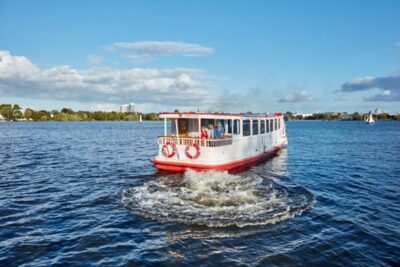 ★ 4.4Hamburg: City Cruise on Alster LakeFrom $29533 reviews
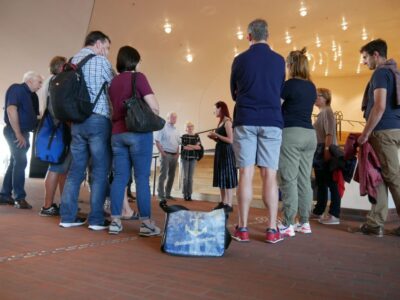 ★ 4.6Hamburg: Elphi Plaza Guided Tour with Störtebeker BeerFrom $34245 reviews
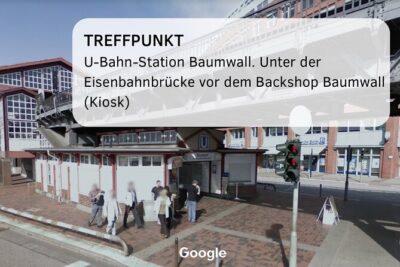 ★ 4.0Elphi Plaza FührungFrom $26231 reviews
Other lists this tour is on