
REVIEW · HAMBURG
Hamburg: Tour from St. Michael’s to the Elbphilharmonie
Hamburg has old soul, then modern swagger. This guided walk links St. Michaelis and the Elbphilharmonie in one smooth route, and I especially like the mix of classic Hanseatic sights with the bold new architecture. You’ll also get the chance to spot little details that you’d usually miss on your own, like the oldest surviving row-house settlement. One consideration: it runs rain or shine, so bring a proper rain layer and plan for wet stone and sidewalks.
I like that the pace keeps things practical. You get photo stops, short guided explanations, and real walking through the places where Hamburg’s story shows up in the streets, not just on plaques. The guide speaks German, so if you’re not comfortable there, you may want to line up a translation app before you go.
At $25 per person for about two hours with a live guide, this feels like a good value if you want structure and context without paying for entrances. Expect the tour to be more about seeing and learning than sitting down. Also, it is not suitable for people with mobility impairments, so those folks should look for a different format.
In This Review
- Key highlights you’ll remember
- Why this walk works, St. Michaelis to the Elbphilharmonie
- St. Michaelis Church start: the clock, the scale, the orientation
- Krameramtswohnungen and the Michelwiese: merchant homes and open views
- Portugiesenviertel pass-by: small time, real flavor
- Siel-Einsteigehäuschen and Baumwall: flood protection, explained
- Hamburg Port and the harbor walk: seeing the city at working speed
- Speicherstadt UNESCO stop: past and present in one walk
- Elbphilharmonie end stop: modern architecture and harbor views
- How the timing and walking feel for real
- Price and what you really get for about $25
- Who this tour fits best
- Final call: should you book the St. Michaelis to Elbphilharmonie walk?
- FAQ
- Where do I meet the guide for this tour?
- How long is the guided tour?
- How much does the tour cost?
- Is food or drinks included?
- Are entrance tickets included for sights?
- What language is the live guide?
- Is the tour available in bad weather?
- What should I wear or bring?
- Is this tour suitable for people with mobility impairments?
- Can I cancel for a refund?
- Does the tour end at the meeting point?
Key highlights you’ll remember
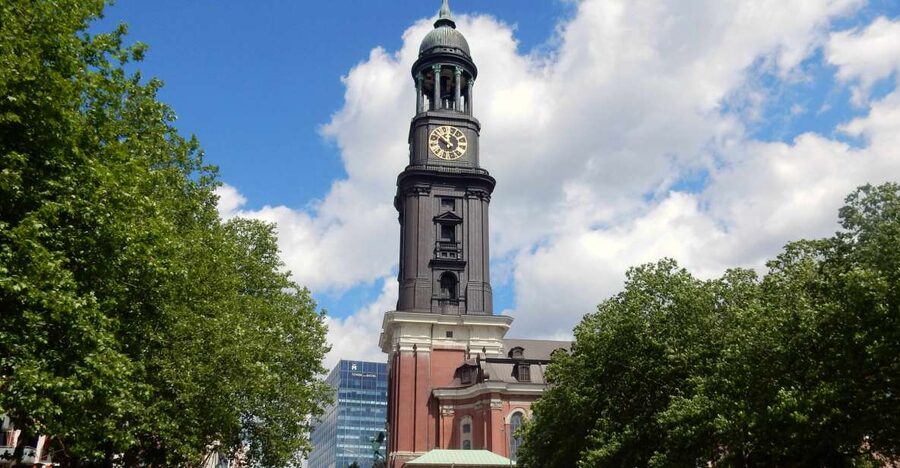
- St. Michaelis Church clock stop with one of Germany’s biggest clock faces setting the tone
- Krameramtswohnungen row houses connected to Hamburg’s merchant past
- Michelwiese to the harbor approach for quick open-air views
- Siel-Einsteigehäuschen and Baumwall where flood protection gets explained in plain terms
- UNESCO Speicherstadt walk-by for the past-and-present Hamburg contrast
- Elbphilharmonie forecourt photos at the modern architectural endpoint
More Elphi and Alster time to compare
- Hamburg: Elbphilharmonie Plaza Guided Tour★ 4.7 · 5,882 reviews
- Hamburg: Elbphilharmonie Plaza, Highlights & Surroundings★ 4.6 · 2,270 reviews
- Hamburg: Elbphilharmonie Plaza and HafenCity Food Tour★ 4.7 · 1,711 reviews
- Hamburg: Hop-On Hop-Off Bus with Alster or Harbor Cruise★ 4.5 · 812 reviews
Why this walk works, St. Michaelis to the Elbphilharmonie
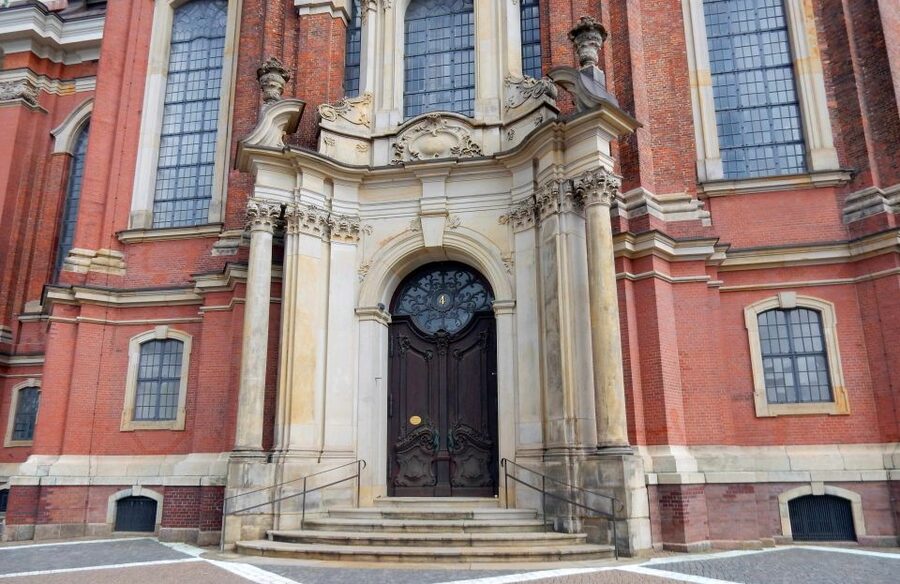
This is the kind of Hamburg tour that helps you understand the city’s “before and after” without turning it into a textbook. You start at St. Michaelis, the grand church that anchors the central area, then you steadily move toward the waterfront where modern Hamburg makes its statement.
The value here is in the connections. Your guide doesn’t just point at landmarks. You get a route that ties together merchant housing, church symbolism, harbor logistics, and the city’s effort to manage water. And the walk ends in the Elbphilharmonie area, where the view across the harbor and toward the theater buildings gives you a quick sense of why this building matters.
You’ll also get a good mix of stop types:
- Short guided segments inside the tour flow
- Photo pauses when there’s something worth capturing
- Walking through neighborhoods long enough to feel the streets, not just pass through them
If you like to travel with your eyes open but still want someone to connect the dots, this is a solid choice.
St. Michaelis Church start: the clock, the scale, the orientation
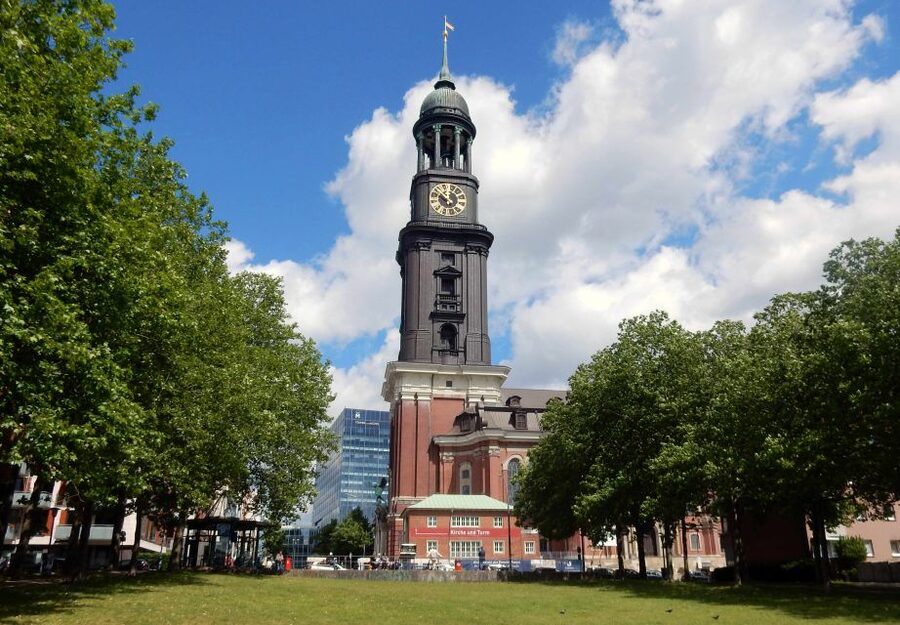
The tour begins at St. Michaeliskirche, and you’ll meet on the right side of the main entrance. The guide is easy to spot, carrying a white bag, so you’re not stuck playing guessing games.
You get about a 20-minute focused stop at the church. The standout detail for me is the famous church clock, described as the largest in Germany. Even if clocks aren’t usually your thing, the size and presence help you orient yourself in Hamburg’s center. It’s like a visual landmark that tells you you’re in the real downtown core.
Beyond the clock, this stop is also a briefing moment. A guide-led introduction is useful here because it sets expectations for what you’ll see later, especially once you’re walking toward the harbor. Without that framing, Hamburg can feel like a set of pretty places connected by transit streets. With the framing, the route makes more sense.
Practical tip: wear shoes with grip. Church steps and the surrounding sidewalks can get slick when the weather turns.
Krameramtswohnungen and the Michelwiese: merchant homes and open views
After St. Michaelis, the walking tour shifts into a different side of Hamburg. You’ll reach Krameramtswohnungen, the older row-house settlement that still exists, tied to the city’s merchant community. You get a short guided look and a photo stop, about 10 minutes.
What I like about this stop is how tangible it makes the Hanseatic era. Row houses sound like a technical detail until you see them in context. You start to notice the scale of past living and working patterns, and how those patterns still shape street lines today.
Then you move to the Michelwiese. This is the kind of short segment that improves the whole day. You get about 10 minutes for a guided sightseeing walk. It’s a change of tempo: less architecture inspection, more open space and air.
From the Michelwiese, the direction toward the harbor starts to feel real. It’s also a good place for photos, since you’re not yet in the densest crowding near the water.
If you’re planning your own day afterward, this is also where you’ll likely get your bearings fast. You understand the church as an anchor, you see the old settlement as a past layer, and then the harbor approach clicks into place.
Portugiesenviertel pass-by: small time, real flavor
The tour continues through the Portugiesenviertel, with a short pass-by and a quick walk section of about 5 minutes. This is not the longest stop on the route, so don’t expect a deep historical lecture here.
But it’s still useful. It gives you that “street-level” feeling that makes a walking tour worth it. You get a sense of neighborhood scale, street geometry, and the way Hamburg’s districts look and feel as you move from central landmarks toward the water.
I find these short segments matter because they keep the day from becoming a checklist of buildings. Even brief neighborhood passages add texture, and they help you remember the route later.

Siel-Einsteigehäuschen and Baumwall: flood protection, explained
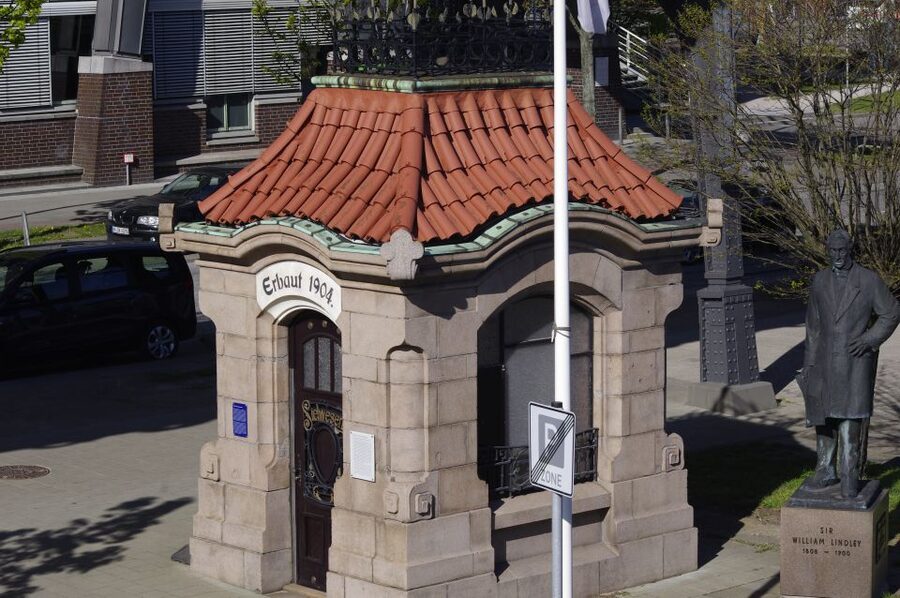
One of the more interesting parts of this experience is where it shifts from pretty sights to how Hamburg actually functions. You stop at the Siel-Einsteigehäuschen, and the guide helps you understand the water-management logic behind the harbor city.
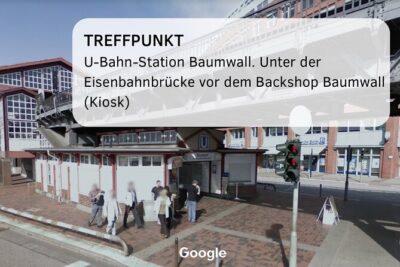
You also get a stop around Baumwall, at an underground station where flood protection is explained. This is where the tour becomes more than sightseeing. Hamburg’s relationship with water is not abstract, and the guide’s explanation makes it easier to connect the city’s engineering with the places you’re walking past.
I like that the tour doesn’t assume you know the terminology. Instead, it gives you a framework so you can interpret what you see later at the harbor and Speicherstadt. When you finally reach the waterfront, you’ll be thinking in terms of systems, not just scenery.
This section is also a reminder that Hamburg is a working port city. Even when the streets look beautiful, the logic underneath them is practical.
Hamburg Port and the harbor walk: seeing the city at working speed
Once you’re on the harbor side, you’re guided through the port area with a walking segment. This portion helps you shift from “landmark viewing” into “city motion.” You get guided sightseeing and time to walk, which matters because harbor areas don’t read well when you’re only looking from one spot.
In these moments, the guide helps you see what you’d otherwise miss:
- How the harbor spaces connect visually and physically
- Why certain directions and sightlines matter
- How the city’s modern face sits next to infrastructure built for real logistics
This is also one of the best parts of the day for a “pause and watch” approach. If the weather’s decent, you’ll probably want to slow down for a few extra seconds between the guide’s talking points. The city is doing things all around you, and it’s easier to appreciate when you’re not rushing.
Speicherstadt UNESCO stop: past and present in one walk
Next, you reach Speicherstadt, described as Hamburg’s UNESCO World Heritage Site. You get a photo stop and guided sightseeing here, with time to look around.
What makes this valuable is the past-and-present feeling. Speicherstadt isn’t only a historic set piece. It’s part of the city fabric, and the walking tour gives you a perspective on Hamburg’s evolution as a trade center.
I like to think of UNESCO sites as either museum-like or living. Speicherstadt leans toward the living side, and the guided context helps you see why. You’re not just admiring old warehouses. You’re noticing how Hamburg used storage and trade infrastructure to build power and influence, then carrying that logic forward into modern city planning.
Even if you’re not an architecture nerd, the guide’s explanations help you connect shapes, streets, and water-adjacent design with the city’s economic history. It turns the sight into something you can actually interpret.
Elbphilharmonie end stop: modern architecture and harbor views
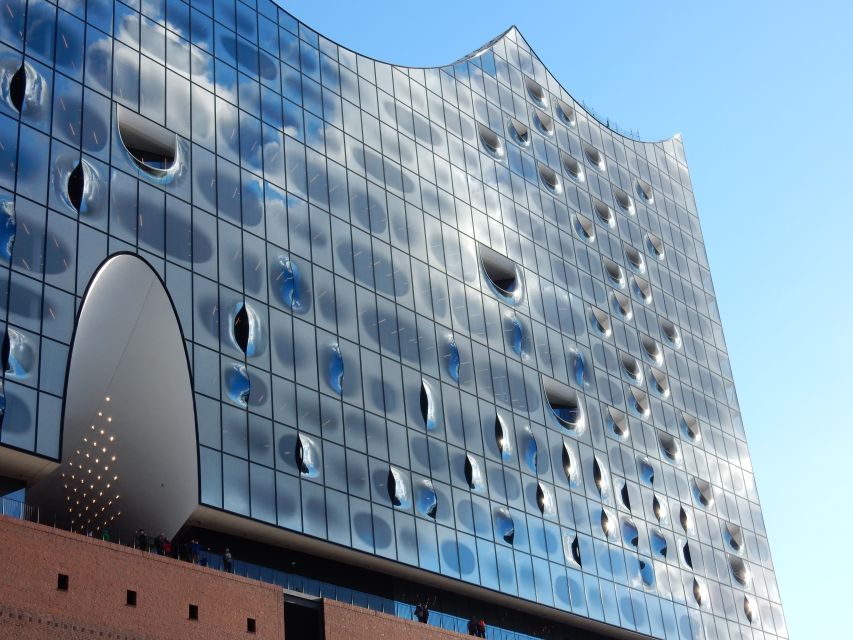
The final stretch brings you to the Elbphilharmonie, Hamburg’s newly built international landmark. You get a photo stop and guided sightseeing for about 20 minutes at the Elbe Philharmonic Hall.
This part is where you’ll feel the city’s contrast most clearly. The tour approaches the modern side through the HafenCity area, known for striking buildings. You also hear about Hamburg’s most controversial project, the Elbe Philharmonic. That word controversial is useful, because it signals that this building is not only admired, it’s discussed. And if you love architecture debates, this is exactly the kind of stop you want.
The guide points out how the building combines tradition and modernity, and the harbor view from the Elbphilharmonie area is the payoff. You get a look across the water toward the musical theater side of Hamburg, so you understand the building’s location value, not just its design.
Practical note: after the guided portion, you may explore the Elbphilharmonie Plaza on your own, depending on closures. Entrance to specific sights is not included, so plan your expectations around viewing and walking, not ticketed interior time.
How the timing and walking feel for real
This is a 2-hour walking tour, with multiple short stops rather than one long lecture. That pacing is what makes it manageable. If you like to keep moving and you enjoy learning in small pieces, you’ll probably feel comfortable.
Still, the entire experience relies on your legs. It is not suitable for people with mobility impairments. Even if you can walk fine, I’d treat the route as a steady walking day on uneven, potentially wet sidewalks.
If it’s raining, the “rain or shine” reality matters. Bring a rain layer you can actually move in, not just an umbrella. And consider waterproof shoes or at least shoes you don’t mind getting wet.
Price and what you really get for about $25
The tour costs $25 per person and includes a guide. That inclusion is the big value piece. You’re paying for context and navigation, not for transportation.
What’s not included is also important. Food and drinks are not part of the tour, and entrance to sights is not included. That means you should budget for snacks and any paid indoor attractions you want to add later on your own.
So is it worth $25? For me, yes, if you want:
- A guided route with multiple landmark stops
- Explanations tied to water management and the port setting
- A structured introduction to Hamburg’s center and waterfront
If your plan is to spend most of the day inside museums or performance venues, you might pair this with another ticketed activity. But if your goal is to understand the city’s shape and story quickly, this price lands in the reasonable zone.
Who this tour fits best
This tour is a great match if you:
- Want a guided route that covers both classic and modern Hamburg
- Enjoy learning how cities work, not only what they look like
- Like photo-friendly stops without long museum detours
- Are comfortable walking and wearing comfortable shoes
It’s also a good option for first-time visitors who want to cover key sights without spending hours figuring out logistics. The German-language guide also means it works best if you speak German or don’t mind using translation help.
If you need accessibility accommodations for mobility impairments, you’ll likely want to choose a different format.
Final call: should you book the St. Michaelis to Elbphilharmonie walk?
Book it if you want an efficient, well-paced way to connect Hamburg’s iconic church area to the harbor and end at the Elbphilharmonie. I especially recommend it when you like tours that explain systems, not just landmarks, since the flood protection stops give you a sharper understanding of why this port city looks and functions the way it does.
Skip or reconsider if you can’t do steady walking, since the tour is not suitable for mobility impairments. Also, if you mainly want indoor experiences and paid entry sites, remember that entrance fees are not included and the tour is structured around outdoors stops and guided explanations.
If you’re the type of traveler who likes to go home with more than photos, this one gives you story and context with a very manageable time commitment.
FAQ
Where do I meet the guide for this tour?
Meet about 10 minutes before the activity starts on the right side of the main entrance of St. Michaelis Church. The guide will be recognizable by a white bag.
How long is the guided tour?
The tour takes about 2 hours.
How much does the tour cost?
It costs $25 per person.
Is food or drinks included?
No. Food and drinks are not included.
Are entrance tickets included for sights?
No. Entrance to sights is not included.
What language is the live guide?
The live tour guide speaks German.
Is the tour available in bad weather?
Yes, the tour takes place rain or shine.
What should I wear or bring?
Bring comfortable shoes. This is a walking tour.
Is this tour suitable for people with mobility impairments?
No, it is not suitable for people with mobility impairments.
Can I cancel for a refund?
Yes, you can cancel up to 24 hours in advance for a full refund.
Does the tour end at the meeting point?
Yes, the activity ends back at the meeting point.
The Concert Hall and the Lake
Everything else we filed on Hamburg
- Hamburg: Safari tour in St. Pauli
★ 4.9 · 11 reviews - Hamburg: Party Bingo with the Bingo Gringos
★ 4.8 · 11 reviews - Hamburg Harbor: 3.5-Hour Guided Tour by Bike
★ 4.7 · 11 reviews - Hamburg: 2-Hour St. Georg Walking Tour
★ 4.8 · 11 reviews - Hamburg: Guided Walking Tour in Danish
★ 5.0 · 11 reviews - Discover Hamburg in a retro Bulli
★ 3.0 · 12 reviews
Elbphilharmonie and Alster Experiences, side by side.
 ★ 4.7Hamburg: Elbphilharmonie Plaza Guided TourFrom $275,882 reviews
 ★ 4.6Hamburg: Elbphilharmonie Plaza, Highlights & SurroundingsFrom $272,270 reviews
 ★ 4.7Hamburg: Elbphilharmonie Plaza and HafenCity Food TourFrom $691,711 reviews
 ★ 4.5Hamburg: Hop-On Hop-Off Bus with Alster or Harbor CruiseFrom $44812 reviews
 ★ 4.7Hamburg: Elbphilharmonie Highlights and Plaza Guided TourFrom $27709 reviews
 ★ 4.4Hamburg: City Cruise on Alster LakeFrom $29533 reviews
 ★ 4.6Hamburg: Elphi Plaza Guided Tour with Störtebeker BeerFrom $34245 reviews
 ★ 4.0Elphi Plaza FührungFrom $26231 reviews
Other lists this tour is on