
REVIEW · GUIDED
Adventure Darkness – Guided tour in the dark
You are about to lose your sense of sight completely. In Ruhr Area, Germany, Adventure Darkness turns that fear into a hands-on learning trip, with blind or severely visually impaired guides leading you through dark adventure rooms. You’ll use your cane, listen closely, and pick up the world through sound, touch, smell, and even taste.
I especially love the human side of this experience, the way you’re not watching disability from a distance, you’re learning alongside a guide. Second, I like the structure, you spend about 60 minutes in the dark rooms and then end at a cozy dark bar where you can talk it through over fritz-kola, coffee, or beer. One drawback to consider: if you’re expecting high-tech, perfectly timed sound effects in every scene, you might be a little disappointed in how certain audio cues land.
In This Review
- Key points before you go
- Dark Rooms in the Ruhr Area: What This 90-Minute Experience Feels Like
- Meet Your Guide With a Long Cane, and Why That Changes Everything
- Your Sensory Itinerary: Everyday Situations, Sports-Style Challenges, and a Road Crossing
- The Dark Bar Debrief: Fritz-Kola, Coffee, and Beer Conversations
- Price and Value: Why Around $21 Is a Deal for Real-Guided Inclusion
- What Not to Bring, and How to Prepare Your Brain for Total Dark
- Wheelchair Users and Age Limits: One Important Thing to Check
- Who This Tour Suits Best, and Who Might Prefer Another Experience
- Should You Book Adventure Darkness With Stockfinster?
- FAQ
- How long is the Adventure Darkness tour?
- Is the tour guided, or self-guided?
- How big is the group?
- What is the location?
- Is it suitable for children?
- Are wheelchair users allowed?
- What items are not allowed during the tour?
- What do I need to bring for check-in?
Key points before you go
- Guided in complete darkness by blind or severely visually impaired guides using a long cane
- Sensory rooms built around everyday life plus small special challenges
- A debrief at the dark bar with your guide and a drink to reflect
- Small group, up to 8 people, so the experience stays personal
- No cameras, flashlights, or cellphones, which keeps attention where it belongs
Dark Rooms in the Ruhr Area: What This 90-Minute Experience Feels Like
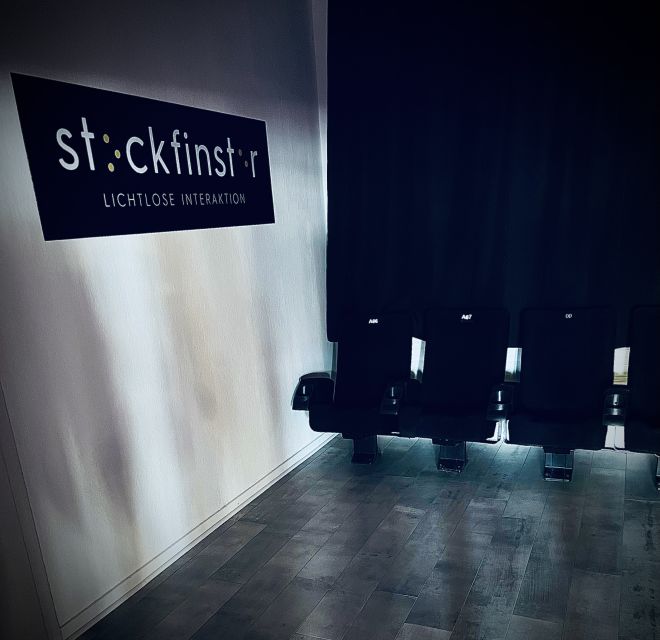
Adventure Darkness is a guided tour where “seeing” is removed as an option. The rooms are completely dark, and you’re guided through a set of recreated situations designed to feel familiar, but experienced from a totally different viewpoint. The goal is not to scare you. It’s to teach your brain how strongly your other senses can take over when vision is gone.
The experience is priced at about $21 per person, and that matters because you are paying for guided time with trained, visually impaired hosts plus an entire built environment in darkness. This is also not a quick photo stop. You’re committing for about 90 minutes in total, with the main dark portion running roughly an hour before you reach the bar.
Your brain will react fast to the new rules. When visual perception is off the table, targeted sounds, touch points, and scents feel more intense. That shift is the core of what makes this tour memorable.
Meet Your Guide With a Long Cane, and Why That Changes Everything
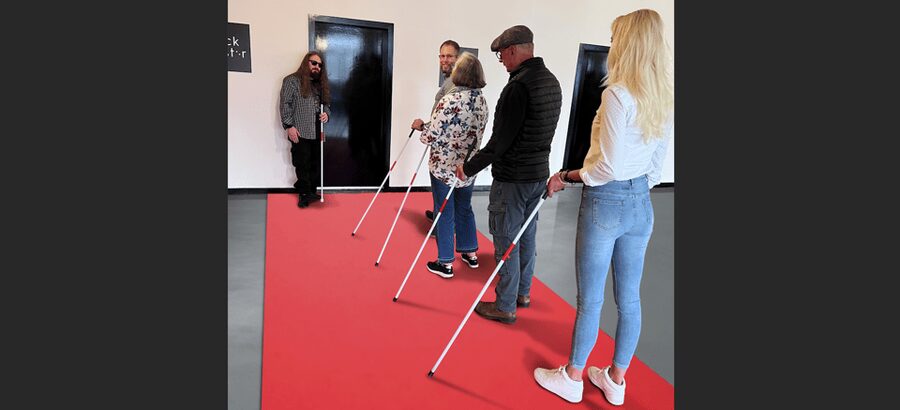
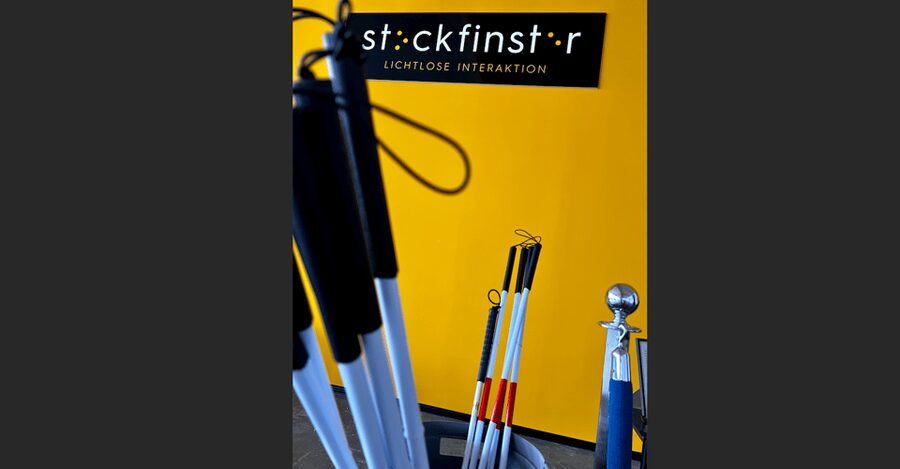
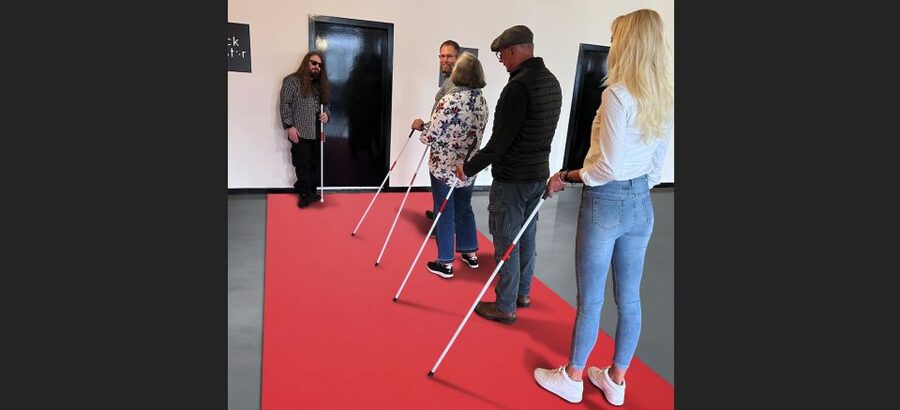
The tour is led by blind or severely visually impaired guides, and you enter with a long cane as part of the experience. That simple detail changes the whole trip, because you’re not just “pretending.” You’re using a tool that many people rely on in real life.
In one session, the guide was Florian, and the feedback was clear: people felt he was warm, supportive, and tuned in to the group. Even without knowing who you’ll get ahead of time, you can expect the tone to be guided and patient. The guides are there to safely steer you through the dark, and also to help you make sense of what you’re experiencing afterward.
Because the guide is visually impaired, the experience naturally carries an inclusion message without feeling like a lecture. You learn by doing, and you learn by listening to the guide explain what you’re missing and what you’re gaining.
Your Sensory Itinerary: Everyday Situations, Sports-Style Challenges, and a Road Crossing

The main part of the tour happens inside completely dark adventure rooms. You move through multiple recreated scenarios where your senses do the work normally handled by sight. The design tries to balance ordinary moments with a few special challenges so you leave with both recognition and surprise.
Here’s what you can count on, based on the experience format:
- You’ll face typical everyday situations, recreated so you can feel how daily navigation changes without vision.
- You’ll try at least one sports-style challenge, framed as an activity rather than a test.
- You’ll cross a road scenario, using guidance and sensory cues instead of visual signals.
What makes these scenarios valuable is the way they train your awareness. In normal life, you often “default” to sight for distance, direction, and timing. In darkness, the brain has to re-learn those things using sound and touch, and you start noticing how quickly you rely on assumptions.
You should also know the experience is partly about unpredictability. Even when a room is carefully designed, a group’s pace and attention can affect what you notice. That’s true in any guided interaction, and it’s one reason the debrief at the end matters.
One helpful caution from real feedback: in a road crossing scene, the intended sound atmosphere did not fully function as expected in one visit. So if you’re the type who gets bothered when an audio cue feels off, go in with flexibility. Your learning still comes from the broader structure, not from one perfect effect.
The Dark Bar Debrief: Fritz-Kola, Coffee, and Beer Conversations
After about 60 minutes, you reach the dark bar. This is not a separate entertainment segment that drags on. It’s a chance to slow down, catch your breath, and talk with your guide while you reflect on what you experienced.
This part is also where the tour becomes clearer. In the dark rooms, you’re busy reacting. In the bar, you can ask questions, compare what your senses picked up, and understand why certain stimuli felt stronger or more confusing than you expected.
You can chat over fritz-kola, coffee, or a cold beer, depending on what’s offered that day. I like this format because it avoids that post-event feeling where people just say, “It was cool,” and call it a day. Here, your guide helps connect the dots.
Price and Value: Why Around $21 Is a Deal for Real-Guided Inclusion
At about $21 per person, this tour sits in a low-to-mid range compared to many guided experiences. But the value comes from what you’re buying, not just the number. You’re getting a limited small-group session, led by blind or severely visually impaired guides, inside purpose-built dark rooms with sensory programming and a debrief space.
Small group size matters here. Limited to 8 participants, you’re less likely to get lost in the crowd. You also get more personal guidance when your orientation skills are being tested in real time. For an experience built on trust and communication, that group limit is a big part of the cost justification.
You’re also paying for an educational angle that isn’t abstract. The tour is designed to create understanding of inclusion by letting you experience key challenges from a different perspective. That kind of learning is hard to replicate with a museum visit or a standard guided walk.
Finally, the vibe feels accessible in a practical sense. It’s only 1.5 hours total, with a clear arc: dark rooms, then bar discussion. If you’re short on time but want something meaningful, this length fits well.
What Not to Bring, and How to Prepare Your Brain for Total Dark
Adventure Darkness has clear rules about what you can’t bring in. No cameras, no jewelry, no flashlight, and no cellphones. These restrictions are not there to be fussy. They keep the experience consistent and prevent outside light or distractions from breaking the “complete dark” concept.
Plan your outfit with that in mind. Wear comfortable shoes you can move in calmly, and avoid jewelry so you’re not stuck adjusting awkward items during the tour. Also, think about your personal comfort with disorientation. If you already know you get panicky in the dark, this might not be the right kind of challenge.
One more practical tip: treat this like a listening and touch experience, not like an obstacle course. The more you fight your own frustration in the first few minutes, the harder it gets. Let your senses calibrate. Your hearing and touch will start giving you useful information quickly.
Wheelchair Users and Age Limits: One Important Thing to Check
The provided info includes some conflicting signals on mobility. It lists the tour as wheelchair accessible, but it also says it is not suitable for wheelchair users. It also states the tour is not suitable for children under 5 years.
Because you’re walking through dark rooms that rely on cane guidance and sensory cues, you should verify what “wheelchair accessible” means for this specific experience on the dates you’re considering. If you or someone in your group uses a wheelchair, it’s worth contacting the operator to confirm whether the route, safety steps, and guidance style will work in practice.
For families, age matters mainly because the experience depends on focused participation and comfort with sensory input. If a child is under 5, the tour isn’t intended for that age group.
Who This Tour Suits Best, and Who Might Prefer Another Experience
This is for you if you want a short but powerful learning experience. You’ll enjoy it more if you like hands-on activities and you’re curious about how other senses can guide you. It also suits people who care about inclusion and want an experience that builds empathy in a concrete way.
It’s also a good option for couples and friends because the small group format keeps the experience shared. You’ll compare notes after you emerge from the dark, and the bar conversation gives you time to connect your different perceptions.
Who might not love it? If you need visual stimulation, dislike feeling disoriented, or strongly prefer to document everything with a camera, the format can feel frustrating. Since cameras and flashlights are not allowed, this tour is about presence, not capturing content.
If you have hearing challenges, the tour heavily uses auditory cues. I would treat that as a personal fit question. You’ll still be guided through touch and other senses, but sound is a major part of how you’ll navigate.
Should You Book Adventure Darkness With Stockfinster?
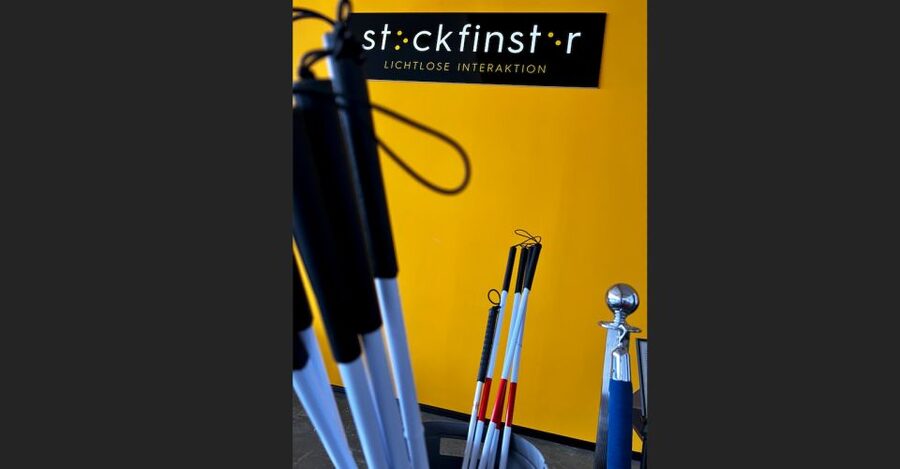
If you want an experience that feels real, not staged, I think you should seriously consider booking. Adventure Darkness gives you a guided encounter with visual impairment that’s built around safety, trust, and direct learning. The ending at the dark bar also turns it into a full arc, dark rooms first, then thoughtful conversation with your guide.
Book it if:
- You like interactive learning and short guided activities
- You’re open to using your senses in a new way
- You value inclusion and want empathy through experience
Skip it or check details carefully if:
- You or someone in your group uses a wheelchair, due to the mixed accessibility notes
- You dislike being in total darkness for about an hour
- You want to take photos, since cameras and cellphones are not allowed
If you do book, set your expectations right: this is not about perfect effects in every moment. It’s about how your brain changes when vision disappears, and how your guide helps you make sense of it. For many people, that shift is exactly what makes the tour worth the $21 price tag.
FAQ
How long is the Adventure Darkness tour?
The total duration is 1.5 hours, with a 90-minute tour in the dark.
Is the tour guided, or self-guided?
It is a live guided tour with a German speaking guide.
How big is the group?
The group is limited to 8 participants.
What is the location?
The experience takes place in the Ruhr Area, Germany.
Is it suitable for children?
It is not suitable for children under 5 years.
Are wheelchair users allowed?
The information says wheelchair accessible, but it also states not suitable for wheelchair users. You should confirm fit for your situation before booking.
What items are not allowed during the tour?
Cameras, jewelry, flashlights, and cellphones are not allowed.
What do I need to bring for check-in?
You must show the voucher on arrival in the app or in printed form, using the voucher code. Appointments require phone confirmation with the voucher code.
Guided, side by side.
 ★ 4.7Berlin: Reichstag, Dome and Government District Guided TourFrom $1818,288 reviews
 ★ 4.7Dresden: Semperoper Tickets and Guided TourFrom $1812,102 reviews
 ★ 4.7Berlin: Government District around the Reichstag Guided TourFrom $2848,447 reviews
 ★ 4.7Hamburg: Elbphilharmonie Plaza Guided TourFrom $275,882 reviews
 ★ 4.8Berlin: Hidden Backyards Guided Walking TourFrom $235,360 reviews
 ★ 4.7Berlin: 1-Hour Boat Tour with Bilingual Live GuideFrom $223,629 reviews
 ★ 4.6Bamberg: Guided Walking TourFrom $143,202 reviews
 ★ 4.5Bremen: City Center Guided Walking TourFrom $142,709 reviews