
REVIEW · CITY TOURS
City tour on foot, by S-Bahn and tram
Leipzig has layers, and this tour maps them fast. You get a smart mix of walking and public transit, plus stops that connect trade-fair Leipzig, the arcades in the old center, and the city’s later “autumn of 89” story. The biggest thing to consider is the language: it is a German live tour and the included audio is also in German, so you will want at least basic German comfort.
I particularly like the way the route uses real transit to cut down on backtracking. You also see major landmarks without turning it into a museum marathon, from the Mädlerpassage and Nikolaikirche to the Musikviertel and the imposing Reichsgericht building.
The best part is how the guide turns street-level details into context you can actually use while you keep exploring after the tour. It is outdoors for a good chunk, so plan for typical weather and bring appropriate layers.
In This Review
- Key points to know before you go
- Why this Leipzig tour is a smart way to start
- Getting oriented at Altes Rathaus, Markt 1
- Mädlerpassage and Nikolaikirche: Leipzig’s center in miniature
- Leipzig by rail and tram: the “Bimmel” connection
- Bayrischer Bahnhof: history you can see and photograph
- Trade fair Leipzig and the story behind the arcades
- The Musikviertel: Wilhelminian streets and the old university library
- Augustusplatz and the Reichsgericht’s dramatic civic presence
- Ending back in the center: why the route makes sense
- Price and value: is about $25 a fair deal for 2.5 hours?
- Who should book this Leipzig walking and transit tour
- Should you book Leipzig Details GbR’s city tour?
- FAQ
- Where is the meeting point for the tour?
- How long is the guided tour?
- What does the price include?
- Is the tour language German?
- Do I need to buy a public transport ticket separately?
- Are umbrellas provided?
- What should I bring?
- FAQ
- Is there a wheelchair-accessible option?
- Can I cancel for a refund?
- What about food and drinks during the tour?
Key points to know before you go

- Walking plus “Bimmel” rides keeps the pacing easy and lets you cover more ground without rushing.
- Mädlerpassage and Nikolaikirche give you a strong old-town base for understanding Leipzig’s center.
- Bayrischer Bahnhof is a standout rail stop, one of Germany’s oldest train stations.
- Musikviertel focuses on Wilhelminian-era streets, the old university library, and daily-scale architecture.
- Reichsgericht adds a dramatic, civic-building moment that is easy to spot and photo-friendly.
- Small-group feel and Q&A-friendly guiding come up as a real advantage in feedback.
The wider Leipzig sightseeing pile
- Leipzig: City History Canal Sightseeing Tour on a Motorboat★ 4.7 · 6,232 reviews
- Combo Tour in Leipzig: Guided City Tour & City Sightseeing★ 4.7 · 2,317 reviews
- Leipzig: 90-Minute Trabi City Tour★ 4.9 · 728 reviews
- Leipzig: Floodplain Forest & City River Cruise★ 4.9 · 334 reviews
Why this Leipzig tour is a smart way to start

Leipzig can feel big at first glance, but the city center is surprisingly easy to read once you know where to look. This tour is designed for that exact first-day problem: you get orientation on foot, then you hop on public transit for the jumps between areas.
I like formats like this because they do not waste your time. In only 2.5 hours, you hit several “anchors,” places that act like bookmarks in your mental map. And you do it with an experienced local city guide who can explain what you are seeing, not just recite dates.
The other practical win is that public transport is part of the experience, not an afterthought. You are not just touring old stones. You are also learning how Leipzig connects its neighborhoods, which helps a lot when you plan the rest of your trip.
Getting oriented at Altes Rathaus, Markt 1
You meet at Altes Rathaus, specifically the Durchgang unterm Turm by Markt 1. That location matters because it puts you right in the historical center, in the same zone where you will later recognize stops like Augustusplatz.
From the start, the pace is set for strolling. You will be on your feet enough to get a feel for the street layout, but the route is planned so you are not constantly climbing or sprinting between far-flung sights. If you have ever done a “walk until your legs quit” tour, this one is more balanced.
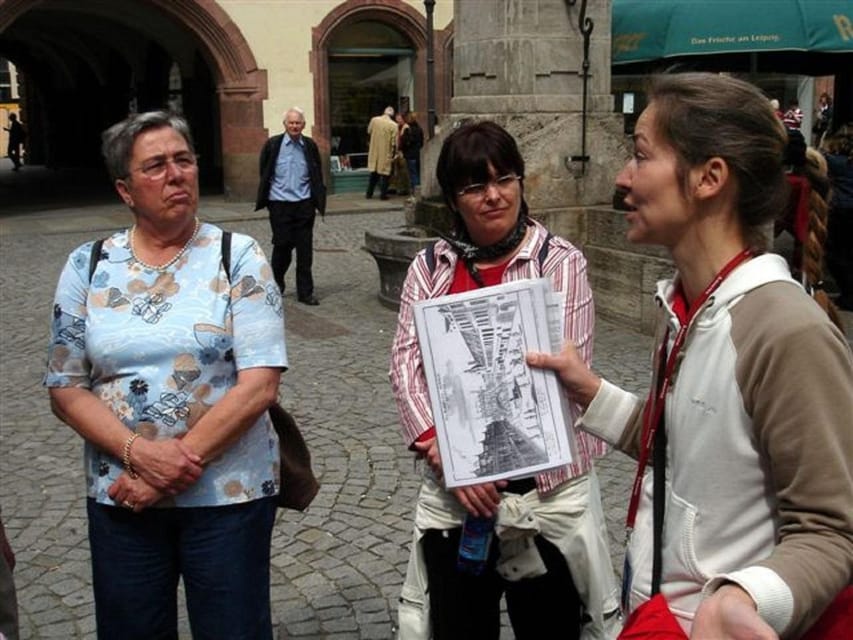
Also, you get a guide you can ask questions to right away. In feedback about this tour style, the guidance is described as attentive and responsive, including the way the group can handle individual questions without the experience turning into a rigid lecture.
Tip for your comfort: wear comfortable shoes. The tour is easy to follow, but it still involves walking segments in the central city.
Mädlerpassage and Nikolaikirche: Leipzig’s center in miniature
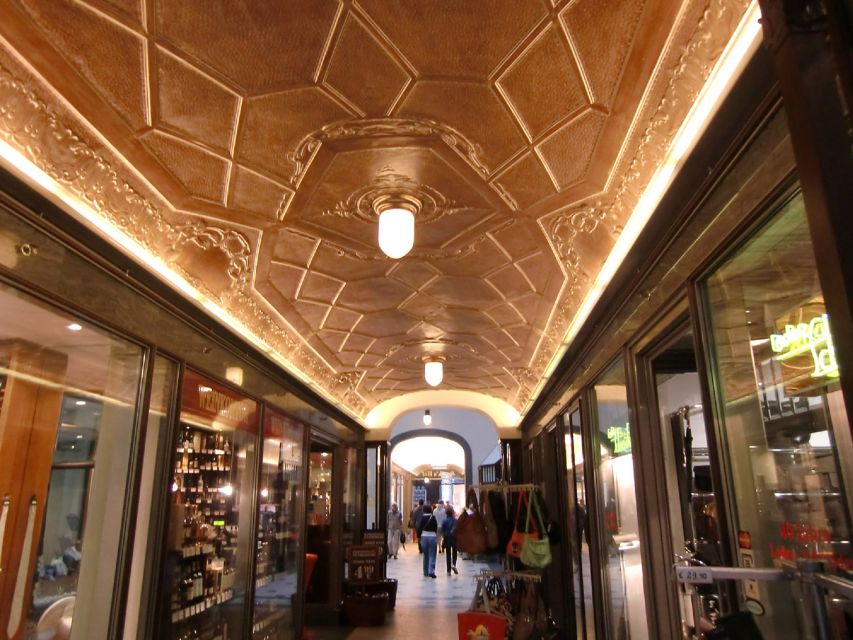
One of the best ways to understand Leipzig is through its passageways and central squares. This tour includes the old town area, with Mädlerpassage as a key stop. Passages like this are more than shortcuts. They show how the city historically handled shopping, movement, and daily life in a compact space.
Right alongside that, you visit Nikolaikirche. Churches in city centers often serve as visual anchors. They help you orient yourself, and they also frame the kind of city events Leipzig became known for in later decades. Even if you only see the church briefly, it gives the old center weight.
What I like about pairing a passage with a church is the contrast. You get the commercial, corridor-like feel of the arcade system, then the open, formal presence of a major church. Together, they make the center feel more complete.
Drawback to keep in mind: this is a city-center walking segment. If rain shows up, you will want a rain plan because there is no umbrella included. A light, packable rain layer beats getting stuck thinking about weather.
Leipzig by rail and tram: the “Bimmel” connection
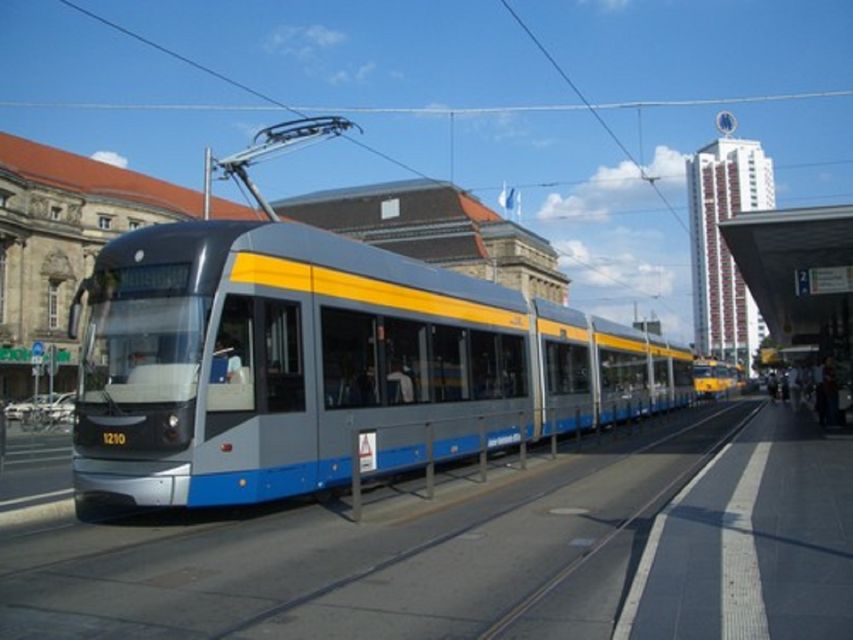
After the first part in the old center, the tour shifts gears using local transit. You take the regional train and tram connection referred to as the Bimmel, which moves you from station to station.
That transition is not just logistics. It changes your perspective. When you travel by S-Bahn and tram during a guided tour, you stop thinking of places as isolated stops on a map. Instead, you start seeing how Leipzig flows.
Another reason this is valuable: the Bayrischer Bahnhof area is not just a sight. It sits in a real transport network, so you get a sense of what today’s Leipzig feels like between old landmarks. It is easier to return later on your own if you know which station to aim for and how to get there without drama.
One practical note from real-world experience: transit can sometimes get interrupted. When that happens, tours that already planned for movement on foot can still keep the experience informative rather than stalling. The guiding approach is designed to keep you moving.



Bayrischer Bahnhof: history you can see and photograph
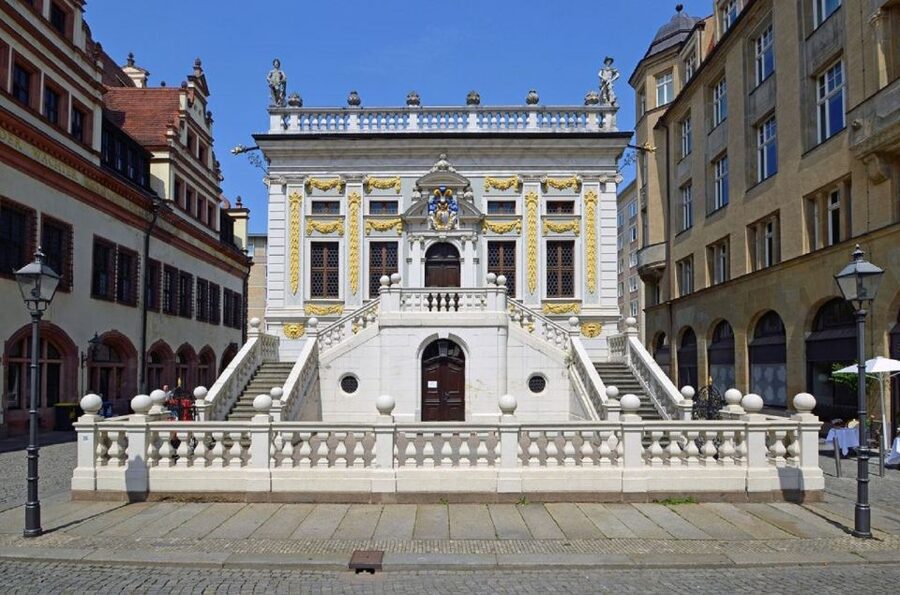
Bayrischer Bahnhof is one of the oldest train stations in Germany, and it is a great stop because it feels like a real piece of operating infrastructure, not a staged exhibit. This is a moment where a quick ride pays off. You arrive, you focus, you look up, and you get the station’s scale without spending an entire day getting there.
Stations like this also tell you something about Leipzig’s long-distance role. Even without heavy technical detail, the presence of an old, major rail hub helps you understand how Leipzig connected to broader routes and regional life over time.
What makes this stop especially good for first-time visitors is how it anchors the rest of the tour. Once you have a clear rail reference point, the later district visits make more sense, because you can mentally connect neighborhood to station.
If you enjoy architecture, this is your break. Look around at the building massing and the station environment. You are learning Leipzig’s story through its infrastructure.
Trade fair Leipzig and the story behind the arcades
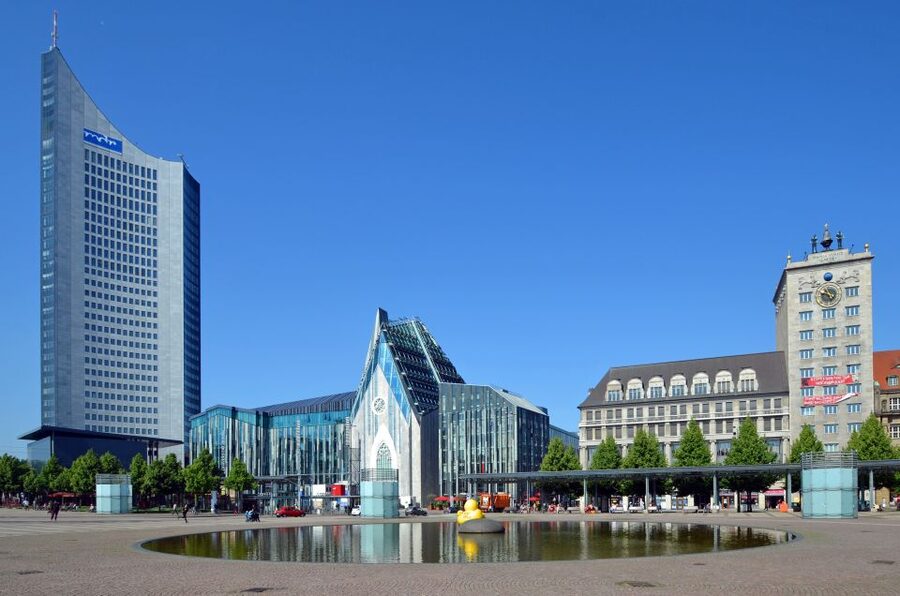
A core promise of this tour is learning about Leipzig through the lens of its trade fair, its unique arcade system, and the events around autumn of 89. You will not get this in abstract form. The guide ties it back to what you are seeing around the center.
Why that matters: trade-fair cities grow in specific ways. They build for crowds, movement, commerce, and visitors. That is why the passageways and central paths show up so strongly on this route. They are physical evidence of how Leipzig handled people and business, long before tourism was what it is today.
Then comes the later layer, the references to autumn of 89. Even if you only remember the key idea, it helps you interpret the city beyond “old streets and nice buildings.” Leipzig has a modern historical identity, and this tour is one of the faster ways to start connecting it to real places.
I also appreciate that the route does not try to cover every historical detail. It gives you enough context to make your independent wandering smarter. After the tour, you will be able to notice connections instead of just collecting photos.
The Musikviertel: Wilhelminian streets and the old university library

The tour’s transit segment ends at the Musikviertel, the area described as the largest Wilhelminian-style district in Leipzig. That matters because Wilhelminian districts have a particular street feel. Think big building fronts, structured blocks, and an overall sense of city formality.
This is not the kind of neighborhood where you just stare at one landmark and move on. The value is in walking through a coherent area, letting the architecture teach you the vibe. If you like urban design, you will probably enjoy this portion more than you expected.
Two specific highlights here are the old university library and the overall district character. The university connection adds another layer to the city story, because Leipzig is not only trade-fair history. It is also education, scholarship, and long-term civic planning.
You also get the sense that this district was built to last and to handle large populations. It feels like Leipzig at a bigger scale, compared to the tighter old-center passage moments earlier.
If you are traveling with kids or someone who tires quickly, this is a good moment to pause and let the guide catch you up. The architecture gives you plenty to look at without needing constant attention to signage.
Augustusplatz and the Reichsgericht’s dramatic civic presence
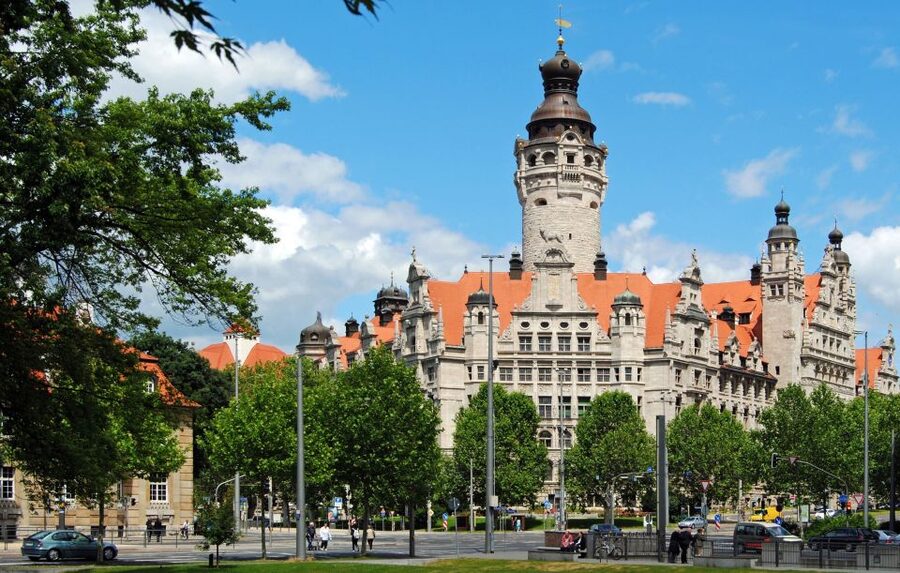
As you continue, you pass by Augustusplatz and the New Town hall area, then move toward the stop people remember: the Reichsgericht building.
Why the Reichsgericht works on a guided tour: it is a magnificent civic structure, and the guide can explain why that kind of building matters to understanding the city. Court architecture is about authority and public identity. Seeing it as part of a walking and transit route makes it feel grounded in Leipzig’s streets instead of like a random photo stop.
This is also where your tour gains emotional weight. The earlier stops are historic but often comfortable in their scale. The Reichsgericht feels heavier, more imposing. That shift helps the tour avoid the “everything is the same old stone” problem.
If you are into photography, aim for a moment where you can look at the full facade rather than rushing past. The building is built to be seen from the outside, and the guided stop timing is usually enough to get a good perspective.
Ending back in the center: why the route makes sense

The tour loops back to the city center after the Musikviertel and the major civic landmark. This is a practical ending, because it helps you continue your day without needing to solve transport from scratch.
You have already seen the pieces that define the center: the arcade environment around the old town, the rail-hub feeling of Bayrischer Bahnhof, the district-scale architecture of the Musikviertel, and the big presence of Augustusplatz and the court building.
By the time you finish, you should feel like Leipzig has a clear internal logic. You know which areas are linked by transit. You know what kind of architecture to look for. You also know what questions to ask next, because the guide will have given you handles for future exploration.
A good travel day has a finish line that sets you up for an easy win. This one does.
Price and value: is about $25 a fair deal for 2.5 hours?
At around $25 per person for a 2.5-hour guided experience, the value comes from three things.
First, you get a live guide and an included audio guide. Even with a German-only language setup, having a guide who can explain what you are seeing is what turns streets into a story.
Second, public transport is included in the experience through a ticket. That matters because you are not just walking a route on foot. You are using S-Bahn and tram to connect neighborhoods efficiently.
Third, the stops are varied but not random. You are not hopping between totally unrelated areas. You move from old-center passage and church to a major rail station, then to a specific architectural district, then to a major civic building, and finally back to the central area. That structure is what makes the time feel full rather than stretched thin.
If you are short on time and want a guided backbone for later independent exploring, this pricing fits the job.
Who should book this Leipzig walking and transit tour
This tour is a strong fit if you want a first-pass orientation of Leipzig without spending all day in transit or cramming in too many stops.
It is especially good for:
- Visitors who like mixing city walking with public transit rides
- People interested in Leipzig’s trade-fair role and how the city grew around it
- Anyone who enjoys architecture, especially the contrast between older center passages and Wilhelminian district planning
- Travelers who want a guided narrative they can follow in only 2.5 hours
It may be less ideal if:
- You do not feel comfortable with German. The live tour is German, and the included audio guide is also in German.
- You are looking for a food-focused experience. Food and drinks are not included, so you will need to plan breaks on your own.
Should you book Leipzig Details GbR’s city tour?
Yes, if your priority is to understand Leipzig quickly and neatly. I’d book it for the smart pacing, the mix of walking and S-Bahn/tram movement, and the memorable set of landmarks: Mädlerpassage, Nikolaikirche, Bayrischer Bahnhof, the Musikviertel, and the Reichsgericht.
But choose it with eyes open. If you do not read or understand German well, you may miss part of the nuance, even with the audio support in German. If that is you, look for an option in your language.
If you want a solid tour that gives you real bearings for the rest of your Leipzig days, this one is a practical starting point.
FAQ
Where is the meeting point for the tour?
You meet at Altes Rathaus, Durchgang unterm Turm, Markt 1.
How long is the guided tour?
The duration is 2.5 hours.
What does the price include?
The tour includes a guided component and a public transport ticket.
Is the tour language German?
Yes. The live tour guide is German, and the audio guide included is also German.
Do I need to buy a public transport ticket separately?
No, the public transport ticket is included.
Are umbrellas provided?
No. Umbrellas are not included.
What should I bring?
Bring comfortable shoes for walking.
FAQ
Is there a wheelchair-accessible option?
Yes, the tour is wheelchair accessible.
Can I cancel for a refund?
Yes, free cancellation is available up to 24 hours in advance for a full refund.
What about food and drinks during the tour?
Essen und Trinken, food and drinks, are not included, so plan your own stop if you need one.
Seeing Leipzig in One Go
Everything else we filed on Leipzig
- Leipzig exclusive : Guided bike tour for a private group
★ 5.0 · 11 reviews - Mulled wine ride in the Leipzig New Zealand
★ 4.6 · 12 reviews - Wittenberg Private Walking Tour With A Professional Guide
★ 5.0 · 12 reviews - City tour on foot, by S-Bahn and tram
★ 4.5 · 12 reviews - The classic – experience Leipzig’s city centre
★ 5.0 · 13 reviews - Corpses, Leprosy, Lucifer 75-minute Tour at the Old Cemetery
★ 5.0 · 16 reviews
City Tours, side by side.
 ★ 4.3Berlin: 1-Hour City Tour by Boat with Guaranteed SeatingFrom $2516,993 reviews
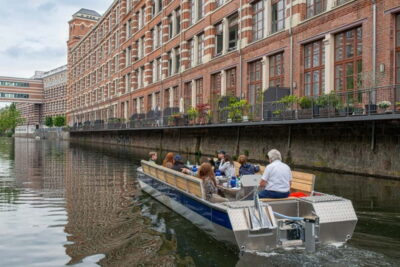 ★ 4.7Leipzig: City History Canal Sightseeing Tour on a MotorboatFrom $186,232 reviews
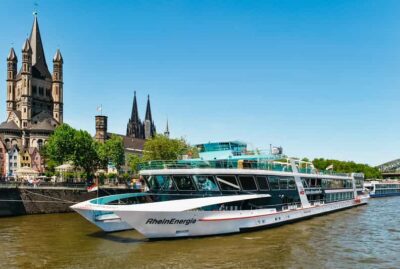 ★ 4.3Cologne: Panoramic City CruiseFrom $235,698 reviews
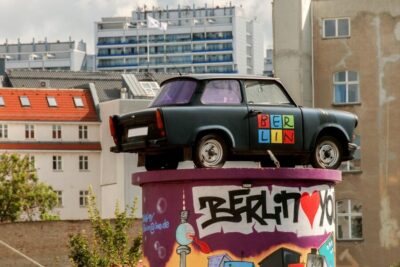 ★ 4.1Berlin: City Sightseeing Hop-On Hop-Off Bus TourFrom $254,233 reviews
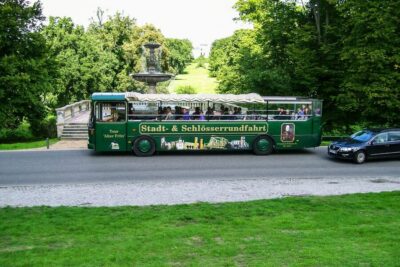 ★ 4.7Potsdam: City and Castles TourFrom $293,721 reviews
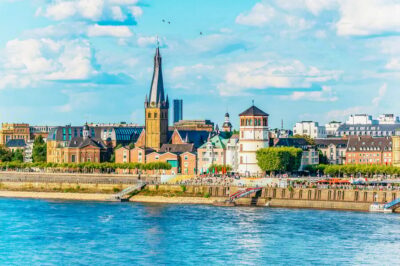 ★ 4.1Düsseldorf: City Sightseeing Cruise on the RhineFrom $232,954 reviews
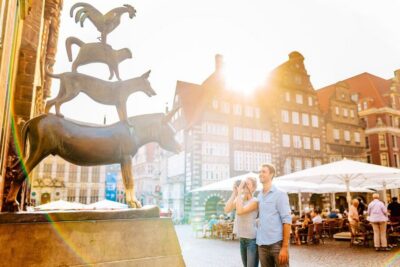 ★ 4.5Bremen: City Center Guided Walking TourFrom $142,709 reviews
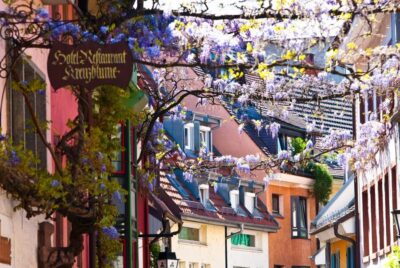 ★ 4.7Freiburg: Gässle, Bächle and More City TourFrom $132,632 reviews
Other lists this tour is on