
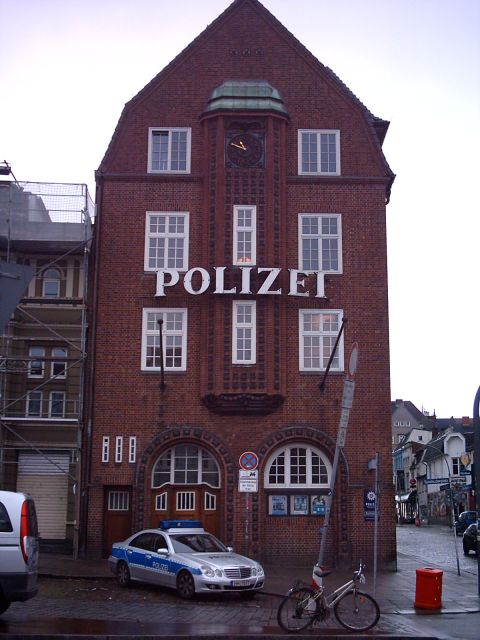
REVIEW · REEPERBAHN
CSI St. Pauli – Crime Scene St. Pauli
Crime meets street history in Hamburg’s St. Pauli. This 90-minute guided tour takes you along the entertainment district’s darker side, from WWI-era violence and policing to the way people prosecuted crime up to around 1990. You’ll follow a trail of crime through the neighborhood while learning how gang meeting points, raids, and famous cases shaped what locals thought was deviant, dangerous, or just tolerated.
I really like the tour’s focus on law and order and how it changes over decades, not just a list of scandals. I also like that it tackles the evolution of prostitution by explaining how pimps operated and how trouble brewed in dodgy bars. The one drawback to consider is that the experience depends a lot on your guide’s English and pacing, so if you need clear English throughout, you may want to plan for that reality.
In This Review
- Key highlights at a glance
- St. Pauli after dark: what a crime tour actually teaches
- Millerntorplatz start: planning a 90-minute street story
- The Spartacus League and the Reeperbahn: politics becomes street violence
- Law and order from WWI to around 1990: why definitions kept changing
- Werner Mucki Pinzner: following a murder through the story
- Prostitution then and now: pimps, control, and dodgy bars
- Walkthrough pacing and language: the private-group reality
- Price and value for a $31, 90-minute crime walk
- Who should book CSI St. Pauli, and who should think twice
- Should you book CSI St. Pauli? My practical decision guide
- FAQ
- Is CSI St. Pauli located in Hamburg?
- How long is the tour?
- How much does the tour cost?
- What is the meeting point?
- What topics does the tour cover?
- What languages is the tour offered in?
- Does the tour run in bad weather?
- Is the tour wheelchair accessible?
- Is this a private tour?
- What is the minimum group size?
Key highlights at a glance
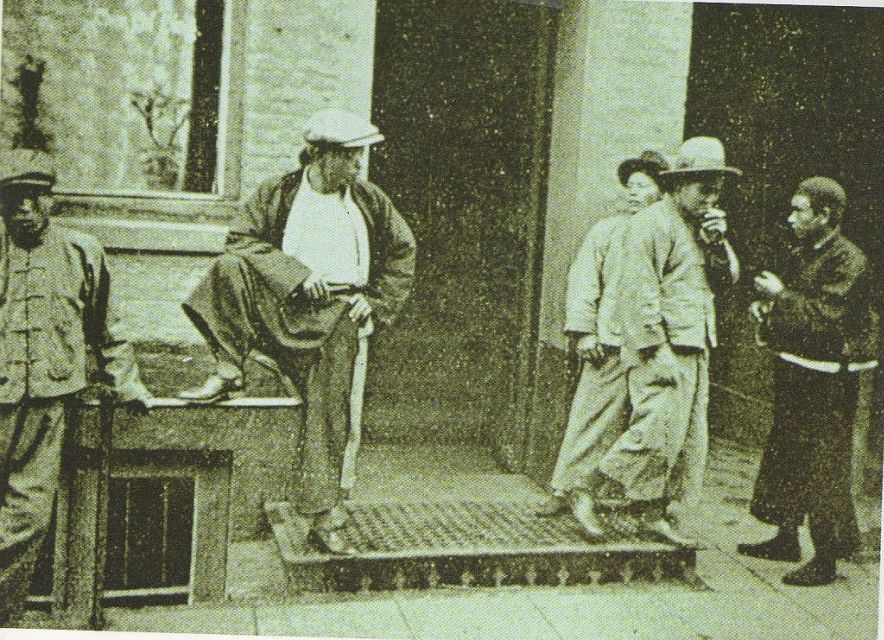
- Reeperbahn Spartacus League raids: context for street violence tied to politics
- Mucki Pinzner murder case: a famous crime explained with stops tied to the story
- Law and order over time: how crime was persecuted and defined from WWI to around 1990
- Prostitution then and now: what changed, what stayed shady, and why
- Gang meeting points and crime scenes: you walk where the narratives place the action
Still on the Kiez? More nights reviewed here
- Hamburg: Sex and Crime in St. Pauli Tour for Ages 18+★ 4.7 · 15,447 reviews
- Hamburg: Reeperbahn Lust & Laster Tour for Adults Only★ 4.7 · 5,440 reviews
- Hamburg: Insider Tour of the Reeperbahn & St. Pauli★ 4.7 · 5,057 reviews
- Hamburg: Night Watchman’s Tour of St. Pauli in German★ 4.7 · 4,818 reviews
St. Pauli after dark: what a crime tour actually teaches
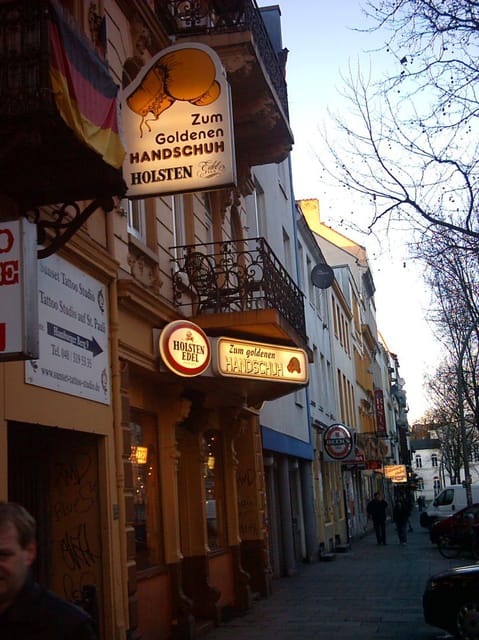
Hamburg’s St. Pauli is famous for nightlife. This tour flips the angle and puts crime, policing, and power back at the center. That might sound grim, but the payoff is practical: you learn why certain streets became symbols, why some behaviors were treated one way in one era and another way later, and how the entertainment district’s “wild” reputation was built.
The big idea you get here is that crime is not only a personal event. It is also a system. The way authorities investigated, the way society labeled people, and the way criminals avoided attention all changed over time. The tour frames that from the First World War until around 1990, which is exactly the kind of long timeline that helps things click.
And since the tour is designed as a guided walk through St. Pauli, you are not stuck inside a museum. You get street-level context. Even if you have never heard of Werner Mucki Pinzner before, the story puts him into a wider pattern of how Hamburg’s underworld intersected with law and public tolerance.
Millerntorplatz start: planning a 90-minute street story
Your meeting point is Millerntorplatz 1, Hamburg, right by Five Guys. That’s helpful because you can orient yourself fast and meet without a guessing game.
The tour runs for 90 minutes. In real terms, that means expect a focused walking route with stops for explanation rather than a long sit-down lecture. Comfortable shoes matter because you are out in the weather. The tour operates in any weather, so bring sensible footwear and dress like you are going for a short city walk, not a show.
This is also a private group format. That can be a good match for a crime-and-history tour because you can ask questions and get follow-ups. Still, keep in mind that private does not automatically mean unlimited time. The 90-minute length is fixed, so your guide will likely manage pace and keep moving.
The Spartacus League and the Reeperbahn: politics becomes street violence
One of the tour’s core themes is the Spartacus League and their infamous raids along Reeperbahn. Reeperbahn is St. Pauli’s headline street, and hearing about it through the lens of raids changes how you read the area.
What makes this part valuable is the cause-and-effect angle. Raids are not only about physical harm. They are about pressure, fear, public attention, and who gets to define the narrative. When you learn that these events were tied to a major political movement, you start to see St. Pauli not just as nightlife, but as a place where politics and authority collided.
As you move through the Reeperbahn area, you should listen for how the guide connects the street, the people involved, and the response from law and order. The tour’s focus is on how crime was prosecuted and defined over time, so this section is likely meant to show you an early example of that dynamic: disorder gets labeled, authorities act, and the public reacts.
If you like historical cause and effect, this is the section where the tour feels most like “real history,” not just crime trivia.
Law and order from WWI to around 1990: why definitions kept changing
The tour explicitly covers how crime was persecuted and defined from the First World War until around 1990. That long stretch matters because it tells you something uncomfortable but useful: the same kind of behavior can be treated very differently depending on the era.
In practical terms, this means you will likely hear how attitudes and enforcement shifted. Authorities did not always pursue the same targets. Society did not always apply the same labels. And criminals did not always need to escape the same kind of scrutiny.
This is where a good guide turns “dark sightseeing” into something you can carry home. You stop thinking of crime as a fixed category. Instead, you understand crime as a changing relationship between people, power, and enforcement.
I like tours that do this because they help you connect past events to patterns that still show up today: who gets watched more, who gets blamed, and how institutions define what counts as dangerous.
Werner Mucki Pinzner: following a murder through the story
The tour highlights the murders of Mucki Pinzner, including the infamous case of Werner “Mucki” Pinzner. Even if you only know the name in passing, the way this case is presented can anchor the whole tour.
A murder case works well in a walking format because the guide can tie the narrative to specific places, turning hearsay into a clear route. You are meant to see various crime scenes and the meeting points of local gangs. Even when you are only learning about locations from the story, the structure matters. It helps you build a mental map of how the underworld moved and how law and order tried to catch up.
Just as important, the case is not treated as an isolated shock. It is presented inside the tour’s broader theme: how crime was prosecuted and defined over decades. That means you should listen for how the Pinzner story reflects the era’s policing style and social attitudes, not just the sensational details.
Because this is a crime-focused tour, you may want to mentally prepare for darker subject matter. If you prefer light cultural walks only, this one may feel too heavy. If you can handle grim stories while still wanting context, this is likely the tour’s most memorable section.
Prostitution then and now: pimps, control, and dodgy bars
Another headline focus is the evolution of prostitution, and how the tour connects then and now. You are not just told that prostitution existed. You learn about the background of how it changed and how it was managed socially and by authorities.
The tour also explains how “sly pimps” stayed under the radar while still stirring trouble in dodgy bars. That kind of detail matters because it moves the story from “individual wrongdoing” to a network problem. Pimping is described as a control system. The bars are described as places where trouble brewed.
Why this is worth your time is simple: St. Pauli’s nightlife reputation can make people oversimplify what they see. This tour pushes back. It gives you a framework for how street-level vice gets organized, marketed, and protected.
When the guide discusses prostitution’s evolution up to around 1990, you should pay attention to how enforcement and definitions changed. The tour is built around differing approaches to persecution over time. That is where “then and now” becomes more than a slogan. It’s a chance to compare how society handled the same behavior across eras.
It’s also a reminder that entertainment districts rarely run on innocence. They run on power, money, and the constant tug-of-war between visibility and control.
Walkthrough pacing and language: the private-group reality
With any guided tour, you are buying two things: the information and the delivery. This one is a 90-minute walk through sensitive topics, so delivery quality matters even more.
The available language options are German and English. In one reported private group experience, a guide named Eva was praised for offering a strong program for three people and being flexible about curiosities. That is the kind of guide behavior that can turn a fixed-length walk into a better fit for your interests.
On the other hand, there was also a report of an English tour where understanding was difficult due to the guide’s low volume and limited English clarity. Another report described a guide who was walking with crutches, with pacing that caused the group to not finish within the scheduled time, which created issues for someone with a dinner reservation.
So here’s my practical advice. If you book in English and clear narration is important to you, choose departure times when you can reasonably expect a smooth pace. If you are traveling with a tight dinner plan, treat it as flexible. This tour is short, so lateness hits harder than on a half-day excursion.
Price and value for a $31, 90-minute crime walk
At $31 per person for a 90-minute guided tour, the value is strong if you want a specialist, street-level story. This is not an all-day ticket to multiple sites. You are paying for a focused guide-led narrative that connects locations, cases, and long-term changes in how crime was defined.
Included is simply the guide. No extra museum entry, no included transport, no ticketed sites are listed. That means your value equation is straightforward: you get what the guide can explain well while you walk.
For people who enjoy history but hate slow group pacing, this structure works. It is short enough to keep it energetic, and it is detailed enough to give you names, cases, and a framework, like the Mucki Pinzner case and the Spartacus League raids along Reeperbahn.
If your goal is a light photo walk for nightlife vibes, the price will not feel “cheap” because the content is more serious than you might expect. If your goal is meaning and context, the price feels fair.
Who should book CSI St. Pauli, and who should think twice
This tour is a good fit if you:
- like crime stories with historical context and a long timeline
- want to understand St. Pauli beyond nightlife marketing
- are interested in prostitution’s evolution and how society and authorities responded
- enjoy guided walking tours where stops create a mental map
It might be a poor fit if you:
- need a fully lighthearted outing, because the focus includes murder cases
- struggle with listening to quieter guides and fast pace in a foreign language
- have zero flexibility for timing, since the route is 90 minutes and the guide’s pace can affect finishing
Should you book CSI St. Pauli? My practical decision guide
Book it if you want a short, guided, street-based lesson in how Hamburg’s St. Pauli earned its reputation, and how law and order shaped what people feared, tolerated, and prosecuted across decades. The combination of Reeperbahn raids, the Mucki Pinzner murder case, and the evolution of prostitution gives you more than gossip. You get a framework for the neighborhood’s shadow side.
Skip it if you are only here for nightlife photos and you dislike heavy topics. Also think twice if you need very clear English delivery no matter what, because this tour lives and dies by narration and pacing.
FAQ
Is CSI St. Pauli located in Hamburg?
Yes. The tour takes place in Northern Germany, and the meeting point is in Hamburg at Millerntorplatz 1, by Five Guys.
How long is the tour?
The duration is 90 minutes.
How much does the tour cost?
The price is listed as $31 per person.
What is the meeting point?
Millerntorplatz 1, Hamburg, located by Five Guys.
What topics does the tour cover?
It focuses on crime and the different ways it was persecuted and defined from the First World War until around 1990. It also includes information on the Spartacus League raids along Reeperbahn and the murders of Werner “Mucki” Pinzner. It covers the evolution of prostitution and the role of pimps and prostitution-related trouble in bars.
What languages is the tour offered in?
The live guide offers German and English.
Does the tour run in bad weather?
Yes, it takes place in any weather, so comfortable shoes and appropriate clothing are a good idea.
Is the tour wheelchair accessible?
Yes, it is wheelchair accessible.
Is this a private tour?
It is listed as a private group.
What is the minimum group size?
The tour requires a minimum of 2 persons, and it runs on fixed dates.
More of the Kiez After Dark
Everything else we filed on Hamburg
- Hamburg: Safari tour in St. Pauli
★ 4.9 · 11 reviews - Hamburg: Party Bingo with the Bingo Gringos
★ 4.8 · 11 reviews - Hamburg Harbor: 3.5-Hour Guided Tour by Bike
★ 4.7 · 11 reviews - Hamburg: 2-Hour St. Georg Walking Tour
★ 4.8 · 11 reviews - Hamburg: Guided Walking Tour in Danish
★ 5.0 · 11 reviews - Discover Hamburg in a retro Bulli
★ 3.0 · 12 reviews
St Pauli and Reeperbahn Tours, side by side.
 ★ 4.7Hamburg: Sex and Crime in St. Pauli Tour for Ages 18+From $29515,447 reviews
 ★ 4.7Hamburg: Reeperbahn Lust & Laster Tour for Adults OnlyFrom $5005,440 reviews
 ★ 4.7Hamburg: Insider Tour of the Reeperbahn & St. PauliFrom $295,057 reviews
 ★ 4.7Hamburg: Night Watchman’s Tour of St. Pauli in GermanFrom $234,818 reviews
 ★ 4.7Hamburg: In the Footsteps of “Olivia” Reeperbahn TourFrom $5003,947 reviews
 ★ 4.7Hamburg: Lust, Luden & Die Große Freiheit TourFrom $172,444 reviews
 ★ 4.7Hamburg: St. Pauli Highlights Guided Tour with Beer for 18+From $292,353 reviews
 ★ 4.6Hamburg: Schanzenviertel Culinary TourFrom $572,051 reviews
Other lists this tour is on