
REVIEW · HAMBURG
Down Town to Speicherstadt, HafenCity and Elbphilharmonie
Hamburg feels like it has two faces, old trade and new city-making. This 2-hour walk from Rathausmarkt down toward the harbor connects the dots from ships and warehouses to a modern concert hall. I love how the route balances architecture with practical stories, and I also love getting clear context for why places like Speicherstadt and HafenCity look the way they do today. One thing to consider: it is a walking tour, so you’ll want comfortable shoes even though the stops are spaced out.
What makes this experience especially easy to recommend is the guide. In my favorite tours of this type, the best part is hearing how a real person links the details, and here guides (often including Jutta) add humor, quick stories, and fact-like details that keep the group engaged. The only drawback I’d flag is that the pacing is built for seeing several major highlights, so if you’re hoping for long photo stops or deep museum time, you’ll have to manage expectations.
In This Review
- Key highlights to look for
- Starting at Rathausmarkt, where trade ruled the skyline
- Trostbrücke and Deichstraße, how the port shaped daily life
- St. Nikolai memorial, Operation Gomorrha, and how memory is built into the streets
- HafenCity, Europe’s largest city-planning project, and the new Hamburg model
- Speicherstadt, UNESCO warehouses on wooden piles, and why the bricks matter
- Elbphilharmonie finishing at the end, plus why the acoustics are part of the draw
- Price, group size, and why this is good value for a short stay
- Should you book Down Town to Speicherstadt, HafenCity and Elbphilharmonie?
Key highlights to look for
- Rathausmarkt first, so you start with Hamburg’s political and trading power right away
- Hygieia-Brunnen as an easy, visual reminder that fresh water shaped city life
- Trostbrücke and port evolution, with a clear explanation of how shipping changed
- Deichstraße 17th-century merchant life, including what the homes were used for and how they survived major disasters
- HafenCity and Speicherstadt side by side, showing regeneration without erasing the old
- Elbphilharmonie platform views, plus the story of why people chase its sound and design
More red brick and canal bridges
- Hamburg: 1.5-Hour Harbor and Speicherstadt Day Cruise★ 4.6 · 14,200 reviews
- Hamburg: 1-Hour Harbor Sightseeing Cruise with HafenCity★ 4.4 · 3,067 reviews
- Hamburg: Elbphilharmonie Plaza and HafenCity Food Tour★ 4.7 · 1,711 reviews
- Hamburg: Eerie Speicherstadt Tour★ 4.5 · 1,394 reviews
Starting at Rathausmarkt, where trade ruled the skyline
Your tour begins at Rathausmarkt, and it is a smart choice. Hamburg’s Town Hall, built in a neorenaissance style in 1897, gives you a quick sense of how important the city’s merchants were. The facade is the kind of building detail you might breeze past if you were on your own, but with a guide you get a framework for what you are actually looking at.
Right behind the Town Hall, you’ll find the Hygieia-Brunnen. It is easy to think of fountains as decoration, but this one represents fresh water, which is a big deal for a port city. Even if you do not memorize the symbolism, you’ll start noticing how often Hamburg’s story comes back to the basics: water, shipping, and the practical needs of the people who ran the place.
From here, the tour shifts from civic power to port reality. That change matters because it keeps you from treating Hamburg like just a set of pretty buildings. You understand the city as a working machine.
Trostbrücke and Deichstraße, how the port shaped daily life
Next comes Trostbrücke, a spot tied to the origin of Hamburg’s port. This is the kind of location where a good guide helps you stand in the right mindset. Think of sailing ships arriving with goods from across the world, and then merchants waiting for them nearby. That rhythm, once central to the economy, is a big part of why Hamburg developed the way it did.
Then you’ll hear how steam ships and later container vessels changed everything. The point is not just that technology evolved. It is that the entire system of where goods went and how the city interacted with the harbor shifted over time. When you know that, the rest of the route makes more sense. Warehouses, canals, and rebuilt districts are not random. They are responses to changing shipping.
Deichstraße follows, and this is one of my favorite stops on the walk because it brings you down from mega-project thinking to real human scale. The street has houses from the 17th century, and you get a vivid picture of how traders lived and worked in the same merchant homes. Goods storage was part of daily life, not something tucked away in a distant industrial zone. The story also includes survival through major shocks, including a fire in 1842 and the effects of WWII. That survival angle is important, because it turns “old buildings” into evidence of resilience.
Practical tip: along Deichstraße, slow down for photos if you care about facade details. The buildings look similar at first glance, but with guidance you start noticing differences that help you tell one era from another.
St. Nikolai memorial, Operation Gomorrha, and how memory is built into the streets
After the port and merchant-life scenes, the tour shifts tone at the Mahnmal St. Nikolai. The steeple dates to 1874, and it functions as a memorial for victims of WWII. This stop can feel heavy, but it adds depth to the rest of your walk. Hamburg’s rebuilding story is not just about design and planning. It is also about loss and remembrance.
A key detail here is that underneath the ruined structure there is an exhibition related to Operation Gomorrha. You do not need to treat this as a history class, but you should see it as a reality check. When you later look at HafenCity and Speicherstadt, you’ll understand why reconstruction and preservation matter so much to this city.
Possible drawback: this is the emotional point in the route. If you prefer only upbeat sights, you might want to mentally prepare for a solemn moment before you continue toward the harbor views. Either way, it is one of the stops that makes the tour feel honest.
HafenCity, Europe’s largest city-planning project, and the new Hamburg model
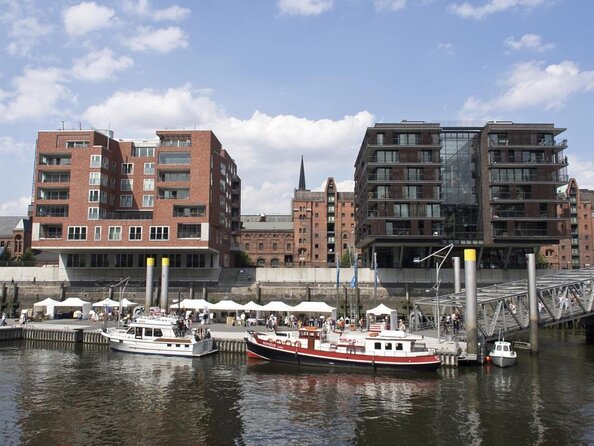
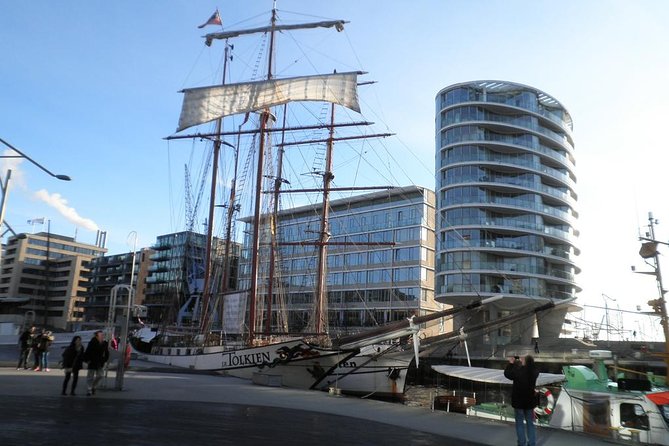
Now you turn toward HafenCity, often described as Europe’s biggest city-planning project. The scale is clear: 157 hectares of former industrial area transformed into a new district. Standing in this area with a guide helps because the story becomes tangible. You see the modern mix of space and planning, but you also understand you are walking through the aftermath of older uses, not some imaginary clean slate.
What I like here is that it answers a question many first-time visitors have. How can a major port city modernize without flattening everything? HafenCity is shown in the tour as a process, with an emphasis on transformation rather than demolition. So even if you just like architecture, you get a practical storyline for how cities retool themselves when industries move, shipping evolves, and land use needs change.
You also get context that carries forward into Speicherstadt. If HafenCity is the “new plan,” Speicherstadt is the “old engine kept alive.” Seeing both in sequence helps you avoid the common mistake of treating them as unrelated attractions.
More Elphi and Alster time to compare
Speicherstadt, UNESCO warehouses on wooden piles, and why the bricks matter
Then you hit Speicherstadt, and it delivers on visual impact. It is the world’s largest warehouse district made of red brick on wooden piles. That specific combination matters. Red brick tells you about the material choices of the era. Wooden piles speak to how the ground and construction needs met the reality of building in a water-linked port environment.
The district was inaugurated in 1888, then restored after WWII. That restoration detail is important because it echoes back to St. Nikolai. You are not looking at a theme park version of history. You are looking at a place that survived the worst of the 20th century and was brought back with care. This is also part of UNESCO World Heritage, which gives the whole area a conservation-minded frame.
Here is how I’d use this stop, even if you only have a short time: slow your pace and look up. The warehouses are not just background. Their forms, repetition, and canal-side layout help you understand how goods moved through the district. With a guide, you’ll get the historical reason behind what might otherwise look like a clean, picturesque setting.
Value note: the stops on this route are presented as free entry along the way. That matters when you are weighing cost, because you are paying for the guide and the storytelling, not stacked admissions.
Elbphilharmonie finishing at the end, plus why the acoustics are part of the draw
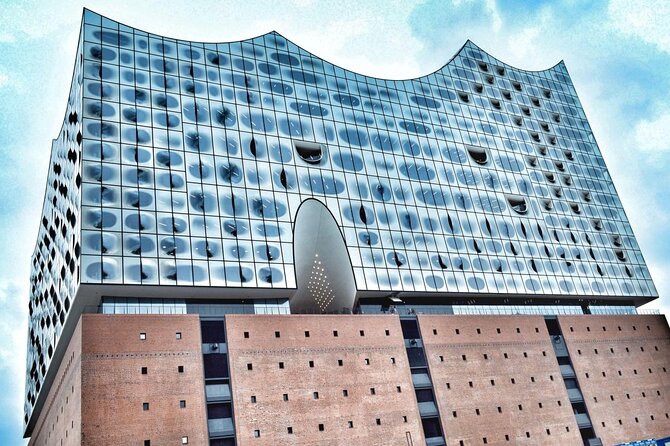
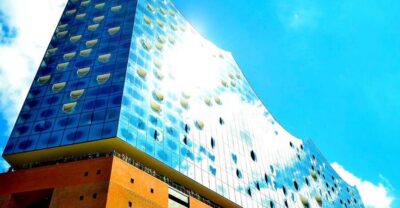
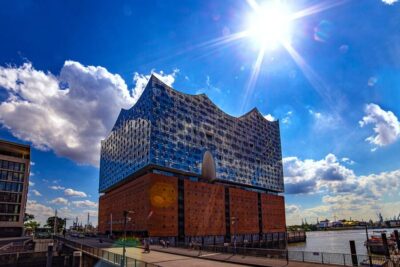
Your tour ends in front of the Elbphilharmonie. This is a very fitting finale because it is the opposite of a warehouse in style and intent. The concert hall was inaugurated in 2016, and the first concert took place on 11 January 2017. If you’re the type who likes to connect dates to architecture, this helps you place the building in the modern era.
The tour also explains why so many people talk about its near perfect acoustics. Even without sitting inside, the story gives you a reason to care beyond looks. The guide’s focus on the hall’s sound helps you see it as an engineering and design achievement, not just a landmark photo spot.
Best part: you get the chance to visit the platform and enjoy views over the port. That view angle is why this tour works as an arc. You start with Hamburg’s civic identity, move through merchant and port development, see districts shaped by rebuilding, and end with a modern symbol that still faces the water.
Practical tip: at the end, take a moment to look back along the direction you walked. It helps your brain map Hamburg from “a place I visited” into “a place I understand.”
Price, group size, and why this is good value for a short stay
This tour costs $30.04 per person and lasts about 2 hours. For many short stays, that is a sweet spot: long enough to cover major highlights, short enough to keep your day flexible. It also helps that the tour includes a professional guide, and the key stops are described as admission free along the route.
The guide quality is not a small detail here. The rating is 4.8 out of 5 from 18 reviews, with a 100% recommendation rate. The strongest praise centers on guides who are funny, friendly, and ready with stories that make the city click. Jutta is one name that shows up with specific praise for mixing humor, strong command of local context, and a knack for throwing in random facts that land well.
Group size stays manageable, with a maximum of 15 travelers and a minimum of 8. That matters because smaller groups can actually hear the guide over the street noise. You’ll likely walk as a pack, stop together, and keep a steady pace without feeling lost.
Logistics to know up front: transportation to and from sights is not included. The meeting point is Rathausmarkt, and the finish is at the Elbphilharmonie area. You’ll want to plan to arrive on time and then continue exploring after the tour ends.
Booking timing: the tour is commonly booked about 89 days in advance on average. If you’re traveling in high season or on a busy week, it’s smart to lock it in early.
Should you book Down Town to Speicherstadt, HafenCity and Elbphilharmonie?
I’d book this tour if you want a fast, organized way to understand Hamburg’s core story. It gives you a clear chain from trading power (Town Hall) to shipping realities (Trostbrücke), to the human scale of merchant life (Deichstraße), and then to the city’s rebuilding choices (St. Nikolai, HafenCity, Speicherstadt). The ending at the Elbphilharmonie adds a modern perspective and a payoff view from the platform.
Skip it only if your dream Hamburg day is mostly museum time or long lingering at a single site. This walk is about moving, learning, and seeing the big connections in a short window.
If you take one mindset with you, make it this: you are not just sightseeing. You are walking through how Hamburg adapted, preserved, and rebuilt, from wooden piles under warehouses to the engineering of a concert hall above the harbor.
The Concert Hall and the Lake
Warehouse Country, Reviewed
Everything else we filed on Hamburg
- Hamburg: Safari tour in St. Pauli
★ 4.9 · 11 reviews - Hamburg: Party Bingo with the Bingo Gringos
★ 4.8 · 11 reviews - Hamburg Harbor: 3.5-Hour Guided Tour by Bike
★ 4.7 · 11 reviews - Hamburg: 2-Hour St. Georg Walking Tour
★ 4.8 · 11 reviews - Hamburg: Guided Walking Tour in Danish
★ 5.0 · 11 reviews - Discover Hamburg in a retro Bulli
★ 3.0 · 12 reviews
Speicherstadt and HafenCity Tours, side by side.
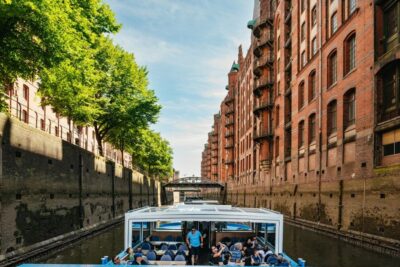 ★ 4.6Hamburg: 1.5-Hour Harbor and Speicherstadt Day CruiseFrom $4014,200 reviews
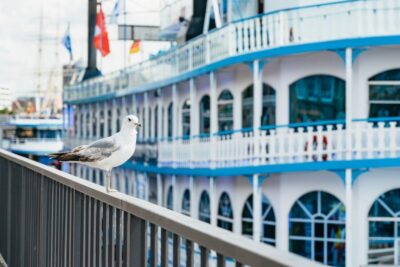 ★ 4.4Hamburg: 1-Hour Harbor Sightseeing Cruise with HafenCityFrom $303,067 reviews
 ★ 4.7Hamburg: Elbphilharmonie Plaza and HafenCity Food TourFrom $691,711 reviews
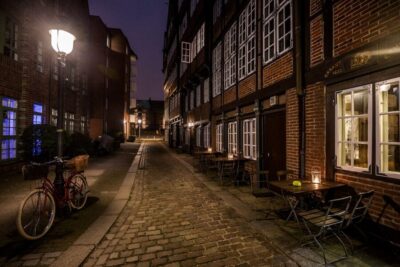 ★ 4.5Hamburg: Eerie Speicherstadt TourFrom $291,394 reviews
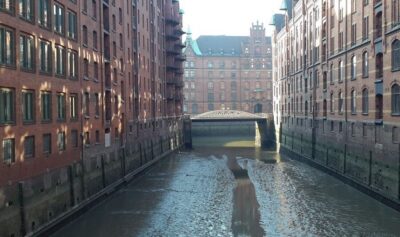 ★ 4.7Hamburg: Speicherstadt and Hafencity Guided TourFrom $161,344 reviews
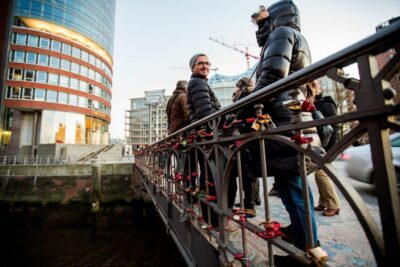 ★ 4.8Hamburg: Speicherstadt and HafenCity 2-Hour TourFrom $2821,063 reviews
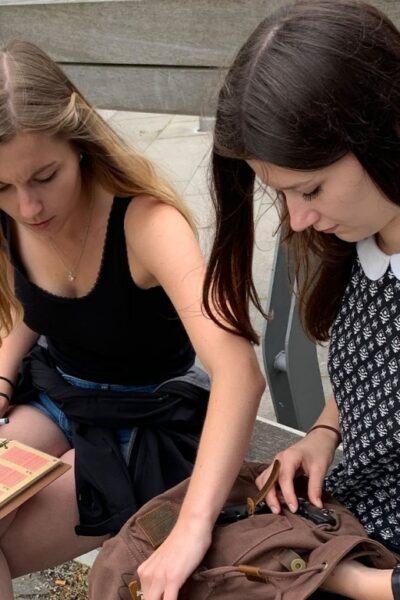 ★ 4.7Hamburg: Treasure Hunt Game through HafenCityFrom $29364 reviews
 ★ 4.6Hamburg: Speicherstadt Walking Tour with Coffee TastingFrom $50360 reviews
Other lists this tour is on