
REVIEW · HAMBURG
Duisburg: Guided Walking Tour through the inner harbour
Inner harbor history, told on foot. This 1.5-hour walk through Duisburg’s inner harbor connects old shipping rhythms to a modern rebuild shaped in the mid-1990s by Sir Norman Foster. I love how the area is easy to read when you’re standing right on the water, with the Mercator fountain serving as a handy anchor for your bearings.
Two things I especially like: the tour points out standout waterfront architecture such as the Five Boats, and it gives you the logic behind why these spaces exist now, not just what you’re looking at. The story starts with the inner harbor’s role as the Ruhr area’s “bread basket” for grain, then explains how the decline of grain mills after the late 1960s forced a real change.
One possible consideration: this tour runs even in rain, so you’ll want a weatherproof layer and shoes with good grip for the harbor sidewalks. If the wet weather makes you grumpy, plan to keep it practical and let the guide keep the pace light.
In This Review
- Key highlights before you go
- Duisburg Inner Harbour, rebuilt with a clear plan
- Finding your way: meeting at the Mercator fountain
- The “bread basket” story, and why grain mills mattered
- From freighters to yachts, the Mediterranean atmosphere you can feel
- Five Boats, marina life, and architecture you can spot fast
- Offices beside warehouses, and the meaning of that contrast
- Rain-proof walking: what that means for your comfort
- Timing and pacing: why 1.5 hours is a sweet spot
- Museum add-ons before or after: Küppersmühle and urban history
- Price and value: $16 for context, not just sightseeing
- Who should book this Duisburg inner-harbor walk
- Should you book this 1.5-hour inner harbour tour?
- FAQ
- How long is the Duisburg inner harbour guided walking tour?
- What is the price per person?
- Where do I meet the guide?
- What language is the tour guide?
- Is the tour wheelchair accessible?
- Does the tour run in bad weather?
- Is free cancellation available?
- Can I reserve and pay later?
- Who provides the tour?
Key highlights before you go
- Sir Norman Foster’s mid-1990s plan explains how the harbor’s reuse was designed, not accidental
- Five Boats and marina views help you connect modern form with working waterfront energy
- Grain trade to yacht moorings shows structural change you can actually see
- A 1.5-hour format works well for orientation without eating your whole day
- Rain does not pause the tour which makes it reliable when the forecast looks questionable
- Museum add-ons nearby include Küppersmühle and the cultural and urban history museum
A few more trips out past the cranes
- Duisburg-Ruhrot: Historic Harbor Pub Tour★ 4.8 · 15 reviews
Duisburg Inner Harbour, rebuilt with a clear plan
The Duisburg inner harbor is one of those places where the past and present stand next to each other and neither one apologizes. You start with a maritime setting that feels unmistakably “port,” then you learn why it looks the way it does now: a redesign that took hold from the mid-1990s onward, guided by the British architect Sir Norman Foster.
The tour’s big strength is that it doesn’t treat the harbor like a collection of pretty buildings. It treats it like an urban machine that used to move grain and ships, then had to reinvent itself when that old economic engine slowed down. That framing makes every stop click, especially when you’re looking at new office blocks beside older warehouse-style structures.
If you care about how cities adapt, you’ll like the way this walking route connects cause and effect. It’s not just architecture talk. It’s a practical explanation of what happens when industry changes, and how a waterfront can be repurposed into something people want to live with, visit, and enjoy.
Finding your way: meeting at the Mercator fountain
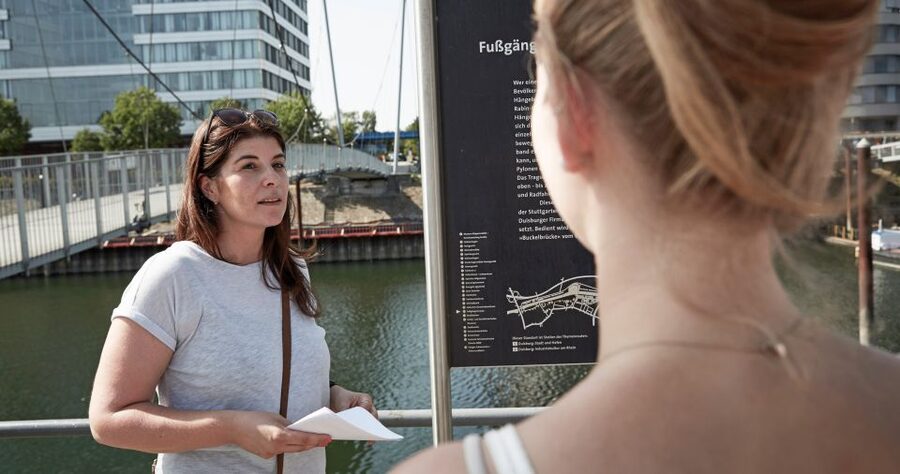
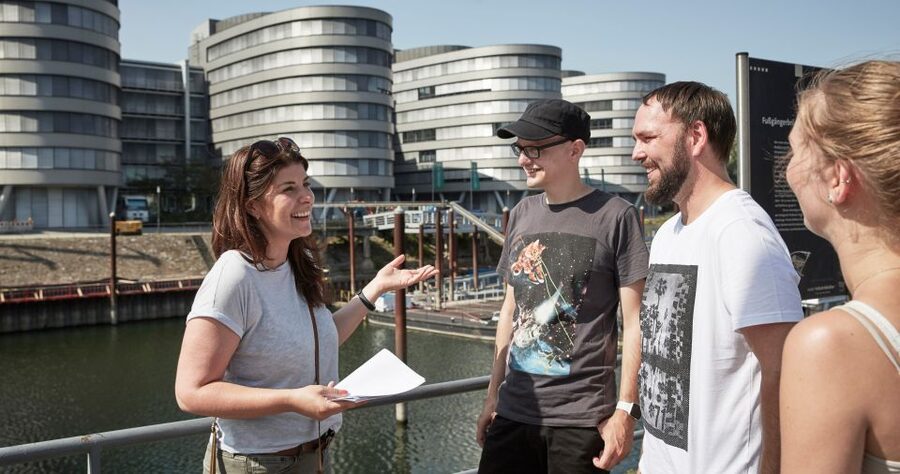
You meet your guide in front of the Mercator fountain, right in front of the town hall. That matters more than it sounds. A clear central meeting point means you spend less time figuring things out and more time looking at the harbor itself.
In plain terms, you should plan to arrive a few minutes early so you can settle in before the walk starts. If you’re using public transit or you’re unsure about streets around the town hall, give yourself extra buffer. The walk is only 1.5 hours, so every minute helps, and the guide is most effective when the group is together from the start.
The tour language is German, so if you’re not comfortable with German, bring a translation app or plan to focus on the visual side of the stops. The content is still readable even when you catch only part of what’s being said.
The “bread basket” story, and why grain mills mattered
Here’s the harbor’s origin story, and it’s the key to understanding the transformation. Duisburg’s inner harbor earned its reputation because it handled huge amounts of grain, earning the nickname bread basket of the Ruhr area.
But the grain mills declined and the end of that era came toward the close of the 1960s. Once the mills were gone, the old harbor setup made less sense. That’s the moment the city had to change its relationship to the water. You see this idea during the walk: the shift isn’t only about new buildings, it’s about new uses taking the place of old ones.
I like this part because it stops the tour from feeling like a shallow photo walk. Even if the harbor looks new and polished, the guide’s explanation keeps bringing you back to why the changes were necessary. You’ll start noticing contrasts with fresh eyes, like where activity used to be about loading and unloading, and where it’s now about mooring, dining, and strolling.
From freighters to yachts, the Mediterranean atmosphere you can feel
One of the tour’s most memorable ideas is the sensory switch. Where freighters used to be loaded and unloaded, yachts now lie at anchor. That change alone alters the mood. You’re not looking at a labor scene. You’re looking at leisure, and it shows up in everything around the waterline.
The guide walks you through how the inner harbor developed into a district with a maritime flair that feels almost Mediterranean in tone. Restaurants right on the waterfront, water-level viewpoints, and events that work for both young and old all contribute to that vibe.
For you, this is a practical lesson in how cities reuse space. You get a clear example of what “structural change” looks like in real life. It’s not a theoretical concept. It’s a harbor that got reprogrammed from freight logic to visitor logic, without losing the fact that it is still a harbor.
More Rhine and Ruhr city days


Five Boats, marina life, and architecture you can spot fast
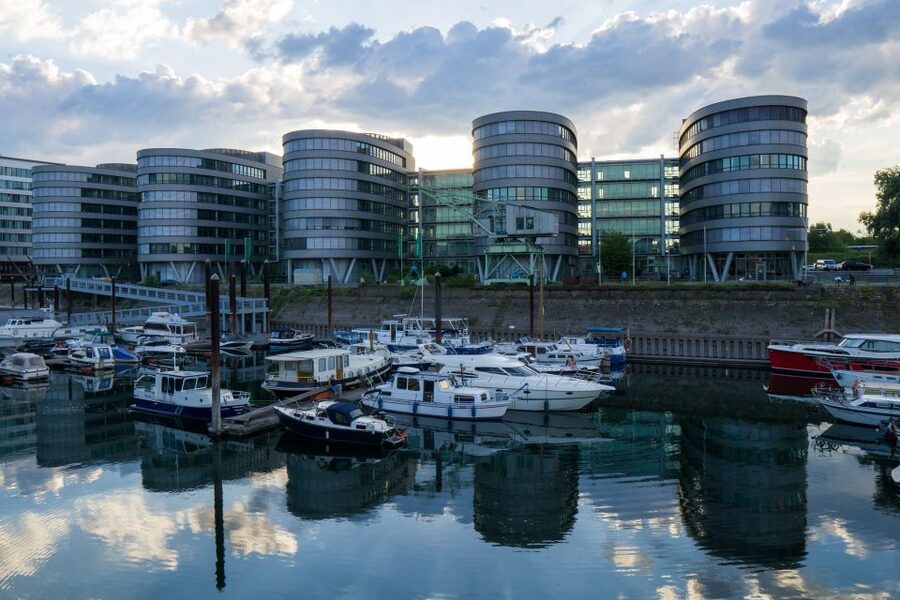
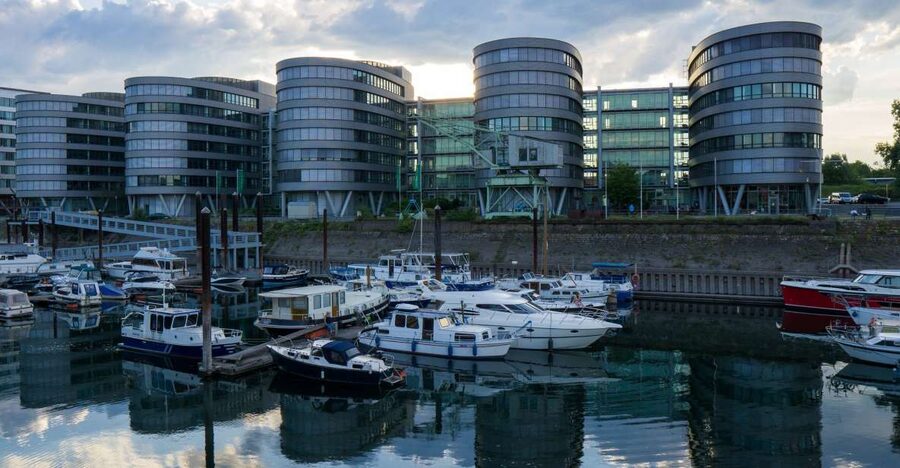
Modern architecture shows up early in the walk. The route includes buildings and waterfront landmarks you can recognize quickly, including the Five Boats. Even if you’re not an architecture nerd, having specific named points helps you keep track of the story while you’re moving.
You’ll also see the marina and areas tied to museums and restaurants. The value here is in the way the guide connects these points: which elements feel new because they support modern harbor life, and which elements keep an echo of the older warehouse rows and industrial scale.
I find these moments useful for photos, too. The inner harbor gives you lines of sight along the water. It’s easy to frame modern office structures with older harbor textures in the background. And because the tour is only 1.5 hours, you’re not stuck wandering in uncertainty for ages. You’re moving with a purpose, and the guide keeps the focus on what matters.
Offices beside warehouses, and the meaning of that contrast
This is one of those places where the contradictions are the point. The guide highlights how the harbor now has glittering office complexes next to nostalgic warehouse rows. That pairing can look random if you’re just strolling on your own, but with the context of the master plan, it becomes understandable.
Why does this matter? Because it’s a signal of how preservation and redevelopment can share the same waterfront. The city did not erase everything. It rebuilt, but it also kept enough of the harbor identity to make the new district feel grounded.
If you’re trying to understand Duisburg beyond the station and shopping streets, this walk is a shortcut. It shows you a city making a new chapter while still keeping the industrial handwriting visible. The result is a waterfront you can recognize as Duisburg, not just Germany’s generic modern district.
Rain-proof walking: what that means for your comfort
A detail that makes this tour easier to plan: it also runs when it’s raining. That’s great if you like certainty, but it changes how you should prepare.
Bring a jacket that blocks wind and a hood if you have one. Water can make harbor surfaces slippery, so shoes with grip matter. Also, if you like photos, rain can actually help with reflections, but you may need to accept fewer crisp long-distance shots.
The good news from past participants is that the guide keeps the atmosphere upbeat even when the weather is rough. If you come prepared, the rain condition becomes a non-issue and you still get the full story.
Timing and pacing: why 1.5 hours is a sweet spot
The tour lasts 1.5 hours. That’s short enough to stay focused but long enough to cover the transformation arc: grain harbor roots, then the redevelopment and how the modern district works today.
For you, that length is ideal in several situations:
- You have limited time in Duisburg but want a meaningful orientation.
- You’re interested in city planning, not only in landmarks.
- You want something active that still stays easy to manage.
It also pairs well with museum time afterward. The harbor is not only architecture and waterfront views. It sits next to cultural stops that reward a second visit with your own pace.
Museum add-ons before or after: Küppersmühle and urban history
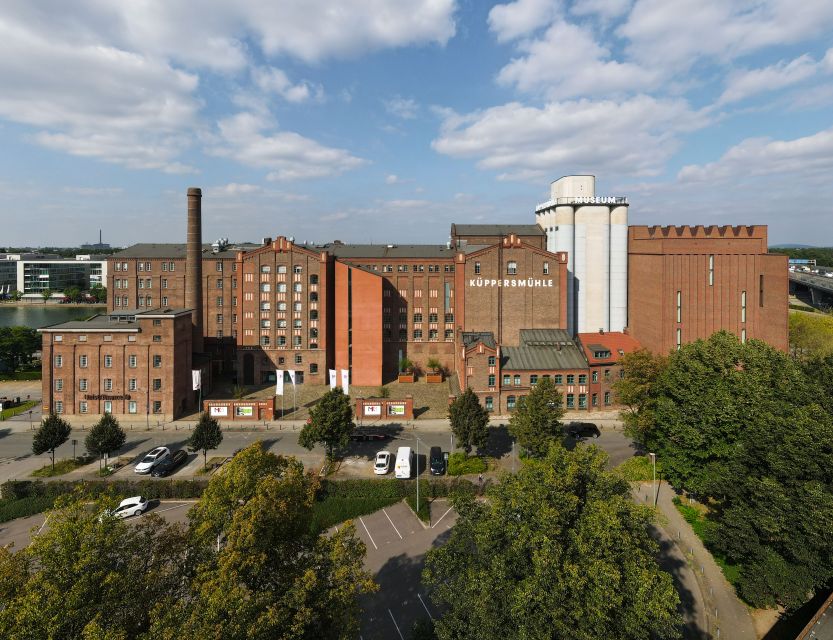
If you want to extend the experience, plan a visit around the tour. The museum of modern art Küppersmühle is a really good option. It’s especially fitting because the inner harbor’s redevelopment story is about changing identity, and modern art museums tend to speak that same language.
Another strong follow-up is the cultural and urban history museum. This makes sense because the walking tour already gives you the transformation story from the grain era to the modern harbor district. A museum visit after that adds more depth and lets you read at your own speed.
If you’re tight on time, you can also do the reverse order: museum first to set your context, then the harbor walk to see the redevelopment ideas in physical space.
Price and value: $16 for context, not just sightseeing
At $16 per person for a 1.5-hour guided walk, the value is about what you’re buying: interpretation. You’re not paying for a long itinerary. You’re paying for a guide who can explain why the inner harbor changed in the way it did, including the role of Sir Norman Foster’s plan.
This matters because harbor districts can feel confusing if you only look at buildings from the outside. When you understand the grain economy, the mill decline after the late 1960s, and the mid-1990s redevelopment, the waterfront becomes easier to read. Every named landmark, every architectural contrast, and every shift from loading activity to yacht moorings makes more sense.
Past participants rated the experience 4.3 out of 5 across 6 reviews, and they consistently point to strong value for the money and an informative, humor-friendly approach, even when conditions are less than perfect. For your planning, that combination is a good sign: you’ll likely feel you got your money’s worth fast.
Who should book this Duisburg inner-harbor walk
This tour is a smart fit if you want:
- A focused overview of Duisburg’s inner harbor with context
- Architecture and urban change explained in an approachable way
- A waterfront stroll that goes beyond postcard views
- A rain-ready activity in a compact time window
It may be less ideal if you need an English-only experience. The live guide is German. You can still enjoy the visuals and the harbor setting, but your understanding will be more limited without German help.
Should you book this 1.5-hour inner harbour tour?
I’d book it if you want a quick, story-driven orientation to Duisburg’s waterfront and you enjoy seeing how cities reinvent industrial space. The combination of named landmarks like the Five Boats, a clear explanation of the Norman Foster plan from the mid-1990s, and the grain-to-yacht transformation gives you more than just scenery.
Skip it if you prefer a self-guided wander with no structure at all, or if you want a longer program that covers museums in depth. Otherwise, at $16 for a guided interpretation, it’s the kind of outing that helps you understand a place in a short time.
FAQ
How long is the Duisburg inner harbour guided walking tour?
It lasts 1.5 hours.
What is the price per person?
The price is $16 per person.
Where do I meet the guide?
Meet in front of the Mercator fountain, in front of the town hall.
What language is the tour guide?
The live tour guide speaks German.
Is the tour wheelchair accessible?
Yes, it is wheelchair accessible.
Does the tour run in bad weather?
Yes, the tour also takes place when it is raining.
Is free cancellation available?
Free cancellation is available up to 24 hours in advance for a full refund.
Can I reserve and pay later?
Yes, you can reserve now and pay later.
Who provides the tour?
The provider is Duisburg Kontor GmbH.
Dusseldorf and the Ruhr, Reviewed
Back Out Among the Cranes
Everything else we filed on Duisburg
- Duisburg: Guided Walking Tour through the inner harbour
★ 4.3 · 6 reviews - Duisburg: Schimmi Tour goes City
★ 4.8 · 11 reviews - Duisburg: Guided Evening Tour at “Tiger and Turtle”
★ 4.3 · 11 reviews - Duisburg-Ruhrot: Historic Harbor Pub Tour
★ 4.8 · 15 reviews - Schimmi tour pure (without catering)
★ 4.9 · 19 reviews - Duisburg Landscape Park GPS treasure hunt in old ironworks
★ 3.9 · 23 reviews
Harbor and Port Cruises, side by side.
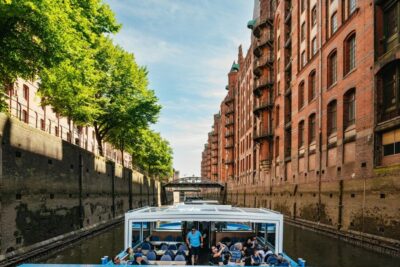 ★ 4.6Hamburg: 1.5-Hour Harbor and Speicherstadt Day CruiseFrom $4014,200 reviews
 ★ 4.5Hamburg: 90-Minute Evening Lights Harbor CruiseFrom $277,728 reviews
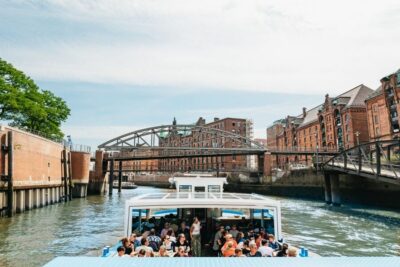 ★ 4.7Hamburg: 2-Hour XXL Port of Hamburg Cruise TourFrom $476,979 reviews
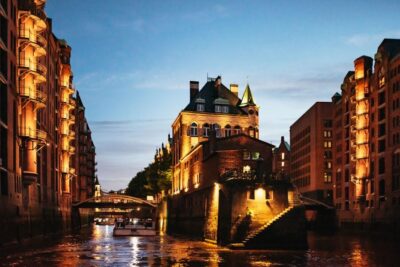 ★ 4.4Hamburg: 1-Hour Harbor Evening Lights CruiseFrom $304,861 reviews
 ★ 4.4Hamburg: 1-Hour Harbor Sightseeing Cruise with HafenCityFrom $303,067 reviews
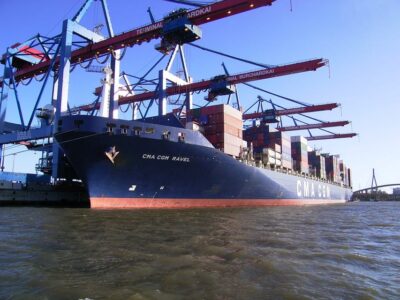 ★ 4.6Hamburg: 1-Hour Harbor CruiseFrom $282,283 reviews
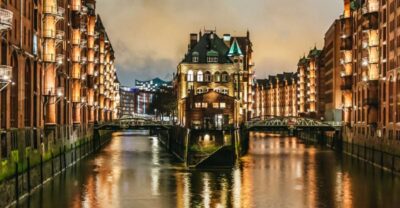 ★ 4.2Hamburg: 1.5h Grand Harbor Evening Lights CruiseFrom $281,316 reviews
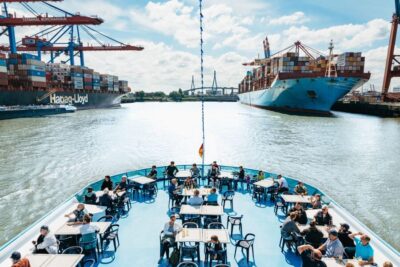 ★ 4.5Hamburg: Hop-On Hop-Off Bus with Alster or Harbor CruiseFrom $44812 reviews
Other lists this tour is on