
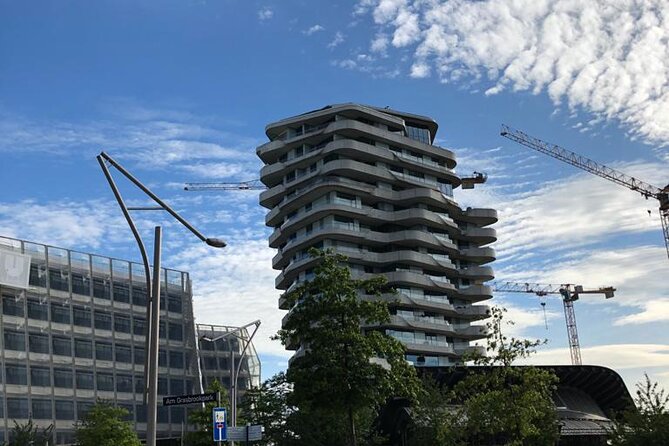
REVIEW · HAMBURG
Elbe Philharmonic Hall, HafenCity and Speicherstadt tour
Hamburg rewires your skyline in two hours. You’ll walk between three of the city’s biggest identity makers, HafenCity, the UNESCO Speicherstadt, and the Elbphilharmonie area, with a local guide who ties the port’s past to today’s rebuild. I especially like the small group size, which keeps the pace human and the questions welcome. I also love how the tour makes the modern parts of town feel connected, not random, with stops built around how Hamburg thinks, floods included.
One thing to weigh: this is mostly a walking route and it depends on good weather. A few highlights sit behind ticketed entrances like Miniatur Wunderland, so you’ll see them from the outside unless you add extra entry on your own.
In This Review
- Key points to know
- HafenCity, Speicherstadt, and the Elbphilharmonie, in One Walk
- Meeting at Überseequartier, Ending Near Baumwall
- HafenCity: Europe’s Biggest Inner-City Build, Explained on Foot
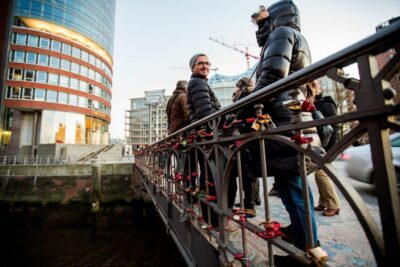
- Kibbelstegbrücke: The Bridge That’s Also Part of Safety Planning
- Magdeburger Hafen and Grasbrookpark: Port Views and a Little Green Break
- Sandtorhafen and Traditionsschiffhafen: Where Maritime History Still Shows Itself
- Speicherstadt: UNESCO Warehouses and the Walled Water City Feeling
- WASSERSCHLOSS Speicherstadt: A Famous Landmark Inside the Warehouse Complex
- Quick Stops for Iconic Tickets: Miniatur Wunderland, Spicy’s, and Fleetschlösschen
- Elbphilharmonie: The Glass Landmark Built on the Kaispeicher A Shell
- Kehrwieder and Überseebrücke: Former Islands, Flood-Proof Footpaths
- Price and Value: $28.92 for a Guided Port-Architecture Pattern
- Should You Book This Hamburg Hafen and UNESCO Walk?
- FAQ
- How long is the Elbe Philharmonic Hall, HafenCity and Speicherstadt tour?
- Where do I meet the guide and where does the tour end?
- How big is the group?
- Is admission included for the attractions on the route?
- What is the price of the tour?
- Does the tour run in any weather?
Key points to know
- Small-group experience (max 15), good for questions and a flexible pace
- Easy meetup at Überseequartier station, then an end near Baumwall station
- Frequent “why it matters” stops, from storm-surge planning to UNESCO warehouse architecture
- UNESCO Speicherstadt focus, with classic photo angles and landmark buildings
- Elbphilharmonie viewed from the waterfront, with context on the old Kaispeicher A shell
- Some attractions not included, like Miniatur Wunderland, Spicy’s, Fleetschlösschen, and others
More red brick and canal bridges
- Hamburg: 1.5-Hour Harbor and Speicherstadt Day Cruise★ 4.6 · 14,200 reviews
- Hamburg: 1-Hour Harbor Sightseeing Cruise with HafenCity★ 4.4 · 3,067 reviews
- Hamburg: Elbphilharmonie Plaza and HafenCity Food Tour★ 4.7 · 1,711 reviews
- Hamburg: Eerie Speicherstadt Tour★ 4.5 · 1,394 reviews
HafenCity, Speicherstadt, and the Elbphilharmonie, in One Walk
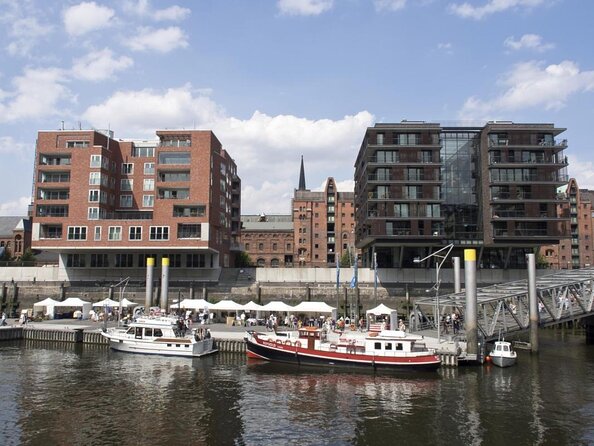
If you’ve only seen Hamburg from a bus window, this route is a fast fix. You’ll go from redevelopment planning (HafenCity) to the world-famous warehouse walls (Speicherstadt) and finish with the Elbphilharmonie, the city’s “new landmark on old port bones.”
The magic here is the way everything stays about Hamburg’s waterfront life. Buildings, bridges, parks, and even evacuation routes become part of one story: how a port city protects itself, ships goods, and then repurposes space for residents, museums, and culture.
This also works well as a first introduction. In about two hours you get a clear mental map of how HafenCity and Speicherstadt sit, how they connect with bridges and basins, and why locals care about the Elphi.
Meeting at Überseequartier, Ending Near Baumwall
You start at Überseequartier, with a meeting point at 20457 Hamburg. It’s an easy anchor, because Überseequartier is well connected, and the tour is designed so you can find the group without stress.
You end at Baumwall station in 20459 Hamburg, not far from the top station of Bäumenall. That end point is convenient if you want to keep walking after, or if you want to roll directly into other HafenCity and port areas.
Timing also helps. The departure is at 4:00 pm, which usually lands you with nice daylight for the waterfront. Even if the sky is cloudy, the glass, brick, and canals still photograph well.
HafenCity: Europe’s Biggest Inner-City Build, Explained on Foot
Your first stretch is HafenCity, a huge inner-city development area on the former Großer Grasbrook zone of the free port. This part matters because it’s not just sightseeing. It’s planning made visible, with the tour pointing out what’s been built, what’s coming, and how many people are expected to live, work, study, and visit there.
In this area, the tour hits the human scale of change. You’ll hear how HafenCity is expected to hold residential units for up to 14,000 people, with hotels and major workplaces following, plus thousands of students and daily visitors once it’s completed. Those numbers can sound abstract, but seeing the waterfront layout makes them feel real.
You also get brief stops that set up what comes next, including views and the idea of movement between basins and districts. Admission here is listed as free, so you’re mainly paying for the guide’s ability to translate the big picture into what you can actually see.
Tip for you: when the guide talks about future phases, look for the outlines of what feels “new” versus what looks “historic.” Hamburg keeps its port roots visible, even when the area changes fast.
Kibbelstegbrücke: The Bridge That’s Also Part of Safety Planning
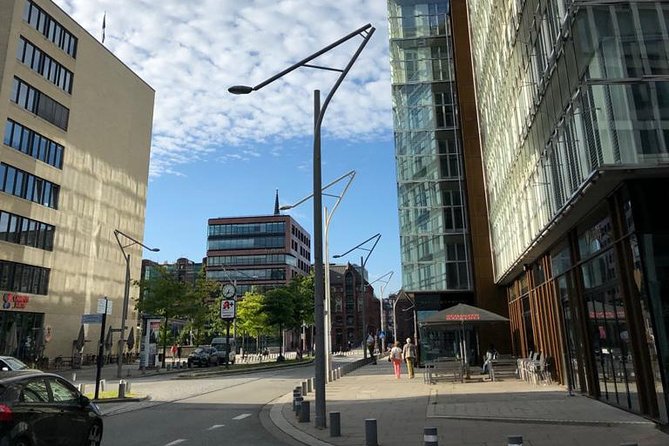
A quick hop brings you to Kibbelstegbrücke, a bridge with an unusual role: storm-surge evacuation logic. The tour explains that, during major flooding scenarios, evacuation routes can move people through the historic warehouse district toward behind the dike line of Hamburg’s city center.
This stop is short, but it’s one of the most useful pieces of context you’ll get on the whole walk. It turns the water and bridges from scenery into infrastructure. You start to notice the city as a system, not just a collection of pretty buildings.
Because this is mostly an outside viewpoint stop, there’s no ticket cost here either. It’s an easy add-on minute, and it makes the rest of the port walk feel more grounded.
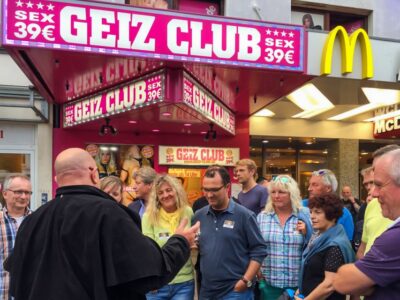
Magdeburger Hafen and Grasbrookpark: Port Views and a Little Green Break
From Kibbelstegbrücke you move toward Magdeburger Hafen, where you get typical fleets plus some of HafenCity’s more modern building silhouettes. You’ll also be pointed toward key sight lines, including a view angle that relates to the Maritime Museum area and the Elbarkaden.
Then the tour includes Grasbrookpark, a small neighborhood park in HafenCity. It sits in the Am Sandtorpark and Grasbrook area between Überseequartier and the Marco Polo terraces. Parks like this matter on a walk like this because they give your legs a breather, but also because they show how HafenCity tries to mix daily life into a former port zone.
This part is all about pacing and perspective. You’ll look outward at the water, then look inward at how people might use these spaces day to day.
Sandtorhafen and Traditionsschiffhafen: Where Maritime History Still Shows Itself
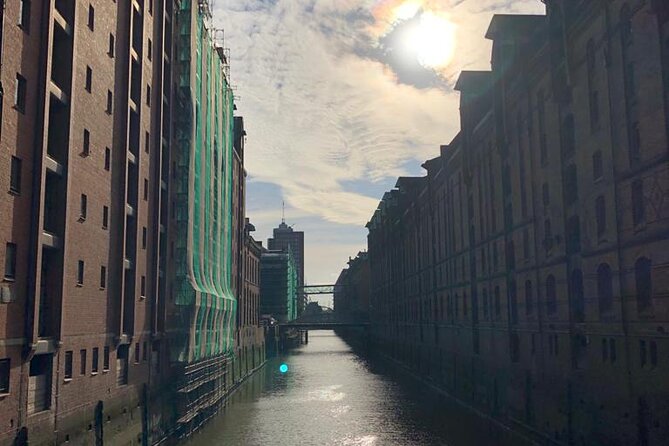
Next comes the heart of the maritime vibe at Sandtorhafen and Traditionsschiffhafen. This is the traditional shipping port in the center of Hamburg, tied to the Hamburg Maritim Foundation and its mission to preserve, restore, and make port heritage accessible.
You’ll spend more time here, and the route focuses on port structures and heritage elements: historic ships, pontoon facilities, and work equipment that act like physical evidence of Hamburg’s shipping era. The Sandtorkai quay wall is noted as restored in 2002, and the tour points out the historical access bridges that open up the pontoon system.
This stop gives you that rare combo of city walk plus working-port context. You’re not just reading about old shipping; you’re watching the waterfront function as a historical setting.
If you like photography, this is usually where the scene starts to feel richer. The angles are better, the objects are more “maritime,” and there’s a stronger sense of texture in the scene.
Speicherstadt: UNESCO Warehouses and the Walled Water City Feeling
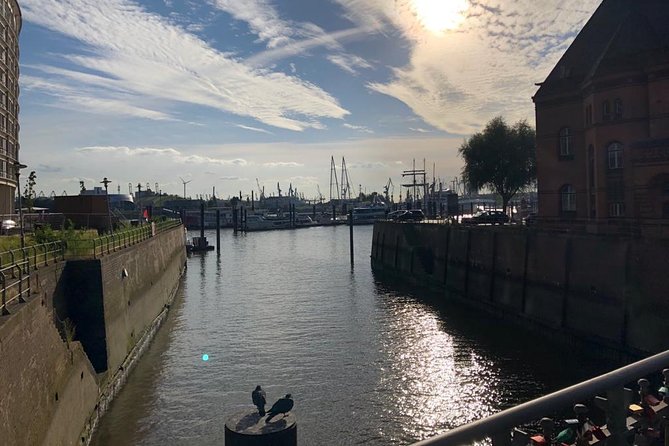
Then you hit Speicherstadt, and the mood changes right away. This is Hamburg’s warehouse district, described as the world’s largest historic warehouse complex, located in the port area between Bäumenall and Oberhafen.
UNESCO status is part of the point here. Speicherstadt has been a listed building since 1991 and has been on the UNESCO World Heritage List since July 5, 2015, as Speicherstadt and Kontorhaus district with Chilehaus.
On a walk like this, you don’t need an inside museum ticket to understand why. The district reads like a planned machine for storage and logistics. Brickwork, canal edges, and the dense arrangement of buildings create that classic “walled water city” feel.
The tour also gives you time, about 45 minutes, so you can slow down without feeling rushed. This is where you’ll get your best sense of the canal-side streets and bridge crossings that define Speicherstadt.
WASSERSCHLOSS Speicherstadt: A Famous Landmark Inside the Warehouse Complex
Within the Speicherstadt portion, you get a stop at WASSERSCHLOSS Speicherstadt. This four-story building was built between 1905 and 1907 during the third construction phase, which covered the years 1899 to 1912.
It’s one of the best-known landmarks in the area and one of the oldest buildings in the complex. Even if you don’t go inside, it’s worth paying attention to because it helps you understand the warehouse district as more than just storage. It was designed with recognizable civic and functional architecture in mind.
This is also a great spot for a breather. The warehouse alleys tend to pull you forward, then a landmark like this gives you a clear “pause and look” moment.
Quick Stops for Iconic Tickets: Miniatur Wunderland, Spicy’s, and Fleetschlösschen
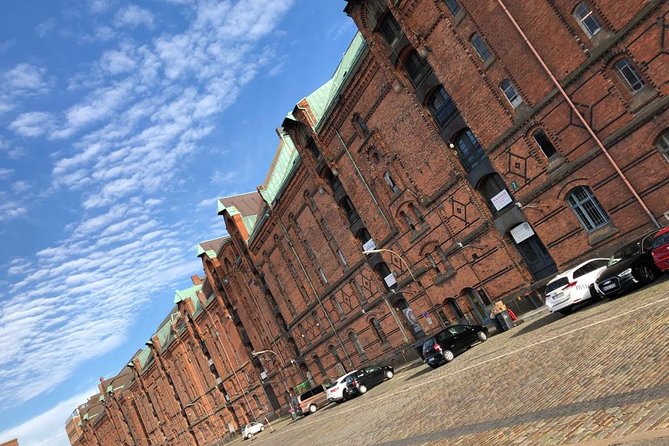
After you absorb the warehouse geometry, the tour threads through several famous attractions. Some are listed as admission not included, which means you can look and orient, but you may need separate tickets if you want to go in.
Miniatur Wunderland is one of those. It’s the largest model railway system in the world, located in the historic warehouse district. The scale is listed at 1:87, with 15,715 kilometers of tracks (as of August 2019) and around 1,040 digitally controlled trains on a 1,499 square meter area. Even if you only have a minute here, it’s the kind of detail that makes the warehouses feel like a venue for modern creativity, not just a preserved set.
Spicy’s Gewuerzmuseum is another quick hit. It’s a private museum founded in 1991 and was one of Hamburg’s most popular museums, with 152,000 visitors in 2007. The short stop still helps you place it in the district, so if you decide later that you want smells and spice stories, you can plan it.
Then there’s Fleetschlösschen, a historic building on Brooktorkai and St.-Annen-Brücke. It’s listed and part of the Speicherstadt UNESCO ensemble since July 2015. Historically it’s listed as a former toilet building, and today it’s used as a café and pub in a former coffee hatch.
These stops work best for two types of people. First, if you want a fast overview before choosing what to add later. Second, if you like the atmosphere around big attractions, even without going fully inside.
Elbphilharmonie: The Glass Landmark Built on the Kaispeicher A Shell
Finally, the route pulls you to the Elbphilharmonie, the concert hall that became a new symbol when it was completed in November 2016. The tour frames it as a cultural monument for all, which you can feel just from how it sits at the edge of the port city.
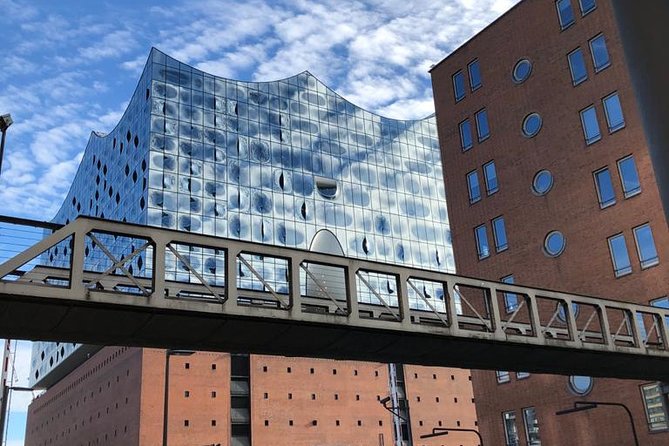
The building is 110 meters high and located in HafenCity at the head of the Großer Grasbrook, right on the right bank of the Norderelbe. It’s built on the former Kaispeicher A shell (built in 1963), and the modern structure uses a glass facade designed to evoke sails, water waves, icebergs, or quartz crystal.
What I like about the way the tour handles the Elphi is that it doesn’t treat it as a standalone wow. It connects the Elphi back to the warehouses, the industrial brick language, and the port location where the old shell still matters.
Admission for this stop is listed as not included, so think of this as orientation and exterior views. If you want the inside experience, you’ll need to plan that separately.
Kehrwieder and Überseebrücke: Former Islands, Flood-Proof Footpaths
After the Elphi moment, you shift to Kehrwieder and then to Überseebrücke, and the waterfront story keeps moving.
Kehrwieder is described as one of the former islands in Hamburg’s city area, specifically the western part of the historic warehouse district. It belongs to HafenCity, and its geography connects it to the Lower Elbe flood area and the northern Grasbrook. Historically, it was included in the fortified city in 1532 together with the neighboring island of Wandrahm.
That short explanation helps you see the district as something that literally changed over time. You stop thinking of these buildings as fixed backdrops and start seeing them as evidence of geography and human engineering.
Then you reach Überseebrücke, a covered pedestrian bridge run as part of the Port of Hamburg. It leads from the flood protection system at Vorsetzen to a pontoon in Hamburg’s Niederhafen, near the level of the former Jonashafen, east of the St. Pauli Landungsbrücken.
This stop wraps up the walk with a practical idea: the city’s pathways are built with water management in mind. It’s a fitting final note after learning about storm surge evacuation at Kibbelstegbrücke earlier.
Price and Value: $28.92 for a Guided Port-Architecture Pattern
At $28.92 per person for about two hours, the price feels reasonable because you’re not just passing landmarks. You’re getting a local guide to connect the dots across time periods, from historic logistics to today’s HafenCity redevelopment.
Most of the listed stops are “admission ticket free,” which matters for value. You’re mostly visiting public areas, viewpoints, and exterior landmark architecture, so you can keep your costs stable if you’re watching your budget.
The trade-off is that several high-demand attractions along the way list admission as not included, including Miniatur Wunderland and several Speicherstadt-related sites. If you want those add-ons, you’ll pay extra on top.
Group size also affects value. With a maximum of 15 travelers, you tend to get more back-and-forth and fewer “listen and move on” moments. If you want a guide you can ask questions of, this format usually pays off.
One more small value point: the tour uses a mobile ticket, which cuts down on fiddly paper logistics on the day.
Should You Book This Hamburg Hafen and UNESCO Walk?
Book it if you want a smart, high-impact introduction to Hamburg’s waterfront without committing to a full-day plan. This tour is especially good for first-timers who want both modern HafenCity context and the UNESCO Speicherstadt look, plus the Elbphilharmonie area explained in plain terms.
Skip it or plan something else alongside if you’re mainly chasing inside-the-ticket experiences. The route is short on time at many attractions, and admission for several popular stops is not included.
I’d also book it when your schedule allows for weather flexibility. Since the experience requires good weather, you’ll have the best day if you can adjust your expectations based on the sky.
If your goal is to leave Hamburg understanding how the city works, this is a strong use of two hours.
FAQ
How long is the Elbe Philharmonic Hall, HafenCity and Speicherstadt tour?
The tour lasts about 2 hours.
Where do I meet the guide and where does the tour end?
You meet at Überseequartier, 20457 Hamburg, Germany, and the tour ends at Baumwall Station, 20459 Hamburg, Germany.
How big is the group?
This experience is limited to a maximum of 15 travelers.
Is admission included for the attractions on the route?
Many stops are listed as admission ticket free, but some attractions are listed as admission not included, such as Miniatur Wunderland and several Speicherstadt sites.
What is the price of the tour?
The listed price is $28.92 per person.
Does the tour run in any weather?
The experience requires good weather. If it is canceled due to poor weather, you will be offered a different date or a full refund.
Warehouse Country, Reviewed
Everything else we filed on Hamburg
- Hamburg: Safari tour in St. Pauli
★ 4.9 · 11 reviews - Hamburg: Party Bingo with the Bingo Gringos
★ 4.8 · 11 reviews - Hamburg Harbor: 3.5-Hour Guided Tour by Bike
★ 4.7 · 11 reviews - Hamburg: 2-Hour St. Georg Walking Tour
★ 4.8 · 11 reviews - Hamburg: Guided Walking Tour in Danish
★ 5.0 · 11 reviews - Discover Hamburg in a retro Bulli
★ 3.0 · 12 reviews
Speicherstadt and HafenCity Tours, side by side.
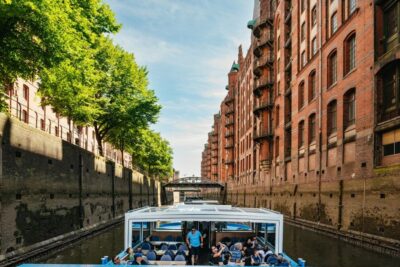 ★ 4.6Hamburg: 1.5-Hour Harbor and Speicherstadt Day CruiseFrom $4014,200 reviews
 ★ 4.4Hamburg: 1-Hour Harbor Sightseeing Cruise with HafenCityFrom $303,067 reviews
 ★ 4.7Hamburg: Elbphilharmonie Plaza and HafenCity Food TourFrom $691,711 reviews
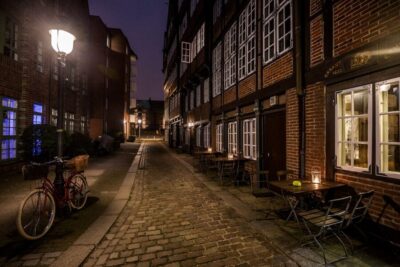 ★ 4.5Hamburg: Eerie Speicherstadt TourFrom $291,394 reviews
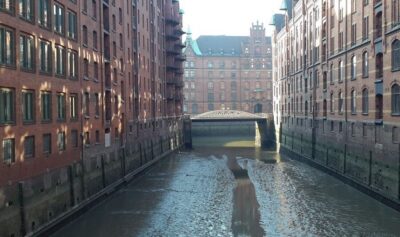 ★ 4.7Hamburg: Speicherstadt and Hafencity Guided TourFrom $161,344 reviews
 ★ 4.8Hamburg: Speicherstadt and HafenCity 2-Hour TourFrom $2821,063 reviews
 ★ 4.7Hamburg: Treasure Hunt Game through HafenCityFrom $29364 reviews
 ★ 4.6Hamburg: Speicherstadt Walking Tour with Coffee TastingFrom $50360 reviews
Other lists this tour is on