
REVIEW · THE BLACK FOREST
Freiburg – Historic walking tour
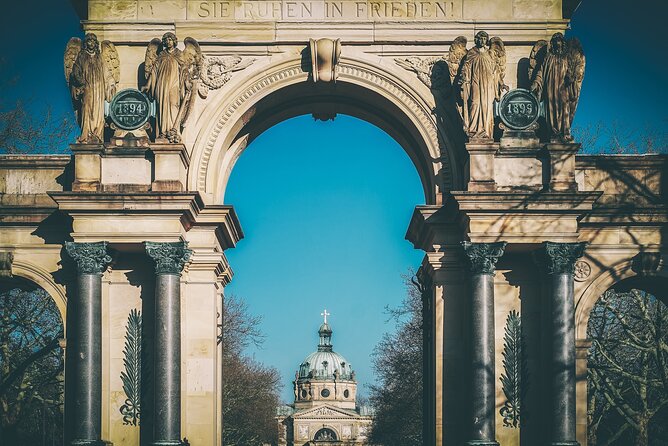
Freiburg is easier when someone points. This private historic walking tour helps you get your bearings fast and covers the city’s standout medieval sights in about two hours. I really like the pacing because it’s private and flexible, so your guide can slow down for the details that matter. The other big plus is the mix of places you would not connect on your own, from the Siegesdenkmal war monument to the cathedral’s long story of rebuilding. One drawback to plan for is simple: it’s still a walking tour in real city streets, so bring comfortable shoes and water, especially on hot days.
You’ll start at the Siegesdenkmal and move through Old Town landmarks that survived major disruption, including World War II bombings. I’m also a fan of the film-meets-architecture moment at the Haus zum Walfisch, where a Gothic building complex even shows up in the 1977 horror film Suspiria. The cathedral and churches are the kind of stops where a good guide helps the shapes and timelines click, not just the photos.
If you want quiet, slow museum-style time, this tour is not that. It’s a focused walking intro, with some stops outside or short interior moments, and entrance fees are not included.
In This Review
- Key Highlights Worth Your Time
- A 2-Hour Private Intro To Freiburg’s Old Town and Cathedral
- Siegesdenkmal to Haus zum Walfisch, Stories in Plain Sight
- Old Town Hall, the Old Court House, and a University That Spread Out
- Entering Freiburg Cathedral, Romanesque Style With Real Survival
- Bertold’s Fountain, Kaiser-Joseph-Strasse, and Two Medieval Gates
- Adelhauser Kirche and the Schwabentor Finish
- Price and Booking Timing, What You Really Pay For
- Comfort Tips for a Two-Hour Walk (Without Overthinking It)
- Who This Tour Suits Best
- Should You Book This Freiburg Historic Walking Tour?
- FAQ
- How long is the Freiburg historic walking tour?
- Is this tour private, and what’s the group size?
- Where do we meet and where does the tour end?
- What language is the guide?
- Are entrance fees included?
- Do I get a mobile ticket?
- What is the cancellation policy?
Key Highlights Worth Your Time
- A true private tour for your group, with English-speaking guidance and room for questions
- Siegesdenkmal details like Karl Friedrich Moest’s design and the 18-sculptor competition
- Haus zum Walfisch as a 17-building Gothic complex that connects to Suspiria
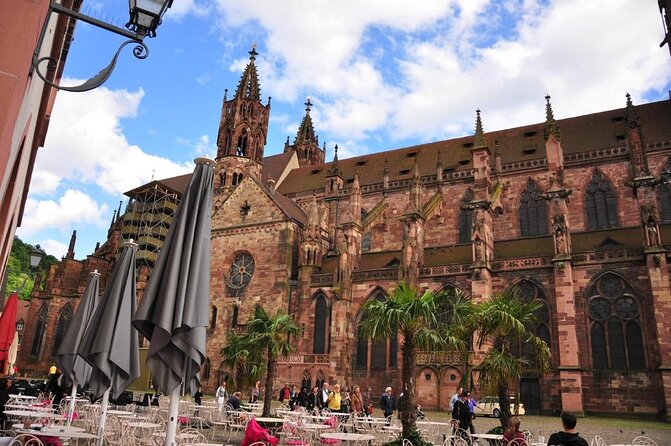
- Cathedral built around 1200, survived bombing raids, and includes altars linked to Hans Baldung and Hans Holbein the Younger
- Medieval gates in walking reach, including Martinstor and Schwabentor
- Dominican convent history at Adelhauser Kirche, formed from four medieval convents and rebuilt in 1687
More forest days and spa afternoons
- Freiburg: Gässle, Bächle and More City Tour★ 4.7 · 2,632 reviews
- Freiburg: City Walking Tour with Drag Queen Betty BBQ★ 4.7 · 525 reviews
- Freiburg: Guided City Tours with Actors★ 4.9 · 459 reviews
- Freiburg: Highlights of the old town★ 4.6 · 167 reviews
A 2-Hour Private Intro To Freiburg’s Old Town and Cathedral
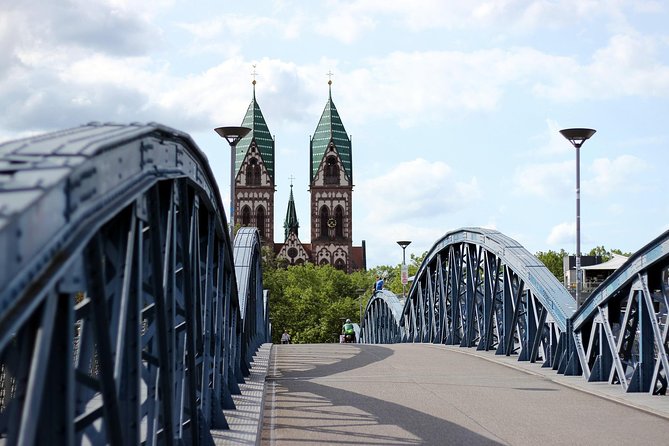
This is the kind of tour I recommend when you have limited time and want the important pieces of Freiburg lined up in your head. In roughly two hours, you cover a tight route through the medieval university city on the edge of the Black Forest, moving from monuments and civic buildings to religious landmarks and the surviving city gates.
What makes it feel efficient is that Freiburg’s center is compact, and your guide helps you connect what you’re seeing to why it exists. You’re not just collecting viewpoints. You’re learning how the city’s identity formed, then got reshaped by wars, fires, and rebuilding.
Because it’s private, the experience is also more human. If you’re curious about one building style, you can linger a bit. If your group has mobility questions, you can ask for practical pacing. Past groups highlighted that the guide (Matthias) can keep things engaging and energetic, even when the weather hits 35 C. That matters, because this route is not a “sit and listen” situation.
Siegesdenkmal to Haus zum Walfisch, Stories in Plain Sight
Your walk starts at the Siegesdenkmal, the Victory Monument tied to Germany’s 1871 victory over France after the Franco-Prussian war. The sculptor was Karl Friedrich Moest, and there was a public competition among 18 sculptors to choose the final design. It’s the kind of start that teaches you something useful right away: monuments here are not decorations. They’re part of political history, carved into stone so the meaning stays visible for generations.
From there, the tour shifts gears into architecture you might miss if you’re only scanning for “pretty.” You pass the Haus zum Walfisch, a Gothic bourgeois house complex made out of 17 buildings. The guided angle is fun because it ties form to culture. This place also became a central filming location for the 1977 horror film Suspiria. Even if you’re not a horror-film person, it’s a neat reminder that the city’s older structures keep finding modern roles.
The value of this stretch is how quickly it trains your eyes. After a couple of minutes, you’ll start noticing features in the facades and layouts that explain how Freiburg grew.
Old Town Hall, the Old Court House, and a University That Spread Out
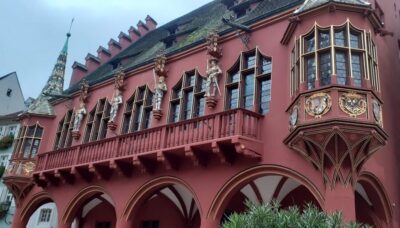
You then reach the Altes Rathaus, the old town hall, which is linked to Freiburg’s government functions. It has a Renaissance style, and the building is known for its paintings. A key story is the 1944 bombing and fire that destroyed the old structure, followed by reconstruction that added three new wings. That detail matters because it explains why the building looks the way it does today. It’s not just “old.” It’s old plus scars plus restoration.
There’s also a practical architectural moment: a bridge connects the old town hall to the new town hall. When you see it, you start to understand how civic life was organized around connected buildings, not isolated blocks.
Behind the old town hall is the Gerichtslaube, the old court house. This is one of Freiburg’s older government buildings, dating to about the 13th or 14th century. If you want a quick time jump, this is it. The tour uses this stop to show you that the medieval civic system didn’t vanish. It got rebuilt, adapted, and kept its physical presence.
Then you move to the old university. It opened in 1457, and the idea here is that it wasn’t limited to one building. The administration was said to run from many buildings, and some of the research departments at the site still exist. The guide frames it in a way that helps you picture the university as a living network rather than a single campus.
One small consideration: none of these stops are an all-day museum. You’re getting the story while walking past and looking closely, so if you like to read every plaque on your own, plan extra time afterward.
Entering Freiburg Cathedral, Romanesque Style With Real Survival
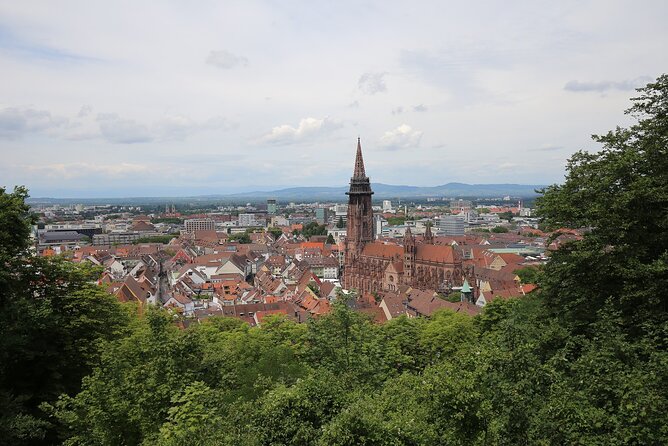
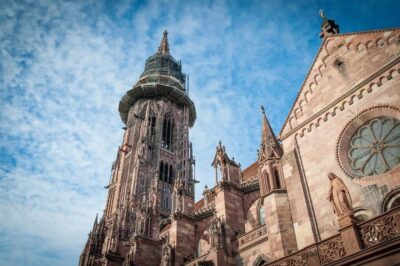
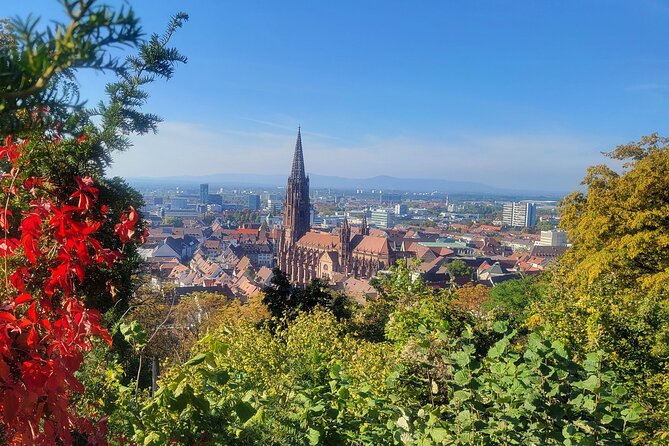
Freiburg Cathedral is the tour’s biggest religious landmark stop. It’s Romanesque in style, built around the year 1200 by the last duke of the Zähringen line. The cathedral survived the bombing raids of 1944, which gives it a special weight compared with some other buildings you’ll see on the route.
You’ll also learn a timeline point that helps you appreciate the scale: construction is said to have taken nearly 300 years, shaped by builders over generations. The guide explains that this kind of long project meant no single person saw it finished. That’s a helpful mindset for looking at the structure. You’re not looking at one master plan, you’re looking at a centuries-long process.
The cathedral is tied to major artistic details through its altars. The stops focus on two names you’ll recognize from German art history: Hans Baldung and Hans Holbein the Younger. If you like art and religious architecture, this is where the walking tour becomes more than just landmarks. It’s about what these places carried forward.
A practical note: cathedral admission is not included, so if you want to go in for any interior views beyond the exterior, budget for the entrance fee. The rest of the route includes some stops with free admission, so this is one place where your wallet will feel the difference.
Other walking routes through Freiburg
Bertold’s Fountain, Kaiser-Joseph-Strasse, and Two Medieval Gates
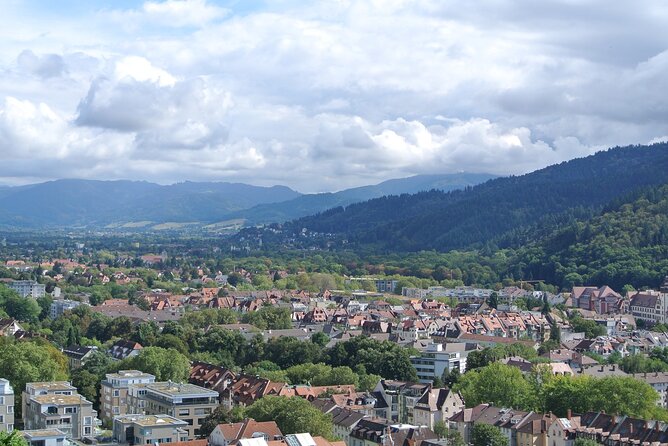
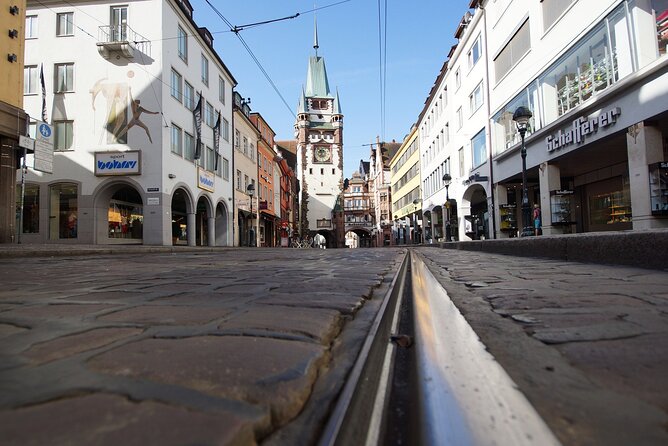
The tour keeps momentum by moving you from civic and religious buildings to the street-life anchors of Freiburg. One of the most central is Bertold’s Fountain. It features an equestrian statue, and the guide notes that the original fish fountain was destroyed during World War II. Now the fountain sits at a crossroads where trolley car lines intersect with the shopping street Kaiser-Joseph-Strasse. That combination, old sculpture meets modern transit, is exactly why Freiburg feels “alive” without being loud.
Next comes Martinstor, also called Martin’s gate. This gate dates back to the 13th century. It’s one of only two remaining gates out of the five medieval city gates that once stood. Seeing the surviving gate in context helps you understand how Freiburg protected itself and how the medieval boundary shaped movement through the city.
From there you visit Saint Martin’s church, which dates back to 1206. The guide points out the architectural changes over time, shifting from baroque toward neo-gothic. It was partially destroyed during the 1944 bombings and reconstructed starting in 1949. If you’ve ever wondered why some churches look like they were built more than once, this stop gives you a clear example of how rebuilding creates a mix of styles.
Adelhauser Kirche and the Schwabentor Finish
As the tour moves toward its end, you’ll reach Adelhauser Kirche, known as the Adelhauser New Convent. The story here is very Middle Ages to Early Modern. The building was created by merging four medieval Dominican convents, which had been centers of Christian mysticism. Then a new construction happened under the direction of Jean La Douze in 1687.
This stop is where the walk feels more focused and less “touristy.” It’s not just another church. It’s a site that connects spiritual movements to a physical place, and you can see how the building was reorganized across time.
Finally, you end at Schwabentor, the Swabian gate, dating to the mid 13th century. Like Martinstor, it’s one of the two remaining medieval gates out of five. Ending here makes sense because it’s a strong “wrap” visual. You’ve spent the walk learning about medieval Freiburg’s centers, civic structures, and defenses, and you finish at one of the surviving edges of the old city.
The route ends at Oberlinden 25, near the Schwabentor area. If you’re pairing this with lunch or a second walk, this ending point is convenient because it keeps you close to the core.
Price and Booking Timing, What You Really Pay For
The price is $370.06 per group, up to 15 people. That’s not cheap if you’re solo, but it can become very reasonable when you’re splitting costs with friends or family. Here’s the simplest way to think about value: you’re paying for a private, guided route through major Freiburg highlights, with an English-speaking guide and a structure that helps you understand what you’re seeing.
A rough per-person range can help you decide. If you fill the group capacity, it can work out to about $25 per person. If your group is smaller, it costs more per person, but you still get the key value: flexible pacing and an order that makes the city’s layout easier to interpret.
Two more timing signals matter. First, confirmations are received at the time of booking. Second, this tour tends to be booked about 59 days in advance. If your travel dates are fixed, don’t wait until the last week. Freiburg is a popular base for Black Forest trips, and a private slot can vanish.
One more practical point: tickets are mobile, so you can keep it simple and avoid paper hassles.
Comfort Tips for a Two-Hour Walk (Without Overthinking It)
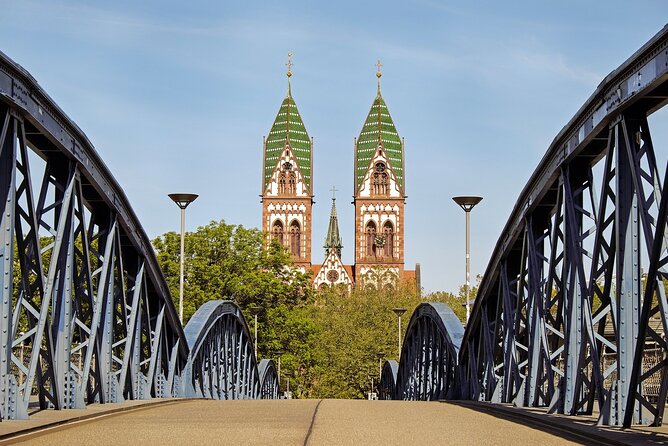
Because the tour is around 2 hours and includes multiple outdoor looks, your comfort setup matters. I’d plan for:
- Comfortable shoes you can walk in for city distances
- A refillable water bottle, especially in warm weather
- Quick phone use for navigation, but rely on your guide for the stories and context
Also, entrance fees are not included. Some stops are free, and the cathedral is flagged as not included. If you’re trying to control costs, you may want to decide in advance whether you’ll pay for cathedral access or stick to what you can see without entry.
If you care about photos, bring a clean lens wipe. This walk includes street corners, stone facades, and exterior gate views, and Freiburg weather can go from bright to cloudy quickly.
Who This Tour Suits Best
This tour works especially well if:
- You’re in Freiburg for a first visit and want a clear map of the center
- You like medieval streets but want the stories tied to the buildings
- You want a private guide so questions and pacing fit your group
- You’re traveling with a mixed group of adults who want something more meaningful than a self-guided loop
It can also be a good “connector” tour. After this, you’ll understand where to spend extra time, whether that’s lingering near the cathedral area, exploring around the city gates, or returning to the Old Town halls for a second look.
Should You Book This Freiburg Historic Walking Tour?
Book it if you want a structured, private introduction that covers major medieval Freiburg sights in a short window. The value comes from the way the route links monuments, civic buildings, university-era sites, and the cathedral into one story you can actually remember.
Skip it only if you want long interior visits, lots of sitting, or a budget-only self-guided plan. Entrance fees apply, and the format is a walk, not a slow museum day.
If you’re deciding between a generic overview and something with depth, this is the better bet. You’ll leave with the city’s key landmarks in place, plus enough context to explore on your own afterward.
FAQ
How long is the Freiburg historic walking tour?
The tour lasts about 2 hours.
Is this tour private, and what’s the group size?
Yes, it is a private tour/activity, and it’s set for a group of up to 15 people.
Where do we meet and where does the tour end?
You start at Friedrichring 13, 79104 Freiburg im Breisgau, and the tour ends at Oberlinden 25, 79098 Freiburg im Breisgau, near the Schwabentor (Swabian gate).
What language is the guide?
The guide is English speaking.
Are entrance fees included?
No. Entrance fees are not included.
Do I get a mobile ticket?
Yes, the tour uses a mobile ticket.
What is the cancellation policy?
This experience is non-refundable and cannot be changed for any reason. If you cancel or ask for an amendment, the amount you paid will not be refunded.
The Longer History of Freiburg
Pavements of Freiburg
Deeper Into the Black Forest
Everything else we filed on Freiburg
- Private: Outdoor Escape Game Tuniberg: Eduardo & the Wine Secret
★ 5.0 · 5 reviews - Private: Outdoor • Escape • Experience Freiburg: Luise & Friedrich
★ 5.0 · 5 reviews - Freiburg – Historic walking tour
★ 5.0 · 6 reviews - Freiburg: Walking and Strolling the Historic Center
★ 4.7 · 6 reviews - Group tour in Italian in Freiburg im Breisgau
★ 5.0 · 6 reviews - Freiburg Self Guided Sherlock Holmes Murder Mystery Game
★ 4.0 · 7 reviews
Black Forest and Baden-Baden Trips, side by side.
 ★ 4.7Freiburg: Gässle, Bächle and More City TourFrom $132,632 reviews
 ★ 4.7Freiburg: City Walking Tour with Drag Queen Betty BBQFrom $40525 reviews
 ★ 4.9Freiburg: Guided City Tours with ActorsFrom $329459 reviews
 ★ 5.0Black Forest Tour by car – start Offenburg or FreiburgFrom $1,208347 reviews
 ★ 4.0Baden-Baden, Black Forest and Strasbourg Day Trip from FrankfurtFrom $354297 reviews
 ★ 4.7Baden-Baden: Sightseeing Highlights Guided Walking TourFrom $17184 reviews
 ★ 4.6Freiburg: Highlights of the old townFrom $17167 reviews
 ★ 4.7Freiburg: Tour of the city with cathedral visitFrom $21167 reviews
Other lists this tour is on