
REVIEW · LOWER SAXONY
Fritz Haarmann murder tour through Hanover’s old town
Fritz Haarmann still casts a shadow in Hanover. This guided dark history walk connects the dots between the infamous serial killer and real old-town locations you can actually stand in and look at. I especially liked how clearly Hendrik Seiffert links Haarmann’s life stages to the places you visit, without turning it into pure shock value.
The other thing I really appreciated is the bonus: you also get a solid feel for Hanover’s historic center while you’re learning.
One heads-up: the tour is usually in German, so if you want English you need to request it after booking. The story is also heavy and grim, so this is not the choice for a light, goofy evening.
In This Review
- Key highlights you will feel fast
- A dark history walk through Hanover’s old town after 8:00 pm
- Meeting at Ernst August Platz, then settling into a tight route
- Kropcke-Uhr: why this landmark is a strong opening point
- Leineschloss and Landtag Niedersachsen: city power in the background
- Ballhofplatz: the kind of square where stories stick
- Rote Reihe: closing with the atmosphere it deserves
- Why Fritz Haarmann’s story is still tied to Hanover
- Price and value: $34.39 for a guided evening route
- Language, pace, and weather tips that keep the night enjoyable
- Who this tour is best for, and who should skip it
- Should you book the Fritz Haarmann murder tour?
Key highlights you will feel fast
- Small group size (max 10) keeps questions possible and the pacing calm
- Perfect night timing (8:00 pm) makes the gloomy mood fit the setting
- Four focused old-town stops, each about 20 minutes
- Stops are free to access, so you are paying for the guide and experience, not entrances
- Mobile ticket makes check-in straightforward
- International buzz in 1924 and the werewolf of Hanover nickname stay part of the story you will hear
More of Lower Saxony on foot
- SEA LIFE Hannover Ticket★ 4.0 · 96 reviews
- City walk through Hanover★ 4.0 · 20 reviews
- Hanover Private Walking Tour With A Professional Guide★ 5.0 · 7 reviews
- Taste and Travel Odyssey in Hanover★ 5.0 · 5 reviews
A dark history walk through Hanover’s old town after 8:00 pm
If you like your travel stories grounded in real streets, this Fritz Haarmann tour hits the spot. It is a guided evening walk through Hanover’s old town, built around the infamous serial killer Fritz Haarmann, also known as the werewolf of Hanover. The tone is serious, because the subject is serious. But the method is practical: you walk, you stop, you learn, you ask questions.
The timing matters. Starting at 8:00 pm means you experience those historic corners in low light, when the city feels quieter and the story lands better. You are also not spending your whole day hunting down sites on your own. You get a route that does the thinking for you.
You should come with curiosity, not squeamishness. This is about a sex murderer and the background behind the crimes, plus how the story became internationally known in 1924. That context is part of why the name is still tied to Hanover today.
Meeting at Ernst August Platz, then settling into a tight route
You meet at Ernst-August-Platz (Ernst August) at 8:00 pm, and the tour ends back at the same spot. That is a big deal for two reasons. First, you do not worry about how you will get home. Second, it keeps the evening simple if you are already using public transportation in Hanover.
The route itself is designed to be manageable. You are walking in the old-town core with short stop-and-go segments. Each of the four main stops gets about 20 minutes, and the whole tour runs roughly 1 hour 45 minutes.
The group size stays small, with a maximum of 10 travelers. In a topic like this, small groups help. You are more likely to get answers when you ask something specific. And the guide can adjust the pace so the group does not feel rushed through the darker parts.
Kropcke-Uhr: why this landmark is a strong opening point
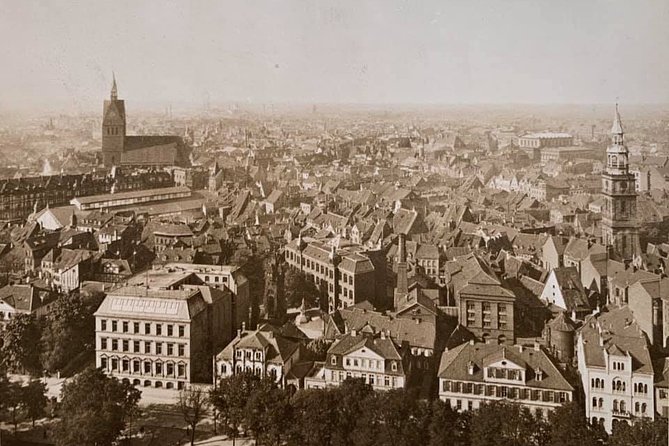
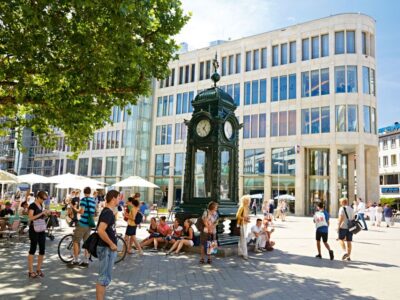
The tour begins with Kropcke-Uhr, a well-known clock area in Hanover. As a starting point, it works because it gives you a clear anchor right away. You can orient yourself in the city and understand that what you are hearing is not floating theory, it is tied to places you can point at.
Expect the guide to frame Haarmann’s story from early context, then move you into how Hanover became associated with the case over time. The story’s international attention in 1924 is part of the narrative arc you will hear here. That helps you understand why the name “werewolf of Hanover” is not just local gossip, it became a bigger story beyond Germany.
At this stop, you get about 20 minutes. Admission is listed as free for this stop, which is helpful. You are paying for storytelling, not extra entry fees.
Practical note: since Kropcke-Uhr is central, it is also a good place for the guide to check that everyone can hear. If you are sensitive to loud crowds later in the evening, this first stop is where you can decide if you want to stand slightly to one side for comfort.
Leineschloss and Landtag Niedersachsen: city power in the background
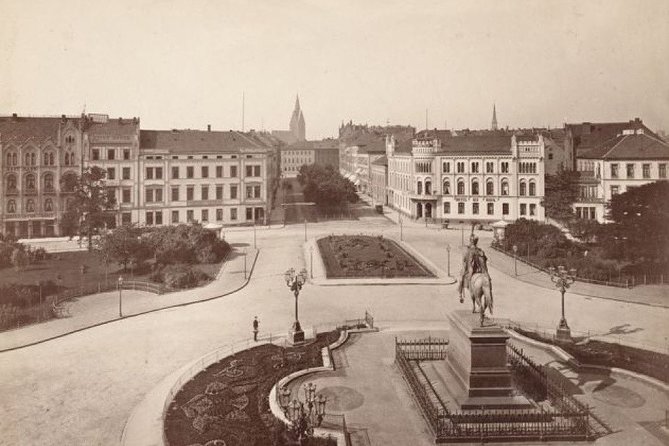
Next you reach Leineschloss, also called the Landtag Niedersachsen. This is another smart choice for a tour built around crimes and public reaction. You are standing in a place connected to government and civic life, which makes the contrast with a criminal case feel sharper.
Here, the guide’s job is to connect what you learned at the start to broader background: the atmosphere in early 20th-century Hanover and how the story became something people talked about and reacted to. You will hear about Haarmann’s life stages and the background story behind the crimes.
This stop also gets about 20 minutes, and it is marked as free for admission. You keep moving at an easy walking pace. So even if you find the topic grim, you still get structure and breaks between locations.
One consideration: if you are hoping for a “history museum style” explanation with lots of artifact viewing, this stop is not that. You are mostly learning through conversation and the setting, not a gallery visit. That is usually a plus for travelers who like walking tours, but you should know what you are signing up for.
Ballhofplatz: the kind of square where stories stick
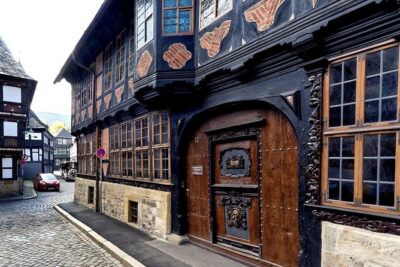
Then you move to Ballhofplatz. This is where the walk starts to feel more like a story you can inhabit. Squares and plazas like this often carry old-town character, and that helps the guide do something important: translate a notorious case into something you can visualize in real space.
At this stage, the tour keeps building through Haarmann’s timeline. You should expect the guide to keep tying events together and to explain the background so it makes sense as a sequence rather than a random list of facts. The tour description emphasizes Haarmann’s life stages, and this stop is part of how those stages get paced through the evening.
The stop runs for about 20 minutes and, again, the admission ticket is free. That keeps your costs predictable. It also means you can treat this as a true guided street walk rather than a tour that breaks into paid sightseeing.
A small but meaningful takeaway I like from this kind of stop is how Hanover’s old center can feel like a living stage. You are not just learning that the case happened in the city, you are understanding how the city layout can shape where stories spread and how people gather.
Rote Reihe: closing with the atmosphere it deserves
The final stop is Rote Reihe. This is a powerful place to end, because it brings you back into an old-town streetscape vibe that feels right for a darker story. Ending here also gives you a strong “I remember this place” finish. It is not just the facts you take home, it is a sense of place.
This stop continues the Haarmann narrative and helps connect what you learned earlier into the bigger picture of why the story still sticks to Hanover today. You will hear the international excitement angle from 1924 again in the way the guide frames the case’s afterlife, meaning how the notoriety traveled and lingered.
You get about 20 minutes here as well. Like the other stops, admission is listed as free.
If you do not like walking in cold or damp evenings, plan ahead. The tour is short enough that you will not freeze for hours, but the last stop still matters. Wear shoes you trust and bring a layer. It will make the experience more comfortable without changing the seriousness of the story.
Why Fritz Haarmann’s story is still tied to Hanover
This tour does not treat Haarmann as a distant headline. It frames him as part of Hanover’s past, specifically through the lens of what the city became associated with after the case. You hear that the story hit international excitement in 1924, and that it is still connected with Hanover even now.
That matters because it changes how you interpret the places. You are not just walking landmarks. You are seeing how a city’s identity gets shaped by stories, crimes, and public attention. The guide’s job is to connect the dots: Haarmann’s life stages, the background of the case, and how those details became the kind of reputation people still talk about.
I also like that the tone stays factual. The best reviews of this tour emphasize that the guide explains the facts clearly and can answer questions. That is exactly what you want on a topic that can easily become sensational. Clear explanations help you keep your footing and understand what is being said.
One more point: because this is a walking tour, you get a kind of “social history” effect. You see where people might have gathered, how central places connect, and how a story becomes part of the everyday geography of a city.
Price and value: $34.39 for a guided evening route
The price is $34.39 per person, for about 1 hour 45 minutes. On paper, that might look like a lot for a walking tour. In practice, it is closer to paying for a focused, expert-led experience that saves you time and gives you context you would not easily piece together yourself.
Here is why the value works:
- Small group size means you are not lost in a big crowd
- The tour covers multiple central old-town locations, rather than one stop with a long speech
- The guide is clearly capable of answering questions, which improves the learning payoff
- Mobile ticket means less friction on the ground
- Each stop lists admission as free, so your cost stays stable
If you like self-guided sightseeing, you could try to research Haarmann on your own. But then you would be left doing the hard part: building a coherent narrative across places. This tour does that for you, and for many travelers that is worth the price.
The other value piece is the timing. At 8:00 pm, you get something meaningful to do when many daytime sights start to feel repetitive. It turns evening into a story-based experience instead of just dinner and a walk.
Language, pace, and weather tips that keep the night enjoyable
The tour is usually in German. If you want an English version, you need to let the operator know after booking. That simple detail can make or break your experience. If you do not handle German well, confirm your language preference early so you do not end up with a tour you cannot follow.
The tour runs for about 1 hour 45 minutes, which is a manageable length for a walking evening. You are not doing an all-day commitment, and the stop timing is consistent at about 20 minutes each. That pacing helps you mentally reset between darker parts of the story.
Weather matters. The experience requires good weather. If it is canceled due to poor weather, you should be offered a different date or a full refund. I would plan to wear shoes you can walk in on uneven old streets, and bring a jacket if it is chilly. When the weather cooperates, the evening tone tends to feel more authentic.
Finally, this tour is listed as suitable for most travelers and allows service animals. It is also near public transportation, which makes it easy to fit into a Hanover itinerary without complicated transfers.
Who this tour is best for, and who should skip it
This is a great fit if you:
- want a Hanover old town walking experience with a strong story thread
- like guided explanations rather than reading everything on your phone
- feel comfortable with dark, factual history content
- want to ask questions and hear answers in a small group
It might not be for you if you:
- need an English tour and forgot to request it after booking
- prefer light topics with minimal grim subject matter
- would rather see artifacts and museum exhibits instead of listening to a narrative on streets
Should you book the Fritz Haarmann murder tour?
My take: book it if you want a compact, guided night route that turns Hanover’s old center into a meaningful backdrop. The small group, clear fact explanations, and friendly guide style make a difference here, especially because the subject is so heavy. And if you care about getting more than one thing at once, you are learning about Haarmann while also learning your way around the city.
Skip it if language is a problem for you or if you do not want dark crime history as part of your travel. In that case, you will probably feel restless rather than informed.
If you do book: dress for walking, confirm your language needs after booking, and come ready to ask questions. You will leave with a sharper sense of how Hanover’s streets and stories became linked.
Lower Saxony, Town by Town
Everything else we filed on Hannover
- Guided tour of the New Town Hall in Hanover
★ 5.0 · 4 reviews - Taste and Travel Odyssey in Hanover
★ 5.0 · 5 reviews - Hanover Private Walking Tour With A Professional Guide
★ 5.0 · 7 reviews - Goslar City guided tour
★ 4.5 · 11 reviews - City walk through Hanover
★ 4.0 · 20 reviews - SEA LIFE Hannover Ticket
★ 4.0 · 96 reviews
Hanover Bremen and Lower Saxony Tours, side by side.
 ★ 4.7Bremen: Walking Tour in German with Night GuardFrom $182,922 reviews
 ★ 4.5Bremen: City Center Guided Walking TourFrom $142,709 reviews
 ★ 4.1Bremen: Underground Guided TourFrom $181,408 reviews
 ★ 4.6Soltau: Heide Park Resort Day TicketFrom $421,160 reviews
 ★ 4.6Bremen: 3-Hour Beck’s Brewery TourFrom $281,091 reviews
 ★ 4.8Bremen: Walking Tour of Historic Schnoor DistrictFrom $14429 reviews
 ★ 4.5Hannover: Guided Old Town Walking TourFrom $13338 reviews
 ★ 4.6Bremen: Universum Science Center Entrance TicketFrom $21324 reviews
Other lists this tour is on