
REVIEW · NEUSCHWANSTEIN
Füssen: Private Guided Walking Tour
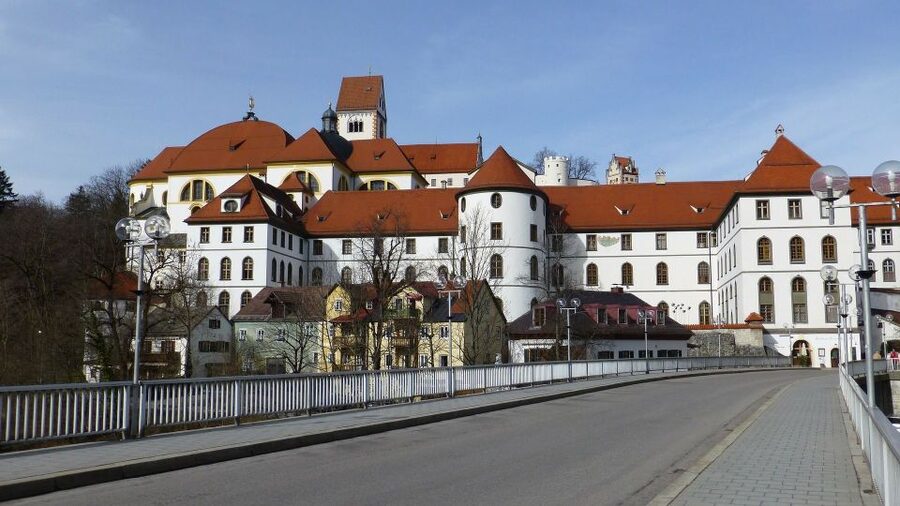
Füssen tells its story at walking speed. I love how the tour pairs High Castle views with clear explanations of power, faith, and treaties, all inside a compact town you can actually feel in your legs. I also like the focus on St. Mang’s 9th-century monastery story, plus the way the guide connects it to the town’s patron saint. The only real drawback is that it is not suitable if you need step-free access, since you will be on cobblestones and uneven old-town streets.
With a private guide for just your group, you get a 90-minute rhythm that works well before Neuschwanstein. You meet at Schrannenplatz, near the old-town heart, and the guide can adjust details on the spot to fit your pace and interests. If you want mostly inside-the-buildings stops, note that entrance fees are not included, so you may still need tickets for any paid sites.
In This Review
- Key things that make this tour worth your time
- Why Füssen Works So Well on Foot
- High Castle: Prince-Bishop Power, Not Just Big Walls
- St. Mang’s Benedictine Monastery and 9th-Century Origins
- Magnus of Füssen: The Patron Saint Behind the Atmosphere
- Treaty of Füssen and the Romantic Road Connection
- Schrannenplatz to Old Streets: How the 90 Minutes Really Feel
- Private Guide Quality: English or German, and Real Human Flexibility
- Price and Value for a 15-Person Private Group
- What to Watch For: Shoes, Weather, and Entrance Fees
- Should You Book This Füssen Walking Tour?
- FAQ
- How long is the Füssen private guided walking tour?
- What is the price for the tour?
- Is the tour private or shared?
- What languages are available?
- Where do we meet?
- Are entrance fees included?
- Is the tour suitable for wheelchair users?
- What should I bring?
- Can I cancel for a refund?
Key things that make this tour worth your time
- High Castle context: You learn why prince-bishops of Augsburg mattered, not just what the building looks like.
- St. Mang’s monastery timeline: The story reaches back to the 9th century.
- Magnus of Füssen: The patron saint’s legacy helps explain why the town feels the way it does.
- Treaty of Füssen and the Romantic Road: You connect local politics to the wider route travelers follow.
- 90 minutes, private pacing: Your guide works at your speed, with the option to customize.
Other routes to the castle on the crag
- From Hohenschwangau: Tour to Neuschwanstein Castle★ 4.7 · 693 reviews
- Füssen: Neuschwanstein Castle Entry Ticket and Audio Guide★ 3.7 · 524 reviews
- Neuschwanstein Castle Ticket With Audio Guided Tour★ 3.5 · 473 reviews
- Neuschwanstein Castle Tour with Skip the Line from Hohenschwangau★ 5.0 · 323 reviews
Why Füssen Works So Well on Foot
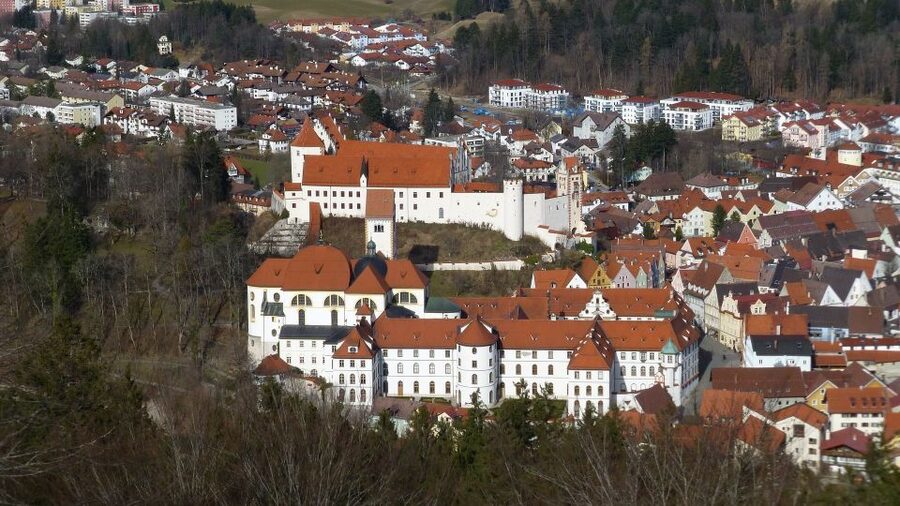
Füssen feels made for walking, because the important pieces sit close together in a walled, medieval-style town. The tour leans into that reality. You will move through the old lanes and cobbled alley charm, but you will still have the modern basics around you, so the experience stays easy to plug into a normal day.
One detail I really appreciate is the guide attention to the town’s “center stage” look. Füssen has a turquoise river running through the middle, and the whole scene keeps pulling you back toward the core. When you understand that the town was designed for life around movement and defense, the look of streets and walls starts to make sense, not just look pretty in photos.
Even the name gives you a fun angle for mental storytelling. Füssen is linked to the idea of feet, which is a handy reminder that this is one of those places where walking is not just convenient, it is part of the point.
High Castle: Prince-Bishop Power, Not Just Big Walls
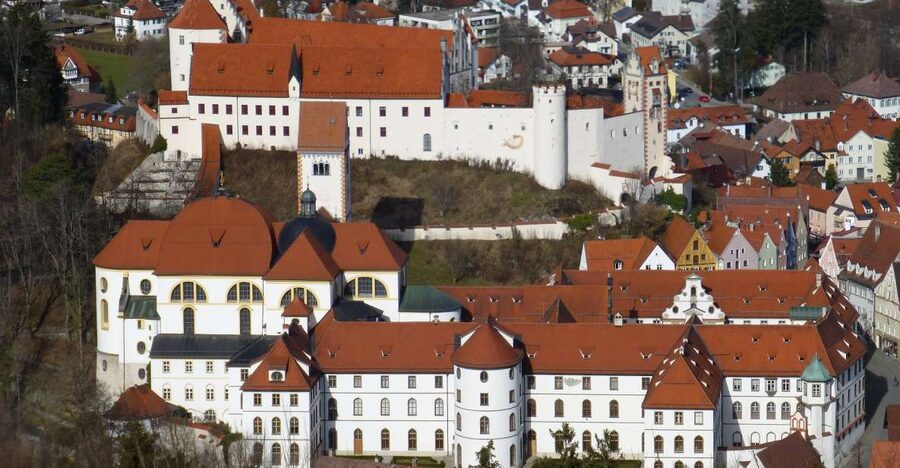
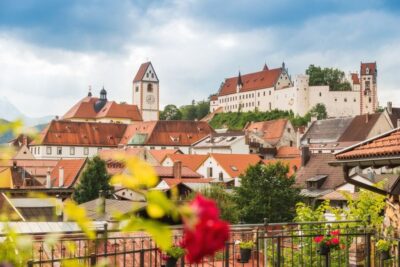
High Castle is the headline, and the guide treats it like more than a postcard. You hear that it was a former summer residence for the prince-bishops of Augsburg, which instantly reframes what you are looking at. This was not a random fortress, it was tied to power, religion, and regional control, the kind of mix Bavaria did unusually well.
The value here is interpretation. A lot of castle tours stop at dramatic descriptions. This one focuses on why the castle mattered in its time, so when you look up at the walls or the role of the site, you understand it as a statement of authority. That is especially useful if you are the kind of traveler who likes meaning, not just views.
There is also a specific thread about history that connects to local outcomes: the guide explains a treaty tied to ending imperial ambitions. You do not need to know complex political textbooks to follow it, because the tour keeps bringing you back to what it changed for people on the ground.
If you pair this with Neuschwanstein later, the payoff is that you will see the region as a living story of power and place, not two unrelated castles.
St. Mang’s Benedictine Monastery and 9th-Century Origins
St. Mang’s is one of the stops where Füssen stops being only medieval scenery and becomes a timeline. The tour highlights the monastery’s 9th-century history, and that matters because it tells you the town was organized around religious life long before the later castle era you see in architecture.
Why I like this kind of stop: monasteries are often where you get the “slow history.” You learn how communities formed, what institutions lasted, and why certain sites became anchors for years and years. When you hear the monastery story in the context of the town itself, you start noticing how other buildings and traditions fit into the same pattern.
Also, monastery history gives your day structure. If you are planning Neuschwanstein afterward, having St. Mang’s early context helps you place what you see next into a bigger, longer story.
Magnus of Füssen: The Patron Saint Behind the Atmosphere
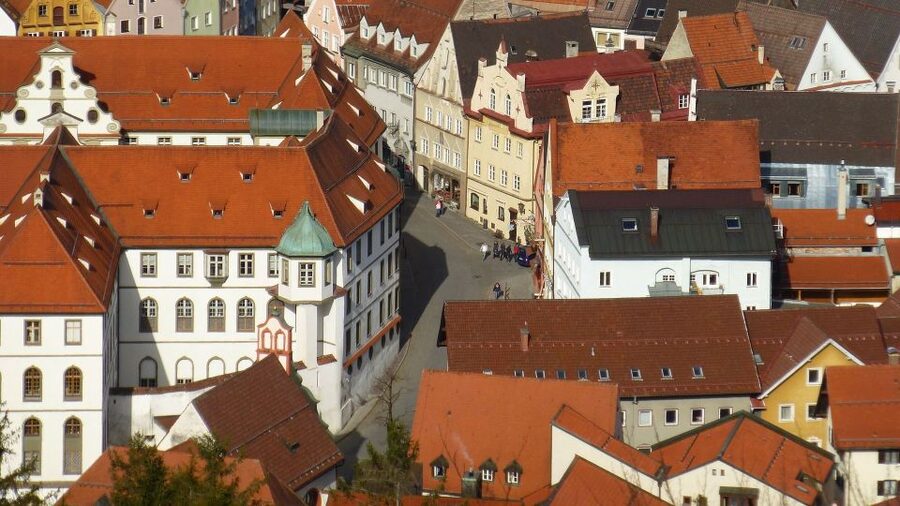
Every town has legends, but in Füssen the tour makes the patron saint feel practical. You learn about the legacy of Magnus of Füssen, the town’s patron saint. Instead of treating this as a trivia fact, the guide uses it as a lens for understanding why certain landmarks and traditions matter.
This is the kind of background that makes a town feel less like scenery and more like a community. Saints often show up in church dedications, local identity, and town rituals. When you connect the name Magnus to what you are seeing around you, it gives you a reason to pay attention to details instead of simply passing them by.
And if you are the type who likes to connect spiritual history to architecture, this is a strong match. You get a thread you can carry with you as you walk the streets near these historic religious anchors.
Other walking routes through Fussen
Treaty of Füssen and the Romantic Road Connection
The tour ties Füssen to two bigger ideas: the Treaty of Füssen and the Romantic Road.
First, the treaty connection. The guide explains it as a turning point that ended imperial ambitions. That single framing is more helpful than it sounds. When you understand a place as something shaped by political decisions, your eyes start spotting patterns. Why certain powers rose or faded. Why resources, influence, and planning followed the decisions they did.
Second, the Romantic Road angle. The tour positions Füssen as a practical start or key stop on the route, near Neuschwanstein. In other words, it helps you understand the “why” behind the route, not just the “checklist” of places. Once you see that, the next day’s sightseeing feels like a continuation instead of a separate detour.
This is exactly the kind of setup that makes a short guided walk worth it. A good guide helps you connect dots, so you do not have to rely on luck or a guidebook app in the moment.
Schrannenplatz to Old Streets: How the 90 Minutes Really Feel
This is a 90-minute private walking tour, and that timing is a sweet spot for Füssen. Long enough to cover multiple historic beats, short enough to keep your energy for later stops like Neuschwanstein.
You will want comfortable shoes, because the town’s character includes cobblestones and old-town surfaces. Even if you are a confident walker, this is one of those places where shoes matter more than you expect. Bring footwear you can trust, not just sneakers you hope will be fine.
Since it is private, your guide stays with your group only. You can also customize details on the spot. That flexibility is underrated. If you care more about religious history, the guide can lean that way. If you want the political angle, you can steer the conversation.
One more practical point: entrance fees are not included. That means you might get the architectural storytelling and exterior context, but if you want to go inside any ticketed sites, you should plan on paying separately.
Private Guide Quality: English or German, and Real Human Flexibility
This tour is led by a local guide with your group only, available in English and German. The format matters because it reduces the usual group-tour feeling of being rushed or left behind. You can ask questions and the guide can respond to what you are actually seeing.
The strongest sign of guide quality in the experiences shared is knowledge with a friendly delivery. One guide named Sandra is specifically mentioned for being knowledgeable about Füssen and Bavarian history, and for being very friendly. Another booking noted that the guide was able to accommodate time constraints and even start the tour early, which is a big deal when you are trying to fit Neuschwanstein into a tight schedule.
Weather also came up in a helpful way. In at least one instance, the guide brought umbrellas, which tells you the tour team thinks ahead. You cannot control rain in Bavaria, but you can control whether you are stuck in discomfort the whole time.
Finally, I like that the tone of the tour includes practical local thinking. In one experience, the guide recommended lunch and dinner spots, which is often what you want at the end of a walking day, especially when you would rather eat somewhere thoughtful than somewhere generic.
Price and Value for a 15-Person Private Group
The price is $310 per group up to 15 people for 90 minutes. That sounds high if you are thinking per person, because it is priced as a private guide rental.
Here is the real value math. If you travel as a small group, your per-person cost goes up, since you are dividing one guide fee among fewer people. If you travel with a family or a small group that can fill the private slot, it becomes more reasonable fast. With a full group near 15, the cost can feel like a bargain compared with paying separate guided tickets for each person.
It is also worth comparing value based on time. Ninety minutes in a compact town can prevent wasted walking, missed context, and the kind of “we saw it but we did not get it” feeling. The tour is designed to give you the story you can carry into later sightseeing, especially your Neuschwanstein day.
One more value detail: customization on the spot can save you from buying extra tours for the same topic. If your group wants more emphasis on certain historic threads, this guide format lets you adjust without changing plans.
What to Watch For: Shoes, Weather, and Entrance Fees
This is a walking tour in a historic town, so the biggest practical constraints are not complicated, they are physical and logistical.
First, mobility. The tour is not suitable for people with mobility impairments or wheelchair users. The data is clear about that, so if accessibility is a factor, plan a different format.
Second, surfaces. You will be on cobblestones and old-town streets, so comfortable shoes are non-negotiable.
Third, weather. Rain is part of the Bavarian experience. One guide experience noted umbrella support, but you should still be prepared for wet conditions. If you get cold easily, bring a layer that you can add or remove without turning the tour into a clothing store.
Fourth, entrance fees. Since they are not included, you should not expect the tour to cover paid entries by default. The guide can still explain what you need to know for outside viewing, and you can decide later what is worth your money to step into.
Should You Book This Füssen Walking Tour?
Book it if you want Füssen to make sense quickly. This is ideal for travelers who are planning Neuschwanstein soon and want historical context first. In 90 minutes you get town identity clues like the origin of the name Füssen as feet, plus the longer threads from Roman roots to the 9th-century monastery story and the way treaties shaped outcomes.
You should also book it if your group enjoys questions and conversation. The private format, bilingual guide options (English or German), and on-the-spot customization give you control over what you hear.
Skip or reconsider if you have tight mobility needs, since the tour is not suitable for wheelchairs. Also consider whether you expect mostly ticketed interior time, because entrance fees are not included. If your main goal is paid castle interiors, you may need to build that with additional plans.
In short, if you want an efficient, story-driven walk through Füssen’s medieval layers, this private guided tour is a smart use of an hour and a half.
FAQ
How long is the Füssen private guided walking tour?
The tour lasts 90 minutes.
What is the price for the tour?
It costs $310 per group, up to 15 people.
Is the tour private or shared?
It is a private group tour, with a local guide for your group only.
What languages are available?
The live tour guide is available in English and German.
Where do we meet?
You meet at Schrannenplatz, Schrannengasse 10, 87629 Füssen, Germany.
Are entrance fees included?
No. Entrance fees are not included.
Is the tour suitable for wheelchair users?
No, it is not suitable for people with mobility impairments or wheelchair users.
What should I bring?
Wear comfortable shoes for walking on old-town surfaces.
Can I cancel for a refund?
Yes. You can cancel up to 24 hours in advance for a full refund.
Pavements of Fussen
Getting to Neuschwanstein, Compared
Everything else we filed on Fussen
- Private tour of the best of Fussen – Sightseeing, Food & Culture with a local
★ 5.0 · 3 reviews - Munich Card (Group) with public transport: Save at attractions & tours!
★ 5.0 · 5 reviews - Füssen: Private Guided Walking Tour
★ 4.6 · 7 reviews - Munich Card with public transport: Save at attractions & tours!
★ 4.5 · 10 reviews - Füssen: E-Bike or Mountain Bike Rental
★ 4.1 · 10 reviews - Canyoning Advanced Day Trip
★ 5.0 · 13 reviews
Neuschwanstein Castle Day Trips, side by side.
 ★ 4.5From Munich: Neuschwanstein & Linderhof Castle Full-Day Trip12,494 reviews
 ★ 4.5Neuschwanstein & Linderhof Castle-Fairytale Day Tour from MunichFrom $957,275 reviews
 ★ 4.5Neuschwanstein Castle Tour from MunichFrom $955,117 reviews
 ★ 4.7From Munich: Neuschwanstein Castle Full-Day TripFrom $933,977 reviews
 ★ 5.0Premium Neuschwanstein Castle and Linderhof VIP Tour from MunichFrom $2272,480 reviews
 ★ 4.5Neuschwanstein Castle and Linderhof Palace Day Trip from MunichFrom $911,756 reviews
 ★ 4.8From Munich: Neuschwanstein Castle Full-Day Trip by VanFrom $1471,177 reviews
 ★ 4.8From Munich: Premium Neuschwanstein Castle & Linderhof TourFrom $2201,151 reviews
Other lists this tour is on