
REVIEW · THE BALTIC
Güstrow: Guided tour of the historic city center
Güstrow packs centuries into 90 minutes. This guided city-center walk is built around the brick Gothic cathedral and Ernst Barlach’s Floating, plus lively stops in the historic squares where the town’s big names left their mark.
I also love how the old town still feels undestroyed for 500 years, so architectural styles show up right on the street, not behind glass. One possible drawback: if you mainly want the wider city center and not as much focus on the cathedral, you may wish the tour time were spread a bit more evenly.
In This Review
- Key things you will notice
- First stop: meeting at Güstrow Information
- Winding streets in an old town that’s stayed standing
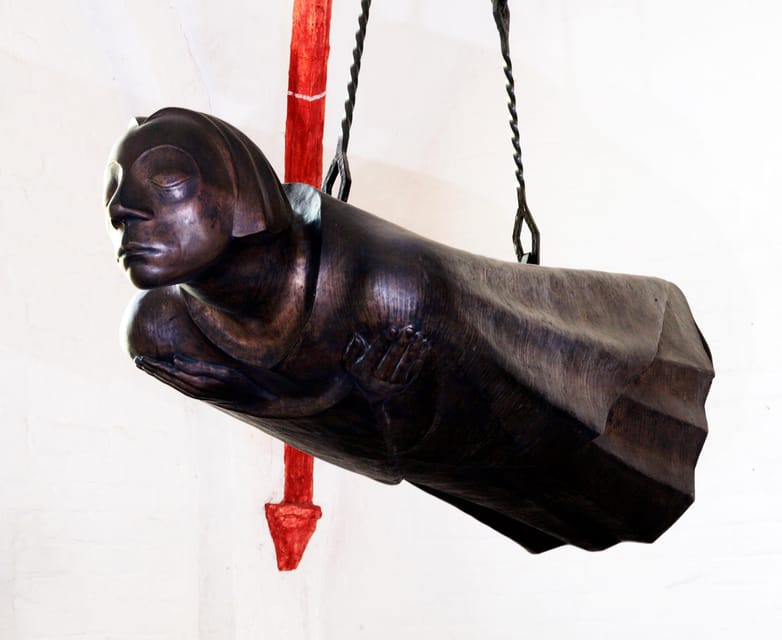
- Brick Gothic cathedral and Ernst Barlach’s Floating
- Market square: town hall, parish church, and style shifts
- Renaissance castle of Northern Europe, even while under restoration
- The people behind Güstrow, from Wallenstein to Uwe Johnson
- 90 minutes on foot: how to make the most of your walk
- Free city museum before or after the tour
- Price and value: why $10 can feel like a steal
- Should you book this Güstrow city-center tour?
- FAQ
- How long is the guided tour of the historic city center in Güstrow?
- What is the price per person?
- Where does the tour start?
- What language is the tour guide?
- Is the tour wheelchair accessible?
- What is included in the price?
- Are entrance fees included?
- Can I cancel, and can I pay later?
Key things you will notice
- Ernst Barlach’s Floating inside the brick Gothic cathedral, a must-see anchor for the whole walk
- 500-year-old old town feel, with classicist houses, Renaissance buildings, and brick Gothic details side by side
- Market square highlights like the town hall, parish church, and town houses from different eras
- Renaissance castle stories, including why it matters, even while it’s under restoration
- An energetic German city guide who keeps the walking tour moving and answers questions patiently
- A free city museum add-on you can visit before or after the tour
First stop: meeting at Güstrow Information
You start at Güstrow Information, Franz-Parr-Platz 10 (18273 Güstrow). That location matters more than you’d think, because it puts you right at the center of where local life and historic buildings overlap. In practice, it means you are already in the right frame of mind before the walking begins: you are not hunting for landmarks, you are letting the guide help you get your bearings fast.
The tour runs about 1.5 hours, with the guide speaking German. If you understand German well, you will catch the details and the connections between people, buildings, and politics. If your German is basic, you can still follow along, because the architecture does a lot of the explaining.
One more practical note: entrance fees are not included, so think of this as a guided orientation plus exterior views and interior moments where the tour goes. If you want a specific interior ticketed experience, you’ll need to plan that separately.
Winding streets in an old town that’s stayed standing
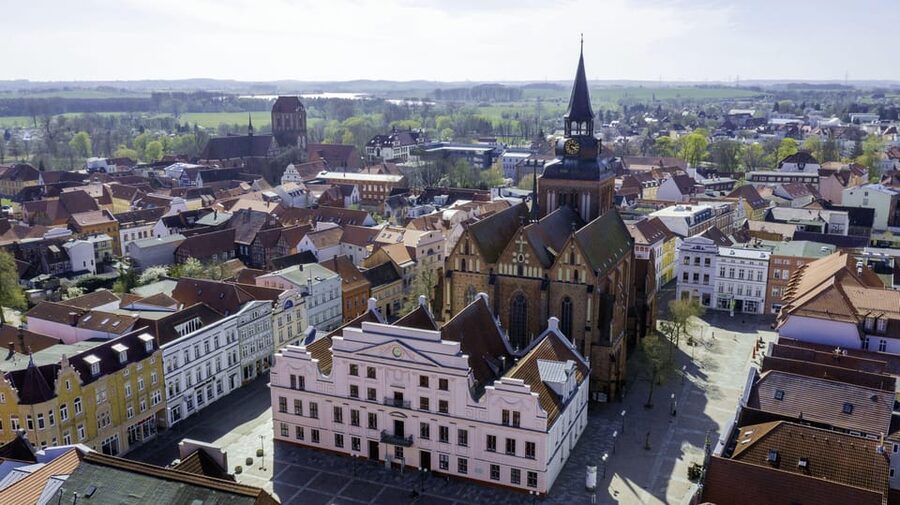
Güstrow is a former residential and administrative town, and you feel that right away in the mix of buildings and the way the streets fold and open. The walk is designed around historic squares and connecting lanes, so you keep seeing new styles pop into view rather than repeating the same street frontage for the whole 90 minutes.
What makes this special is the time depth. The old town is described as undestroyed for 500 years, and that translates into an atmosphere where you can actually compare eras in real space. You’ll likely spot classicist town houses, Renaissance-era features, and brick Gothic treasures, all within an easy walking loop.
You will also hear about major historical figures connected to the area, including Wallenstein, August the Strong, Tsar Peter the First, and later cultural names like Ernst Barlach and Uwe Johnson. Even when a person’s “connection” is explained through references rather than a single preserved room, the guide helps you understand why their era shaped the city’s identity.
Brick Gothic cathedral and Ernst Barlach’s Floating
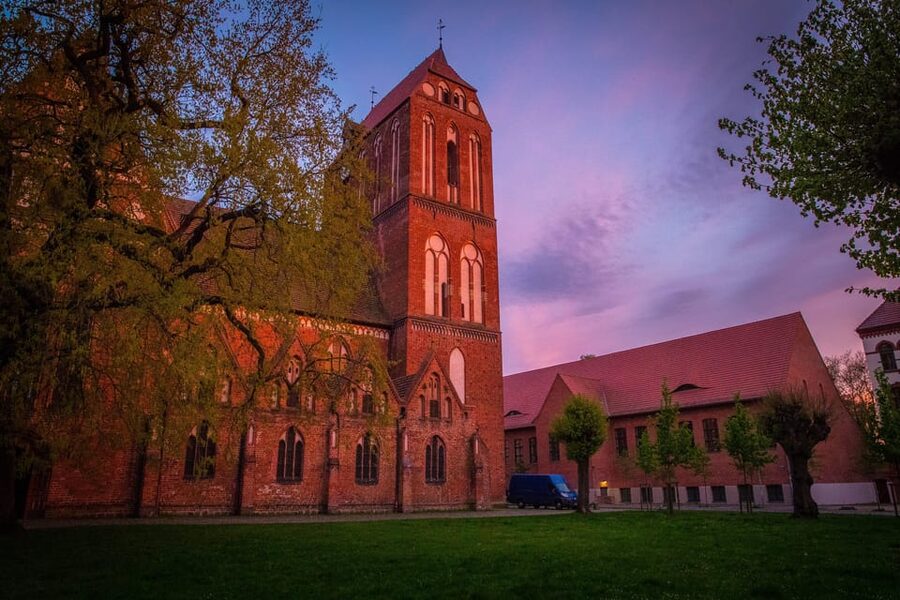
The cathedral is the tour’s anchor stop, and it is not there just for a quick glance. You’ll visit the brick Gothic cathedral and see the connection to Ernst Barlach’s Floating. This is the kind of stop where the guide’s storytelling matters, because the art and architecture work together: brick Gothic design gives the space its weight and mood, and Barlach’s work becomes the emotional focal point.
If you care about how art fits into a religious setting, this is your payoff. Even if you are not a museum person, you will likely find yourself looking more carefully at details once you understand what you are seeing and why it was placed there.
The main consideration is time allocation. Some people come hoping to cover more of the city center beyond the cathedral, and the tour can end up spending enough minutes at the Dom that you might feel a bit “cataloged” by the end. If you are cathedral-focused, that is a plus. If not, go in with the right mindset: this walk is organized around that stop.
Market square: town hall, parish church, and style shifts
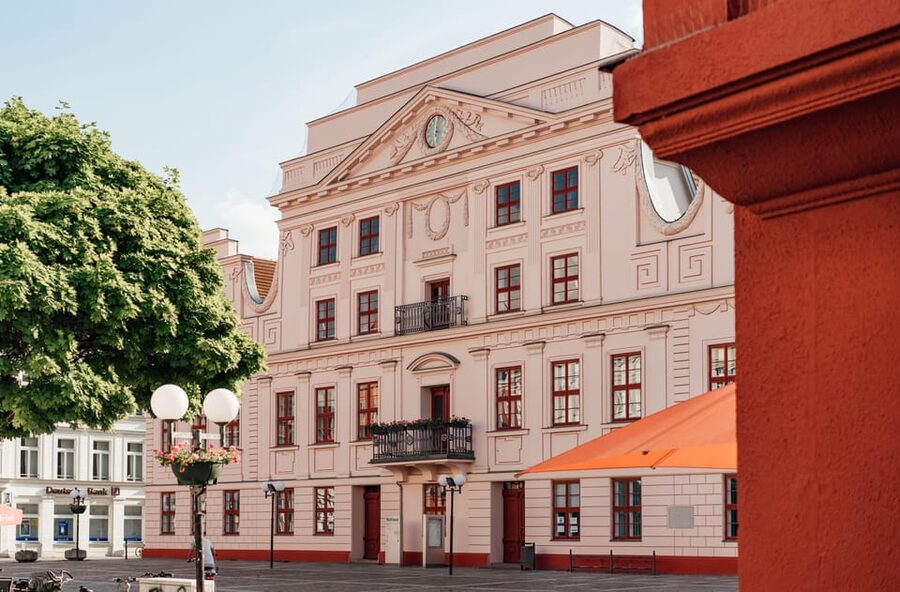
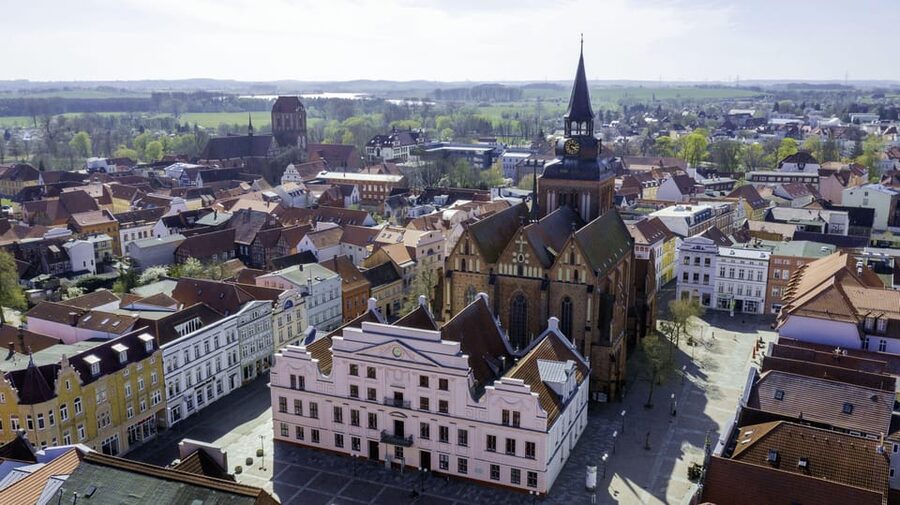
After the cathedral, the tour shifts to the social heart of town: the market square. This is where you see the city’s civic and everyday side. You’ll visit the area around the town hall and the parish church, and you’ll also look at town houses that represent different stylistic periods.
I like market squares because they act like a time machine with practical clues. A town hall signals governance. A parish church signals community life. And the surrounding buildings tell you how wealth, design taste, and status changed over the centuries. A good guide turns those into a story you can follow, instead of making it feel like a list of facades.
One advantage here is the balance between “big landmark” and “human scale.” The market square gives you architectural meaning, but it also gives you a sense of how people would have moved through the space day after day. If you like photos, this is also where you can usually find cleaner angles and more open sightlines than in the tightest lanes.
Renaissance castle of Northern Europe, even while under restoration
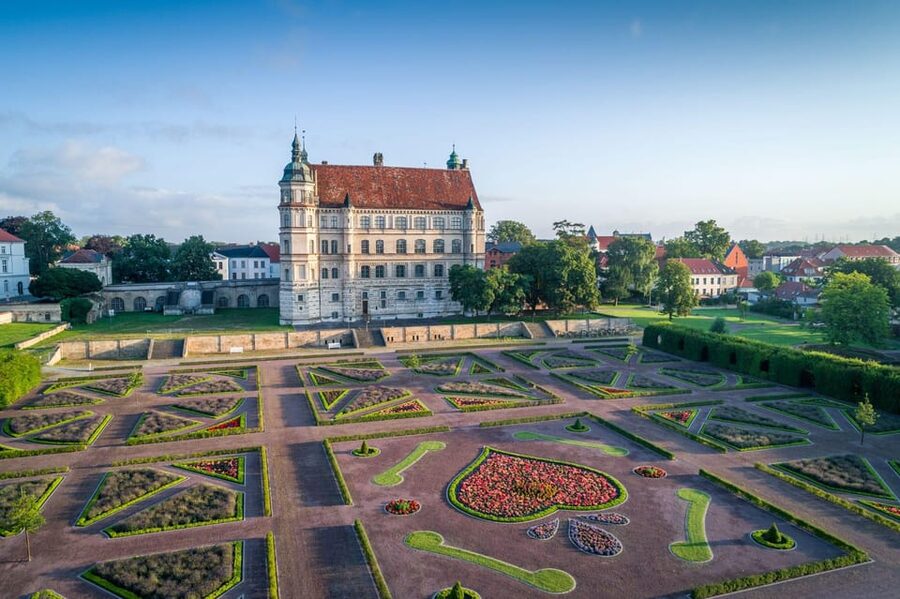
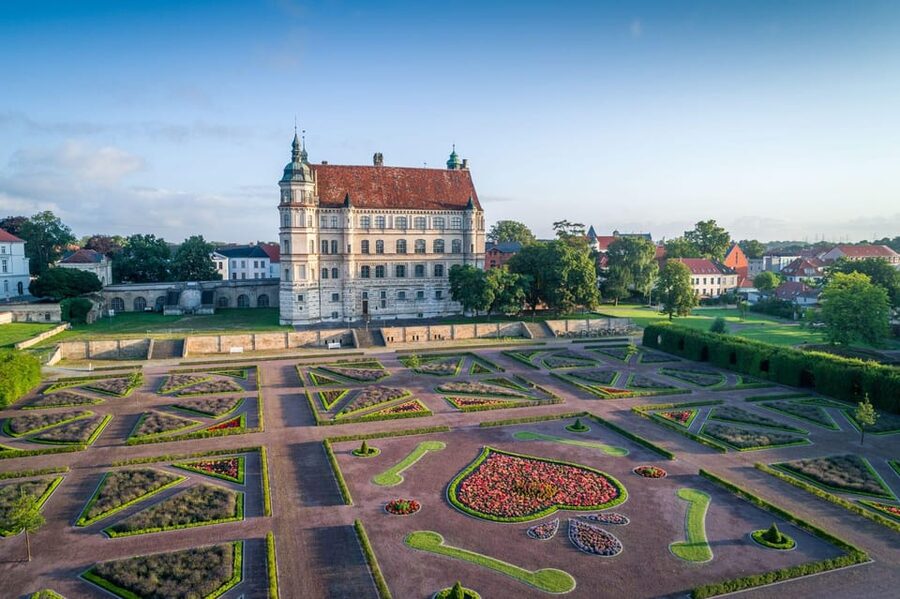
The Renaissance castle is presented as the most important in Northern Europe, and yes, it is under restoration. That matters for your expectations. You should treat it like a story-driven visit more than a full “walk-through every room” kind of experience.
The value is in learning why the castle is important and how its Renaissance identity fits into the broader Güstrow picture. When a building is under restoration, the city is basically telling you: this place is still alive. It is not a dead monument. Even if you cannot see everything you might in a fully finished state, you can still understand the scale and significance.
So what should you do with this stop? Look at the castle as a piece of the city’s long arc, not just a single moment. The guide’s job is to connect it to the town’s role as a residential and administrative center. If you want a photo, aim for angles that show the castle in relation to the surrounding urban fabric, because that’s often where the “why it matters” story becomes visible.
The people behind Güstrow, from Wallenstein to Uwe Johnson
A good guided tour does more than point. It connects. In Güstrow, you get a mix of major political names and cultural ones, including Wallenstein, August the Strong, and Tsar Peter the First, plus later figures like Georg Friedrich Kerting, John Brinkmann, Ernst Barlach, and Uwe Johnson.
You might not see a plaque for each person. That’s normal. Instead, the guide ties these names to what shaped the city, such as the town’s residential and administrative status and the way that status attracted attention and influenced construction and civic life. In other words, you are learning how a place earns its reputation, then keeping that in mind as you walk past the buildings.
I especially like when a tour includes both early power figures and later artists and writers. It reminds you that a city is not only rulers and wars. It is also the people who created culture after the political spotlight moved on.
90 minutes on foot: how to make the most of your walk
This is a 1.5-hour guided city-center tour, so pacing matters. You won’t get unlimited time at each stop. The guide keeps the loop moving through winding streets and historic squares, and the structure is meant to give you a coherent story: cathedral and art, civic market square, then the Renaissance castle thread.
Here’s how you personally can get more out of it. Ask one or two targeted questions early, while your guide is still setting the context. Good questions for this specific kind of walk are simple:
- Which part of what I’m seeing is brick Gothic versus Renaissance?
- What should I look for on the castle facade, given it’s under restoration?
- How do the major figures tie back to Güstrow’s role as an administrative and residential town?
Also, bring comfortable shoes. Old towns tend to reward slow steps, not speed. Even if the tour is short, you will enjoy it more if you can pause for quick photos without feeling rushed.
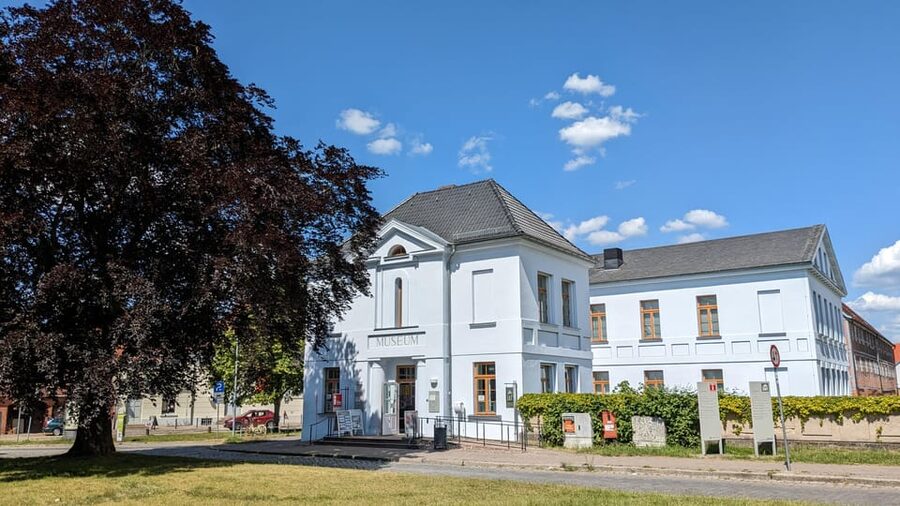
Free city museum before or after the tour
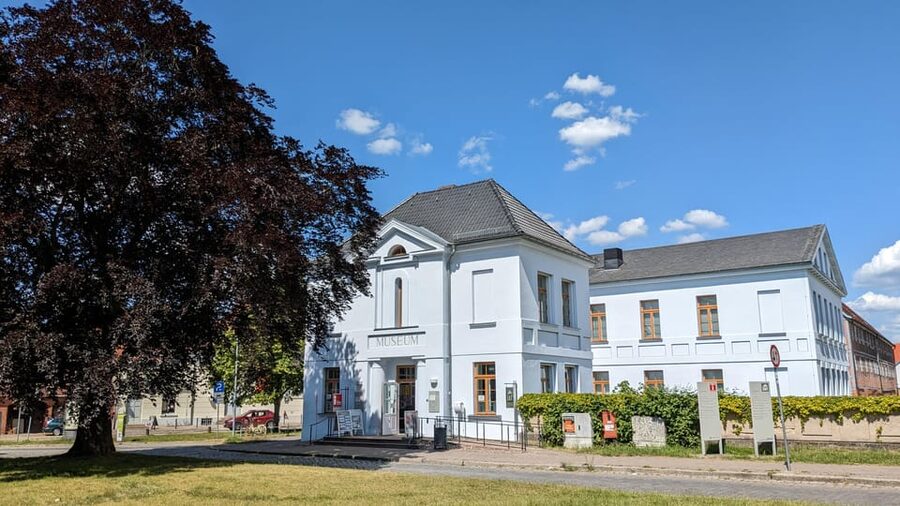
One of the best value perks here is the free city museum you can visit either before or after the walk. That is a smart combo because the tour gives you the street-level “where and why,” and the museum can fill in the “what exactly” and background details that you might not have time to absorb during the walk.
I like using guided tours to set context, then using museums to confirm and expand it. If you have energy after the 90 minutes, do the museum right away. If you want a breather, do it before and treat the tour like a guided route through what you just learned.
Because entrance fees are not included for attractions in the tour itself, the free museum becomes even more important for value. It’s the built-in way to make your money and time go further.
Price and value: why $10 can feel like a steal
At $10 per person for a 1.5-hour guided walking tour, you’re paying for more than narration. You’re paying for someone to connect architecture, art, and local identity in a way that would take you longer to piece together on your own.
The real value comes from three things working together:
- You get a structured route through key historic areas, not just random wandering
- The cathedral stop is anchored by a specific art highlight, Ernst Barlach’s Floating
- You also get a free city museum option before or after, which extends the experience without extra ticket costs
It’s also a good budget choice if you want something meaningful without committing to a full day. You can fit this into a longer Northern Germany itinerary or use it as your “first day context” activity so the rest of your time makes more sense.
Should you book this Güstrow city-center tour?
If you want a short, focused way to understand Güstrow’s center, I think this is an easy yes. You get the cathedral and Barlach’s Floating, the market square with civic landmarks, and the Renaissance castle story, all wrapped into a route that works for people who enjoy architecture and clear explanations.
Book it if:
- You like guided walking tours with story-driven stops
- You want a German guide and you don’t mind spending more time at the cathedral
- You want a low-cost add-on through the free city museum
Skip or adjust your expectations if:
- You are mainly interested in hitting lots of different sites quickly and want fewer details at the Dom
If you decide to go, show up with comfortable shoes and a curious mindset. This tour is built to help you read the city, not just tick off photos. And once you understand how the pieces connect, the whole historic center starts to click.
FAQ
How long is the guided tour of the historic city center in Güstrow?
The tour lasts about 1.5 hours (90 minutes).
What is the price per person?
It costs $10 per person.
Where does the tour start?
The meeting point is Güstrow Information, Franz-Parr-Platz 10, 18273 Güstrow.
What language is the tour guide?
The live tour guide speaks German.
Is the tour wheelchair accessible?
Yes, the tour is listed as wheelchair accessible.
What is included in the price?
You get an experienced city guide, the 90-minute tour, and a free city museum visit before or after the tour.
Are entrance fees included?
No, entrance fees are not included.
Can I cancel, and can I pay later?
You can cancel up to 24 hours in advance for a full refund, and you can reserve now and pay later.
Baltic Coast and Island Tours, side by side.
 ★ 4.0Lübeck: 1-Hour Splash Bus City TourFrom $352,626 reviews
 ★ 4.7Lübeck: entertaining guided tour to old town highlightsFrom $16594 reviews
 ★ 4.7Schwerin: City Highlights Guided TourFrom $12541 reviews
 ★ 4.8Lübeck: Entertaining Tour Through Hidden CourtyardsFrom $20483 reviews
 ★ 4.5Schwerin: Tour with the Night WatchmanFrom $15366 reviews
 ★ 4.6Stralsund: 1-Hour Harbor CruiseFrom $15365 reviews
 ★ 4.5Rostock: Guided tour of the historic city centerFrom $17311 reviews
 ★ 4.5All-in-One Berlin Shore Excursion from WarnemundeFrom $83293 reviews
Other lists this tour is on