
REVIEW · HAMBURG
Hamburg: Private – Town Hall, Speicherstadt, Elbphilharmonie
Hamburg history comes with great architecture. This private 2-hour walk strings together the Hamburg Rathaus and standout waterfront landmarks, so the city’s big story makes sense fast.
I also love how a guide like Jutta brings it to life with clear humor, and even uses photos to show how Hamburg changed over time. It is the kind of guided pace that works well for small groups, including people who want everything explained in English.
One possible drawback: in just two hours, you get smart overviews and great photo stops, but not the kind of long, inside-the-building time you might want if you are looking for a museum-style visit.
In This Review
- Key Points You Will Actually Care About
- A Smart 2-Hour Mix of Power, Port Life, and WWII Memory
- Inside Hamburg Rathaus, Where the City Showed Off Its Wealth
- Chamber of Commerce Views, Plus the Proof That Hamburg Runs on Trade
- Nicolaifleet and the St. Trost Bridge Moment That Feels Like Old Hamburg
- St. Nikolai Memorial, The WWII Ruin That Changes How You See the City
- Deichstrasse Merchant Houses, 17th-Century Details You Can Still Read
- Speicherstadt UNESCO Warehouses, Red-Brick Time Travel With a Coffee Option
- HafenCity, A Modern City Plan That Explains Hamburg’s Next Chapter
- Elbphilharmonie, The 2017 Icon and Why It Matters Beyond Photos
- What the Private Format Does for You (And Who It Fits Best)
- Price and Value, Is $294 Worth It?
- Practical Tips So You Enjoy It More
- Should You Book This Hamburg Private Tour?
- FAQ
- How long is the Hamburg private tour?
- What is included in the price?
- How much does it cost and what is the group size?
- Where does the tour start and end?
- What languages are available for the live guide?
- Is free cancellation available?
Key Points You Will Actually Care About
- Private group pacing with a real guide, not a rushed bus stop routine
- Rathaus and WWII St. Nikolai in the same route, so you see the contrast right away
- Speicherstadt UNESCO area with red-brick warehouse streets that feel like a different era
- Elbphilharmonie viewpoint time plus context on why the building matters
- Jutta-level storytelling noted for humor, flexibility, and easy explanations
More red brick and canal bridges
- Hamburg: 1.5-Hour Harbor and Speicherstadt Day Cruise★ 4.6 · 14,200 reviews
- Hamburg: 1-Hour Harbor Sightseeing Cruise with HafenCity★ 4.4 · 3,067 reviews
- Hamburg: Elbphilharmonie Plaza and HafenCity Food Tour★ 4.7 · 1,711 reviews
- Hamburg: Eerie Speicherstadt Tour★ 4.5 · 1,394 reviews
A Smart 2-Hour Mix of Power, Port Life, and WWII Memory
This tour works because it does not try to do everything. It chooses the places that explain Hamburg in layers: government and wealth in the city center, port and trade in the canals and warehouses, and the WWII scars you still feel in the middle of it all. The private format matters here. You can ask questions, slow down for photos, and get answers on the spot.
If you enjoy walking through cities with a strong narrative, you’ll like the flow. It starts with the power center, then moves to the waterfront story, then ends with a modern icon that feels like the future arrived on schedule. The total time is about 2 hours, so wear shoes you trust, and expect a few short stops rather than long museum stays.
Inside Hamburg Rathaus, Where the City Showed Off Its Wealth
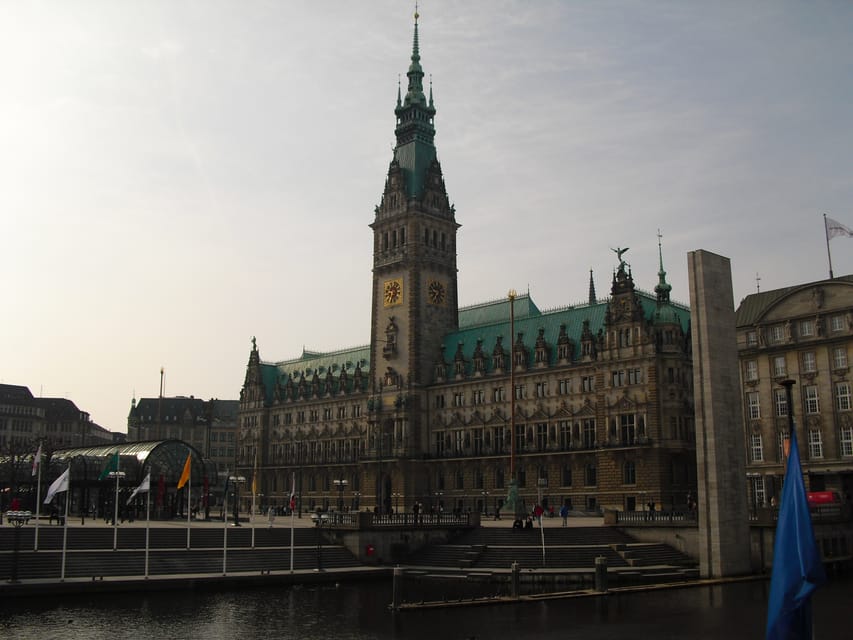
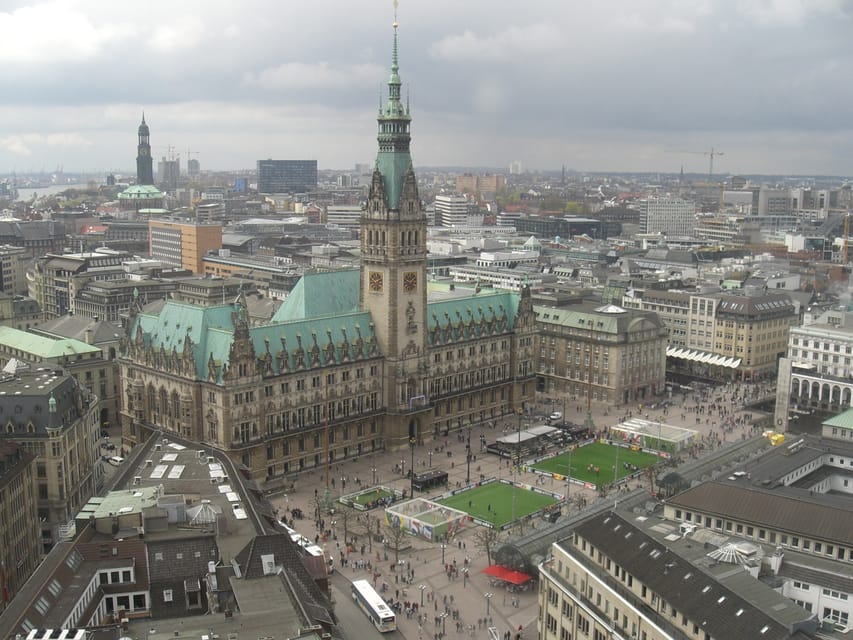
You begin at the Rathaus area, taking in the neo-Renaissance look that signals Hamburg’s confidence over centuries. This building is beautiful even before you get the explanation. The shape, detail, and grand entry spaces are not random decoration. They are the city’s way of saying, this is what we built, this is what we stand for.
From there, you also connect it to what came next in the same building complex. The former stock market and today’s chamber functions tell you how commerce and civic life were tied together in Hamburg’s everyday identity. That pairing is one of the reasons I like this stop. It is not just a pretty facade. You get a practical reason for why it looks the way it does.
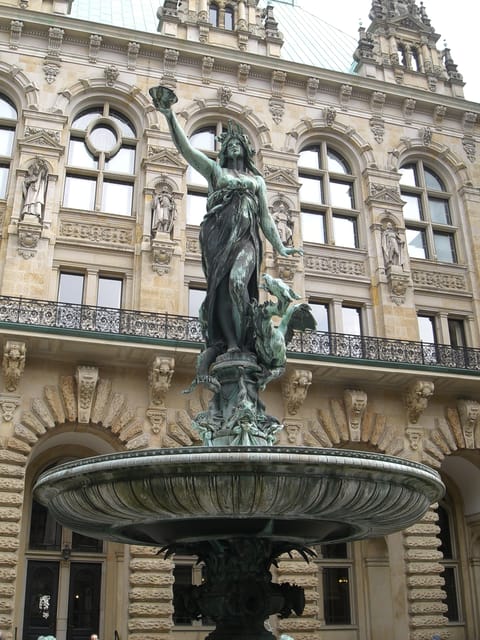
A small tip for the timing: you will have only about 15 minutes at the Rathaus photo stop and guided time. Use that window to get your angle for photos and then listen for the details the guide shares, especially the stories around statues and the fountain area inside the grand entrance. The guide’s job is to turn architecture into meaning, and this is where that starts.
Chamber of Commerce Views, Plus the Proof That Hamburg Runs on Trade
The next segment keeps the momentum going with the chamber of commerce connection. You’ll spend a short stretch here, around 10 minutes, mostly focused on what the building represents in Hamburg’s economy and how it grew from trade. Even if you are not a history buff, this is useful. Hamburg is a port city, and you can feel that logic as you move through the route.
What I find especially helpful is the way the guide links the government setting to the port setting later. You start to see a theme: decisions made in offices connect to ships, warehouses, and entire neighborhoods. It makes the rest of the walk click, instead of feeling like separate sightseeing stops.
Nicolaifleet and the St. Trost Bridge Moment That Feels Like Old Hamburg
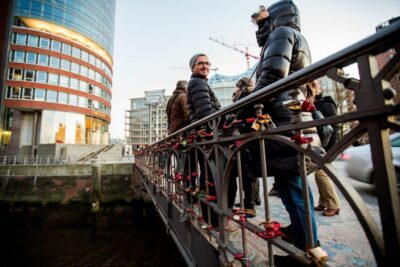
Then you shift to the waterways. Around the Trostbrücke area, you get a quick break to look at the canal and the Nicolaifleet area, including the idea that you might see more when water levels are right. There’s a small planning reality here: canals look different at different tides and weather. So if your photos matter, come prepared to take what the day gives you.
You’ll also get about 5 minutes for the bridge photo stop and guided time. It is short, but it sets the tone. This is where Hamburg feels like it is built around water, not just next to it.
More Elphi and Alster time to compare

St. Nikolai Memorial, The WWII Ruin That Changes How You See the City
The St. Nikolai Memorial stop is one of the tour’s most powerful moments. You are looking at a church ruin destroyed during WWII, and it functions as a memorial. The guide’s explanation is key here. Without context, a ruin can feel like just another old building. With context, it becomes a visible record of what happened and how that history sits in the center of daily life.
You get about 10 minutes at this stop, including photo time and guided explanation. Consider how you’ll experience it. If you are the reflective type, pause before you take photos. Let the scale and the damaged structure hit first, then let the guide fill in the timeline. It tends to make the story land more.
Also, this stop adds emotional balance to the architecture earlier. Rathaus shows prosperity and planning. St. Nikolai reminds you that planning can be undone in an instant. That contrast is why this tour works as more than a checklist.
Deichstrasse Merchant Houses, 17th-Century Details You Can Still Read
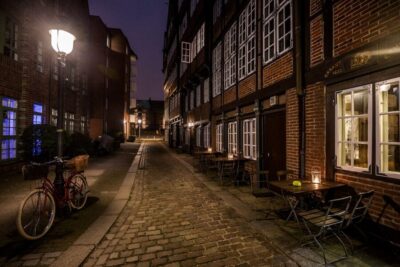
Next comes Deichstrasse, famous for historic merchant residences and protected building charm from the 17th century. This is where you get a quieter, more human-feeling part of the walk. The guide points out what was preserved and what survived, and you can see the difference between wartime destruction and the parts that endured.
You’ll spend about 15 minutes here with photo stops and guided time. That is a good amount for this street because you can look up at facades, then look around at the street rhythm. You may also notice places where you can grab snacks or something sweet, including ice cream, and you might spot spots offering whiskey tastings. It is not a food tour, but the area is set up for casual breaks.
Practical note: Deichstrasse is best appreciated slowly. If you rush it, you miss the small details the guide will highlight. If you like street-level history, this is one of the most satisfying stops.
Speicherstadt UNESCO Warehouses, Red-Brick Time Travel With a Coffee Option
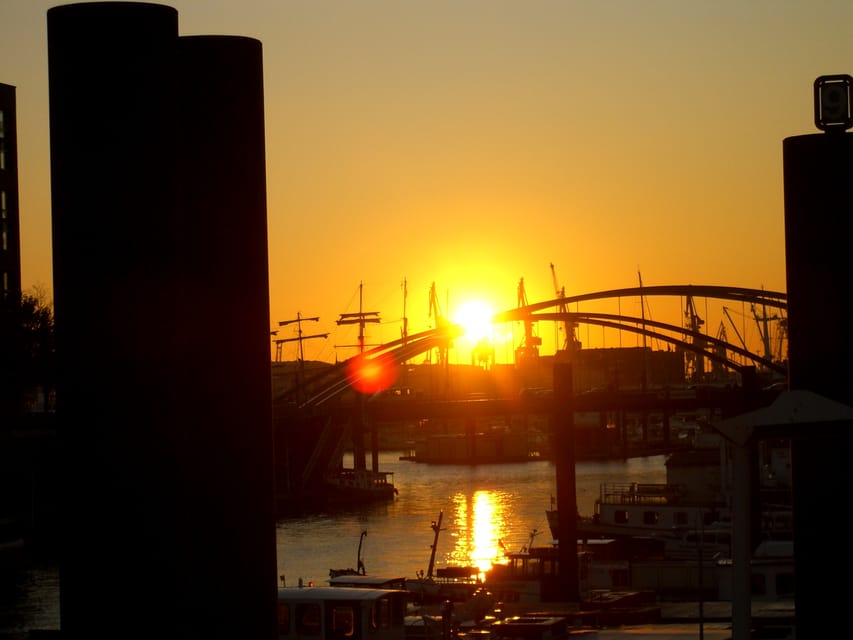
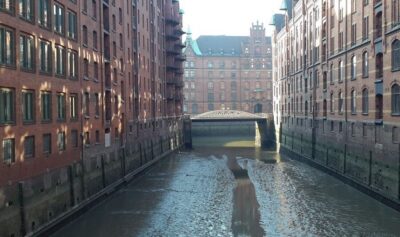
Then the route jumps into the warehouse era with Speicherstadt, part of the UNESCO World Heritage listing. This is Hamburg’s historic warehouse district, shaped by trade and goods arriving by water. The buildings look like they were built to withstand time, and the red-brick setting helps you imagine cargo, schedules, and daily labor.
You get around 10 minutes here for photo stops and guided context. It is a short stop, but the goal is to give you the right mental picture: these weren’t generic warehouses. They were the physical system that made the port economy work.
One extra detail you might like: the tour may include a coffee roastery visit in the area. Even if you only plan to stand, smell the coffee, and keep walking, the roastery angle adds a modern layer that fits Hamburg well. You are literally moving from historic goods to today’s craft and taste culture.
If you want more time in Speicherstadt after the tour, you’ll have an easy reason to return. You’ll know what to look for, rather than walking through as a generic tourist.
HafenCity, A Modern City Plan That Explains Hamburg’s Next Chapter
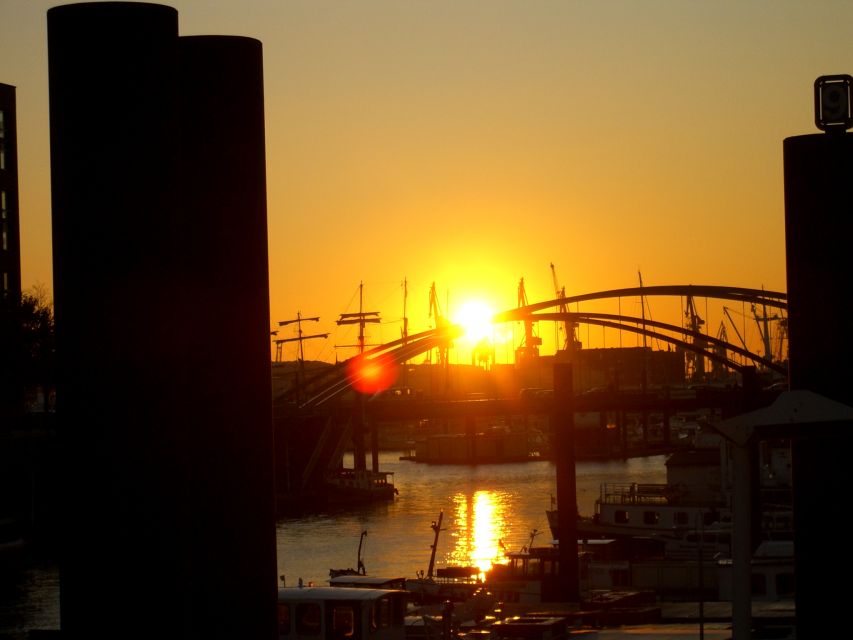
From warehouses you head into HafenCity, Europe’s large city planning project. This is where the story shifts from “how Hamburg built itself to handle trade” to “how Hamburg rebuilt and reworked its waterfront for a new century.”
You’ll spend about 10 minutes here with photo time and guided interpretation. The key value is that you understand the logic behind the transformation. HafenCity can look like just another modern waterfront area unless you know what makes it different. The guide connects the dots so you see it as part of the same long-term thread, not an unrelated new neighborhood.
This stop is great if you enjoy urban design and architecture. If you do not, you can still appreciate it as a contrast point. Rathaus is old power. St. Nikolai is old loss. Speicherstadt is old trade. HafenCity is old land repositioned for new life.
Elbphilharmonie, The 2017 Icon and Why It Matters Beyond Photos
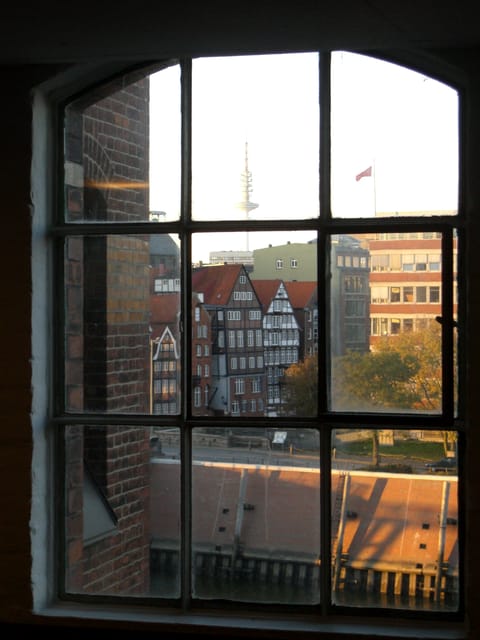
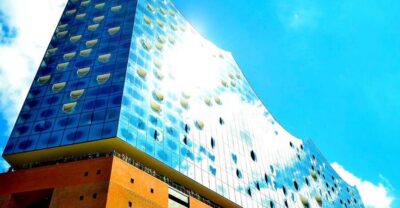
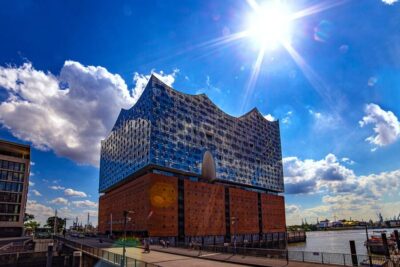
The tour ends at the Elbphilharmonie, inaugurated in 2017. This is the moment most people picture when they think Hamburg. The architecture is dramatic enough that you will understand why it has become a headline landmark.
You get about 15 minutes at the hall, including photo stop and guided time. This is enough to appreciate the exterior and the design story, and to understand why the Elbphilharmonie is more than a pretty building. It is a statement about culture in a city that historically ran on commerce and shipping.
If you are a concert-goer, this stop is even better because the guide gives the context that makes it feel like a living cultural place, not just a tourist photo backdrop. And if you are not, the architecture still delivers. You can look at how the form sits over the waterfront story you just learned.
What the Private Format Does for You (And Who It Fits Best)
This is a private tour for up to 15 people per group, with a professional guide and about 2 hours total. That size is important. You are not stuck in a tiny bottleneck line, but you still get the benefits of a guided conversation.
It is a strong choice for:
- Families who want a coherent overview without splitting up
- First-timers who want the major Hamburg landmarks with context
- People who care about WWII memory and how it shows up in the city today
- Anyone who likes a guide who keeps things light, not stiff
A nice signal from the experience feedback: the guide is known for humor and flexibility, and for handling English-speaking groups in a way that feels easy, not scripted. If you prefer a human guide who can adjust pacing, this format supports that.
Price and Value, Is $294 Worth It?
The price is $294 per group up to 15, for 2 hours with a professional guide. On paper, that can sound high if you compare it to public tours. But in private sightseeing, you pay for three things you feel immediately:
- Time efficiency, because the guide chooses the best route and timing
- Better storytelling, because questions and follow-ups are possible
- Group flexibility, because you are not fighting a crowd
For a group of friends or a family unit, the math often improves quickly. Even for smaller groups, the value is in getting a guided narrative through multiple eras and neighborhoods without needing to piece together maps and facts on your own.
You also avoid the friction of transportation planning to multiple locations. The tour does not include transport costs to the meeting point, so factor that in. Once you are on the route, the guide does the rest.
Practical Tips So You Enjoy It More
- Wear comfortable shoes. The walk is short but not stop-and-go slow.
- Bring a phone for photos, but also look up. Many of the key details are on facades and architectural features.
- If you care about seeing the canal views at their best, remember that water levels can change what you see at spots near the bridge.
- If you have preferences, tell the guide early. Jutta is described as flexible, and it helps when you align the storytelling to what you want.
- Plan a light snack or drink afterward. Deichstrasse has plenty of places where you can grab something casual, including sweets, and the waterfront area keeps your options open.
Should You Book This Hamburg Private Tour?
If you want a fast, well-organized way to understand Hamburg, I recommend booking. This is especially true if you care about seeing how the city’s government, port life, and WWII memory connect, and you like a guide who explains clearly with humor. The Rathaus, the St. Nikolai Memorial, and the jump to Elbphilharmonie make the walk feel like a single story with an ending.
If you want long indoor time in major venues, you might feel a little rushed. But for most first-time visitors, this is a smart length, with enough variety to make you feel oriented in Hamburg.
FAQ
How long is the Hamburg private tour?
The tour duration is 2 hours.
What is included in the price?
The tour includes a professional tour guide and the 2-hour tour. Transportation costs to the meeting point are not included.
How much does it cost and what is the group size?
It costs $294 per group, for a private group up to 15 people.
Where does the tour start and end?
The meeting point may vary depending on the option booked. The tour drop-off is at Elbphilharmonie Hamburg (including Platz der Deutschen Einheit 1, 20457 Hamburg, Deutschland).
What languages are available for the live guide?
The live guide offers German, English, Spanish, and French.
Is free cancellation available?
Yes, you can cancel up to 24 hours in advance for a full refund.
The Concert Hall and the Lake
Warehouse Country, Reviewed
Everything else we filed on Hamburg
- Hamburg: Safari tour in St. Pauli
★ 4.9 · 11 reviews - Hamburg: Party Bingo with the Bingo Gringos
★ 4.8 · 11 reviews - Hamburg Harbor: 3.5-Hour Guided Tour by Bike
★ 4.7 · 11 reviews - Hamburg: 2-Hour St. Georg Walking Tour
★ 4.8 · 11 reviews - Hamburg: Guided Walking Tour in Danish
★ 5.0 · 11 reviews - Discover Hamburg in a retro Bulli
★ 3.0 · 12 reviews
Speicherstadt and HafenCity Tours, side by side.
 ★ 4.6Hamburg: 1.5-Hour Harbor and Speicherstadt Day CruiseFrom $4014,200 reviews
 ★ 4.4Hamburg: 1-Hour Harbor Sightseeing Cruise with HafenCityFrom $303,067 reviews
 ★ 4.7Hamburg: Elbphilharmonie Plaza and HafenCity Food TourFrom $691,711 reviews
 ★ 4.5Hamburg: Eerie Speicherstadt TourFrom $291,394 reviews
 ★ 4.7Hamburg: Speicherstadt and Hafencity Guided TourFrom $161,344 reviews
 ★ 4.8Hamburg: Speicherstadt and HafenCity 2-Hour TourFrom $2821,063 reviews
 ★ 4.7Hamburg: Treasure Hunt Game through HafenCityFrom $29364 reviews
 ★ 4.6Hamburg: Speicherstadt Walking Tour with Coffee TastingFrom $50360 reviews
Other lists this tour is on