
REVIEW · REEPERBAHN
Hamburg: St. Pauli 1.5-Hour Tour
St. Pauli has two faces, past and present. This 90-minute walk is a fast, human way to understand the district using historical photos and original sources, then matching them to what you see on the streets now.
I especially like the 2 to 12 person group size, because it keeps things conversational and you can ask real questions. I also like that the route includes recognizable landmarks like St. Pauli Church, Beatles-Platz, and Grosse Freiheit, plus quieter corners you would miss on your own.
One thing to consider: this is an outside-focused introduction. If you want an inside look at clubs, don’t expect that here, since the emphasis is street level and comparisons.
In This Review
- Key things to look forward to
- Why This 1.5-Hour St. Pauli Walk Makes Sense
- Meeting at Spielbudenplatz 31, Right Outside Davidwache
- How the Tour Uses Photos and Original Sources
- Davidstrasse and Hans-Albers-Platz, Reading the Neighborhood at Street Level
- St. Pauli Church and Beatles-Platz, Landmarks With Context
- Grosse Freiheit, Where the District Feels Like It Still Breathes
- Small Group and Local Guides, The Real Reason It Feels Personal
- Price and Time Value for a St. Pauli Intro
- What to Expect Outside, Including the Main Limitation
- Who This Tour Suits Best
- Should You Book This St. Pauli Tour?
- FAQ
- FAQ
- Where is the meeting point for the St. Pauli tour?
- How long is the tour?
- Which languages are available?
- What size is the group?
- Which places does the walking route include?
- Is it wheelchair accessible, and what is the cancellation window?
Key things to look forward to
- Davidwache meeting point so the story starts with a sense of place right away
- Photo-and-source history that helps you read St. Pauli, not just walk through it
- A focused 90-minute route that hits Davidstrasse, Hans-Albers-Platz, St. Pauli Church, Beatles-Platz, and Grosse Freiheit
- Local resident guides who know the neighborhood details that don’t show up on signs
- Smaller groups (2 to 12) for easier Q and A without feeling rushed
- Lesser-known corners so you get more than just the main strip
Still on the Kiez? More nights reviewed here
- Hamburg: Sex and Crime in St. Pauli Tour for Ages 18+★ 4.7 · 15,447 reviews
- Hamburg: Reeperbahn Lust & Laster Tour for Adults Only★ 4.7 · 5,440 reviews
- Hamburg: Insider Tour of the Reeperbahn & St. Pauli★ 4.7 · 5,057 reviews
- Hamburg: Night Watchman’s Tour of St. Pauli in German★ 4.7 · 4,818 reviews
Why This 1.5-Hour St. Pauli Walk Makes Sense
St. Pauli can feel like information overload. One street says one thing, the next says something totally different. This tour is built for that problem, because it gives you a guided way to compare what you see today with what shaped the district in the first place. You’re not just following a route, you’re learning how to look.
The big win is the time. Ninety minutes is long enough to get oriented, but short enough that it does not drag. That matters in Hamburg, where weather can change fast, and where you may want to pair this walk with a longer evening out afterward.
If you’re visiting for the first time, or you want an easy St. Pauli intro without committing to a full half-day, this format hits a sweet spot. I also like that it’s not only about the loud bits. You get context for the neighborhood’s many sides, including parts that are not directly tied to the most famous strip.
Meeting at Spielbudenplatz 31, Right Outside Davidwache
Your tour starts at Spielbudenplatz 31, in front of the Davidwache police station. That location isn’t random. It anchors you immediately in the reality of the district, not just the postcards. You start with a brief intro and then move into history and photos.
From a practical standpoint, this meeting point is helpful because it’s easy to find once you’re in St. Pauli. You also avoid the awkward situation where you’re searching for a guide somewhere deep in back streets. The start is clear, and that keeps your first 10 minutes stress-free.
If you’re someone who likes to get your bearings fast, this works well. You’re placed at a focal point, then walked into the surrounding streets with a story attached, so the neighborhood starts making sense.
How the Tour Uses Photos and Original Sources
A lot of walking tours tell stories. This one goes one step further by using historical photos and original sources as part of the experience. In practical terms, that means you learn to spot contrasts. You can literally hold two moments in your mind: how the area looked before and how it looks now.
That comparison is what turns a simple stroll into something you can remember. A street name becomes a clue, a landmark becomes a reference point, and even the less flashy side streets start to feel meaningful.
Another detail I value is the pacing of this teaching style. The history is not dumped on you in a lecture. It comes in chunks as you walk to the next location, so you can stay engaged and also see how the explanations connect to real views.
Davidstrasse and Hans-Albers-Platz, Reading the Neighborhood at Street Level
After the intro, you head to Davidstrasse and then Hans-Albers-Platz. These stops are useful because they show you how St. Pauli’s story isn’t only about one famous corridor. You start seeing the district as a system of streets and gathering points, where everyday blocks still carry identity.
Davidstrasse helps you connect the tour’s “past vs present” theme to actual urban form. Even if you are not focused on architecture, you’ll likely notice how the street layout shapes movement and visibility. That’s the kind of detail that makes future wandering more confident.
Hans-Albers-Platz adds a sense of place you can orient to. It works as a mid-tour landmark, so by the time you reach the bigger named sites later, you’ll already have your internal map.
This is also where local guide storytelling shines. When the guide knows the neighborhood well, you get those small, human explanations that usually get lost in purely academic tours. You’re not just told what is there. You’re told why people experience it the way they do.


St. Pauli Church and Beatles-Platz, Landmarks With Context
Next you visit St. Pauli Church and then Beatles-Platz. These are great stops because they are easy to recognize, so you get quick “I’m here” confirmation while still learning how the district developed around real community and cultural touchpoints.
St. Pauli Church is a useful counterbalance in a nightlife-heavy area. It reminds you that districts are not only defined by entertainment streets. Even if you’re not a church visitor, the stop makes you think about continuity, community presence, and how neighborhoods change while still keeping certain anchors.
Then Beatles-Platz shifts the tone toward cultural memory. Again, you are not asked to guess what it means. The tour frames it so you understand it as part of the district’s identity, not just a named spot for photos.
I like that these stops come after the street segments. By then, you’ve already learned how to read the neighborhood, so the landmarks feel less like random photo stops and more like points on the same story line.
Grosse Freiheit, Where the District Feels Like It Still Breathes
One of the main highlights is Grosse Freiheit. This stop is the kind of location where St. Pauli’s present-day character becomes obvious quickly. It is also a smart final anchor because it gives you an easy place to picture what you’ve been hearing.
This is where the “compare past and today” approach really clicks. You can look around and connect the guide’s context to the lived atmosphere. Even if you don’t linger long afterward, you leave with a clearer sense of how this area functions as a social space.
The tour also includes lesser-known corners of St. Pauli, which is a big deal. It means the walk does not feel like a checklist of the most famous names only. You get extra texture, and that helps you avoid the common problem of leaving with photos but no real understanding.
If you plan to explore after the tour, Grosse Freiheit is a good reference point for choosing where to go next, and where to slow down.
Small Group and Local Guides, The Real Reason It Feels Personal
The group size is 2 to 12 people, and that changes everything. A smaller group means the guide can respond to your questions without rushing to the next time slot. It also means the tour tends to feel more like a guided conversation than a parade.
The guides are mostly local residents, which matters because locals notice patterns visitors usually miss. You get practical explanations for how the neighborhood works in real life, not just a list of facts.
Language is also a plus. You can choose English or German, so you are not stuck piecing together meaning from a language barrier. One review theme that stands out is that people appreciate having an English option, because it can be limited for other tours.
If you like asking questions, this tour is built for that. With enough time to talk and not feel crowded, you’ll get more out of the walk, even if you are shy at first.
Price and Time Value for a St. Pauli Intro
At $30 per person for 1.5 hours, this is priced like a solid orientation experience. You’re paying for a guided route plus interpretation using photos and sources, not just a walk between landmarks.
Is it cheap? No. But it is good value if you want to reduce guesswork. St. Pauli is not the easiest neighborhood to understand quickly. A guided comparison saves time, and it helps you avoid the common “I saw it, now I’m not sure what it meant” feeling.
Also, the small group size supports the price. If you were in a big bus-style group, you would likely hear less and ask fewer questions. Here, the format suggests you should get more personal attention for your money.
Think of it as a paid shortcut to seeing the district in “layers,” not only in “views.”
What to Expect Outside, Including the Main Limitation
This tour is mostly outdoors walking, and the route focuses on named places and some lesser-known corners. That’s ideal if you enjoy street-level history and want to understand a neighborhood by walking it.
The main limitation is what it does not promise. There is no indication that you’ll go inside clubs. If your ideal St. Pauli experience is an access-to-the-scene inside look, you may find the tour stays on the outside side of things. The upside is that you still get a coherent introduction without needing special permissions or dramatic detours.
Weather is another consideration. Since the format is a street walk, bring layers if it’s cold or damp. Even if the pacing is right, you’ll feel the conditions more than on a tour that includes indoor segments.
In other words: go in expecting a historical, guided walking orientation. If that fits what you want, it works very well.
Who This Tour Suits Best
I think this tour fits best if you:
- Want a first-time St. Pauli orientation with history and context
- Prefer small groups and a guide who can answer questions
- Like tours that compare then and now using photos and sources
- Are visiting with limited time and want an efficient route through major sites
It may not be the best fit if you want a nightlife-focused, behind-the-scenes look at clubs. This is more about understanding the district than accessing interiors.
If you speak English or German, the language option makes it easier to get the full value without doing your own interpretation work.
Should You Book This St. Pauli Tour?
If you want a practical St. Pauli introduction that makes the neighborhood feel readable, I’d say yes. The combination of historical photos and original sources, a manageable 1.5-hour time window, and a 2 to 12 small group setup gives you a strong chance of leaving with real context, not just street photos.
Book it especially if you plan to wander afterward. You’ll know where you are and why those places matter. If you go in expecting an outside walking history tour that focuses on comparisons rather than club entry, you’ll likely find it hits the mark.
FAQ
FAQ
Where is the meeting point for the St. Pauli tour?
You meet at Spielbudenplatz 31, in front of the Davidwache police station.
How long is the tour?
The tour lasts 1.5 hours.
Which languages are available?
The live tour guide is available in German and English.
What size is the group?
The tour is designed for small groups, typically 2 to 12 people.
Which places does the walking route include?
The tour includes Davidstrasse, Hans-Albers-Platz, St. Pauli Church, Beatles-Platz, and Grosse Freiheit, plus lesser-known corners of St. Pauli.
Is it wheelchair accessible, and what is the cancellation window?
The tour is wheelchair accessible. You can cancel up to 24 hours in advance for a full refund.
More of the Kiez After Dark
Everything else we filed on Hamburg
- Hamburg: Safari tour in St. Pauli
★ 4.9 · 11 reviews - Hamburg: Party Bingo with the Bingo Gringos
★ 4.8 · 11 reviews - Hamburg Harbor: 3.5-Hour Guided Tour by Bike
★ 4.7 · 11 reviews - Hamburg: 2-Hour St. Georg Walking Tour
★ 4.8 · 11 reviews - Hamburg: Guided Walking Tour in Danish
★ 5.0 · 11 reviews - Discover Hamburg in a retro Bulli
★ 3.0 · 12 reviews
St Pauli and Reeperbahn Tours, side by side.
 ★ 4.7Hamburg: Sex and Crime in St. Pauli Tour for Ages 18+From $29515,447 reviews
 ★ 4.7Hamburg: Reeperbahn Lust & Laster Tour for Adults OnlyFrom $5005,440 reviews
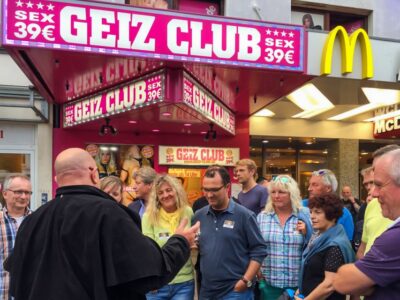 ★ 4.7Hamburg: Insider Tour of the Reeperbahn & St. PauliFrom $295,057 reviews
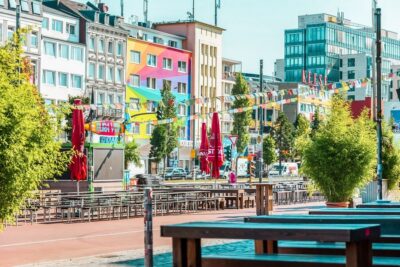 ★ 4.7Hamburg: Night Watchman’s Tour of St. Pauli in GermanFrom $234,818 reviews
 ★ 4.7Hamburg: In the Footsteps of “Olivia” Reeperbahn TourFrom $5003,947 reviews
 ★ 4.7Hamburg: Lust, Luden & Die Große Freiheit TourFrom $172,444 reviews
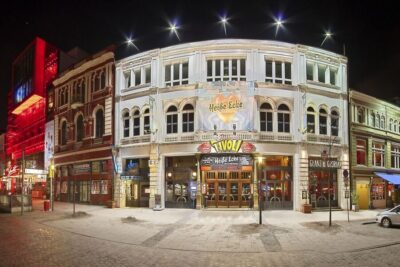 ★ 4.7Hamburg: St. Pauli Highlights Guided Tour with Beer for 18+From $292,353 reviews
 ★ 4.6Hamburg: Schanzenviertel Culinary TourFrom $572,051 reviews
Other lists this tour is on