
REVIEW · WESTPHALIA
Münster: Old Town Highlights Guided Tour
Münster’s old town has plot twists. This 1.5-hour guided walk helps you understand how the city grew, why church and merchants clashed, and how those fights shaped what you can still see today, from St. Paul’s Cathedral to the Historic City Hall.
I especially like the way the guide turns big ideas into street-level clues, so you are not just hearing dates. My other favorite part is the guided attention to memorable symbols, like why the Überwasserkirche tower still has no point, and what the Anabaptist-era details on the churches mean. One drawback to plan around: the tour is in German, so you will want at least a basic comfort with the language to fully enjoy it.
In This Review
- Quick takeaways for your Münster walk
- Meeting at Michaelisplatz, then starting with the city’s power map
- St. Paul’s Cathedral and the idea of immunity zones in plain sight
- Seeing merchant-clergy tensions in Prinzipalmarkt and the old town streets
- Überwasserkirche and St. Lambertus: Anabaptist-era symbols you can still read
- Historic City Hall and the Peace Hall of 1648
- Baroque Münster: Erbdrostenhof and Clemenskirche by Johann Conrad Schlaun
- The 1.5-hour pace: enough time for meaning without museum fatigue
- Price and value for a $16 Münster old town tour
- Should you book this Münster old town highlights tour?
- FAQ
- How long is the Münster Old Town Highlights Guided Tour?
- How much does the tour cost?
- What language is the tour guide?
- Where is the meeting point?
- What sights are included on the tour?
- What historical topics will I hear about?
- Is the tour suitable for children?
- Is free cancellation available?
- Can I reserve and pay later?
Quick takeaways for your Münster walk
- 1.5 hours of high-impact storytelling that connects the city’s layout to religious and political power
- St. Paul’s Cathedral and Historic City Hall as the two anchor stops for Münster’s big turning points
- Anabaptist-era symbols you can still spot on church towers, including the tower of Überwasserkirche and the market church of St. Lambertus
- Baroque architecture by Johann Conrad Schlaun at Erbdrostenhof and Clemenskirche
- A guide who runs a smooth, punctual tour and answers questions well, with a friendly approach
- Kids 0 to 5 join for free, making it easier to bring the whole family
More Westphalian towns to compare
- Münster: Old Town Highlights Guided Tour★ 4.7 · 286 reviews
- Münster: Nachtwächter-Führung (Erlebnistour)★ 4.4 · 213 reviews
- Münster: Private Guided Rickshaw City Tour★ 4.8 · 143 reviews
- Münster: Night watchman tour through the picturesque old town by lantern light★ 4.8 · 65 reviews
Meeting at Michaelisplatz, then starting with the city’s power map
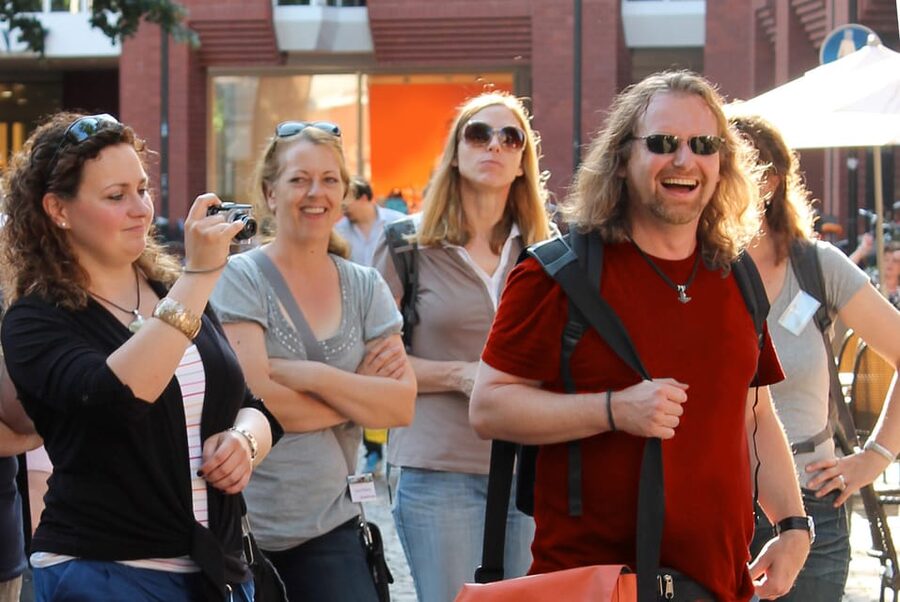
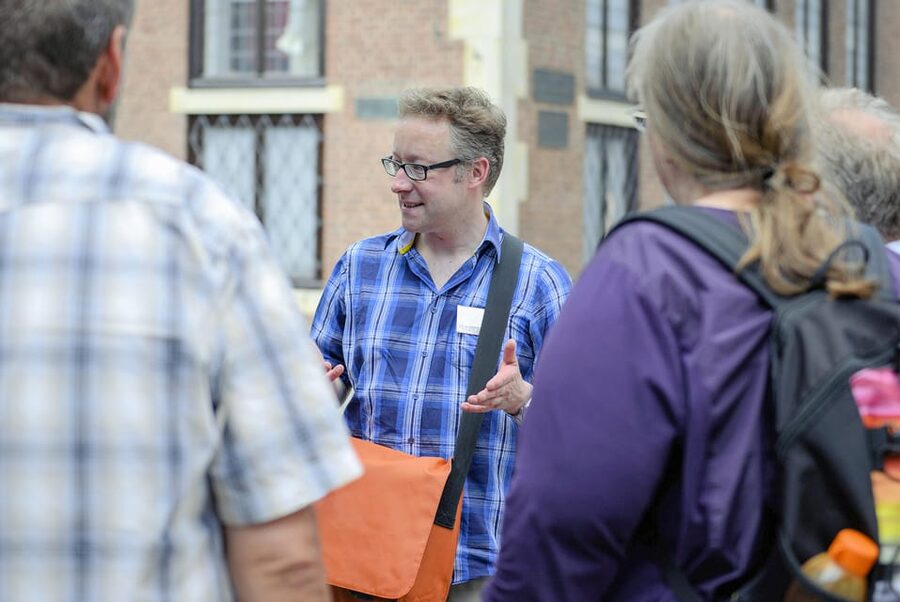
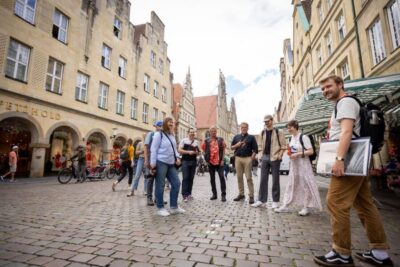
Your tour meets opposite the historical town hall, at Michaelisplatz, near the Rathausrelief. The guide wears an orange bag with the k3 sign, so you should be able to spot them quickly.
The smart part of this meeting spot is that it sets the tone right away. Münster’s old town is basically a diagram of who had authority at different times. In a short walking tour, you need to start where the stories intersect, and the town hall area is perfect for that. From the first minutes, you are guided to connect buildings with the role they played in real disputes, real negotiations, and real rules about who could do what where.
If you want to get the most out of the walk, do one small thing before you start. Stand still for a moment at the meeting point and look at the mix of civic space and church presence around you. Then the guide’s explanations will make sense faster, instead of feeling like you are memorizing trivia.
St. Paul’s Cathedral and the idea of immunity zones in plain sight
St. Paul’s Cathedral is where the tour starts getting very practical. You learn how the small Saxon settlement of Mimigernaford became Münster, and you also hear about cathedral immunity, the special status that shaped life around the church.
Think of it as a legal and social bubble. When a religious institution has immunity, it affects where power sits, how conflicts get handled, and even how people behave in surrounding areas. The tour makes this more than an abstract term by connecting it to Münster’s physical layout, especially the way earlier disputes between merchants and clergy could still show up in the cityscape.
You will also get a clear sense of how early power structures weren’t just political. They were personal. When the guide explains why people argued, who had influence, and what rules governed daily movement and trade, you start reading the city like a map with hidden labels.
Two things to watch for here: first, any mention of how the immunity shaped boundaries and behavior around church property. Second, listen for how the guide links these concepts to later historical episodes, because the tour uses the cathedral era as a foundation for everything that comes after.
Seeing merchant-clergy tensions in Prinzipalmarkt and the old town streets

After the cathedral, the tour keeps walking you through Münster’s older core, including stops that bring you to major old town sights such as Lamberti Church and Prinzipalmarkt.
This is where you get one of the best payoffs of the whole experience. Instead of treating the city as a set of pretty facades, the guide frames the streets and squares as leftovers from older conflict. Disputes between merchants and clergy were not just philosophical. They influenced civic life, how business operated, and how the city developed.
If you like tours that help you decode a place, this approach works well. You are not just collecting landmarks. You are learning a cause-and-effect story that helps you understand why certain parts of town feel organized the way they do.
A practical tip: as you walk, keep your eyes up. The stories the guide shares are often anchored to specific towers, church details, or how buildings face the street. If you look down the whole time, you can miss the visual proof the guide is pointing you toward.
Überwasserkirche and St. Lambertus: Anabaptist-era symbols you can still read
One of the most memorable parts of the tour is the Anabaptist chapter and how it left physical traces. You hear about how the rule of the Anabaptists in the 16th century led to striking details that you can still see today.
The tour specifically points out the tower of the Überwasserkirche, which stands there without a point to this day. It also covers saints that remain headless, another stark reminder of how religious conflict can turn into long-lasting symbolism in stone.
Then you move to the market church of St. Lambertus and learn about the cages that symbolize the end of the Anabaptist movement. The tour also connects this imagery to the tower keeper, explaining how the daily role of someone maintaining the tower fits into the broader story.
This section is worth your attention if you enjoy history that you can actually see. Münster does not hide its past in a museum only. It bakes key moments into churches and towers. That is why a guided tour helps so much here. You might notice the odd details on your own, but the guide helps you understand the meaning behind them.



Historic City Hall and the Peace Hall of 1648
The Historic City Hall is the civic centerpiece, and it is where the Peace of Westphalia story comes into focus. You learn about the Westphalian peace negotiations, and you also connect the significance of Münster to the Thirty Years’ War, which the peace agreements helped end in 1648.
The guide explains that the Peace Hall is where the peace was signed between the Dutch and the Spaniards. Even if you have heard of the Peace of Westphalia before, hearing how Münster earned its role through specific negotiations makes it feel less like a textbook line and more like a real turning point.
This is also a good moment to slow down mentally. Political history like this can be huge and messy, but the guide keeps it tied to place. When you are standing at the town hall, the story becomes immediate.
One small consideration: the topic is serious. If you prefer lighthearted history only, you may find this section more intense than the church symbolism. Still, it is also one of the most important reasons Münster deserves a spot on your Germany plan.
Baroque Münster: Erbdrostenhof and Clemenskirche by Johann Conrad Schlaun
The walk doesn’t stop at medieval power. You also see the later Baroque look of the city through buildings linked to Johann Conrad Schlaun, whose style is still characteristic of Münster today.
Two examples highlighted on this tour are the Erbdrostenhof and the Clemenskirche. The goal here is not to turn you into an architecture critic. It is to show you how the city kept reshaping itself after major religious and political changes.
Baroque buildings can feel like “decoration” if you do not know what to look for. On this tour, you get enough context to understand why these buildings matter in the big picture: after conflict, cities often rebuild their identity in stone, with style and scale that communicate authority, stability, and civic pride.
If you are the type who likes to photograph, pay attention during this portion. The guide’s framing helps you notice details that make Baroque work more than eye candy.
The 1.5-hour pace: enough time for meaning without museum fatigue
At 1.5 hours, this tour hits a sweet spot. You are getting a guided sequence from the cathedral era and Mimigernaford, through religious conflict and its visible marks, to the civic climax of peace negotiations. That is a lot of ground for a short time window.
The pacing also matters for enjoyment. You do not need patience for a multi-hour museum-style program. You get quick explanations matched to what you are seeing, which helps you keep your focus.
Based on the strongest feedback from people who booked, the guide tends to run the tour smoothly. Look for a punctual start and a clear, friendly approach. You also get the benefit of time to ask questions, with answers delivered in a way that helps you connect the dots.
Who this suits best:
- If you want history with visible clues, not just dates
- If you are short on time but still want major Münster highlights
- If you travel with kids who enjoy watching and listening, especially because children aged 0 to 5 can join for free
- If you speak German or are comfortable with German-guided tours
Who might find it less ideal:
- If you do not understand German, this could feel like you are seeing places without fully getting the meaning
- If you want extremely detailed technical history, you may wish you had more time for a longer format
Price and value for a $16 Münster old town tour
The price is $16 per person for about 1.5 hours. For Münster, that is the kind of cost that works well if you are trying to add depth without committing to a half-day.
The value comes from three practical things. First, the guide points you to the most meaningful stops in the old town core, including Dom, Lamberti Church, Prinzipalmarkt, and Historic City Hall. Second, the tour explains why odd details exist, like the missing tower point on Überwasserkirche and the symbolic cages on St. Lambertus. Third, it covers the Peace of Westphalia in a way that makes Münster’s role in 1648 feel concrete.
If you were to do these stops on your own, you could certainly walk between them. But you would likely miss the “why,” especially the immunity concept and the story connecting Anabaptist-era events to physical features on towers.
So if you are deciding between a self-guided walk and a guided hour and a half, this tour is a strong choice when you want understanding, not just sightseeing.
Should you book this Münster old town highlights tour?
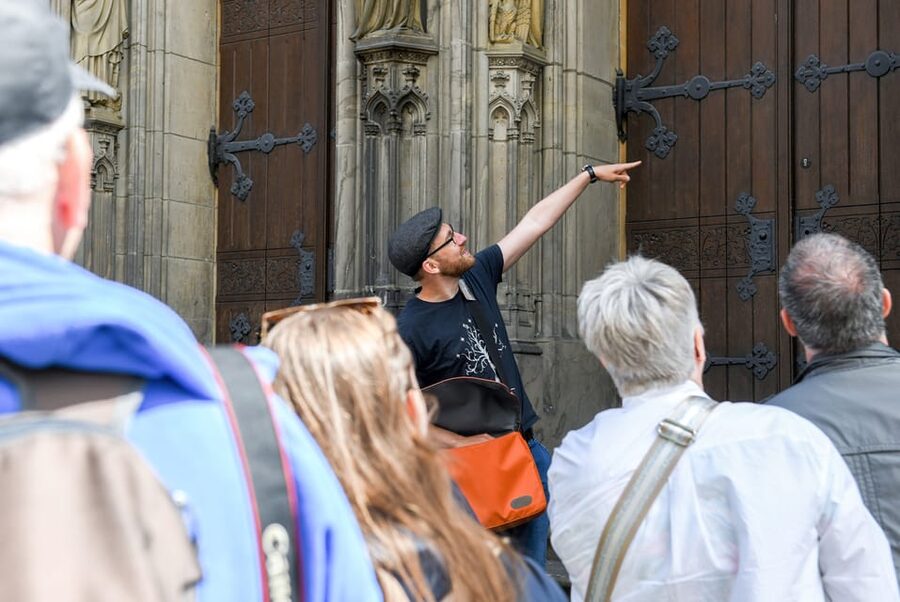
I recommend booking if you want a fast, high-signal history walk through Münster’s most famous old town anchors. The tour’s structure is efficient: cathedral origins and power rules, religious conflict with physical symbols, then the major civic moment of the Peace of Westphalia at the town hall.
Book it soon if:
- You will be in Münster for a short time
- You want one guided activity that connects churches and civic buildings into a coherent story
- You can handle a German live guide, since that is the language used
Skip or reconsider if:
- German is a barrier for you, because the tour is not stated as multilingual
- You already know the Münster history well and only want architecture tips, since the focus is interpretive history tied to specific sights
Bottom line: for $16 and 1.5 hours, this is a smart way to get your bearings and understand why Münster looks the way it does.
FAQ
How long is the Münster Old Town Highlights Guided Tour?
The tour lasts 1.5 hours.
How much does the tour cost?
The price is $16 per person.
What language is the tour guide?
The live tour guide leads the tour in German.
Where is the meeting point?
Meet your guide opposite the historical town hall beneath the sign Michaelisplatz, close to the Rathausrelief. The guide is wearing an orange bag with the k3 sign.
What sights are included on the tour?
You’ll visit major Münster highlights such as Dom, Lamberti Church, Prinzipalmarkt, and the Historic City Hall.
What historical topics will I hear about?
You’ll learn about the origin of Münster from Mimigernaford, cathedral immunity, disputes between merchants and clergy, the Anabaptists in the 16th century and their symbolic marks on churches, and the Westphalian peace negotiations including the Peace of Westphalia.
Is the tour suitable for children?
Children aged 0 to 5 years can join for free.
Is free cancellation available?
Yes, free cancellation is available up to 24 hours in advance for a full refund.
Can I reserve and pay later?
Yes, you can reserve now and pay later to keep your plans flexible.
Aachen, Munster and Westphalia
Everything else we filed on Munster
- Münster: Private Guided Sculptures Tour on a Rickshaw
★ 5.0 · 12 reviews - Münster Old Town: Outdoor Escape Game
★ 4.1 · 14 reviews - Münster Private Guided Walking Tour
★ 4.5 · 18 reviews - Private crime city tour by rickshaw including guide
★ 5.0 · 21 reviews - Münster: Old Town Crime Mystery Tour
★ 4.0 · 35 reviews - Münster: Old Town Historical Walking Tour by “Geo Epoche”
★ 4.7 · 51 reviews
Aachen Munster and Westphalia Tours, side by side.
 ★ 4.4Münster: Nachtwächter-Führung (Erlebnistour)From $19213 reviews
 ★ 4.0Aachen: 24-Hour Hop-On Hop-Off Sightseeing Bus TicketFrom $28208 reviews
 ★ 4.8Münster: Private Guided Rickshaw City TourFrom $33143 reviews
 ★ 4.7Explore Aachen with Passionate Tour GuidesFrom $371 reviews
 ★ 4.8Münster: Night watchman tour through the picturesque old town by lantern lightFrom $2165 reviews
 ★ 4.6Paderborn: Nachtwächter-Führung (Erlebnistour)From $1961 reviews
 ★ 4.7Münster: Beer Tasting Rickshaw TourFrom $7056 reviews
 ★ 4.9Private Christmas Tour in Münster including GlühweinFrom $4654 reviews
Other lists this tour is on