
REVIEW · NUREMBERG
Nuremberg: Nuclear Bunker in Main Railway Station
Atomic bunkers under a train station sound wild. This 75-minute guided stop in Nuremberg puts Cold War fear into concrete form, with a look at World War II history and a surprisingly modern bunker setup designed for civilian protection. You’ll see how plans shifted after atomic bombs, and you’ll get practical answers to one big question: if the unthinkable happened, what could people actually do?
Two things I really like here are the hands-on feeling of the bunker layout and the way the exhibits explain nuclear threats in clear, step-by-step terms. You also get computer-based comparison, so you can grasp why early atomic bombs and later warheads are not the same scale of danger. The main drawback is the space and the topic, so if you have claustrophobia or limited mobility, this is not the right fit.
In This Review
- Key things you’ll notice on this Nuremberg nuclear bunker tour
- Entering a Cold War bunker from inside Nuremberg’s main station
- Why this bunker exists: from atomic bombs to civilian protection planning
- The exhibits that explain nuclear power without turning it into pure fear
- A guided walk that puts you in the bunker’s “how would it feel” zone
- How the bunker design connects nuclear, biological, and chemical threats
- Logistics for a smooth 75 minutes underground
- Who should go, and who should skip this nuclear bunker visit
- Price and value: is $15 worth it?
- My take: should you book the Nuremberg nuclear bunker tour?
- FAQ
- How long is the nuclear bunker tour in Nuremberg?
- Where do I meet for the tour?
- What language is the guide?
- What is included in the ticket price?
- What should I avoid bringing or doing during the tour?
- Does the tour run in rain or shine?
- Is this tour suitable for young children?
Key things you’ll notice on this Nuremberg nuclear bunker tour

- Nuremberg Hauptbahnhof basement access: You start inside the station and use escalators to reach the bunker area.
- Built for more than one threat: The bunker concept includes shielding against nuclear risk, plus biological and chemical attacks.
- Simulations that show scale: A computer simulation helps you compare early atomic explosions with later warheads.
- Living-space reality: You can lie down on a pallet or sit to imagine being packed in with hundreds of people.
- Civilians, not soldiers: The exhibits focus on civilian protection plans and what officials hoped would work.
- A practical guide tone: The best moments are when the guide keeps the mood readable with humor and common sense.
More of the divided city, written up in full
- Nuremberg: Historischer Kunstbunker WWII Art Bunker Tour★ 4.8 · 921 reviews
Entering a Cold War bunker from inside Nuremberg’s main station
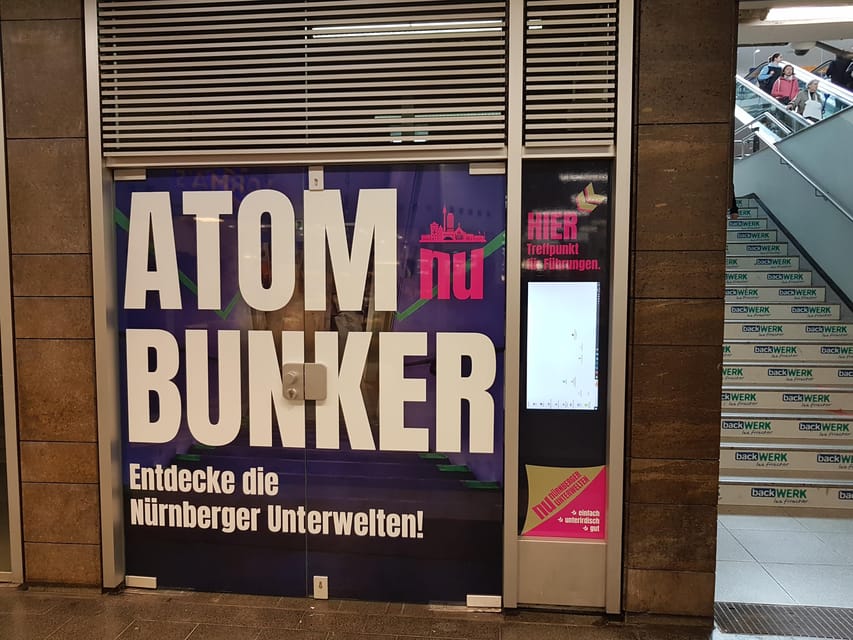
This tour starts in Nuremberg’s main railway station, so it feels almost like you are going the wrong direction at first. Walk in through the main portal, head into the main hall, then follow the escalators down to the basement levels.
From there, you have two route choices, depending on what you see:
- Take the long escalator down to the shopping arcade area called Königstorpassage, then continue your way back toward the basement entrance.
- Or take the short escalator and then a step staircase.
Either way, your target is the bunker entrance on the right wall. Right after the escalator area, turn sharply to the right. Look for the bunker entrance, and wait there for the tour to begin directly at the Yorma’s restaurant area.
This is one of those tours where a small planning detail saves you stress. If you are not from Nürnberg, do a quick orientation walk before your start time so you are not guessing in the moment. One practical reason: this entrance can feel tucked into the station maze.
Why this bunker exists: from atomic bombs to civilian protection planning
The story on the tour begins after the Second World World War and the atomic bombings in Japan. From there, it moves into the nuclear arms race, and then into the Cold War question nobody could ignore: how do you protect people who are not trained to fight, and who are simply living their lives?
That is the key theme you’ll keep seeing: civilian protection was treated as a real planning problem. And it was not only nuclear threat, either. The bunker concept also aimed to reduce exposure for other extreme risks, including biological and chemical attacks. The result is a facility designed to shelter and contain, not to comfort.
What makes this meaningful for you, beyond the obvious horror of nuclear war, is that the exhibits spend time on intended behavior and real-world constraints. You get a sense of what officials could imagine at the time, including how to keep people alive and organized while the threat lasted.
The exhibits that explain nuclear power without turning it into pure fear
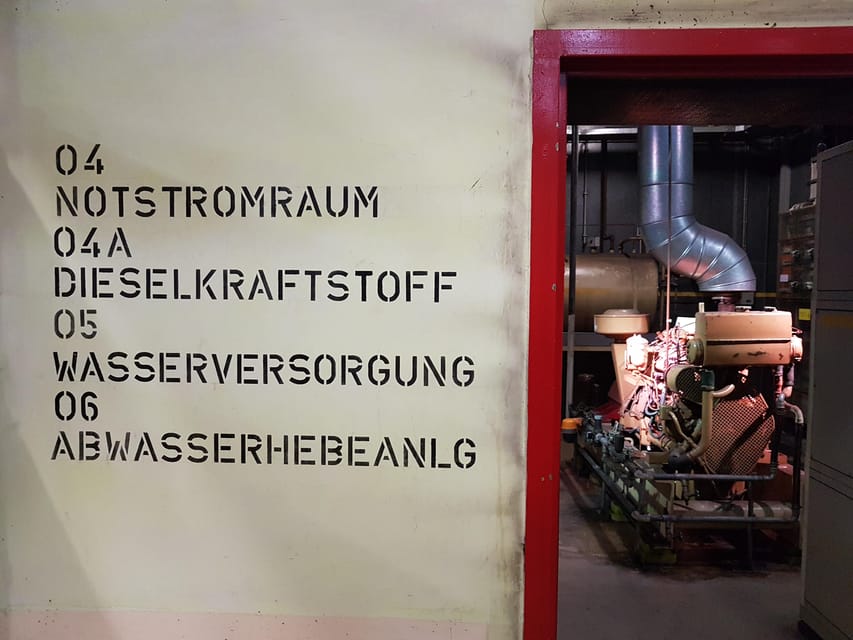
One of the most useful parts is how the tour breaks down nuclear danger in layers. You’ll be prompted with comparisons, not just scary headlines. For example, you’ll learn how influential the first atomic bombs were compared to later nuclear warheads, and why the gap in destructive power mattered.
A computer simulation plays a big role here. It gives you an idea of the ominous progression in the nuclear weapons arsenal, so you can see the concept rather than just hear it. This matters because nuclear weapons can feel abstract. A simulation helps your brain build a mental model, and that makes the information stick.
I also appreciate that the tour doesn’t treat nuclear risk like a lone event. It places it inside a broader civil defense framework, showing that authorities were thinking in scenarios: What would you do? What would the shelter do? What could be protected, and what could not?
A guided walk that puts you in the bunker’s “how would it feel” zone
This tour gets clever with imagination. The goal is not horror for horror’s sake. It is about experiencing the physical reality that policy documents usually skip.
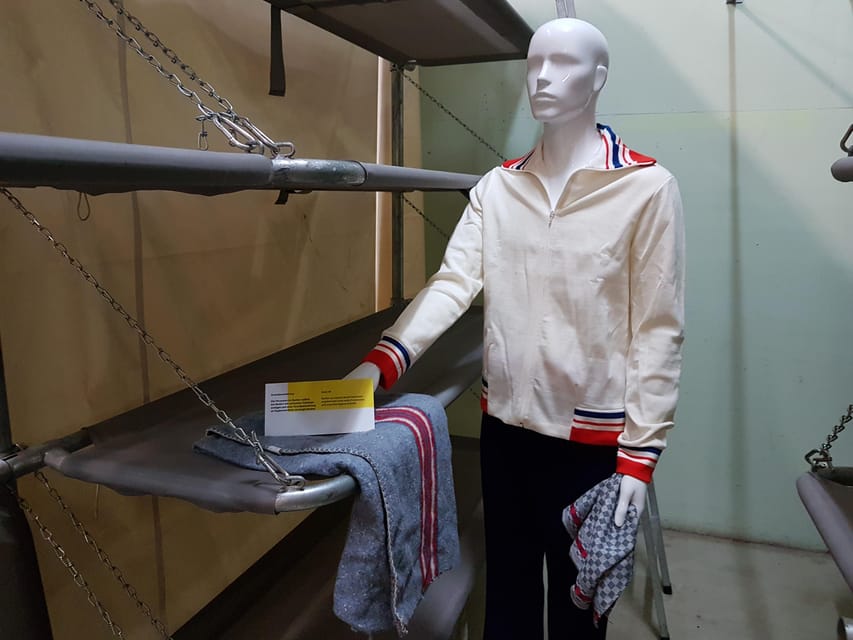
You’ll be guided through what life could have felt like in the bunker. There’s a moment where you can lie down on a pallet or sit, so you can experience the cooped-up feeling that comes with being packed in. The tour frames this with the idea of several hundred people sharing a confined space, which changes how you interpret everything else you just learned.
That shift is the real value. Nuclear history is heavy on charts and descriptions. Here, the exhibit turns it into body-level understanding, still respectful, but undeniably physical.
More of Nuremberg inside the walls
How the bunker design connects nuclear, biological, and chemical threats
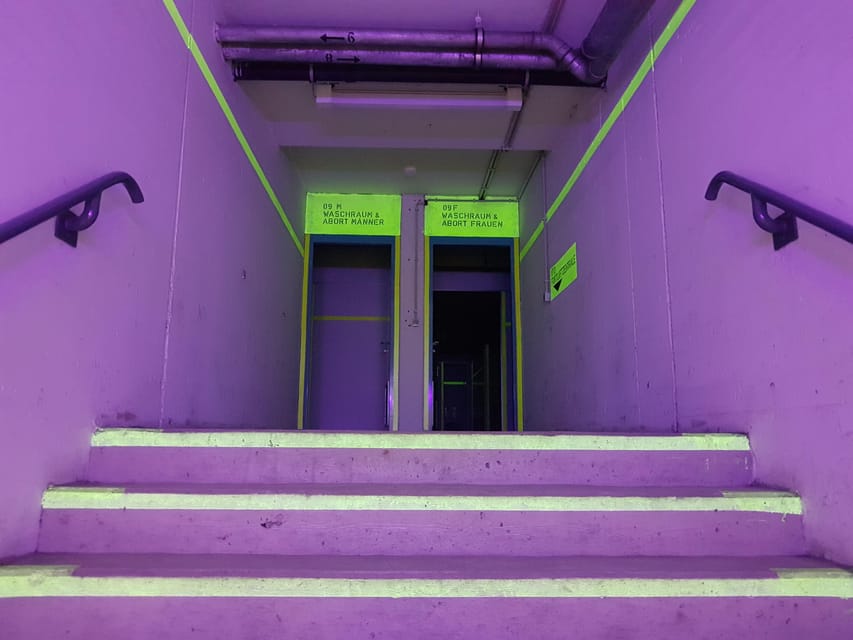
The bunker is presented as more than a single-purpose shelter. It was intended to protect some of the city’s inhabitants, and especially travelers in the station area, from an acute threat. And because the threat list was broader than nuclear alone, the design concept included shielding against biological and chemical attacks as well.
For you, that makes the tour feel more grounded. It is not just a Cold War museum stop where you stare at a single timeline. You get a fuller sense of how civil defense planning tried to cover multiple catastrophic possibilities.
This also helps you understand why the bunker would be positioned under such a busy, strategic location. A central station naturally mixes locals and visitors. So the shelter planning had to think about whoever was there when the warning came, not only a carefully chosen group.
Logistics for a smooth 75 minutes underground
The full experience lasts about 75 minutes, with a live guide in German. The timing matters. There can be no entry after the tour starting time, so arrive early enough to handle the station navigation without rushing.
This tour also runs rain or shine. That sounds minor until you are standing around outside in bad weather while you figure out the entrance. Since the start point is inside the station and you are going underground, you’re protected from the elements, but you still want to be in the right place on time.
Food and drinks are not part of your plan here, and that is worth noting in your day planning. You are in an enclosed, exhibit-focused environment, so plan to eat before or after.
You also need to treat the bunker exhibits like they are museum artifacts, not photo props. You cannot touch the exhibits, and selfie sticks are not allowed. Large luggage and bags are also off limits, which matters if you are doing heavy intercity travel.
Who should go, and who should skip this nuclear bunker visit
This is a great tour if you like practical history that explains the real-world consequences of policy, not only the big events. You’ll also enjoy it if you want context for Cold War thinking and a setting that forces you to understand physical constraints.
It is less suitable if any of these apply:
- Children under 8 years
- People with mobility impairments
- Wheelchair users
- People with claustrophobia
That is not just a formality. The bunker experience includes being in a confined space and imagining hundreds of people packed in together. If that kind of environment would stress you out, you’ll have a harder time focusing on the learning.
Also, the tour is German only, so if you need English, this may not meet your needs. The guide language matters here because the topic is technical enough that lost words can make sections feel confusing.
Price and value: is $15 worth it?

At about $15 per person, this tour is priced like a well-run museum-style guided entry. And in this case, I think the value comes from rarity and from teaching style.
You are getting:
- Guided interpretation with a live guide
- Access to an actual nuclear bunker site under a major station
- A structured explanation that connects nuclear weapons, civilian protection, and biological or chemical threat thinking
- A simulation component that helps you compare scales, not just memorize terms
For a 75-minute experience, the price feels fair because you are not only walking through static displays. You are guided through context and then asked to do a small, memorable “imagine yourself here” moment by lying down or sitting on a pallet.
If you are already in Nürnberg for a day, this is also an efficient use of time. You do not need special transport planning beyond getting to the main station, and you can pair it with other sights nearby in the station area.
My take: should you book the Nuremberg nuclear bunker tour?
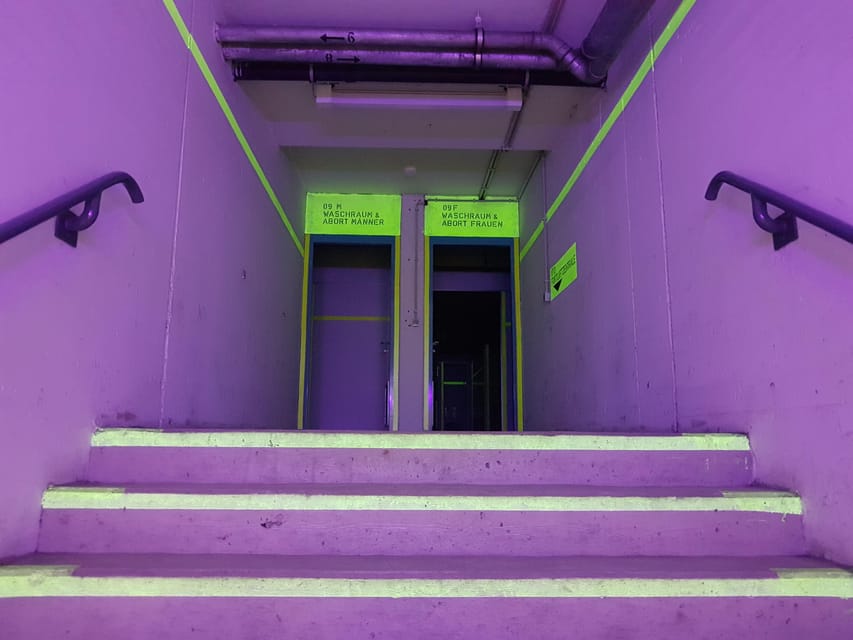
Book this if you want a direct, thoughtful look at how Cold War fears turned into shelter planning, and you like tours that explain cause and effect without reducing everything to horror. I also think it works well for travelers who enjoy practical interpretation, because the tone tends to stay readable and human, with humor and common sense helping you process heavy material.
Skip it if you have claustrophobia, wheelchair needs, or mobility limitations. Skip it if you expect a casual, touchable museum experience. And if German-only tours are a problem for you, you’ll spend too much energy trying to follow instead of learning.
If you meet the basic requirements, this is one of the more memorable historical experiences in Nürnberg because the setting is real, the comparisons are clear, and the experience changes how you understand what people were trying to protect.
FAQ
How long is the nuclear bunker tour in Nuremberg?
The tour lasts about 75 minutes.
Where do I meet for the tour?
Enter the station through the main portal, reach the main hall, then go down via the escalators to the basement floors. Turn sharply to the right at the foot of the escalator steps to find the bunker entrance, and wait at the Yorma’s restaurant area.
What language is the guide?
The live tour guide is German.
What is included in the ticket price?
The ticket includes the nuclear bunker entry fee and a guide.
What should I avoid bringing or doing during the tour?
Smoking, food and drinks, luggage or large bags, pets (assistance dogs allowed), selfie sticks, and touching the exhibits are not allowed.
Does the tour run in rain or shine?
Yes, the tour takes place rain or shine.
Is this tour suitable for young children?
No. It is not suitable for children under 8 years old.
By Rail From Nuremberg
Nuremberg Within the Walls
The Divided Years, Reviewed
Everything else we filed on Nuremberg
- Nuremberg: Medieval Time Travel for Kids
★ 4.9 · 15 reviews - PRIVATE Nuremberg WW2 and Old Town Day Tour (Product code: 87669P16)
★ 4.5 · 15 reviews - Nuremberg: St. Johannis Friedhof &Hesperidengärten IN GERMAN
★ 4.4 · 15 reviews - Nuremberg: Private guided tour of the Old Town in German
★ 4.9 · 17 reviews - PLAYMOBIL®-FunPark Entrance Ticket
★ 4.5 · 17 reviews - Stein: Public guided tour of the “Old Mine” museum
★ 4.5 · 18 reviews
Nuremberg Old Town and Castle Tours, side by side.
 ★ 4.4Nuremberg: City Tour with the Bimmelbahn TrainFrom $122,475 reviews
 ★ 4.6Nuremberg: Old Town Guided Walking TourFrom $182,416 reviews
 ★ 4.8Nuremberg: Tunnels and Secret Passages in the City Wall TourFrom $142,334 reviews
 ★ 4.8Nuremberg: Medieval Dungeons Guided TourFrom $111,726 reviews
 ★ 4.7Nuremberg: Walking Tour of Former Nazi Party Rally GroundsFrom $151,665 reviews
 ★ 5.0Medieval Tour in Nuremberg in SpanishFrom $191,374 reviews
 ★ 4.8Nuremberg: Historischer Kunstbunker WWII Art Bunker TourFrom $14921 reviews
 ★ 4.7Nuremberg: PLAYMOBIL®- FunParkFrom $29863 reviews
Other lists this tour is on