
REVIEW · NUREMBERG
Nuremberg: St. Johannis Friedhof &Hesperidengärten IN GERMAN
A cemetery tour that feels like a city lecture. The St. Johannis walk in Nuremberg turns headstones into stories, with a local guide connecting grave art to the city that produced it, plus a stop in the nearby Hesperidengärten.
I especially liked the artistic epitaphs and how they helped me picture who these people were and what families wanted remembered. I also enjoyed the punctuation point of the tour: Albrecht Dürer’s Grab, where Nuremberg’s art identity clicks into place.
One catch: the tour is German-only, and the garden portion only works May to October, so plan your timing and your language comfort level.
In This Review
- Key things you will notice on this tour
- St. Johannis Cemetery: a peaceful place with big city meaning
- Getting started at Lindengasse and Johannisstraße (and what to wear)
- The guided route through Nuremberg’s people: patricians to politicians
- Albrecht Dürer’s grave: why this stop lands
- Hesperidengärten: recreation plus Mediterranean fruit culture
- Walking pace, time split, and what feels like “enough”
- Price and value: why $17 can be a good deal here
- Who should book (and who may want to skip it)
- Best time to go: May to October for the gardens
- Practical expectations before you go
- Should you book the St. Johannis Friedhof and Hesperidengärten tour?
- FAQ
- Where does the tour start?
- How long is the guided tour?
- Is the tour offered in English?
- When can I visit the Hesperidengärten?
- What is the walking distance like?
- Is this tour suitable for wheelchair users or people with limited fitness?
Key things you will notice on this tour
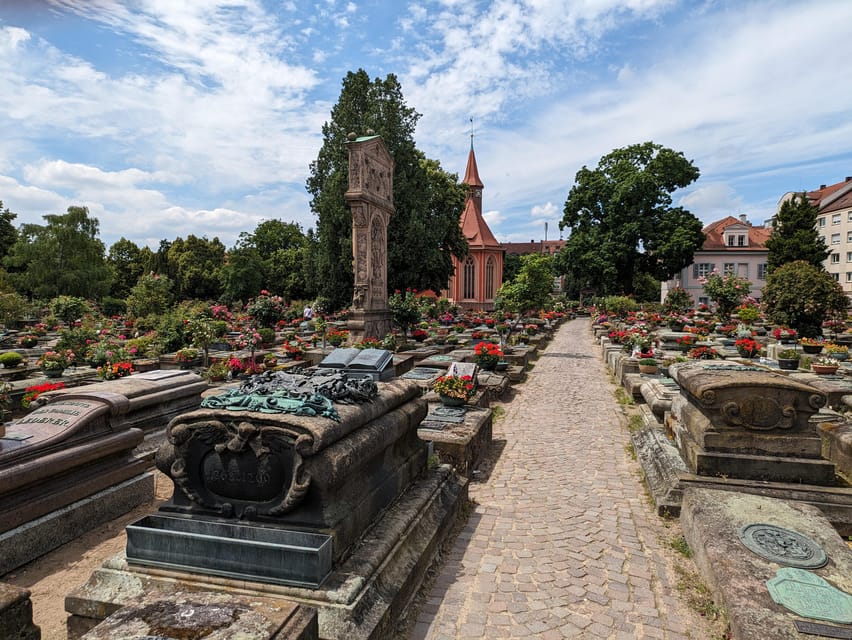
- Germany’s most beautiful cemetery (2013), where the setting does the talking
- Patricians, craftsmen, artists, and politicians covered in one guided route
- Artistic epitaphs that turn memorial stones into readable history
- A dedicated stop at Albrecht Dürer’s grave
- Hesperidengärten recreation and Mediterranean fruit cultivation
- A “green Johannis district” feeling, even though you are walking among monuments
More of Nuremberg inside the walls
- Nuremberg: Old Town Guided Walking Tour★ 4.6 · 2,416 reviews
- Nuremberg: Tunnels and Secret Passages in the City Wall Tour★ 4.8 · 2,334 reviews
- Nuremberg: Medieval Dungeons Guided Tour★ 4.8 · 1,726 reviews
- Nuremberg: Walking Tour of Former Nazi Party Rally Grounds★ 4.7 · 1,665 reviews
St. Johannis Cemetery: a peaceful place with big city meaning
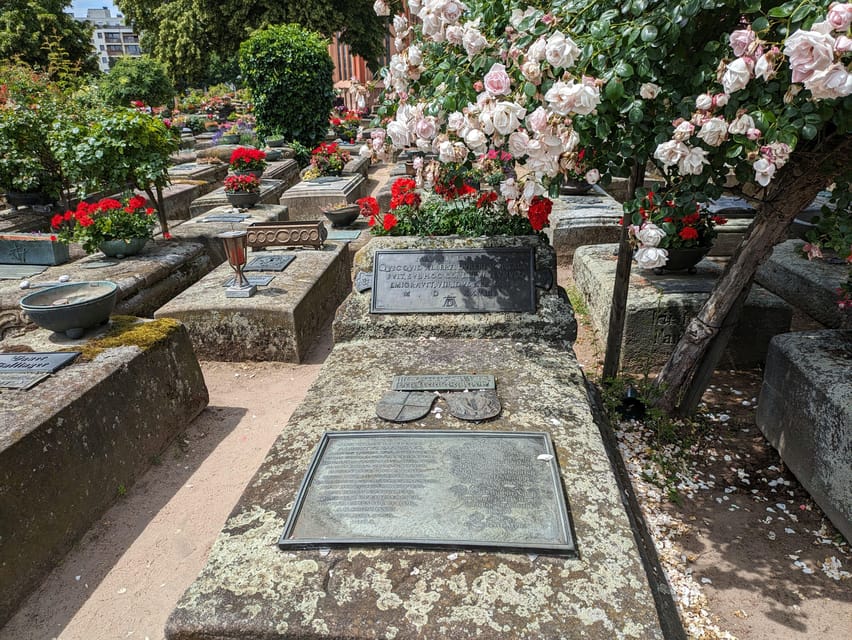
Nuremberg has plenty of photo-worthy sights, but St. Johannis Friedhof does something different. It is not just a cemetery you pass by. With a guide, you start seeing it as a map of the city’s social mix, from the people who shaped civic life to the workers and artists who made culture real.
This cemetery is widely considered one of the most famous burial grounds in Europe. It was even voted Germany’s most beautiful cemetery in 2013. That reputation is not just about marble and mood. The point is that the place tells stories you can follow, especially when someone explains what to look for.
Expect a guided walk where the route matters. You are not wandering aimlessly. Instead, you are moving through named areas and stopping where the symbolism connects back to Nuremberg’s history.
The vibe is calm, but it is not quiet in the “nothing to do” way. You will be listening, and you will likely pause often to take in the details your guide points out.
Getting started at Lindengasse and Johannisstraße (and what to wear)
Your meeting point is St. Johannisfriedhof, East Entrance, at the corner of Lindengasse and Johannisstraße. Being precise matters here, because cemeteries are easy to enter in the wrong place and then spend time backtracking.
The tour runs for about 1.5 hours, with the bulk of the time split between cemetery highlights and the nearby garden stop. That length is long enough to get real context, but short enough that you are not stuck for half a day.
Bring comfortable shoes. The route is not described as extreme, but it is still a walking tour, and cemeteries tend to have paths that are not always flat. One participant noted the walk is roughly 1 kilometer, which is helpful if you are measuring your own stamina.
Also, think about weather. One guide-led outing can feel very different in cold air versus heat. If you are visiting in summer, the garden portion can feel more noticeable just because you will be outside longer and the ambiance is more “recreation and strolling.”
The guided route through Nuremberg’s people: patricians to politicians
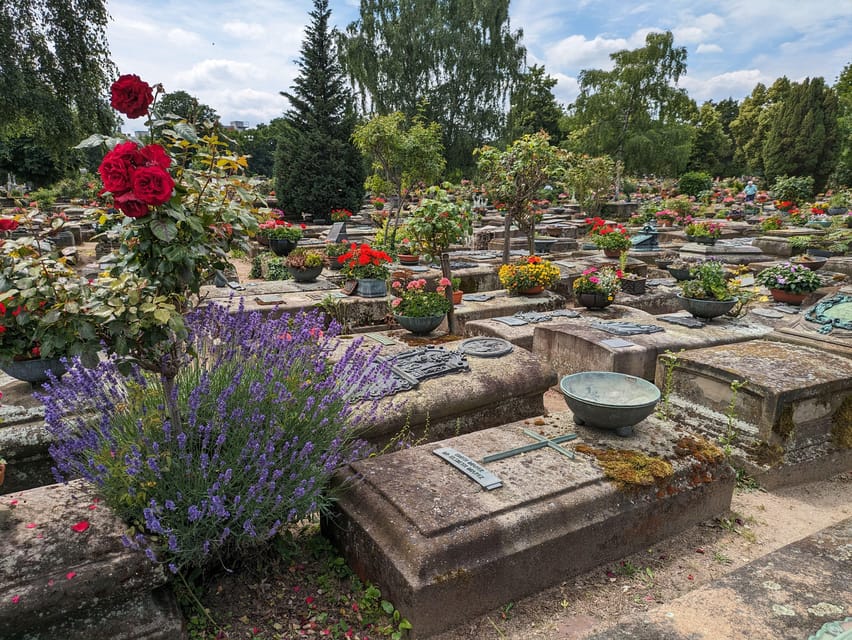
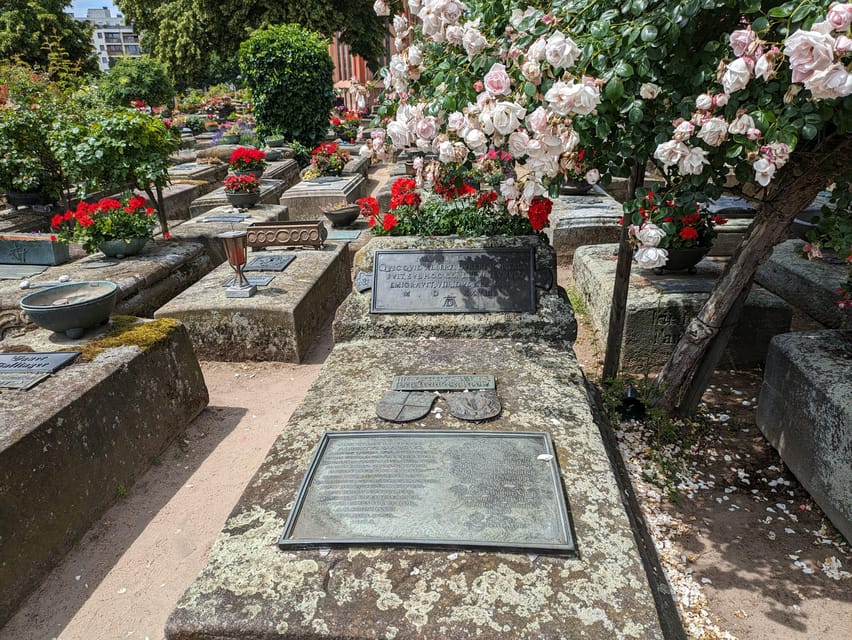
The heart of the experience is the cemetery tour focused on who is buried there and why it matters. You get a guided look at the graves of patricians, craftsmen, artists, and politicians. That selection is smart because it covers multiple layers of city life, not only one elite group.
When a guide explains the memorials, the stones stop looking random. You start noticing patterns: how families wanted to be represented, what professions signaled, and how civic status showed up even in death.
The tour also highlights artistic epitaphs. These are not just names and dates. They are expressions of identity, written or sculpted in ways meant to communicate something to the living. That is where the experience becomes more than sightseeing.
I like this style of history because it is tangible. You are not learning from a timeline alone. You are learning from individual stories arranged in space, so the city’s development feels concrete.
A practical note: because the tour is in German, you will want to be ready to follow spoken explanations. If you understand basic German, you can probably still catch the structure of the story. If German is challenging, the experience can still be beautiful visually, but the full value depends on listening.
Albrecht Dürer’s grave: why this stop lands
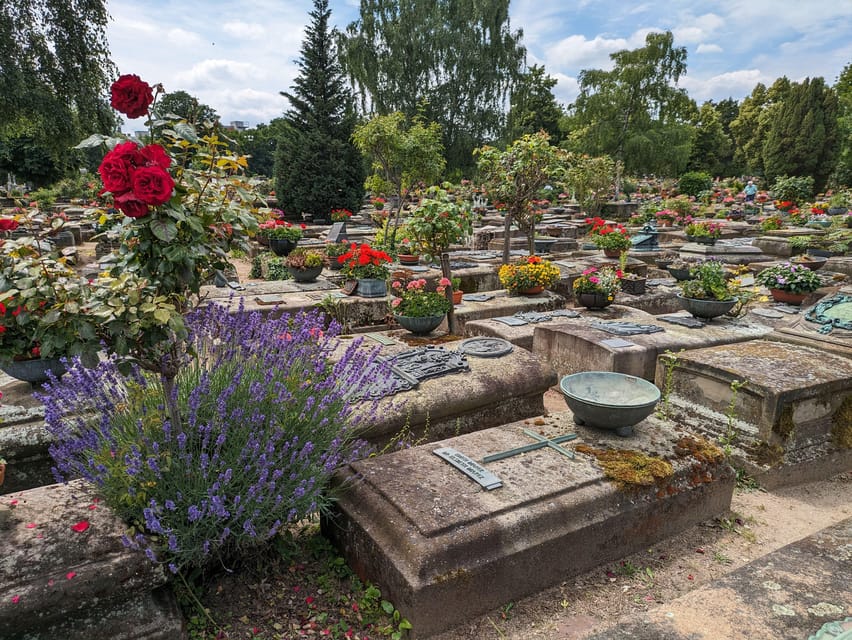
At some point, the tour pivots to Albrecht Dürer’s Grab. Dürer is one of those names that you might associate with museums and books, so it is useful to see how his presence connects to place.
A guided stop at his grave helps you connect the artist to Nuremberg as a living city, not just an artistic brand. You also get a reminder that historical figures belonged to local communities and social structures, which is exactly what the cemetery tour is showing overall.
This moment often works like punctuation. After learning about different groups and how epitaphs communicate status and remembrance, Dürer’s name gives the route a recognizable anchor.
If you are an art fan, you will probably appreciate how the tour uses him without making it a lecture about the entire Renaissance. It is more focused: this is about what the burial site communicates in Nuremberg’s story.
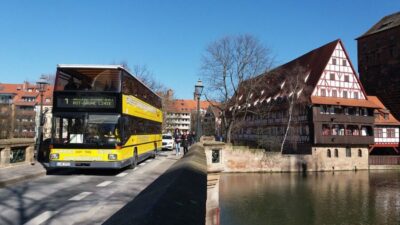
Hesperidengärten: recreation plus Mediterranean fruit culture
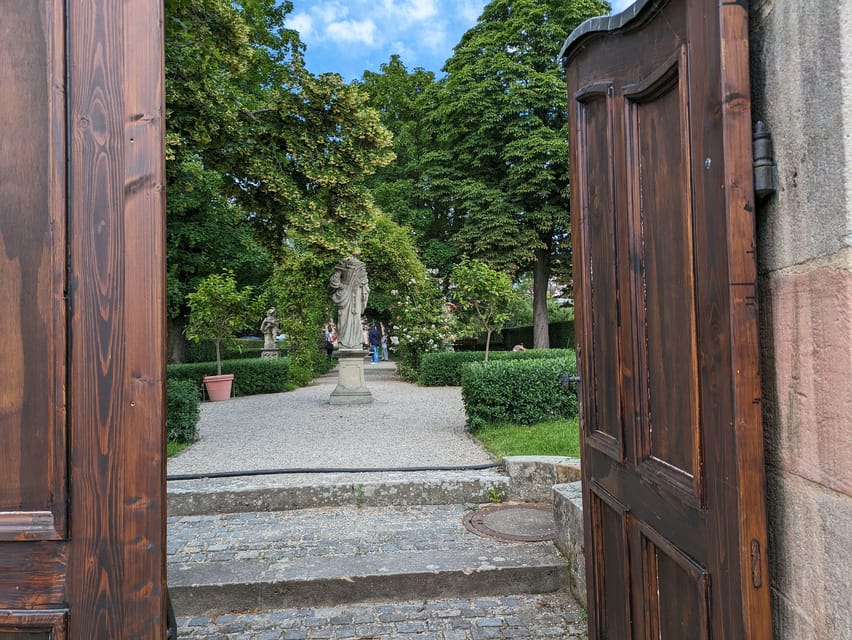
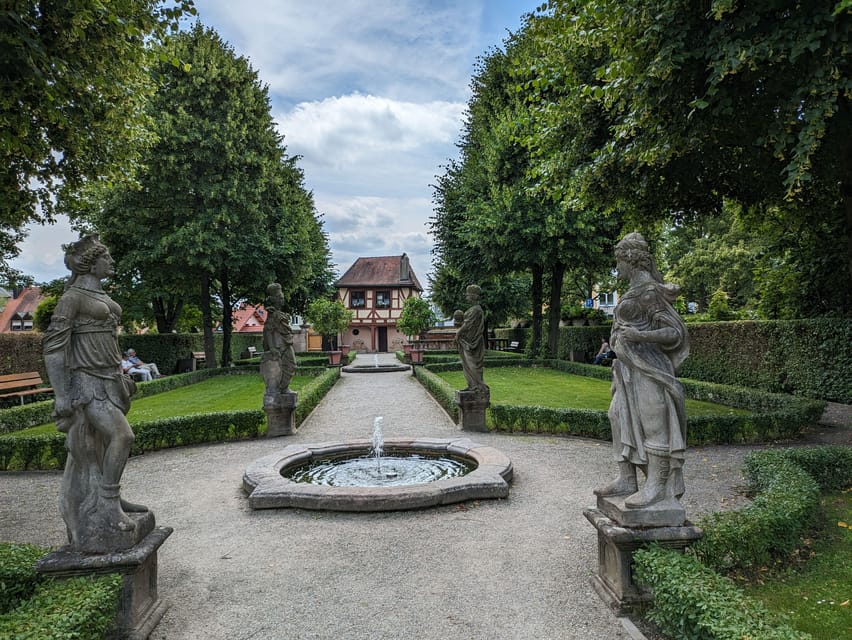
The second half shifts mood. You move from stones to greenery with a detour to the Hesperidengärten. These gardens are tied to the “green Johannis district” idea, so they feel like a natural continuation rather than a random extra stop.
Here is the interesting part: the gardens served for recreation, but they were also used for cultivating Mediterranean fruit. That pairing matters. It is a reminder that gardens were not only pretty scenery. In many historical settings, they were practical spaces where residents experimented with plants tied to broader trade and cultural imagination.
The tour gives you context for how to read the garden as part of the same city story you just learned in the cemetery. You are still thinking about identity and memory, but now through leisure, cultivation, and a different kind of local pride.
Timing is key. The Hesperidengärten can only be visited from May to October. If your dates fall outside that window, you might miss the garden portion. So check your travel month before you commit.
Walking pace, time split, and what feels like “enough”
This is billed as a 1.5-hour guided tour. That time window is ideal for two reasons.
First, cemetery history can expand quickly. A guide needs to be selective, and an hour and a half forces that focus. You come away with a story you can remember, not a blur of facts.
Second, it keeps the day flexible. You can fit it between museum time and meal time without feeling like you have scheduled your whole day around one site. If you are sightseeing solo, it is also a nice change from long museum corridors because you spend the time outdoors.
One participant noted the walking distance is roughly one kilometer, and that it can work for older interested people. I would still plan for slow, comfortable pacing. Even short distances feel longer when you stop often to look and listen.
If you are sensitive to heat, think about when you go. Someone found the garden portion less compelling during high heat, which makes sense. In hot months, you might want a slightly cooler time of day, or just mentally prepare that the cemetery stories will be the main payoff.
Price and value: why $17 can be a good deal here
At about $17 per person, the value depends on what you want from a guided experience.
If you are the type who reads a cemetery map once, takes a photo, then moves on, this might feel expensive for what sounds like walking outdoors. But if you care about interpreting what you are seeing, a live guide helps a lot. Here, the guide is doing the heavy lifting: translating epitaph symbolism, explaining who different groups were, and connecting the cemetery and gardens to Nuremberg’s identity.
Also, you are getting more than one site in one session: St. Johannis Friedhof plus a garden detour. Many city tours charge similar prices for a single focus. This one strings together two connected settings in a short time.
In plain terms, the cost is fair if you want context. It is not a bargain if you want self-guided wandering only.
Who should book (and who may want to skip it)
This tour fits best if you enjoy character-based history. I like it because it frames Nuremberg through people, professions, and memorial art. If you like art, civic history, or Renaissance-era names like Albrecht Dürer, you will probably enjoy the flow.
It is also a good choice if you like small-scale experiences. Instead of racing across multiple highlights, you go deep in one emotionally meaningful site and then add the gardens for a lighter change of pace.
But it is not for everyone. It is listed as not suitable for wheelchair users, not suitable for visually impaired people, and not suitable for people with low level of fitness. So if any of those apply, you will likely feel stressed or limited rather than comfortable.
Finally, remember the language requirement: it is in German. If you do not read German and you struggle with spoken German, you may miss the strongest part of the experience.
Best time to go: May to October for the gardens
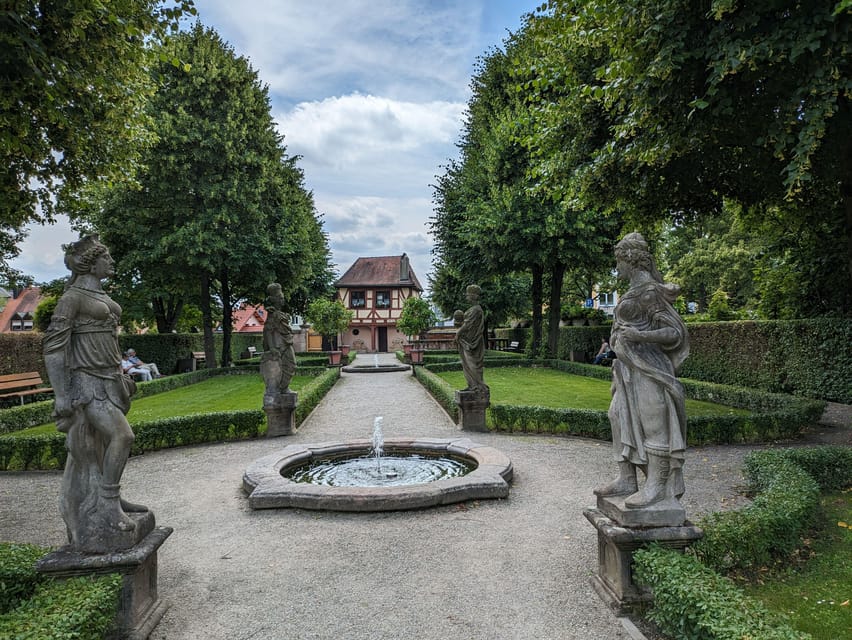
Your travel month matters because of the Hesperidengärten access window. The gardens can only be visited from May to October. That means the tour experience changes depending on your dates.
In those months, you get the full two-part story, cemetery first and then the garden with its recreation and Mediterranean fruit connection. In other months, you might still have the cemetery component, but you would miss what makes the tour especially distinctive for this listing.
Weather also changes the feel. One outing is described as happening in chilly weather, and it still worked well because the focus stayed on listening and looking at memorial details. In contrast, high heat can make the outdoor garden portion feel like extra effort, even if the historical concept is interesting.
If you can choose, aim for comfortable walking weather. Plan your clothing for being outside, and bring a layer if you are going earlier in the season.
Practical expectations before you go
Here are the details that help you set expectations correctly.
- Duration: about 1.5 hours
- Language: guided tour in German
- Walking: roughly 1 kilometer noted by a participant
- Meeting point: St. Johannisfriedhof, East Entrance, Lindengasse and Johannisstraße corner
- Group size rule: minimum 2 participants
If you are coming from a central Nuremberg area, build in a little time to find the exact entrance. Cemeteries can be spread out, and arriving smoothly keeps the start stress-free.
Bring your curiosity. The cemetery tour works best when you treat each stop as a clue. Your guide points out what to notice, but you will get more by lingering a few seconds longer at each place.
Should you book the St. Johannis Friedhof and Hesperidengärten tour?
Book this tour if you want a smarter way to see Nuremberg. It is not a generic photo loop. The cemetery becomes an organized lesson in how different groups lived, mattered, and were remembered, with artistic epitaphs and clear city context from a local guide.
You should also book it if you care about a well-timed contrast. The garden portion adds recreation and historical plant culture, so the experience does not stay heavy the whole time.
Skip it if German-only tours are a problem for you, or if you are traveling outside May to October and the gardens are a big part of what you want. And if mobility or vision needs make walking tours difficult, choose a different format.
If those boxes fit, this is a memorable, low-cost way to understand Nuremberg from the ground up, starting at St. Johannis and ending in the Hesperidengärten.
FAQ
Where does the tour start?
The meeting point is St. Johannisfriedhof, East Entrance on the corner of Lindengasse and Johannisstraße.
How long is the guided tour?
The duration is about 1.5 hours.
Is the tour offered in English?
No, the tour is held in German.
When can I visit the Hesperidengärten?
The Hesperidengärten can only be visited from May to October.
What is the walking distance like?
One participant noted the walking distance is about 1 kilometer.
Is this tour suitable for wheelchair users or people with limited fitness?
No. It is listed as not suitable for wheelchair users, visually impaired people, and people with low level of fitness.
Nuremberg Within the Walls
Everything else we filed on Nuremberg
- Nuremberg: Medieval Time Travel for Kids
★ 4.9 · 15 reviews - PRIVATE Nuremberg WW2 and Old Town Day Tour (Product code: 87669P16)
★ 4.5 · 15 reviews - Nuremberg: St. Johannis Friedhof &Hesperidengärten IN GERMAN
★ 4.4 · 15 reviews - Nuremberg: Private guided tour of the Old Town in German
★ 4.9 · 17 reviews - PLAYMOBIL®-FunPark Entrance Ticket
★ 4.5 · 17 reviews - Stein: Public guided tour of the “Old Mine” museum
★ 4.5 · 18 reviews
Nuremberg Old Town and Castle Tours, side by side.
 ★ 4.4Nuremberg: City Tour with the Bimmelbahn TrainFrom $122,475 reviews
 ★ 4.6Nuremberg: Old Town Guided Walking TourFrom $182,416 reviews
 ★ 4.8Nuremberg: Tunnels and Secret Passages in the City Wall TourFrom $142,334 reviews
 ★ 4.8Nuremberg: Medieval Dungeons Guided TourFrom $111,726 reviews
 ★ 4.7Nuremberg: Walking Tour of Former Nazi Party Rally GroundsFrom $151,665 reviews
 ★ 5.0Medieval Tour in Nuremberg in SpanishFrom $191,374 reviews
 ★ 4.8Nuremberg: Historischer Kunstbunker WWII Art Bunker TourFrom $14921 reviews
 ★ 4.7Nuremberg: PLAYMOBIL®- FunParkFrom $29863 reviews
Other lists this tour is on