
REVIEW · FRANCONIA
Passau Private Walking Tour With A Professional Guide
Baroque and rivers, in one easy walk. This Passau private walking tour is interesting because you get a guide who can steer the pace and focus, and you begin right at St. Stephan’s Cathedral, one of the big sights in town. I especially like how the route strings together landmarks tied to the Prince-Bishopric era, plus Danube viewpoints you can actually see instead of just reading about.
One thing to consider: the walk is easy, but it still involves bridge crossings and a climb up the path to Veste Oberhaus, so wear comfortable shoes. Also, any admission tickets you want to use during the tour are not included, so plan a little extra if you decide you want to go inside a site rather than view from the outside.
In This Review
- Key things I’d circle before you book
- A private walking tour that respects your time
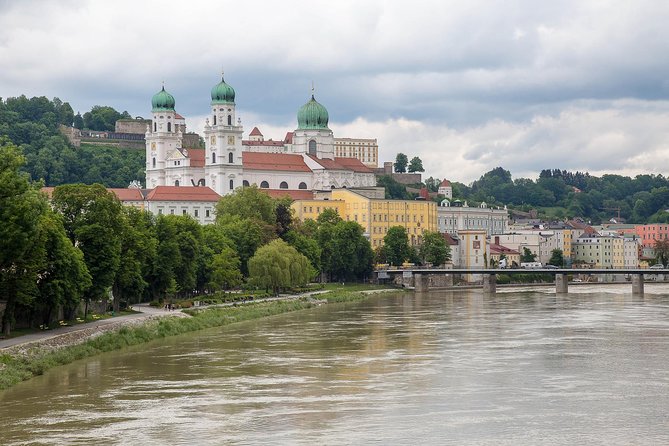
- Starting at Domplatz: St. Stephan’s Cathedral sets the tone
- The bishop’s orbit: from the former residence to town hall details
- Crossing the Danube on Luitpold Bridge
- Veste Oberhaus: the bishop’s fortified perch
- Back across the bridge: where the three rivers meet the Danube
- Price and value: what $351.80 really buys you
- Who this Passau walk suits best
- Should you book this Passau private walking tour?
- FAQ
- How long is the Passau private walking tour?
- What is the group size for this private tour?
- Where does the tour start and end?
- Is the tour offered in English?
- Do I need transportation during the tour?
- Are admission tickets included?
- Can I cancel for a full refund?
Key things I’d circle before you book
- A private guide, only for your group means questions get answered right away and the pace stays yours
- St. Stephan’s Cathedral is the anchor stop, with Europe’s largest pipe organ on site
- Royal Promenade connections link the scenery to rulers like Barbarossa and Empress Elisabeth, nicknamed Sissi
- Luitpold Bridge and Danube river views give you postcard angles without needing boat time
- Veste Oberhaus viewpoint explains why bishops built a fortified residence here
- Town Hall carillon tower adds a fun local detail, including the largest carillon in Bavaria
Other Franconian towns worth the train
- Passau: Crystal Ship Sightseeing Cruise★ 4.6 · 705 reviews
- Passau: Floating City Highlights Tour on the Danube and Inn★ 4.5 · 452 reviews
- Passau: City Highlights Guided Walking Tour★ 4.8 · 351 reviews
- Passau: 1-Hour Guided City Walking Tour★ 4.3 · 274 reviews
A private walking tour that respects your time
Passau is one of those towns where a big chunk of the charm is just getting your bearings and walking the river edges. This tour is built for that. You get a local guide with your group only, and you can usually work around your schedule because the start time can be chosen for your group.
The “private” part matters more here than in some places. Passau has layers. You’ll hear about the Prince-Bishopric state and how it shaped the cultural feel of the city, but your guide can emphasize what you care about, whether that is architecture, political power, or simply how the rivers formed the town’s identity.
Logistics are refreshingly simple. It is a walking tour, no transportation needed, and it stays near public transport. You also receive a mobile ticket, so you do not have to worry about digging through printouts.
A small note from past experiences with guides like Leonie and Petra is that the guiding style can make or break a short tour. Leonie comes across as friendly and highly effective at turning facts into something you can picture. Petra is described as fun, with strong command of Passau, and she even offered guests practical extras like dinner recommendations and shopping tips. Even if you only take a one-off walk like this, that kind of guidance helps you keep the momentum after the tour ends.
Starting at Domplatz: St. Stephan’s Cathedral sets the tone
Most Passau tours start with a church photo. This one starts at the square of St. Stephan’s Cathedral, and that is smart because you see the scale immediately.
Why this cathedral is a big deal, even if baroque architecture is not your main hobby: it is the largest baroque cathedral north of the Alps, and it is home to the largest pipe organ in all of Europe. Those two facts alone give you a sense of why the Prince-Bishopric rulers cared so much about religious and cultural display. This was not just a place to worship. It was also a statement you could see and hear.
From here, you move along the Royal Promenade, which follows the steps of historical figures like Barbarossa and Empress Elisabeth, nicknamed Sissi. That kind of storytelling works well in Passau because the city feels like it is built for walking. You are not racing between far-flung stops. You are gradually turning the same streets into a timeline.
One practical consideration: you get the best experience when you allow short pauses. Your guide will point out what matters, but if you rush through, you will miss those “oh, that explains a lot” moments tied to the river, the buildings, and the old power structure.
The bishop’s orbit: from the former residence to town hall details
After the cathedral, the route continues toward the former Bishop’s Residence. This is a key transition point in the story because it connects the religious center to the governing center. Even without a long museum visit, you can start to see how the Prince-Bishopric era left fingerprints on where people lived and how authority was staged.
Next up is the town hall, and it is worth slowing down for the small stuff. The town hall is mainly built in the late 14th century, right along the river edge. That matters because it shows how civic life grew alongside (and alongside, not beneath) the bishop’s influence.
Then comes a very Passau-style detail: the 19th century tower with the largest carillon in Bavaria. A carillon is not just a decoration. It is part of daily rhythm, and your guide can help you understand how these sounds were meant to carry across the city. Even if you do not hear it during your visit, knowing it is there makes the town feel more lived-in rather than frozen in postcard mode.
At this stage, you also begin to shift your attention from buildings to views. Soon you will cross the Danube via Luitpold Bridge, and the guide’s earlier context makes those river angles more meaningful. You are not just looking at water. You are seeing how Passau’s geography shaped where power, trade, and daily life could gather.
Crossing the Danube on Luitpold Bridge
Crossing Luitpold Bridge is one of those moves that sounds simple until you do it. The bridge gives you a moving perspective, and you get a clearer sense of the river valley than you would if you stayed in one spot.
You also use the bridge to connect two different “moods” of the city: the old-town riverside feel and the higher, fortified feel up toward Veste Oberhaus. This is a smart pacing choice on a one-and-a-half to two-hour tour, because it prevents the walking from feeling like a long chain of checkboxes. Instead, it feels like a climb through eras and functions.
Practical tip: if you are traveling with kids or anyone with limited stamina, this is where you should set expectations early. The overall activity level is easy, but the climb to the viewpoint includes a path up. Your guide can usually adapt the pace for your group, especially because the tour is private.
Veste Oberhaus: the bishop’s fortified perch
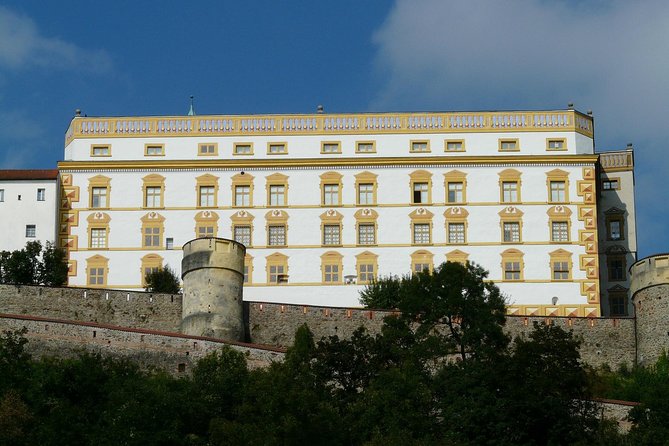
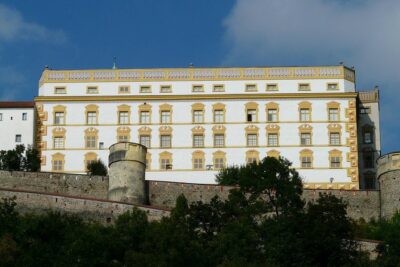
One of the most satisfying parts of this route is the walk up to Veste Oberhaus. It served as the fortified residence of the bishop of Passau, and the place earns its keep just by offering views that explain the strategy.
From the path up, you start to understand why a fortified residence made sense here. Passau is defined by water. When the rivers act like highways and boundaries, controlling the heights gives you both observation and influence. You will not need a long lecture to get it, because the city layout does the teaching for you.
Then you reach the viewpoint, and it is not only pretty. It is useful. From up here, the river valley looks organized instead of chaotic. You can see how the old town sits in relation to the water, and you get a stronger sense of the city’s shape, which helps with everything you do after the tour.
If you are a photographer, this is your main payoff. Plan to slow down for framing. A quick phone snapshot works, but you will get better angles if you let your eyes adjust, then take a couple of shots from slightly different spots.
Back across the bridge: where the three rivers meet the Danube
When you return, you cross the same bridge again. That repetition is not filler. It is a deliberate way to help you compare angles and recognize how the city turns as you move.
This section centers on a very specific Passau feature: the tip of land where three rivers join to form the mighty Danube. In other towns, river confluences are just geography. In Passau, it is identity. Your guide will point out what you should look for, so you can actually spot the junction rather than just hearing about it.
This is also the perfect moment to switch into “watch mode.” Instead of scanning every building, focus on how the water channels line up. You may spot how the city’s layout responds to currents and land shapes. And because the tour is private, you can ask a quick question like which river is which, or where the best photo angle is, and get a straight answer.
You finish by rediscovering the old town and wrapping up near the end point listed for the activity (in the old-town area around 94 Passau). Even with a short duration, that ending matters. You are not left stranded outside the places you care about. You are dropped back where you can keep exploring on your own.
Price and value: what $351.80 really buys you
The price is $351.80 per group (up to 15), for about 1 hour 30 minutes. The key to value here is how group pricing turns the math in your favor.
If you have a small group, the per-person cost can be on the higher side. But if you split the group cost across multiple people, the price becomes far more reasonable because you are paying for a professional guide time block plus a tailored walking experience.
Think of it like this:
- For a group of 2, it is about $175 per person.
- For a group of 4, it is about $88 per person.
- For a group of 6, it is about $59 per person.
Those rough conversions help you decide quickly. If you are traveling solo, you might prefer a cheaper group tour. If you are traveling as a couple or family, or you have friends who like asking questions and getting practical advice, a private guide can be the best way to get more out of less time.
Also, the experience includes possible customizing on the spot, which you cannot easily get with fixed group tours. That flexibility can be worth real money in a short stay, especially if you want to spend more time on a single theme like architecture, river history, or the Prince-Bishopric influence.
One last value check: admission tickets are not included. If you plan to enter places during the walk, you might spend a little more. If your plan is to enjoy the exterior views and the storytelling, you can likely keep costs tight.
Who this Passau walk suits best
This is an easy, age-friendly walking tour, with no transportation needed. It is well suited for:
- First-time visitors who want a clear, guided orientation to Passau quickly
- Families who want structure without a strenuous hike
- Small groups that like questions and a customized pace
- People who care about how religious and political power shaped city design
Where you might think twice: if you want a long indoor museum style day, this is not that. It is focused on seeing and understanding key city spots in a compact time frame. It is also built around walking and viewpoints, so you want to be comfortable with steps and a short climb even if the overall activity level is easy.
Should you book this Passau private walking tour?
I would book it if you want a high-impact introduction to Passau with a guide who can tailor the emphasis, especially if St. Stephan’s Cathedral, the Danube river junction, and the Veste Oberhaus viewpoint are on your must-see list. The private format, plus the way the route links cathedral, bishop’s power, town hall details like the carillon tower, and river views, makes the whole story stick.
Skip it if you already know Passau well and you are happy wandering on your own with a map. Also pause before booking if you dislike paying for a private guide when your main goal is purely low-cost sightseeing.
If you like walking, short stops, and guide-led context, this is a strong way to make 90 minutes feel like a lot more.
FAQ
How long is the Passau private walking tour?
It lasts about 1 hour 30 minutes.
What is the group size for this private tour?
It is private, and your group only participates. The price is per group for up to 15 people.
Where does the tour start and end?
The start is at Domplatz, 94032 Passau-Alstadt, Germany. The tour ends in Passau at 94 Passau.
Is the tour offered in English?
Yes, it is offered in English.
Do I need transportation during the tour?
No. For this walk tour, no transportation is needed.
Are admission tickets included?
No. Admission tickets are not included.
Can I cancel for a full refund?
Yes. You can cancel up to 24 hours in advance for a full refund. If you cancel less than 24 hours before the start time, the amount paid is not refunded.
Pavements of Passau
Around Franconia, Reviewed
Everything else we filed on Passau
- Private Transfer from Passau to Munich with Sightseeing
★ 5.0 · 4 reviews - Passau Private Walking Tour With A Professional Guide
★ 5.0 · 5 reviews - Passau – Classic Guided tour
★ 4.0 · 5 reviews - Adventure tour with the crystal ship
★ 5.0 · 6 reviews - Private Transfer From Passau To Munich With a Stop In Dachau
★ 5.0 · 10 reviews - Passau: Barefoot Passau XL
★ 4.4 · 15 reviews
Bamberg Wurzburg and Franconia Tours, side by side.
 ★ 4.6Bamberg: Guided Walking TourFrom $143,202 reviews
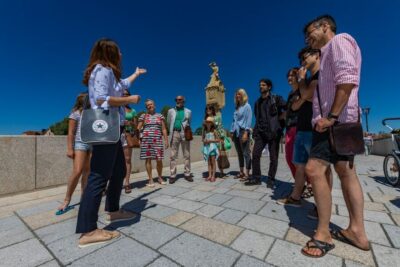 ★ 4.7Regensburg: Guided City Walking Tour of the Old TownFrom $181,395 reviews
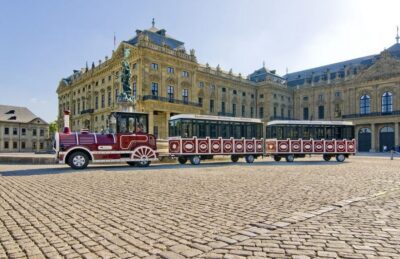 ★ 4.4Würzburg: City Tour with the Bimmelbahn TrainFrom $121,322 reviews
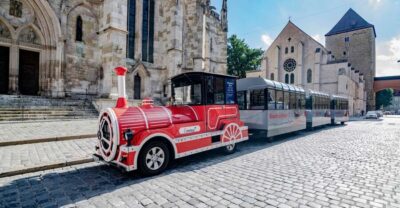 ★ 4.3Regensburg: City Tour with the Bimmelbahn TrainFrom $121,010 reviews
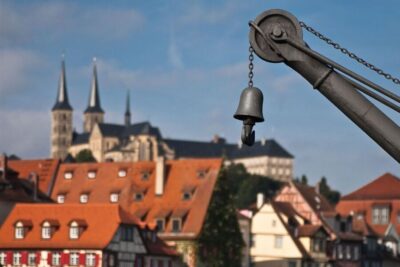 ★ 4.6Bamberg: Guided Beer History Tour with Optional TastingFrom $21772 reviews
 ★ 4.6Passau: Crystal Ship Sightseeing CruiseFrom $24705 reviews
 ★ 4.6Bamberg: City Highlights Walking TourFrom $14679 reviews
 ★ 4.6Regensburg: Klinger’s Sightseeing Boat Tour to WalhallaFrom $23507 reviews
Other lists this tour is on