
REVIEW · THE BLACK FOREST
Private: Outdoor Escape Game Schluchsee: The Lost Village
Suitcase mysteries meet lake puzzles. This 3-hour outdoor escape game in Schluchsee turns a 1928 dam plan into a hands-on mystery walk, with puzzle materials you actually use as you go.
I especially liked how the story pieces, a suitcase tied to Amalie, mayor’s daughter, and the trail of letters and locked boxes, give the walk momentum. I also liked that the puzzles stay social, built for teamwork, not solitary thinking.
One catch: it’s weather-dependent. The experience requires good weather, so plan for outdoors, not a cozy indoor escape room.
In This Review
- Key highlights you should know
- Schluchsee’s Lost Village, a puzzle walk built around a real place
- Where you start by the lake, and how the 3 hours usually flow
- The story beats, from the dam rumor to the suitcase that changes everything
- How the puzzle kit works, and why the fishing-backpack style matters
- The outdoors part, lakeshore breaks, and how to pace your team
- Difficulty tuning, hints, and when the game might feel too hard for your group
- Value check: price, what you actually get, and who it suits best
- Practical tips so your Lost Village game feels smooth
- Should you book The Lost Village outdoor escape game?
- FAQ
- How long is Outdoor Escape Game Schluchsee: The Lost Village?
- Where do I meet for the experience?
- What does the story involve?
- Is this a private tour?
- Do I get a mobile ticket?
- Can we take breaks during the puzzle?
- Does the game require good weather?
- What is the cancellation policy?
Key highlights you should know
- Schluchsee in 1928 plotline: dam plans threaten to bury a remote village, then a suitcase surfaces years later.
- Solve with teamwork: the game is designed around collaboration, with a group size up to 48 per game.
- Hands-on puzzle kit: you work through tasks using themed materials, including a fishing-backpack style setup.
- Hints if you stall: the game includes tips so you can keep moving rather than getting stuck forever.
- Picnic-friendly pacing: there’s an option to pause the puzzle, which makes lakeshore breaks more realistic.
- Private for your group: you won’t mix with other booking parties.
Undecided? The closest Rust write-ups we have are these.
- Rust: Rulantica Water Park Entry Ticket★ 4.6 · 289 reviews
- Rust: Europa-Park 2-Day Entrance Ticket★ 5.0 · 48 reviews
Schluchsee’s Lost Village, a puzzle walk built around a real place
The Outdoor Escape Game Schluchsee: The Lost Village is the kind of activity that fits people who get bored with “just sightseeing.” You’re at Schluchsee, near the lake, but the day is run like an outdoor exit room. Your job is to follow a time-linked story and solve puzzles that push you along.
The “Lost Village” premise starts in 1928, when plans to build a dam stir panic in a remote village. The reservoir will eventually swallow the place. Then, almost a hundred years later, a suitcase appears. It’s connected to Amalie, the mayor’s daughter, and it kicks off the modern-day mystery trail.
What I like about this setup is the way it gives you a reason to pay attention to your surroundings. You’re not just walking between puzzle points. You’re reading clues, opening things, and making choices that connect back to the legend. If you like stories with specifics, the dam, the lake outcome, and the Amalie thread make it feel grounded in the setting.
At the same time, this is still a puzzle game, not a lecture. That means your experience will rise or fall on how comfortable you are with collaboration and problem-solving in the outdoors.
Where you start by the lake, and how the 3 hours usually flow
You meet at Tourist-Information Schluchsee, Fischbacher Str. 7, 79859 Schluchsee, Germany. The activity ends back at the same meeting point, so you’re not trying to navigate back on your own after you’re done solving.
The duration is listed as about 3 hours. In practice, that’s a sweet spot. Long enough to feel like a real mission, short enough that you don’t need to turn your whole day into an event.
The game is private to your group. That matters because it changes the vibe. You’re not waiting behind strangers or trying to coordinate across a random mix of people. Your whole group can fall into roles naturally, like one person reading clues while others test puzzle steps.
You’ll also have a mobile ticket. That’s a small thing, but it helps on travel days. You can keep everything on your phone instead of managing printed vouchers.
One more scheduling detail worth thinking about: this is commonly booked about 19 days in advance on average. If you’re traveling in high season or on a busy weekend, don’t treat it as an afterthought.
The story beats, from the dam rumor to the suitcase that changes everything
The heart of The Lost Village is the time jump. First you’re in 1928, when dam plans throw the village into turmoil. You get the sense that the community is fighting for something that might be taken away by a reservoir.
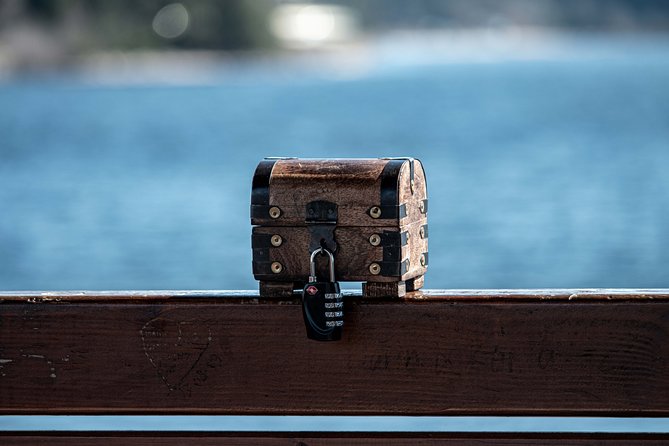
Then the story catches up to the present, with that suitcase appearing almost a hundred years later. It becomes a physical clue box for the whole mystery. From there, the plot threads you’ll work with include mysterious letters, locked boxes, and a foggy sense that love, loyalty, and difficult choices sit underneath the surface of the legend.
That mix is what makes this game feel more satisfying than a generic scavenger hunt. The clues are tied to story elements rather than random objects. You’re not just collecting information, you’re unraveling a narrative.
One practical benefit of story-driven puzzles is pacing. Even when you’re stuck, the story helps you decide what to try next. That reduces the common escape-walk frustration where you’re staring at the path wondering what the game wants.
How the puzzle kit works, and why the fishing-backpack style matters
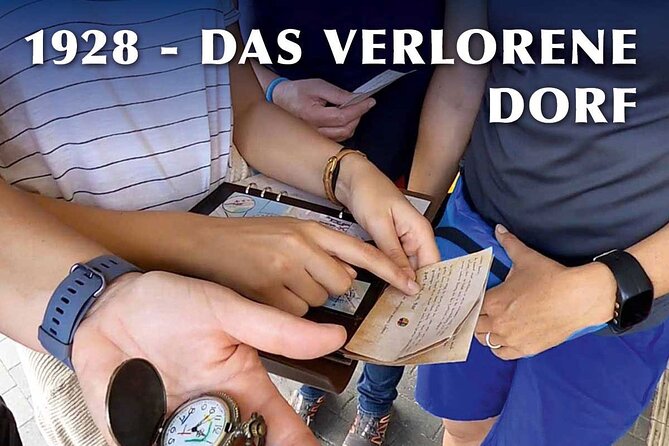
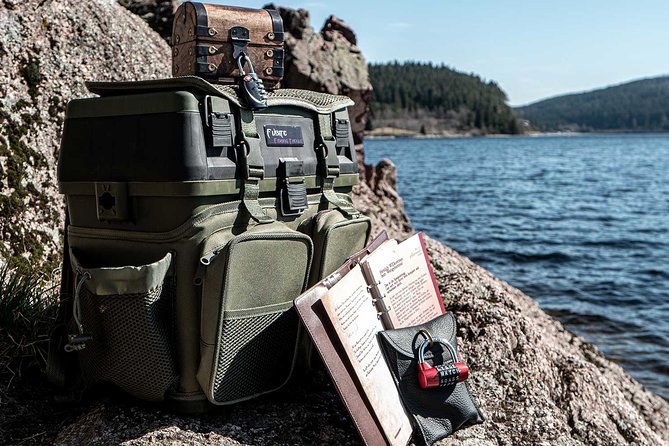
This experience is built around collaboration, so the materials are designed for shared use. The game includes a kit of themed items, and you’ll work through tasks using the puzzle materials as you go. In the reviews, one consistent theme is that the material design is well made and engaging, not just functional.
I like that the puzzles aren’t purely brainteaser worksheets. They feel like physical objects in your hands. You’re opening, reading, matching, and testing steps, which is exactly what you want in an outdoor escape game. It keeps people engaged even if one person is struggling at a specific moment.
If you’re experienced with escape rooms, you might find some steps quick. That can be a good thing. You get more time for the scenery, the story, and the group discussion. You also still get the satisfaction of solving everything end-to-end, just with less waiting.
If you’re newer to puzzle games, there’s a built-in safety net: tips. One of the reviews notes that if you can’t get anywhere, there are tips for reading. That’s important. You don’t want a frustrating “walk back and try again” feeling. You want to keep progress moving.
The outdoors part, lakeshore breaks, and how to pace your team
This is not an indoor game where you can sprint from station to station. You’re outside, and that changes everything. You’ll be more aware of the path, the space, and the timing, especially if you want everyone to stay focused.
A neat perk is that you can pause the puzzle. Reviews mention that pausing made it possible to take picnic breaks on the lakeshore. That turns the game into something closer to an afternoon outing than a high-pressure clock race.
For you, that means two strategies can work well:
- If your group runs hot and wants momentum, solve steadily and use breaks only when the story and puzzles naturally slow down.
- If your group has a mix of puzzle strength, pause when discussion needs a reset. It helps avoid the classic “one person got it, everyone else is stuck” spiral.
Also, plan for the simple outdoors reality: you’ll want comfortable walking shoes and a layer for changing lake air. The game requires good weather, so dress for a pleasant walk, not a sprint.
Difficulty tuning, hints, and when the game might feel too hard for your group
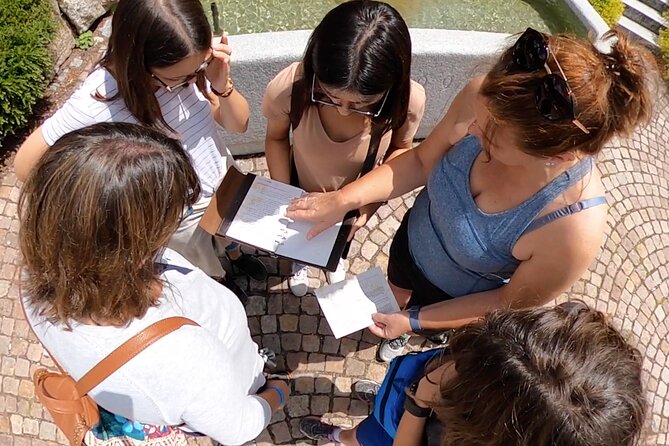
The puzzles are designed to land in a middle difficulty zone. There’s even an explicit idea behind it: the tour should not be too easy and not too hard. That’s a good goal, because a game that’s too simple turns into background noise. A game that’s too hard turns into frustration.
Still, there’s always group chemistry. One write-up included a situation where the first task felt unsolvable for their group, and they had to abandon partway through. That’s the reality of escape-style games. Different people spot different patterns.
How do you protect your day from that outcome? Use the game’s hint support early rather than late. If you hit a wall, check the tips for reading. Then get back to the core activity: teamwork, trying the steps together, and keeping the story thread alive.
If you’re traveling with teenagers, that middle difficulty sweet spot tends to work well. Reviews mention it was recommended even with puzzle-loving youth. If your group likes puzzles, you’ll likely enjoy the challenge without it turning into homework.
Value check: price, what you actually get, and who it suits best
The price is $105.63 per person. That’s not “cheap activity” money, so you want to think about value the right way. Here, value comes from three things:
- You’re paying for a guided, game-structured experience for about 3 hours.
- You get themed puzzle materials, story content, and hint support.
- It’s private for your group, so you can control the teamwork vibe.
It also includes group discounts, which can change the math if you’re traveling with several people who will all benefit from the private format. If you can spread cost across a family group, a small circle of friends, or a team outing, it starts to look like a fair exchange for a high-participation afternoon.
My advice: compare this to alternatives that also cost money but keep you passive, like a long paid tour where you mostly listen. Here, you’re doing. Your brain is working, your hands are working, and everyone has a job.
Who should book?
- Families and friend groups who enjoy puzzles and don’t mind teamwork.
- People who want a Schluchsee activity that feels more personal than a standard walking tour.
- Escape-room fans who want a change of scenery, with outdoor pacing and story clues.
Who might hesitate?
- If your group hates walking outdoors or hates puzzles.
- If you want an activity that stays fully easy and predictable from start to finish.
Practical tips so your Lost Village game feels smooth
A few small choices will help your group enjoy the experience more, especially outdoors:
- Bring comfortable shoes. You’re following a route and working between clue points.
- Keep phones charged, but don’t let your group rely on them to solve puzzles. The game is meant to be done with the kit and teamwork.
- Assign roles at the start. One person reads letters, another watches for clue order, and others test puzzle steps.
- Don’t let one person derail progress. Use hints if you’re truly stuck.
- Take advantage of pauses when you want a lakeshore reset, especially if you brought snacks for a picnic moment.
Also, since the experience requires good weather, check your plans close to the date. The offer includes a different date or a full refund if it’s canceled due to poor weather.
Should you book The Lost Village outdoor escape game?
I think you should book this if you want Schluchsee to feel like an interactive mystery, not a passive stop on your itinerary. The story hook, the puzzle kit, and the collaboration focus are exactly the kind of combination that makes a 3-hour outing feel like an event.
Skip it only if your group is puzzle-averse or you’re planning for rough weather. The game depends on getting outdoors, and the experience is designed to be solved together.
If you’re deciding between this and a standard guided walk, choose The Lost Village when you want hands-on problem-solving tied to a specific narrative thread, with the option to pause for a more relaxed lakeshore break.
FAQ
How long is Outdoor Escape Game Schluchsee: The Lost Village?
The game lasts about 3 hours.
Where do I meet for the experience?
You start at Tourist-Information Schluchsee, Fischbacher Str. 7, 79859 Schluchsee, Germany. It ends back at the same meeting point.
What does the story involve?
The story starts in 1928 with dam plans that threaten to bury a remote village under water. Almost a hundred years later, a suitcase connected to Amalie, the mayor’s daughter, leads to mysterious letters and locked boxes.
Is this a private tour?
Yes. It is a private tour or activity, and only your group participates.
Do I get a mobile ticket?
Yes, the experience uses a mobile ticket.
Can we take breaks during the puzzle?
There is an option to pause the puzzle, which can make it easier to take breaks, including picnic time on the lakeshore.
Does the game require good weather?
Yes. The experience requires good weather. If it’s canceled due to poor weather, you’ll be offered a different date or a full refund.
What is the cancellation policy?
Cancellation is free. You can cancel up to 24 hours in advance for a full refund. If you cancel less than 24 hours before the start time, the amount paid is not refunded.
Everything else we filed on Rust
- Private: Outdoor Escape Game Schluchsee: The Lost Village
★ 4.5 · 11 reviews - Rust: Europa-Park 2-Day Entrance Ticket
★ 5.0 · 48 reviews
Black Forest and Baden-Baden Trips, side by side.
 ★ 4.7Freiburg: Gässle, Bächle and More City TourFrom $132,632 reviews
 ★ 4.7Freiburg: City Walking Tour with Drag Queen Betty BBQFrom $40525 reviews
 ★ 4.9Freiburg: Guided City Tours with ActorsFrom $329459 reviews
 ★ 5.0Black Forest Tour by car – start Offenburg or FreiburgFrom $1,208347 reviews
 ★ 4.0Baden-Baden, Black Forest and Strasbourg Day Trip from FrankfurtFrom $354297 reviews
 ★ 4.7Baden-Baden: Sightseeing Highlights Guided Walking TourFrom $17184 reviews
 ★ 4.7Freiburg: Tour of the city with cathedral visitFrom $21167 reviews
 ★ 4.6Freiburg: Highlights of the old townFrom $17167 reviews
Other lists this tour is on