
REVIEW · ROTHENBURG
Rothenburg ob der Tauber: Private Guided Walking Tour
Rothenburg rewards slow walking. On a private guided route, you get half-timbered streets and tight explanations that make the town feel real, not just postcard pretty, plus the legendary Plönlein viewpoint.
I particularly like that the tour centers on the big medieval anchors, from the Market Square life to the landmarks that explain how this walled town worked. One consideration: Rothenburg is cobblestone-heavy, and the experience is not suitable for wheelchair users, so comfortable shoes and good footwork matter.
In This Review
- Key things that make this tour worth your time
- First stop: Georgenbrunnen and the Market Square orientation
- Half-timbered lanes, cobblestones, and what to look for
- Market Square and Town Hall: where civic life becomes architecture
- Marien Apotheke (since 1812): a small stop with big meaning
- Church of St. James: how religion shaped the street scene
- The Town wall dating back to 1142: turning views into understanding
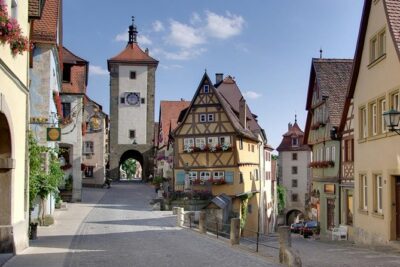
- Plönlein: why this corner gets photographed again and again
- Baumeisterhaus and the Master-Builder’s story in the streets
- Optional upgrades: Tower climb, Medieval Crime Museum, or a snowball pastry
- Who this 90-minute walking tour is best for
- Price and value: $340 per group, up to 15 people
- What the guides are getting praised for
- Should you book this Rothenburg ob der Tauber private walking tour?
- FAQ
- How long is the Rothenburg private guided walking tour?
- How much does the tour cost?
- Where do we meet the guide?
- Is this tour private or shared?
- What languages are the guides available in?
- What is included, and what is not?
Key things that make this tour worth your time
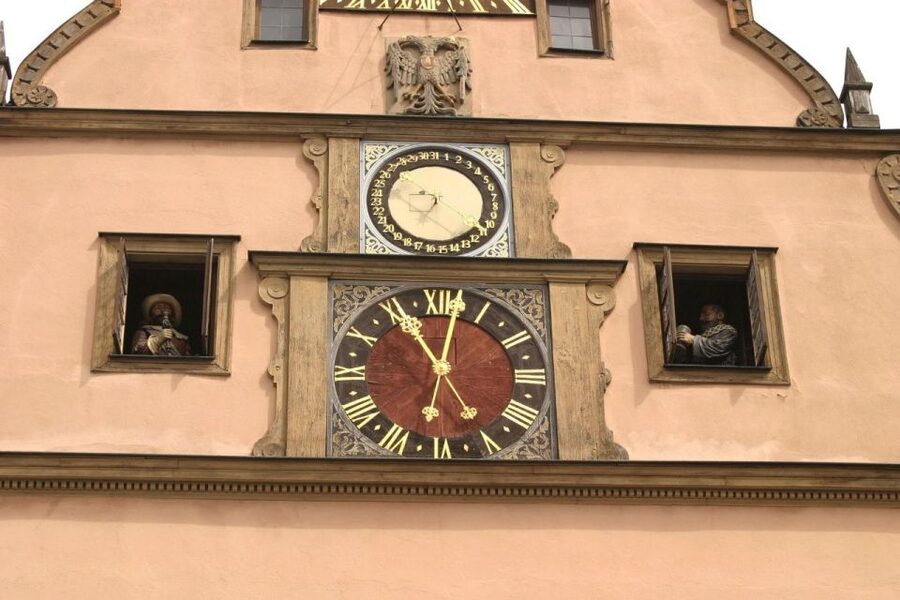
- Plönlein, the star photo corner, explained so you understand why the view looks the way it does
- Market Square start and finish, right by the Town Hall area, so you can keep exploring before or after
- Town wall history from 1142, framed in a way that helps you picture daily life inside defenses
- Marien Apotheke (since 1812), a simple stop that adds human scale to all that stone and timber
- Custom options on the day, like climbing the Town Hall Tower or adding the Medieval Crime Museum
- A guide who tells stories, including the background behind the Master Draught festival
More walled towns down the same road
- From Munich: Rothenburg and Nördlinger Ries Day Trip by Bus★ 4.4 · 1,748 reviews
- Rothenburg ob der Tauber: Private Old Town Walking Tour★ 4.8 · 155 reviews
- Rothenburg ob der Tauber: Private Guided Walking Tour★ 4.8 · 12 reviews
- Romantic Road & Rothenburg ob der Tauber Tour from Würzburg★ 4.8 · 12 reviews
First stop: Georgenbrunnen and the Market Square orientation
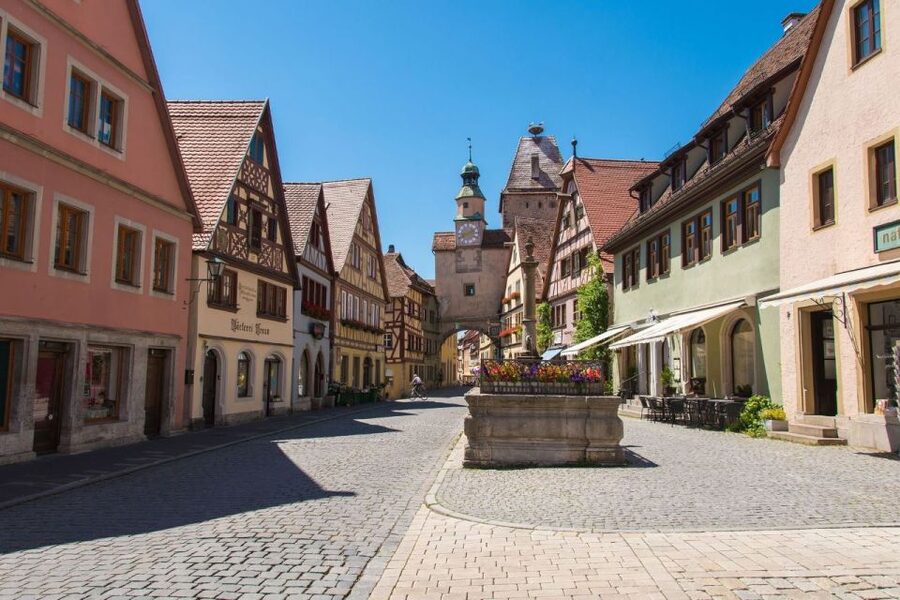
Your tour meets next to the Georgenbrunnen (St. George’s Fountain) in Herrngasse, right beside the Market Square and the Town Hall area. This is a smart starting point because you are in the middle of Rothenburg’s action, not off in some remote lane. In 90 minutes, that matters. You will spend your time moving through the historic core, not searching for the next landmark.
From the fountain, your guide sets expectations fast. You get a quick picture of Rothenburg as one of the most historic medieval towns along Germany’s Romantic Road, and then you start walking into the streets that made it famous. I like tours that explain the layout early, because Rothenburg can feel like you are photographing the same pretty wall for an hour. A good guide prevents that by linking each stop to what came before.
Also, this being a private group means you can ask questions as you go. If you want more time on the architecture, or you want the story behind the festival details, you can usually steer it.
Half-timbered lanes, cobblestones, and what to look for
Once you’re moving, Rothenburg’s charm is not subtle. Half-timbered facades crowd in close, and the street surfaces are classic cobblestone. This is where you will feel the tour’s pace. Ninety minutes is long enough to see the key sights, but short enough that you should keep your energy for the stops that actually matter.
Here’s what I’d watch for as you walk. Notice how the timber framing and plaster create patterns that look decorative, but were also structural. Notice how many buildings cluster around the town center, which is a big clue that life was meant to be walkable and close to civic power. Your guide can point out these connections, and that’s what turns a pretty town into a readable one.
If you are traveling with anyone who hates uneven pavement, plan ahead. This tour is a walking experience, and Rothenburg’s streets are not smooth. You can still do it, but you should accept that comfort comes from preparation, not luck.
Market Square and Town Hall: where civic life becomes architecture
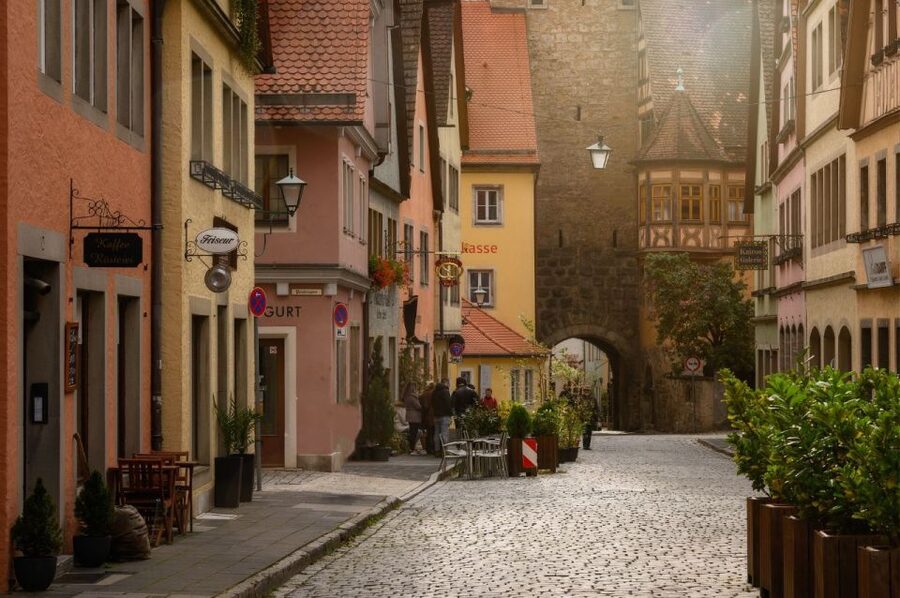
The tour naturally feeds you into Market Square and the Town Hall area. This is the civic heart of the town, and it’s not just a backdrop for photos. Market Square is where announcements, judging, commerce, and social life would have blended together. Your guide’s job here is to connect the buildings to the human routines that used to happen in this space.
You will likely also see landmarks tied to Rothenburg’s distinctive medieval identity, and the guide’s stories give the buildings context. That context is especially helpful if you’ve already visited other German towns. Rothenburg has a specific look, but it also has a specific purpose, and the Market Square is where you start to understand it.
If you feel like you want to add vertical views later, the tour is set up for that kind of choice. One optional upgrade is climbing to the top of the Town Hall Tower, which can be a great way to understand the town wall and the street network below. Only you can decide if stairs are worth it, but it’s a classic payoff move.
Marien Apotheke (since 1812): a small stop with big meaning
One stop I like on this kind of route is Marien Apotheke, which has been a pharmacy since 1812. It’s not a medieval ruin or a grand church facade, so it can get overlooked by people chasing only the most dramatic sights. But that’s exactly why it’s valuable.
A pharmacy is a reminder that towns keep functioning long after the medieval stories end. You are not just looking at history as scenery, you are seeing how the town’s life continued into later centuries. Your guide can point out why that matters, and it helps you appreciate Rothenburg as a living place, not a theme park.
If you love details like trade, daily services, and how locals lived day to day, this type of stop is a gift. Even if you do not go inside (entrance fees are not included), you still get the story.
Church of St. James: how religion shaped the street scene
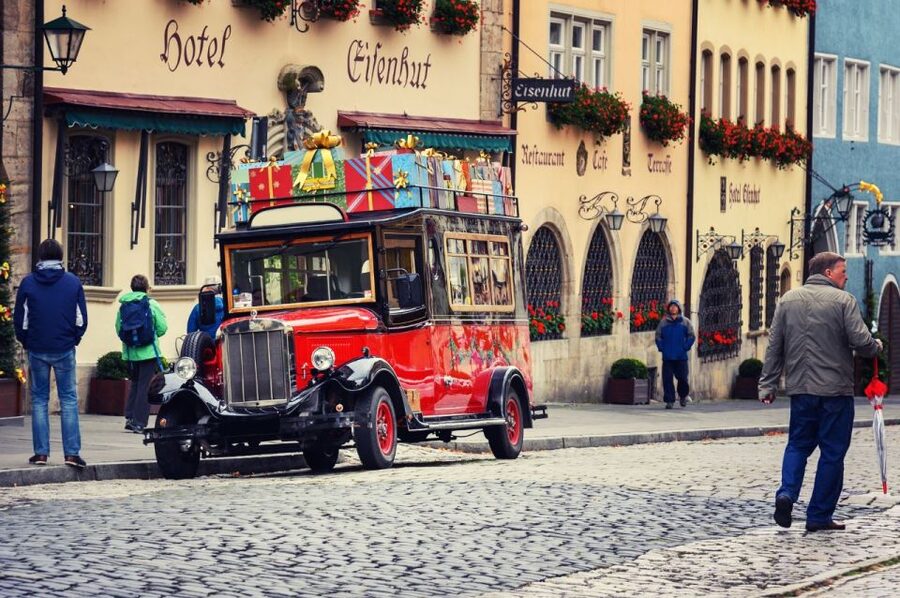
Rothenburg’s main churches are visually striking, but the value is in understanding their role in town life. The tour includes a look at the Church of St. James, a centerpiece in the historic layout. As you approach, try to notice how churches anchor routes. In old towns, you rarely built a major church in a random place. It was part of how people navigated daily life, met neighbors, and marked the calendar.
Your guide can also help you read the architecture beyond the surface. If you are standing there thinking, I like the look, but I do not know what I am seeing, ask for a quick explanation on what makes it important and what to look for. That kind of targeted guidance can be the difference between a photo stop and a meaningful one.
The Town wall dating back to 1142: turning views into understanding
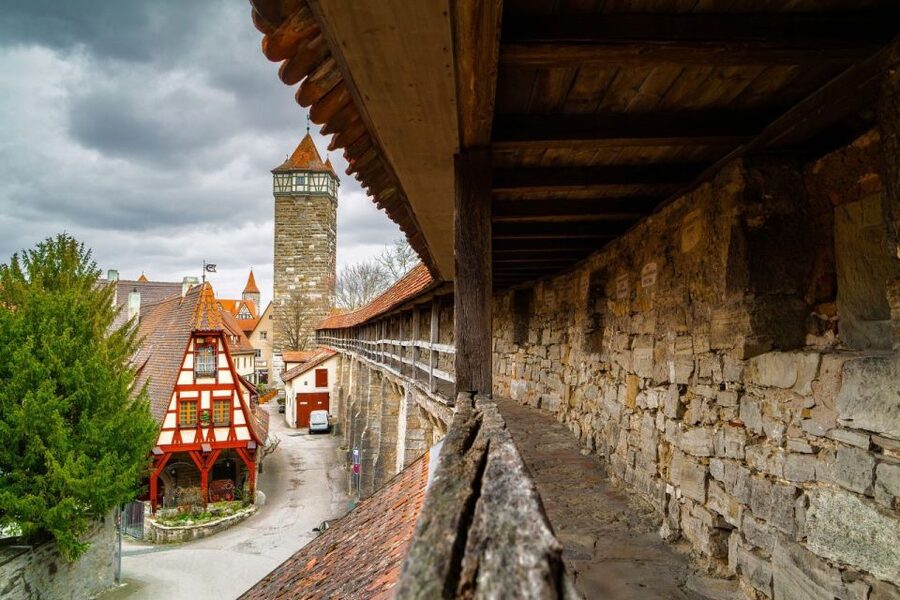
One of the most memorable things to learn in Rothenburg is that you are walking inside a place that was designed to defend itself. The tour includes the city wall, with a history dating back to 1142. That date does something for your brain. It makes the town feel older than the buildings look at first glance.
As you see sections of the wall, think about what you want from the tour. If you want atmosphere, you’ll get it. If you want clarity, you’ll get that too, if you let the guide connect the dots. Walls were not just for battles. They shaped movement, control, and the economic logic of a town.
Even if your tour does not feel like a full walk on top of the wall, you’ll still get enough framing to understand where it sits and why the town layout makes sense.
Plönlein: why this corner gets photographed again and again
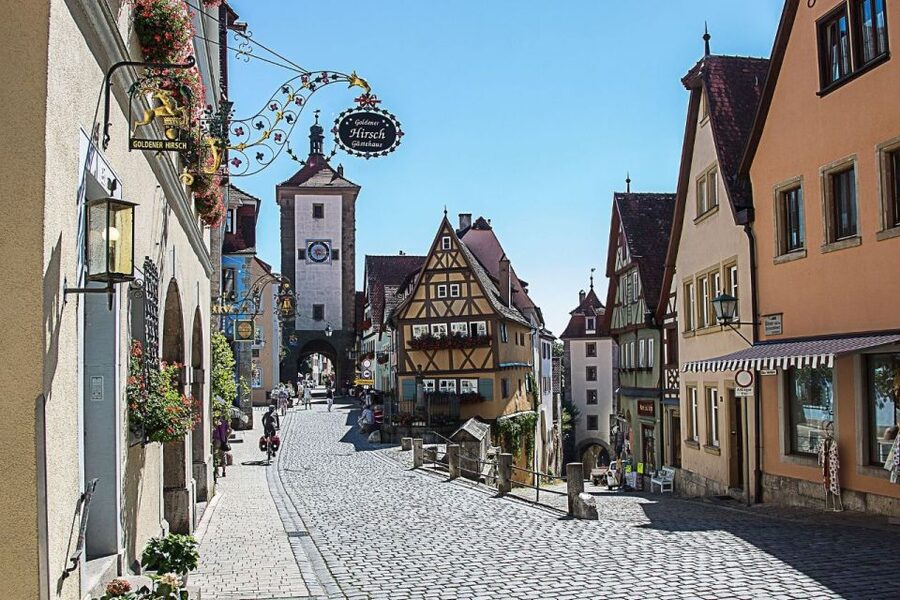
Then comes Plönlein, the most famous photo stop in Rothenburg. If you have seen Plönlein in pictures, it can still surprise you in person. The buildings create a little stage, and the narrow framing gives a fairy-tale look that is hard to manufacture.
What makes this stop work on a guided tour is the explanation behind the scene. You learn how to look at the relationship between the buildings and the town’s medieval geometry. You stop treating it like a random postcard and start understanding what you are actually seeing.
If you care about photography, Plönlein is where you’ll want to slow down. Don’t rush your turn. Get a couple angles, then keep walking so the rest of the tour feels like a payoff, not a scramble.
Baumeisterhaus and the Master-Builder’s story in the streets
The tour route also includes the Baumeisterhaus area, often described as the Master-Builder’s House. This is where the town’s identity turns from “old buildings” into “old professionals.” Medieval building was a skill set with networks, reputations, and roles. When your guide ties this building to that bigger story, you get a more human sense of who created what you see.
I like these stops because they prevent Rothenburg from becoming all atmosphere and no substance. If you enjoy architecture, local trades, or how medieval cities managed construction, this section tends to land well.
Optional upgrades: Tower climb, Medieval Crime Museum, or a snowball pastry
This is one of the best parts of the experience: it’s entirely customizable on the day. You can adjust the focus based on what you care about most.
Here are the specific add-ons you can consider:
- Town Hall Tower climb: Great if you want higher views and a better sense of the walled town below. Expect stairs and plan for your comfort.
- Medieval Crime Museum: If you want a darker angle on medieval life, this is the kind of stop that breaks the usual “cute town” spell. Entrance fees are not included, so factor that into your planning.
- Snowball pastry: A local treat option if you want something edible and memorable. Since food and drinks are not included, you may need to pay separately.
My practical advice: choose one optional add-on, not all three. Ninety minutes is designed to cover the core sights. Adding everything can make the tour feel rushed instead of relaxed. Pick the option that matches your travel mood that day, then enjoy the guided pacing.
Who this 90-minute walking tour is best for
This tour fits best when you want structure without getting trapped in a rigid itinerary. The private nature means it works well for couples, friends, and small groups who want to see the highlights and still ask questions.
It’s also ideal if:
- you want a guided reading of Rothenburg’s medieval layout, not just a wander
- you care about specific landmarks like Plönlein, Market Square, the Town Hall area, and the city wall
- you want to add one optional experience, like the Medieval Crime Museum or the Town Hall Tower
If you are traveling with anyone who struggles on cobblestones, or if you use a wheelchair, you’ll need to choose a different format. This walking tour is not set up for wheelchair users.
Price and value: $340 per group, up to 15 people
At $340 per group (up to 15 people) for about 90 minutes, the price can look steep if you are thinking per person. But the math shifts quickly if you can fill the group or travel with friends.
- If you only have a couple of people, you are effectively paying a premium for the private experience.
- If you have a larger group closer to the maximum, your cost per person drops a lot.
What you are really buying here is time and interpretation. Rothenburg can swallow hours with no direction. This tour compresses the key landmarks into a tight route and adds stories that explain why the town looks the way it does. In a place like this, that guidance can be worth more than an extra hour of solo wandering.
Also, entrance fees and food are not included, so you should budget a little extra if you add the tower, the museum, or the snowball.
What the guides are getting praised for
The overall feedback is high, and the themes are clear. Guides are praised for being friendly and thorough, with a special strength in making Rothenburg’s history feel connected. In one highlighted case, a guide named Antonia was singled out for detailed explanations and pleasant delivery throughout the tour.
That matters because Rothenburg is easy to over-romanticize. A good guide keeps you grounded in real details, like what you are looking at and why it matters. You also get story elements that you might not find if you only rely on guidebooks, such as the background behind the Master Draught festival.
If you want the tour to feel less like a checklist and more like an interactive walk, this is the kind of guiding style that tends to deliver.
Should you book this Rothenburg ob der Tauber private walking tour?
I’d book it if you want the Rothenburg highlights with a human layer of explanation, and you like the idea of seeing iconic spots like Market Square, the Town Hall area, Plönlein, and the city wall without spending your limited time sorting it out on your own.
I would hesitate if you need an accessible route, since the tour is not suitable for wheelchair users, or if your group only wants self-guided wandering with zero structure. In that case, you might prefer to go solo and pick a museum or viewpoint on your own.
But if you want value through clarity and flexibility, this private 90-minute setup is a strong choice, especially if you can bring more people to share the group cost and you are excited to choose one optional stop that matches your mood.
FAQ
How long is the Rothenburg private guided walking tour?
The tour lasts 90 minutes.
How much does the tour cost?
It costs $340 per group, for groups up to 15 people.
Where do we meet the guide?
Meet next to the Georgenbrunnen (St. George’s Fountain) in Herrngasse, right next to the Market Square and Town Hall.
Is this tour private or shared?
It is a private group experience.
What languages are the guides available in?
The live guide is available in German and English.
What is included, and what is not?
Included: the private walking tour and a professional tour guide. Not included: entrance fees and food and drinks.
Pavements of Rothenburg Ob Der Tauber
Around Franconia, Reviewed
Further Down the Romantic Road
Everything else we filed on Rothenburg Ob Der Tauber
- Rothenburg ob der Tauber: Private Guided Walking Tour
★ 4.8 · 12 reviews - Romantic Road & Rothenburg ob der Tauber Tour from Würzburg
★ 4.8 · 12 reviews - Rothenburg ob der Tauber: Private Old Town Walking Tour
★ 4.8 · 155 reviews - From Munich: Rothenburg and Nördlinger Ries Day Trip by Bus
★ 4.4 · 1,748 reviews
Rothenburg and the Romantic Road, side by side.
 ★ 4.4From Munich: Rothenburg and Nördlinger Ries Day Trip by BusFrom $701,748 reviews
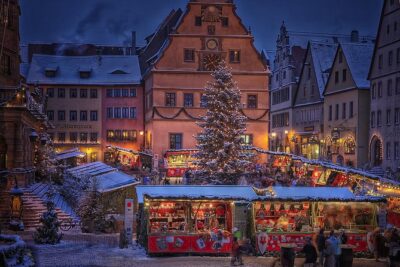 ★ 4.5Romantic Road, Rothenburg, and Harburg Day Tour from MunichFrom $951,376 reviews
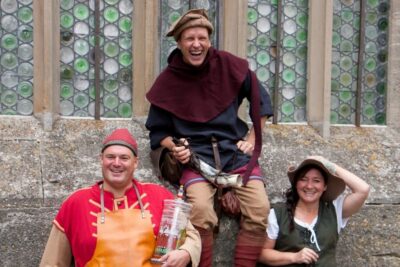 ★ 4.8Rothenburg ob der Tauber: Private Old Town Walking TourFrom $176155 reviews
 ★ 4.8Frankfurt: Romantic Road & Rothenburg ob der Tauber TourFrom $116119 reviews
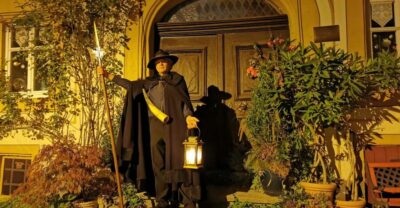 ★ 4.7Rothenburg: Private Night Watchman TourFrom $23098 reviews
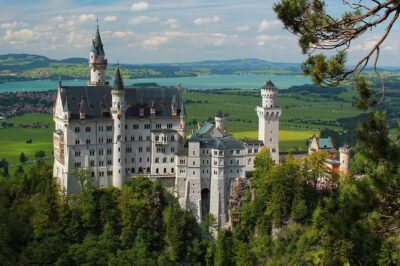 ★ 4.5Frankfurt Super Saver: Neuschwanstein Castle and Rothenburg Day TripFrom $59788 reviews
 ★ 4.5Guided Rothenburg Day Trip from FrankfurtFrom $29583 reviews
 ★ 4.0Heidelberg and Rothenburg Day Trip from FrankfurtFrom $39077 reviews
Other lists this tour is on