
REVIEW · ROTHENBURG
Rothenburg ob der Tauber Private Walking Tour With A Professional Guide
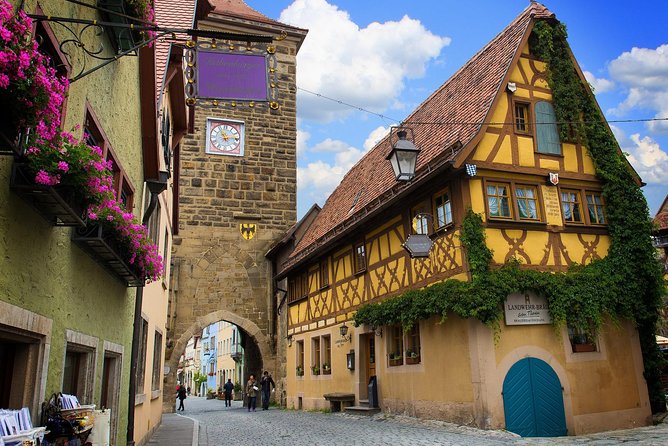
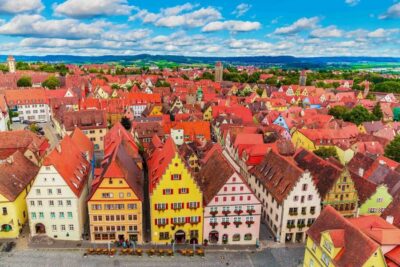
Rothenburg reads like a storybook on foot. This private English walking tour threads you through narrow alleyways and secret spots while your guide explains how a free imperial city ran its daily life and why conservation rules are still so strict today. I love that it’s a customizable private tour, and I love the no navigation worries factor: you simply follow the guide to the Market Square, the Plönlein, and viewpoints on the wall.
One thing to watch, the entrance fees are not included, and the 50m Town Hall Tower plus any optional climbs can depend on ticket availability, so you may not do every extra stop.
In This Review
- Key highlights worth your attention
- Why this Rothenburg walk beats DIY for first-time visitors
- Market Square and the Town Hall Tower, the civic heart of Rothenburg
- Free imperial city politics, Heinrich Toppler, and why the town still looks preserved
- Baumeisterhaus and Marienapotheke: moral sculpture in stone
- The Medieval Crime and Punishment Museum stop, and how to decide if it’s for you
- Plönlein and the Town Wall walk: the best photos and the best views
- Church of St. James and Tilman Riemenschneider’s Last Supper
- How this tour connects Rothenburg to the world, including Pinocchio
- Who your guide might be, and why that matters in a private walk
- Time, price, and logistics: is it good value for $341.49 per group?
- Should you book this Rothenburg private walking tour?
- FAQ
- How long is the private walking tour in Rothenburg?
- How much does the tour cost, and is it priced per person?
- Is the tour private?
- What language is the tour offered in?
- Are entrance fees included in the price?
- Can the route be customized?
- Is there free cancellation?
Key highlights worth your attention
- Private, up to 15 people: one guide for your group, with room to adjust on the spot.
- Fairytale town, explained: you get the medieval power structure, not just photo stops.
- Medieval details in real places: Town Hall, Baumeisterhaus, Marienapotheke, and the walled-city layout.
- Iconic Rothenburg angles: Plönlein, Town Hall Tower views, and wall-top panoramas.
- A hard edge for the curious: a stop tied to the Medieval Crime and Punishment Museum, not for the faint-hearted.
Why this Rothenburg walk beats DIY for first-time visitors
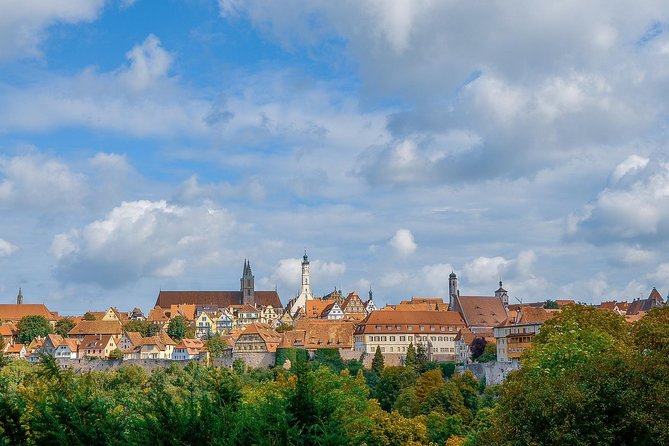
Rothenburg ob der Tauber is the kind of town that looks perfect from every corner, which is great. The catch is simple: if you wander without a plan, you can easily miss the stories that make the place click. This tour solves that problem with a professional guide leading the route through narrow lanes and less-obvious spots.
You also get the benefit of a local storyteller rhythm. Instead of just pointing at buildings, your guide ties Rothenburg’s look to the rules that shaped it. That matters here because the old town is preserved with strict urban conservation orders. When you understand that, you stop seeing the walls and half-timbered facades as decoration and start seeing them as a system.
Another advantage is that it’s private. Your group stays together, and the pace can fit your comfort level. If you want more time at a specific landmark like the Town Hall Tower, you have the chance to ask. If you want to move faster through an intense stop, you can do that too.
One more thing I like: the tour is in English, and it is short enough to fit smoothly into a day that may include other stops.
Market Square and the Town Hall Tower, the civic heart of Rothenburg
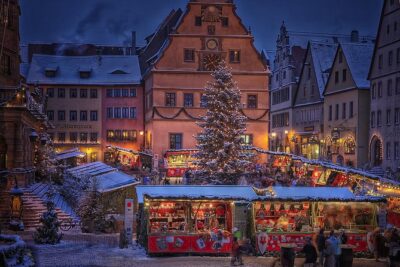
Your walk starts where Rothenburg’s urban life centers up: the Market Square. This is where the town’s identity shows up fast, because it’s surrounded by the main civic symbols visitors usually want to see. The guided approach helps you connect the pieces instead of treating each building as a separate postcard.
In this square you’ll spot the Town Hall and the Councillors’ Tavern, plus St. George’s Fountain. Your guide also focuses on the Town Hall and its tower, including the Renaissance-era story tied to the 16th century.
If your timing works, there’s a 50m Town Hall Tower climb. It is a big payoff for photos and city views, but plan for the practical side: tickets are not included and it’s based on availability. So go in with a flexible mindset. Even without the climb, the guide’s explanation of what the Town Hall represents gives you a better read on what you’re looking at.
Photo tip that doesn’t require heroics: aim your camera when you reach the square’s open angles, then let your guide finish the story before you start shooting everything. The tower views are great, but the square itself can be your best “establishing shot” for the rest of Rothenburg.
Free imperial city politics, Heinrich Toppler, and why the town still looks preserved
A big theme in Rothenburg is that the town is not just old, it’s managed. Your guide explains Rothenburg’s status as a free imperial city and how that influenced daily life and local power. That helps you understand why the old streets, fortifications, and civic buildings are so central to the experience.
You’ll also hear how Bürgermeister Heinrich Toppler changed Rothenburg and helped it become one of the most important cities in the region. It’s the kind of detail that makes the town feel less like a stage set and more like a place where real people made real decisions.
Then comes an important “why does it look this way” layer: the strict urban conservation orders. When your guide explains those rules as you walk past the streets and buildings, you’ll understand why the town’s visual character feels consistent. You’re not just seeing pretty architecture, you’re seeing a town that has protected its shape.
If you care about historic towns, this is one of the best parts of the tour. It turns Rothenburg from a sightseeing checklist into a place with a logic.
Baumeisterhaus and Marienapotheke: moral sculpture in stone
A short walk away, the Baumeisterhaus, also called the Master-Builder’s House, becomes one of the tour’s most memorable stops. Your guide points out its stone sculptures showing the seven virtues and the seven deadly sins.
That detail is fun, but it also teaches you something. These weren’t random decorations. In medieval and Renaissance-era thinking, moral lessons were often built into public spaces and prominent buildings. When you see the sculptures while your guide explains what to look for, you get a clearer sense of how people interpreted the world around them.
Not far from there is Marienapotheke, St. Mary’s Pharmacy. It’s a 15th century mansion built by Mayor Jagstheimer. Again, your guide’s role is key: instead of treating it like another historic facade, the tour connects it back to the town’s leadership and how important families and officials shaped local landmarks.
If you like architecture that has a “reason,” this portion will land well. If you prefer only the biggest photo stops, you might still enjoy it because the story gives these facades personality.
The Medieval Crime and Punishment Museum stop, and how to decide if it’s for you
South of the Market Square, the tour heads toward the Medieval Crime and Punishment Museum. This is one of the stops that sets expectations. The museum is dedicated to torture tools and equipment, and it is not for the faint-hearted.
Because entrance fees are not included, you’ll likely need to plan for any ticketed entry. But even if you just take in the area with your guide, it can still add a darker edge to your understanding of the town’s past.
My advice is simple: decide early if you want this kind of content. If you know you’re sensitive to graphic historical material, skip the museum entry and ask your guide to emphasize the surrounding historic context. A private guide can often adjust the balance for your group, and the tour is designed to allow some customizing on the spot.
This is the one point where Rothenburg stops being all sweetness and turns into a real medieval city with real anxieties.
Plönlein and the Town Wall walk: the best photos and the best views
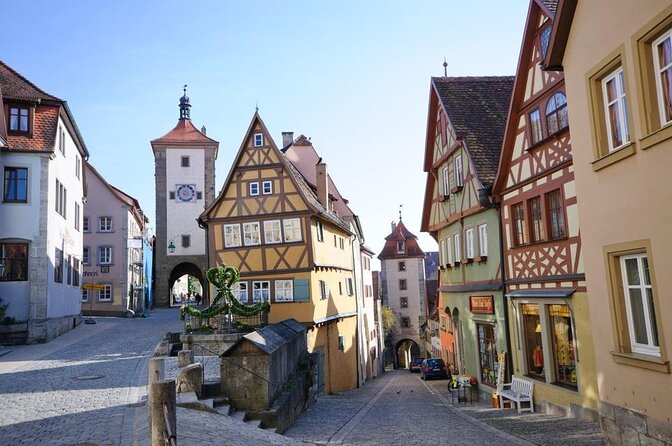
Then you hit one of Rothenburg’s most famous shapes: the Plönlein, also called Flat Square. It’s the triangular road crossing that shows up in travel photos of Germany so often it can feel like you’re repeating a known image. The guided part makes it better, because your guide also explains why this spot matters in the town’s layout and memory.
If you want photographs, this is where you’ll likely feel the impulse to shoot immediately. I’d still suggest you pause for the guide’s context for a moment first. After that, take your time. This corner rewards slow framing, especially in softer light.
From there you continue toward the Town Wall. The wall around the Old Town creates a head-shaped figure on the outskirts of the old town, which is one of those details that only makes sense when someone tells you what to look for. Your guide also sets you up for a view, since you’ll climb parts of the wall for a panorama over the city.
Practical note: wall climbs mean stairs and uneven surfaces. If you have mobility limits, this part is worth mentioning to your guide early so they can manage the pace and route.
Church of St. James and Tilman Riemenschneider’s Last Supper
The tour ends with a strong art-and-faith stop at the Church of St. James. What pulls people in is The Last Supper masterpiece by Tilman Riemenschneider.
Your guide also points out a fascinating church detail: it’s described as the only Protestant church in Germany that houses a Roman Catholic relic. That kind of cross-current is exactly why a guided walk works so well in Rothenburg. You see the building, but you also understand the unusual cultural mix that happened inside it.
If your group loves art history, this church stop is usually a highlight. If your group prefers pure sightseeing and fewer discussions, this is still likely to satisfy, because the art itself is a visual anchor.
When you leave this area, you’re in the right mood to do what Rothenburg does best: wander. The tour ends in the Old Town with time for a leisurely self-walk and time to eat nearby, including local beer and traditional dishes in historic buildings.
How this tour connects Rothenburg to the world, including Pinocchio
One of the more surprising parts of the walk is the way the guide links Rothenburg to culture far beyond Bavaria and Franconia. You’ll hear about how Walt Disney’s Pinocchio was influenced by sketches of Rothenburg ob der Tauber. It’s the kind of detail that makes you look at the “storybook” image differently.
Instead of thinking Rothenburg only exists for tourists, you start seeing it as a visual that artists copied because it felt distinctive. The town’s medieval shapes, its street angles, and its preserved character helped create a look that translated well into animation.
You’ll also hear the story of the Master draught. The tour specifically calls it out as a tale you’ll learn during the walk, so treat it as part of the local storytelling package, not just another stop.
Who your guide might be, and why that matters in a private walk
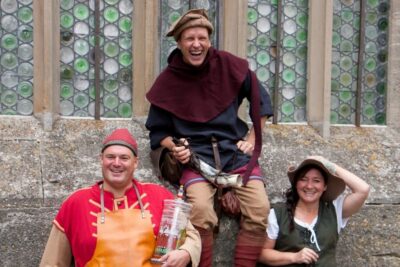
A private walking tour lives or dies on the guide’s delivery. Here, the guided experience gets consistently praised for knowledge and storytelling style. In the rotation of local guides, you may see names like Antonio, Georg, Antonia, Camilla, and Brigit.
Even if the specific person you get is different, you’re booking a professional guide format where the itinerary comes with explanations for what you’re seeing and why it matters. That matters most in a town like Rothenburg, where every street feels “important” and it can be hard to sort what to learn.
If you like asking questions, a private tour gives you space to do it. And if your group has different interests, customizing on the spot can help the walk feel like it was made for you rather than for a generic crowd.
Time, price, and logistics: is it good value for $341.49 per group?
Let’s talk math and value. The price is $341.49 per group, for up to 15 people, and the tour runs about 1 hour 30 minutes.
That means your per-person cost depends entirely on group size. Rough examples:
- If you book for 2 people, it can work out around $170 each.
- If you book for 6 people, it can be closer to $57 each.
- If you book for 10 people, it can be around $34 each.
So this is best value for small groups who want a tailored walk and don’t want to split up. It’s also a solid option if you’re traveling with family or friends and you want one guide to keep everyone connected.
As for logistics, it’s in English, it’s a private activity with only your group participating, and it starts at Herrngasse 1, 91541 Rothenburg ob der Tauber, Germany. It’s also near public transportation, which helps if you’re arriving from another town or day trip.
One more practical detail: because entrance fees are not included, build a little budget for ticketed sights. The 50m Town Hall Tower specifically uses tickets not included and availability rules. If that tower view is a must, consider going with the expectation that you might need to adjust your plans if tickets sell out.
Finally, the tour is often booked around 71 days in advance on average. That’s a clue: Rothenburg is popular, and this private format tends to go quickly.
Should you book this Rothenburg private walking tour?
I think this is a strong booking if you want Rothenburg to make sense. The guide-driven pace and the focus on how the town worked, who shaped it, and why conservation rules matter turn the walk into more than sightseeing.
Book it if:
- You’re visiting for the first time and want the main landmarks explained clearly.
- You like getting context for medieval cities, not just pictures.
- You’re traveling with a group where a private guide keeps things smooth, including families.
Consider another option or adjust expectations if:
- You prefer only low-intensity stops, because the Medieval Crime and Punishment Museum is described as not for the faint-hearted.
- You want every optional climb and ticketed view no matter what, because entrance fees are not included and the Town Hall Tower climb depends on availability.
If you’re planning more than one Rothenburg experience, there’s also value in pairing this daytime walk with a later cultural format. One guide-approved local alternative mentioned alongside it is a Nightwatchman tour that runs at 8:00 pm near St George’s Fountain. Doing both can give you contrast, history in daylight and atmosphere after dark.
FAQ
How long is the private walking tour in Rothenburg?
The tour lasts about 1 hour 30 minutes.
How much does the tour cost, and is it priced per person?
It costs $341.49 per group, with a maximum group size of up to 15 people.
Is the tour private?
Yes. It is a private tour/activity, and only your group participates.
What language is the tour offered in?
The tour is offered in English.
Are entrance fees included in the price?
No. Entrance fees are not included. The Town Hall Tower has tickets that are not included and depend on availability.
Can the route be customized?
Yes. There is possible customizing on tour with your local guide on the spot.
Is there free cancellation?
Yes. Free cancellation is available, and you can cancel up to 24 hours in advance for a full refund. If you cancel less than 24 hours before the start time, the amount paid is not refunded.
Rothenburg and the Romantic Road, side by side.
 ★ 4.4From Munich: Rothenburg and Nördlinger Ries Day Trip by BusFrom $701,748 reviews
 ★ 4.5Romantic Road, Rothenburg, and Harburg Day Tour from MunichFrom $951,376 reviews
 ★ 4.8Rothenburg ob der Tauber: Private Old Town Walking TourFrom $176155 reviews
 ★ 4.8Frankfurt: Romantic Road & Rothenburg ob der Tauber TourFrom $116119 reviews
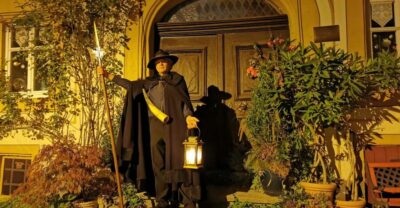 ★ 4.7Rothenburg: Private Night Watchman TourFrom $23098 reviews
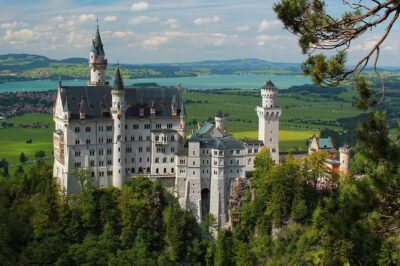 ★ 4.5Frankfurt Super Saver: Neuschwanstein Castle and Rothenburg Day TripFrom $59788 reviews
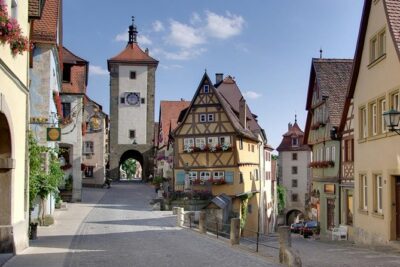 ★ 4.5Guided Rothenburg Day Trip from FrankfurtFrom $29583 reviews
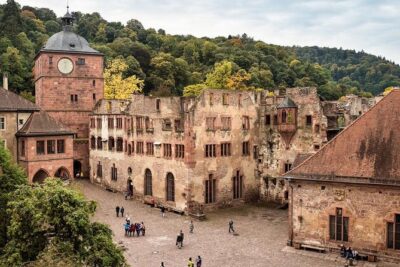 ★ 4.0Heidelberg and Rothenburg Day Trip from FrankfurtFrom $39077 reviews
Other lists this tour is on