
REVIEW · REEPERBAHN
St. Pauli Kieztour – Reeperbahn mittendrin
Red lights meet old streets.
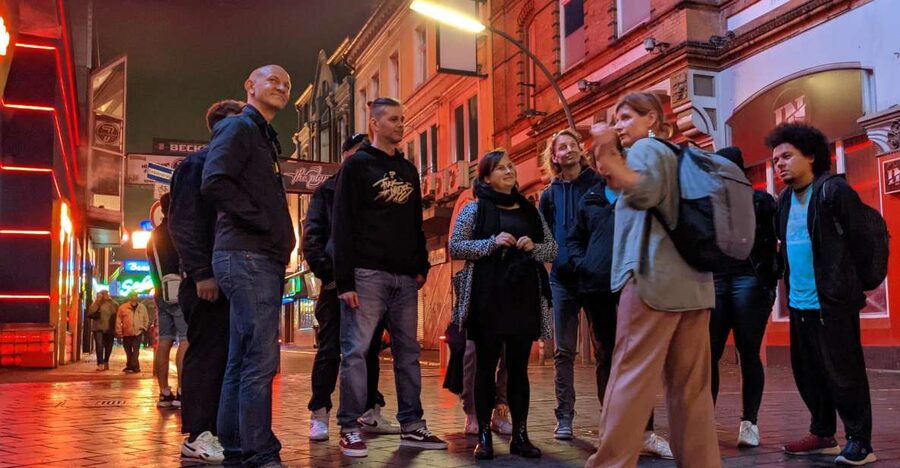
St. Pauli can feel like a city inside a city, and this 2-hour Kieztour is a practical way to make sense of the place. You’ll walk past famous spots and side streets while learning why Hamburg’s St. Pauli has been drawing a crowd for centuries, with a local resident guide pointing out what’s changed and what’s still unmistakably there.
Two things I really like about this experience are the 400-year history angle and the chance to see how it all links to today’s street life and sociopolitical developments. I also like that the tour doesn’t just list landmarks, it explains the clash of cultures, where alternative lifestyles, punk and pop music energy, and mainstream visitors all share the same blocks. The main drawback to consider is that the tour is German only, so if you do not feel comfortable listening in German, you may miss some of the context.
In This Review
- Key Highlights You Will Actually Feel on the Street
- St. Pauli in Two Hours: What This Tour Is For
- Meet Your German Guide at Wohlwillstraße 1
- St. Pauli’s Big Idea: A Place Where Worlds Collide
- Reeperbahn 101: Understanding the Notorious Mile
- What you will appreciate here
- The Landmark Walk: Große Freiheit, Davidwache, Hans-Albers-Platz
- Große Freiheit
- Davidwache
- Hans-Albers-Platz
- Herbertstraße and Spielbudenplatz: Where the Vibe Landed
- Herbertstraße
- Spielbudenplatz
- The Local Pub Stop: Nightlife Without the Tourist Trap
- Why the 400-Year History Matters (Even If You Do Not Care About Dates)
- Price and Value: Is $29 Worth It?
- Who This Tour Fits Best
- Should You Book St. Pauli Kieztour – Reeperbahn Mittendrin?
- FAQ
- What is the duration of the St. Pauli Kieztour?
- How much does the tour cost?
- What language is the tour guide speaking?
- Where do I meet the guide?
- What is included in the tour price?
- Is food or drinks included?
Key Highlights You Will Actually Feel on the Street
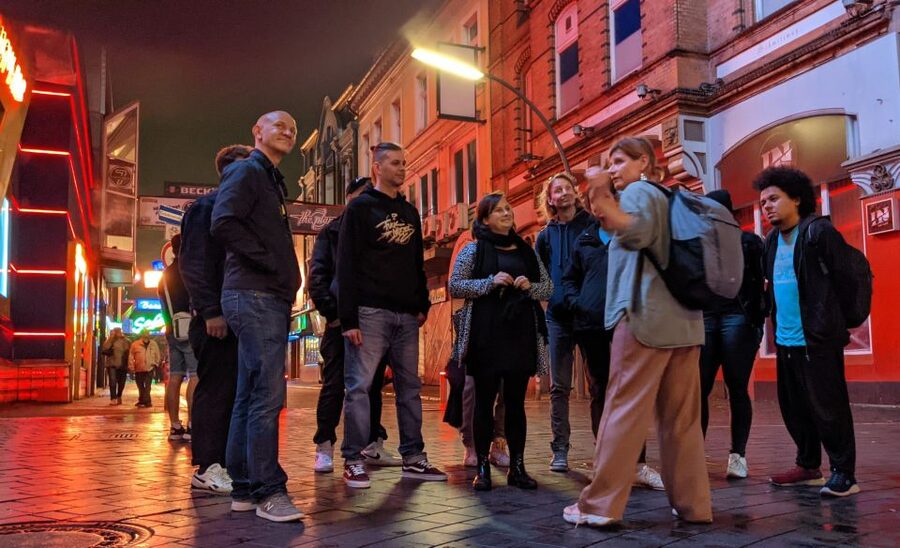
- Meet a local resident style guide and get the neighborhood logic, not just facts from a brochure
- 400 years of St. Pauli history tied to what you see now
- Main landmarks in one run: Große Freiheit, Davidwache, Hans-Albers-Platz, Herbertstraße, Spielbudenplatz
- Reeperbahn context and background so it makes more sense than the headlines
- A real neighborhood pub stop to grab a drink near local life (drinks not included)
- A focus on sociopolitical developments, not only nightlife
Still on the Kiez? More nights reviewed here
- Hamburg: Sex and Crime in St. Pauli Tour for Ages 18+★ 4.7 · 15,447 reviews
- Hamburg: Reeperbahn Lust & Laster Tour for Adults Only★ 4.7 · 5,440 reviews
- Hamburg: Insider Tour of the Reeperbahn & St. Pauli★ 4.7 · 5,057 reviews
- Hamburg: Night Watchman’s Tour of St. Pauli in German★ 4.7 · 4,818 reviews
St. Pauli in Two Hours: What This Tour Is For

This tour is designed for one job: help you read St. Pauli quickly, without turning it into a sightseeing checklist. You get a mix of big-name places and the everyday neighborhood vibe, with a guide who helps you understand why the area has such a reputation in the first place.
At $29 per person for about 2 hours, the value comes from the guide time. You are paying for interpretation, a path through the neighborhood, and context for what you will see near the Reeperbahn. It is not a food tour, and it is not a museum visit, so if you expect a snack-and-sip experience, you might end up spending extra. But if you want to understand the place, especially the clash between old St. Pauli and present-day life, this time window is a good fit.
Also, the pacing is built around the neighborhood shape. You are meant to leave knowing what the main sights are and what they represent, rather than just collecting photos.
Meet Your German Guide at Wohlwillstraße 1
The tour starts at the activity provider’s office, St. Pauli Office, Wohlwillstraße 1, 20359 Hamburg. The key practical detail is timing: you need to register 15 minutes before tourstart at the counter.
This matters because it is a live guided experience with German as the tour language. If you arrive late, you can lose your place in the group timing. And because the tour is not child-friendly, it is also aimed at a more adult rhythm of the neighborhood, where the guide will likely keep the pace moving.
St. Pauli’s Big Idea: A Place Where Worlds Collide

St. Pauli is not subtle. The tour frames it as a collision zone, and that helps you understand what you are looking at.
Here’s what the guide’s theme is based on the tour description:
- red lights beside posh hotels
- alternative lifestyles beside party culture
- punk energy beside pop music
- suburban visitors rubbing shoulders with locals
- tourists sharing streets with old St. Pauli residents
That mix is the heart of why a guided approach works. Without context, you might see only the headline version of the neighborhood. With context, you start noticing how different parts of the area feed the same identity, and how it functions socially.
You also get more than culture talk. The tour includes a look at present-day sociopolitical developments, which is useful if you want to see that St. Pauli is not just a nightlife stage. It is also a neighborhood with ongoing change and public conversations.
Reeperbahn 101: Understanding the Notorious Mile
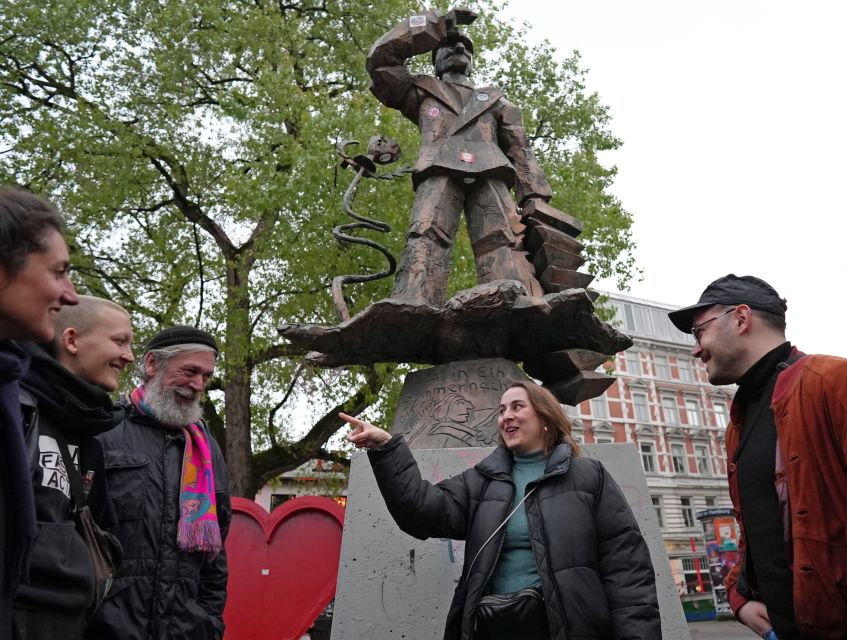
The tour’s standout focus is the notorious Reeperbahn and the history behind it. The Reeperbahn is the kind of place where tourists often think they already know what it is about. This tour helps you slow down and see it as a long-running district with a story that goes beyond modern branding.
Instead of treating the Reeperbahn as purely scandal, the guide connects it to the neighborhood’s 400-year arc. That gives you a better mental model for what you see today: why certain areas became famous, how the reputation formed, and why the energy continues.
You’ll also have a guided explanation of the area’s “sinful mile” cliché, which is basically the public shorthand for what the street became known for. With the guide’s framing, it is easier to separate the sensational headline from the neighborhood reality.
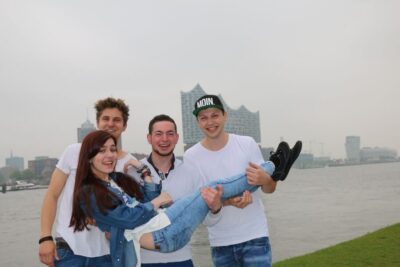

What you will appreciate here
You will not just point at famous spots, you will learn what makes them meaningful. That is especially valuable around St. Pauli, where the same block can feel different depending on the hour, the crowd, and the vibe of the moment.
The Landmark Walk: Große Freiheit, Davidwache, Hans-Albers-Platz
The tour includes a run through several main stops that many people recognize from stories, signage, or TV. Here’s how those names fit into the flow and why they matter.
Große Freiheit
Große Freiheit is one of the best-known anchors for nightlife in St. Pauli. On this tour, it is not just a name for people to photograph. It’s presented as a key landmark that helps you understand the area’s party culture. You’ll get the neighborhood context that explains why this street became part of the wider Reeperbahn identity.
Davidwache
Next is Davidwache, which the tour uses to balance the nightlife image with something more grounded. When you see it in context, it helps you understand the day-to-day structure of the area. It also gives your mental map a point of reference beyond the entertainment zones.
Hans-Albers-Platz
At Hans-Albers-Platz, the tone shifts again. This stop helps you connect St. Pauli’s reputation with a more local sense of place. The value is that you begin to see the neighborhood as livable and recognizable, not only as a party corridor.
Herbertstraße and Spielbudenplatz: Where the Vibe Landed
Two more landmark stops shape the later part of your understanding of St. Pauli.
Herbertstraße
Herbertstraße is included as a major highlight, and it fits the tour’s big theme about clashes of cultures. As you move through the neighborhood with the guide’s explanations, you can start to notice the variety of lifestyles and music culture that the tour describes. It is the kind of street where the “same neighborhood, different world” feeling is easy to notice when you know what to watch for.
Spielbudenplatz
Spielbudenplatz is another central point on the route. The tour uses it to capture the entertainment gravity of the district. If you are trying to understand why St. Pauli became such a magnet, this kind of stop helps it click. It is where the neighborhood’s role in nightlife becomes impossible to miss.
The Local Pub Stop: Nightlife Without the Tourist Trap
One of the best parts of this tour, in a practical sense, is the plan to grab a drink at a quaint neighborhood pub close to where local residents keep their rhythm. Drinks are not included, so you will still pay for whatever you order, but it is a smart way to finish with a real neighborhood setting instead of heading off cold turkey.
This is also where the guide can shift from history to advice. The tour description says you’ll get insider nightlife recommendations, and you can use that time to ask what areas make sense later, what to skip, and how to read the vibe as you move around St. Pauli.
Why the 400-Year History Matters (Even If You Do Not Care About Dates)
You might wonder why a nightlife tour spends time on 400 years. Here’s the practical reason: in St. Pauli, the reputation did not appear overnight. The neighborhood story explains why certain themes keep repeating, how the district became famous, and why today’s clash of cultures feels so permanent.
When you know that St. Pauli has been evolving for centuries, you stop seeing the Reeperbahn only as a modern attraction. Instead, you start seeing it as the latest chapter of a neighborhood identity that keeps changing while holding onto its core.
That is the real value of the history here. It does not feel like homework. It feels like an explanation for why the street looks and behaves the way it does.
Price and Value: Is $29 Worth It?
For $29 per person, you are buying two hours of a live local guide and a structured walk through the key sights: the Reeperbahn area plus Große Freiheit, Davidwache, Hans-Albers-Platz, Herbertstraße, and Spielbudenplatz. Since the tour includes the guidance and interpretation but does not include food or drinks, your total trip cost will stay mostly predictable.
So the value question is simple:
- If you want a guided framework to understand the neighborhood, the Reeperbahn, and the 400-year context, then yes, this price makes sense.
- If you only want casual sightseeing without explanations, you could compare the cost to what you would do on your own.
Because this is a live tour with German as the main language, it is also worth valuing your listening comfort. If you understand German well enough to catch the details, you will likely feel the price as fair. If not, the tour may feel like you are just standing near interesting names with less meaning.
Who This Tour Fits Best
This is best for you if:
- you are curious about St. Pauli beyond stereotypes
- you want historical context that connects to what you see today
- you enjoy nightlife neighborhoods but prefer a guide to help you read them
It is not suitable for children under 16, so plan for an adult outing.
And because the language is German, it fits best if you are comfortable with German commentary or you are traveling with someone who is.
Should You Book St. Pauli Kieztour – Reeperbahn Mittendrin?
Book it if you want a focused 2-hour guided orientation to St. Pauli and the Reeperbahn, with a local perspective and a 400-year history angle. It is also a good pick if you like finishing with a chance to ask questions and grab a drink in a neighborhood pub setting.
Skip it if you need an English-language experience, or if you are mainly looking for a food-and-drink plan. This tour is about the neighborhood story and the street-level highlights, not a catered meal.
If you are coming to Hamburg and want one smart way to understand why St. Pauli has its reputation, this is a solid use of time.
FAQ
What is the duration of the St. Pauli Kieztour?
The tour lasts 2 hours.
How much does the tour cost?
The price listed is $29 per person.
What language is the tour guide speaking?
The live tour guide speaks German.
Where do I meet the guide?
Meet your guide at the activity provider’s office, St. Pauli Office, Wohlwillstraße 1, 20359 Hamburg.
What is included in the tour price?
The tour includes a tour with a local guide.
Is food or drinks included?
Food and drinks are not included. The tour includes time to grab a drink at a neighborhood pub, but you will pay for drinks yourself.
More of the Kiez After Dark
Everything else we filed on Hamburg
- Hamburg: Safari tour in St. Pauli
★ 4.9 · 11 reviews - Hamburg: Party Bingo with the Bingo Gringos
★ 4.8 · 11 reviews - Hamburg Harbor: 3.5-Hour Guided Tour by Bike
★ 4.7 · 11 reviews - Hamburg: 2-Hour St. Georg Walking Tour
★ 4.8 · 11 reviews - Hamburg: Guided Walking Tour in Danish
★ 5.0 · 11 reviews - Discover Hamburg in a retro Bulli
★ 3.0 · 12 reviews
St Pauli and Reeperbahn Tours, side by side.
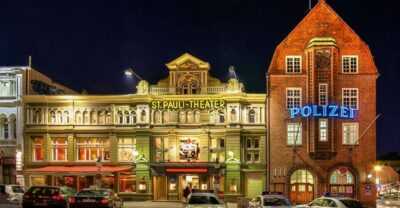 ★ 4.7Hamburg: Sex and Crime in St. Pauli Tour for Ages 18+From $29515,447 reviews
 ★ 4.7Hamburg: Reeperbahn Lust & Laster Tour for Adults OnlyFrom $5005,440 reviews
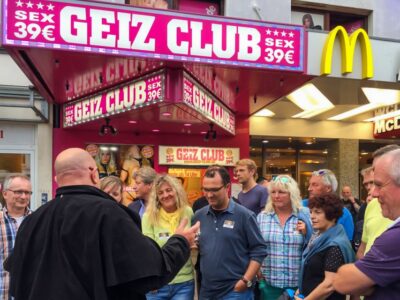 ★ 4.7Hamburg: Insider Tour of the Reeperbahn & St. PauliFrom $295,057 reviews
 ★ 4.7Hamburg: Night Watchman’s Tour of St. Pauli in GermanFrom $234,818 reviews
 ★ 4.7Hamburg: In the Footsteps of “Olivia” Reeperbahn TourFrom $5003,947 reviews
 ★ 4.7Hamburg: Lust, Luden & Die Große Freiheit TourFrom $172,444 reviews
 ★ 4.7Hamburg: St. Pauli Highlights Guided Tour with Beer for 18+From $292,353 reviews
 ★ 4.6Hamburg: Schanzenviertel Culinary TourFrom $572,051 reviews
Other lists this tour is on