

REVIEW · STUTTGART
Stuttgart: entertaining guided tour to old town highlights
A walk in Stuttgart’s center can feel surprisingly personal. In this 1.5-hour old town tour, I like how the guide connects the big sights, especially the New Palace and Schillerplatz, to everyday city life. You also get practical ideas for what to do after you finish. One catch to consider: the guide style can lean more lecture-like than comedy, and you may spend some time in full sun before you’re back in shade.
For $16 per person, you’re buying time saved. Instead of wandering for hours trying to figure out what matters most, you get a focused loop through the core landmarks, plus context on what you’re looking at. The tradeoff is simple: the tour is in German, so plan accordingly if you’re not comfortable following the language.
In This Review
- Key Things to Know Before You Go
- Getting Oriented in Stuttgart’s Center, Fast
- Starting at the New Castle Music Pavilion (Orange Bag)
- New Palace: Baroque Beauty Plus the Württemberg State Museum
- Schillerplatz and Palace Square: Squares as the City’s Living Room
- The Old Town Streets: History You Can Walk Through
- Palace Garden: Breathing Space Between Buildings
- Hauptbahnhof Architecture: 19th-Century Stuttgart in Plain View
- Culture Mile and Art Museums: Turning Walk Insights Into Plans
- Price and Timing: Does $16 Make Sense for 1.5 Hours?
- Language Considerations: German-Only Means You Choose the Pace
- How to Make This Walk Feel Less Like a Sit-Down Lecture
- Who This Tour Is Best For
- Should You Book This Stuttgart Old Town Highlights Walk?
Key Things to Know Before You Go
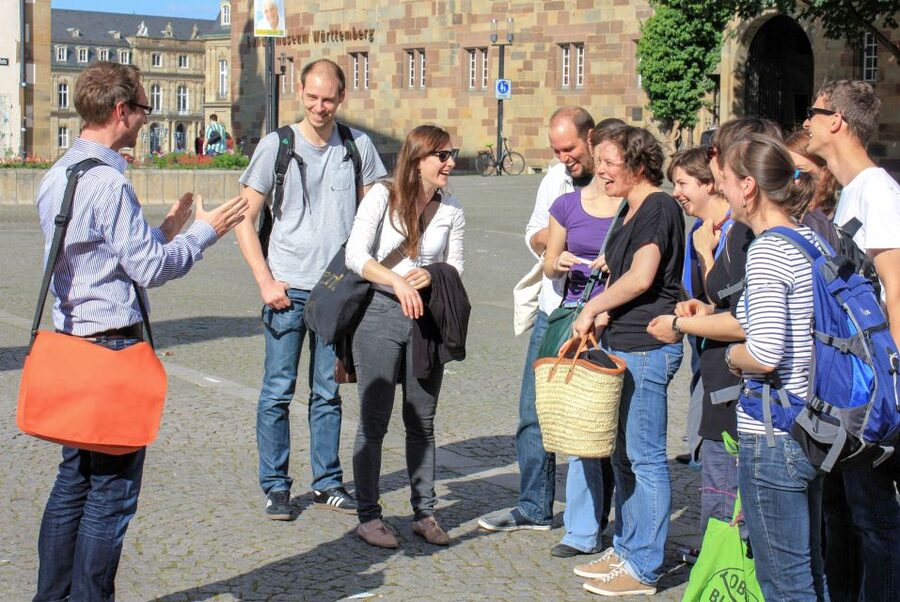
- Meet at the orange-bag starting point: the music pavilion in front of the New Castle.
- A tight 90 minutes: enough time for highlights without turning your day into a slog.
- Major landmarks, walking pace: New Palace, Schillerplatz, Schlossplatz, the old town streets, and the palace garden.
- Art and architecture show up naturally: you’ll connect museums with the buildings and squares around them.
- German-only guiding: you’ll hear history and practical suggestions in German.
- Expect guide personality to vary: some tours feel playful, others more explanatory.
Other Swabian days we have reviewed
- Stuttgart 24-Hour Hop-On Hop-Off Sightseeing Bus Tour★ 4.4 · 1,647 reviews
- Stuttgart: Mercedes-Benz Museum Entry Ticket★ 4.8 · 1,400 reviews
- Tickets SWR Fernsehturm Stuttgart★ 4.5 · 674 reviews
- Stuttgart: Guided Ghost Walking Tour★ 4.5 · 662 reviews
Getting Oriented in Stuttgart’s Center, Fast
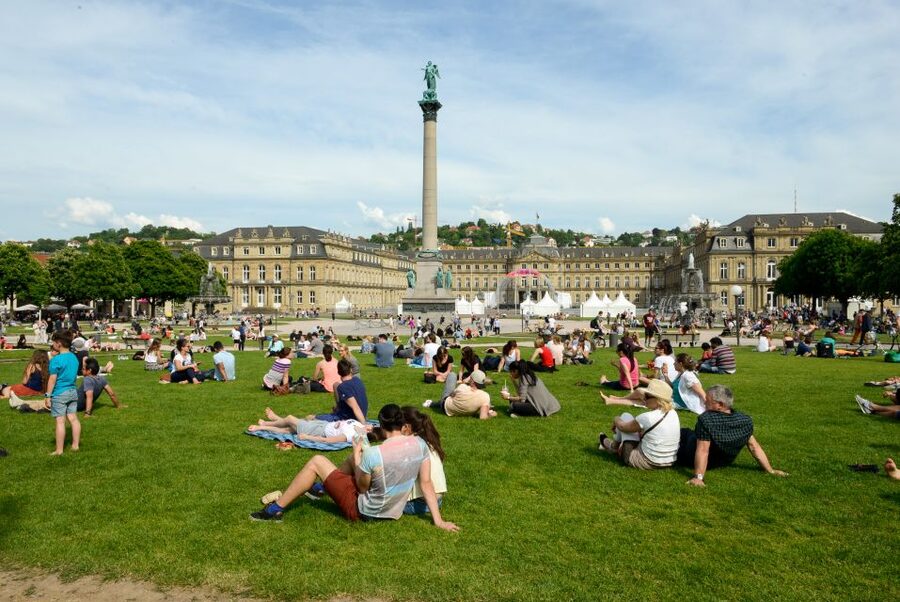
Stuttgart is often described as a city between forest and vines, and you feel that mix in how the center is laid out. This tour is a smart way to get your bearings quickly because it focuses on the exact places you’ll keep seeing later when you explore on your own. In a short time, you move through squares, grand facades, and old streets that show different eras of the city.
The reason I think this works is simple: Stuttgart’s highlights are close enough to walk, but the meaning is not obvious if you only look. Your guide adds the links, from the city’s early settlement roots in the 10th century to why today’s palace buildings and squares still shape the way people move through town. You end with a clearer mental map, not just photos.
And yes, there’s culture along the way. You’ll also hear about the culture mile with art museums, plus ideas for leisure and shopping that can help you turn the rest of your day into something concrete.
Starting at the New Castle Music Pavilion (Orange Bag)
Your tour starts at the music pavilion in front of the New Castle. The detail that matters for you is the orange bag, because it’s your visual shortcut when you arrive and scan the area. If you’re the kind of person who prefers calm starts, show up a few minutes early, especially if you need to double-check you’re at the right corner.
From that starting point, you’re positioned to understand the city’s layout. You’re not starting at a distant stop. You’re starting near the action, which makes the walk feel efficient instead of like a commute.
New Palace: Baroque Beauty Plus the Württemberg State Museum
One of the strongest reasons to book this tour is the New Palace. It’s an imposing baroque building and it now houses the Württemberg State Museum. That museum detail matters, because it helps you understand why this palace is not just pretty from the outside. It’s a working cultural anchor in the city center.
During the walk, your guide explains what you’re seeing in plain terms, including the role of major buildings and architectural styles. If you have even a mild interest in art, you’ll appreciate the mention of the museum’s collection of artworks and artifacts tied to the region. You don’t need to go inside immediately to get value, because you’re learning the “why this matters” before you decide what to do next.
A small practical note: if you’re planning to visit the museum later, this tour gives you context so the exhibits are easier to place. If you don’t plan to go inside, you still get a more satisfying view from the street and a better sense of how the palace relates to the surrounding squares.
Schillerplatz and Palace Square: Squares as the City’s Living Room
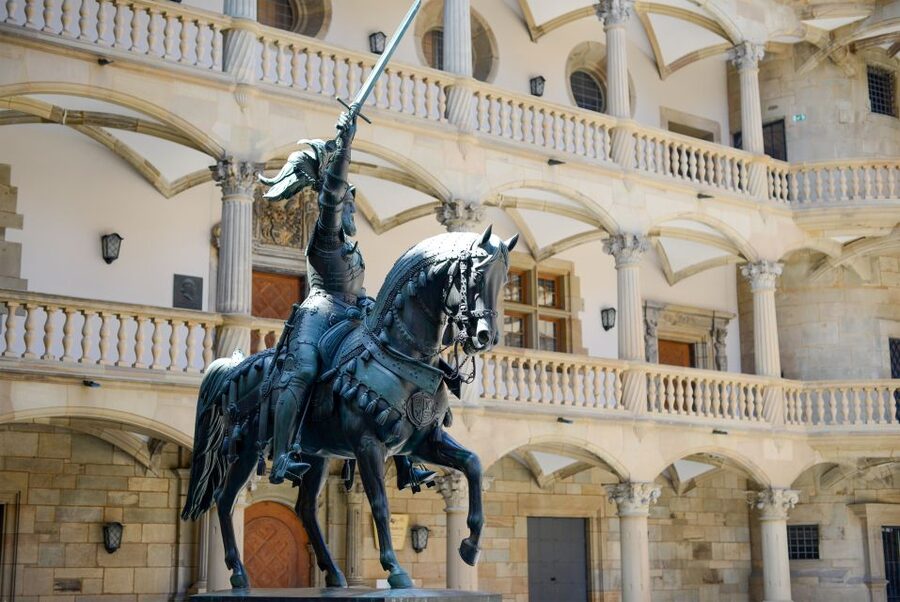
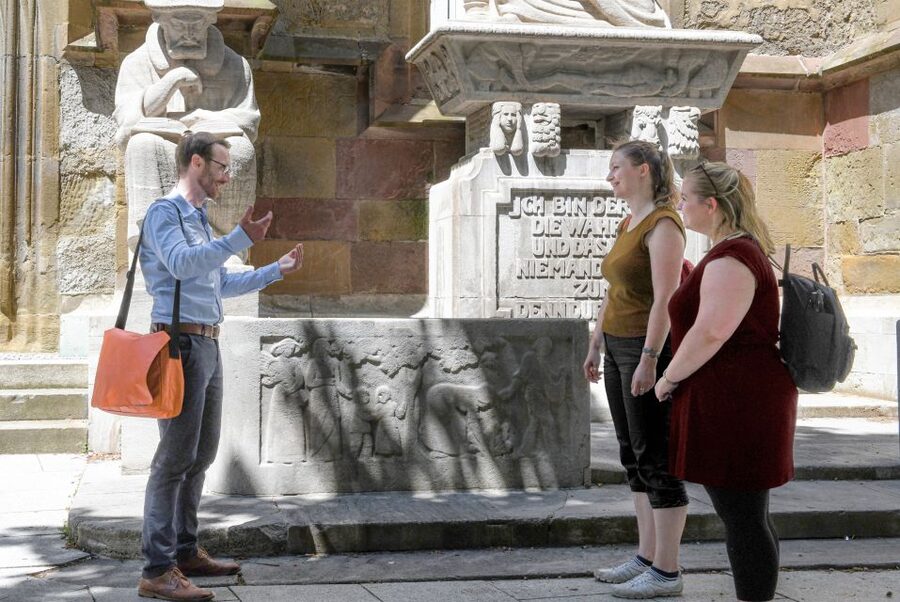
After the palace area, you’ll move into the rhythm of the city through Schillerplatz and Palace Square (Schlossplatz). Squares like these are where Stuttgart shows its everyday side. Even if you’re only walking through, you can feel why people gather here: the space is designed for movement, meetings, and casual strolling.
What I like about this part is that the guide doesn’t treat squares like backdrops. You get context about how the city developed from a small settlement founded in the 10th century into one of Germany’s larger cities. That kind of story helps you see the present architecture as part of an ongoing city plan, not just random sightseeing.
The downside, which you should factor in, is that squares can be exposed. If you’re traveling in hot weather, plan for sun and heat. Some tours can include stretches where the group is gathered or paused longer than you might like, which is exactly the sort of moment you’ll feel most.

The Old Town Streets: History You Can Walk Through
The tour also includes Stuttgart’s historic old town streets. This is where the experience changes pace a bit. Big palaces and grand squares can make you feel like you’re staring at a stage set. The old streets are different. They help you understand how people lived, moved, and shaped neighborhoods over time.
Your guide points out the beautiful corners as you go, and the explanations tie back to the city’s growth. I think this part is especially useful if you tend to rush through old towns without stopping. A guided walk gives you permission to slow down for details that you might otherwise miss: street layouts, the way buildings face the square, and the clues architecture leaves about era and purpose.
You also get that extra benefit of direction. After a tour like this, you’re usually better at choosing what to revisit later. You’ll know which streets felt most interesting and where you’d want to linger on your own.
Palace Garden: Breathing Space Between Buildings
Stuttgart’s palace garden is one of the green areas you’ll pass during the tour. This stop helps balance the heavier architectural moments, and it’s a good reminder that even in a city center, there’s room to slow down. The garden is more than a photo break. It gives you a sense of scale and calm after blocks of buildings and stone squares.
If you’re the type of traveler who gets museum-fatigue fast, the garden is a relief. If you’re someone who loves gardens, you’ll appreciate the way it’s folded into the route instead of treated as a separate side quest.
Hauptbahnhof Architecture: 19th-Century Stuttgart in Plain View
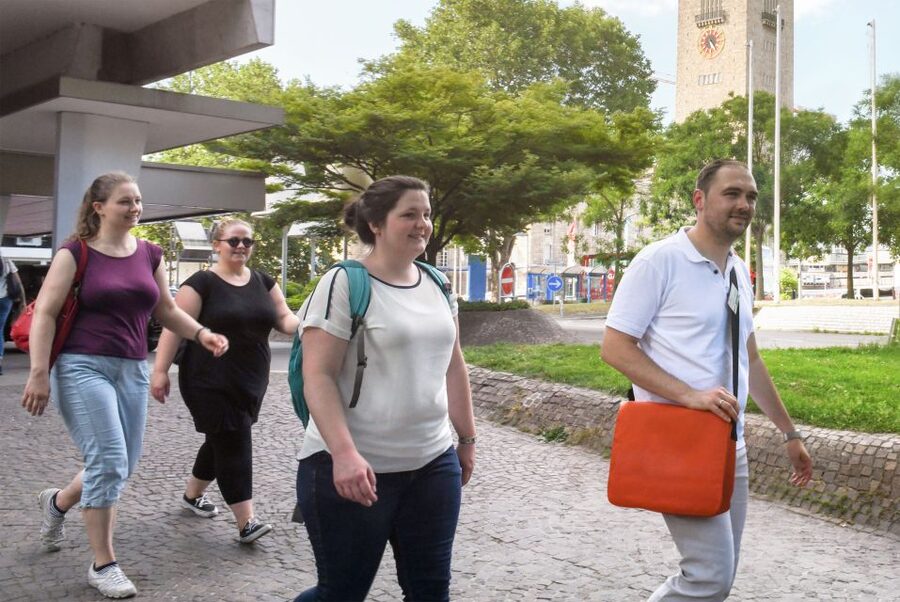
Architecture fans have a treat later in the loop: Hauptbahnhof, Stuttgart’s main train station. It’s highlighted as an impressive example of 19th-century architecture, and your guide uses it to explain architectural styles you might not notice on your own.
This is a valuable stop for two reasons. First, it shows Stuttgart’s “bigger than the old town” story. Second, it connects the city’s modern movement to earlier design choices. You end up seeing the station as part of the same city identity, not as a random transportation hub you only pass through.
If you’re already planning to use the train during your trip, this is a practical mental warm-up. You’ll recognize the building more easily when you return to it later.
Culture Mile and Art Museums: Turning Walk Insights Into Plans
Your guide also points out Stuttgart’s culture mile, where there are numerous art museums. You’re not expected to hit all of them on a 90-minute walk. Instead, the tour helps you understand where that concentration sits and why it’s a big part of the city’s feel.
This is where I think the “tips” part matters. You’ll hear suggestions for leisure activities and shopping from your guide, which can help you make choices fast once the tour ends. That kind of advice is often more valuable than another list of landmarks, because it fits your remaining time.
For you, the traveler, the best use of this section is decision-making. If you love art, you now have the area to target. If you’re more into browsing shops or finding a good place to relax, the route gives you a baseline for what’s nearby and where to go next.
Price and Timing: Does $16 Make Sense for 1.5 Hours?
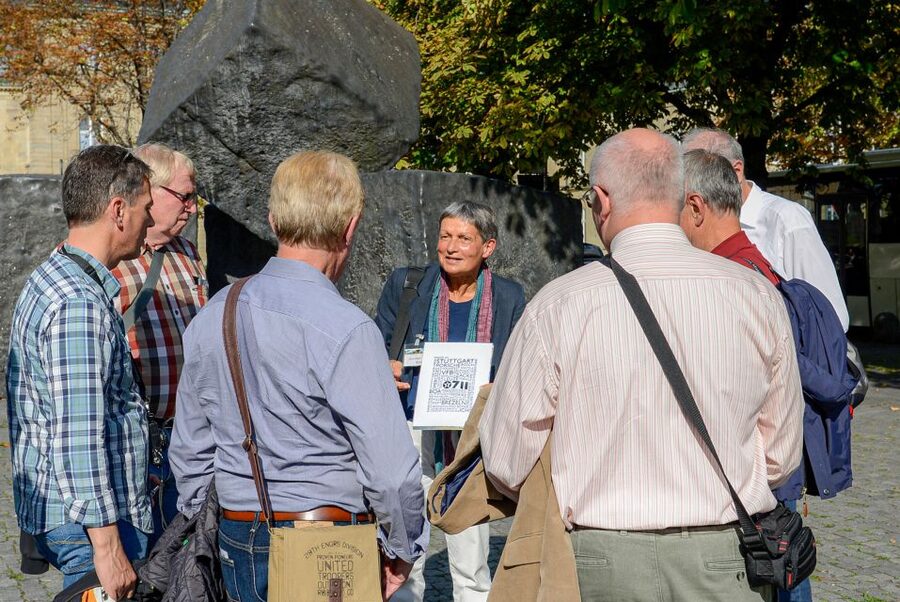
At $16 per person for a 1.5-hour guided walking tour, the value is strongest if you want orientation and context more than a long checklist. You’re paying for a human guide plus a planned route through the most meaningful parts of the center. When you compare that to piecing everything together solo, it’s a fair deal, especially if you’re short on time.
The timing also matters. You don’t have to carve out half a day to get value. Instead, you can fit this into the start of your Stuttgart visit and use it as a foundation.
To keep the price feeling worth it, come with a clear goal: you want to understand what you’re seeing and leave with a plan. If you already know the city well and you just want photos, a self-guided walk might be cheaper. But if you’re trying to get the lay of the land fast, this price is easy to justify.
Language Considerations: German-Only Means You Choose the Pace
This tour is held in German. That’s not a minor detail. It affects what you’ll get from the explanations and the guide’s practical tips.
If you speak some German, you’ll probably follow most of it and enjoy the added context. If you don’t, you can still benefit from the route and the exterior landmarks, but expect less from the spoken history and the shopping and leisure recommendations. Your best move is to go in with realistic expectations and keep a phone translation app ready in case you want quick help with names or key ideas.
How to Make This Walk Feel Less Like a Sit-Down Lecture
Based on what people describe about guide style, you should think about your personal preference. Some guides come across as genuinely humorous and light. Others may feel more like a structured explanation, with more standing time and less joking.
You can improve your odds in a simple way:
- Bring water and be ready for sunny pauses.
- Wear shoes you trust for steady walking.
- If you like interaction, ask a small question when the group stops, even if you’re quiet at first.
That way, even if the tour leans more instructional, you still leave feeling like you got value.
Who This Tour Is Best For
This walking tour is a strong fit if you want:
- A fast orientation to Stuttgart’s center
- Highlights like New Palace, Schillerplatz, Schlossplatz, and the old town streets in one loop
- Architectural context, including the 19th-century style of Hauptbahnhof
- Practical suggestions for what to do next, like leisure ideas and shopping spots
It’s also a good choice if you enjoy cultural areas and want to know where the art museums cluster, even if you do not plan to visit every museum right away.
If you prefer long museum time or private tours with lots of customization, this may feel a bit short and focused. But for most visitors, especially those on a tight schedule, the balance of highlights plus guidance works well.
Should You Book This Stuttgart Old Town Highlights Walk?
I’d book this tour if you want a guided route that helps you understand why Stuttgart’s center looks the way it does, and you’re okay with German as the main language. The best reason to choose it is the combination of the big visual landmarks and the added context, especially around the New Palace, key squares, the palace garden, and Hauptbahnhof.
Skip it or reconsider if you strongly dislike instructional, lecture-heavy guiding, or if you know you get grumpy waiting in sun. Also, if your German is very limited, the spoken parts may not land as well, though the walking route still gives you a useful snapshot of the city.
Overall, for $16 and 1.5 hours, this is a practical way to get oriented and leave with a clearer Stuttgart game plan, not just a few photos.
Across Swabia
Everything else we filed on Stuttgart
- Stuttgart: City History Guided Walking Tour
★ 4.9 · 11 reviews - Stuttgart: Landesmuseum Württemberg Old Castle Entry Ticket
★ 4.5 · 15 reviews - Stuttgart: Winter Sunday Brunch Buffet
★ 4.6 · 16 reviews - Stuttgart : Guided Walking Tour With A Guide (Private Tour)
★ 4.5 · 20 reviews - Stuttgart: Exklusive Floßboote Finne & Fischle
★ 4.5 · 23 reviews - Premium wine hike Stuttgart with games and winemaker’s snack
★ 4.7 · 26 reviews
Stuttgart and Swabia Tours, side by side.
 ★ 4.4Stuttgart 24-Hour Hop-On Hop-Off Sightseeing Bus TourFrom $281,647 reviews
 ★ 4.8Stuttgart: Mercedes-Benz Museum Entry TicketFrom $181,400 reviews
 ★ 4.7Ulm: City Center Walking Tour with Minster VisitFrom $11831 reviews
 ★ 4.5Tickets SWR Fernsehturm StuttgartFrom $14674 reviews
 ★ 4.5Stuttgart: Guided Ghost Walking TourFrom $17662 reviews
 ★ 4.8Sinsheim: Technik Museum Day Pass and IMAX 3D TicketFrom $35616 reviews
 ★ 4.2Stuttgart: Museum of Illusions Entry TicketFrom $16507 reviews
 ★ 4.1Stuttgart: Vineyard Tour by Covered WagonFrom $46217 reviews
Other lists this tour is on