
REVIEW · STUTTGART
Stuttgart: Mercedes-Benz Museum Entry Ticket
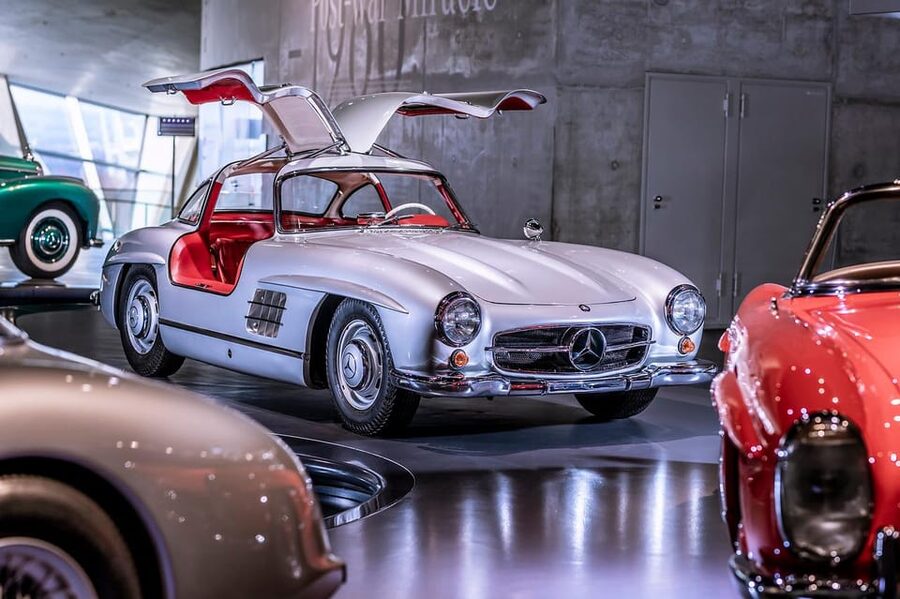
Car history in Stuttgart, built for walking. This museum tells the story of the automobile since Carl Benz’s 1886 breakthrough, using a clear, chronological layout plus a free audioguide. You get more than 160 vehicles across a big indoor space, so it’s not just about looking, it’s about understanding. One thing to watch, though, is time: with so much to see, 90 minutes can feel rushed.
The building itself is modern and striking, and the exhibition is organized into twelve rooms that guide you through technology, day-to-day life, social history, and even popular culture. I like that the museum gives you two narrative options, Legend and Collection, so you can match your mood and your pace. The ticket price is $18 per person, and for what you’re getting, it’s usually fair value if you give yourself at least a half day.
In This Review
- Key things that make this visit work
- Mercedes-Benz Museum ticket, Stuttgart: what your $18 actually covers
- Entering the museum the fast way: main entrance and getting oriented
- The museum layout: twelve rooms, multiple floors, and how to pace yourself
- Two ways to experience it: the Legend vs Collection routes
- What to focus on: early cars, racing icons, and concept vehicles
- The audio guide in 8 languages: how to use it without frustration
- More than cars: technology, everyday life, and social history
- Comfort and pacing: resting stops, crowds, and what to expect
- Value and best-fit visitors: who should book this ticket
- Should you book the Mercedes-Benz Museum entry ticket?
- FAQ
- What are the opening hours for the Mercedes-Benz Museum?
- How long should I plan for this museum visit?
- Is the audioguide included, and what languages are available?
- How big is the exhibition and how many vehicles are on display?
- Do I need to queue for the ticket?
- Is the museum wheelchair accessible?
- How does the ticket work for dates and starting times?
- Is there free cancellation or pay later options?
Key things that make this visit work
- Free audioguide in 8 languages so you can move at your own speed.
- 16,500 square meters of exhibition with way more than a single gallery to breeze through.
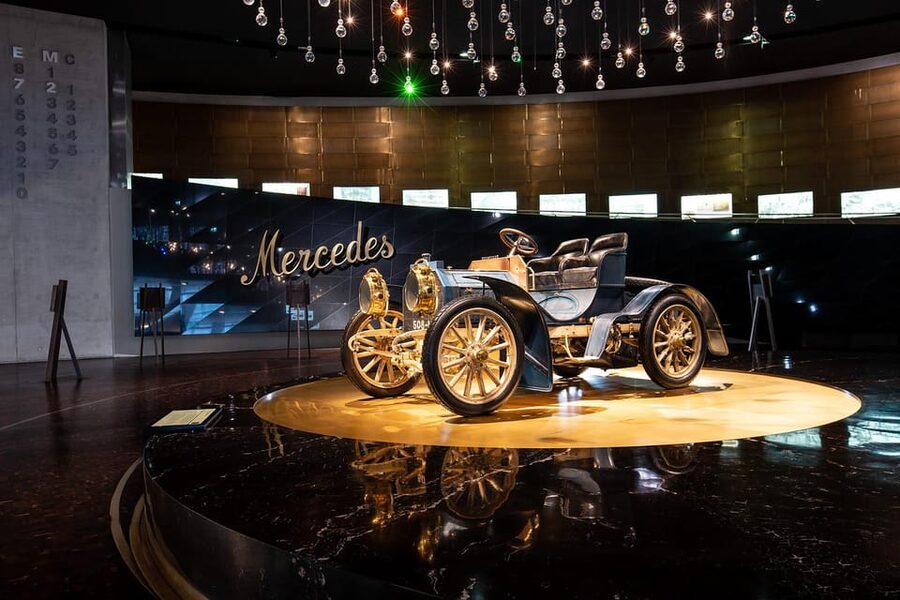
- Over 160 vehicles spanning early automobiles, racing legends, and futuristic research concepts.
- Two story paths, Legend and Collection, so repeat visitors can focus on different angles.
- Multi-floor layout with videos and accessible design, making it easier to understand even if you are not a die-hard car fan.
- Well-organized entry with skip-the-line once you’re at the main entrance.
Other Swabian days we have reviewed
- Stuttgart 24-Hour Hop-On Hop-Off Sightseeing Bus Tour★ 4.4 · 1,647 reviews
- Stuttgart: Mercedes-Benz Museum Entry Ticket★ 4.8 · 1,400 reviews
- Tickets SWR Fernsehturm Stuttgart★ 4.5 · 674 reviews
- Stuttgart: Guided Ghost Walking Tour★ 4.5 · 662 reviews
Mercedes-Benz Museum ticket, Stuttgart: what your $18 actually covers

This is a straightforward ticket experience, which I appreciate. Your $18 per person covers admission to the permanent exhibition plus the audio guide in eight languages. That matters because the museum leans hard on context, not just “here’s a car, good luck.”
The scope is huge for the price. You’re stepping into a permanent exhibition that spans 16,500 square meters and features more than 160 vehicles. If you’ve ever paid museum money and felt like half the displays were background noise, this one is set up to do the opposite: it tries to connect cars to the world around them, how people lived, and what technology made possible.
I also like the “skip-the-ticket-line” idea in practice. You still need time and attention once you’re inside, but you’re not wasting it standing around outside the museum doorway.
Entering the museum the fast way: main entrance and getting oriented
The meeting point is simple: enter through the main entrance. Do that and you’ll get into the museum flow quickly. Once inside, the trick is to get oriented right away so you don’t zigzag.
Because the exhibition is split into twelve rooms and spread across multiple floors, orientation saves energy. You can start with one narrative track and stick with it, then adjust on the fly if you spot something that grabs you more than expected.
Also, plan to carry your attention, not just your feet. Several visitors highlight how well the museum guides you through eras. That guidance only works if you keep moving with purpose, not if you pause in the wrong place and then discover you missed the entire next room.
The museum layout: twelve rooms, multiple floors, and how to pace yourself
The Mercedes-Benz Museum experience is designed like a guided walk through time. The permanent exhibition is arranged into twelve rooms, and the overall layout is multi-story. Some visitors point out there are seven floors to cover, which tells you the museum is not a “stroll for an hour” kind of stop.
Here’s how I’d pace it. If you want to actually understand the story, think in blocks. Spend time in each era, then do a quick sweep before moving on, so you don’t accidentally leave out major highlights on a floor you’ve already “covered.”
How long should you plan? The museum is open Tuesday to Sunday from 9 a.m. to 6 p.m., and last admission is 5 p.m. In reviews, people often recommend 4 to 5 hours for a satisfying visit. If you only have 90 minutes or 1 hour, you can still see impressive vehicles, but you’ll be forced into a “greatest hits” approach, not a full understanding of how Mercedes-Benz evolved and how cars shaped daily life.
Two ways to experience it: the Legend vs Collection routes
This is one of the most useful features for planning, because it changes what you pay attention to. The museum offers two tour narratives: Legend and Collection.
- Legend is the story-driving route. It’s built around the biggest names, the famous moments, and the kind of milestones that make people fall in love with cars in the first place.
- Collection is the broader catalog route. It tends to work well if you like comparing designs, tech approaches, and vehicle types across time.
You do not need to memorize the routes before you arrive. But it helps to choose early so you know what you’re trying to get from the day. If you start hopping between floors without a plan, you can end up seeing plenty of vehicles and still feeling like you missed the “why” behind them.
Either way, the permanent exhibition is anchored in the automobile’s invention in 1886, then moves forward through decades of innovation, competition, and changes in society. That framing is what makes the museum more than a car showroom.
More collections to walk through in Stuttgart

What to focus on: early cars, racing icons, and concept vehicles
The museum makes 160+ vehicles the main protagonists. That’s a big deal because the cars are not randomly displayed. They’re positioned to tell you how technology evolved and how Mercedes-Benz responded to changing needs and tastes.
From the way the exhibition is described, I’d treat vehicle types as your checklist:
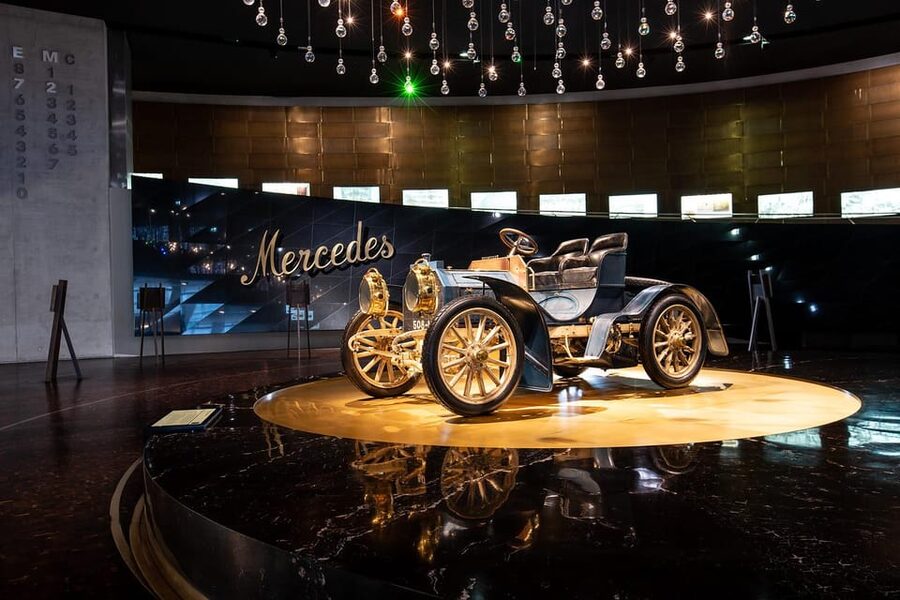
- Some of the oldest automobiles ever built, for seeing how far engineering has come.
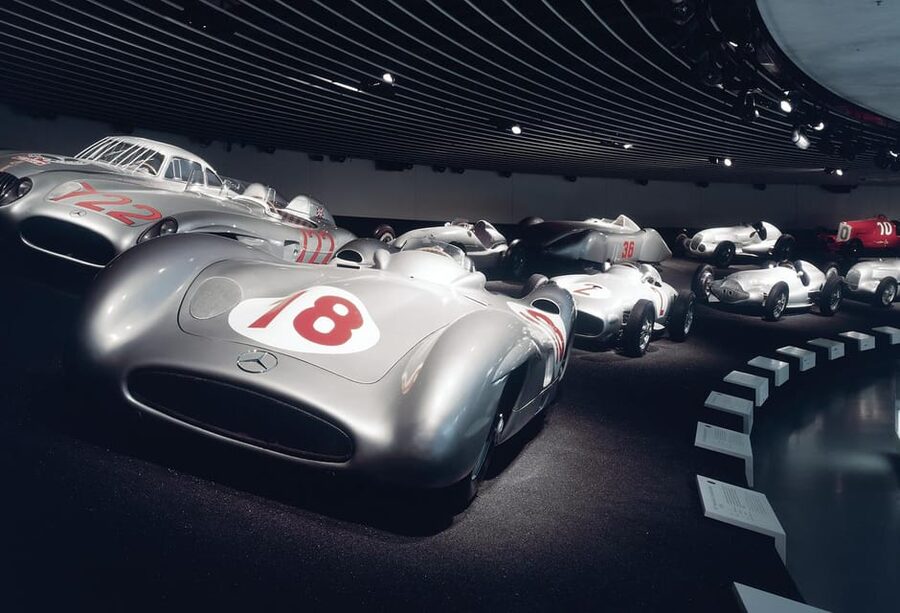
- Legendary racing cars, for understanding performance culture and motorsport influence.
- Futuristic research vehicles, so the museum doesn’t end with the past.
One of the strongest themes coming through in visitor comments is that the museum covers not only brand history, but how the engine, the technology, and the wider industrial world evolved too. That’s especially satisfying if you want to connect cars to engineering, not just personalities and logos.
If you’re a racing fan, don’t rush the racing displays. One review notes the visit ends with racing cars, which suggests they’re used as a final chapter. If you arrive late in the day or leave early, you risk missing the payoff.
The audio guide in 8 languages: how to use it without frustration
The audioguide is included and available in German, English, Italian, Spanish, French, Chinese, Japanese, and Russian. That’s a wide spread, and it’s a big reason the museum works for international visitors.
In real life, the challenge isn’t language, it’s timing and device reliability. A couple of reviews mention occasional headset problems or the unit not activating. Another comment notes audio volume can be hard to hear in the busy museum spaces.
So here’s the practical approach:
- Start with the audio guide early so you can adjust volume and confirm it works while you’re still fresh.
- If a headset acts up, don’t waste time wandering. Ask staff for help quickly and move on.
Even if you prefer reading, I’d still use the audio for the “context layer.” The museum’s message is about technology and society, and the guide helps you follow that argument instead of just admiring metal and wheels.
More than cars: technology, everyday life, and social history
This is not a museum that only talks to gearheads. The exhibition connects the automobile to day-to-day life, social history, and popular culture, and it presents the evolution of the technology in a way that makes sense.
That’s why people who aren’t hardcore car fans still get something out of it. The museum uses the vehicles as evidence. It shows how innovation affects mobility, how design reflects tastes, and how cars grew into part of modern life.
Several comments also highlight that the museum includes videos on each floor. Those can be helpful break points when your eyes start to glaze over from too many labels. Short media moments give your brain a reset between eras.
If you’re traveling with kids, you’ll likely enjoy the family-friendly touches mentioned in reviews, like coloring activities and puzzles. That kind of distraction matters, because it keeps younger visitors engaged long enough to experience the story rather than treating it like a long hallway.
Comfort and pacing: resting stops, crowds, and what to expect
This museum is big. That sounds obvious, but the design choices matter. With so many vehicles and multiple floors, you should expect walking and some concentration.
Some visitors ask for more resting points. That’s not a dealbreaker, but it’s a good reminder to plan breaks rather than treating it like a nonstop museum sprint.
Crowd flow can also impact your experience. One review notes unnecessary queueing for prepaid tickets and another mentions limited staff assistance with handheld units. I can’t promise how smooth it will be on your specific day, but the best defense is arriving earlier in the open window and staying calm if you hit a line.
If you were hoping for interactive extras like simulators, one review states there isn’t one. That doesn’t reduce the quality of the museum, but it helps you set expectations: this is about exhibits and story, not a video game arcade.
Value and best-fit visitors: who should book this ticket
For $18, you’re paying for time, organization, and a lot of exhibits under one roof. The “value” part is not just price. It’s that the museum gives you structured storytelling through two narrative routes, plus interpretation through the free audioguide.
This is a great fit if:
- You love car history and want to see it laid out in chronological form.
- You like learning about technology and how it affected society, not just the brand.
- You have half a day and can handle walking across multiple floors.
It may be less ideal if:
- You only have 60 to 90 minutes and you hate rushing.
- You want hands-on simulations or game-style interaction (reviews suggest these are not the focus).
- You prefer fully printed labels and do not want to deal with audio devices at all.
For solo travelers, it’s excellent because you can follow Legend or Collection and stop exactly when something catches your eye. For couples and families, the museum can be a shared experience because it supports different interests, from racing cars to the cultural context.
Should you book the Mercedes-Benz Museum entry ticket?
Yes, if you’re visiting Stuttgart and you even mildly care about how cars shaped the modern world. The combination of 160+ vehicles, a very large 16,500 square meter exhibit space, and a free audioguide in 8 languages makes the ticket feel fair. The skip-the-line feature helps you spend more time inside, where it counts.
I’d book it with one condition: plan time. If you can, aim for 4 to 5 hours so you don’t end up speed-reading the story. If your schedule is tight, still go, just expect a best-of route rather than a full journey.
FAQ
What are the opening hours for the Mercedes-Benz Museum?
The museum is open Tuesday to Sunday from 9 a.m. to 6 p.m., with last admission at 5 p.m.
How long should I plan for this museum visit?
The experience is ticketed as a 1-day visit. Based on visitor feedback patterns, many people plan around 4 to 5 hours to see a lot of the exhibits.
Is the audioguide included, and what languages are available?
Yes. The audioguide is included and offered in German, English, Italian, Spanish, French, Chinese, Japanese, and Russian.
How big is the exhibition and how many vehicles are on display?
The permanent exhibition covers 16,500 square meters and features more than 160 vehicles.
Do I need to queue for the ticket?
The ticket includes a skip-the-ticket-line feature, and you can enter through the main entrance.
Is the museum wheelchair accessible?
Yes, the museum is listed as wheelchair accessible.
How does the ticket work for dates and starting times?
The ticket is valid for 1 day. You check availability to see starting times.
Is there free cancellation or pay later options?
Yes. You can reserve and pay later, and free cancellation is available up to 24 hours in advance for a full refund.
Museums Worth the Queue in Stuttgart
Across Swabia
Everything else we filed on Stuttgart
- Stuttgart: City History Guided Walking Tour
★ 4.9 · 11 reviews - Stuttgart: Landesmuseum Württemberg Old Castle Entry Ticket
★ 4.5 · 15 reviews - Stuttgart: Winter Sunday Brunch Buffet
★ 4.6 · 16 reviews - Stuttgart : Guided Walking Tour With A Guide (Private Tour)
★ 4.5 · 20 reviews - Stuttgart: Exklusive Floßboote Finne & Fischle
★ 4.5 · 23 reviews - Premium wine hike Stuttgart with games and winemaker’s snack
★ 4.7 · 26 reviews
Stuttgart and Swabia Tours, side by side.
 ★ 4.4Stuttgart 24-Hour Hop-On Hop-Off Sightseeing Bus TourFrom $281,647 reviews
 ★ 4.7Ulm: City Center Walking Tour with Minster VisitFrom $11831 reviews
 ★ 4.5Tickets SWR Fernsehturm StuttgartFrom $14674 reviews
 ★ 4.5Stuttgart: Guided Ghost Walking TourFrom $17662 reviews
 ★ 4.8Sinsheim: Technik Museum Day Pass and IMAX 3D TicketFrom $35616 reviews
 ★ 4.2Stuttgart: Museum of Illusions Entry TicketFrom $16507 reviews
 ★ 4.1Stuttgart: Vineyard Tour by Covered WagonFrom $46217 reviews
 ★ 4.7Stuttgart: City Highlights – Guided Walking TourFrom $188189 reviews
Other lists this tour is on