
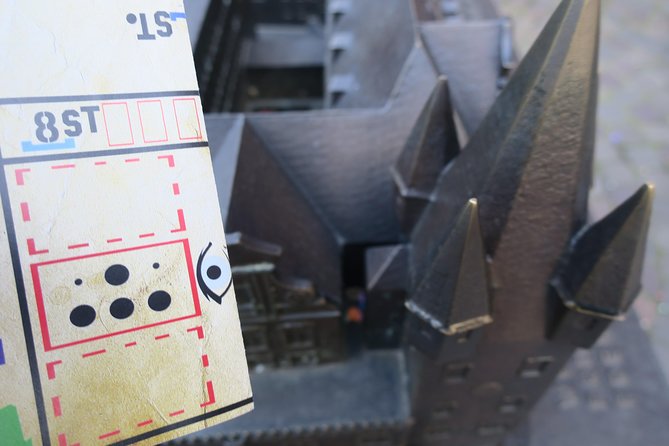
REVIEW · SELF-GUIDED TOURS
Urban Adventure Game in Frankfurt with an app
A street game in Frankfurt, powered by your phone, sounds simple, then it turns into smart sightseeing. You book online for instant confirmation, form a team of 2 to 6, and solve tasks at major stops like Neue Altstadt and the Romer area using a web app plus a printed card. What I like most is how it gets you moving through the city at your own pace, and how the app reveals each next station after you answer correctly. One thing to consider: you do need a smartphone or tablet with internet and you’ll be printing your own materials, which can feel like extra prep if your printer does not behave.
You start and finish at An der Hauptwache in Frankfurt am Main-Innenstadt, and the experience runs for about 2 hours 30 minutes. Once the ticket is activated, the game flows station by station, with the app showing tourist info between stops and hints that help you work out the next answer as a team.
In This Review
- Key things to know before you play
- Price and Logistics for a team of up to 6
- What the game feels like in the real world
- Your starting point: An der Hauptwache to launch the route
- Stop 1: Neue Altstadt, the game’s first real test
- Stop 2: Iron Bridge, where hints start to matter
- Stop 3: St. Paul’s Church (Paulskirche), solving with context
- Stop 4: Cathedral of St. Bartholomew (Dom St. Bartholomaus)
- Stop 5: Romer, finishing with a sense of completion
- The one logistical hiccup to plan for: printing your materials
- Is it worth $47.81 per group? My value take
- Who this Frankfurt street game suits best
- Should you book this street game in Frankfurt?
- FAQ
- How much does the Frankfurt street game cost?
- How long does the experience take?
- Do I need an appointment or a fixed meeting time?
- Where do we start and end?
- What do I need to bring?
- Is there a guide with you?
- What is included in the ticket?
- What is not included?
- Are service animals allowed?
- When do I get confirmation?
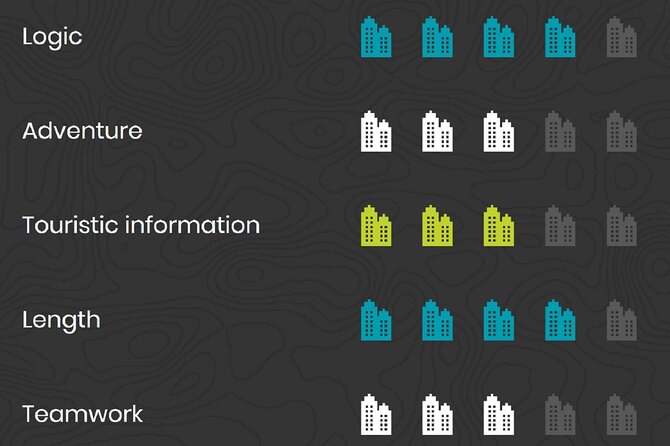
Key things to know before you play
- A no-wait street game: no appointment needed, and you can play at any point during the listed daily hours.
- Works in a team of 2 to 6: ideal for families, friends, or groups that like solving problems together.
- Smartphone, internet, and a pen are essential: plan for around 100 MB of mobile data.
- The app drives the route: correct answers unlock the location of the next station.
- Built-in city context: between stations, the app provides tourist information for the previous stop.
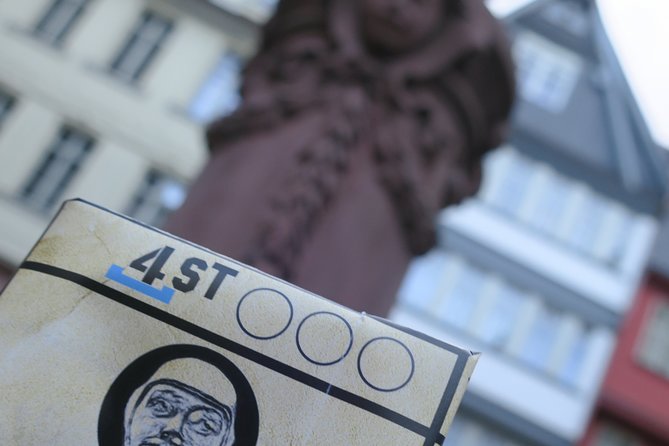
- You print your own game card: the front side is what you need for gameplay, and extra back-side text may be language-specific.
More routes you can walk on your own
- Frankfurt Self-Guided Historical Walking Tour★ 4.0 · 58 reviews
- Frankfurt: Struwwelpeter Museum Entry Ticket w/Audio Guide★ 4.5 · 22 reviews
Price and Logistics for a team of up to 6
The cost is $47.81 per group for up to 6 people. That is the big value story here. If you roll with 2 people, it lands at about $23.90 per person. If you fill all 6 spots, it is about $8 per person. Either way, you are paying for the game engine and the digital documents, not for a live guide.
The time box is also friendly. Expect about 2 hours 30 minutes. In a city center like Frankfurt, that is enough time to bounce between historic landmarks without feeling like you need to plan an entire day around it.
Your practical setup matters more than you might expect:
- You need a smartphone or tablet that stays charged.
- You need mobile internet, roughly 100 MB.
- You need a pen.
- You need the printed card (you print it yourself).
No guide meets you. There is also no formal briefing built in. The good news is the game is designed so you can start on your own as soon as the ticket is activated, and the first task can be solved right away from the card.
What the game feels like in the real world
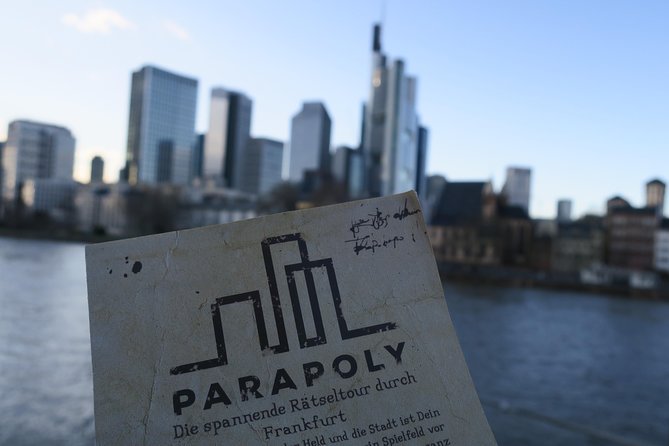
Think of this as a “move, notice, answer” format. You are not just walking around looking at sights. You are hunting for clues the way a small team investigates a place.
Here is how the flow works:
- Activate your ticket.
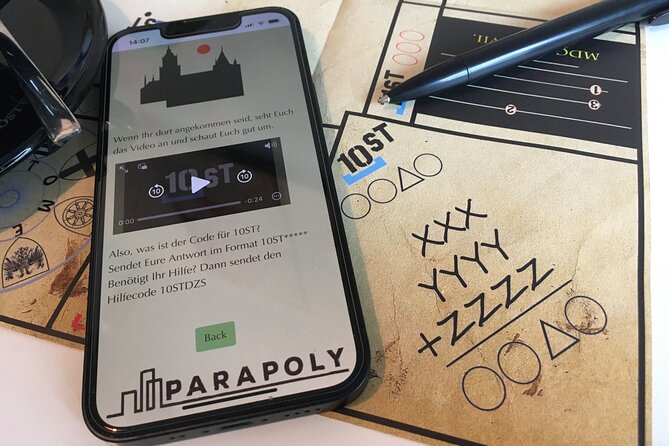
- Solve the first task directly on the printed card. It does not matter when or where you start, because the task is solvable from the card itself.
- Enter the answer into a web application (the access data is available after activation).
- If your answer is correct, the app reveals where Stop 1 is located.
- At each station, you solve a task using what you can see on site, plus hints from the printed card and the app.
- After each station, the app gives you a hint for the next station. Between stops, it also shows tourist information about the previous one.
That last part is underrated. A lot of self-guided games dump you into the streets with no context. This one at least hands you small pieces of sight-related info as you move along, so the walk does not feel like a scavenger hunt with no payoff.
Your starting point: An der Hauptwache to launch the route
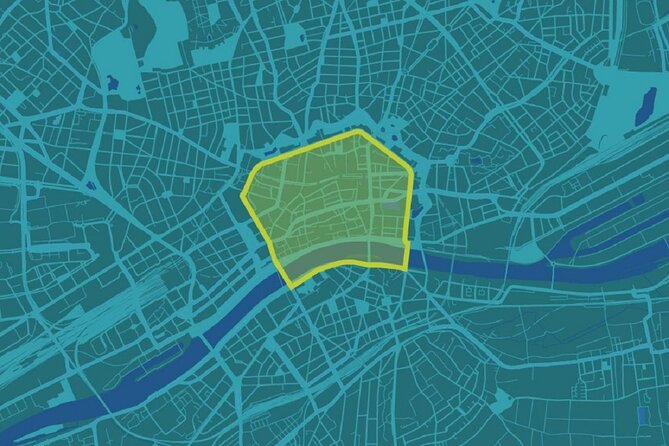
The meeting point is An der Hauptwache, and the activity ends back there. That makes logistics easier. You do not need to worry about getting yourself to a distant pickup point or figuring out how to end a loop.
Also, since the first card task can be done immediately, you can think of activation as your off switch and station finding as your on switch. Your smartphone becomes the control center, and your legs become the navigation system.
And yes, since it is a street game, you should plan on walking. The experience notes a moderate physical fitness level. That likely means you are moving between central stops at a comfortable pace, not climbing mountains or doing long off-road walks.
Stop 1: Neue Altstadt, the game’s first real test
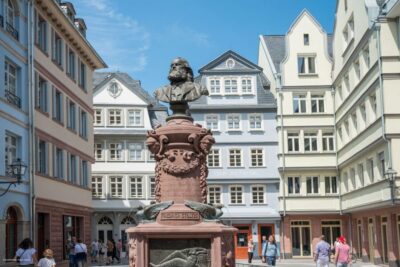
Neue Altstadt is your early move. By the time you reach Stop 1, you have already solved the card-based question and used the web app to get here. That means you get a quick taste of how the game expects you to think.
What you’ll actually do at Neue Altstadt:
- You stand at the location shown by the app.
- You read the station task on the card.
- You use what you see on site to craft the answer.
- You lean on the hints inside the app and the card.
Why this stop works well early: it forces your team to coordinate. One person reads the card carefully. Another watches the surroundings and compares details. A third person tries to interpret the hint logic so you do not all chase the same idea.
Possible drawback: early tasks can feel like a puzzle where the answer is not obvious at first glance. If your group wants straightforward sightseeing with no mental effort, this could feel like the opposite of relaxing. If you and your team like solving, though, Neue Altstadt is the moment the game clicks.


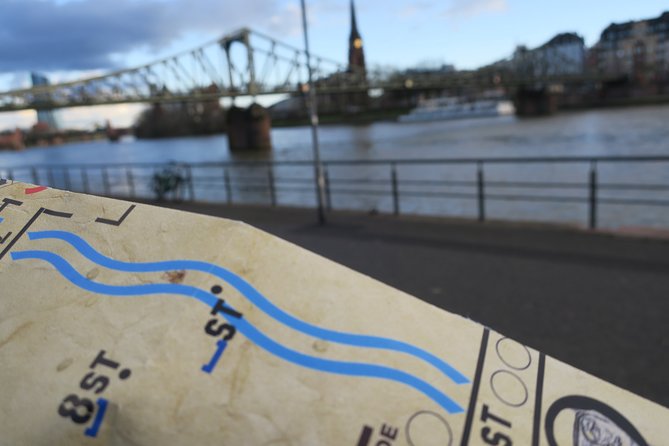
Stop 2: Iron Bridge, where hints start to matter
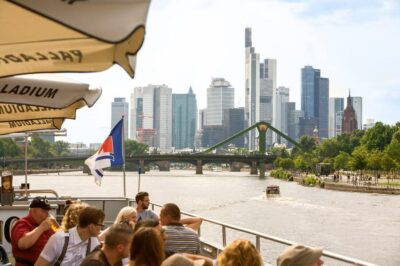
Stop 2 is the Iron Bridge area. Bridges are great for game design because they create natural sight lines and landmarks people can recognize quickly. Even if you are not using your sightseeing memory from past visits, the setting is visually clear.
How the experience works here:
- The app gives you a hint for the next station after you complete the previous one.
- At the Iron Bridge, you solve the next task using what you can see and the support text in the printed card and app.
This is also a good checkpoint for your team. If you are stuck at earlier steps, Stop 2 is often where you can reset and use teamwork better. Split roles. Re-read the clue. Confirm what you are looking at before you commit to an answer.
A practical tip from how these games tend to function: if you keep guessing, you burn time. It is faster to slow down and compare the card clue to the visible details right in front of you.
Stop 3: St. Paul’s Church (Paulskirche), solving with context
Stop 3 is St. Paul’s Church, or Paulskirche. This kind of landmark often gives you solid visual anchors for answering tasks. It also tends to make the game feel more meaningful because you are not just passing through random streets.
What to expect at Paulskirche:
- The app points you to the location.
- You solve the station task by combining on-site viewing with hints.
- After you finish, you receive another hint that helps you find the next station.
This stop is where I’d look for the “city info payoff” feature. Between stations, the app provides tourist information about the previous stop. So by the time you are at Stop 3, you have likely gotten a little context refresh in the rhythm of the game.
Possible drawback: if your team expects full explanations, a game like this can feel a bit opaque. In one reported case, the explanation for how an answer was reached required follow-up. The designed path is hints plus your own observation, so if you hate puzzles, you might find that frustrating.
Stop 4: Cathedral of St. Bartholomew (Dom St. Bartholomaus)
Stop 4 is Dom St. Bartholomaus, the cathedral. This is the “big landmark” stop in your sequence, and that matters because it changes how you perceive the game.
At cathedral-level stops, you may be tempted to speed through just to reach the next phase. Don’t. Pause long enough to read the clue carefully and then look for what the task is really asking. Many street-game tasks reward observation, not just general landmark recognition.
How this stage usually plays:
- Your smartphone app keeps you in the loop.
- The printed card and the on-site view do the heavy lifting.
- You solve and then unlock the next station via the app.
If your group starts to feel tense, this is a good moment to reset your team approach. Choose a single person to enter the answer once everyone agrees. That avoids the chaos of competing inputs.
Stop 5: Romer, finishing with a sense of completion
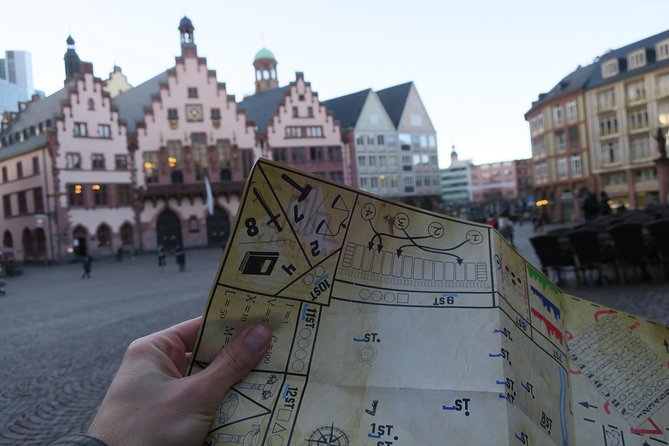
Stop 5 is Römer, the final station in the itinerary. Finishing strong helps this kind of game. You can feel the teamwork payoff when you solve the last station tasks and then roll back to where you started.
What makes the final leg satisfying:
- You have practiced the game rhythm by now.
- You know the app will guide the next steps.
- The tourist-info between stops gives you a running context thread.
You also get a subtle benefit here. By clustering stops in central Frankfurt, the game format naturally turns into a mini loop through the historic core. When it ends back at An der Hauptwache, you are well placed to continue on your own, whether that means grabbing a coffee or walking to another nearby sight.
The one logistical hiccup to plan for: printing your materials
You print your own game document or card, plus you need the printed card in play. That is not complicated, but it is the most common real-world friction point in self-guided games.
One issue that can happen is paper size. In a reported case, the map printed only on A4 rather than letter size, forcing the group to get a map elsewhere, and that version was only in German. Another important detail from the same situation: for gameplay, you only need the front side of the map. The back side may include German purchase and activation information, and extra tour info, while the app experience is available in English.
So here’s my practical advice before you go:
- Test print if you can, at least once.
- If your printout looks weird, check you are using the correct paper setting.
- Focus on the game-relevant side, since the app handles most of the language-dependent clues.
This is not the kind of activity where you want to discover printer problems on the sidewalk.
Is it worth $47.81 per group? My value take
For a self-guided, app-assisted city game, $47.81 per group is a reasonable price if you treat it like an activity, not a shortcut.
Here is why it can be good value:
- You get a structured route through central sights.
- You are not paying for a guide, so the cost stays group-based.
- The time is compact, around 2.5 hours, which helps you fit it into a travel schedule.
- If you have 4 to 6 people, the per-person cost becomes quite low.
But value depends on your group personality:
- If you enjoy teamwork, puzzles, and exploring while solving, you will probably feel like you got your money’s worth.
- If you want passive sightseeing, you might find it slower than a standard walk.
I also think the app route logic is a value element. The game keeps you from feeling lost. It also gives tourist information between stations so the walk stays connected to what you are seeing.
Who this Frankfurt street game suits best
This experience fits best when your group likes one or more of these:
- Problem solving as a team
- Short, structured city walks
- Family bonding without “museum mode”
- Using your phone as a guide rather than staring at a map all day
It also helps if you are comfortable with a moderate walking pace. No extreme fitness requirement is listed, but you should be ready for repeated short stretches.
It can work for all ages, but if someone in your group hates puzzles, the hints system might become a stress point. One key skill here is staying patient when the clue is not instant.
Should you book this street game in Frankfurt?
Book it if you and your group want a fun, structured way to see central Frankfurt, and you are happy to use a smartphone and solve tasks as you go. The format is compact, flexible (no appointment), and price-friendly for teams.
Skip it if your ideal day is slow strolling with minimal thinking, or if you know printing game materials will be a hassle for you. Also skip it if your group hates hint-based puzzles, because the game is built around solving from clues and what you see on site, not getting a narrated explanation at every stop.
If you are the type who likes, read, look, discuss, and try again, this is the kind of activity that makes city landmarks feel personal without needing a private guide. Just do one thing first, print your materials correctly and check your phone battery, and you will set yourself up for a smoother run through the Neue Altstadt, Iron Bridge, Paulskirche, Dom St. Bartholomaus, and Römer loop.
FAQ
How much does the Frankfurt street game cost?
It costs $47.81 per group, for groups of up to 6 people.
How long does the experience take?
Plan on about 2 hours 30 minutes.
Do I need an appointment or a fixed meeting time?
No appointment is needed. You can play without making an appointment, and it runs daily during the listed hours.
Where do we start and end?
You start at An der Hauptwache (60 Frankfurt am Main-Innenstadt I, Germany) and the activity ends back at the same meeting point.
What do I need to bring?
Bring a charged smartphone or tablet (about 100 MB mobile internet is needed), a pen, and the printed card/map for the game. You print the materials yourself.
Is there a guide with you?
No. This is a private tour/activity without a personal guide or a personal briefing.
What is included in the ticket?
You get access to the game document (which you obtain using the provided information) and access to the web application.
What is not included?
A personal guide and personal briefing are not included.
Are service animals allowed?
Yes, service animals are allowed.
When do I get confirmation?
Confirmation is received at the time of booking.
Unguided Around Frankfurt
Everything else we filed on Frankfurt
- Airport Transfer: Airport FRA to Frankfurt by Luxury Van
★ 4.0 · 11 reviews - Munich City Tour and Dachau Concentration Camp Memorial Site Day Trip from Frankfurt
★ 3.5 · 11 reviews - Frankfurt: Private Sightseeing Tour in Retro Ape Calessino
★ 5.0 · 11 reviews - Heidelberg and Baden-Baden Tour from Frankfurt
★ 3.5 · 11 reviews - Frankfurt: Private custom tour with a local guide
★ 4.6 · 12 reviews - Frankfurt: Private Skyline Sightseeing Boat Tour
★ 4.9 · 12 reviews
Self-Guided Tours, side by side.
 ★ 4.4BVB Signal Iduna Park: Stadium Access and Self-Guided TourFrom $102,332 reviews
 ★ 4.6Berlin: Solar Powered Sunset Catamaran Cruise & Audio GuideFrom $421,043 reviews
 ★ 3.7Füssen: Neuschwanstein Castle Entry Ticket and Audio GuideFrom $51524 reviews
 ★ 3.5Neuschwanstein Castle Ticket With Audio Guided TourFrom $54473 reviews
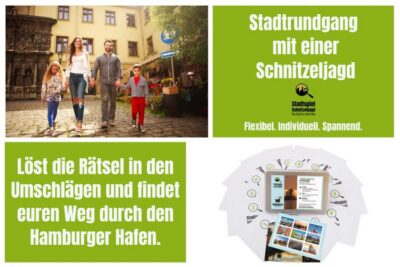 ★ 4.5Hamburg: Scavenger Hunt Self-Guided Tour for ChildrenFrom $47319 reviews
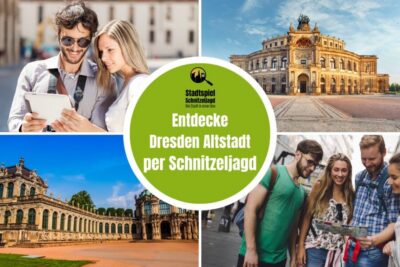 ★ 4.5Dresden: Old Town Self-Guided Scavenger Hunt TourFrom $41151 reviews
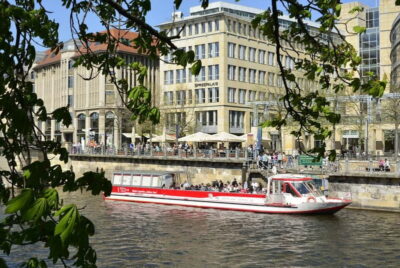 ★ 4.1Berlin: Panoramic Boat Tour with Bilingual Audio GuideFrom $22136 reviews
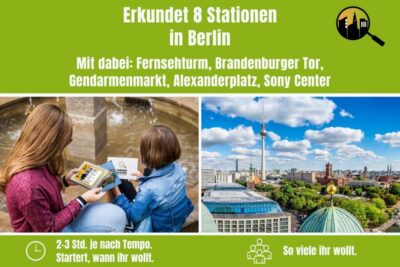 ★ 4.6Berlin: Self-Guided Family and School Class Scavenger HuntFrom $47128 reviews