
REVIEW · WESTPHALIA
Aachen classic walking tour
Thermal fumes and imperial power, on foot. This Aachen classic walking tour uses quick stops and smart storytelling to connect Roman Aquae Granni to Charlemagne’s world. I love the way Sara, a certified native Italian-speaking guide, keeps the pace friendly and the facts clear. I also love how the route builds a timeline you can actually picture, from the Elisenbrunnen springs to the UNESCO Palatine Chapel. The main thing to keep in mind is that it is a walking tour of monuments from the outside, so interior views and in-depth inside explanations are limited.
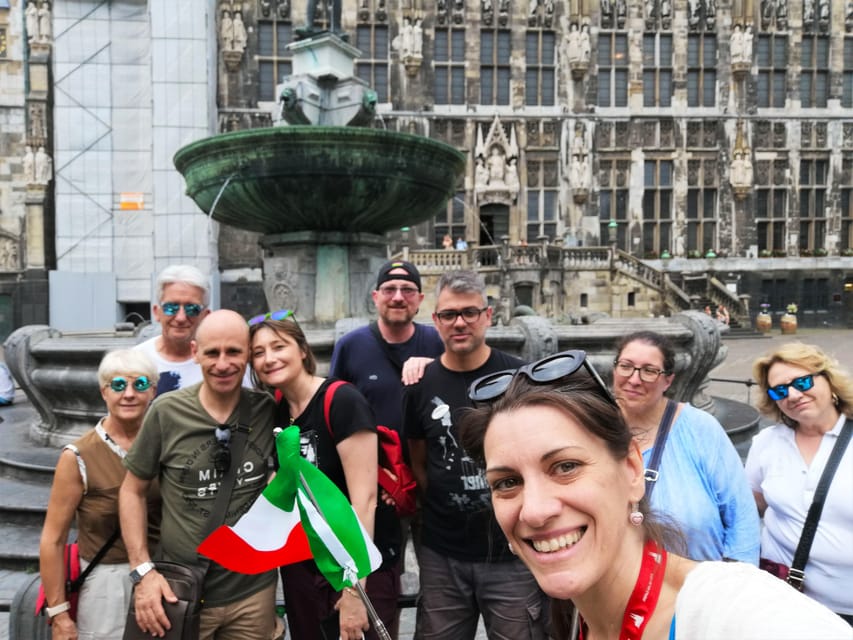
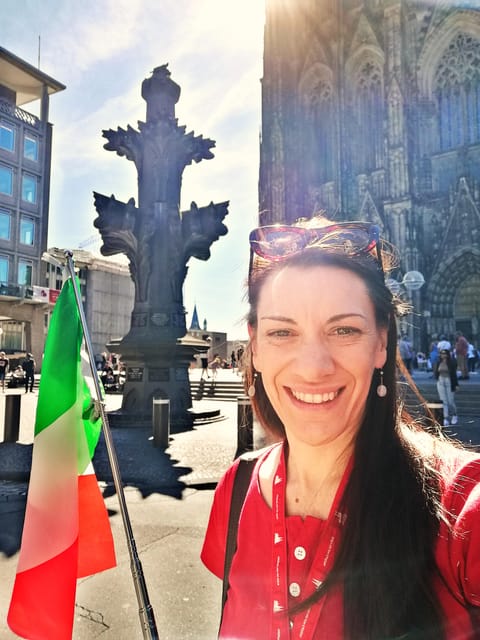
You meet in front of the tourist board, and the guide carries an Italian flag so you can spot her fast. In 1.5 hours, you’ll see a lot of Aachen’s big-name landmarks without getting stuck in a long day plan, as long as you wear comfortable shoes and accept that this is an exterior “story walk,” not a museum marathon.
In This Review
- Key Points You’ll Care About
- A 90-Minute Aachen Walk Led by Sara in Italian
- Elisenbrunnen Opens the Tour With Thermal Drama
- Aquae Granni Roman Baths: Where the Story Really Starts
- Coin Fountain, Puppet Fountain, and the Fun Stops in Between
- Am Hof and Couven Museum: Old Corners With Real Context
- Granus Tower and City Landmarks That Anchor the Route
- Aachen Town Hall and Market Square: Where Power Became Visible
- Palatine Courtyard, Treasury Chamber, and Aachen Cathedral Exteriors
- Price and Value: Is $29 Fair for 1.5 Hours?
- Who This Tour Fits Best
- Should You Book This Aachen Classic Walking Tour?
- FAQ
- How long is the Aachen classic walking tour?
- How much does the tour cost?
- What language is the guide?
- Where do I meet the guide?
- Is the tour a walking tour?
- Are monuments included from inside or only from outside?
- What major sights will we see?
- Is there free cancellation?
- Is reserve and pay later available?
- Who provides the tour?
Key Points You’ll Care About
- Italian-only, certified guide: Sara leads the tour live in Italian, with an approachable style.
- A clear Aachen timeline: Roman baths to Charlemagne to the Holy Roman Empire story, told step by step.
- Elisenbrunnen as the dramatic opener: thermal vapors set the tone from the first stop.
- UNESCO and UNESCO-adjacent highlights: the Palatine Chapel and Aachen Cathedral complex are central.
- Lots of quick photo-worthy landmarks: fountains, towers, and old-town corners break up the walk.
- Outside viewing focus: it’s designed around monuments from the outside, so set expectations accordingly.
More Westphalian towns to compare
- Aachen: 24-Hour Hop-On Hop-Off Sightseeing Bus Ticket★ 4.0 · 208 reviews
- Aachen: Private Walking Tour With A Professional Guide★ 4.8 · 22 reviews
- Aachen classic walking tour★ 4.8 · 7 reviews
- Aachen: Express Walk with a Local in 60 minutes★ 4.6 · 6 reviews
A 90-Minute Aachen Walk Led by Sara in Italian
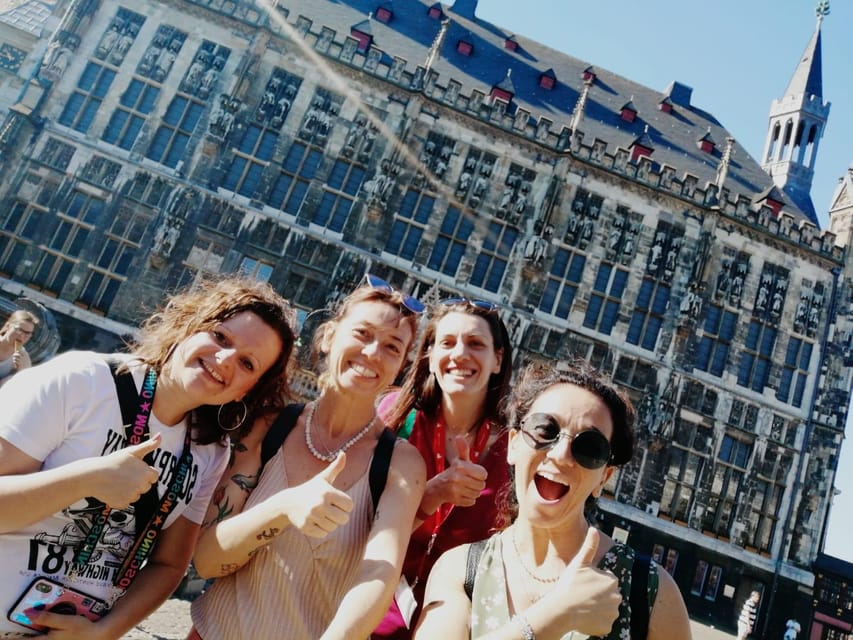
If you want Aachen without the stress, this tour hits the sweet spot. It is short, focused, and structured like a guided walk-through of the city’s turning points: where the Romans bathed, where Charlemagne ruled, and where later emperors mattered.
Sara’s strength is how she tells the story in plain, human terms. The tour is in Italian, and she uses historical images and exciting stories to help you “see” earlier eras as you stand in the modern street scene. Even if you know only a little about Charlemagne, you’ll likely come away with a much clearer mental map of why Aachen drew power and visitors for centuries.
Elisenbrunnen Opens the Tour With Thermal Drama
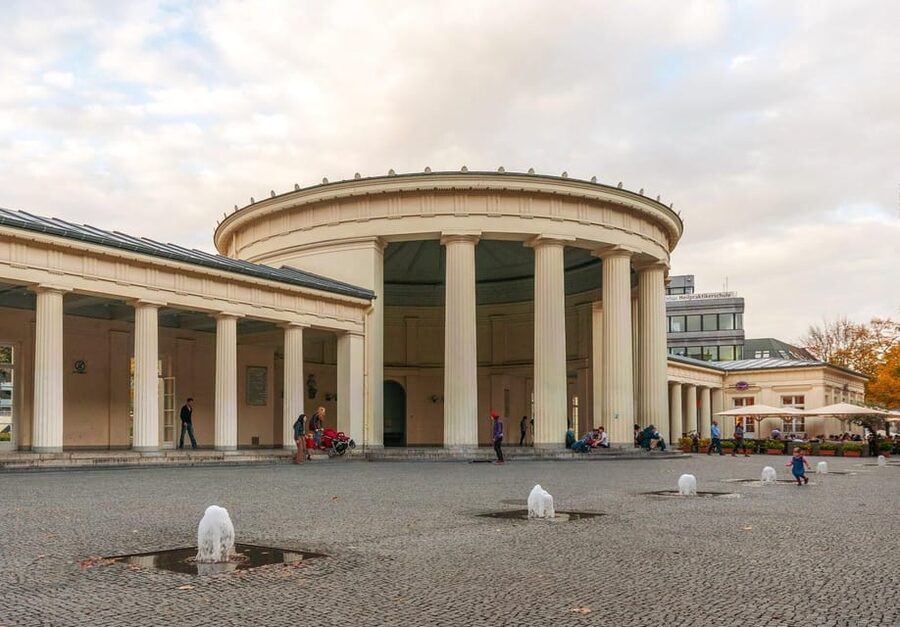
You start at the Elisa Fountain, also called the Elisenbrunnen. It sits right at the entrance to the old town, and it does its job immediately, with sulphurous vapours that remind you why this place became a thermal magnet.
This is more than a pretty fountain. The tour frames it as a gateway to Aachen’s identity as a spa city. You’ll also hear that the hottest thermal waters in north-central Europe flow here, which explains why the nobility came to Bad Aachen in the 18th century.
If you like the feeling of a tour that starts with atmosphere instead of a lecture, this is a strong opening. Just remember, vapours mean it can be a strong smell at close range, so step back for a second if you are sensitive.
Aquae Granni Roman Baths: Where the Story Really Starts
From the spa scene, the guide turns your attention to the ancient Roman baths of Aquae Granni. Aachen’s story did not begin with Charlemagne. It started with a practical Roman idea, soak in thermal waters, then build a settlement around the people who want to do the same.
This is where the tour’s “historical images” approach really helps. You are not just looking at a wall or a corner. You are learning to connect what you see now to what used to be there, and why Roman baths mattered as an early anchor point for the city.
The big value here is perspective. When you later reach Carolingian power sites, you’ll understand the pattern: Aachen’s thermal appeal and strategic location kept bringing attention back to the same area, generation after generation.
Coin Fountain, Puppet Fountain, and the Fun Stops in Between
A classic walking tour earns its keep with more than major monuments. Between the big-ticket sites, you’ll pass smaller landmarks that keep you oriented and give you natural breaks.
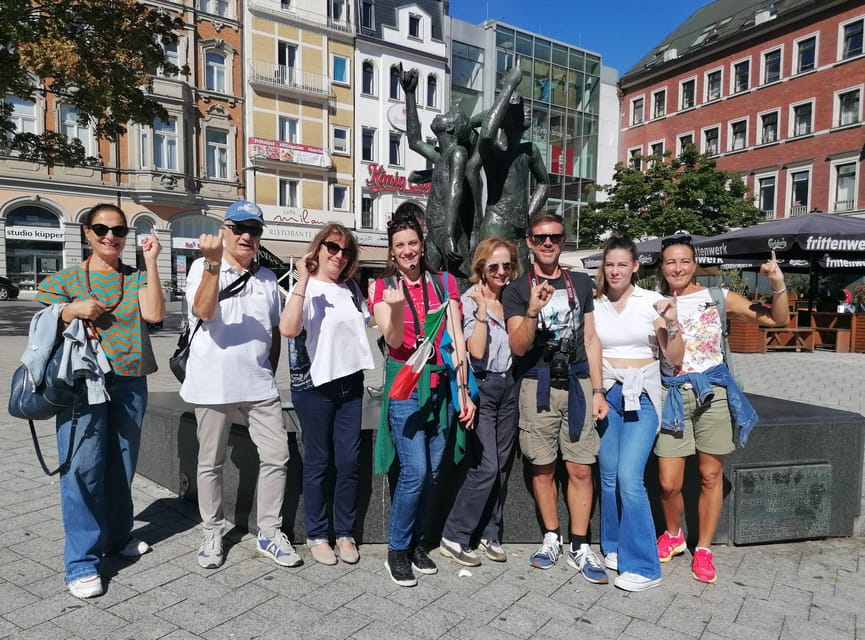
That is where stops like the Coin Fountain and the Puppet Fountain come in. They are the kind of sights you can quickly photograph, but your guide also uses them as stepping stones in the narrative of the city. Think of them as punctuation marks that help you keep following the timeline without burning out.
You also include a stop at Nobis Printen. Even if you do not plan to buy anything, it is a good reminder that a place’s identity is not only cathedrals and emperors. It is also food culture and local tradition. Treat this stop as a chance to get one small flavor of modern Aachen before the tour moves deeper into its medieval center.
Am Hof and Couven Museum: Old Corners With Real Context
From the fountains, you move into the old-town fabric around Am Hof and the Couven Museum. These stops matter because they sit in the “in-between” zone that many quick walks skip. The guide helps you connect street-level Aachen with the larger political story you’ll hear later.
Am Hof gives you a feel for how people have used these spaces over time. Couven Museum adds a different layer, helping you see that Aachen’s past still shows up in how the city preserves and presents its identity.
Practical tip: this part of the walk can feel like a steady procession of names and buildings. If you want the story to stick, pay attention to the guide’s transitions. When she explains why you are moving from one era to another, it turns the route from a list into a timeline you can remember.
Granus Tower and City Landmarks That Anchor the Route
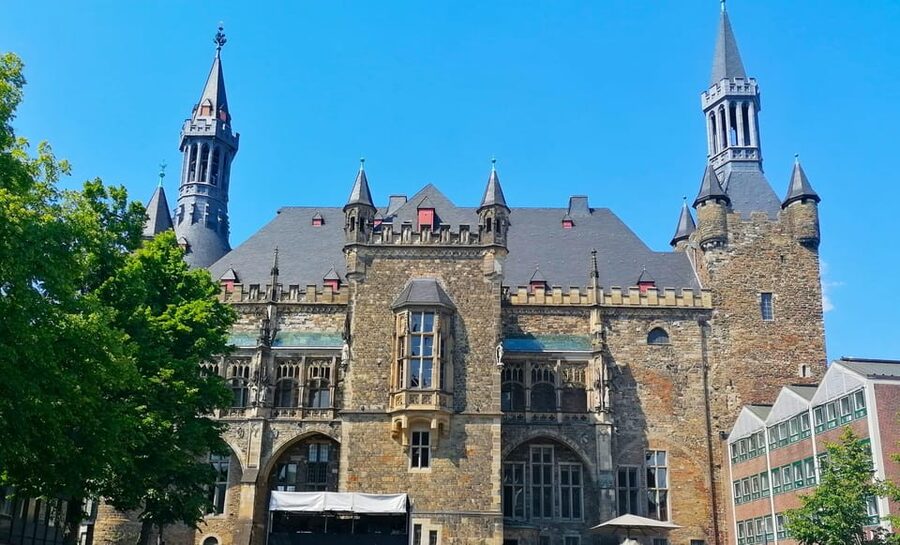
Then you hit Granus Tower. Towers are useful for tours like this because they act like visual anchors. Even if you forget every detail, you’ll remember that tower as a reference point, and that helps you mentally “reset” after each major stop.
This is also a good moment to check your footing. Your tour is a walking route through historic streets, and the city center can include uneven surfaces. Comfortable shoes make a big difference over 1.5 hours, especially if the pace is brisk.
Aachen Town Hall and Market Square: Where Power Became Visible
Next comes the historic City Hall, known as the Rathaus. The tour explains something important here: in the 8th to 9th centuries, this location served as a palatine hall. Later, Aachen’s Town Hall was built on the foundations of that earlier structure.
That detail changes the way you look at the building. You are not only seeing a civic landmark. You are standing where authority already existed, then evolved. It is a reminder that power often grows out of continuity, not reinvention.
From there, you also visit the Market Square. In towns like Aachen, markets are where history becomes daily life. You get the sense of how a place with imperial connections still needed the practical rhythm of commerce and people moving through the same spaces for generations.
Charles Fountain appears later as another landmark tied into the theme of public identity. It is the kind of stop that makes your route feel like real city life, not a straight line between museums.
Palatine Courtyard, Treasury Chamber, and Aachen Cathedral Exteriors
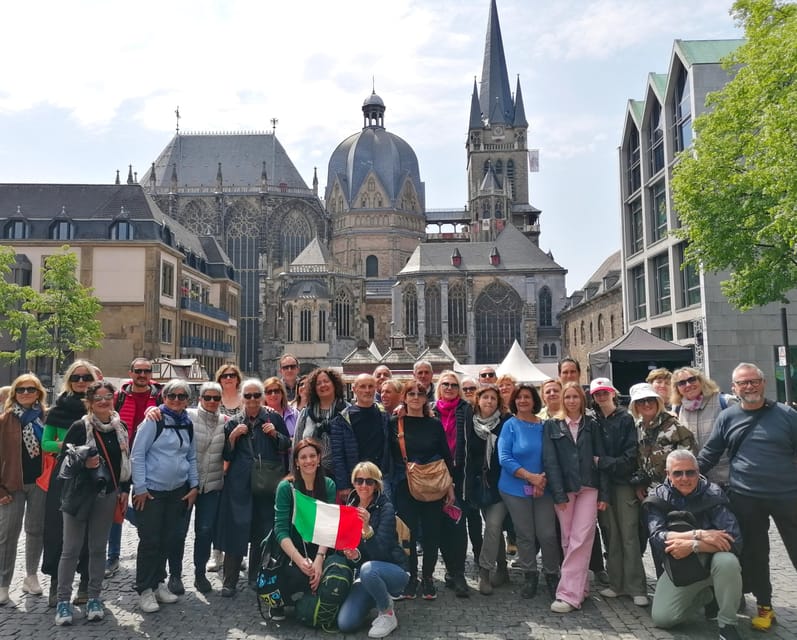
Now you move into the core of Charlemagne’s legacy. The tour guides you toward the Palatine Courtyard and then the Treasury Chamber, and finally to the Palatine Chapel and Aachen Cathedral complex.
Here is what makes these stops special, and why the outside viewing format can still work. Your guide frames the Palatine Chapel and Aachen Cathedral as an architectural masterpiece and the first UNESCO World Heritage Site in Germany. More than that, it is the final resting place of Charlemagne, and the site houses amazing treasures and artworks.
Even if you are only seeing exteriors, you can still understand why this place mattered. It was where the message of rulership became stone and ceremony. When the guide connects the Holy Roman Empire angle, you also learn that Aachen was tied to coronations of emperors for thousands of years, and that long continuity helps explain the city’s pull.
One caution: because the tour is monuments from the outside, you should not expect to wander through interior spaces at every stop. If you are the type who wants inside explanations of every room, you may feel like the tour is just brushing the surface at the biggest monuments.
Price and Value: Is $29 Fair for 1.5 Hours?
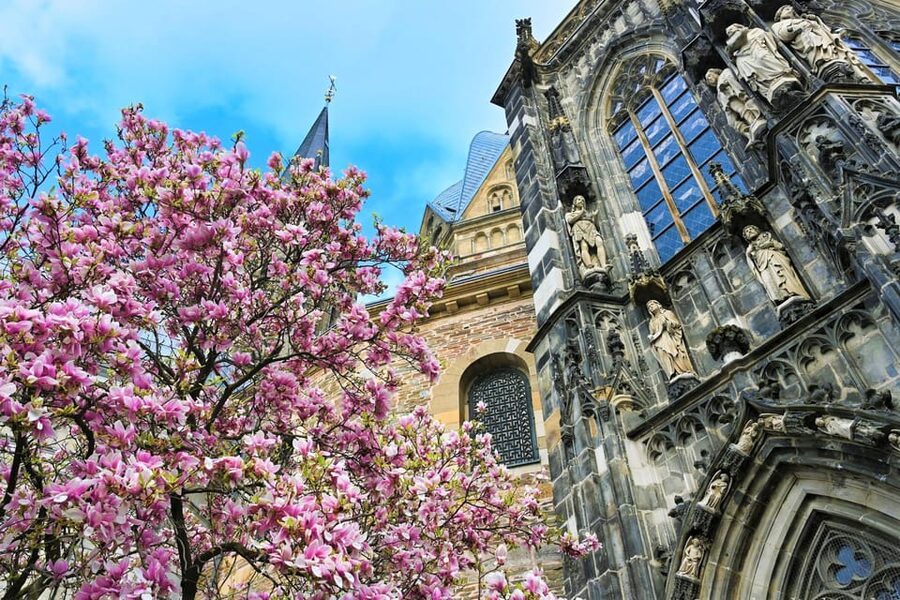
At $29 per person for a 1.5-hour guided walk, the value comes from concentration. You get a guided route that touches major themes and landmarks, including Roman Aquae Granni, Elisenbrunnen thermal symbolism, and UNESCO-level Charlemagne sites.
You also get something harder to price: a certified guide who can make the city’s timeline feel connected rather than random. Sara’s storytelling style seems to be the real driver behind the high satisfaction, with people appreciating her passion and her ability to keep the tour interesting rather than turning it into a monotone history lecture.
Is it expensive? Not really, especially for a tour that packs in big names. Is it a bargain? It is competitive for what you see in 90 minutes. What you have to accept is the outside-focused format, which means it is best for people who want orientation and narrative, not for people hunting for maximum interior access.
Who This Tour Fits Best
This is a smart pick if you want:
- A compact way to learn Aachen’s key story points without a full-day plan
- A guide who speaks native Italian and tells the story with energy
- A route that mixes grand landmarks with smaller street-level sights like fountains and local corners
It might not be your best match if:
- You do not speak Italian, since the tour runs in Italian
- You expect extensive inside access and detailed interior walkthroughs at every major monument
Should You Book This Aachen Classic Walking Tour?
Book it if you want an efficient first taste of Aachen that connects the city’s thermal beginnings to its imperial peak. I think it’s especially worth it when you value story structure, historical images, and a guide like Sara who keeps the tone lively and approachable.
Skip it or pair it with other plans if you are determined to spend lots of time inside the major sites, because this is designed for monuments from the outside. Also, if Italian is a stretch for you, this tour will feel much less rewarding.
If your goal is getting your bearings fast, then learning why Aachen mattered, this is a strong, good-value way to do it.
FAQ
How long is the Aachen classic walking tour?
It lasts 1.5 hours.
How much does the tour cost?
The price is $29 per person.
What language is the guide?
The live tour guide speaks Italian.
Where do I meet the guide?
Meet in front of the tourist board. The guide will have the Italian flag.
Is the tour a walking tour?
Yes, it is a walking guided tour.
Are monuments included from inside or only from outside?
It is a walking guided tour of monuments from the outside.
What major sights will we see?
You’ll see the Roman baths of Aquae Granni, Elisenbrunnen, Aachen Cathedral and the Palatine Chapel, the Rathaus (Town Hall), Market Square, and other listed landmarks along the route including Charles Fountain and the Treasury Chamber.
Is there free cancellation?
Yes, you can cancel up to 24 hours in advance for a full refund.
Is reserve and pay later available?
Yes, you can reserve now and pay later.
Who provides the tour?
The provider lists Guida di Colonia Sara, with a certified native Italian-speaking guide.
Pavements of Aachen
Aachen, Munster and Westphalia
Everything else we filed on Aachen
- Aachen: Express Walk with a Local in 60 minutes
★ 4.6 · 6 reviews - Aachen: Private Walking Tour With A Professional Guide
★ 4.8 · 22 reviews - Explore Aachen with Passionate Tour Guides
★ 4.7 · 71 reviews - Aachen: 24-Hour Hop-On Hop-Off Sightseeing Bus Ticket
★ 4.0 · 208 reviews
Aachen Munster and Westphalia Tours, side by side.
 ★ 4.7Münster: Old Town Highlights Guided TourFrom $16286 reviews
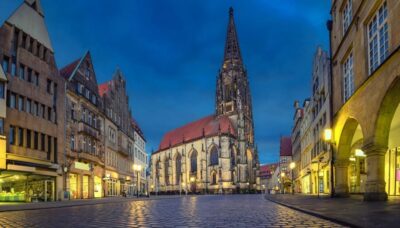 ★ 4.4Münster: Nachtwächter-Führung (Erlebnistour)From $19213 reviews
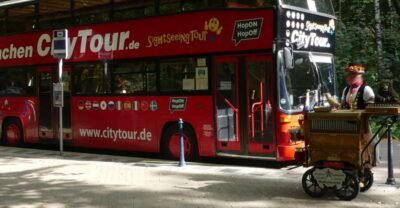 ★ 4.0Aachen: 24-Hour Hop-On Hop-Off Sightseeing Bus TicketFrom $28208 reviews
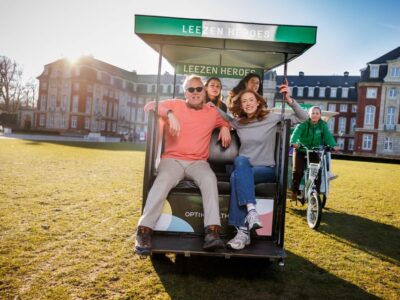 ★ 4.8Münster: Private Guided Rickshaw City TourFrom $33143 reviews
 ★ 4.7Explore Aachen with Passionate Tour GuidesFrom $371 reviews
 ★ 4.8Münster: Night watchman tour through the picturesque old town by lantern lightFrom $2165 reviews
 ★ 4.6Paderborn: Nachtwächter-Führung (Erlebnistour)From $1961 reviews
 ★ 4.7Münster: Beer Tasting Rickshaw TourFrom $7056 reviews
Other lists this tour is on