

REVIEW · POTSDAM
City Sightseeing Potsdam Hop-On Hop-Off Bus Tour
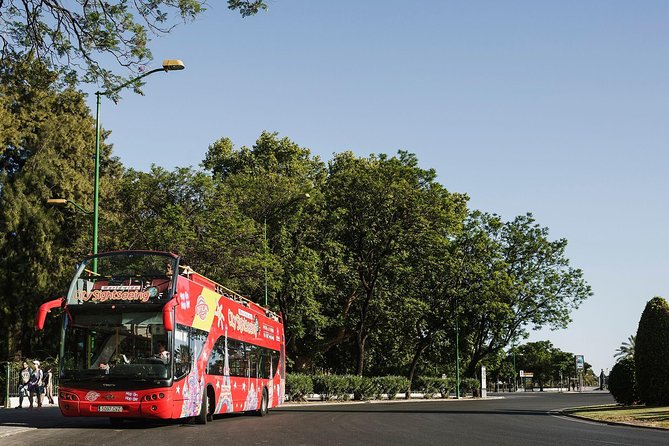
Potsdam from the top deck is surprisingly satisfying. This City Sightseeing hop-on hop-off loop gives you easy access to UNESCO palaces like Sanssouci and Cecilienhof, and the one-day ticket means you can hop off when something catches your eye and get back on later. One possible drawback to plan for: the ride can feel slow and bumpy at times, and the English experience depends on what commentary format is running that day.
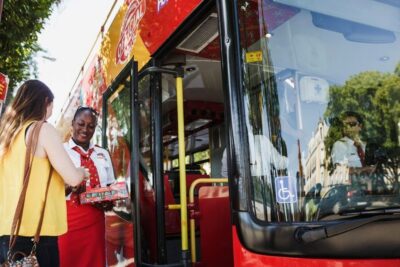
The route is built for people who want a fast, street-level overview of Potsdam without locking themselves into a tight guided walk. You get an open-top, double-decker bus with panoramic views, plus on-board commentary through free headphones, and you can time your palace visits around what you care about most.
One more practical thing: the bus doesn’t always match the ideal cadence you might expect, so building in a little waiting time is smart. Also, the starting stop can be a bit hard to spot if you arrive late, so I’d show up early and watch for the red buses.
In This Review
- Key things to know before you ride
- Why this Potsdam hop-on hop-off loop makes sense
- Price, duration, and value for a one-day pass
- The route in plain English, from Luisenplatz to Sanssouci Park
- Luisenplatz, then the quick city orientation
- Filmmuseum Potsdam and the Dutch Quarter
- Glienicke Bridge and view-time
- Marmorpalais, Cecilienhof, and the Potsdam Conference
- Museum Alexandrowka, Neues Palais, and Orangerie area
- Park Sanssouci as your payoff zone
- Sanssouci, New Palace, Charlottenhof, and Orangerie: what the bus won’t tell you
- Cecilienhof Palace and the Potsdam Conference story
- Open-top ride reality: views, bumpy roads, and traffic slowdowns
- Commentary in English: great when it matches, frustrating when it does not
- Practical pacing tips so you do not miss your best time
- Who this tour fits best, and who might want another plan
- The quick decision: should you book this bus tour?
- FAQ
- How long is the Potsdam hop-on hop-off bus tour?
- What is included with the ticket?
- Is hotel pickup or drop-off included?
- What languages are available?
- How often do the buses run?
- What are the operating hours?
Key things to know before you ride
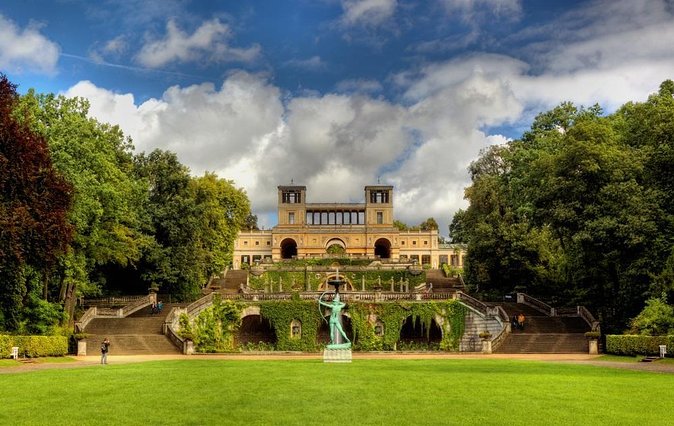
- Unlimited hop-on hop-off for 1 day: use it from your first ride that day, and ride as many times as the buses run.
- Open-top double-decker panoramas: great for photos at stops like Dutch Quarter and Glienicke Bridge.
- UNESCO hits on the route: Sanssouci Park, the New Palace area, and Cecilienhof are all part of the story.
- Headphones + on-board commentary: included, with options in English and live components depending on the language setup.
- Expect cobblestones and traffic: the bus may feel bumpy, and city slowdowns can affect timing.
Other Potsdam days worth the S-Bahn
- Potsdam: City and Castles Tour★ 4.7 · 3,721 reviews
- Potsdam: Palace Tour by Boat★ 4.5 · 2,369 reviews
- Potsdam: Sanssouci Palace and Prussian Palaces Entry Ticket★ 4.5 · 2,101 reviews
- Potsdam by Boat: Island Cruise★ 4.6 · 1,308 reviews
Why this Potsdam hop-on hop-off loop makes sense
Potsdam is the kind of city where the highlights spread out, but not in a scary way. You could rent a bike or do it by taxi, sure, but the bus gives you a low-effort way to connect the dots between palaces, quarters, and view points.
What I like most is that the hop-on format gives your day breathing room. You are not forced to stay on the bus through every stop. If you want a quick photo at Glienicke Bridge, you can do that and move on. If you want more time near Sanssouci Park, you can stay there and ride again later when you are ready.
It also works well if you are coming from Berlin. Potsdam is a common add-on to a Berlin trip, and this tour is a clean way to get oriented fast. Think of it like a guided map you can ride, rather than a lecture you must endure from start to finish.
Price, duration, and value for a one-day pass

At $24.06 per person, the value is strongest when you actually use the hop-on part. The included audio setup (plus free headphones) matters, because you are not paying extra for information at every stop. And the ticket is valid for one day from the time you first use it, so you can adapt your pacing instead of rushing to fit everything into a short window.
The ride time listed is about 105 minutes, but that does not mean your day is only 105 minutes. The bus loop is how you travel between sights. Your real flexibility comes from hopping off and spending that time on the palaces and neighborhoods you care about most.
Is it a bargain? If your main goal is to hit the big-name Potsdam highlights like Sanssouci, New Palace, and Cecilienhof without planning a complicated route, the price feels fair. If you already know you only want one or two palace areas and you do not want to wait for buses, you might be happier going direct by train, bike, or local transit.
The route in plain English, from Luisenplatz to Sanssouci Park
This tour takes you through a classic Potsdam cross-section, mixing historic zones, scenic viewpoints, and palace ensembles. Even when you only get off for short looks, the bus ride itself helps you place everything in your head.
Luisenplatz, then the quick city orientation
You start at Luisenplatz, a central starting point for getting your bearings. From here you are positioned to understand Potsdam’s layout. Expect some waiting at the first stop, and plan for it rather than treating it like a quick curbside pickup.
From there, you head toward S Potsdam Hauptbahnhof/Nord ILB, which is useful if you are arriving from the station or want an easy reference point for local connections.
The wider Potsdam sightseeing pile
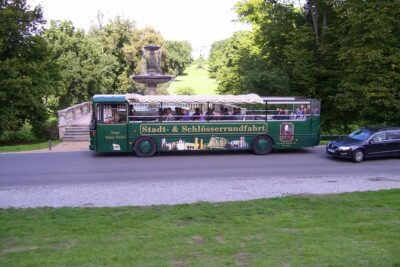
Filmmuseum Potsdam and the Dutch Quarter
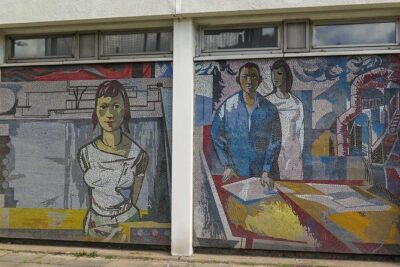
Next comes Filmmuseum Potsdam. Even if you do not enter, it gives you a glimpse of Potsdam beyond the palaces, a reminder that the city has modern culture mixed in with the royal-era sites.
Then you move to the Dutch Quarter. This is where the bus experience shines for photos and quick walking breaks. It is a neighborhood feel, not just a single monument. If you like architecture and streetscapes, you will get more from a short hop here than you might expect.
Glienicke Bridge and view-time
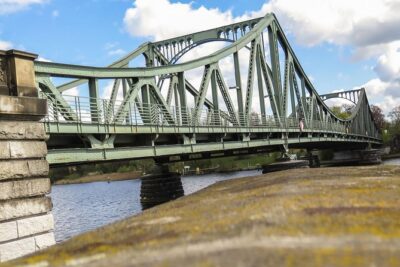
You continue to Glienicke Bridge, a major viewpoint stop. It is the kind of place where the bus plus a couple minutes on foot can make your trip feel bigger, because you are not just looking at buildings, you are seeing geography and connections.
Marmorpalais, Cecilienhof, and the Potsdam Conference
After the bridge, the route heads to Marmorpalais, then to Cecilienhof Palace. If you care about history, Cecilienhof is a standout. This is where Churchill, Truman, and Stalin discussed the partition of Germany, one of the events that shaped the post-World War II world.
Cecilienhof is also a good reality check for planning. Palaces can require more time than the bus stop allows, so if you truly want the interiors, give yourself extra room in your schedule and keep an eye on opening days.
Museum Alexandrowka, Neues Palais, and Orangerie area
You then reach Museum Alexandrowka, an area tied to the Russian colony theme of Potsdam. It is a contrast stop, and it helps you see how Potsdam was influenced by multiple cultures, not only Prussian royal life.
Next is Potsdam, Neues Palais, a major part of the Sanssouci Park palace world. This is where you start feeling the scale. If you enjoy grand ensembles, you will want more than a drive-by look.
Then you go to An der Orangerie, a stop that supports the palace-and-gardens rhythm. After that, Obeliskportal is another useful marker. Even if you do not stay long, it helps connect the dots between the park entrances and the palace areas you plan to revisit.
Park Sanssouci as your payoff zone
Finally you get to Park Sanssouci. This is the stop where you can turn your bus visit into an actual palace day. Sanssouci is the anchor, and it is also where you can work in nearby highlights such as the Charlottenhof Palace area (in the Sanssouci Park zone) and other structures you recognize as part of the UNESCO complex.
If you only have time for one get-off, make it Sanssouci Park. It is the place you can keep wandering, and you can always jump back on later if the day is running long.
Sanssouci, New Palace, Charlottenhof, and Orangerie: what the bus won’t tell you

On paper, it sounds like these are just stops. In real life, these are zones. Sanssouci Park is large, and the bus helps by dropping you close, not by transporting you into each room.
Here is how I’d approach it. Use the bus ride to identify what you actually want. Do you want palace architecture? Then spend more time near the main park access points and prioritize the New Palace area. Do you want the classic gardens-and-palaces vibe? Then treat Park Sanssouci as your base and walk between viewpoints.
The New Palace is described as the largest and most impressive palace ensemble in the Sanssouci area, so if that word impresses you, plan time for it. The Orangerie Palace is built in a High Renaissance style and was commissioned by King Frederick William IV, so it is a great stop for anyone who likes art history or wants a different look than the more familiar Baroque or Rococo vibes.
And Charlottenhof Palace, the small neo-classical palace in Sanssouci Park, is the kind of detail stop you might rush past if you treat everything as a quick photo.
Cecilienhof Palace and the Potsdam Conference story
Cecilienhof is where Potsdam turns from beautiful to meaningful. The tour highlights that Churchill, Truman, and Stalin wrote world history here while discussing how to partition Germany. If you have any interest in the Cold War era, this is your emotional center.
The bus stop makes it easy to reach the palace area, but the time you spend there is what determines whether you get the full payoff. If you only do a brief exterior look, you still get the location and context. If you want to feel the story, you should build extra time.
Also, the schedule for when palaces are open matters. A short bus day can cut into your palace time, so check opening days before you commit.
Open-top ride reality: views, bumpy roads, and traffic slowdowns
The tour is described as an open-top, double-decker bus with panoramic views, and that is exactly how it feels when it is running well. You see more sky, more streets, and more of the sight lines that matter in a palace city.
But Potsdam also includes cobblestone stretches, and that can mean a rough ride. One thing I’d plan for: sitting where you can tolerate bumps, and keeping your expectations flexible. If traffic is heavy, your timing can slide, and the ride can feel less efficient than the ideal timetable.
This is not a deal-breaker. It just means you should not schedule your day with zero slack. Use the bus for transport and orientation, then spend your focused time where you really care.
Commentary in English: great when it matches, frustrating when it does not
The tour includes live and audio commentary in multiple languages, and English is offered. It also includes free headphones, which is a big plus because you can actually hear what is going on without leaning toward strangers.
Still, the day-to-day experience can vary. You might hear recorded English audio that covers the highlights, while other language groups get live commentary and deeper detail. You can also run into situations where the audio feels out of sync with what you are passing, which is annoying when you are trying to match narration to a specific façade.
My practical advice: treat the commentary as useful guidance, not as the sole source of your palace knowledge. If you are the type who likes to understand a place before you walk into it, read a little about Sanssouci and Cecilienhof first. Then the bus narration becomes a helpful refresher instead of your only education.
Practical pacing tips so you do not miss your best time
A hop-on hop-off tour is only as good as the time you give it. Based on how this kind of loop tends to run, here are the choices that usually keep the day smooth.
- Start early at the first departure from the main stop (the schedule lists the first departure at 10:25 AM from the first stop). This reduces stress and gives you more options later.
- Plan one big “stay longer” zone. In this route, that zone is usually Sanssouci Park or Cecilienhof. Trying to seriously do both during short stops can be exhausting.
- Build in buffer for waits. The frequency is listed as about every 60 minutes, and real-world timing can slip when traffic is heavy.
- If you really want interiors, check palace opening days. The palaces can have limited schedules, and the bus does not magically extend those hours.
- If your English narration feels thin, use the bus ride to decide what to walk. Then prioritize your time on foot.
Who this tour fits best, and who might want another plan
This is a smart match if you want to see Potsdam’s top sights in a simple, low-planning way. It is especially good for first-timers who want to connect the UNESCO palaces, the Dutch Quarter, and the bridge viewpoint into one coherent day.
It is also a good fit if you dislike rushing. The hop-on format helps you pace yourself, and you can move between transport and walking when you want.
You might consider a different approach if you only care about one palace area and you are confident navigating by local transit or walking. In that case, bus timing and possible waits can feel like a tax on your time.
The quick decision: should you book this bus tour?
Book it if you want a convenient one-day overview that includes the big Potsdam names, and you like the freedom to hop off at Dutch Quarter, Glienicke Bridge, and especially Sanssouci Park.
Skip or rethink it if your plan depends on hitting lots of palace interiors with zero waiting. In that case, you may get more control with local transit plus a bike or a dedicated route, especially if you know exactly where you want to spend the most time.
If you do book, treat this as your orientation tool and your transport backbone. Then spend your focused time where Potsdam really lands: Sanssouci Park and Cecilienhof.
FAQ
How long is the Potsdam hop-on hop-off bus tour?
The duration is listed as about 105 minutes.
What is included with the ticket?
The ticket includes unlimited hop-on hop-off for 1 day and free headphones with on-board audio commentary.
Is hotel pickup or drop-off included?
No, hotel pickup and drop-off are not included.
What languages are available?
The tour offers commentary in multiple languages, including English. The ticket is listed as offered in English.
How often do the buses run?
The frequency is listed as every 60 minutes.
What are the operating hours?
The listed opening hours for the season shown are Monday to Sunday from 10:25 AM to 3:25 PM. The information also notes daily operation until November 1.
Seeing Potsdam in One Go
A Day in Potsdam, Compared
Everything else we filed on Potsdam
- Private Sightseeingtour im Taxi nach Potsdam und Sanssouci
★ 5.0 · 12 reviews - Warnemünde Shore Excursion: Private Sachsenhausen and Berlin Tour
★ 5.0 · 12 reviews - Private Potsdam City Tour in an authentic vintage van
★ 5.0 · 14 reviews - In the Forbidden City – Potsdam Walking Tour
★ 5.0 · 17 reviews - Potsdam: Outdoor Escape Game
★ 4.4 · 22 reviews - Private Walking Tour of Potsdam and Sanssouci
★ 5.0 · 24 reviews
Potsdam and Sanssouci Day Trips, side by side.
 ★ 4.7Potsdam: City and Castles TourFrom $293,721 reviews
 ★ 4.5Potsdam: Palace Tour by BoatFrom $272,369 reviews
 ★ 4.5Potsdam: Sanssouci Palace and Prussian Palaces Entry TicketFrom $252,101 reviews
 ★ 4.5Berlin: World Heritage Cruise to PotsdamFrom $251,435 reviews
 ★ 4.6Berlin: Sachsenhausen Concentration Camp and Potsdam TourFrom $651,334 reviews
 ★ 4.6Potsdam by Boat: Island CruiseFrom $421,308 reviews
 ★ 4.5From Berlin: Potsdam and Sanssouci Palace Tour with EntryFrom $731,094 reviews
 ★ 4.2Potsdam: City Sightseeing Hop-On Hop-Off Bus TourFrom $23864 reviews
Other lists this tour is on