
REVIEW · CITY TOURS
Cologne: City Highlights with Local Guide
Two thousand years, and you can walk it. This 2-hour Cologne highlights tour uses a simple route to show how the city became what you see today, from old town squares to the Cathedral area. I like that it is built around real street-level moments, not just a stop-and-pose checklist, and you get to hear the Cologne mindset too: cheerful, open, and used to welcoming visitors.
I also like how the story is layered. You move from Heumarkt to Fischmarkt, then through the old town streets toward Groß St. Martin and on to Alter Markt and the historic town hall, so the history keeps changing as you change locations. Expect mentions of Romans and bishops, merchants and craftsmen, plus traces of French influence, monks, and medieval power.
One possible drawback: this is a walking tour, with 2 hours to cover a lot of ground. If you want to linger in one place for a long time, you may feel a bit rushed, so wear comfortable shoes and plan to keep moving at a steady pace.
In This Review
- Key moments worth knowing before you go
- A 2-hour route through Cologne’s 2000-year timeline
- Heumarkt meeting point: where your orientation starts
- From Heumarkt to Fischmarkt: hearing history through street-level clues
- Passing Groß St. Martin: medieval Cologne in a short walk segment
- Alter Markt and the historic town hall: where civic power shows up
- Cologne Cathedral area: the reason the whole walk makes sense
- Romans, French influence, bishops, merchants, and war rebuilding, connected
- The Cologne attitude: cheerfulness, openness, and practical storytelling
- Price and value: $16 for a guided old town timeline
- Who this tour fits best, and who should rethink it
- Should you book Cologne: City Highlights with Local Guide?
- FAQ
- How long is the Cologne city highlights tour?
- How much does it cost?
- Where do I meet the guide?
- What language is the guide?
- What sights are covered?
- What should I bring?
- Is there free cancellation or a pay-later option?
Key moments worth knowing before you go
- Heumarkt start at the equestrian monument so you can orient fast and get walking
- Fischmarkt to Groß St. Martin route where the city’s different eras feel close together
- Alter Markt and the historic town hall as a snapshot of medieval civic life
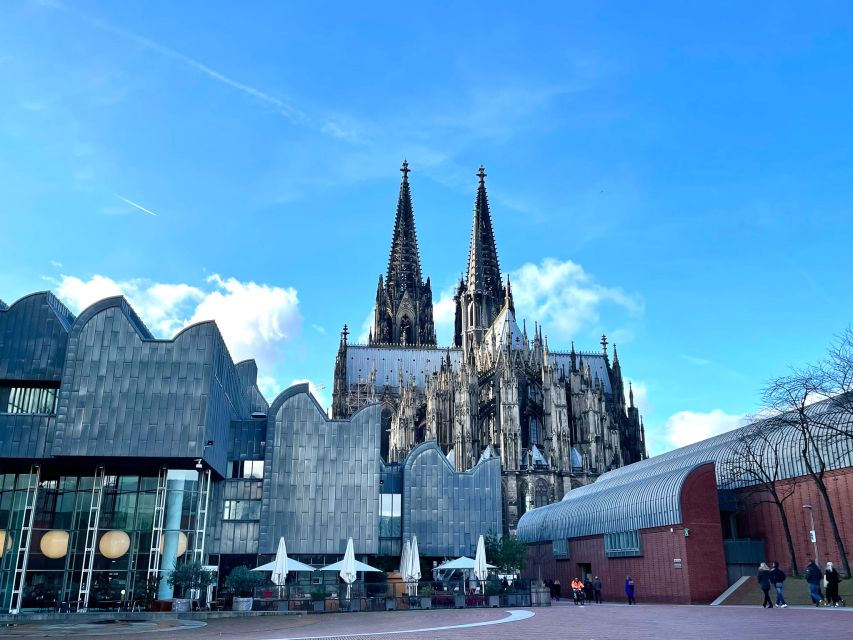
- Cologne Cathedral as the anchor point for the whole 2000-year story
- War damage and rebuilding traces that help the city’s survival feel real
- German live guidance with room for questions, with guides like Markus and Angelika noted for friendly, competent explanations
The wider Cologne sightseeing pile
- Cologne City Tour Experience cathedral city on the Rhine★ 5.0 · 852 reviews
- Cologne: City Highlights with Local Guide★ 4.8 · 237 reviews
- Cologne: The Dark Side of the City Walking Tour★ 4.8 · 142 reviews
- Cologne: City Highlights Segway Tour★ 4.9 · 93 reviews
A 2-hour route through Cologne’s 2000-year timeline
Cologne has an age problem, in the best way. This tour takes that long timeline and turns it into a walk you can follow, starting in the old town area and finishing around the Cathedral. Over 2 hours, you go from early traces to medieval power and right up to the way the city rebuilt after the destruction of war.
What makes this format work is that it is chronological in spirit, even when you are not literally ticking off a year-by-year timeline. You hear about Romans, bishops, merchants, craftsmen, monks, and also French influence, then you see where the main landmarks sit in relation to one another. When history is told while you are standing near the places involved, it feels less like a lecture and more like noticing clues in the city.
This tour also keeps the pace human. You are walking through narrow old town streets, which means you naturally slow down to look at buildings and transitions between squares. And because it is a local guide experience, the explanations feel tuned to the city, including how Cologne people show cheerfulness and openness even to guests.
Heumarkt meeting point: where your orientation starts
You meet at the equestrian monument on Heumarkt. If there is an event on the square, the meeting point shifts to Heumarkt, corner of Gürzenichstraße. That change matters because Heumarkt is lively, and you do not want to waste time searching for a group when it is already moving.
Standing at Heumarkt first is a good choice. A square gives you a visual reset. You can get your bearings before the streets begin to narrow and the old town starts pulling you along. From there, the route begins its shift from open space into those tight lanes where you start to feel how the city developed, brick by brick, generation by generation.
If you like tours that start with practical orientation instead of immediately dumping details, this one is that. It helps you build mental “handles” for the rest of the walk: this is where you started, this is where the Cathedral area comes later, and the middle stops are the bridges between them.
From Heumarkt to Fischmarkt: hearing history through street-level clues
The walk heads from Heumarkt to Fischmarkt, and that move is more than geographic. It sets you into the old town rhythm: streets that compress space and make buildings feel close enough to talk back. Along the way, your guide connects what you see with what the city used to be.
This is where the big themes begin to show up. You will hear about Roman traces, and later on you will hear about bishops and the religious power that shaped Cologne. You also get references to merchants and craftsmen, which matters because the city was not only ruled, it was worked and traded. Those everyday forces often explain why cities look the way they do, with major institutions and commercial areas sharing the same streets.
One tip for getting the most from this section: keep your eyes up and scan the facades as you walk. When a guide mentions a period, try to match that era to the kind of architecture you are seeing right now. Even if you cannot date everything in your head, you will start building a sense of what changed and what stayed.
Passing Groß St. Martin: medieval Cologne in a short walk segment
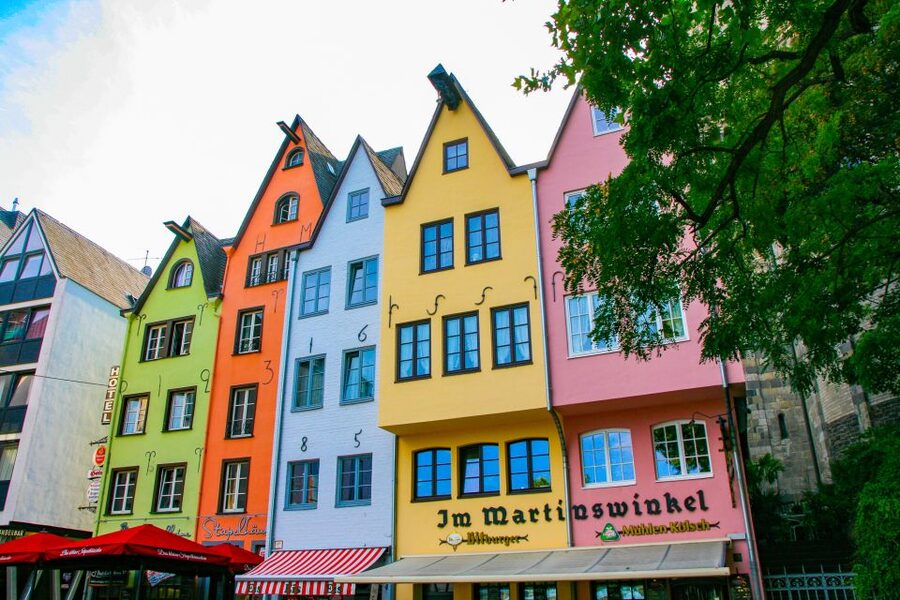
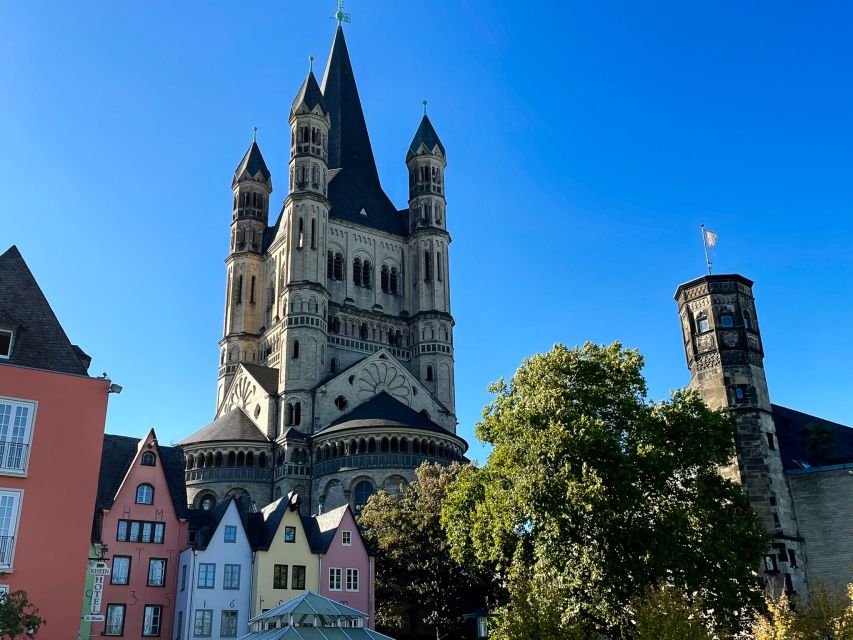
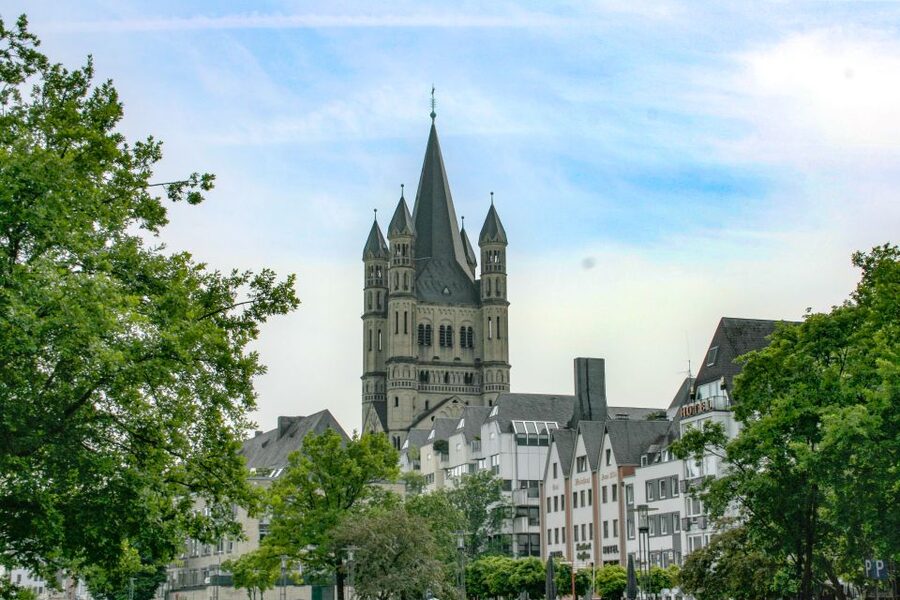
Next comes Groß St. Martin, a key landmark on the route. This stop is useful because it anchors the tour’s religious thread. Cologne’s story includes bishops and monks, and standing near a major church-related landmark gives those names something solid to attach to.
You should also expect the guide to connect the medieval era to the people who lived through it, including how religion, governance, and trade were not separate worlds. The city’s power structure shows up in the way major sites cluster, and your guide uses that clustering to make the “why” of Cologne feel closer.
This is also a good moment to ask questions, because the tour is built around conversations and explanations. In the booking feedback, guides like Markus are described as open to questions beyond the immediate topic, and that kind of flexibility is exactly what makes a short tour feel more personal. If you have a specific curiosity like how one era led into another, this is a prime time to bring it up.
Alter Markt and the historic town hall: where civic power shows up
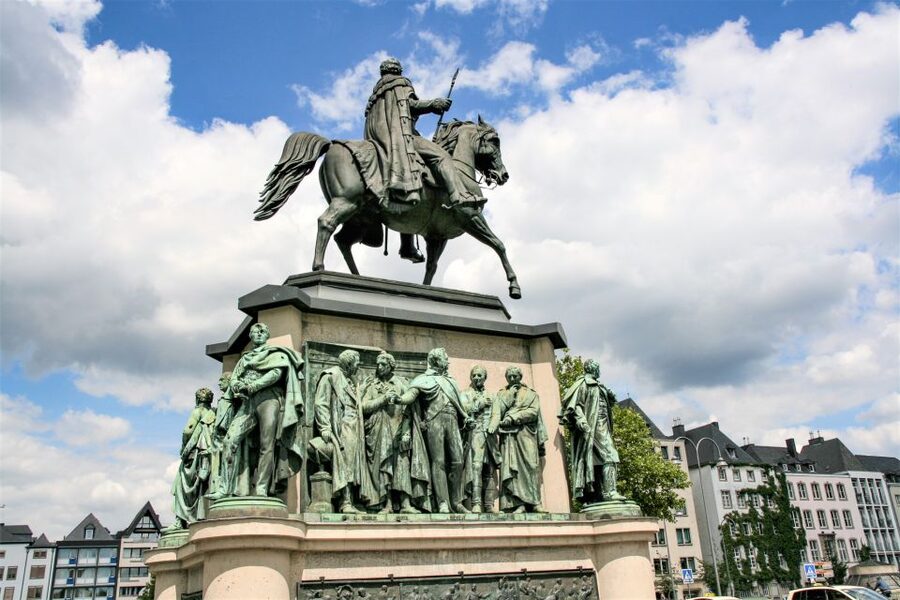
From Groß St. Martin you move on toward Alter Markt and the historic town hall. This portion shifts the story from primarily religious influence to civic and civic-adjacent power. Merchants and craftsmen come back into focus, because trade and city organization are what keep a place functioning day to day.
I like this stop because it keeps you from thinking about history as only castles and cathedrals. Civic life is part of the story, too. A historic town hall is the kind of place where decisions happened, and those decisions affected markets, streets, and the daily experience of ordinary people.
Even in just a couple of short walk segments, the tour can help you understand why medieval Cologne looked the way it did. The city was shaped by the people with authority, but also by the people with skills and goods. When your guide ties merchants and craftsmen to specific locations, the history stops being abstract.
Cologne Cathedral area: the reason the whole walk makes sense
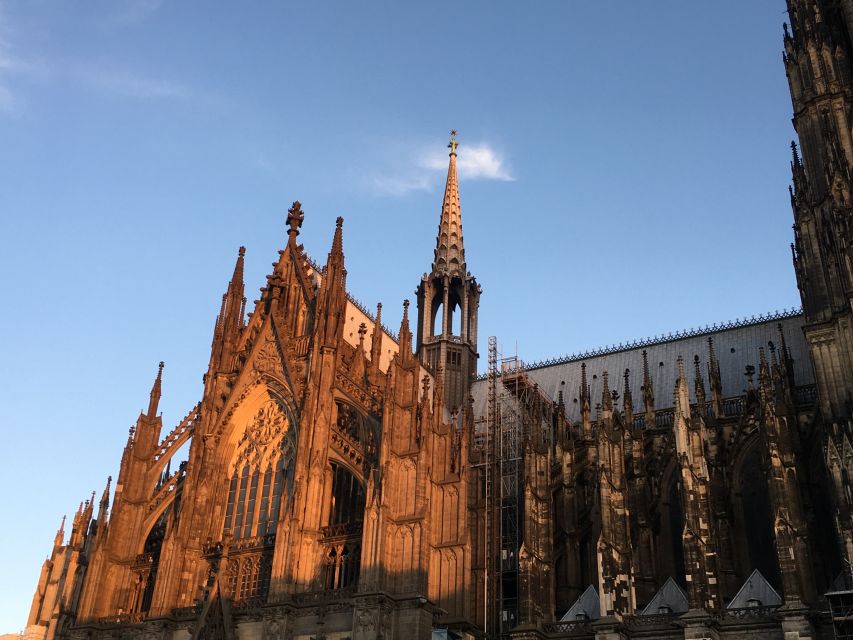
The climax is the Cologne Cathedral area. It is the visual centerpiece, but the guide uses it as more than a photo stop. You hear about how the city’s long story funnels into this landmark, and you also learn how later events altered what you see.
Cathedrals can feel like they belong to one era only. This tour pushes back on that idea by placing the Cathedral near the end of a route that has already included Romans, bishops, monks, medieval merchants and craftsmen, and even references to French influence. By the time you arrive, the Cathedral becomes the final “reading” surface for centuries of change.
Another practical reason this ending works: you are likely to stay engaged longer because the Cathedral area gives you visual focus after hours of walking through smaller details. If you feel your mind getting tired, the Cathedral offers something big to see and a clear way to land the story.
If you want the Cathedral moment to stick, do this: before you fully settle, take 30 seconds to look for how the Cathedral relates to the surrounding streets and squares. A good guide story will help you connect that placement to what the city has been doing for centuries.
Romans, French influence, bishops, merchants, and war rebuilding, connected
One of the strongest parts of this tour is that it does not treat history as separate chapters. It connects them. You hear about Romans and bishops, merchants and craftsmen, and the presence of Frenchmen in the city’s traces. You also hear about monks and medieval power, and then the tour acknowledges destruction in war and how Cologne was rebuilt afterward.
That last theme is important. Too many city stories skip from “old times” straight to “now.” Here, you get a reminder that cities break and then get rebuilt, and those rebuilds affect what survives and what disappears. When a guide mentions destruction of war and later rebuilding, it helps you read the city with more realism.
This kind of context also changes how you experience your walk. You stop thinking of the city as a museum with a fixed layout. You start treating it like a living place with surviving layers. That is a big part of why a guided walk can feel more meaningful than wandering alone, especially when you only have 2 hours.
The Cologne attitude: cheerfulness, openness, and practical storytelling
Cologne people are described as cheerful and open, including toward guests. That matters on a tour because it shapes the tone. A friendly guide style makes it easier to ask questions when something clicks or when something feels unclear.
I also think the German-only delivery can actually improve the experience, even if your German is basic. A local guide speaking German typically means you get less simplified fluff and more real explanations tied to place. If you speak a little, you will catch more of the structure, even if you do not catch every word.
If German is not your strength, plan to rely on body language, visible landmarks, and a willingness to catch the main points. The tour is built around clear stopping points, so you should still follow the story even if some details slip by.
Price and value: $16 for a guided old town timeline
At $16 per person for 2 hours with an experienced local guide, this is priced in the “worth it for the time you save” category. You are not paying for a luxury experience. You are paying for a guide who can turn a handful of famous places into a connected story of Romans, bishops, merchants, craftsmen, French influence, monks, and post-war rebuilding.
The fact that this tour holds a 4.8 rating from 237 bookings is a useful signal for value. When a low-to-mid price tour keeps strong satisfaction, it usually means you are getting steady pacing, understandable explanations, and a route that actually covers the main highlights without dragging.
You can also see the value in the scope. You hit several major stops in a compact route: Heumarkt, Fischmarkt, Groß St. Martin, Alter Markt, the historic town hall, and then the Cathedral area. For many visitors, that is the core structure of Cologne’s old-town feel, and you get it in a single guided block.
Who this tour fits best, and who should rethink it
This experience works best if you want a focused old town introduction. If you enjoy architecture, want to understand why Cologne matters across centuries, and like hearing about ordinary forces like merchants and craftsmen alongside big religious landmarks, you will likely enjoy this.
It is also a good fit if you like tours that move through a city logically. The route is designed to connect squares and landmarks so you do not feel lost, and the guide’s story keeps you moving with purpose.
You might reconsider if you hate walking. Narrow streets are part of the experience, and the duration is short enough that the group will not stop for long sightseeing detours at every turn. If you prefer slow wandering and independent exploration, this may feel too structured.
Should you book Cologne: City Highlights with Local Guide?
Yes, if you want a tight, meaningful introduction to Cologne that explains the city’s layers in 2 hours. At $16, you are paying for a local perspective that ties together Roman traces, bishops and monks, medieval merchants and craftsmen, French influence, and the reality of post-war rebuilding, all around the Cathedral area.
Book it if you:
- want the big highlights without spending hours researching each stop
- prefer a guided storyline over solo guessing
- like asking questions and getting place-based answers in German
Skip it if you:
- want a slow, linger-everywhere sightseeing day
- need long indoor time at each landmark
- cannot handle a walking pace through the old town streets
If you are aiming for an efficient first visit, this one is a sensible choice.
FAQ
How long is the Cologne city highlights tour?
The tour lasts 2 hours.
How much does it cost?
The price is $16 per person.
Where do I meet the guide?
Meet at the equestrian monument on Heumarkt. If there is an event on the square, meet at Heumarkt, corner of Gürzenichstraße.
What language is the guide?
The live tour guide speaks German.
What sights are covered?
You will cover 2000 years of Cologne history, see important places in Cologne, and explore historic spots around Cologne Cathedral, walking from Heumarkt to Fischmarkt and passing Groß St. Martin, then Alter Markt and the historic town hall.
What should I bring?
Bring comfortable shoes and weather-appropriate clothing.
Is there free cancellation or a pay-later option?
Yes. You can cancel up to 24 hours in advance for a full refund, and you can reserve now and pay later.
Seeing Cologne in One Go
Everything else we filed on Cologne
- Aachen Private Walking Tour With A Professional Guide
★ 5.0 · 11 reviews - e-Scavenger hunt Aachen: Explore the city at your own pace
★ 4.0 · 13 reviews - Aachen Scavenger Hunt and Sights Self-Guided Tour
★ 5.0 · 14 reviews - Cologne: Fables, Fairy Tales, and Legends Tour in German
★ 4.9 · 15 reviews - Cologne: Virtual escape game adventure at 7th Space
★ 4.3 · 15 reviews - Roman Cologne: A Self-Guided Audio Tour
★ 4.0 · 15 reviews
City Tours, side by side.
 ★ 4.3Berlin: 1-Hour City Tour by Boat with Guaranteed SeatingFrom $2516,993 reviews
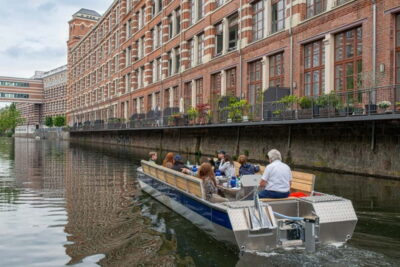 ★ 4.7Leipzig: City History Canal Sightseeing Tour on a MotorboatFrom $186,232 reviews
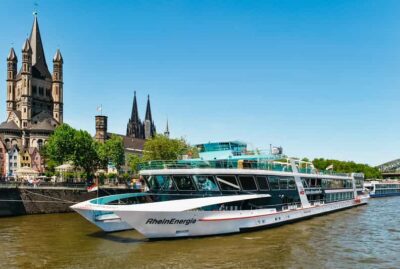 ★ 4.3Cologne: Panoramic City CruiseFrom $235,698 reviews
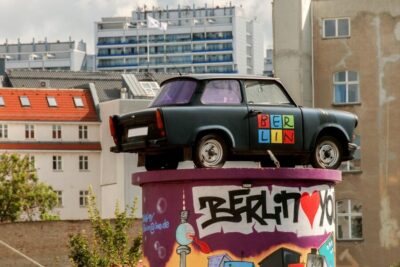 ★ 4.1Berlin: City Sightseeing Hop-On Hop-Off Bus TourFrom $254,233 reviews
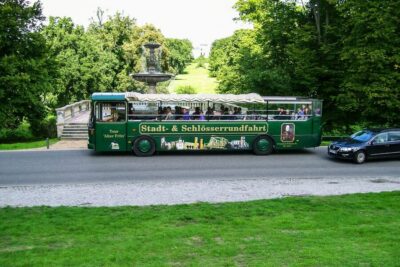 ★ 4.7Potsdam: City and Castles TourFrom $293,721 reviews
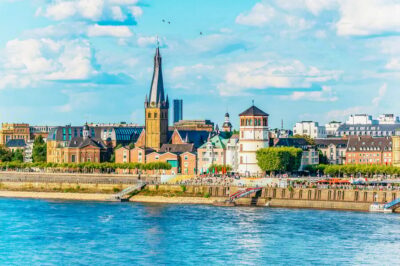 ★ 4.1Düsseldorf: City Sightseeing Cruise on the RhineFrom $232,954 reviews
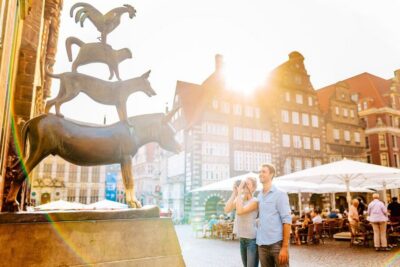 ★ 4.5Bremen: City Center Guided Walking TourFrom $142,709 reviews
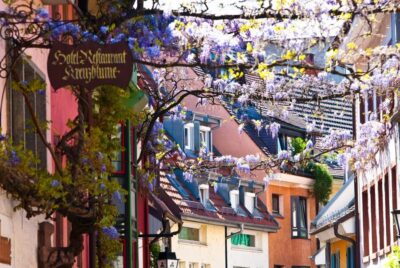 ★ 4.7Freiburg: Gässle, Bächle and More City TourFrom $132,632 reviews
Other lists this tour is on