
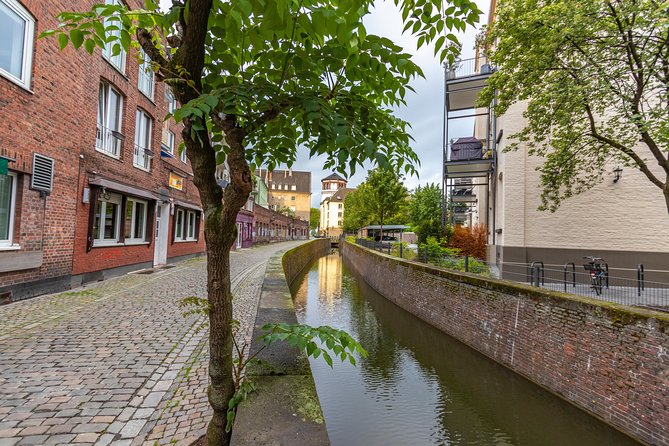
REVIEW · DUSSELDORF
Discover Dusseldorf’s most Photogenic Spots with a Local
Düsseldorf looks great through a camera. This 90-minute, photo-focused walk pairs top sights with a local guide so you can turn streets into shots, not just souvenirs. I love starting at the Tonhalle and working your way toward the river, and I love how the route blends landmarks with quieter photo corners. One heads up: the exact stops can shift with weather and walking pace.
The big win here is the small group size, up to 8 people, which means you are not fighting for attention when you want a better angle. Expect a relaxed pace, plus a guide who can point out what to photograph and how to read what you are seeing as you go. If you hate walking or you only want museum time, this may feel too focused on the street.
In This Review
- Key points to know before you go
- Why a photo walk in Düsseldorf beats solo wandering
- Tonhalle Düsseldorf: Wilhelm Kreis and your first good shot
- Art Academy stop: turning ideas into a visual story
- Old Town core: photographing the heart without getting lost
- A green park with a canal: balancing architecture and calm
- Parliament building with art exhibitions: neo-Renaissance drama
- Rheinuferpromenade finale: the Rhine as Düsseldorf’s mood board
- Price and value for $115.19 in 90 minutes
- Who should book this photo-focused walk
- Should you book this Düsseldorf photo tour?
- FAQ
- How long is the Düsseldorf photo walking tour?
- How much does the tour cost?
- How big is the group?
- Where does the tour start and end?
- Are entry tickets included?
- What is the cancellation policy?
Key points to know before you go
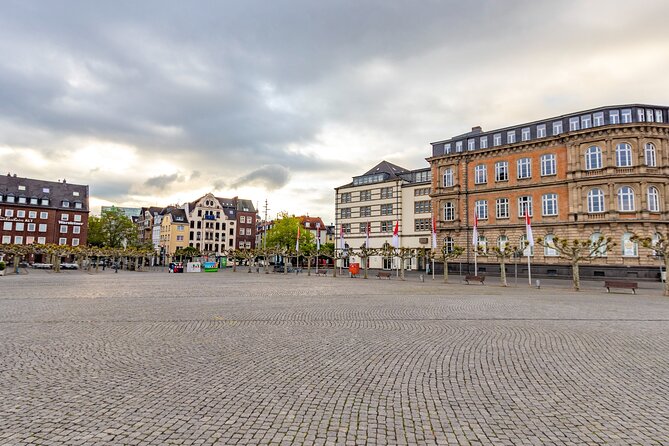
- Small group, big attention: up to 8 people, so questions and photo help stay personal
- Tonhalle to the Rhine: a logical route that builds from architecture to river views
- Photography-first stops: each location is chosen for how it looks on camera
- Insider context: you get local perspective, not just name-and-dates sightseeing
- Weather-aware plan: stops may vary, and the pace adapts to your group
More Rhine and Ruhr city days
- Düsseldorf: City Sightseeing Cruise on the Rhine★ 4.1 · 2,954 reviews
- Düsseldorf: 24-Hour Hop-On Hop-Off Ticket★ 4.2 · 1,685 reviews
- Düsseldorf: Brewery Tour with Alt Beer Tastings★ 4.7 · 1,523 reviews
- Düsseldorf: Altbier-Safari Beer Walking Tour★ 4.4 · 1,150 reviews
Why a photo walk in Düsseldorf beats solo wandering
Düsseldorf can feel a bit “tidy” at first, the kind of city where everything is photogenic but you still might not know where to aim your lens. That is the sweet spot of this tour. You get a straight-line route that moves you through some of the city’s most camera-friendly architecture and spaces, plus you get a local’s eye for timing, angles, and what makes each place feel distinct.
I also like that this is not a marathon. At around 1 hour 30 minutes, you should finish with usable photos and a clearer sense of the city’s layout. And because the itinerary adapts to interests and walking pace, you are not locked into a rigid script if your group is slower or really into a specific stop.
The other practical advantage is logistics. You start at Tonhalle Düsseldorf and end at the Rheinuferpromenade, which is an easy way to connect your sightseeing with the river atmosphere. That matters in a city where the best views often come from how districts relate to the Rhine.
Tonhalle Düsseldorf: Wilhelm Kreis and your first good shot
You begin at Tonhalle Düsseldorf, at Ehrenhof 1, 40479 Düsseldorf. This is a strong way to start because it immediately gives you big architectural lines to work with. The building was designed by architect Wilhelm Kreis, so you get more than just a pretty façade. You also get a sense of why the Tonhalle looks the way it does, which helps you photograph it with intention instead of just pointing and shooting.
What to focus on here:
- Look for strong symmetry and repeating shapes along the exterior.
- If you are shooting with a phone, try switching between wide and normal focal lengths. Wide helps with whole-building context, normal often looks sharper for detail.
- Step around a bit before you commit to a frame, because the best light on stone and glass can change as you move.
A subtle benefit of starting at a landmark like this is that it sets your “photo rhythm.” After Tonhalle, your brain is already thinking in frames, not in directions.
Art Academy stop: turning ideas into a visual story
Next comes a stop at Düsseldorf’s internationally known Art Academy. It is acclaimed for the wide variety of ideas and experiments created by its graduates. Even if you are not an art-world person, I like this stop because it reframes the city. Düsseldorf is not only commerce and clean streets. It also has a creative engine, and you can feel it in the way the city builds around learning and making.
Photography-wise, academic areas often give you two things:
- Human-scale detail, like entrances, courtyards, and study spaces.
- Visual cues of experimentation, through modern additions, signage, or surrounding design.
Because the tour is photo-focused, you should get guidance on how to look beyond the obvious. That is where a local really helps. A solo walk can leave you with generic shots. This stop pushes you toward images that feel like Düsseldorf rather than just “Germany, city street.”
Practical note: if you want to take photos without rushing, wear something comfortable. You may not be here long, but this kind of stop rewards a careful look.
Old Town core: photographing the heart without getting lost
Then you move into what the guide calls the heart of Düsseldorf, across about half a square kilometer. This is where the tour shifts from single big icons to a more “walkable” photo rhythm: corners, façades, and street-level views that build a story.
A key idea here is that this is not just a scenic detour. It is the place where you can capture the city’s personality in compact frames:
- Architectural details on buildings that line the square.
- Streets that show how locals actually move.
- Views that let you include multiple landmarks in one image.
The trick with Old Town areas is pacing. If you sprint through, you get surface photos. If you slow down, you get images with context. Since the itinerary adapts to walking pace, you should be able to linger at the angles that click for you.
Possible drawback to consider: Old Town photography is the most time-sensitive part of walking tours. Light changes fast, and crowds (not mentioned specifically) tend to gather where people naturally pause. If your group wants long exposures or careful framing, you may need to accept that other stops will feel shorter.
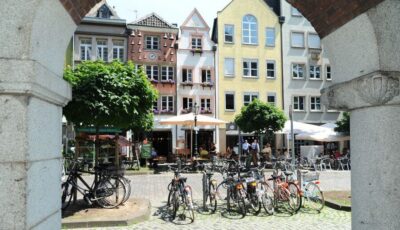
A green park with a canal: balancing architecture and calm
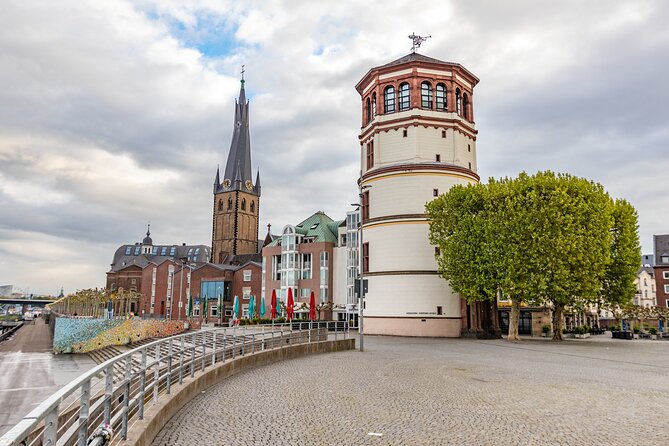
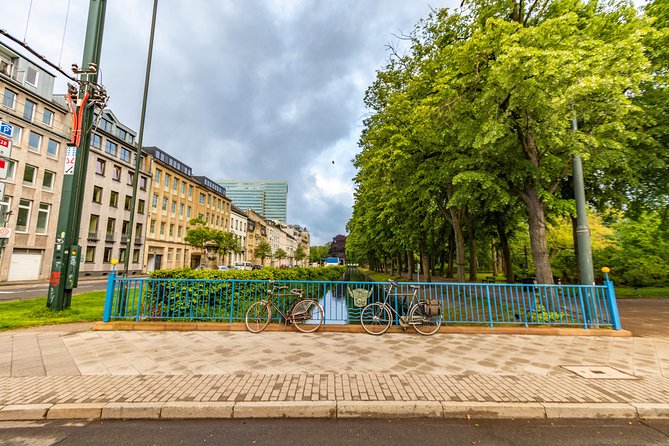
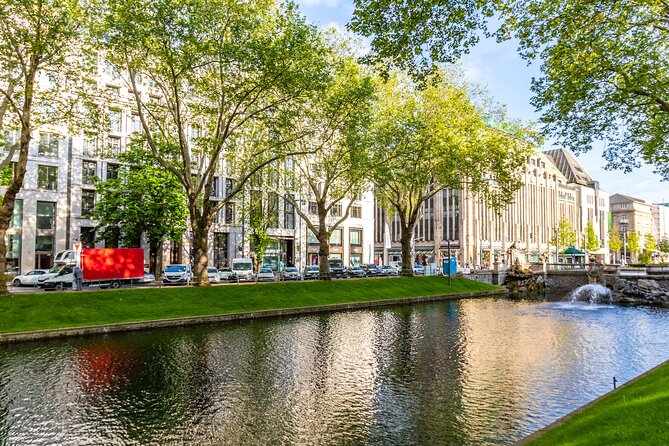
After the dense city core, the tour gives you a calmer scene: a beautiful green area with a canal running down the middle, surrounded by grand architecture. This is a smart contrast. If your first half is about buildings and city energy, this stop resets your eye and gives you compositions with both reflection and symmetry.
This kind of canal-and-park setting is a photographer’s friend because you can play with layers:
- Foreground greenery, midground water, background façades.
- Reflections that turn normal buildings into softer, more creative shapes.
- Leading lines created by the canal itself.
If you are using a phone, check your reflection angle. Move slightly up or down to avoid glare, and try a few frames with your subject partially cropped. With a camera, consider a slightly narrower aperture if you want more depth, but the easiest win is simply changing your position by a step or two.
Also, this is a good moment to take a breather. You are outside, you get space, and you can review what you already captured, so you walk into the next stops with a clearer style.
Parliament building with art exhibitions: neo-Renaissance drama
Next up is the former seat of the Parliament of North Rhine–Westphalia, a grand neo-Renaissance building that is known for cutting-edge art exhibitions. This is one of those stops where the guide can connect the visuals to the current role of the place.
Why this works for a photo walk:
- Neo-Renaissance architecture often has strong structure. Think curves, ornament, and big formal lines.
- Exhibition spaces tend to add modern contrast, which can make your photos feel current rather than purely historical.
A fair consideration: the tour data does not say you will be going inside or that you are guaranteed an exhibition view. It focuses on the exterior walking experience and photogenic stops. So, plan on using this moment for street-level and exterior framing unless the local guide confirms something on the day.
Still, even from outside, a building like this can give you dramatic compositions. It is also a great time to practice tighter crop shots: columns, windows, and entrances can look more powerful than the entire building.
Rheinuferpromenade finale: the Rhine as Düsseldorf’s mood board
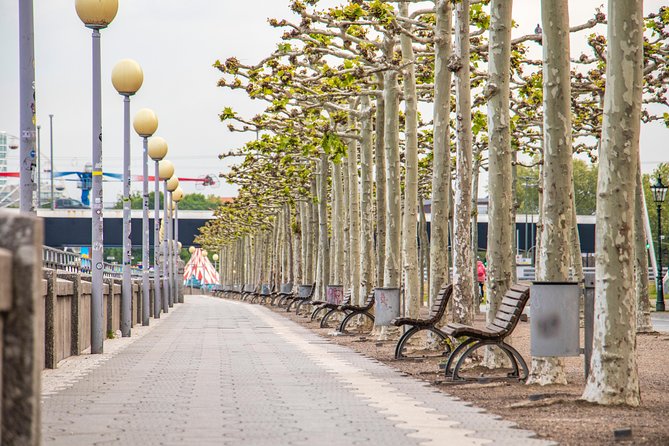
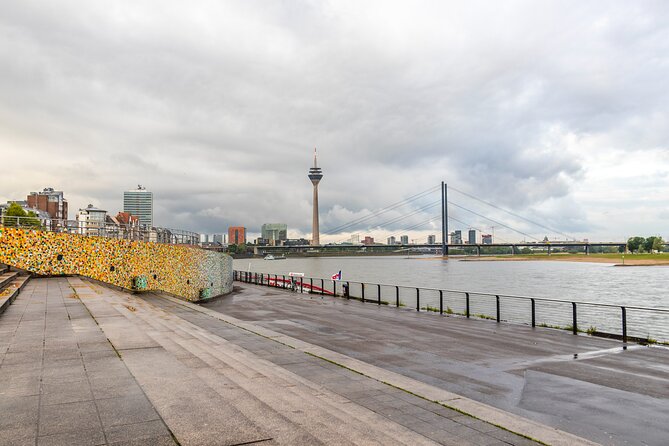
The tour ends at the Rheinuferpromenade Düsseldorf, near Untere Rheinwerft, 40213 Düsseldorf. This is the lifeline of Düsseldorf, connecting the city to the mighty Rhine, and it celebrates the cheerful spirit of the city.
As a finale, it is perfect because it usually offers what the rest of the tour builds toward: wide views, open space, and a sense of place. A promenade ending also helps you keep control of your evening. You finish near a lively area where you can continue at your own pace, grab something to drink, or just keep taking photos after the guided portion ends.
What to photograph here:
- River views that show the horizon line.
- Bridges and waterfront structures that anchor your composition.
- People walking along the promenade, if you can capture them in a way that does not feel chaotic.
If you care about color, the Rhine can dramatically change your photos depending on time of day and sky conditions. Since the tour can adjust stops for weather, you can treat this as a chance to get a final batch of shots without stress.
Price and value for $115.19 in 90 minutes
The price is $115.19 per person for about 1 hour 30 minutes, with a small-group format and a mobile ticket. I look at this as a “you pay for help making the photos” experience, not a bargain sightseeing bus.
Here is where the value comes from:
- You get a local guide who helps you see what to photograph, not just where to stand.
- Small group size, up to 8, keeps the experience from turning into a headcount exercise.
- You get personalized recommendations, which is important in photography. If you like wide shots, you get different advice than someone who prefers portraits and detail.
Also, group discounts are mentioned. If you are traveling with a friend or small cluster, that can help you justify the spend even more.
Is it expensive? Compared to self-guided walking, yes. But compared to other paid tours where you mostly listen, you are getting a clear theme: photography plus local context. If you want the best chance of leaving with great images and a sense of Düsseldorf that makes sense, the structure matters.
One more practical point: entry tickets for public transportation, museums, and monuments are not included. So, if you plan to hop between stops by transit, budget for any extra costs.
Who should book this photo-focused walk
This is a great fit if:
- You want photos that look intentional, not random.
- You enjoy walking tours but still want a tight route.
- You like learning how locals frame what you are seeing, especially around architecture and public spaces.
- You travel with a phone camera and want help with composition on the fly.
It might not be for you if:
- You want long indoor time at museums or a museum ticket included.
- You do not like any walking, even a moderate amount.
- You expect a purely cultural lecture with no photo focus.
Should you book this Düsseldorf photo tour?
Yes, if your main goal is to come away with strong images and a clearer mental map of Düsseldorf. Starting at Tonhalle and ending at the Rheinuferpromenade creates a smooth arc from architecture to river views, and the small-group size gives you the chance to ask for guidance when you want it. The guide’s friendly, helpful approach is a clear highlight in the feedback, and that matters on a photo tour, because you are not just watching the city, you are working it into a set of frames.
I would book it even if you consider yourself a beginner with a camera. The route is built for what the city already does well visually, and the local perspective helps you get there faster. Just bring comfortable shoes, a charged phone or camera battery, and a bit of flexibility for weather changes.
FAQ
How long is the Düsseldorf photo walking tour?
It runs for about 1 hour 30 minutes.
How much does the tour cost?
The price is $115.19 per person.
How big is the group?
The group is small, with a maximum of 8 travelers.
Where does the tour start and end?
It starts at Tonhalle Düsseldorf, Ehrenhof 1, 40479 Düsseldorf, and ends at Rheinuferpromenade Düsseldorf, Untere Rheinwerft, 40213 Düsseldorf.
Are entry tickets included?
No. Entry tickets for public transportation, museums, and monuments are not included.
What is the cancellation policy?
You can cancel for free up to 24 hours in advance for a full refund. If you cancel less than 24 hours before the experience starts, you do not get a refund.
Dusseldorf and the Ruhr, Reviewed
Everything else we filed on Dusseldorf
- Discover Dusseldorf’s most Photogenic Spots with a Local
★ 5.0 · 3 reviews - Whodunnit – Interactive city walk in Düsseldorf
★ 4.5 · 3 reviews - Dusseldorf Private Walking Tour With A Professional Guide
★ 4.5 · 3 reviews - Filmtour Düsseldorf: From Hollywood to Netflix
★ 4.9 · 4 reviews - Explore Dusseldorf’s Art and Culture with a Local
★ 5.0 · 4 reviews - Düsseldorf: Girls-only-tour with shots, party, fun & games
★ 4.5 · 4 reviews
Dusseldorf and the Ruhr Tours, side by side.
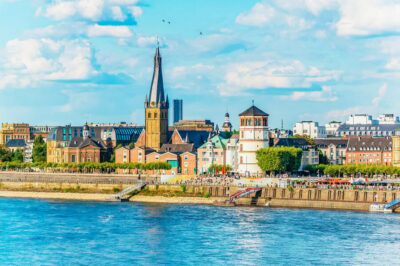 ★ 4.1Düsseldorf: City Sightseeing Cruise on the RhineFrom $232,954 reviews
 ★ 4.2Düsseldorf: 24-Hour Hop-On Hop-Off TicketFrom $281,685 reviews
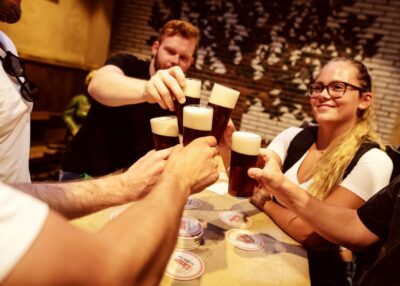 ★ 4.7Düsseldorf: Brewery Tour with Alt Beer TastingsFrom $321,523 reviews
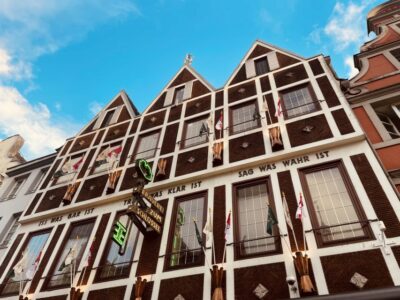 ★ 4.4Düsseldorf: Altbier-Safari Beer Walking TourFrom $431,150 reviews
 ★ 4.7Düsseldorf: Guided Tour with a Night WatchmanFrom $25986 reviews
 ★ 4.5Düsseldorf: Rhine Tower Adult EntryFrom $14638 reviews
 ★ 4.7Dusseldorf: Old Town & Altbier TourFrom $27585 reviews
 ★ 4.6Düsseldorf: Sushi, Sake & Japanese Lifestyle TourFrom $41539 reviews
Other lists this tour is on