
REVIEW · DUSSELDORF
Explore Dusseldorf’s Art and Culture with a Local
Düsseldorf changes pace when you walk it with a local. I like how this tour links art and public space in a way that actually helps you understand the city, not just see it. The best part is the small group size, and the guide keeps things human. The only real drawback is time, you cover a lot in 1 hour 30 minutes, so you will not get long, sit-down museum wandering at every stop.
You start at the Tonhalle Concert Hall area and move through classic Düsseldorf corners, modern architecture views, and major art institutions, all guided in English. I also love that you end at the Kunstsammlung, so you can continue into the museum on your own without rushing to catch anything else. If you want very deep museum time, plan to pair this with a separate visit later.
In This Review
- Key Highlights at a Glance
- Why This Walking Art Tour Works in 90 Minutes
- Meet at Tonhalle Düsseldorf, Then Start With Architecture
- Hofgarten Roots, Plus the Daniel Libeskind View at Kö-Bogen
- A Famous Mural and a Tour of 20th-Century Art Movements
- A Museum Stop With Changing Work From Innovative Artists
- Düsseldorf Heartbeat: The Square-Centimeter Details Add Up
- Burgplatz and the Rivertime Detail You Should Look For
- The Rhine Promenade: Düsseldorf’s Lifeline in One Walking Segment
- End at Kunstsammlung: Finish at a Museum and Keep Going on Your Own
- Value and Price: What $117.16 Gets You for 90 Minutes
- Who This Tour Is Best For (and Who Might Want Something Else)
- Tips to Get More From the Walk
- Should You Book This Düsseldorf Art and Culture Walk?
- FAQ
- How long is the Düsseldorf art and culture tour?
- What is the meeting point?
- Where does the tour end?
- What language is the tour offered in?
- What is the group size?
- Is a mobile ticket included?
- Is the tour suitable for most travelers?
- Are service animals allowed?
- Can I cancel for a full refund?
Key Highlights at a Glance
- Up to 8 people means the guide can slow down when you have questions
- Tonhalle and the Hofgarten give you culture plus an easy walk right away
- Modern architecture views show how Düsseldorf connects old and new
- A 20th-century art focus includes a famous mural you will remember
- Burgplatz and the Rivertime artwork add post-WWII design context
- The Rhine connection ties the whole day together with the city’s lifeline
More Rhine and Ruhr city days
- Düsseldorf: City Sightseeing Cruise on the Rhine★ 4.1 · 2,954 reviews
- Düsseldorf: 24-Hour Hop-On Hop-Off Ticket★ 4.2 · 1,685 reviews
- Düsseldorf: Brewery Tour with Alt Beer Tastings★ 4.7 · 1,523 reviews
- Düsseldorf: Altbier-Safari Beer Walking Tour★ 4.4 · 1,150 reviews
Why This Walking Art Tour Works in 90 Minutes
This is the kind of tour that fits real travel schedules. In just 1 hour 30 minutes, you get a guided route that acts like a city map made of culture. You are not stuck in one building. You move from concert-hall architecture to park views to museum fronts to the Rhine.
The small group matters. With a maximum of 8 travelers, you are more likely to get conversational explanations instead of a lecture mode. That is the difference between collecting facts and actually learning how locals think about the places you are seeing.
Also, the route is built around variety. You get German culture in formal spaces, like a concert hall and major museum buildings, then you get street-level design and public outdoor areas like parks and squares. It is a smart balance for first-time visitors.
Meet at Tonhalle Düsseldorf, Then Start With Architecture
You begin at Tonhalle Düsseldorf at Ehrenhof 1. Even before you hit the art stops, you get a useful anchor: this concert hall was built by architect Wilhelm Kreis. That single detail helps you notice things you might otherwise miss, like how Düsseldorf invests in impressive public buildings.
This opening works because it sets the tone. A concert hall is not only for music. It is also a statement about design, civic pride, and where the city puts its creative energy. If you are the type who likes to understand a place by its landmark buildings, this start pays off fast.
Practical tip: arrive a few minutes early so you can settle in. The tour begins with walking right after meeting, and you do not want to be late while the group is getting positioned.
Hofgarten Roots, Plus the Daniel Libeskind View at Kö-Bogen
Next you walk through a central park dating from the 1600s, the Hofgarten. That matters because it gives you a timeline you can feel under your feet. Even if you are not a “history person,” a park like this teaches you how Düsseldorf chose green space as part of daily life, not just for special events.
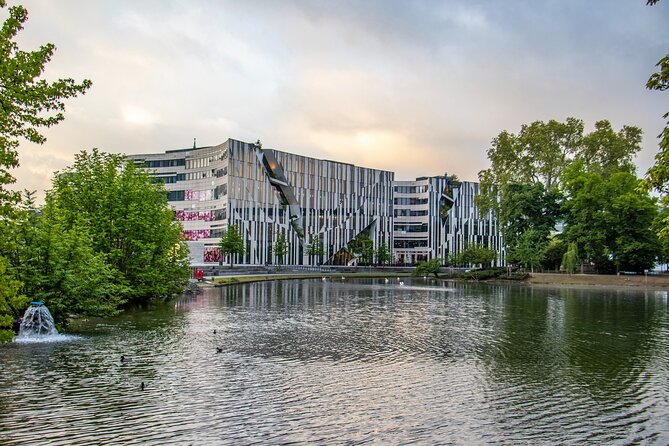
From there, you look toward a modern creation by Daniel Libeskind, the Kö-Bogen. This is one of the best kinds of contrasts: old park foundations meeting contemporary architecture. You start to understand how the city uses design to connect generations.
Possible drawback to consider: outdoor views are great, but you are at the mercy of weather. If it is rainy or very windy, wear layers and shoes you can walk in comfortably. The pace is manageable, but it is still a walking route.
A Famous Mural and a Tour of 20th-Century Art Movements
One of the stops is described as an astonishing compendium of artistic movements from the last century, and a highlight is a famous mural on a wall. This is where the tour earns its art-culture title in a clear, memorable way.
Why this works for you: you get context. Instead of seeing a mural like it is just a big decorative image, you can understand it as part of broader artistic directions. That makes the mural feel less random and more like a visual summary of an era.
If you love modern art but often feel overwhelmed by what you are seeing, this stop is useful. You are not left alone in the gallery. The guide’s explanations help you put the pieces together while you are still in the flow of the walk.
A Museum Stop With Changing Work From Innovative Artists
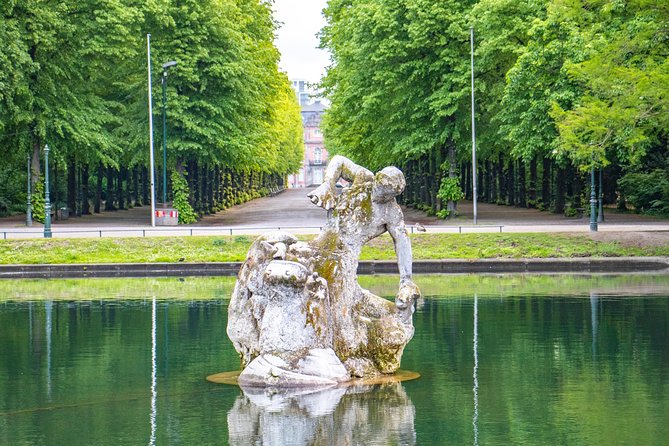
After that art-movements stop, you move to an excellent museum that features an ever-changing collection of work from some of the country’s most innovative artists.
A changing collection is a big deal for visitors. It means you are more likely to see something current, not only a fixed set of masterpieces that never evolves. It also means your experience can feel fresh, even if you plan to revisit Düsseldorf later.
What to expect in practice: this tour gives you a guided look, but you should still plan for the museum stop to be more of a “highlight tour” than a full day. Bring curiosity, not the assumption that you will read every label or see every room.
Düsseldorf Heartbeat: The Square-Centimeter Details Add Up
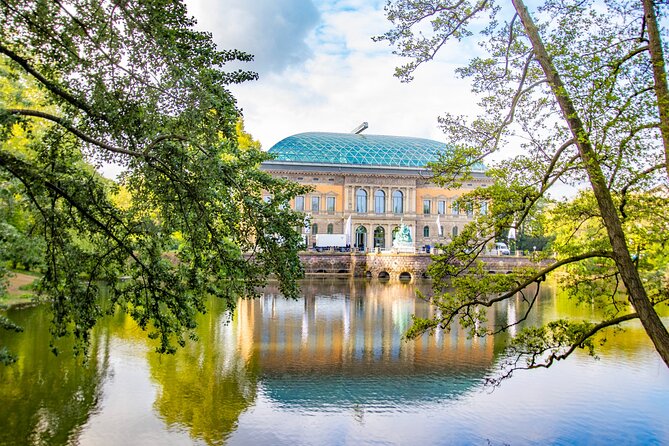
Then you hit what is described as the heart of Düsseldorf, a half-kilometer stretch of public space. This part of the walk is important because it shifts you from “art viewing mode” to “city getting-around mode.”
You start to notice how the city feels at street level: where people naturally gather, how squares connect, and how easy or hard it is to orient yourself. For first-timers, this is exactly what you want from a guided introduction. You end up with mental landmarks for later.
If you are visiting with someone who prefers walking outdoors but still wants culture, this stop is a good compromise. It is not only museums and architecture. It is the lived-in Düsseldorf center.
Burgplatz and the Rivertime Detail You Should Look For
You then visit Burgplatz, recognized as one of the most beautiful post-WWII places in Germany. The guide also points you to a specific work you should not miss: Rivertime on the side walls of the staircase.
This is the kind of detail that makes tours worth paying for. If you arrive at Burgplatz alone, you might see the big impression and move on. With a guide, you know exactly where to look, and the artwork becomes part of the story rather than a random visual.
Also, knowing it is a post-WWII design highlight helps you interpret what you are seeing. It is not only about aesthetics. It is about the rebuilding era and the choices the city made about public space.
Tip: at a staircase viewpoint, take a second to stop and look around. The artwork is not just on display, it is part of how people circulate through the space.
The Rhine Promenade: Düsseldorf’s Lifeline in One Walking Segment
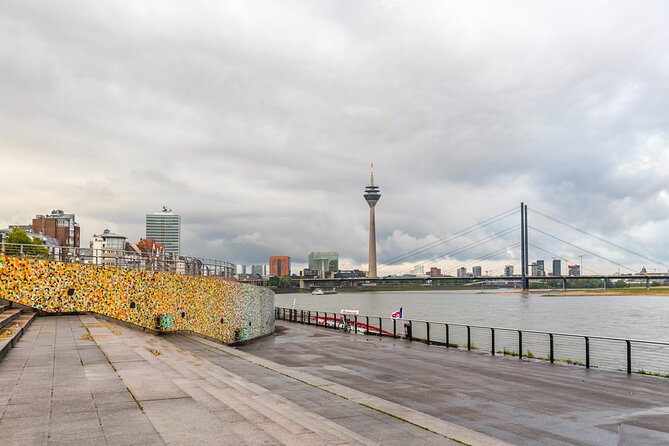
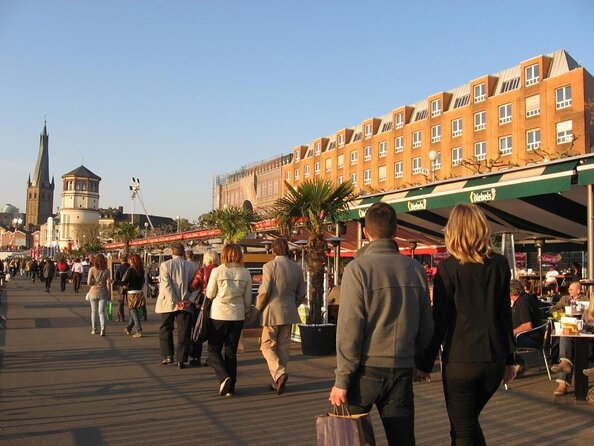
The tour then follows the lifeline of Düsseldorf, connecting the city to the Rhine. This part is described as a celebration of Düsseldorf’s cheerful spirit, which is exactly what the riverfront tends to do. Even if you are not a hardcore “river lover,” you feel the shift from formal buildings and museum stops to open-air city energy.
Why it is valuable: art and culture is not only in museums. It also lives in how a city relaxes and meets itself outdoors. The Rhine segment helps you picture how locals enjoy Düsseldorf when they are not on a museum schedule.
Practical note: keep an eye on the route back to indoor places if the weather turns. Rhine edges can be breezy.
End at Kunstsammlung: Finish at a Museum and Keep Going on Your Own
You finish at Kunstsammlung in Ständehausstraße 1. This building was once the seat of the Parliament of North Rhine-Westphalia and is a neo-Renaissance structure known for cutting-edge art exhibitions.
Ending here is smart for two reasons. First, it gives you a reason to keep your momentum after the walk. Second, it lets you switch from guided viewing to self-directed exploration, at your own pace.
If you want a practical plan, do this: use the tour to get your bearings and pick one or two exhibitions you care about. Then spend your extra time inside based on what interested you most during the walk.
Also, the fact that this is a former parliamentary seat is a meaningful cultural detail. Art in a former civic power space changes your perspective, even if you never read a single label.
Value and Price: What $117.16 Gets You for 90 Minutes
At about $117.16 per person for roughly 1 hour 30 minutes, you are paying for a few things at once:
- A local guide who can explain what you are seeing in real time
- A small group setting, capped at 8 travelers
- A route that strings together multiple major culture stops efficiently
- An English-language experience with a mobile ticket included
Is it “cheap”? No. But it also is not overpriced in the way some large-group tours can be. You are paying for quality and convenience, especially the guided connections between places.
The best value usually comes when you are a first-timer, or when you want a cultural sampler that helps you choose what to do next. If you already know Düsseldorf well and mainly want one museum, you might feel that the walk is too wide-ranging. But if you want a map made of art, the format makes sense.
Who This Tour Is Best For (and Who Might Want Something Else)
This experience is a good fit if you:
- Want an easy introduction to Düsseldorf’s art and culture without planning every stop yourself
- Like architecture and public spaces, not just galleries
- Prefer a small-group pace where you can ask questions
- Are visiting in a short window and want a route that covers the city’s creative landmarks
It might be less ideal if you:
- Want a long museum deep dive. You get highlights, not hours and hours inside every place.
- Travel when conditions are often bad, since parts of the tour are outdoors and walking-focused.
Tips to Get More From the Walk
Here are a few practical ways to make your 1 hour 30 minutes feel longer:
- Wear comfortable shoes. You are moving through multiple districts and outdoor stretches.
- Bring a quick notebook habit, even on your phone. Write down one place you want to return to after the tour.
- Pay attention to the guide’s pointed details. The Rivertime artwork is a perfect example of something you would otherwise miss.
- After the tour ends at Kunstsammlung, plan one follow-up visit goal. Pick what you care about while it is still fresh.
Also, if you are traveling with a senior family member, you might appreciate how a good guide can tailor the pace and focus. One guide mentioned in this context, Anne, is described as especially considerate and thoughtful with a senior mother, and that kind of attention can make the difference between a stressful walk and a confident one.
And if you are new to the city, a guide like Beatriz is highlighted for giving a great introduction to where you should explore next. That is exactly what you want from a first Düsseldorf outing: clarity, not confusion.
Should You Book This Düsseldorf Art and Culture Walk?
I think you should book this tour if you want the fastest, most coherent introduction to Düsseldorf’s art side, without turning your trip into a museum marathon. The small-group size helps you actually connect to the route, and the lineup of places, Tonhalle, Hofgarten, the art highlights, Burgplatz with Rivertime, the Rhine segment, and the Kunstsammlung ending, gives you a well-rounded sense of the city.
Skip it only if your main goal is hours of unstructured museum time. This tour is designed to point you in the right direction, not to replace a full day of independent exploration.
FAQ
How long is the Düsseldorf art and culture tour?
The tour is approximately 1 hour 30 minutes.
What is the meeting point?
You meet at Tonhalle Düsseldorf, Ehrenhof 1, 40479 Düsseldorf.
Where does the tour end?
The tour ends at Kunstsammlung, Ständehausstraße 1, 40217 Düsseldorf. You can explore the museum on your own after.
What language is the tour offered in?
The tour is offered in English.
What is the group size?
The tour has a maximum of 8 travelers.
Is a mobile ticket included?
Yes, a mobile ticket is included.
Is the tour suitable for most travelers?
Yes, most travelers can participate.
Are service animals allowed?
Service animals are allowed.
Can I cancel for a full refund?
Yes. You can cancel up to 24 hours in advance for a full refund. If you cancel less than 24 hours before the start time, the amount paid is not refunded.
Dusseldorf and the Ruhr, Reviewed
Everything else we filed on Dusseldorf
- Discover Dusseldorf’s most Photogenic Spots with a Local
★ 5.0 · 3 reviews - Whodunnit – Interactive city walk in Düsseldorf
★ 4.5 · 3 reviews - Dusseldorf Private Walking Tour With A Professional Guide
★ 4.5 · 3 reviews - Filmtour Düsseldorf: From Hollywood to Netflix
★ 4.9 · 4 reviews - Explore Dusseldorf’s Art and Culture with a Local
★ 5.0 · 4 reviews - Düsseldorf: Girls-only-tour with shots, party, fun & games
★ 4.5 · 4 reviews
Dusseldorf and the Ruhr Tours, side by side.
 ★ 4.1Düsseldorf: City Sightseeing Cruise on the RhineFrom $232,954 reviews
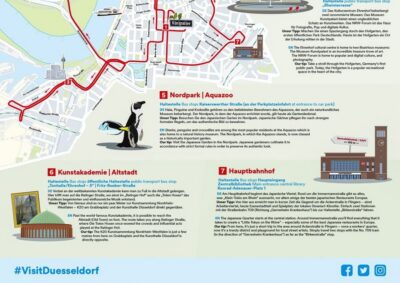 ★ 4.2Düsseldorf: 24-Hour Hop-On Hop-Off TicketFrom $281,685 reviews
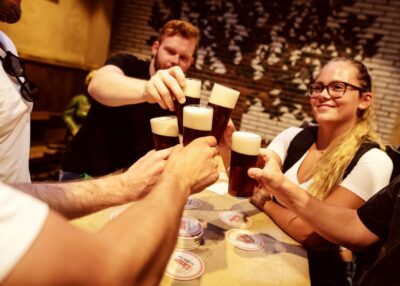 ★ 4.7Düsseldorf: Brewery Tour with Alt Beer TastingsFrom $321,523 reviews
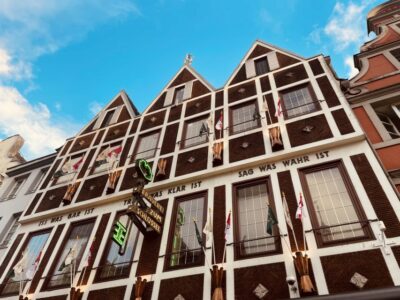 ★ 4.4Düsseldorf: Altbier-Safari Beer Walking TourFrom $431,150 reviews
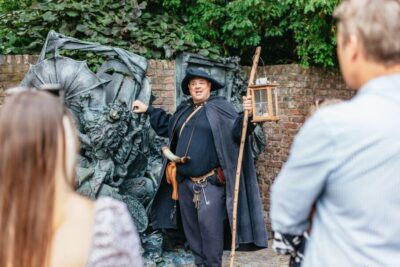 ★ 4.7Düsseldorf: Guided Tour with a Night WatchmanFrom $25986 reviews
 ★ 4.5Düsseldorf: Rhine Tower Adult EntryFrom $14638 reviews
 ★ 4.7Dusseldorf: Old Town & Altbier TourFrom $27585 reviews
 ★ 4.6Düsseldorf: Sushi, Sake & Japanese Lifestyle TourFrom $41539 reviews
Other lists this tour is on