
REVIEW · DUSSELDORF
Dortmund Soccer Segway Tour
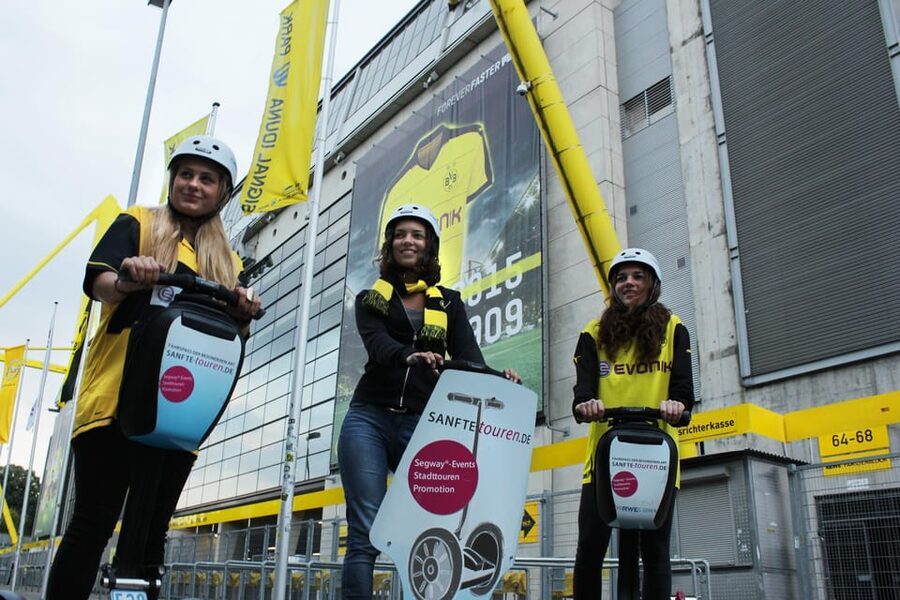
Segways and Borussia stories, in two hours. This tour makes football feel local, not distant, with stops tied to the club’s streets, stadiums, and legends. I loved how you get real time, live guiding plus audio narration, so Signal Iduna Park means something beyond a postcard.
What I liked even more is the pace. It moves enough to stay fun, but it never rushes you, and the route is built to show key places like small-group stops and meaningful corners of Dortmund.
One thing to consider: this is German-language guiding, and you will be riding through public areas, so you’ll want comfortable shoes and a steady, confident stance on the Segway.
In This Review
- Key points to know before you go
- Where You Start: Im Defdahl and a Quick, Serious Safety Setup
- The 2-Hour Football Loop: How the Route Builds Meaning
- From the U Through Westpark to Sonnenstraße: Stories You Can See
- Southwest Cemetery and Franz Jacobi: A Surprising Side of the Game
- Strobelallee to the Stadiums: Signal Iduna Park and Rote Erde
- Goldsaal: When Interiors Add Context
- Borsigplatz and Trinity Church: Tracing Origins in Plain Sight
- Guides, Headsets, and the Human Touch
- Value and Price: Is $93 for Two Hours Fair?
- Who Should Book This Segway Soccer Tour (and Who Should Skip It)
- Should You Book the Dortmund Soccer Segway Tour?
- FAQ
- Where is the meeting point for the Dortmund Soccer Segway Tour?
- How long is the tour?
- How much does the tour cost?
- Is the tour guided?
- Does the tour include Segway safety gear and audio?
- What should I bring?
- What are the age and weight limits?
- How big is the group?
- Is there a language barrier if I do not speak German well?
- Can I cancel, and can I book without paying right away?
Key points to know before you go
- Small group, max 8 riders means you get help when you need it
- Audio receivers keep the stories clear, even when streets get noisy
- First-time Segway friendly instruction, so you are not stuck feeling lost
- Signal Iduna Park plus Rote Erde Stadium give you two different football atmospheres
- Goldsaal and Borsigplatz connect big match days to club origins
- Southwest Cemetery and Franz Jacobi add a surprising human angle to football history
More Rhine and Ruhr city days
- Dortmund: German Football Museum★ 4.6 · 484 reviews
- Dortmund: Borusseum Borussia Dortmund Museum Entry Ticket★ 4.6 · 315 reviews
- Dortmund: Phoenix des Lumières Ticket – Monet★ 4.2 · 194 reviews
- Dortmund: 24-Hour Hop-On Hop-Off Sightseeing Bus Ticket★ 4.1 · 161 reviews
Where You Start: Im Defdahl and a Quick, Serious Safety Setup
You meet at Im Defdahl 12, 44141 Dortmund. Plan to arrive a few minutes early, because the tour begins with a safety briefing and then a short setup so everyone feels comfortable.
Before you ride, you get the basics: helmet, safety vest, and an audio receiver so you can hear the guide clearly. That audio piece matters more than it sounds, because you are moving. Without it, the stories would get swallowed by traffic and wind. With it, you actually follow along.
The tour runs for about 2 hours, and it is small enough that the guide can watch your comfort level. In the reviews, first-timers mention that the instruction works, even if you have never stood on a Segway before. That is exactly what you want from a short, active tour like this.
The 2-Hour Football Loop: How the Route Builds Meaning
The route is designed like a timeline you ride with your own wheels. You start near central sights, then you move through streets and landmarks that connect the club’s fan culture to the stadium era.
Along the way, you will hear stories through the headset system, so each stop has a reason to exist. You are not just passing buildings. You are learning why they matter to Dortmund soccer, and you are also picking up context about the city itself.
Two things help this tour feel efficient. First, it packs multiple recognizable football locations into a single ride. Second, the guide controls the flow, so you get the explanations without spending half a day on buses or trains.
The one drawback is also simple: because it is only 2 hours, you will not have long stays at every spot. If you want deep museum-style time, pair this with an extra hour in the area after the tour.
From the U Through Westpark to Sonnenstraße: Stories You Can See
After the safety briefing, you start with your guide at the U. Then you roll through the Westpark, reaching Sonnenstraße via Lindemannstraße.
This part works because it is a mix of movement and meaning. You get the Segway momentum, but the guide is pointing out how fan life and promotion efforts took shape around real addresses. One key stop here is Restaurant Zur Sonne, which the tour highlights as the foundation of the fan and promotion department.
That detail is the kind of thing that makes football history feel human. Instead of thinking only about trophies and stadium lights, you see how clubs grow through people, organization, and local support. It is also the first moment where the tour’s audio narration really pays off. The headset lets you hear why this spot matters while you keep moving.
If you prefer “story stops” over long scenic rides, this will click for you. If you just want the thrill of riding, you will still have fun, but the value comes from listening.
Southwest Cemetery and Franz Jacobi: A Surprising Side of the Game
Next, you visit the Southwest Cemetery. Here, the tour points you to the final resting place of the founder Franz Jacobi. The information also notes that this has been the resting place since 2013.
This stop changes the tone in a good way. Football is usually told as results and rivalries, but a founder’s legacy pulls the story back to decisions and identity. You are not just learning what happened on match days. You are learning who helped shape the club and how the city remembers that impact.
You should expect quiet, reflective time here compared with the stadium-heavy sections. It is a short visit, but it gives the tour emotional weight. For me, it is one of the stops that prevents the whole experience from feeling like a theme park version of football.
One practical note: cemeteries often have paths that can feel uneven. You are on a Segway, so keep your attention on the guide’s instructions and watch your footing in addition to listening.


Strobelallee to the Stadiums: Signal Iduna Park and Rote Erde
From the cemetery area, you continue via Strobelallee to the stadiums. The tour specifically includes Signal Iduna Park and Rote Erde Stadium.
This is where the whole concept lands. Signal Iduna Park is the big name, the place you see in headlines. Seeing it from the street during a Segway ride gives you context without turning the day into ticket hassles and long lines.
Rote Erde Stadium brings a different vibe. Even if you are not a lifelong local expert, you can feel the difference in how the venue fits into Dortmund’s football story. Together, these two stops help you understand that a club’s identity is built across more than one ground.
The audio narration is important again here. Stadium names can blur together when you only read them on a sign. With the headset stories, you connect the locations to what the tour is trying to explain, so the buildings stop being just views and start being points in a larger narrative.
If you are a visual person, you will enjoy this segment. If you hate crowds, this format can still work, because you are not stuck inside for long periods. You are moving between key points while the guide keeps the experience focused.
Goldsaal: When Interiors Add Context
You also visit the Goldsaal. This is the type of stop that often gets skipped on quick photo tours, and that is why it can be so satisfying.
Even without going into long formal lectures, interiors like the Goldsaal help you feel how club culture connects to spaces. Think of it like the difference between hearing a stadium is important versus seeing where people gather, meet, or remember. The tour’s audio system helps tie the place back to the football story, so you are not just looking at a room.
This segment also makes the tour balanced. Half of the tour is outdoors, moving by streets and parks. A stop like the Goldsaal adds a change of pace, and it gives you something to focus on beyond motion and speed.
If you are traveling with someone who loves football but also likes city culture, this is the part that helps both interests land in the same experience.
Borsigplatz and Trinity Church: Tracing Origins in Plain Sight
In the final stretch, you head northwards to Borsigplatz. The tour calls out Borsigplatz as the founding place of the Dortmunder Soccer Club, plus a connection to the Trinity Church.
These stops are valuable because they point to beginnings. When you learn the club story through its origin site, you understand why later stadiums matter so much. It is like connecting chapter one to chapter ten.
The Trinity Church adds another layer. You are seeing how football landmarks sit inside a real city landscape, not in isolation. That is one reason I like this route for short visits: it helps you read Dortmund as a place where sport grew alongside neighborhoods, streets, and community institutions.
This final section also tends to feel satisfying because you end with a sense of completion. You start with the club’s physical modern center, then you work back toward origins, and by the time you reach Borsigplatz, the story feels tied together.
Guides, Headsets, and the Human Touch
The biggest repeat theme in the reviews is the guide. People describe the instruction as friendly, competent, and genuinely fun to follow. Names that come up include Daniel, Wolfgang, and Stefan.
What matters for you is what great guiding changes about your experience. It is not just facts. A good guide adjusts to the group and helps when path sections get tricky. That is exactly what you want on a Segway tour, because comfort and confidence drive whether you enjoy the ride.
The audio system also turns guidance into a smoother experience. You are not guessing what the guide said from across the group. You hear the story clearly as you approach each stop.
German is the tour language, so if you do not speak it, you should know this is not an English-only experience. The headsets help, but the narration is still in German. If you are comfortable with basic German, or you do not mind listening for key ideas rather than every word, you will likely still get value.
Value and Price: Is $93 for Two Hours Fair?
At about $93 per person for a 2-hour tour, you are paying for three things at once: a Segway experience, live guiding, and an itinerary built around recognizable Dortmund football locations.
For value, the key question is whether you get more than a simple ride. You do. You visit multiple major stops including Signal Iduna Park, Rote Erde Stadium, the Goldsaal, and Borsigplatz, plus the cemetery stop tied to Franz Jacobi. The ride also comes with safety gear, helmet support, and headset audio so you can actually hear the information.
The small group size, capped at 8 participants, also helps justify the price. In a crowded tour, you spend more time waiting. Here, you spend more time moving and listening.
If you are the type who likes sports history but does not want to spend all day reading and museum-hopping, this can be a good use of time. It is active, it is focused, and it gives you a clear route you can feel good about after you are done.
Who Should Book This Segway Soccer Tour (and Who Should Skip It)
This tour fits best if you want an active way to learn Dortmund’s football story. You’ll probably enjoy it if you like combining city walking energy with a fun ride format.
You should consider it especially if:
- you want to see Signal Iduna Park and Rote Erde Stadium in one go
- you like guided storytelling and need audio support to follow the details
- you are traveling with someone who enjoys soccer history but appreciates a mix of city stops and landmarks
You should skip it if you do not meet the limits. The tour requires riders to be at least 14 years old, and your weight must fall between 45 and 118 kg (99 to 260 pounds). It is also not suitable for children under 14 or people above 118 kg.
And one practical tip: wear comfortable shoes. You will be standing, turning, and riding for a couple of hours, so footwear matters more than you might think.
Should You Book the Dortmund Soccer Segway Tour?
I think you should book if you want a short, high-impact experience that connects stadium names to the streets and people behind them. The mix of Signal Iduna Park, Rote Erde Stadium, the Goldsaal, and Borsigplatz gives you multiple layers of football Dortmund in one timeline-like ride.
It is also a smart choice for first-time Segway riders because the setup and guiding are part of the experience, not an afterthought. If you can listen to German narration and you do not mind that you will cover a lot in 2 hours, you’ll likely leave feeling like you saw the city through the lens of soccer.
If you only want quiet viewing time, or you need long explanations with zero motion, this may feel too active. But if you want fun plus story, this tour delivers that mix.
FAQ
Where is the meeting point for the Dortmund Soccer Segway Tour?
You meet at Im Defdahl 12, 44141 Dortmund.
How long is the tour?
The tour duration is 2 hours.
How much does the tour cost?
The price is $93 per person.
Is the tour guided?
Yes, there is a live tour guide, and the guide language is German.
Does the tour include Segway safety gear and audio?
Yes. You get a helmet, plus headsets so you can hear the guide clearly.
What should I bring?
Wear comfortable shoes.
What are the age and weight limits?
Riders must be at least 14 years old. Everyone must weigh between 45 and 118 kg (99 and 260 pounds).
How big is the group?
This is a small group limited to 8 participants.
Is there a language barrier if I do not speak German well?
The tour guide speaks German, and the audio system delivers the narration. You should be comfortable following a German-led experience, at least with some general understanding.
Can I cancel, and can I book without paying right away?
Cancellation is free up to 24 hours in advance for a full refund. You can reserve now and pay later.
Dusseldorf and the Ruhr, Reviewed
Everything else we filed on Dortmund
- Private scavenger hunt around the Berge Castle in Gelsenkirchen
★ 3.5 · 4 reviews - Explore Münster in 60 minutes with a Local
★ 4.0 · 4 reviews - e-Scavenger hunt Münster: Explore the city at your own pace
★ 3.5 · 5 reviews - Dortmund Soccer Segway Tour
★ 5.0 · 10 reviews - Private audio book city rally around the Rombergpark in Dortmund
★ 4.0 · 12 reviews - Combi Ticket: LEGOLAND Discovery Centre & SEA LIFE Oberhausen
★ 3.5 · 19 reviews
Dusseldorf and the Ruhr Tours, side by side.
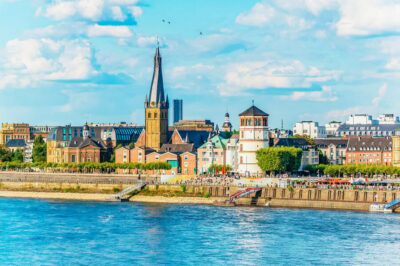 ★ 4.1Düsseldorf: City Sightseeing Cruise on the RhineFrom $232,954 reviews
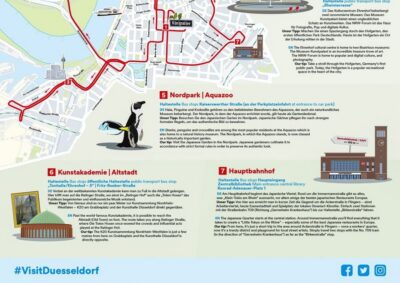 ★ 4.2Düsseldorf: 24-Hour Hop-On Hop-Off TicketFrom $281,685 reviews
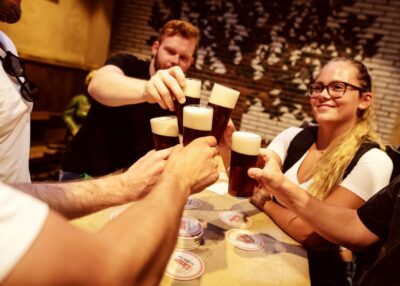 ★ 4.7Düsseldorf: Brewery Tour with Alt Beer TastingsFrom $321,523 reviews
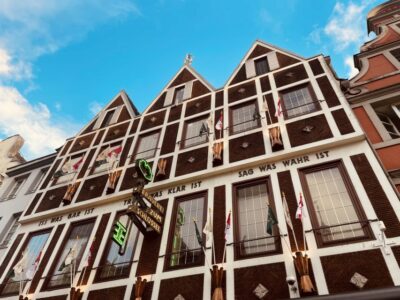 ★ 4.4Düsseldorf: Altbier-Safari Beer Walking TourFrom $431,150 reviews
 ★ 4.7Düsseldorf: Guided Tour with a Night WatchmanFrom $25986 reviews
 ★ 4.5Düsseldorf: Rhine Tower Adult EntryFrom $14638 reviews
 ★ 4.7Dusseldorf: Old Town & Altbier TourFrom $27585 reviews
 ★ 4.6Düsseldorf: Sushi, Sake & Japanese Lifestyle TourFrom $41539 reviews
Other lists this tour is on