
REVIEW · WESTPHALIA
e-Scavenger hunt Münster: Explore the city at your own pace
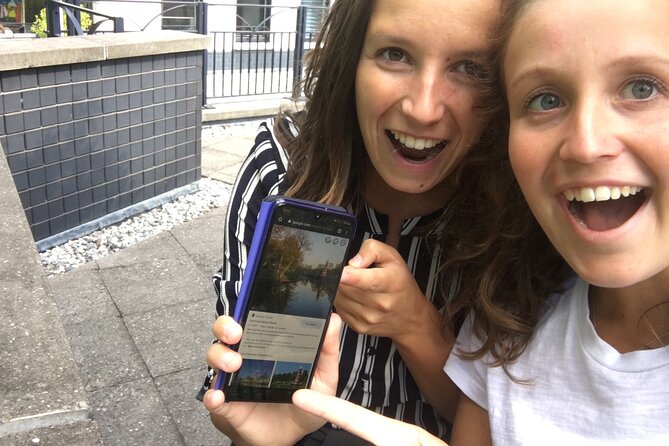
Münster turns into a scavenger hunt. You follow clues on your phone using GPS, moving at your own speed through some of the city’s best-known sights without being stuck in a loud pack. I like that it’s independent by design, so you can stop, look, and figure things out without a schedule bossing you around.
Two things I really appreciate about this setup: first, you get the game through a mobile ticket and smartphone, with no equipment pickup. Second, the route is designed to mix things up, so you often wander past spots you would not hit on a straight checklist. One consideration: the tasks can feel a bit repetitive, with some clue answers not requiring you to be at a specific spot, which can reduce the fun for people who want stronger “go here, do this” moments.
In This Review
- Key highlights at a glance
- How the e-Scavenger Hunt in Münster actually plays
- Price and value, especially for a group of up to 6
- Starting at Berliner Pl. 25, then walking a flexible city loop
- Stop-by-stop: what you see during the hunt
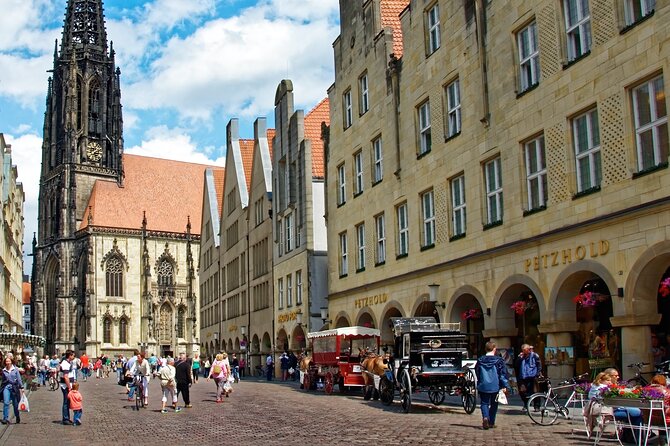
- Münster Cathedral and the City Hall that anchors the center
- The weekly market in front of the Dom
- City Museum and the idea of Münster over time
- Botanical Garden: a calm break with greenhouse time
- Saint Lambert Church and the Late Gothic feel
- Kunstmuseum Pablo Picasso Münster: graphics and contemporaries
- Kiepenkerl terrace statue: a photo pause that feels local
- Dominican Church, St. Clement’s Church, and St. Liudger Church
- Erbdrostenhof and the palace vibe along Salzstraße
- Münster City Library: a modern pause amid the classics
- What I like about this style of city game (and what to watch for)
- Getting around: transport links and walking comfort
- Accessibility notes that matter for real planning
- Should you book the e-Scavenger Hunt Münster?
Key highlights at a glance
- Smartphone-only start: use your phone and GPS, no ticket office lines
- Up to 6 people per group: good value for families or friends
- No fixed walking pace: 2 to 4 hours you can flex in real time
- Landmarks plus everyday city life: cathedral, town hall, museums, and the market area
- Randomized order: less of a straight-line tour, more unexpected streets
More Westphalian towns to compare
- e-Scavenger hunt Münster: Explore the city at your own pace★ 3.5 · 5 reviews
How the e-Scavenger Hunt in Münster actually plays
This is not a guided walking tour where one person talks the whole time. It is a self-guided city game you run on your smartphone. You use GPS to find the next location, then complete the prompt tied to that stop. Think of it as a calm way to get around, where the city becomes the puzzle board.
The game style matters. Instead of a narrator filling the gaps, you get a reason to look closely at details you might skip. That is where the experience becomes useful for future sightseeing too. By the end, you usually end up with a short list of places you want to revisit in daylight, with more time, or just to take better photos.
You should know one practical thing up front: the tour includes an online app, but it does not include the phone or your mobile data. In other words, plan for your own smartphone battery and a workable data connection, or you may end up doing the last part the old-fashioned way, with patience.
Price and value, especially for a group of up to 6
The price is $36.07 per group, up to 6 people. That is a big reason this can make sense. If you are traveling with a small group, a per-group game is often cheaper than multiple standard tours, and you still get a structured route.
The value is not just cost. It is also the “time you buy.” You get a ready-made loop through central Münster, with enough stopping points to feel like you saw a lot in 2 to 4 hours, yet still flexible enough to break the rhythm if you want a snack or a quick look inside a church.
Where it may feel less worth it is if you are the type who wants deep explanations at every stop. If your main goal is a lecture delivered while you walk, the format may feel light. The good news is you can always add your own context afterward by returning to one or two places you liked best.
Starting at Berliner Pl. 25, then walking a flexible city loop
The activity starts at Berliner Pl. 25, 48143 Münster, Germany. It also ends back at the meeting point, so you do not have to solve an open-ended “where do we finish?” puzzle.
Timing is straightforward. Expect 2 to 4 hours. In practice, this range is wide on purpose. Faster players keep moving through clues. Slower players linger at facades, read plaques, and check their surroundings before answering.
Availability runs daily, with opening hours listed as 12:00 AM to 11:59 PM during 01/27/2022 to 06/17/2026. So you can slot this into a morning, an afternoon, or even early evening. I suggest late morning or early afternoon if you want the best chance to find things open, and to make the most of the market area when it is active.
Stop-by-stop: what you see during the hunt

The game hits a set of major Münster landmarks, plus a few spots that feel more local than “tour bus famous.” Here is what you can expect as the route guides you around.
More puzzles to walk a city with
Münster Cathedral and the City Hall that anchors the center
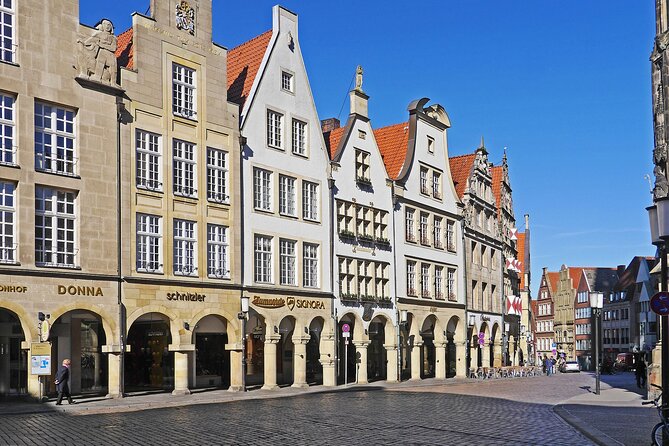
You will come across the Roman Catholic cathedral linked with Münster’s identity, plus the Historical City Hall nearby. These two buildings are core symbols of the city, so even if you are not a church-and-architecture person, you will probably slow down for a minute.
At the Historical City Hall, the big idea is what happened there. The building served as one of the places for negotiations of the Peace of Westphalia, the set of events that helped conclude the Thirty Years’ War in Western Europe and the Eighty Years’ War between Spain and the Republic of the Seven United Netherlands. In plain terms, this is a city where political history left physical footprints.
If you want a quick way to make sense of the area, do this: spend a moment looking at the streetscape between these two anchor points. Then use the game prompts to notice small details you might otherwise miss. It turns the center into a map you understand.
The weekly market in front of the Dom
Directly in front of the cathedral area, you get the weekly market setting. It is a wide spread of vegetables, fruit, plants, and flowers, plus regional specialties.
Even if you do not shop, the market stop is useful. It makes Münster feel like a living city rather than a string of monuments. If you are doing this hunt on a day the market is active, you can time your snack break here. If it is not active when you pass through, you can still use the square as an easy checkpoint for your own pacing.
City Museum and the idea of Münster over time
The City Museum covers the city’s story from its beginnings up to the present. This helps you anchor the walk. When the game takes you through architecture and landmarks, it is handy to have at least a basic “how the city grew” framework in your head.
The museum stop also works for different styles of travelers. If you like hands-on facts, you can spend extra time. If you prefer just a quick scan, you can treat it like a “set the context” stop and then move on to art and churches.
Botanical Garden: a calm break with greenhouse time
Another stop is the botanical garden, listed at about 5 hectares, with greenhouse space. A key detail: not all greenhouses are open year-round, but five out of ten greenhouses are open throughout the year. The site also notes an estimated 200,000 visitors per year.
This is a good “reset” moment during a game-style walk. It breaks the pattern of stone buildings and church facades, and it gives you a chance to slow down. If you like photos, this is where you can usually get calmer shots, without the crowd energy that often builds up in city centers.
Saint Lambert Church and the Late Gothic feel
The Saint Lambert Church is described as the most important sacred building of Westphalian Late Gothic. That single label is a helpful compass. You will know what to look for: the feel of late Gothic style rather than early, and the way details shape the look of the structure.
As with other churches on the route, your best approach is to take the exterior first. Then if you can step inside, compare how the building’s style translates from outside to inside. The hunt format gives you a reason to pause instead of rushing past.
Kunstmuseum Pablo Picasso Münster: graphics and contemporaries
You also reach the Kunstmuseum Pablo Picasso Münster. The museum is noted for a large collection of Picasso graphics, plus works by contemporaries connected to Münster.
This is a smart contrast to the older monuments. Even in a short 2 to 4 hour game, this art stop shifts your mental gears. If you are curious about 20th-century art but do not want an all-day museum plan, this kind of museum stop can be a perfect add-on to the walking game.
Kiepenkerl terrace statue: a photo pause that feels local
There is a statue placed in the middle of the terrace between the two Kiepenkerl restaurants. It is the kind of spot that is made for a quick stop, a short conversation, and a snack break nearby.
One word of caution: not every photo prompt will land the same way across seasons. If you are doing this during winter and the terrace setup feels less photogenic to you, treat the area as a waypoint rather than a forced photo moment.
Dominican Church, St. Clement’s Church, and St. Liudger Church
The hunt includes several churches close together, which makes this portion efficient for walking.
- The Dominican Church sits on Salzstraße, not far from St. Lambertus Church.
- St. Clement’s Church is a monastery and hospital church built between 1745 and 1753, designed by Johann Conrad Schlaun.
- St. Liudger Church is one of the oldest Catholic church buildings in Münster, with first construction dating to 1173.
When multiple church stops stack like this, I like to focus on differences, not just dates. Start by noticing exterior style and scale. Then, if there is access, look for how light and interior layout feel. The hunt prompts help you keep moving, but you still get a chance to compare eras.
Erbdrostenhof and the palace vibe along Salzstraße
Next you hit the Erbdrostenhof, described as an impressive palace in the historic center, built in the 18th century on Salzstraße. Even if you do not know who lived here historically, the “palace vibe” is visible in scale and façade.
This stop works well because it adds variety. The route is not only religious and museum sites. You are also seeing how power and administration shaped the look of the city.
Münster City Library: a modern pause amid the classics
The Münster City Library is on the route with its range of media and information. This is another “reset” stop, one that is more everyday than ceremonial.
For some people, a library stop feels odd in a hunt. For others, it is perfect. It makes the walk feel less like history cosplay and more like normal city life. If you need a break from streets, it gives you a reason to stop and regroup.
What I like about this style of city game (and what to watch for)
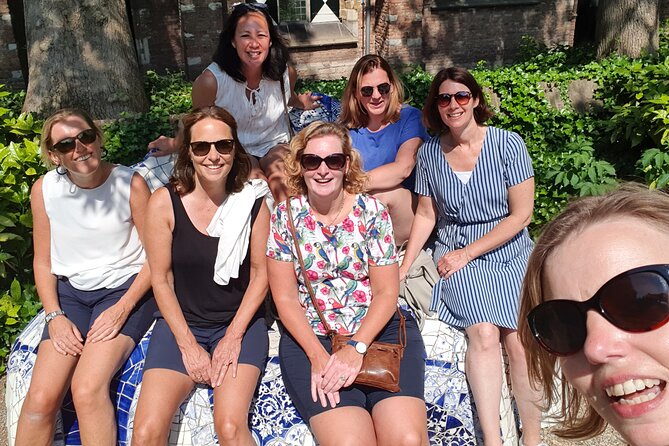
The strongest praise for this format tends to come from how easy it is to start and how much it reduces stress. The game is designed to be clear and user-friendly, so you do not spend half your time figuring out the app.
It also avoids the straight-line tour trap. Because the locations can arrive in a random order, you are less likely to walk the same “tourist path” every other visitor walks. That can lead to unexpected side streets and little surprises that feel more like exploring than sightseeing.
The tradeoff shows up if you want highly tailored background at every station. If you are hoping for lots of story depth in the prompts themselves, you may find the content a bit thin in places. There is also a concern that not every station truly requires you to be physically at the exact location to answer, which can lower the satisfaction for puzzle lovers who like precision.
Getting around: transport links and walking comfort

This is a walking game, but it is designed for a normal visitor pace. The route is near public transportation, so you can reach the meeting point easily and then keep walking.
Bring comfortable shoes. Münster’s center is walkable, but you will cover multiple stops. The benefit of the game is that it gives structure, so you do not feel aimless. Still, your feet will feel the difference between 2 hours and 4 hours.
Also, plan your phone power. You rely on GPS. If your battery is low, you might lose the very thing that makes the game work.
Accessibility notes that matter for real planning
The experience is listed as user friendly for the hearing impaired, and service animals are allowed. If that matters for your group, this is a good sign before you arrive.
It is also described as something most people can participate in, which usually means the route and instructions are not overly technical. Still, treat it as a walking activity and plan accordingly if you have mobility limitations.
Should you book the e-Scavenger Hunt Münster?
Book it if you want an easy, low-pressure way to see Münster’s top landmarks while walking on your own terms. The best fit is a small group that likes puzzles, appreciates self-guided exploring, and wants a built-in reason to check out places like Münster Cathedral, the Historical City Hall, the City Museum, and the Kunstmuseum Pablo Picasso Münster.
Skip it or lower expectations if your main goal is heavy-handed narration and strong “you must be here” clue design. The game can feel more like a light scavenger walk than a deeply researched guided tour.
If you do book it, my practical tip is simple: treat the hunt like the first draft of your Münster itinerary. When you find a stop you really connect with, plan to return later on your own and spend proper time there.
Seeing Dortmund in One Go
Play the City, Reviewed
Aachen, Munster and Westphalia
Everything else we filed on Dortmund
- Private scavenger hunt around the Berge Castle in Gelsenkirchen
★ 3.5 · 4 reviews - Explore Münster in 60 minutes with a Local
★ 4.0 · 4 reviews - e-Scavenger hunt Münster: Explore the city at your own pace
★ 3.5 · 5 reviews - Dortmund Soccer Segway Tour
★ 5.0 · 10 reviews - Private audio book city rally around the Rombergpark in Dortmund
★ 4.0 · 12 reviews - Combi Ticket: LEGOLAND Discovery Centre & SEA LIFE Oberhausen
★ 3.5 · 19 reviews
Aachen Munster and Westphalia Tours, side by side.
 ★ 4.7Münster: Old Town Highlights Guided TourFrom $16286 reviews
 ★ 4.4Münster: Nachtwächter-Führung (Erlebnistour)From $19213 reviews
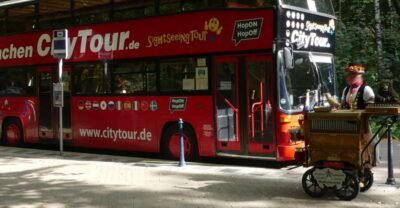 ★ 4.0Aachen: 24-Hour Hop-On Hop-Off Sightseeing Bus TicketFrom $28208 reviews
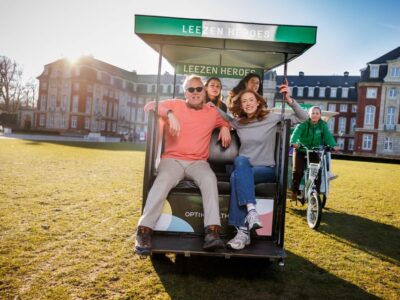 ★ 4.8Münster: Private Guided Rickshaw City TourFrom $33143 reviews
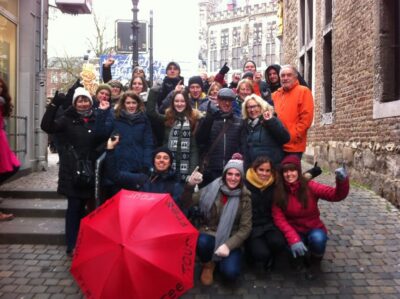 ★ 4.7Explore Aachen with Passionate Tour GuidesFrom $371 reviews
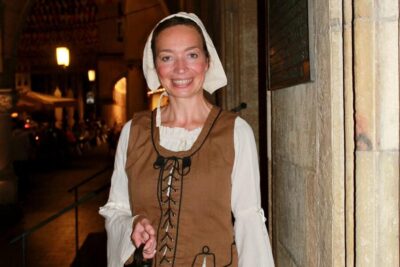 ★ 4.8Münster: Night watchman tour through the picturesque old town by lantern lightFrom $2165 reviews
 ★ 4.6Paderborn: Nachtwächter-Führung (Erlebnistour)From $1961 reviews
 ★ 4.7Münster: Beer Tasting Rickshaw TourFrom $7056 reviews
Other lists this tour is on