
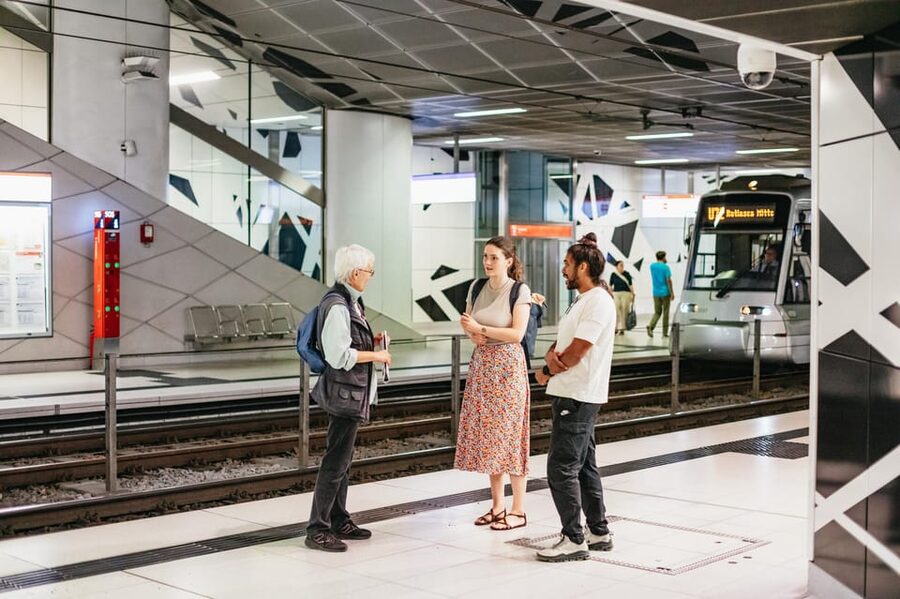
REVIEW · DUSSELDORF
Düsseldorf: The Wehrhahn Line Metro Guided Tour
Art in the metro? Yes, and it works here. This Wehrhahn Line guided tour trains your eyes on how Düsseldorf turns everyday commuting into public art. I like that the guide keeps the story clear and practical, and the pacing stays manageable, even when you are in a small group. One thing to plan for upfront: the tour is German-only, and you need a Metro ticket in fare category A3.
You will focus on key stations along the route, including Pempelforter Straße, Schadowstraße, Heinrich-Heine-Allee, Benrather Straße, and Kirchplatz. Across the line, the design concept for six subway stations was developed by different artists in cooperation with the subway engineers, so you will see how creativity fits real transportation needs. Expect a mix of painted, sculptural, interactive, acoustic, and geometric features.
You can book a shared group or a private guided tour. Either way, it is built as a short walking-and-looking circuit that starts at Pempelforter Straße and ends back at the meeting point area, which makes it easy to plug into a busy Düsseldorf day.
In This Review
- Key highlights at a glance
- Art in a place you usually rush through
- Price and time: $20 for 1.5 hours that teaches you how to look
- Metro ticket reality: what you must do before meeting
- Where to meet on the ground: Pempelforter Straße access
- Shared group vs private tour: pick based on your style
- What the guide actually helps you notice
- Stop-by-stop on the Wehrhahn Line
- Pempelforter Straße: start with the station identity
- Schadowstraße: art that reads at human speed
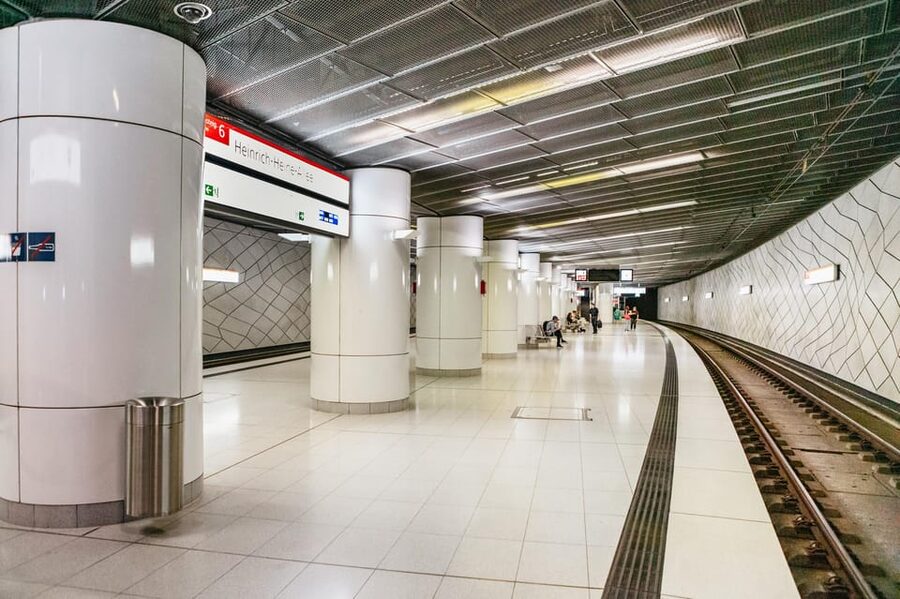
- Heinrich-Heine-Allee: the line’s design concept in action
- Benrather Straße: where geometry and form take over
- Kirchplatz: finish at a recognizable anchor
- The value you get that most station photos miss
- Who should book this Wehrhahn Line tour
- Should you book the Düsseldorf Wehrhahn Line guided tour?
- FAQ
- How long is the Düsseldorf Wehrhahn Line metro guided tour?
- How much does the tour cost?
- Do I need a Metro ticket to join?
- Where does the tour meet and where does it end?
- Which stations are included on the tour?
- Is the tour in English?
- Can I choose a shared group or private tour?
Key highlights at a glance
- Art and engineering together: Six stations designed through collaboration between artists and subway engineers
- Multiple art types in one line: painted, sculptural, interactive, acoustic, and geometric elements
- Top stations on the Wehrhahn Line: Pempelforter Straße, Schadowstraße, Heinrich-Heine-Allee, Benrather Straße, Kirchplatz
- Small-group feel: good chance for an easy, conversational pace
- Choose your style: shared group or private tour
- Photo moments built in: time for pictures during the route
More Rhine and Ruhr city days
- Düsseldorf: City Sightseeing Cruise on the Rhine★ 4.1 · 2,954 reviews
- Düsseldorf: 24-Hour Hop-On Hop-Off Ticket★ 4.2 · 1,685 reviews
- Düsseldorf: Brewery Tour with Alt Beer Tastings★ 4.7 · 1,523 reviews
- Düsseldorf: Altbier-Safari Beer Walking Tour★ 4.4 · 1,150 reviews
Art in a place you usually rush through
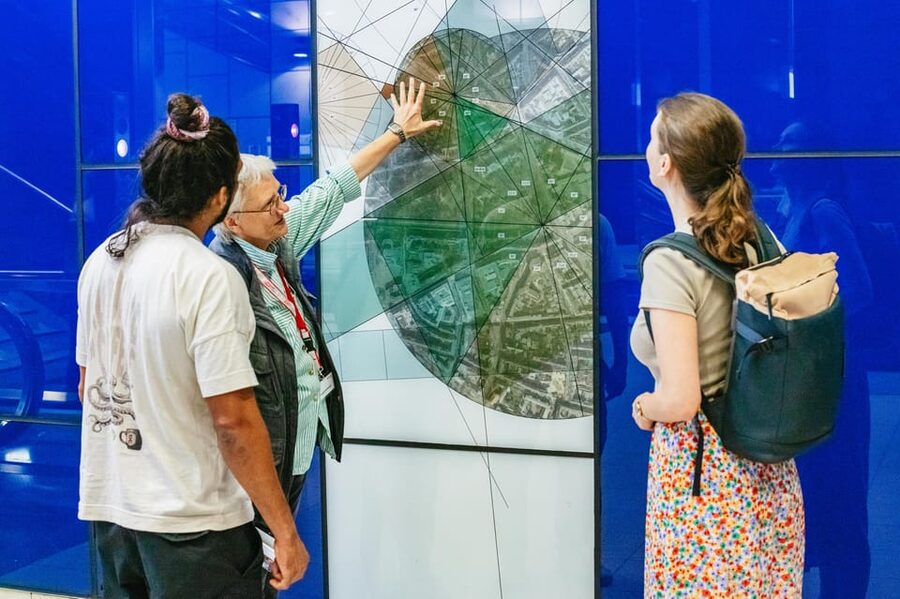
Most people treat a metro station as a hallway with stairs. This tour asks you to do the opposite, slow down, and look at what is on the walls, in the shapes, and in the way sound and space are handled.
What makes the Wehrhahn Line especially worth your time is that it is not just “pretty decoration.” The concept for the line involved different artists working alongside the subway engineers. That means the art is not an add-on. It is part of the station design problem, how people move, where light hits, and how the platform experience feels.
I also like the human side of the experience. The best feedback points to guides who explain clearly and keep the information organized. One comment specifically called out an older guide who managed to explain everything well, which tells you something important: you do not need deep technical knowledge to get value from this.
Price and time: $20 for 1.5 hours that teaches you how to look
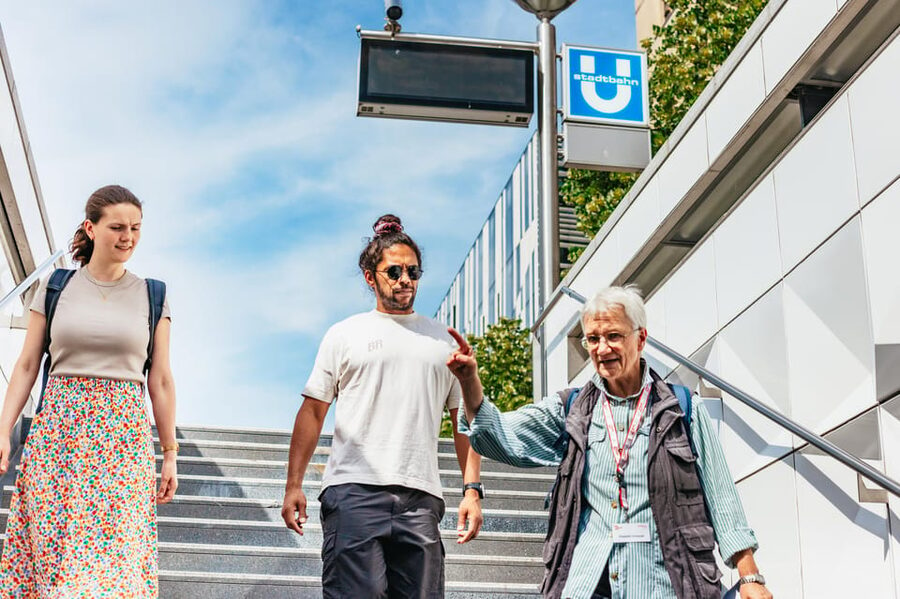
At about $20 per person for roughly 1.5 hours, this is a “high learning per minute” kind of tour. You are paying for someone to interpret design choices, not for long transit or museum entry tickets.
Is it a bargain? It can be, if you care about design, public art, architecture, or just learning how cities shape daily life. You get a guided look at a focused stretch of the U-Bahn line, with multiple notable stations and a mix of art styles mentioned for the route.
The one trade-off is that it stays short. This is not a full-day architectural survey of Düsseldorf. If you want to spend hours going deep into one single station or want long indoor time, you might find 1.5 hours tight.
Metro ticket reality: what you must do before meeting
The tour itself includes the guided portion. What you need to bring is a Metro ticket in fare category A3. The cost of that ticket is not included, so check the current local pricing before you go and buy it in advance when possible.
Plan for this in your schedule. If you show up late or without the ticket, you lose time right when the tour starts. Also remember the guide language is German only. If you do not speak much German, you can still enjoy the visual parts, but you should expect less back-and-forth and fewer explanations you can follow word-for-word.
Where to meet on the ground: Pempelforter Straße access
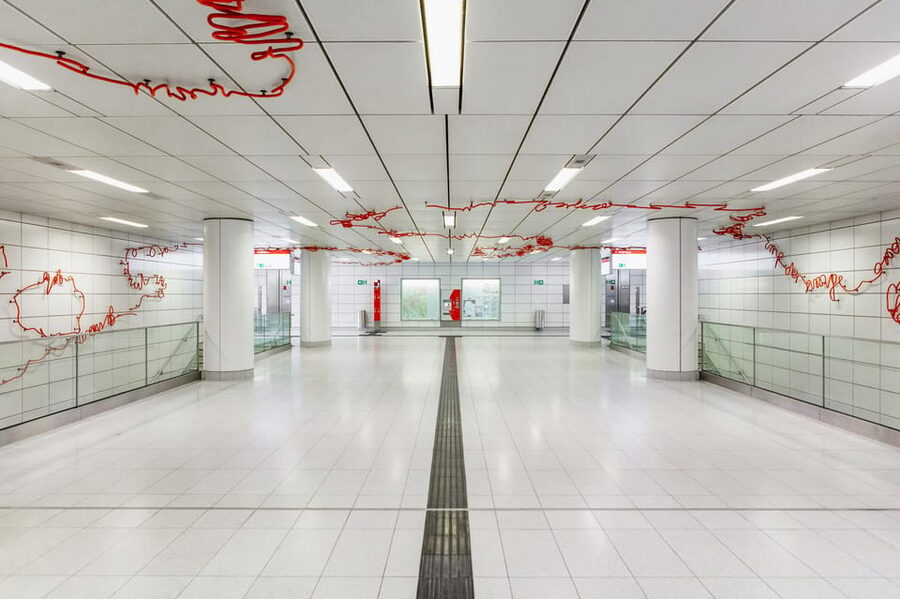
The meeting point is at street level at the station access on Pempelforter Straße on Oststraße, at the corner with Am Wehrhahn.
This matters more than you might think. Station entrances can be spread out, and U-Bahn signage can look similar at first glance. When a tour starts on the corner of two streets, give yourself a few extra minutes to confirm you are standing in the right exact spot.
The tour ends back at the meeting point area. The route notes also list Kirchplatz and Oststraße as possible drop-off locations, so treat it as a loop that finishes near where you started, even if the exact exact stopping point can vary by how the group moves.
Shared group vs private tour: pick based on your style

You have two options: a shared group tour or a private guided tour.
A shared group is often the best value when you are comfortable listening with other people and you want a social, lively pace. The strongest praise for the experience points to a good group size and helpful, competent guidance. That is exactly what you want in a shared setting.
A private tour is better if you want more flexibility, quieter conversation, or you have specific interests in how one station type uses art, sound, or geometry. The content is still the same general idea: art and architecture on the Wehrhahn Line, station by station.
Either way, the tour is designed to be walk-and-look friendly. You are not getting stuck in one spot for the whole time.
What the guide actually helps you notice

A guided station tour works only if it changes your perspective. This one is built around the design concept for the six stations and the fact that different artists contributed. That gives you a simple lens for the whole experience:
You are not just seeing a station. You are seeing multiple creative approaches to solving how a transit space looks and feels.
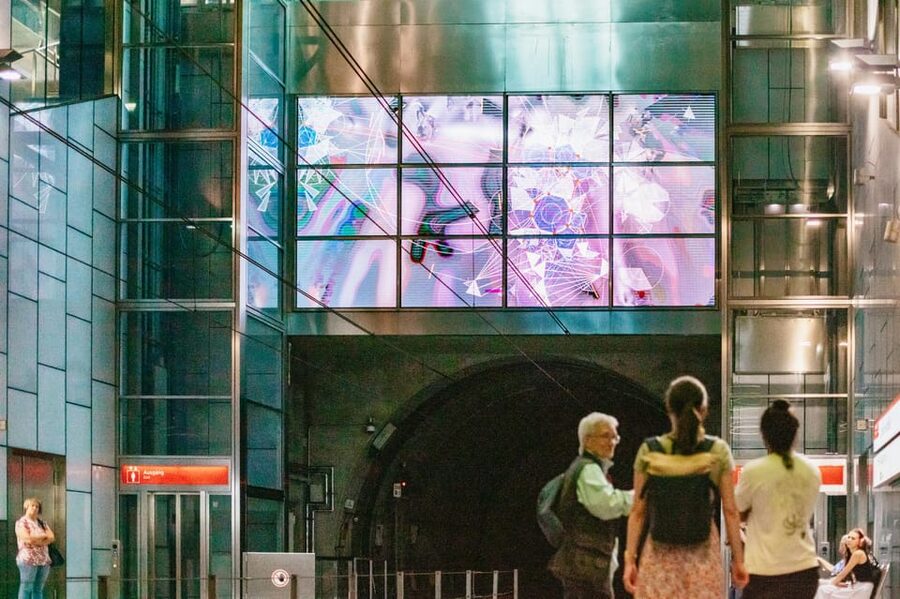
During the tour, you will hear about the execution of the design concept and how artists coordinated with subway engineers. Then you will get to admire each stop’s distinctive character, including elements like painted details, sculptural forms, interactive pieces, acoustic effects, or geometric patterns.
You do not need to identify every material. I would focus on asking yourself one question at each station: What is this station trying to make you feel while you wait or move through it?
Stop-by-stop on the Wehrhahn Line
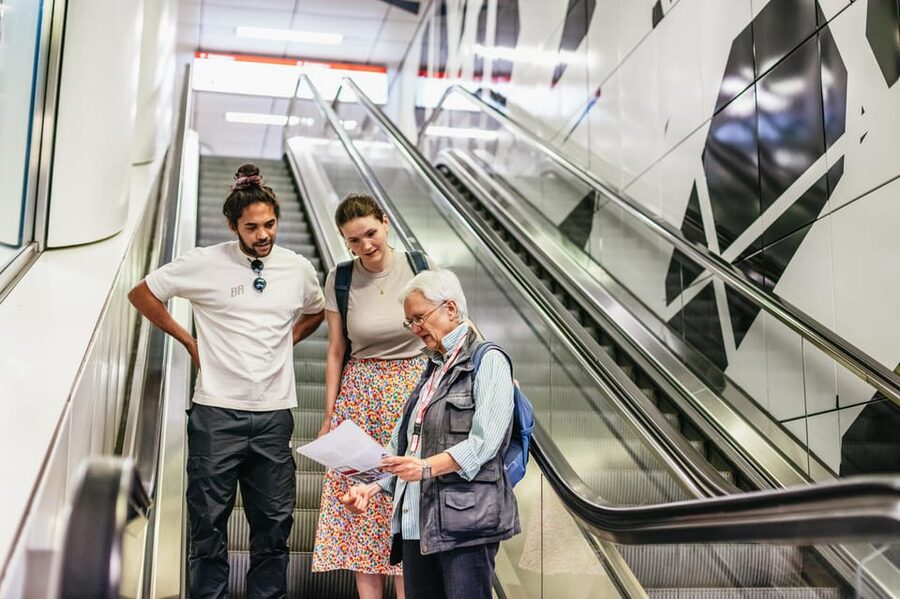
The route centers on some of Düsseldorf’s best-known Wehrhahn Line stations. Here is how to think about each stop, and what to watch for as the art meets the architecture.
Pempelforter Straße: start with the station identity
You begin at the Pempelforter Straße area, where the tour starts near the street-level access on Oststraße, corner Am Wehrhahn. Think of this first stop as your visual warm-up.
Why it matters: the tour is about pattern recognition. The guide typically sets the tone early, so you can later compare how the next stations shift from painted effects to sculptural forms or other design approaches. If you miss the explanation at the start, you might still enjoy the visuals, but the “why” behind the artwork will land later.
Practical tip: keep your phone camera ready for quick photo moments. The route includes a photo stop, and you will likely want images of the most distinctive design areas.
Schadowstraße: art that reads at human speed
Schadowstraße is one of the named notable stops on the line. In a guided format, this kind of station often shines because it is easy to notice the design features while you are moving.
What to watch for: look for how the station’s design guides your eye. Even when the artworks are not literal sculptures, the shapes and geometry can create a sense of direction. If you are used to rushing through transit, this is a great station to practice slowing down for 30 seconds at a time.
A small-group pace helps here. Many tours get loud and chaotic after the first stop. This one tends to stay manageable, based on feedback about small groups and a guide who keeps things organized.
Heinrich-Heine-Allee: the line’s design concept in action
Heinrich-Heine-Allee is another key station on the itinerary. Since the tour covers multiple stations, this is the point where you start noticing how the art concept changes station to station while still belonging to the same line.
Why it is valuable: you get to see collaboration in a very real context. Artists brought different design ideas, and the subway engineers made sure they worked in a transit system. That is a rare combination to experience without needing special building knowledge.
If you want something to do during the stop, count how many distinct visual zones you can identify, such as wall sections, ceiling or lighting areas, and platform-side design moments. The tour nudges you toward that kind of observation.
Benrather Straße: where geometry and form take over
Benrather Straße is on the list of notable stops, and the description of the overall line includes geometric features and sculptural elements. That makes this station a logical “pattern shift” point in your mental map.
What to watch for: shapes and structure. Even if you do not know design terminology, your eyes can still track how the station uses form to break up flat surfaces. If the previous stop felt more painted or color-led, this is where a sculptural or geometric moment can change how the space feels.
This is also a good stop for questions. Since the guide language is German, keep it simple. Point and ask something like, what is the main idea here. Even if you only understand part of the answer, the visuals will click after.
Kirchplatz: finish at a recognizable anchor
Kirchplatz appears both as a notable stop and as a listed drop-off location. That often makes it feel like a natural conclusion area for the route.
Why it matters: after five or so stops, you will probably be better at noticing how each station’s character differs. Kirchplatz is a good place to compare back to your first impression at Pempelforter Straße. Do you remember what kind of design element stood out most early on? Does Kirchplatz shift the mood, or does it keep the same tempo?
Since the tour ends back at the meeting point area, Kirchplatz also helps you understand how this transit line ties back into the broader street-level walk. You leave with a stronger sense of how U-Bahn design connects to the city above.
The value you get that most station photos miss
Here is what I think makes this tour worth more than a casual station stroll. A guided look gives you vocabulary, not just images.
Instead of saying, that is cool, you start connecting details to a concept: artists created station design ideas, engineers made them functional, and each station has its own character. The result is that you do not just see art inside transit. You understand why the art looks the way it does in the context of a working system.
The strongest praise in the experience points to the guide doing exactly that, with plenty of information and interesting details. One highlight noted masses of info and interesting specifics, which is what you want if you care about the “how” behind design.
Who should book this Wehrhahn Line tour

Book it if you:
- enjoy public art, architecture, and design details
- want a short activity that makes you look at the city differently
- prefer a guided structure over wandering stations without context
- travel with at least some flexibility to listen in German
Consider skipping it if:
- you need English narration or you cannot follow German at all, even with visual support
- you only want a quick photo stop and do not care about design explanations
- you want a long, deep museum-style experience rather than 1.5 hours on a focused route
Should you book the Düsseldorf Wehrhahn Line guided tour?
If you like design and you want a practical way to experience Düsseldorf beyond the usual sights, I would book it. For the price, you get a guided explanation of how the six-station concept was developed and how multiple artists shaped the look and feel, then you get to see those station characters up close.
Choose the shared group if you want a social pace and you are comfortable listening to German. Choose private if you want quieter time to ask questions and compare station design elements without the group moving you along too fast.
Just make sure you plan for the Metro ticket in fare category A3 and arrive at the Pempelforter Straße corner on time, so the tour starts smoothly and you do not miss the early setup that helps the rest of the line make sense.
FAQ
How long is the Düsseldorf Wehrhahn Line metro guided tour?
It runs for about 1.5 hours.
How much does the tour cost?
The price is $20 per person.
Do I need a Metro ticket to join?
Yes. You must purchase a Metro ticket in fare category A3.
Where does the tour meet and where does it end?
You meet at the street-level station access on Pempelforter Straße on Oststraße, at the corner Am Wehrhahn. The activity ends back at the meeting point area.
Which stations are included on the tour?
The tour highlights stations including Pempelforter Straße, Schadowstraße, Heinrich-Heine-Allee, Benrather Straße, and Kirchplatz.
Is the tour in English?
No. The live guide language is German.
Can I choose a shared group or private tour?
Yes. You can select either a shared group guided tour or a private guided tour.
Dusseldorf and the Ruhr, Reviewed
Everything else we filed on Dusseldorf
- Dusseldorf: City Walk Audio Guide in 7 Languages on your Phone
★ 4.5 · 11 reviews - Düsseldorf: 2-Day Art Exhibition and Museum Pass
★ 4.6 · 13 reviews - DüsseldorfCard Plus
★ 4.1 · 14 reviews - Sightrunning – Private Running Tour in Düsseldorf
★ 5.0 · 16 reviews - Dusseldorf : Highlights Walking tour with A Guide
★ 4.6 · 16 reviews - Düsseldorf PubCrawl: 4 Venues, Welcome Shots + Club Entry
★ 5.0 · 18 reviews
Dusseldorf and the Ruhr Tours, side by side.
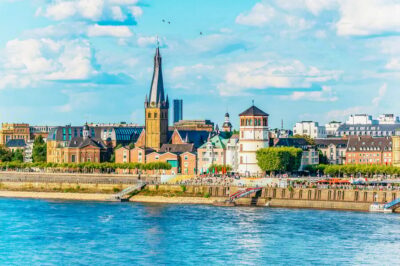 ★ 4.1Düsseldorf: City Sightseeing Cruise on the RhineFrom $232,954 reviews
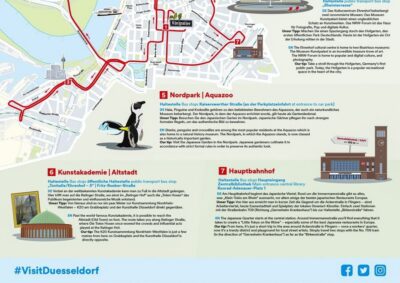 ★ 4.2Düsseldorf: 24-Hour Hop-On Hop-Off TicketFrom $281,685 reviews
 ★ 4.7Düsseldorf: Brewery Tour with Alt Beer TastingsFrom $321,523 reviews
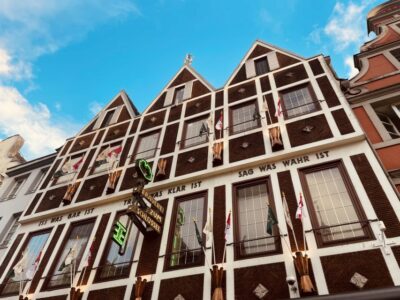 ★ 4.4Düsseldorf: Altbier-Safari Beer Walking TourFrom $431,150 reviews
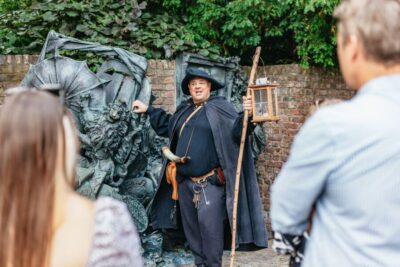 ★ 4.7Düsseldorf: Guided Tour with a Night WatchmanFrom $25986 reviews
 ★ 4.5Düsseldorf: Rhine Tower Adult EntryFrom $14638 reviews
 ★ 4.7Dusseldorf: Old Town & Altbier TourFrom $27585 reviews
 ★ 4.6Düsseldorf: Sushi, Sake & Japanese Lifestyle TourFrom $41539 reviews
Other lists this tour is on