
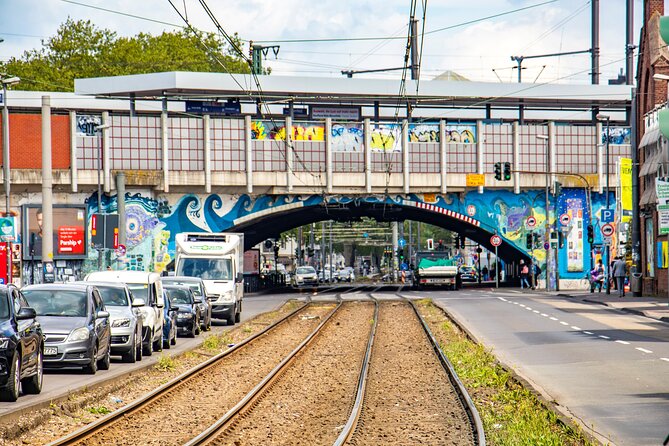
REVIEW · BERLIN
Explore Cologne’s best Street Art Quarter
Cologne street art gets explained, not just photographed. I love the small-group attention and how your guide turns each wall into a lesson on different street art and graffiti styles. You’ll start with a landmark building from 1884, then move through Ehrenfeld and back toward the city with a real sense of place. One possible drawback: at $152.67 for about 1 hour 30 minutes, the pace may feel short if you want to linger longer on every piece.
This is a practical, walk-it-off tour, offered in English, and capped at a maximum of 8 travelers. If you like your street art with context, not only photos, you’ll have a good time. If you want lots of stops and long photo breaks, you may wish for a longer format.
In This Review
- Key highlights at a glance
- Goethe Apotheke im Helioshaus, 1884 architecture before the murals
- Heliosstraße: from Sei Leise paste-ups to Alexander Isakov murals
- Bürgerzentrum Ehrenfeld and Lessingstraße: socially critical art and graffiti color
- Roa’s monochrome animals, Ain Café community art, and the Edelweißpiraten memorial
- Ehrenfeld train station walls: Freedom, Plattenbau memories, and commuter energy
- Captain Borderline’s Animals and Faith47’s Maria in the heart of Cologne
- City Leaks Festival street art and the calm finish at Goldmund Literatur Café
- Price and logistics for a $152.67, 1.5-hour small-group walk
- How to get the best out of each mural stop
- Who this Cologne street art quarter tour fits best
- Should you book this street art quarter tour?
- FAQ
- How long is the Cologne street art quarter tour?
- What language is the tour offered in?
- What does the tour cost and is it for individuals?
- What is included and what is not included?
- Where does the tour start and end?
- Can I use a mobile ticket, and how close is it to public transport?
- Is free cancellation available?
Key highlights at a glance
- Max 8 travelers keeps questions and explanations from getting lost in the group shuffle
- Street art style tutoring helps you recognize themes, techniques, and artist intent
- Ehrenfeld focus gives you a neighborhood feel, not just a few wall selfies
- Big name artists on real streets includes Captain Borderline, Faith47, Roa, and more
- Architecture first, murals second starts the day with the Goethe-Apotheke im Helioshaus building
- Easy end point at Goldmund means a comfortable landing after the walk
Deeper into the painted backstreets
- Cologne: Ehrenfeld District Street Art Walking Tour★ 4.9 · 202 reviews
- Cologne: Ehrenfeld Street Art Bike Tour★ 4.9 · 105 reviews
- Köln Ehrenfeld: Street Art und Graffiti Tour Walls of Wonder★ 5.0 · 70 reviews
- Street Art Tour Cologne Ehrenfeld★ 5.0 · 64 reviews
Goethe Apotheke im Helioshaus, 1884 architecture before the murals
Your tour opens at Goethe Apotheke im Helioshaus, a classical architectural jewel from 1884. Even if street art is your main mission, this first stop matters because it sets the tone. Before you chase paint and paste, you get a sense of Cologne’s built environment and how these streets actually function as part of daily life.
Look for the arched facades, the ornate staircases, and the light-flooded atrium. That matters because street art in Cologne is not floating in a museum void. It’s placed against real surfaces, real buildings, and real neighborhoods. Starting here helps your eyes adjust quickly, so when you step out onto Heliosstraße, you’ll notice composition, placement, and contrast instead of only the artwork itself.
This stop also works as a calm, short reset point. It’s easier to get oriented for what comes next, especially on a 1 hour 30 minute tour where good flow is everything.
Heliosstraße: from Sei Leise paste-ups to Alexander Isakov murals
Next, you head to Heliosstraße, where the street art scene turns into a walking syllabus. This part is where I like the tour’s practical approach best: you learn that street art is not one thing. It’s multiple styles, multiple methods, and multiple goals, from quick, ephemeral work to larger, painted storytelling.
You’ll encounter pieces ranging from Sei Leise’s ephemeral paste-ups to Alexander Isakov’s utopian architecture murals. That contrast is the lesson. Paste-ups can feel intimate and temporary, like something you only catch if you’re paying attention. Larger murals, especially the architecture-themed ones, tend to create a bigger visual argument about how people imagine futures and cities.
As you move, you’ll also get a feel for why this neighborhood works for walking tours. The artwork is placed along a path, so the guide can connect what you see now with what you’ll see a few minutes later, instead of treating each wall as a one-off photo spot.
Practical tip: keep your phone camera ready, but also pause long enough to read the artwork’s layout. With this kind of guided tour, your best photos usually come after you understand what you’re looking at.
Bürgerzentrum Ehrenfeld and Lessingstraße: socially critical art and graffiti color
The tour then leans into Ehrenfeld, with stops that bring both message and technique to the front.
At Bürgerzentrum Ehrenfeld, you’ll explore thought-provoking murals. Captain Borderline’s socially critical masterpieces are the type of work that makes you look twice, because the figures and scenes often point to bigger issues than the artwork’s surface. Next to that, you’ll see Barbara Deppner’s mosaic magic, which adds another layer to the lesson. Mosaic-style street art can look playful at first glance, then reward you with patterns and details that feel crafted rather than sprayed.
From there, you move to Lessingstraße, an urban canvas showcasing graffiti by HNRX. Don’t miss Just Love, described as an ode to borderless creativity and the artist’s playful spirit. That phrase is useful because it points to what you should watch for: not only color and letters, but also how the piece communicates attitude. In graffiti, tone is part of the language.
Drawback to consider here: if you hate reading street art themes and would rather only look at the aesthetics, some of the social commentary may feel like more talk than you want. For me, that’s exactly what makes the tour worth it, since you’re not left guessing.
Roa’s monochrome animals, Ain Café community art, and the Edelweißpiraten memorial
Now you hit a different emotional register. Roa’s monochrome murals shift the palette and the mood with stark animal portraits that blend mortality and vitality. This is the kind of work that can stop your feet even if you’re moving fast. Monochrome at street level hits different, because it tends to feel heavier and more deliberate.
Nearby, you’ll also spot art adorning Ain Café. That small addition is smart. It reminds you that street art in this area is not limited to a few curated walls. It spreads into places where people actually meet, eat, and linger. Even when you are not planning to stop for a long break, it helps you connect the dots between street art and community life.
Then you shift again, to Schönsteinstraße, where you’ll experience Captain Borderline’s memorial to the Edelweißpiraten resistance fighters. That stop changes the meaning of street art in your mind. It’s not only decoration or rebellion for its own sake. Here it can act like public memory, placed where people will pass and notice.
Why this sequence works: the tour moves from social critique to human emotion (and death-and-life themes) to history and remembrance. You come away with a wider understanding of what murals can carry.
Ehrenfeld train station walls: Freedom, Plattenbau memories, and commuter energy
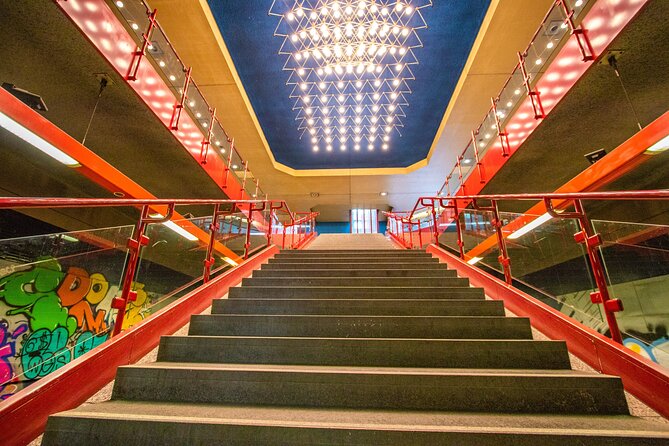
The tour doesn’t keep you in a gallery-sized bubble. It takes you to Ehrenfeld train station, where street art meets real transit flow.
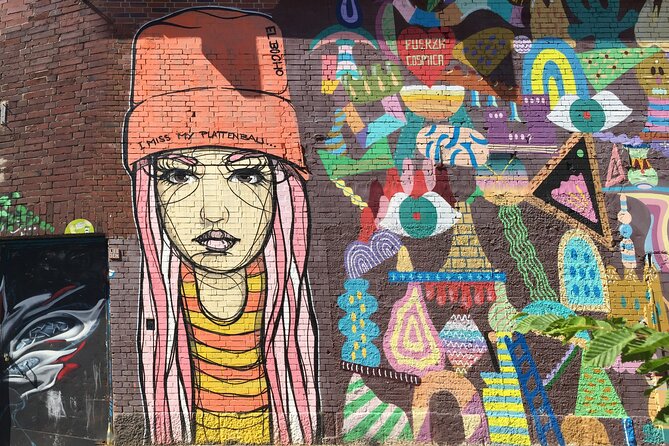
Here you’ll see Huami’s Freedom and El Bocho’s playful I miss my Plattenbau. This pairing is telling. Freedom suggests a serious message, while I miss my Plattenbau plays with nostalgia and everyday architecture culture. Together, they show how the station environment can hold both weight and humor at once.
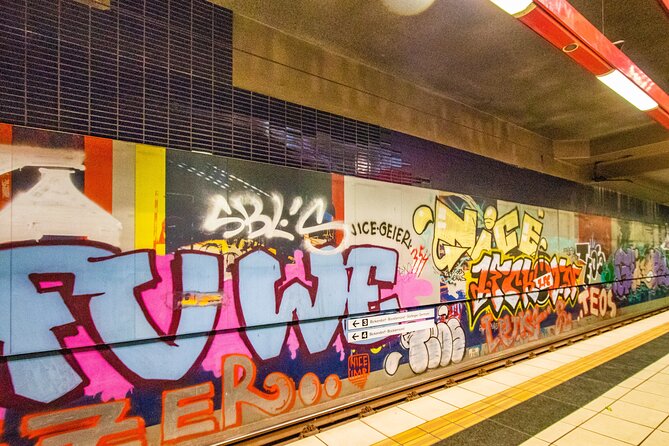
Standing near a transit hub also gives you a reality check. You’ll likely notice how quickly people move past art, and how much meaning changes when a mural becomes part of someone’s commute. If you want to understand street art’s impact, this is one of the best places on the itinerary for that perspective.
One consideration: since this is a train station, crowds and movement can affect your pacing. You may need to accept shorter visual moments for each piece than you’d take in a quieter street. The guide’s job is to keep it smooth, and that’s where the small group size becomes more than a nice extra.
Captain Borderline’s Animals and Faith47’s Maria in the heart of Cologne
Back among larger, more central murals, you’ll encounter Captain Borderline’s Animals and Faith47’s religiously inspired Maria.
This is a strong reminder that Cologne’s street art isn’t locked into one genre. It can be animal symbolism, religious iconography, or social commentary, and it can still sit comfortably in the same urban space. The tour’s value comes from helping you notice those connections without forcing everything into one interpretation.
When you see Animals by Captain Borderline, take a moment to look at how the figures occupy the wall. Street art often works like stage design. The composition pulls your eye in a direction, and the guide’s explanations help you see why that layout matters.
Then Faith47’s Maria adds another emotional tone. Even if you’re not focused on religious themes, the style and imagery can teach you how street art borrows from established icon language, then transforms it into something public and street-level.
If you’re the type of traveler who likes to ask why an artist chose this exact image, this section is where the guide’s context can really pay off.
City Leaks Festival street art and the calm finish at Goldmund Literatur Café
The last stretch brings you into the atmosphere of the City Leaks Festival, where you’ll see murals credited to M-City’s The Eye and SYM1’s Captain Ehrenfeld.
Festival settings often bring experimentation. You tend to see bolder visuals and more playful references, and the guide helps you understand how the work fits into the broader festival energy rather than treating it like random wall decoration. The Eye also acts as a great final visual. It’s the kind of artwork that feels like it’s watching you back, which is perfect for closing a tour where you’ve been training your eye all along.
Then you wrap up at Goldmund Literatur Café Restaurant on Glasstraße 2. The meeting end point is also where you can take a breather, and yes, there’s an explicit suggestion to treat yourself with a piece of cake at Goldmund Literatur Café. After a walking tour, that is a genuinely good idea. Food is not included, so having a café finish that’s close by helps your day stay easy.
I like this ending because it gives you a buffer. You can decompress, review photos, and map out where you want to go next without racing the clock.
Price and logistics for a $152.67, 1.5-hour small-group walk
Let’s talk value. At $152.67 per person for about 1 hour 30 minutes, you’re paying for more than the artwork. You’re paying for guided interpretation, focused attention, and a route that hits multiple street art zones in one tight loop.
That small-group cap of 8 travelers is a big part of the price justification. In a group of that size, you’re more likely to get answers to questions like:
- Why this style here?
- What does the symbolism suggest?
- How does the artist’s method change the message?
Also, the tour offers a mobile ticket, which makes it simpler for you to show up without scrambling at the last minute. It’s near public transportation too, which helps if you’re building it into a Cologne day that already has other plans.
Now the drawback. One of the practical frustrations noted about the tour is that it can feel short for the cost, and the experience could be much longer. That’s a fair consideration. If street art is your top priority, plan to spend extra time after the tour wandering in Ehrenfeld or around whatever murals linger in your memory.
How to get the best out of each mural stop
This tour rewards attention. You’ll get more out of it if you do a little prep and a little slowing down.
First, wear comfortable shoes. You’re getting to know Cologne by foot, and you’ll be moving between stops through real neighborhoods and a train station. Second, bring your phone fully charged, but don’t treat the camera like a substitute for looking. The guide’s explanations are part of the experience.
Third, pace your day around the tour length. Since it’s about 1 hour 30 minutes, you’ll feel the efficiency in the schedule. If you’re trying to cram three other major sights right before or after, you might feel rushed instead of informed.
Food and drinks are not included, but the itinerary ends at Goldmund Literatur Café Restaurant, so you have an easy option right afterward. If you get snacky during the walk, plan for it before you start.
Finally, come ready to recognize styles, not just artists. The route is built to show different methods, from ephemeral paste-ups to larger mural work and monochrome animal portraits. If you watch for technique, you’ll come away with a better visual vocabulary for Cologne on your own.
Who this Cologne street art quarter tour fits best
This is a great pick if you:
- Like street art with context and clear explanations
- Want to learn how graffiti and mural styles differ
- Prefer a small group walk over a big bus tour
- Are curious about how murals handle topics like history, community, and belief
It also works well for first-time visitors to Cologne because the tour organizes multiple street art hotspots into a coherent route. And because it ends at a café that caters to book lovers, it’s a nice way to transition from street-level intensity into something calmer.
If you already know a lot about graffiti culture and you mainly want long stops for photography, you may prefer a longer, unguided wandering time afterward. The guided format is focused, not slow.
Should you book this street art quarter tour?
I’d book it if you want a guided street art walk that actually helps you see what you’re looking at, not just where to point your camera. The route covers strong names and varied styles, and the small-group cap keeps the explanations practical.
Skip it or pair it with extra independent time if you feel the 1 hour 30 minutes pacing will frustrate you. At $152.67, you should expect a tight itinerary, not a slow mural festival day.
If you do book, wear comfortable shoes, plan your next stops nearby, and give yourself permission to pause. Street art is quick to notice, but it’s better to understand it first.
FAQ
How long is the Cologne street art quarter tour?
It lasts about 1 hour 30 minutes.
What language is the tour offered in?
The tour is offered in English.
What does the tour cost and is it for individuals?
The price is $152.67 per person.
What is included and what is not included?
Included are an enthusiastic and knowledgeable Local eager to show you the city, plus positive vibes. Not included are personal expenses, food, drinks, or snacks, and any gallery entry fees.
Where does the tour start and end?
It starts at Goethe Apotheke, Venloer Str. 389, 50825 Köln, Germany. It ends at Goldmund Literatur Café Restaurant, Glasstraße 2, 50823 Köln, Germany.
Can I use a mobile ticket, and how close is it to public transport?
Yes, it uses a mobile ticket, and the tour is near public transportation.
Is free cancellation available?
Yes. You can cancel up to 24 hours in advance for a full refund.
More Painted Walls and Backyards
Everything else we filed on Cologne
- XXL tour (11km)
★ 5.0 · 3 reviews - Compact tour (7km)
★ 5.0 · 3 reviews - Köln Night PubCrawl: 4 Venues, Welcome Shots + Club Entry
★ 3.5 · 4 reviews - Private Vacation Photoshoot with Photographer in Cologne
★ 5.0 · 4 reviews - Discover Cologne’s Christmas Market Magic with a Local
★ 4.5 · 4 reviews - From Amsterdam: Cologne Private Sightseeing Tour
★ 5.0 · 4 reviews
Street Art and Alternative City Tours, side by side.
 ★ 4.6Berlin: Alternative Berlin Walking TourFrom $291,204 reviews
 ★ 4.8Berlin: City Street Art Guided Walking TourFrom $23886 reviews
 ★ 4.7Berlin: 3-Hour Street Art TourFrom $23778 reviews
 ★ 4.5Kreuzberg: Culinary Food TourFrom $589770 reviews
 ★ 4.7Berlin: Kreuzberg Guided Walking Evening TourFrom $27555 reviews
 ★ 4.7Berlin: Alternative Bike Tour of Kreuzberg & FriedrichshainFrom $41548 reviews
 ★ 4.9Berlin: 2.5-Hour Walking Tour through Kreuzberg 61From $23525 reviews
 ★ 5.0Berlin Off-the-Beaten-Path Walking Tour: Kreuzberg, Mitte and FriedrichshainFrom $30412 reviews
Other lists this tour is on