
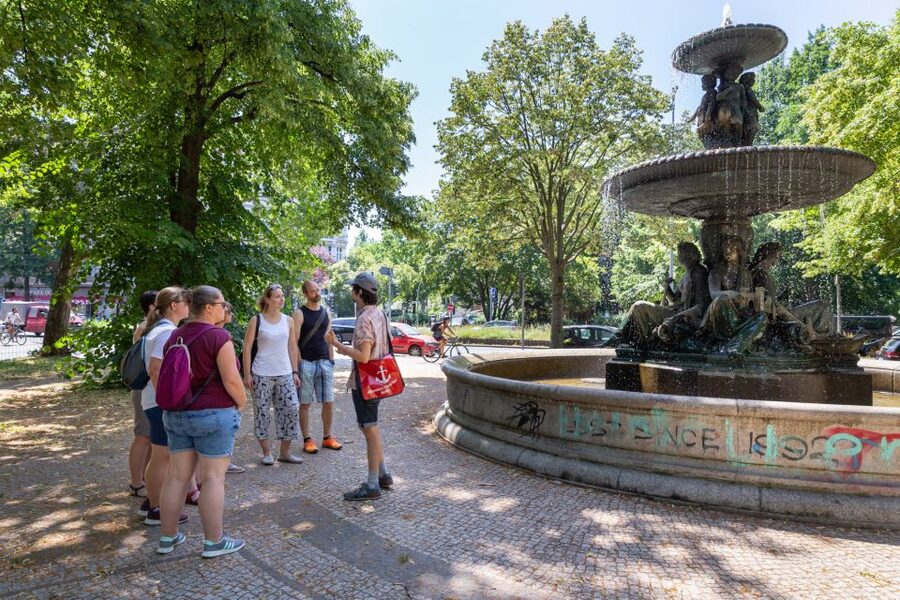
REVIEW · BERLIN
Kreuzberg: Culinary Food Tour
Berlin smells like food and politics. This Kreuzberg culinary tour mixes street-level bites with real neighborhood history, from working-class streets to left-wing demonstrations. I like that you get five tastings at separate spots, so you sample more of the area’s flavors instead of doing one big meal.
One thing to keep in mind: vegan eaters should plan ahead because a vegan option is not available, and in exceptional cases food may be served outside and eaten standing up.
In This Review
- Key things that make this Kreuzberg tour worth your time
- Kreuzberg’s food walk is really a neighborhood story you can eat
- Price and what you’re getting for $589 per group up to 10
- Meeting at Kotti, then learning Kreuzberg from the ground up
- Oranienstraße and SO36, where the street stories explain the food choices
- The GDR era, traffic-light men, and escape stories that feel uncomfortably real
- Stops around Rio-Reiser-Platz, Mariannenstraße, Oranienplatz, and Dresdener Straße
- Admiralsstraße, the longer wrap-up stretch, and final tastings
- What the five tastings actually feel like, and why it works on foot
- Pace and comfort: a 3-hour route built for walking and photos
- Guide quality matters more than people think
- Vegetarian needs are covered, vegan needs extra planning
- Who should book this Kreuzberg culinary tour
- Should you book Kreuzberg: Culinary Food Tour or do it on your own?
- FAQ
- How long is the Kreuzberg culinary food tour?
- How many food tastings are included?
- Where does the tour meet?
- Is the tour guided?
- Is there a vegetarian option?
- Is there a vegan option?
- Are drinks included in the price?
- Can I book a private group?
- What if the food is served outside?
- How is pricing structured?
Key things that make this Kreuzberg tour worth your time

- Five separate tastings in distinct restaurants, not one long sit-down meal
- SO36 and May Day March context, plus neighborhood stories that explain why Kreuzberg feels the way it does
- A guided walk through key streets like Oranienstraße and stops around Oranienplatz and Admiralsstraße
- Berlin history framed as daily life, including GDR escape attempts and local legends
- Vegetarian option available, with an extra emphasis on variety across cuisines
- Professional, upbeat guides, with past groups highlighting thorough prep from guides like Niclas and Nike
Deeper into the painted backstreets
- Berlin: Alternative Berlin Walking Tour★ 4.6 · 1,204 reviews
- Berlin: City Street Art Guided Walking Tour★ 4.8 · 886 reviews
- Berlin: 3-Hour Street Art Tour★ 4.7 · 778 reviews
- Kreuzberg: Culinary Food Tour★ 4.5 · 770 reviews
Kreuzberg’s food walk is really a neighborhood story you can eat

If you only want Berlin landmarks, you can do that in an afternoon. This tour is different. It treats Kreuzberg like a living map, where the food is the fun part, and the history explains why the streets have such a strong personality.
You start with a short orientation and then keep moving. That matters, because Kreuzberg is a place where you notice layers fast. One minute you’re walking normal city streets, the next minute you’re hearing why certain corners mattered for demonstrations, escape attempts, and public life during the GDR era. It gives the neighborhood more meaning than a photo on your phone.
And the food format is practical. Instead of one heavy meal, you get multiple snacks. That is exactly what you want on a 3-hour walking tour, especially when you’re trying to understand a neighborhood while also staying comfortable.
Price and what you’re getting for $589 per group up to 10
The price is listed per group, up to 10 people. That changes the math. If you’re traveling solo, it can sound steep at first. If you’re a small group, the cost per person becomes much more reasonable, and you’re paying for two things that are hard to DIY: a structured walking route with context, and five tastings across different places.
You also get a qualified guide for the full 3 hours, plus vegetarian accommodations. Drinks are not included, so budget a little extra if you know you’ll want something to sip.
Bottom line: this is best value when you can share the group cost and you want both food and storytelling. If you only care about eating and would rather wander at your own pace, you could build a do-it-yourself Kreuzberg night. But if you want the context, the guided structure saves time and helps you pick the right streets to focus on.
Meeting at Kotti, then learning Kreuzberg from the ground up
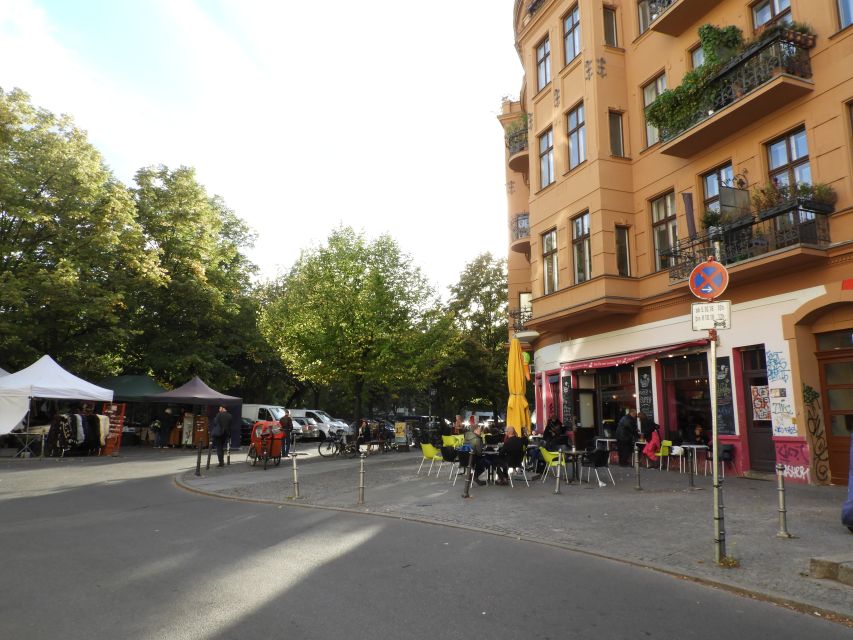
You meet in central Kreuzberg around Kotti. One of the starting options listed is FightClub Casino, and the exact meeting point can vary depending on which option you book. Either way, the start is designed to get you oriented quickly.
After a brief intro, the guide sets the stage: Kreuzberg began as a working-class neighborhood in the middle of the 19th century. You also get a specific mental image of what housing life looked like when people did not have a whole apartment to themselves. The tour uses details like the idea of an eight-hour stay on a mattress, which makes the later political and cultural changes feel less abstract.
This early context is one of the reasons the tour lands well for people who care about culture. You’re not just walking from food stop to food stop. You’re learning how the neighborhood became a meeting point for different communities and opinions, and why its identity still shows up in the streets today.
Oranienstraße and SO36, where the street stories explain the food choices
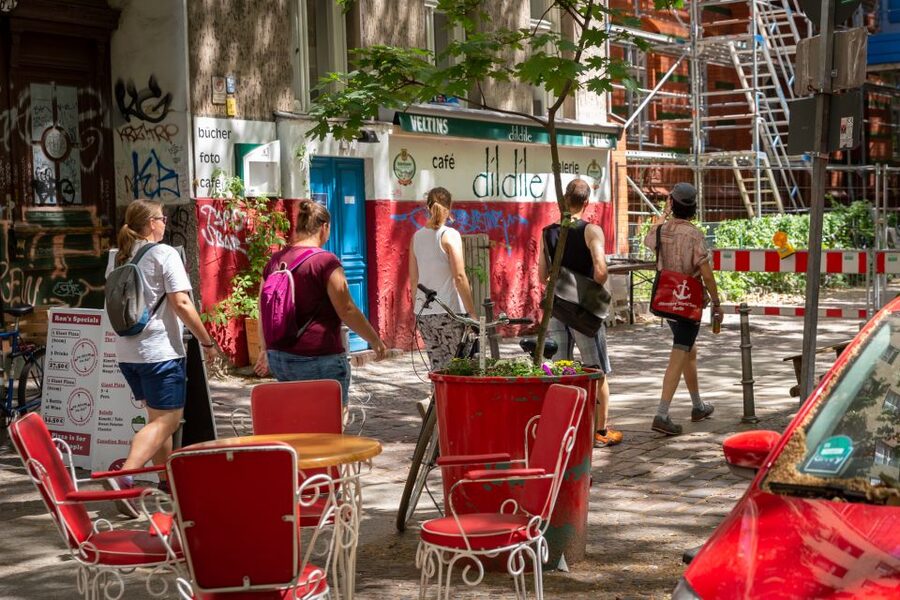
Once you’re oriented, you head toward Oranienstraße. This is the kind of street where you can see why Kreuzberg’s food scene is so international. The tour treats Oranienstraße like a timeline you walk through, not just a shopping corridor.
You’ll also hear about SO36, including its connection to May Day March demonstrations. That is important because Kreuzberg’s food culture is not separate from the neighborhood’s social life. When you understand that people gathered, organized, and argued in public spaces here, the present-day mix of cuisines and styles makes more sense.
The tour keeps it practical, too. Along Oranienstraße you’re still moving while you absorb the background. That rhythm keeps you from turning this into a lecture. You’ll have moments to pause for photos, then you’re back on the move and into the next tasting.
Still hungry? More plates reviewed here
The GDR era, traffic-light men, and escape stories that feel uncomfortably real
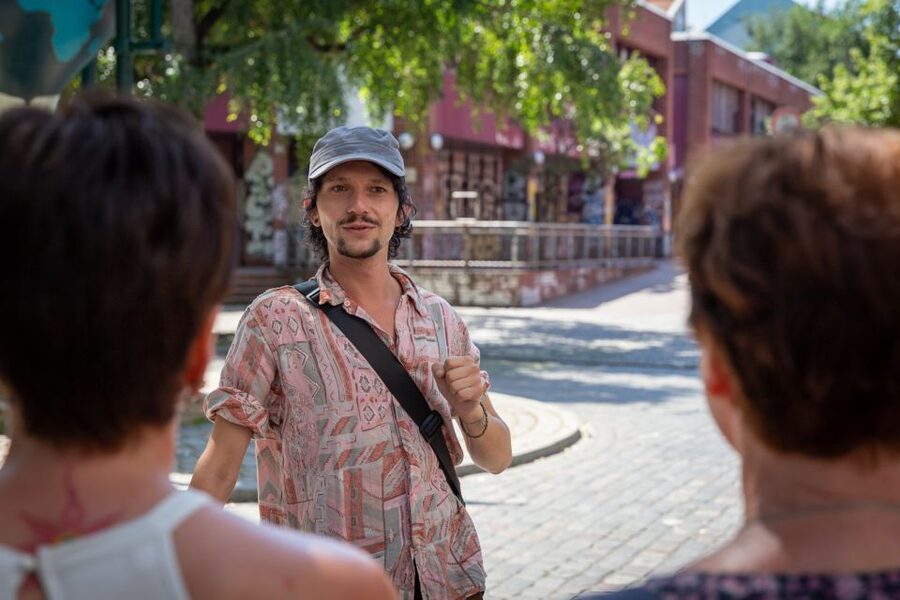
Half the fun of this tour is that it makes history feel like something that happened to real people, not something locked behind museum glass. You’ll hear about the former GDR traffic-light men. You’ll also get stories about attempts to escape the GDR. Even without all the background you might already know, the way these stories are told helps you see how everyday streets had real risk attached to them.
This is also where the tour’s tone matters. It does not drown you in dates. It connects people and places to what you’re walking through right now. That connection is what turns a food tour into a Berlin learning experience.
There’s also a local legend angle. You’re told about Berlin’s Jack the Ripper. Whether you’re already a fan of crime stories or you roll your eyes at spooky legends, it adds energy because it contrasts with the political history you’ve been hearing.
Stops around Rio-Reiser-Platz, Mariannenstraße, Oranienplatz, and Dresdener Straße
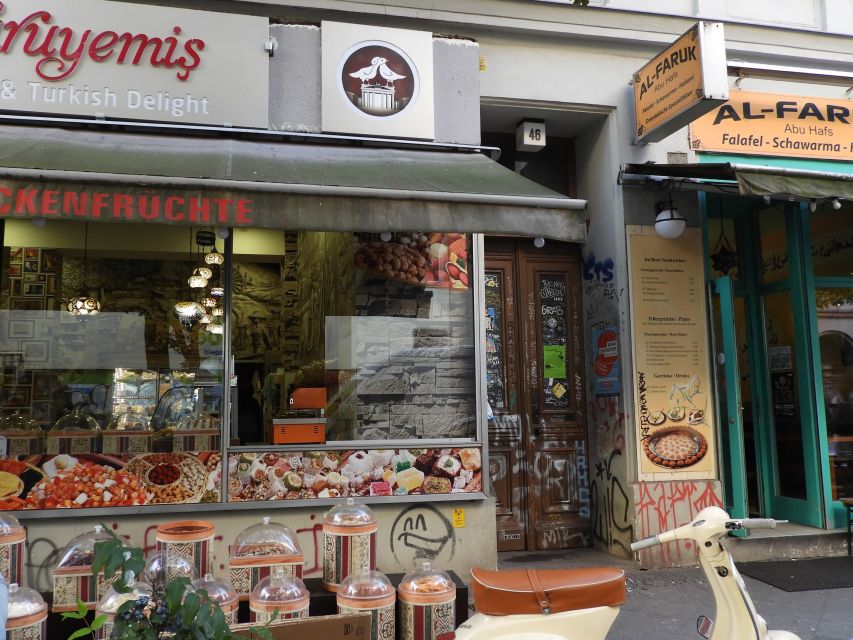
As you continue, you pass several recognizable Kreuzberg points and residential streets. Photo stops happen along the way, and the guide uses those pauses to point out what to notice, then you’re back walking.
Here’s what I like about these segments: the tour keeps switching the focus between the human scale and the bigger story. A plaza becomes a moment to reset. A residential street becomes a reminder that Kreuzberg’s character isn’t only political posters and big events. It is also daily routines, neighbors, and the way people lived around it.
I also like that the route includes both well-known areas and smaller, less obvious parts of the neighborhood. That matters because Kreuzberg’s charm comes from the in-between spaces. If you only see the big, obvious streets, you miss the feel of how the neighborhood actually operates.
Admiralsstraße, the longer wrap-up stretch, and final tastings
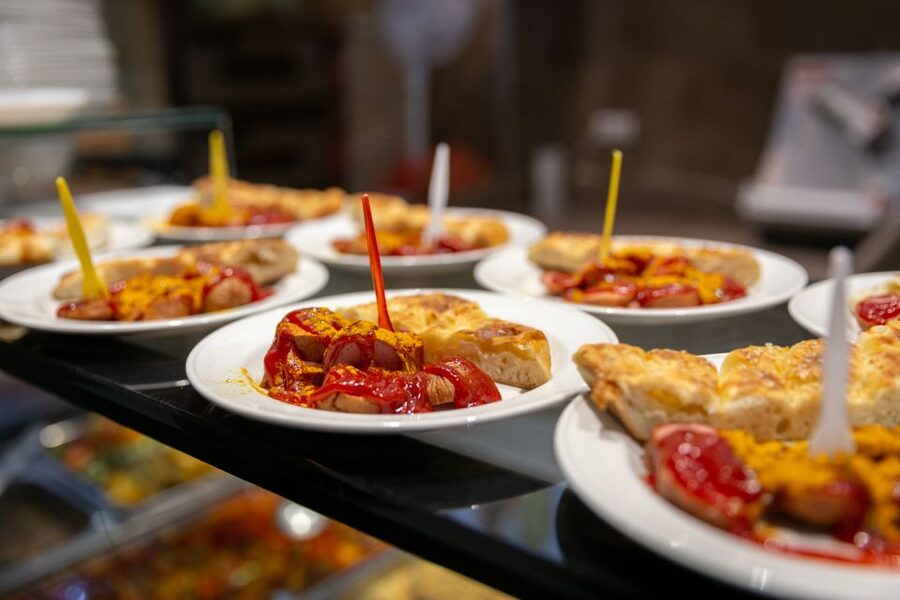
Admiralsstraße is one of the longer segments, with another stretch of guided walking and a meaningful photo moment. By this point, you’ve already learned how Kreuzberg’s working-class and left-wing heritage shaped public life. You’ve also heard about the GDR period and the way it influenced stories of escape and visibility.
That makes the later tastings land differently. You’re not just collecting flavors. You’re connecting each bite to a neighborhood identity that has always been in motion.
The tour ends at Grimmstraße 23, 10967 Berlin. By the finish, you should feel like you’ve seen Kreuzberg as a place with rules, arguments, and change over time, not just a trendy area.
What the five tastings actually feel like, and why it works on foot
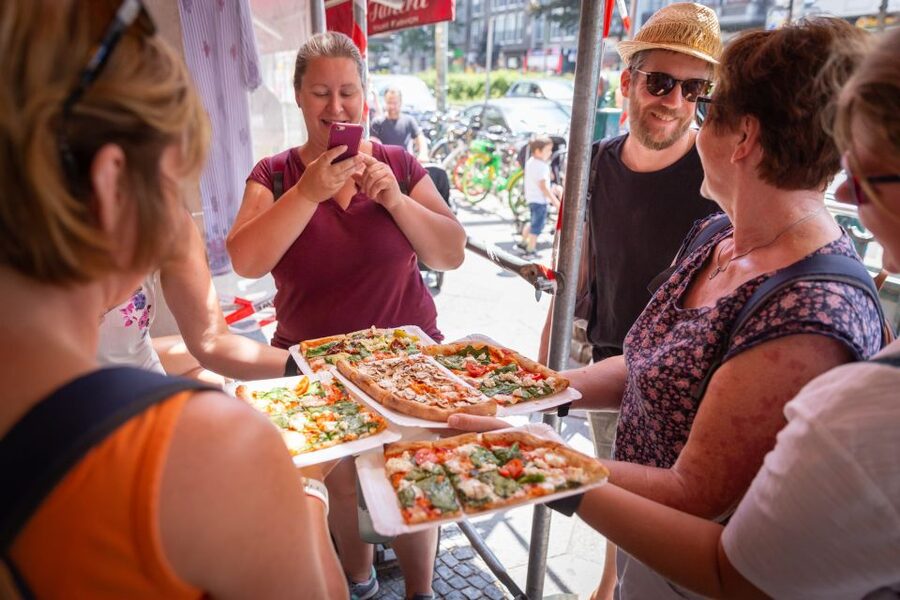
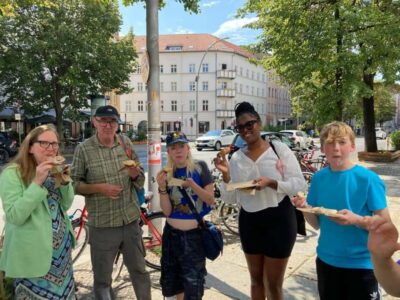
The tour includes five different food tastings in five distinct restaurants, with a vegetarian option available. Drinks are not included, and there is no vegan option. In exceptional cases, the food might be served outside the restaurants, and you might need to eat standing up.
That last point is the main practical drawback to plan around. If you strongly dislike standing while eating, you’ll want to go with flexible expectations. Still, the bigger idea is great: the tastings reflect Kreuzberg’s multicultural mix and creativity.
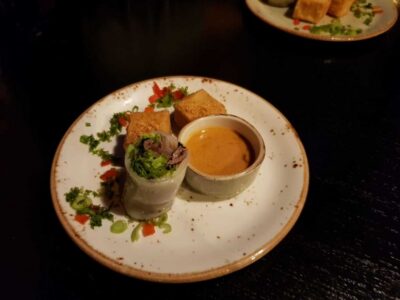
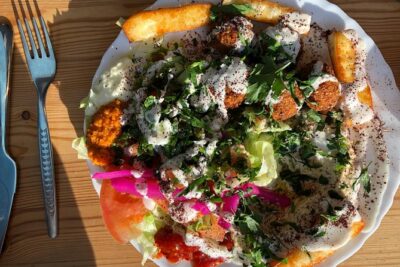
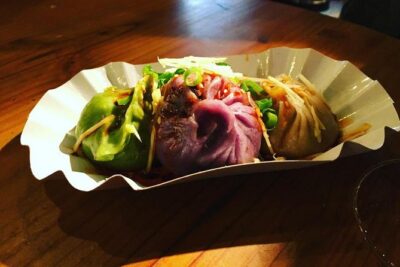
Based on menus and experiences from past tours, you might try classics like döner or döner-style dürüm, currywurst, and flammkuchen. You may also find Mediterranean or Middle Eastern flavors like baklava. For vegetarian eaters, a common highlight in past bookings has been vegetarian sushi. Another repeated theme is roasted nuts in different sweet and savory styles.
One more thing I appreciate is the balance between Berlin comfort food and international crossover. The tour makes sure you get variety. Instead of one “main dish,” you get a sequence of small tastings that lets you compare tastes and styles as you walk.
Pace and comfort: a 3-hour route built for walking and photos
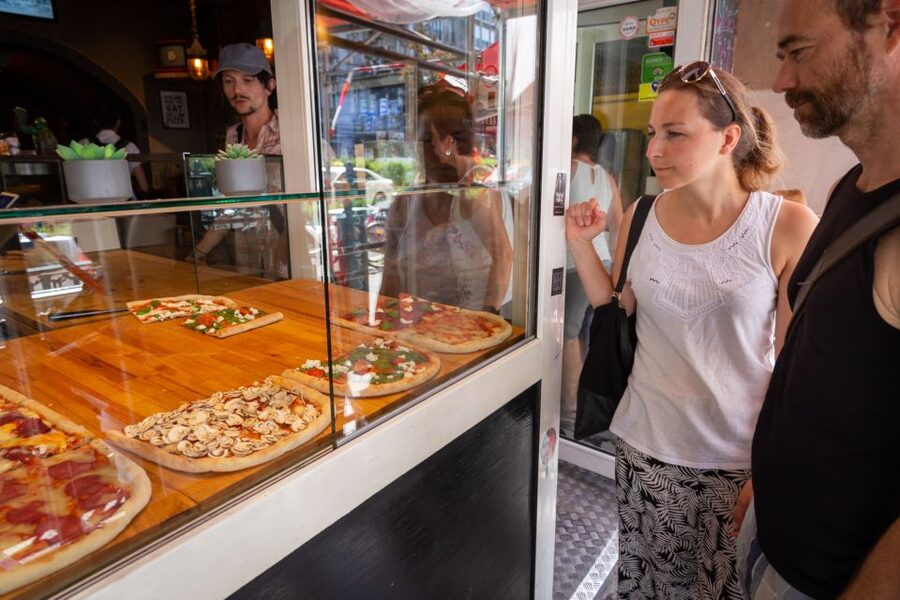
The tour lasts 3 hours. It is fully guided, and it is a walking route with photo stops. Expect time for introductions and a steady flow between tastings and street scenes.
Because it includes several food points across the neighborhood, your comfort depends on two things: comfortable shoes and patience with city streets. Kreuzberg sidewalks can be uneven. You’re also in a neighborhood where you will likely be moving through areas with lots of street activity. Go with shoes you don’t mind walking in for a solid chunk of time.
If you’re someone who needs a quiet, sit-down meal every hour, this isn’t that kind of tour. It is a walk-first experience. But if you like being out in the city and learning through movement, the pace is exactly right.
Guide quality matters more than people think
This tour depends heavily on the guide. You’re walking through a neighborhood with layers of political and cultural context. A prepared guide makes that context readable instead of overwhelming.
Past groups have called out guides like Niclas and Nike for being especially well prepared, with lots of information and historical anecdotes. That shows up in how the stories connect to what you’re seeing. You don’t get random facts. You get explanations that help you connect street corners to events like demonstrations, the GDR era, and major visits such as Martin Luther King’s visit in 1964.
Even when the story line gets dramatic, you still feel like the guide is in control of the flow. That control helps you enjoy both the history and the food.
Vegetarian needs are covered, vegan needs extra planning
Here’s the food reality check: vegetarian option is available. Vegan option is not available.
If you’re vegetarian, you should feel confident booking. In practice, a vegetarian tasting like sushi has shown up on at least one experience. That is a good sign that the vegetarian menu is not an afterthought.
If you’re vegan, you may need to plan your expectations. The tour as described does not offer a vegan option, so you might end up with tastings that do not work for your diet. In that case, you could still enjoy the walking and the stories, but the food part may be limited.
Who should book this Kreuzberg culinary tour
This is a strong choice if you want three things at once:
- A walking food tour with multiple tastings
- Neighborhood context that explains Kreuzberg’s identity, including left-wing heritage and the SO36 era
- A guided route that helps you see both obvious and less obvious parts of the neighborhood
It also works well if you like history, but not in a classroom way. The tour uses street-level scenes and specific references, like GDR traffic-light men and Martin Luther King’s 1964 visit, to make the past feel present.
You’ll also like it if you travel with a group up to 10, because the pricing is per group. It becomes an easy win for friends who want a shared activity.
Should you book Kreuzberg: Culinary Food Tour or do it on your own?
Book this tour if you want guided history plus real food sampling in a short window. The five tastings across separate restaurants and the steady walking route make it efficient. You’ll also learn why Kreuzberg’s streets feel the way they do, not just what to photograph.
Skip it, or at least adjust your expectations, if you are vegan and rely on vegan-specific tastings, since the tour does not offer a vegan option. Also skip it if you hate standing while eating, since exceptional cases can involve outside service.
If you’re happy with a guided walk, a mix of Berlin classics and international foods, and stories that go past the surface, this is a smart way to experience Kreuzberg in about three hours.
FAQ
How long is the Kreuzberg culinary food tour?
The tour lasts 3 hours.
How many food tastings are included?
You get 5 different food tastings across 5 distinct restaurants.
Where does the tour meet?
The meeting point may vary depending on the option booked. One listed starting option is FightClub Casino, and the tour also mentions meeting at Kotti in central Kreuzberg.
Is the tour guided?
Yes, it is a 3-hour guided walking tour with a professional tour guide. The tour is offered in English and German.
Is there a vegetarian option?
Yes, a vegetarian option is available.
Is there a vegan option?
No, a vegan option is not available.
Are drinks included in the price?
No, drinks are not included.
Can I book a private group?
Yes, private group availability is listed.
What if the food is served outside?
In exceptional cases, food might be served outside of the restaurants and you may have to eat standing up.
How is pricing structured?
The price is $589 per group up to 10 people.
Plates and Steins in Berlin
More German Plates
More Painted Walls and Backyards
Everything else we filed on Berlin
- East Berlin: City of Shadows Walking Tour
★ 5.0 · 11 reviews - Berlin: Die Stachelschweine – Frank Lüdecke – Träumt Weiter
★ 4.7 · 11 reviews - Potsdam Day Trip from Berlin with a Local: Private & Personalized
★ 4.0 · 11 reviews - An Introduction to Berlin Walking Tour
★ 5.0 · 11 reviews - DJ for a Day: Learn to Mix Like a Pro in Berlin
★ 5.0 · 11 reviews - 2-H Segway Sightseeing Tour Berlin
★ 4.5 · 11 reviews
Street Art and Alternative City Tours, side by side.
 ★ 4.6Berlin: Alternative Berlin Walking TourFrom $291,204 reviews
 ★ 4.8Berlin: City Street Art Guided Walking TourFrom $23886 reviews
 ★ 4.7Berlin: 3-Hour Street Art TourFrom $23778 reviews
 ★ 4.7Berlin: Kreuzberg Guided Walking Evening TourFrom $27555 reviews
 ★ 4.7Berlin: Alternative Bike Tour of Kreuzberg & FriedrichshainFrom $41548 reviews
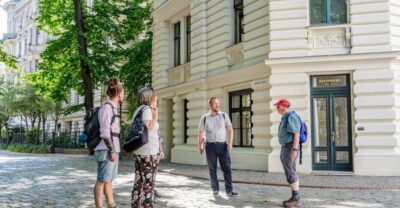 ★ 4.9Berlin: 2.5-Hour Walking Tour through Kreuzberg 61From $23525 reviews
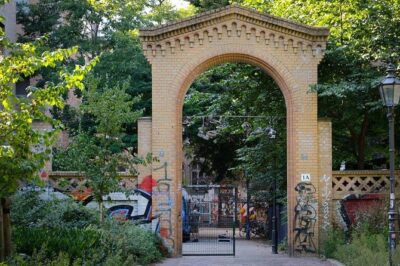 ★ 5.0Berlin Off-the-Beaten-Path Walking Tour: Kreuzberg, Mitte and FriedrichshainFrom $30412 reviews
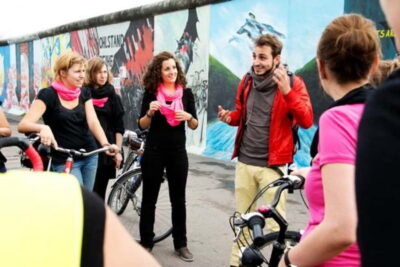 ★ 4.8Berlin: Alternative Berlin Bike TourFrom $40359 reviews
Other lists this tour is on