
REVIEW · FRANKFURT
Frankfurt Walking Tour: Explore Top Sights & Hidden Gems
Frankfurt feels like layers you can walk through, and this compact route stitches them together. I like how the stops connect culture, writing, and politics without turning into a textbook, and Alte Oper and St. Paul’s Church alone make the walk feel worth your time. You also get a simple pace, with about 20 minutes per major highlight.
I also enjoy that the tour is built around places tied to real people and real decisions, from Goethe’s birthplace to the first freely elected parliament in 1848. One practical drawback to keep in mind, the time is tight, so each stop is a quick, guided look rather than a long visit inside every building.
In This Review
- Key highlights worth showing up for
- A smart 2.5 hour walk that gives you direction
- Alte Oper: neo-Renaissance pride in Frankfurt’s postwar story
- Goetheplatz: where the city’s present life meets its literary name
- Goethe House: tracing the writer’s origins without getting lost in dates
- St. Paul’s Church: the 1848 democracy story told in stone
- Römerberg: Frankfurt’s iconic square and its medieval pulse
- Frankfurt Cathedral (Kaiserdom): Gothic power and imperial coronations
- Eiserner Steg: a Main River bridge for skyline views
- Price and value: what $32 buys you in Frankfurt time
- When you should book, and who might not love it
- Should you book this Frankfurt walking tour?
- FAQ
- What is the duration of the Frankfurt walking tour?
- How much does the tour cost?
- What does the tour include?
- Where does the tour start, and where does it end?
- Is the tour offered in English?
- Are any admission tickets required for the listed stops?
Key highlights worth showing up for
- Alte Oper exterior views and why Frankfurt’s culture bounced back after WWII
- Goetheplatz and Goethe House for a clear line from 18th-century life to modern literature
- St. Paul’s Church (Paulskirche) and the 1848 democracy turning point
- Römerberg’s medieval civic square with timber-framed character
- Frankfurt Cathedral (Kaiserdom) tied to imperial coronations and Gothic architecture
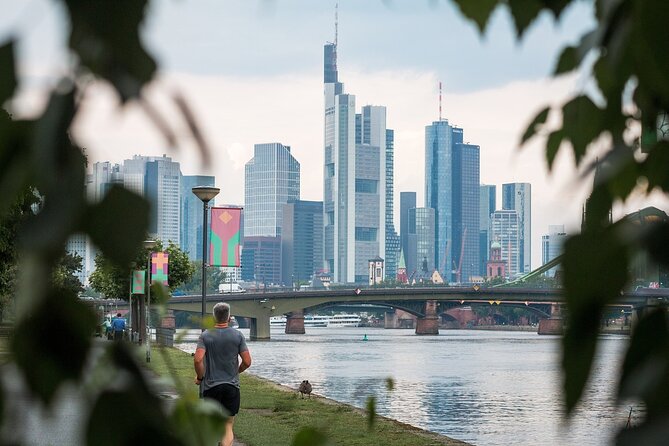
- Eiserner Steg for Main River skyline views and an easy connection toward Sachsenhausen
More Frankfurt, towers and timber both
- Frankfurt Highlights English Walking Tour★ 5.0 · 1,203 reviews
- 2-Hour Best of Frankfurt Walking Tour (English)★ 5.0 · 55 reviews
- Frankfurt: Private Sport Boat Tour – Speed, Fun & Skyline★ 4.9 · 42 reviews
- Frankfurt Old Town & Emperors: City Game & Walking Tour★ 4.5 · 39 reviews
A smart 2.5 hour walk that gives you direction
This tour works because it stays focused. You’re out for roughly 2 hours 30 minutes, and you move stop to stop with a professional guide. With a group capped at 15, you get enough energy to ask questions without feeling like you’re lost in a crowd.
For me, the biggest win is that you start with landmarks that define Frankfurt’s identity, then you widen the lens to show how the city grew into a cultural and political hub. You’re not just looking at pretty buildings. You’re learning what the buildings meant when they were built, what they survived, and how that history shapes what you see today.
You’ll also like the format: each stop is given around 20 minutes. That makes it easy to keep momentum, and it helps you plan your own day afterward. If you have limited time in Frankfurt, this is the kind of route that helps you decide what to return to on your own.
One thing I’d consider before booking is your walking comfort. It’s a walking tour, so you’ll want decent shoes and a willingness to keep moving at a steady pace. If you prefer slow museum time, you may want to pair this with a later, quieter activity.
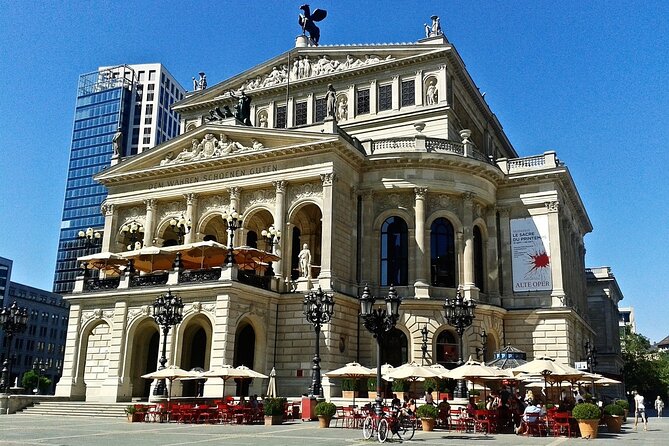
Alte Oper: neo-Renaissance pride in Frankfurt’s postwar story
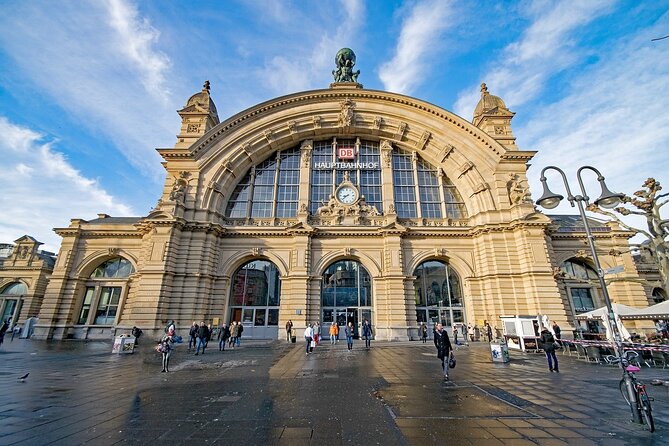
You begin at Alte Oper on Opernpl. 1. Even from the outside, it’s hard to ignore the scale. The building is described as a grand neo-Renaissance opera house, and it’s tied to a powerful idea: cultural resilience after World War II, and Frankfurt’s long-running artistic scene.
Why this matters for your trip is simple. Early in the walk, you’re given a foundation for understanding the city. The Alte Oper isn’t just architecture. It’s a symbol of rebuilding and identity, which makes the later stops feel more connected rather than random.
In about 20 minutes here, you can usually get your bearings fast. Look at the style cues, the way the façade projects a sense of permanence, and how a major performance venue anchors a city center. If you like cities that tell stories through their major institutions, this stop earns its place at the start.
A practical note: opera houses bring foot traffic, so expect people moving around. Try to position yourself so you can hear your guide clearly before you start wandering for photos.
Goetheplatz: where the city’s present life meets its literary name
Next you move to Goetheplatz, a central square named for Johann Wolfgang von Goethe. This is one of those stops that feels modern even if the name is centuries old. It’s surrounded by shops and urban landmarks, and that blend is part of the point.
I like Goetheplatz because it’s the easiest place on this route to understand how Frankfurt moves today. You get a public space that’s active, not frozen in time, yet it still carries cultural weight. Your guide’s explanations help you see the square as a reference point, not just a waypoint.
The stop is about 20 minutes, which is plenty to absorb the idea and snap a few photos without rushing. If you’re the type who likes to orient yourself with streets and squares before you explore further, you’ll appreciate this mid-walk adjustment.
Tip: if you’re thinking about where to grab lunch later, this is a good place to mentally bookmark. Since the area is described as central with shops and urban landmarks, you’ll usually find options nearby.
Goethe House: tracing the writer’s origins without getting lost in dates
Then comes Goethe House, described as the birthplace of Germany’s most famous writer. This is where the route becomes personal and human. Instead of talking only about grand civic identity, you zoom in on one person whose ideas shaped language and literature.
The guide’s framing matters here: you’re not just seeing a name on a plaque. You’re getting insight into 18th-century life and the early influences behind Goethe’s literary legacy. Even if you don’t memorize every detail, you’ll likely come away with a better sense of why Goethe feels like more than a school assignment.
A quick 20-minute stop is enough for this kind of introduction. You’ll learn the context, then you move on. If you want a deeper visit later, this stop can serve as your shortlist marker for a return when you have more time.
One consideration: this is a birthplace theme, and those can feel a bit dense if you’re in history overload mode. The tour length helps prevent that. Still, if you’re sensitive to information density, take a moment to slow down at one or two key spots, then let the guide’s storyline carry the rest.
Other walking routes through Frankfurt

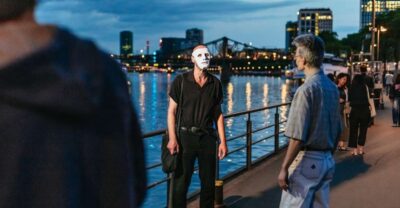
St. Paul’s Church: the 1848 democracy story told in stone
At St. Paul’s Church, you get one of the most meaningful political stops in the route. It’s known as a symbol of German democracy, and it hosted the first freely elected parliament in 1848. That alone gives this church a different weight than a typical religious landmark.
What I like about this stop is how it adds meaning to everything you’ve already seen. You started with culture and a rebuilt city. Now you’re looking at the foundations of modern German political history. Even in a brief 20-minute window, the story is the point.
The building’s role helps you connect architecture with values. Gothic church shapes in Germany often carry centuries of social life, but here the emphasis is on a specific moment when democratic participation took hold. Your guide’s explanation should help you see why this location matters beyond local faith.
A practical photo note: churches attract people who pause to read signage or check their bearings. If you want clean shots, pick a spot slightly off the busiest angle and wait for a quiet moment.
Römerberg: Frankfurt’s iconic square and its medieval pulse
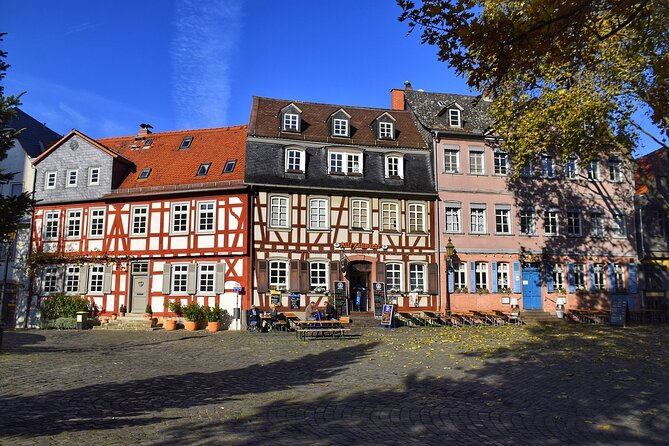
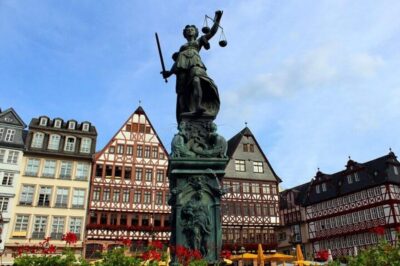
Next up is Römerberg, Frankfurt’s most iconic historic square. The description highlights timber-framed houses and medieval charm, plus centuries of civic and commercial life. This is the stop that tends to feel like you stepped into the old city without having to do a long detour.
I love squares like this because they reveal how everyday life and public power share space. Here, you’re not only looking at old buildings. You’re seeing a place where decisions, business, and community energy have been mixed for a very long time.
With around 20 minutes, you’ll likely do a loop: glance at the facades, scan for architectural details, and then pause where the square opens for photos. It’s also a good spot to let the information sink in. After Goethe, after democracy, Römerberg brings you back to the feel of the city street level.
Drawback to consider: because Römerberg is a “most iconic” square, it can be busy. If you’re visiting during peak hours, your best strategy is to keep moving in small steps so you don’t get stuck behind the same crowd for ten minutes.
Frankfurt Cathedral (Kaiserdom): Gothic power and imperial coronations
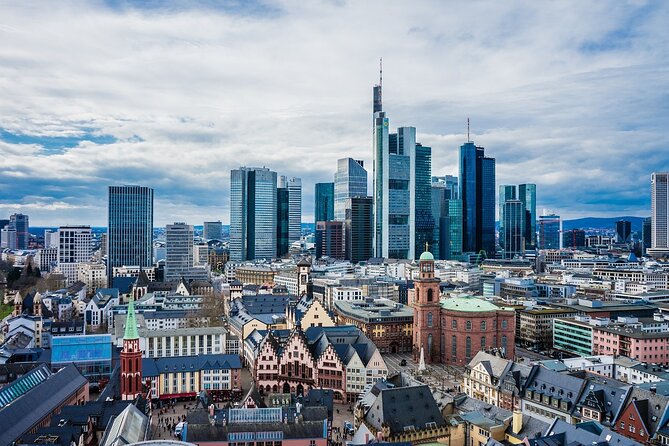
Then you move to Frankfurt Cathedral, also known as the Kaiserdom. This stop is about scale and symbolism. The tour describes it as a central religious site connected to imperial coronations, and it stands as a powerful symbol of Frankfurt’s religious heritage.
This is the route’s architectural high point. Gothic cathedrals often demand your attention without needing extra theatrics, and Kaiserdom’s connection to emperors adds another layer. You’re not just looking at a church. You’re looking at a building tied to major ceremonies that helped define political legitimacy.
The 20-minute time slot should be enough to appreciate the exterior and get the core story your guide is telling. If you want to spend longer, you’ll probably want to return on another day when you can slow down.
One practical consideration: cathedral environments can be quieter and more respectful in tone than busy squares. Keep your voice down, watch for signage, and give people room. This helps the tour feel smooth for everyone and makes it easier to hear your guide.
Eiserner Steg: a Main River bridge for skyline views
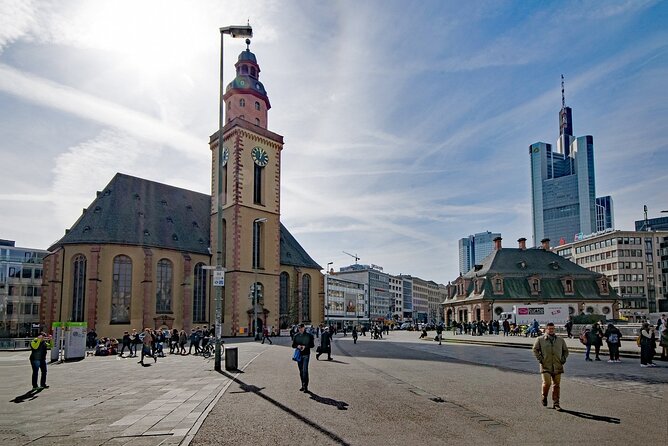
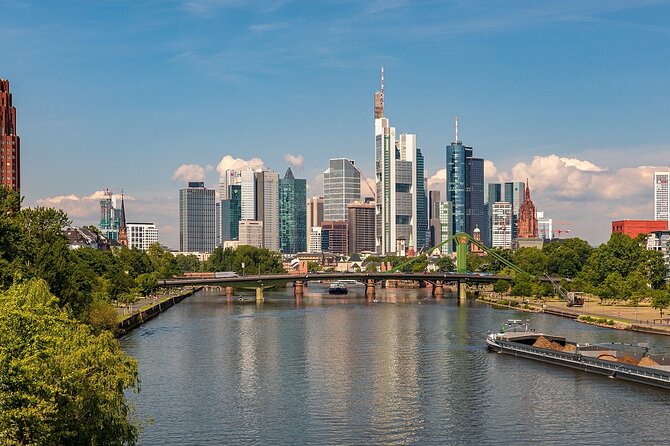
The tour ends with Eiserner Steg, a historic iron footbridge over the Main River. This is a classic way to change the vibe of a walking tour. Instead of staying in the old city world, you get movement over water and a new angle on Frankfurt’s skyline.
The description calls out scenic views and a beloved link between the old town and Sachsenhausen. That detail is useful because it reframes the bridge as part of how the city functions, not just a photo stop. You’re seeing the geography that shapes neighborhoods and daily routes.
With about 20 minutes, you’ll have time to walk a bit along the bridge, look both directions, and get your best skyline perspective. If photography matters to you, stand still for a moment, because the angle changes as you move. You might even find yourself timing your shots to match how the city lights up across the river.
Also, since the tour ends back at the meeting point, Eiserner Steg is a satisfying capper that helps you feel like you’ve covered real ground before heading back.
Price and value: what $32 buys you in Frankfurt time
At $32 per person, this isn’t a budget-free-for-all. It’s a guided experience. The reason it can feel good value is the structure.
You get a professional guide, about 2 hours of guided walking time, plus a route that hits major “anchor points” in the city: Alte Oper, Goethe-related stops, St. Paul’s Church, Römerberg, the Kaiserdom, and the Main River bridge. That’s a lot of mental map building for one morning or late morning block.
Another value signal: the itinerary notes admission ticket free at each listed stop. That doesn’t mean you’ll automatically go inside every building, but it does suggest your time is spent on seeing and learning without extra ticket costs for these highlights.
The group size matters too. With a maximum of 15 travelers, the guide can manage the flow while still answering questions. If you’ve been on large-group tours that feel like a moving bus, this should feel more human.
One more “value” angle you should think about: after this tour, you’ll likely know where you want to return. That can save you time later, which is often the real currency in city trips.
When you should book, and who might not love it
This tour is ideal if you want a smart overview without spending your whole day on trains and ticket lines. It’s also a good fit if you like city history that’s connected to places, not just facts on a page.
You’ll probably be happiest with this tour if you:
- Have limited time and want key Frankfurt sights in a short block
- Enjoy stories that mix culture, literature, and political history
- Prefer guided context over wandering with no plan
You might want to consider another option if you:
- Want long, slow museum-style visits
- Get impatient with brief stopovers
- Are traveling with mobility needs that make steady walking difficult (this tour says most travelers can participate, but it is still a walking route)
Should you book this Frankfurt walking tour?
Yes, I think you should book it if your goal is fast clarity. In roughly 2.5 hours, you’ll cover a well-chosen set of stops that explain how Frankfurt thinks of itself: cultural recovery, literary roots, political breakthroughs, old-town civic life, imperial religious power, and river views that connect neighborhoods.
Also, the guide experience is a big deal here. One guide named Srishti has been noted for being strongly informed about Frankfurt and its history, which is exactly what you want when the tour compresses so many topics into one walk.
My practical advice before you go is simple. Wear comfortable shoes, arrive on time at the Alte Oper meeting point, and go in with the mindset that you’re building a map, not checking off a list. If you do that, you’ll leave knowing what to explore next, and you’ll feel like you really understood the city, not just passed through it.
FAQ
What is the duration of the Frankfurt walking tour?
The tour lasts about 2 hours 30 minutes.
How much does the tour cost?
The price is $32.00 per person.
What does the tour include?
It includes a 2-hour walking tour and a professional tour guide.
Where does the tour start, and where does it end?
The tour starts at Alte Oper, Opernpl. 1, 60313 Frankfurt am Main, Germany, and it ends back at the meeting point.
Is the tour offered in English?
Yes, the tour is offered in English.
Are any admission tickets required for the listed stops?
The stops are listed with admission ticket free.
Pavements of Frankfurt
Frankfurt, Towers and Timber
Everything else we filed on Frankfurt
- Frankfurt to Prague – Private Transfer with 2 hours of Sightseeing
★ 5.0 · 3 reviews - Castle Braunfels Day Trip from Frankfurt
★ 5.0 · 3 reviews - Frankfurt – Private tour with Licensed guide
★ 5.0 · 4 reviews - Arrival by Luxury Vehicule from Frankfurt Airport to Frankfurt
★ 4.0 · 4 reviews - Frankfurt MAIN TOWER with Tickets, Guide and Old Town Tour
★ 5.0 · 4 reviews - Discover Frankfurt’s most Photogenic Spots with a Local
★ 5.0 · 4 reviews
Frankfurt Skyline and Old Town Tours, side by side.
 ★ 4.4Cologne: Top Sights Rhine River Cruise – Skyline TourFrom $283,030 reviews
 ★ 5.0Frankfurt Highlights English Walking TourFrom $361,203 reviews
 ★ 5.02-Hour Best of Frankfurt Walking Tour (English)From $2755 reviews
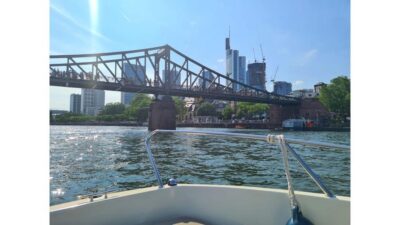 ★ 4.9Frankfurt: Private Sport Boat Tour – Speed, Fun & SkylineFrom $32942 reviews
 ★ 4.5Frankfurt Old Town & Emperors: City Game & Walking TourFrom $539 reviews
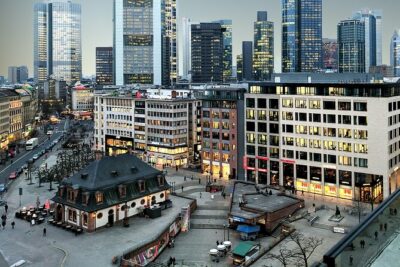 ★ 4.5Frankfurt Private Walking Tour with a LocalFrom $5724 reviews
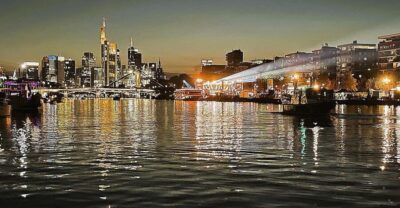 ★ 5.0Frankfurt: Private Romantic Skyline Boat TourFrom $29322 reviews
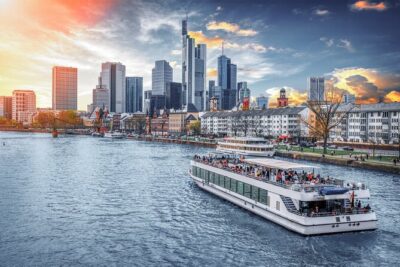 ★ 4.5Frankfurt Private Walking Tour with Relaxing CruiseFrom $23119 reviews
Other lists this tour is on