
REVIEW · WALKING TOURS
Frankfurt on Foot Daily Walking Tour in English
Frankfurt turns into a story you walk through. This easy, English 3-hour walk threads the Römerberg old town square to Main River skyline and lands at photo stops like the Römer and the Eisener Steg views.
I love the mix of big landmarks and how the city rebuilt itself, especially the story behind the re-built Altstadt after WWII. I also like the practical perks for a 3-hour outing, including free entries at stops and a restroom break plus a snack break built into the route.
One consideration: on Sundays and religious holidays, some churches are exterior-only, and Klein Markt Halle is not always open, so you may have less inside time even though the photos still work great.
In This Review
- Key Highlights You Will Actually Feel on the Walk
- Kick Off at 10:00 Near Römerberg, Then Let the Old Town Guide You
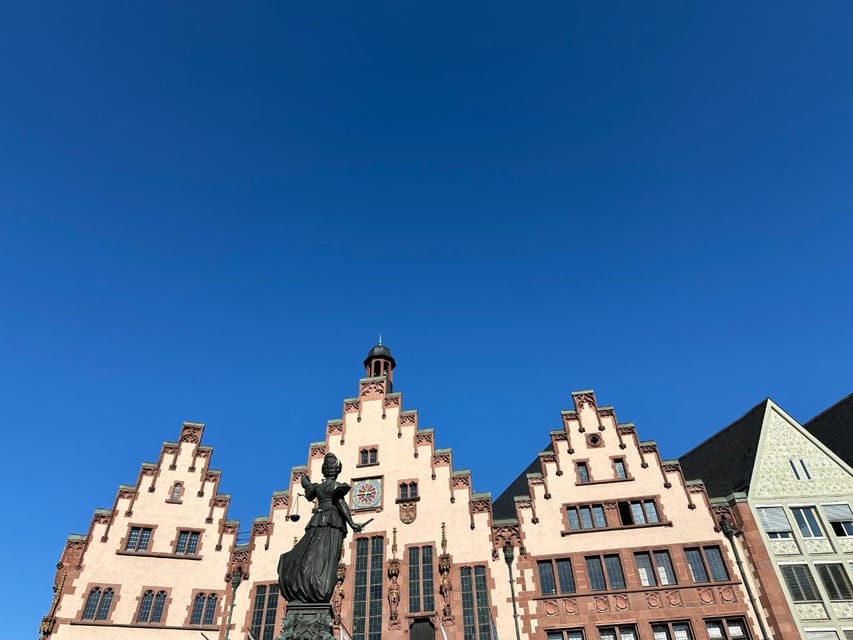
- Römer and Römerplatz: City Power on a Public Square
- The Re-built Altstadt: How Frankfurt Came Back After WWII
- Book Burning Memorial: When the Past Is Hard to Walk Past
- Alt Nikolai Church and House Wertheim: Gothic Lines and a Survivor Half-Timber House
- Eisener Steg: Skyline Views and the Main River Museum Line
- Kaiserdom, St. Bartholomew: Holy Roman Power in One Church Stop
- Karmeliter Cloister: Jörge Ratgeb Wall Paintings (When You Can See Them)
- Stolper Steine and the Holocaust Memorial Wall: Memory in Two Different Styles
- Jewish Quarter Stops: Cemetery Views and a Wall That Once Protected
- Klein Markt Halle Snack Break: Where the Tour Gets Taste and Local Rhythm
- Price and Value: What $35 Buys in a 3-Hour Walking Plan
- Who This Tour Fits Best (and Who Might Want a Different Pace)
- Final Call: Should You Book Frankfurt on Foot?
- FAQ
- What time does the tour start?
- Where is the meeting point?
- How long is the tour?
- Is the tour daily?
- What language is the tour in?
- Are museum or attraction entries included?
- Are snacks included?
- Do you need to bring anything?
- Is it wheelchair accessible?
- Can children join, and is there a walking distance?
- What if I need to cancel?
Key Highlights You Will Actually Feel on the Walk
- Römerplatz and Römer City Hall dating back to 1405 give you a real “how Frankfurt worked” starting point
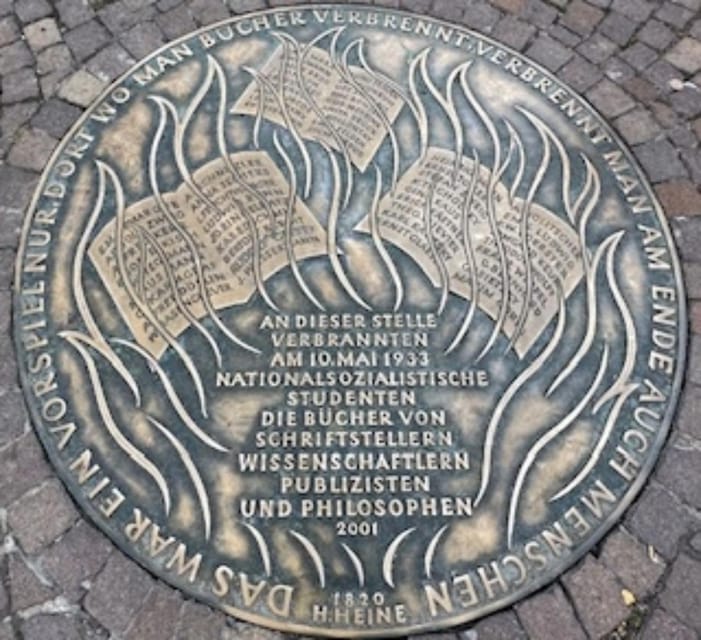
- WWII-era remembrance stops include the Book Burning Memorial and the Nazi-era public story tied to it
- Stolper Steine (stumble stones) put memory directly into everyday streets you walk past
- Jewish Holocaust Memorial Wall includes Anne, Margot, and Edith Frank, and it is personal in a quiet way
- Karmeliter Cloister wall paintings by Jörge Ratgeb are a rare artistic stop when open
- Klein Markt Halle snack break is where you switch from history mode to food and local rhythm
Other walking routes through Frankfurt
- Frankfurt Highlights English Walking Tour★ 5.0 · 1,203 reviews
- Frankfurt on Foot Daily Walking Tour in English★ 4.9 · 323 reviews
- Frankfurt Self-Guided Historical Walking Tour★ 4.0 · 58 reviews
- 2-Hour Best of Frankfurt Walking Tour (English)★ 5.0 · 55 reviews
Kick Off at 10:00 Near Römerberg, Then Let the Old Town Guide You
This is a straightforward, easy walking tour that runs 365 days a year, so it is a good “I need a plan today” option. It starts at 10:00 and you will begin at Braubach Strasse 41.
The meeting point is close to the classic postcard core: directly across from the Tourist Info on the Römerberg, and in front of Binding Schirn Pub, on the street. Your guide will have a sign that says Frankfurt on Foot Walking Tours, which makes it easy to spot when you are standing there with your morning coffee face on.
Because there is no transportation used, you will feel like you are walking as locals do, not bouncing between stops. And that matters, because Frankfurt’s story is written in streets as much as it is written in buildings.
Römer and Römerplatz: City Power on a Public Square
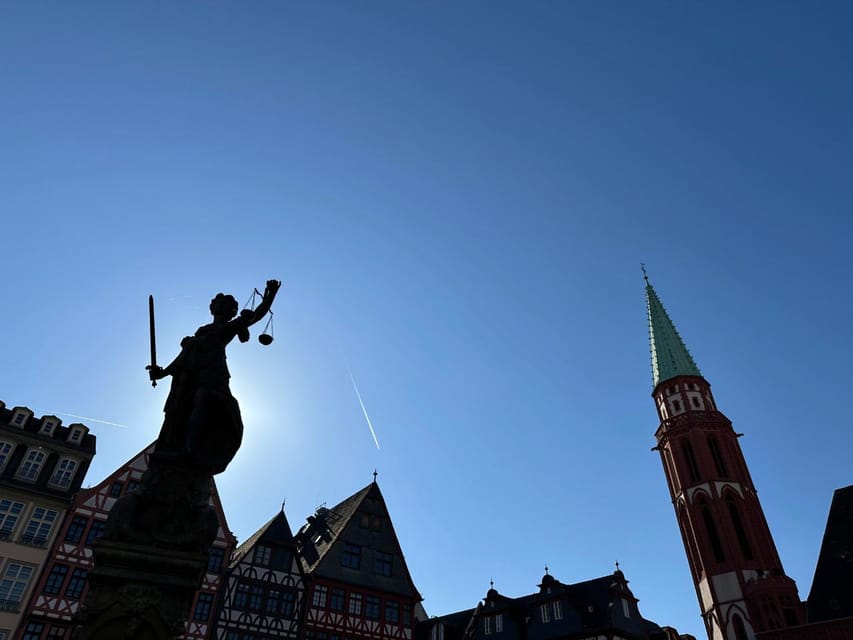
You start by getting your bearings at the Römer and Römerplatz. The Römer complex is Frankfurt’s historic city hall area, and the tour connects it to the long continuity of civic life, dating back to 1405.
Römerplatz is also the best kind of place to begin a walking tour: it is visual. You get a quick sense of scale, the shape of the old center, and what kind of streets you will move through next. If you like tours that help you navigate later on your own, this first stop does that job well.
What I like here is the immediate payoff. You are not trudging far before you hit a major landmark, and you are learning something that makes the rest of the route click.
The Re-built Altstadt: How Frankfurt Came Back After WWII
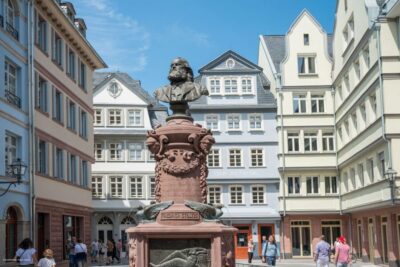
Next comes the New Alt Stadt, and it is not just a “look at these buildings” stop. You will hear how and why the area was re-built, which is key to understanding what you are actually seeing when you walk the restored blocks.
This is where your brain switches from architecture appreciation to real-world history. You begin noticing that some old-looking structures are modern reconstructions, and you learn the difference between surviving heritage and rebuilt heritage.
A practical benefit: if you have only one day in Frankfurt, this kind of explanation helps you stop feeling like you are only visiting monuments. Instead, you start understanding a city’s choices.
Book Burning Memorial: When the Past Is Hard to Walk Past
Then you reach the Book Burning Memorial, tied to the site of Nazi book burning. It is one of those stops where the location matters, because it is not an abstract story. It is a public place connected to a real event in Germany’s dark modern history.
I appreciate that the tour does not sand down the seriousness. You still move forward, you still see the city, but you also learn context that changes how you read everything around you.
If you prefer light and fluffy on day one, this might feel heavier than you expected. Still, if you want to understand Frankfurt as it is, this stop is part of that honest picture.

Alt Nikolai Church and House Wertheim: Gothic Lines and a Survivor Half-Timber House
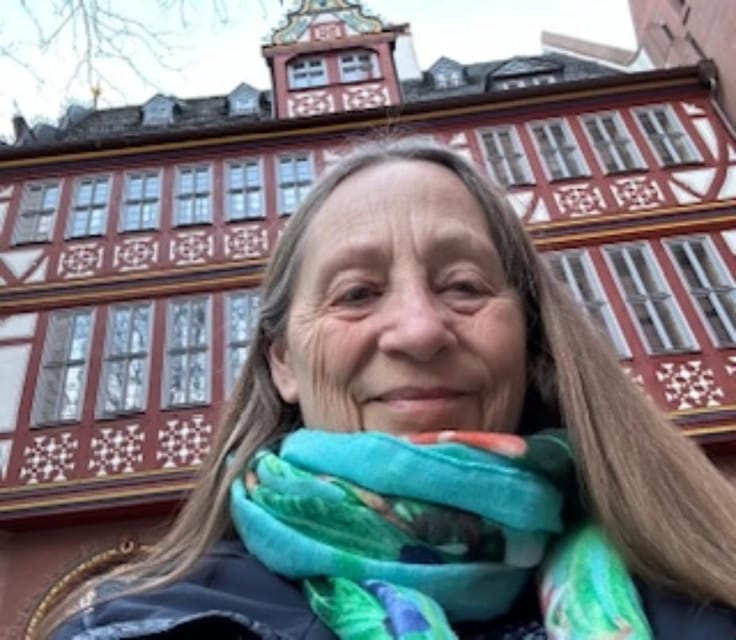
You then swing into the old-town church and historic streetscape details.
The Alt Nikolai Church is a Gothic church built in 1290. On Sundays, you will see it exterior only, so you should think of this stop as a look-and-learn moment rather than a full interior visit on that day.
Just as important is House Wertheim. It is described as the inner city’s only original half-timbered house left at the end of World War II. That makes it feel almost like a time capsule, not because it is untouched history, but because it survived when so much else did not.
This combo works well for first-time visitors. You get religious architecture and domestic architecture in the same stretch, which gives you a more complete sense of what “old Frankfurt” meant for real life.
Eisener Steg: Skyline Views and the Main River Museum Line
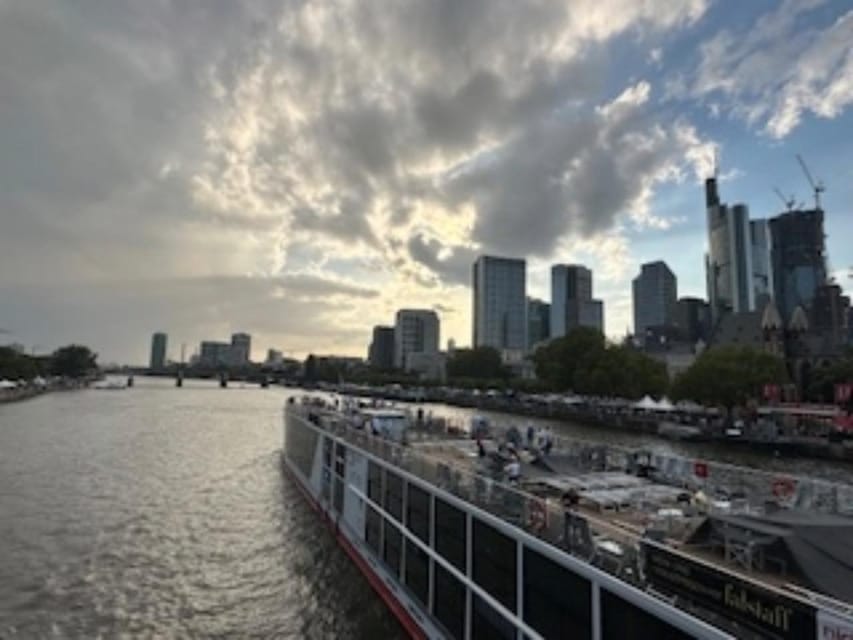
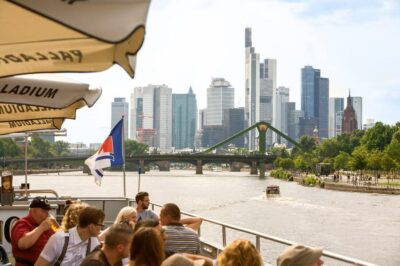
Now you get a break from pure historic facades and step into one of the most scenic segments: Eisener Steg, a pedestrian bridge over the Main River.
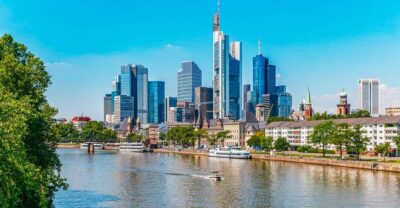
The payoff is the view. From here, you can look out over the skyline and also see how many museums line the riverbanks. It helps you understand why this river area is such a major part of Frankfurt’s identity.
Also, this is a great spot for photos. The bridge gives you a natural angle, and the river creates depth in your pictures. If the sky is clear, this moment becomes the type of snapshot you will still remember later.
If it rains, watch your footing. Cobblestones and bridge approaches can get slippery, so comfortable shoes are not a suggestion, they are your best travel accessory.
Kaiserdom, St. Bartholomew: Holy Roman Power in One Church Stop
Next is St. Bartholomew, better known as the Kaiserdom. This is the Imperial Church that was chosen for coronations and elections of the Holy Roman Emperor for centuries.
The tour focuses on the significance of the building, and you get the sense that Frankfurt was not just a commercial city. It also mattered politically and ceremonially.
One practical note: you will see it exterior only on Sundays and religious holidays. So if you want interior access, plan your day around that reality. Either way, the exterior still tells a story, and the explanation is built to make that exterior meaningful.
Karmeliter Cloister: Jörge Ratgeb Wall Paintings (When You Can See Them)
From there, you head to the Karmeliter Cloister to see the Jörge Ratgeb wall paintings. This stop is special because the tour highlights scale and rarity, calling them the largest religious wall paintings north of the Alps, painted in the early 1500s.
But there is a timing caveat. The wall paintings are not on some holidays, so on those days you might have to adjust expectations. Still, the cloister stop is part of the tour’s “art and atmosphere” balance, and it helps slow you down in a good way.
This is a great stop if you like religious art without needing a museum ticket and a separate travel plan. You get context, and you get to see something you would not normally stumble upon by accident.
Stolper Steine and the Holocaust Memorial Wall: Memory in Two Different Styles
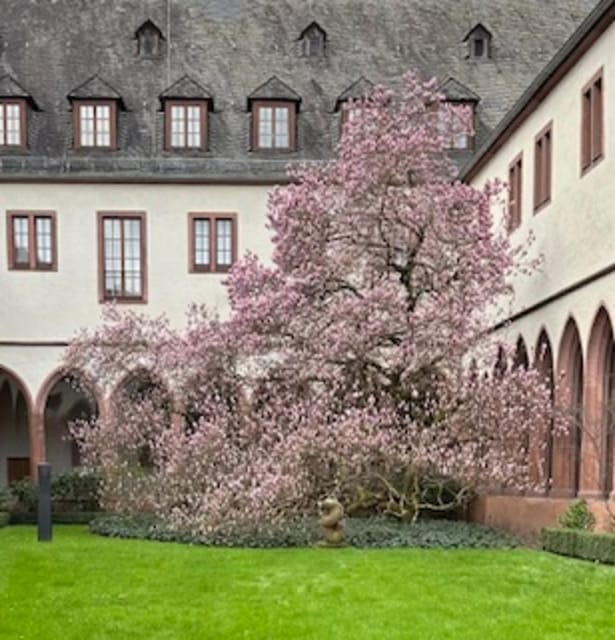
The tour then moves into remembrance on the street.
First are the Stolper Steine, sometimes called stumble stones. These markers are a unique way of remembering people who lost their lives due to the Nazi regime. The power here is that you are not only looking at history. You are walking past it, like it belongs to the everyday.
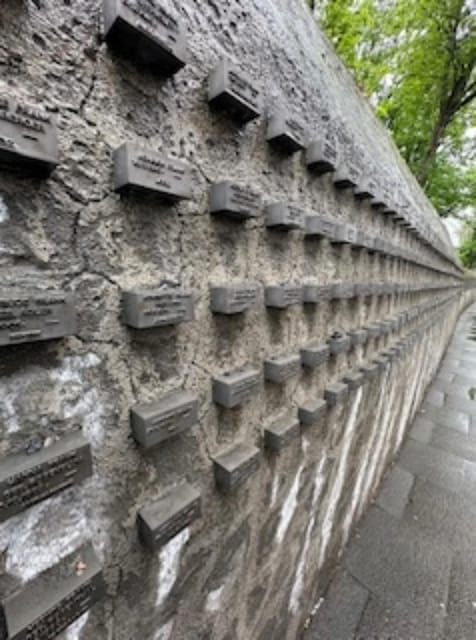
Then you visit the Jewish Holocaust Memorial Wall, which Frankfurt chose to honor the memory of approximately 12,000 Jewish citizens of Frankfurt who were killed in the Shoa. This is where the tour becomes very personal, because names like Anne, Margot, and Edith Frank are included on the wall of remembrance.
I like that the route does not jump from “big landmark” to “art stop” and back again. It stays connected. You understand the city’s physical layers and then you meet the human layers that were torn apart.
If you are sensitive to heavy topics, pace yourself. Sit for a moment before you keep walking. That is not awkward, it is respectful.
Jewish Quarter Stops: Cemetery Views and a Wall That Once Protected
Next comes the broader Jewish Quarter area.
You will see the Medieval Jewish Cemetery. It is described as one of the oldest and largest Jewish cemeteries in Germany, but you view it from the outside, so it is a reflective look rather than a guided walk through the grounds.
Then there is the Jewish Ghetto Wall, connected to how the city’s defenses changed over time. It was part of the city defenses in 1180, and later became one of the walls that surrounded the Medieval Jewish ghetto.
This section is valuable because it explains how a place can change function over centuries. A wall is never only a wall. It is a record of politics, safety systems, and oppression.
Klein Markt Halle Snack Break: Where the Tour Gets Taste and Local Rhythm
At some point, you will reach Klein Markt Halle, one of the tour’s favorites. This is a produce hall packed with fruits, vegetables, chocolate, pastries, cheeses, breads, meats, and fish, plus other delicacies from around the world.
The tour includes a snack break, but snacks and drinks are not included. So this is your chance to buy what you want, then sit if you can find a spot.
Also, Klein Markt Halle is not on Sundays and holidays, so the stop may be different depending on your day. Even when it is not open, the tour’s structure still keeps the “food break” idea alive, but the specific market moment might vary.
One practical tip: if your goal is to eat a proper snack and slow down, arrive hungry and be ready to make quick choices. When the market stop is busy, time can feel tight.
Price and Value: What $35 Buys in a 3-Hour Walking Plan
At $35 per person for 3 hours, this tour is priced like a value play, not a splurge. The big reason is the free entries included at the stops, plus the fact that the tour uses walking only, so you are not paying for transit time or transport tickets.
You also get small logistics that matter in real travel life: WC breaks and a planned snack break. Those are the unglamorous parts that make or break a half-day tour, especially in winter or rain.
On top of that, the tour runs in English, which is not always guaranteed in the city center. If you are with friends who do not read German, this is a clean, easy way to make the day make sense.
Finally, the tour is built as a true “overview of Frankfurt” loop. By the time you finish, you know where you are on the map, and you understand how the city’s WWII story connects to the streets you still see today.
Who This Tour Fits Best (and Who Might Want a Different Pace)
This is a strong fit for you if:
- You want one coherent 3-hour plan instead of piecing together sights
- You care about understanding Frankfurt beyond just the skyline
- You like learning in the open air, with frequent context at each stop
You might want a different style of tour if you prefer purely cheerful sightseeing, because the route includes WWII-related memorials and Jewish remembrance stops. If that subject matter feels too heavy for your mood, you can still take the tour with a plan to step back mentally during those sections.
For families, children 12 and under are free and welcome, as long as they are okay with about 7 km of walking. The tour is also described as wheelchair accessible and stroller friendly, which is a real advantage for mixed groups.
Final Call: Should You Book Frankfurt on Foot?
If you want a first-day tour that gives you orientation, major landmarks, and real context, I think this is a smart booking. The route balances impressive architecture with remembrance stops you cannot easily ignore, and it does it in a format that is easy to follow.
Book it if you like guided walking, photo stops, and a clear route that gets you through the old town without fuss. Skip it only if your trip style is strictly light and entertainment-heavy, because this tour chooses understanding over comfort.
FAQ
What time does the tour start?
The tour starts at 10:00.
Where is the meeting point?
Meet directly across from the Tourist Info on the Römerberg, in front of Binding Schirn Pub, on the street. Your guide will have a sign that says Frankfurt on Foot Walking Tours.
How long is the tour?
The tour lasts 3 hours.
Is the tour daily?
Yes, it runs 365 days a year.
What language is the tour in?
The tour is offered in English only.
Are museum or attraction entries included?
Yes, all entries are free.
Are snacks included?
The tour includes a snack break, but snacks and drinks are not included, so you’ll buy what you want.
Do you need to bring anything?
Bring comfortable shoes for walking.
Is it wheelchair accessible?
Yes, the tour is described as wheelchair accessible, and it is also stroller friendly.
Can children join, and is there a walking distance?
Children 12 and under are free and welcome, but they should be okay with about 7 km of walking.
What if I need to cancel?
You can cancel up to 24 hours in advance for a full refund.
Pavements of Frankfurt
Everything else we filed on Frankfurt
- Airport Transfer: Airport FRA to Frankfurt by Luxury Van
★ 4.0 · 11 reviews - Munich City Tour and Dachau Concentration Camp Memorial Site Day Trip from Frankfurt
★ 3.5 · 11 reviews - Frankfurt: Private Sightseeing Tour in Retro Ape Calessino
★ 5.0 · 11 reviews - Heidelberg and Baden-Baden Tour from Frankfurt
★ 3.5 · 11 reviews - Frankfurt: Private custom tour with a local guide
★ 4.6 · 12 reviews - Frankfurt: Private Skyline Sightseeing Boat Tour
★ 4.9 · 12 reviews
Walking Tours, side by side.
 ★ 5.0Discover Berlin Half-Day Walking TourFrom $249,624 reviews
 ★ 4.9Berlin: Third Reich and Cold War 2 Hour Walking TourFrom $236,830 reviews
 ★ 4.6Munich: Third Reich & WWII Walking TourFrom $316,181 reviews
 ★ 4.9Berlin: Discover Berlin Walking TourFrom $235,998 reviews
 ★ 5.0Berlin’s Best: 2 Hour Walking Tour Third Reich and the Cold WarFrom $245,486 reviews
 ★ 4.8Berlin: Hidden Backyards Guided Walking TourFrom $235,360 reviews
 ★ 4.5Third Reich Walking Tour MunichFrom $454,291 reviews
 ★ 5.0Third Reich Berlin: Hitler and WWII Walking TourFrom $243,301 reviews