
REVIEW · PRIVATE
Frankfurt: Private or Shared Walking Tour
Frankfurt’s past is walkable, not museum-bound. This 1.5-hour walking tour is a practical way to compare the Altstadt with the newer Neue Altstadt plans, while your guide explains what shaped the city after major destruction in World War II.
I like two things most. I love the contrast built into the route, from the historic iron footbridge to the modern skyline. I also love the political stop at the Paulskirche, tied to the 1st German national assembly.
One consideration: the tour is short, so you cover a lot without long stops, and the live guide speaks German only.
In This Review
- Key Highlights Worth Planning Around
- Meeting at Justitia-Brunnen, Then Getting Your Bearings Fast
- Crossing Eiserner Steg, Built in 1868, and Linking Past to Present
- Römer and Paulskirche: The 1st German National Assembly Stop
- Neue Altstadt: Seeing Frankfurt’s New Old Town on Foot
- How the Tour Balances Modern Skyscrapers With Traditional Streets
- Private or Shared: Which Option Fits Your Pace?
- Price and Value: Is $17 for 1.5 Hours Worth It?
- Language Reality Check: The Guide Is German
- Who This Frankfurt Walking Tour Is Best For
- Should You Book This Frankfurt Walking Tour?
- FAQ
- Where does the tour start and end?
- How long is the walking tour?
- Is this tour private or shared?
- What language is the live guide?
- How much does the tour cost?
- Is free cancellation available?
- Can I reserve without paying right away?
- Do I need to check for specific starting times?
Key Highlights Worth Planning Around
- Justitia-Brunnen at Römerberg as your start point makes it easy to orient right away.
- Eiserner Steg, built in 1868 is the first big sight, and it sets the pace for the walk.
- World War II rebuilding story, plus the 2008-9 renovations gives meaning to what you see now.
- Römer and Paulskirche in one flow connects historic Frankfurt to the 1st German national assembly.
- Neue Altstadt is the modern project you can actually walk through and understand on the street.
- Choose shared or private if you want more mingling with people or more room for questions.
Other walking routes through Frankfurt
- Frankfurt Highlights English Walking Tour★ 5.0 · 1,203 reviews
- Frankfurt on Foot Daily Walking Tour in English★ 4.9 · 323 reviews
- Frankfurt Self-Guided Historical Walking Tour★ 4.0 · 58 reviews
- 2-Hour Best of Frankfurt Walking Tour (English)★ 5.0 · 55 reviews
Meeting at Justitia-Brunnen, Then Getting Your Bearings Fast
The tour begins where many Frankfurt walks should begin, at the Justitia-Brunnen on Römerberg. That matters because it gives you a clear, recognizable anchor point before you start weaving through the Old Town area. You’re not guessing where to go or which direction makes sense.
From the start, the idea is simple: you’ll move from one highlight to the next while your guide ties each place to a bigger story about the city. It is a very street-level approach. You’ll also end back at the meeting point, which is handy if you want to continue exploring on your own right after.
If you are the type who likes to understand what you are looking at, this start point helps. You get oriented quickly, then you spend the rest of the 1.5 hours learning why the layout and the landmarks matter.
Crossing Eiserner Steg, Built in 1868, and Linking Past to Present
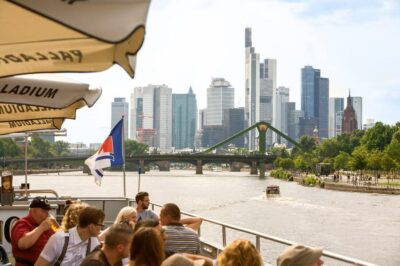
Your first major stop after meeting is the Eiserner Steg, the iron footbridge built in 1868. Even if you have seen bridges like this before, the value here is what comes with it. You’re walking across a structure tied to the city’s older era, and your guide uses that moment to set up the broader comparison theme of the tour.
As you stroll, you’ll hear how many of the grand buildings were destroyed during World War II. That background is not just trivia. It helps you look at today’s skyline and historic streets with a different question in your mind: what survived, what changed, and what was rebuilt in later decades?
Then the tour brings in the renovation story, including major renovations in 2008-9. That is one of those details that makes the walk feel current. You see the city as something that’s still being shaped, not a frozen postcard.
Römer and Paulskirche: The 1st German National Assembly Stop
Next up is the heart of the historic narrative: Römer and Paulskirche. This is where you get specific, not just general impressions. Your guide focuses on how these historic sites connect to Germany’s early national political moment.
The standout takeaway is where the 1st German national assembly took place. If your interest is history with a clear location, this stop is worth the walk. You can stand in the place tied to the event and understand it as part of Frankfurt’s identity, not just a distant chapter in a textbook.
The route also keeps the contrast theme alive. Even while you’re in classic Old Town territory, you’re learning to notice how the city’s modern era shows up alongside the older monuments. That is what makes this tour feel more like orientation and interpretation than a checklist.
Practical tip: wear comfortable shoes. This is a walking tour where your legs do the work and your guide does the connecting-the-dots job.
Neue Altstadt: Seeing Frankfurt’s New Old Town on Foot
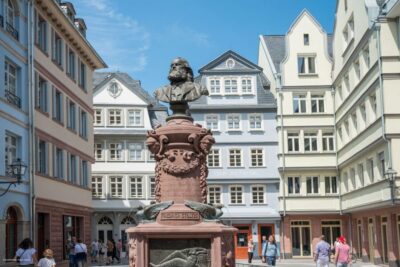
After you’ve covered the historic landmarks, the tour shifts to the city’s newer project: the Neue Altstadt. It is called the new old town for a reason, and you’ll get the context from your guide while you explore.
What I like about including Neue Altstadt is that it stops the story at the present. Many tours stop at what survived the past. Here, you get the chance to see how Frankfurt chooses to rebuild and reimagine parts of the city. That makes the walking route feel like a living conversation between history and design decisions happening now.
This is also where the tour’s “compare old and new” promise becomes real. You can literally look at the blend of traditional sights and newer developments and understand it as a planned outcome, not accidental scenery.


How the Tour Balances Modern Skyscrapers With Traditional Streets
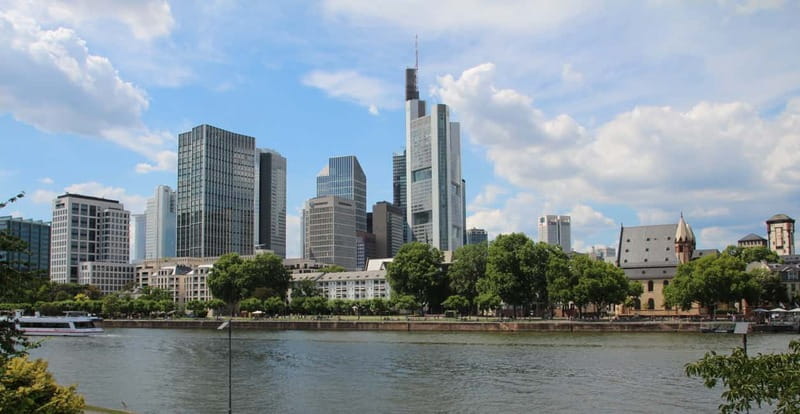
One of the best parts of this kind of walking tour is how it trains your eyes. Frankfurt can look like a city with two personalities: the modern skyline and the older streets. A quick guided route helps you connect those personalities instead of treating them as separate worlds.
During the walk, you’ll hear about skyscrapers of the modern era alongside historic monuments. The point is not to rate buildings. The point is to understand how the city evolved and why certain places ended up where they did.
If you’re arriving for a first visit, this balance is a major value. You do not just see highlights. You learn what to pay attention to when you wander later on your own, whether it’s a view from the bridge or a square tied to major events.
Private or Shared: Which Option Fits Your Pace?
You can choose a shared walking tour or a private group option. In a shared format, you get the social energy of hearing the guide explain the history to different people in real time. In private, you’re more likely to get deeper answers that match your interests.
The most helpful way to think about it is time and flexibility. A private tour can be a smart choice if you want to ask quick follow-up questions as you walk, or if conditions change. For example, one guide mentioned in recent feedback, Sanel, is known for working flexibly with time during a rainy evening and still delivering solid insights even when the schedule had to tighten.
If you like moving with a group and you’re happy to listen and absorb without too much personal tailoring, shared makes sense. If you’d rather control the pace and keep your questions centered on what you care about, private is the better fit.
Price and Value: Is $17 for 1.5 Hours Worth It?
At $17 per person for a 1.5-hour guided walking tour, the value is mostly about whether you want context. You are paying for a guide who connects: the Eiserner Steg built in 1868, the WWII destruction story, the renovation period in 2008-9, and the landmarks tied to the 1st German national assembly, plus a look at the Neue Altstadt project.
That is a lot of meaning for a short block of time. If you are self-guiding, you can still find information, but it’s slower and less connected. With a guide, the story stays coherent while you’re walking, which makes the landmarks stick in your memory.
Also, the tour ends right where it starts. That reduces “wasted time” after the tour. You can keep exploring or grab food without needing another transit step to get back oriented.
If you are traveling on a budget and still want a guided experience that doesn’t eat half your day, this one is priced like a smart shortcut.
Language Reality Check: The Guide Is German
The live tour guide is listed as German. That is the one thing that can make or break the experience for you. If you understand German well enough to follow history explanations, you’ll have a smooth time. If you do not, you might still pick up a lot from visuals and landmark names, but you may miss the finer narrative details.
My practical advice: check your comfort level first. If you’re relying on full comprehension to enjoy history, this tour may feel limiting. If you mainly want to see the sights and use the guide as a pointer for what to notice, you can still get value.
Who This Frankfurt Walking Tour Is Best For
This tour works especially well if you want:
- A quick Frankfurt Altstadt orientation without spending all day on transit.
- A guided route that connects historic monuments and the modern skyline theme.
- A history stop that has a clear location, the Paulskirche and the 1st German national assembly connection.
- A look at how Frankfurt is shaping its present with the Neue Altstadt project.
It is also a good match for people who like a walking pace they can finish and then use immediately afterward to explore more neighborhoods on their own. You get a guided frame, then you take the freedom.
Should You Book This Frankfurt Walking Tour?
Book it if you want a focused, 1.5-hour Frankfurt walking tour that connects the Old Town, the rebuild story, and the landmark tied to Germany’s first national assembly. The pricing is friendly for what you get, and the route makes the city’s old and new identity feel like one story instead of two separate visits.
Think twice if you need an English-speaking guide, since the live guide language is German, or if you want long lingering time at each site. This is more about moving with meaning than slow sightseeing.
If that sounds like your style, you’ll likely enjoy the fast, street-smart way Frankfurt history comes together.
FAQ
Where does the tour start and end?
The tour starts at Justitia-Brunnen (Römerberg) and ends back at the same meeting point.
How long is the walking tour?
The duration is 1.5 hours.
Is this tour private or shared?
It is offered as a shared or private walking tour depending on the option you select.
What language is the live guide?
The live tour guide speaks German.
How much does the tour cost?
The price is listed as $17 per person.
Is free cancellation available?
Yes. You can cancel up to 24 hours in advance for a full refund.
Can I reserve without paying right away?
Yes. The booking option is Reserve now & pay later, so you can book and pay nothing today.
Do I need to check for specific starting times?
Yes. Starting times depend on availability, so you should check availability to see what times are offered.
Pavements of Frankfurt
Everything else we filed on Frankfurt
- Airport Transfer: Airport FRA to Frankfurt by Luxury Van
★ 4.0 · 11 reviews - Munich City Tour and Dachau Concentration Camp Memorial Site Day Trip from Frankfurt
★ 3.5 · 11 reviews - Frankfurt: Private Sightseeing Tour in Retro Ape Calessino
★ 5.0 · 11 reviews - Heidelberg and Baden-Baden Tour from Frankfurt
★ 3.5 · 11 reviews - Frankfurt: Private custom tour with a local guide
★ 4.6 · 12 reviews - Frankfurt: Private Skyline Sightseeing Boat Tour
★ 4.9 · 12 reviews
Private, side by side.
 ★ 4.8Berlin: Private Reichstag and Glass Dome TourFrom $2882,226 reviews
 ★ 5.0Berlin Private Complete History All Day Walking TourFrom $253474 reviews
 ★ 5.0Munich Private Tour with a Local – Highlights & Hidden GemsFrom $112469 reviews
 ★ 5.0Private Walking Tour Berlin Third Reich Hitler and World War IIFrom $192360 reviews
 ★ 5.0Your private 3-hour Hamburg driving tour with a former policemanFrom $337304 reviews
 ★ 5.0Private Berlin: Iconic Sights and Hidden Gems Walking TourFrom $192292 reviews
 ★ 4.8Nuremberg: 1.5-Hour Private Tour through Historical Old TownFrom $140283 reviews
 ★ 5.0Berlin Private Half-Day Walking Tour: Discover the German Capital’s HistoryFrom $180244 reviews