
REVIEW · THE RHINE
Mainz: guided evening tour of the Rhine embankment/old town in German and English
Mainz looks different after dark. This guided evening stroll turns the Rhine embankment and old town into a readable, walkable story. I especially love how you get Rhine views right away, then the route tightens into the medieval streets near St. Martin’s Cathedral. The pace is relaxed, but it is still a walking tour, so plan for about 1.5 hours on your feet.
The guide also leans into small, memorable anecdotes, not just names on a map. You’ll hear connections that link the Romans to modern times, plus references to Johannes Gutenberg and Napoleon Bonaparte as you move through the city’s key spots. One possible drawback is practical: since churches are closed at night, you’ll admire the exteriors and squares more than you’ll see inside.
In This Review
- Key highlights you will actually feel on the walk
- Mainz by night, starting on the Rhine embankment
- Theodor Heuss Bridge to Rheingoldhalle, getting your bearings fast
- Jockel-Fuchs-Platz and Eisenturm, small stops with story power
- Heiliggeist to Liebfrauenplatz, where the atmosphere gets older
- Domplatz and St. Martin’s Cathedral with Cathedral Mountains
- Alter Dom St. Johannis and Leichhof, seeing the older Mainz layer
- Kirschgarten, the cherry orchard and half-timbered charm
- The stories that tie it together, Romans to modern Mainz
- Practical walking advice for a 1.5-hour Rhine to old town route
- Who should book this Mainz evening tour
- Should you book it?
- FAQ
- Where does the tour start?
- How long is the guided walking tour?
- What is the price per person?
- What languages is the guide available in?
- What route will we follow during the walk?
- What are some of the main places you see?
- Can we visit churches inside during the tour?
- Is the tour wheelchair accessible?
- Will there be recommendations for food afterward?
Key highlights you will actually feel on the walk
- Theodor Heuss Bridge at night: river lights, city glow, and a great start-line for photos
- Liebfrauenplatz and the cathedral zone: where the streets start to feel old and important
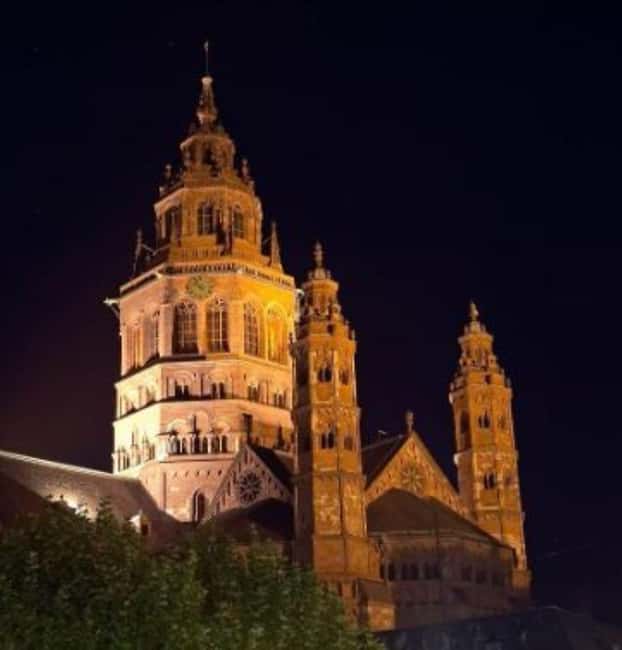
- Domplatz and St. Martin’s Cathedral: the illuminated centerpiece, seen from multiple angles
- Alter Dom St. Johannis and Leichhof: the older layer of Mainz right next to the main sights
- Kirschgarten: the cherry orchard feel with late Middle Ages half-timbered charm
More castles seen from the deck
Mainz by night, starting on the Rhine embankment
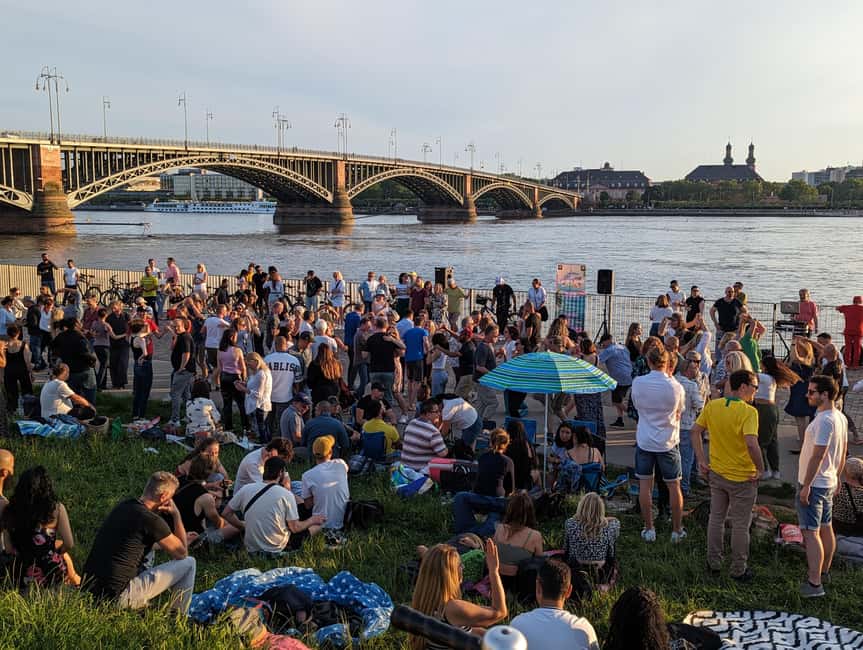
The tour kicks off on the Rhine’s edge, on the terrace side of the Hilton Hotel, facing the Theodor Heuss Bridge. Within minutes, you shift from day plans to night atmosphere. Mainz is lively in a quieter way after dark, and the river adds instant drama.
You then follow the embankment for a while, using the water as your guide. That matters, because it keeps things easy: you are not constantly negotiating turns in the dark. You also get a clear visual sense of where the old town sits in relation to the Rhine.
I like that the route is designed for orientation. You’ll see illuminated alleyways, buildings, and squares, but the big landmarks always appear in sequence, so your brain keeps up.
Theodor Heuss Bridge to Rheingoldhalle, getting your bearings fast
The first named stop is the Theodor Heuss Bridge Mainz, with about 10 minutes of guided time. Even if you are not a bridge person, this stop works. The water reflections and the moving city lights make the start feel like a proper “Mainz at night” reveal.
From there, the walking thread continues into the sights around the riverfront, including the Rheingoldhalle Mainz. You get a short guided pause here, around 5 minutes. It is not a long museum stop, and that is the point. In 1.5 hours, you are learning how Mainz grew around the river, not getting stuck.
If you want a quick photo tip: aim for steady shots near the bridge area. Once you move into tighter streets later, the lighting changes and your camera may need a little extra patience.
Jockel-Fuchs-Platz and Eisenturm, small stops with story power
Next comes Jockel-Fuchs-Platz, followed by Eisenturm Mainz. Each is a brief guided moment, around 5 minutes. These are exactly the kind of stops that make a guided walk worth it. The city’s smaller points can look like “just another corner” on your own, but a good guide gives them meaning.
At Eisenturm, the “why this place matters” feeling starts to build. You are moving from the broad Rhine view into the dense old-town geometry. The contrast is part of the fun. Mainz’s evening glow does not just look pretty. It also helps you notice the layout of the streets and how the city developed.
The best part here is the guide’s rhythm. You never feel lectured, and you do not feel rushed. You get just enough background to make the next scene click.
Heiliggeist to Liebfrauenplatz, where the atmosphere gets older
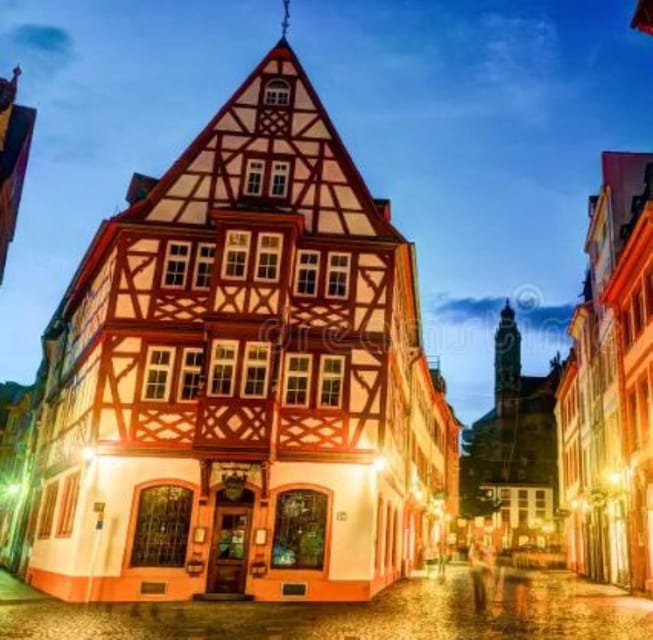
The tour continues with Heiliggeist (about 15 minutes) and then arrives at Liebfrauenplatz (about 15 minutes). This is where the “old town” feeling really settles in. If you like architecture, illuminated stonework, and the way squares open up at night, this is your stretch.
Heiliggeist is a longer pause than some earlier stops, so you get time to take it in. You can also slow down and let the city speak. Night walking is different from daytime sightseeing. You start noticing edges, shadows, and the way light pools on facades.
Then Liebfrauenplatz brings you toward the cathedral zone. Even though you are outside, the sense of place becomes stronger here. Squares act like visual anchors, and this one sets up the next big moment.
More Rhine-Main city walks


Domplatz and St. Martin’s Cathedral with Cathedral Mountains
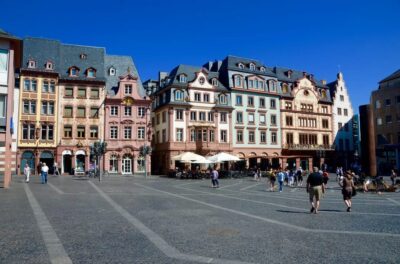
The tour’s major centerpiece is St. Martin’s Cathedral in Mainz, often reached after you pass Liebfrauenplatz. In your mind, this is the moment you switch from “Rhine walk” to “Mainz old town.”
The highlight list calls out St. Martin’s Cathedral and the Cathedral Mountains, and that is a key clue for what you will feel. The terrain around the cathedral area helps create a dramatic sense of height and presence. When buildings light up at night, you get that vertical “city crown” effect.
You will also pause at Wochenmarkt Mainz Domplatz for about 10 minutes. The name tells you it is a market area in the day, but at night it becomes something else: a wide, open stage for city lights and cathedral views. Even if there is no market happening while you are there, the location still does its job, making the cathedral feel centered and important.
This is also a good point to remember what you are actually paying for. The value is not the number of stops. It is the way the guide connects scenes into a timeline. You will hear how Mainz’s story stretches from early eras to more modern chapters as you stand in these key spaces.
Alter Dom St. Johannis and Leichhof, seeing the older Mainz layer
After the cathedral area, the walk brings you toward Alter Dom St. Johannis, with about 10 minutes of guided time. This stop is a “pay attention” moment. When you see an older cathedral exterior in the evening light, you understand why cities build new identities on top of older ones.
The highlight list also mentions Old Cathedral St. Johannis and Leichhof. That pairing matters. It suggests you are not just seeing one famous building, you are getting a sense of how the cathedral area connects to surrounding spaces that feel medieval in scale.
This is one of those parts where the guide’s anecdotes really help. Without a guide, you might focus on details like stones or windows. With the guide, those details turn into context: how Mainz functioned, what different eras left behind, and how people moved through this part of town.
The takeaway for you is simple. If you like cities with layers, you’ll enjoy this section more than the “big sight” crowd. You are seeing how Mainz keeps its past in view.
Kirschgarten, the cherry orchard and half-timbered charm
The final big act is Kirschgarten, with about 15 minutes guided and then the tour ending here. The highlight list calls out a cherry orchard with half-timbered houses from the late Middle Ages, and that is exactly the kind of contrast you want at the end.
This area feels like a reward for walking. The name itself points toward the orchard idea, and the architecture style listed here points to the “late Middle Ages” mood. At night, the half-timber look can be especially charming because light emphasizes structure and texture.
The tour’s “to expect” description also says the guide walks from the cathedral area past St. Johannis toward Kirschgarten. That means you arrive here with momentum, not as a sudden random stop. You understand what you have been seeing.
If you enjoy taking photos, this is a strong finish. You also get a place where you can settle your eyes after the cathedral zone’s bigger forms. Kirschgarten gives you a smaller scale, which makes the whole evening feel balanced.
The stories that tie it together, Romans to modern Mainz
A walking tour like this succeeds or fails based on the narrative. Here, the guide frames Mainz as a city with eras stacked on top of each other. You go from the Rhine edge into old streets, and along the way you hear how Mainz connects from Romans to modern times.
You’ll also get specific name drops as you walk, including Johannes Gutenberg and Napoleon Bonaparte. Even without extra stops, mentioning these figures helps you “attach” the city to history you’ve seen in books. It makes your walk feel like you are moving through chapters, not just passing landmarks.
The most praised aspect you’ll feel in real time is the guide’s tone. The style is open and friendly, with lots of small anecdotes. That matters because it keeps the walk lively and easy to follow in both German and English.
Practical walking advice for a 1.5-hour Rhine to old town route
This tour is built for an evening stroll, about 1.5 hours total. That is short enough to keep the day from feeling wasted, but long enough that you will notice details and get a sense of the city’s shape.
Here’s what I recommend you plan for:
- Wear comfortable shoes. You will be moving steadily from the Rhine embankment up into the old town.
- Bring a light layer if the night feels cool. This is an outdoor route with no mention of indoor warm-ups.
- If you’re photographing, start with the bridge area first, then expect lighting shifts when you move toward squares and cathedral surroundings.
- Since churches are closed at night, focus on exteriors, squares, and the illuminated streets. You can still enjoy the architecture, just plan to admire rather than tour inside.
One more practical perk: the tour includes an ending suggestion for a place to stop for a bite to eat in Mainz. That can save time when you are hungry and you do not want to guess.
Who should book this Mainz evening tour
You’ll get the most from this experience if you want:
- A fast way to orient yourself in Mainz without cramming a full day
- Night views plus old-town atmosphere, with stops that feel purposeful
- A guide who explains with anecdotes, not just facts on a list
- An option that runs in both German and English
It is a great fit for couples, solo travelers, and anyone who wants “Mainz at night” without complicated logistics. It also works well as an add-on to a longer trip in the Rhine region, because it uses the evening hours efficiently.
Should you book it?
Yes, I would book it if you like your sightseeing light, story-driven, and focused on atmosphere. For $23 per person and about 1.5 hours, the value is that you get a guided route from the Rhine to the cathedral area and into Kirschgarten, with meaningful commentary at key places like Theodor Heuss Bridge, Liebfrauenplatz, St. Martin’s Cathedral, and Alter Dom St. Johannis.
I’d skip it only if you specifically want nighttime access inside churches, because the tour operates under the reality that the churches are closed at night. If you’re happy seeing the buildings from the outside and enjoy an evening walk with a lively guide, this is an easy decision.
FAQ
Where does the tour start?
The tour meets on the banks of the Rhine in front of the Hilton Hotel terrace in Mainz, toward the Theodor Heuss Bridge.
How long is the guided walking tour?
The tour lasts about 1.5 hours.
What is the price per person?
The price is listed as $23 per person.
What languages is the guide available in?
The live guide offers the tour in German and English.
What route will we follow during the walk?
You’ll walk along the Rhine banks, then toward the old town area including Liebfrauenplatz and the cathedral zone, and you finish in Kirschgarten.
What are some of the main places you see?
You will include stops such as Theodor Heuss Bridge, Rheingoldhalle, Jockel-Fuchs-Platz, Eisenturm, Heiliggeist, Liebfrauenplatz, Wochenmarkt Domplatz, Alter Dom St. Johannis, and Kirschgarten.
Can we visit churches inside during the tour?
No. The churches are closed at night, so you cannot visit them from the inside.
Is the tour wheelchair accessible?
Yes, the tour is listed as wheelchair accessible.
Will there be recommendations for food afterward?
Yes. At the end of the tour, the guide is happy to recommend a place to stop for a bite to eat in Mainz.
Around the Rhine-Main Cities
Further Along the Rhine
Everything else we filed on Mainz
- Mainz Highlights, private walking tour
★ 4.9 · 15 reviews - 1,5 Hour Private Guided Walking Tour: Cathedral and Old Mainz
★ 5.0 · 25 reviews - Mainz: guided evening tour of the Rhine embankment/old town in German and English
★ 4.9 · 38 reviews - Exclusive Wine & Food Tasting in Historic Cellar | Mainz Old Town
★ 5.0 · 42 reviews - Small Group Rheingau Vineyards Tour with Castles and Abbeys
★ 5.0 · 100 reviews - Guided tour in Mainz on the Rhine in german and english
★ 4.9 · 106 reviews
Rhine Valley Castles and River Cruises, side by side.
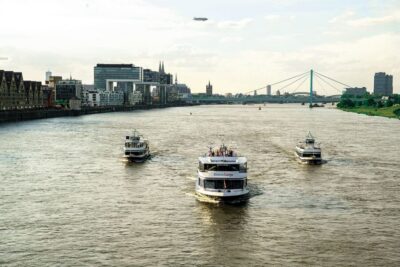 ★ 4.4Cologne: Top Sights Rhine River Cruise – Skyline TourFrom $283,030 reviews
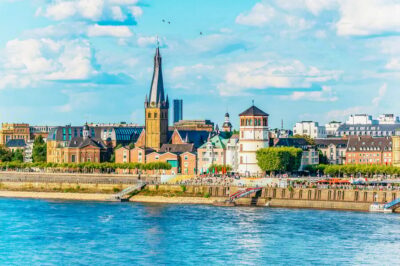 ★ 4.1Düsseldorf: City Sightseeing Cruise on the RhineFrom $232,954 reviews
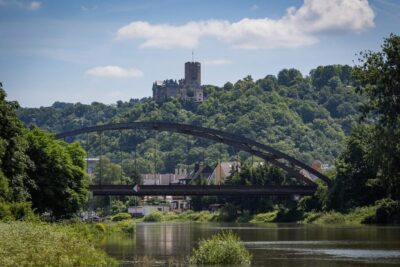 ★ 4.4Koblenz: Rhine Valley Castles and Palaces Boat TourFrom $211,824 reviews
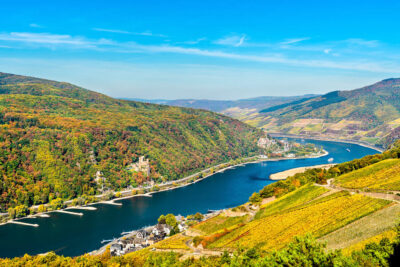 ★ 4.2Rhine Valley Castles: 1.5-Hour Boat Tour from RüdesheimFrom $191,390 reviews
 ★ 4.4From Frankfurt: Rhine Valley Day TripFrom $1751,317 reviews
 ★ 4.0Rhine Valley Trip from Frankfurt including Rhine River CruiseFrom $1671,179 reviews
 ★ 5.0Cologne City Tour Experience cathedral city on the RhineFrom $35852 reviews
 ★ 4.6Koblenz: 2-Hour Sightseeing Cruise on the RhineFrom $20839 reviews
Other lists this tour is on