
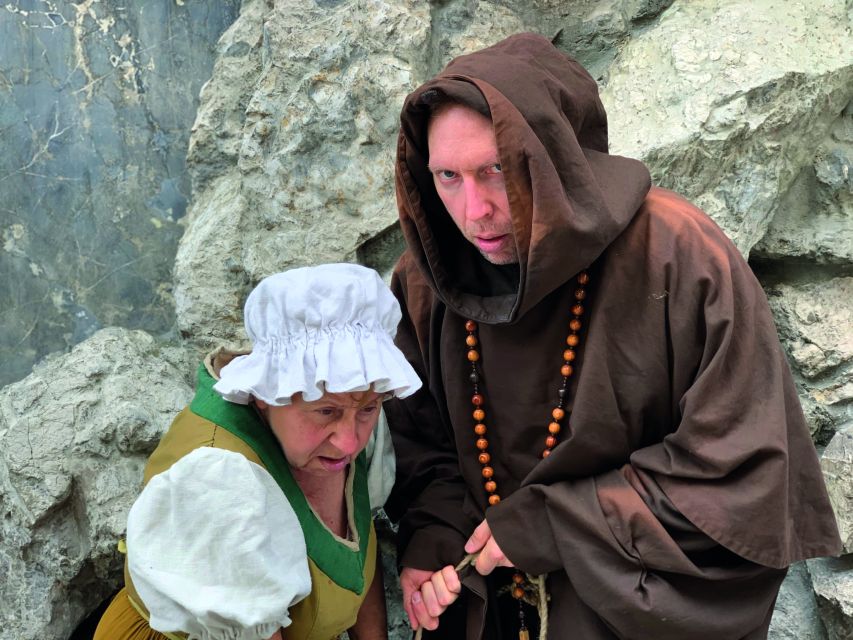
REVIEW · TOURS
Munich: Scary Tour with actors in GERMAN
Munich gets darker after sunset, and it works. This 90-minute walking tour turns major old-town landmarks into a live, German-language story about witch hunts and punishment, staged by professional actors in traditional costume. I like the way the scenes are theatrical but still anchored to specific places, and I especially like the pacing, it feels like a show you can walk through.
One thing to plan for: it is German only, so if you want English or another language, this might be limiting.
In This Review
- Key things to know before you go
- When Munich’s old streets turn into a living stage
- Meet at Karlsplatz, then follow the big blue bag
- Neuhauser Tor and Salzstraße, where punishment left town
- St. Michaelis Church, the tower collapse, and a storm blamed on bad women
- Schöner Turm and the goldsmith story, where rumors become consequences
- Frauenkirche and the Prince of Darkness, plus the windy explanation
- Town Hall yard and Marco Bragadino, alchemy meets persuasion
- St. Peter’s Church, the hangman’s everyday life
- Old Town Hall and the former torture chamber
- The Platzl, red light history, and why it changed after 1972
- The acting and storytelling, why this feels more than a walk
- Price and logistics: is $46 per person a good deal
- Who should book this Munich scary tour
- Should you book it? My straightforward take
- FAQ
- What language is the tour in?
- Where is the meeting point in Munich?
- How long does the tour last?
- Does the tour run in bad weather?
- Is the tour wheelchair accessible?
- What topics does the tour focus on?
- How much does it cost?
- Is it refundable, and can I reserve without paying yet?
Key things to know before you go
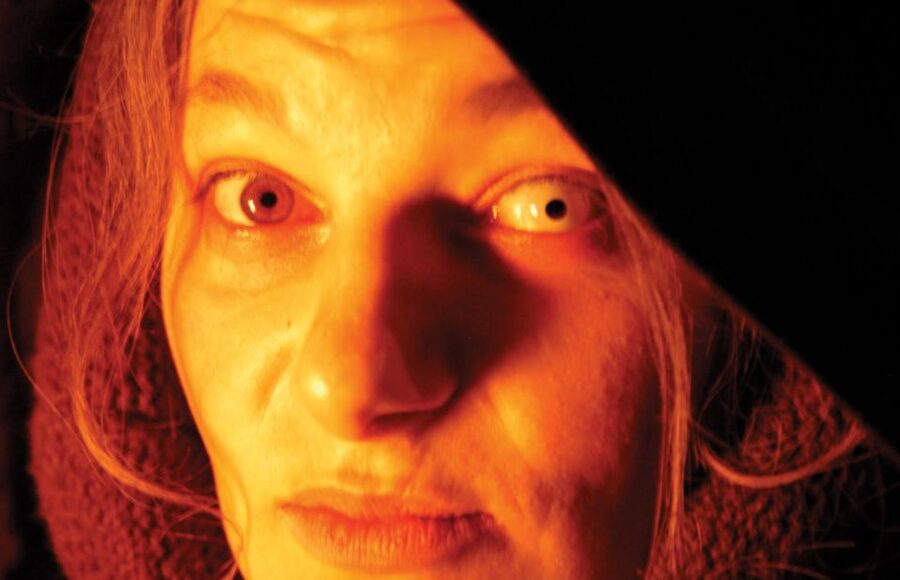
- Actors in historic costumes put the 1500s and 1600s into motion with reenactments, not lectures
- Neuhauser Tor to Frauenkirche connects the grim topics to the actual streets and buildings you see in Munich
- Stop-by-stop stories explain why witches were blamed, why executions were outside town, and what people feared
- Devil-themed moments include the Prince of Darkness and his oddly specific shoe-size detail
- Marco Bragadino and the town hall stop bring the alchemist tale into the mix in a memorable way
- St. Peter and Old Town Hall shift from supernatural claims to everyday work and the mechanics of torture and punishment
Undecided? The closest Munich write-ups we have are these.
- From Munich: Neuschwanstein & Linderhof Castle Full-Day Trip★ 4.5 · 12,494 reviews
- Neuschwanstein & Linderhof Castle-Fairytale Day Tour from Munich★ 4.5 · 7,275 reviews
- Munich: Third Reich & WWII Walking Tour★ 4.6 · 6,181 reviews
- Dachau Concentration Camp Memorial Site Tour from Munich by Train★ 4.5 · 5,637 reviews
When Munich’s old streets turn into a living stage
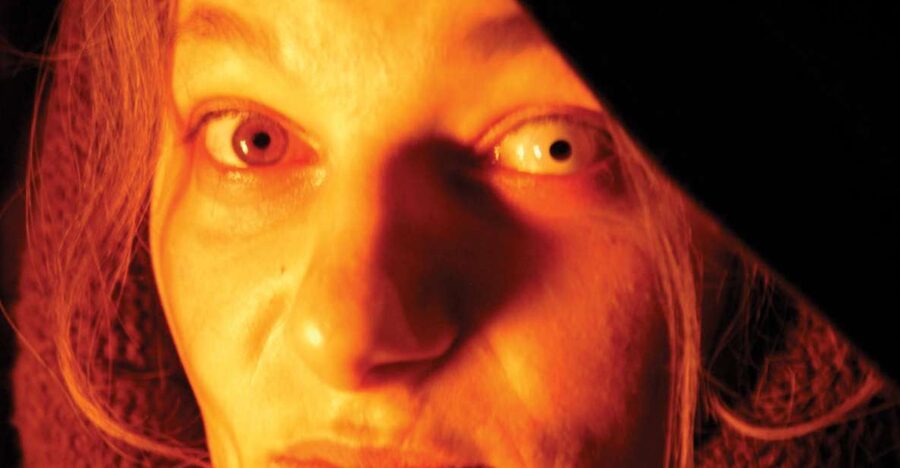
I love tours where you can look up at a landmark and immediately understand why it matters. This one uses Munich’s central old-town sights as cues for stories about power, fear, and control, then has actors perform those ideas right in front of you. The result is a walking theater piece, not a museum tour with headsets.
The core theme is the clash between myth and real life. Hangmen, whores, and witches are connected in the tour’s telling, with a blunt look at how society labeled people and justified punishment. And yes, the devil shows up too, because Munich’s darker folklore loves a dramatic entrance.
You also get real variety in tone. Some scenes are chilling, some are played for dark humor, and some even involve you in small moments during the performance. It is very likely you will leave feeling like Munich is not just pretty architecture, it is also complicated human stories.
Meet at Karlsplatz, then follow the big blue bag
The tour starts at Karlsplatz/Stachus, under the archway of the Karlstor. Your easiest move is to stand there and look for the guide carrying a BIG BLUE BAG with white words reading Weis(s)er Stadtvogel. That makes it simple to find the group quickly, even if you are arriving from different directions.
This matters because the tour is only 90 minutes. You do not want to lose time figuring things out at the first stop. Once you are moving, the pacing is tight enough that you will cover multiple sights without the usual stop-and-wait feeling.
The tour runs rain or shine, so check the weather like you would for any evening walk. If it is damp, bring shoes that grip. If it is cold, layer up, because you will spend time outdoors between performances.
Neuhauser Tor and Salzstraße, where punishment left town
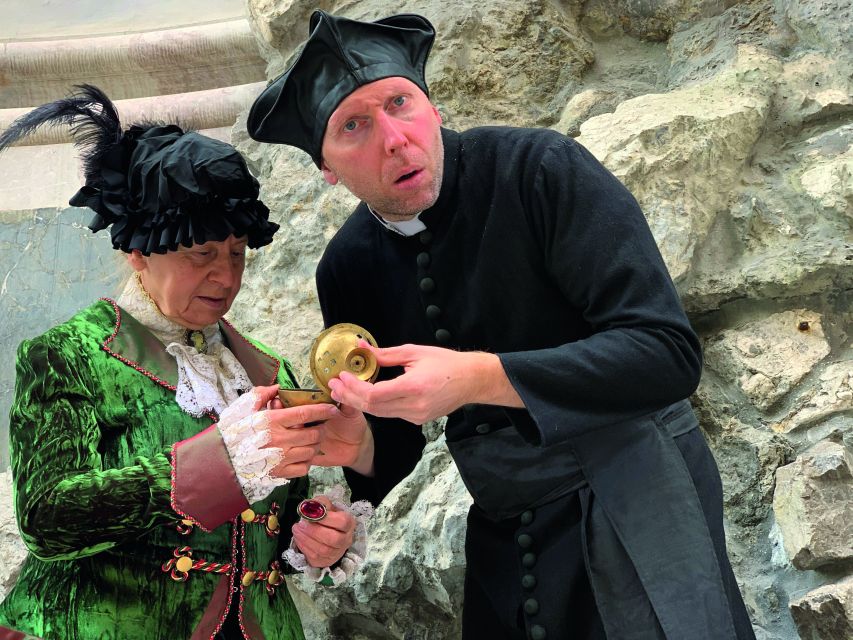
The opening stretch leans into one big idea: criminals were led out of town for execution, and the Neuhauser Tor area is used to set that scene. You get the tour’s explanation of why the execution site was located outside the city, tying it to how authorities controlled fear and public order.
From there, the walk goes along Salzstraße, heading toward the area connected with the former Jesuit school from the period associated with witch hunts. This part is less about sightseeing selfies and more about atmosphere. The actors help you understand how people could see religion, law, and rumor all tangled together, especially when fear ran high.
Then the tour hits a specific dramatic moment involving Duchess Renata and Jesuit Father Ignatius during the construction time tied to St. Michaelis Church. The story uses that church backdrop to show how people explained disasters through blame and supernatural thinking.
If you hate being stuck in a literal reenactment with no context, you might find parts of this heavy. But if you like the idea of hearing why a place is remembered, even when the topic is dark, this sequence works well.
St. Michaelis Church, the tower collapse, and a storm blamed on bad women
At St. Michaelis Church, the performance shifts from general background into a single, high-drama example: during construction, a tower collapsed, and the explanation given in the tour’s telling was that the storm was created by accursed bad women.
That line is exactly the kind of story this tour is built to unpack. It is not just about the event, it is about how communities turned fear into blame, then used belief systems to justify consequences. By tying it to a real church stop, you stop thinking of these events as distant rumor and start seeing them as part of how Munich’s identity formed.
Practical note: churches are often the kind of place where you might want to pause, look up, and take in details. Since this is a walking theater tour, you may have limited time to linger. If you are the kind of person who wants to stand and stare, plan to do that after the tour with a bit of extra time of your own.
Schöner Turm and the goldsmith story, where rumors become consequences
Next comes Schöner Turm, used for the sad story of an unfortunate goldsmith. The tour uses this stop to keep the tension moving from witchcraft accusations into how everyday trades and people could be pulled into accusations and punishment.
This is one of the tour’s strengths. You are not trapped in a single theme. Yes, witch hunts are a major thread, but you also get stories that show how accusations could spread across different roles in society.
The tour’s acting also helps here. Even when the topic is grim, the performers make it understandable. They turn abstract ideas into something you can follow while walking, so you do not feel lost when the story jumps between characters and locations.
Frauenkirche and the Prince of Darkness, plus the windy explanation
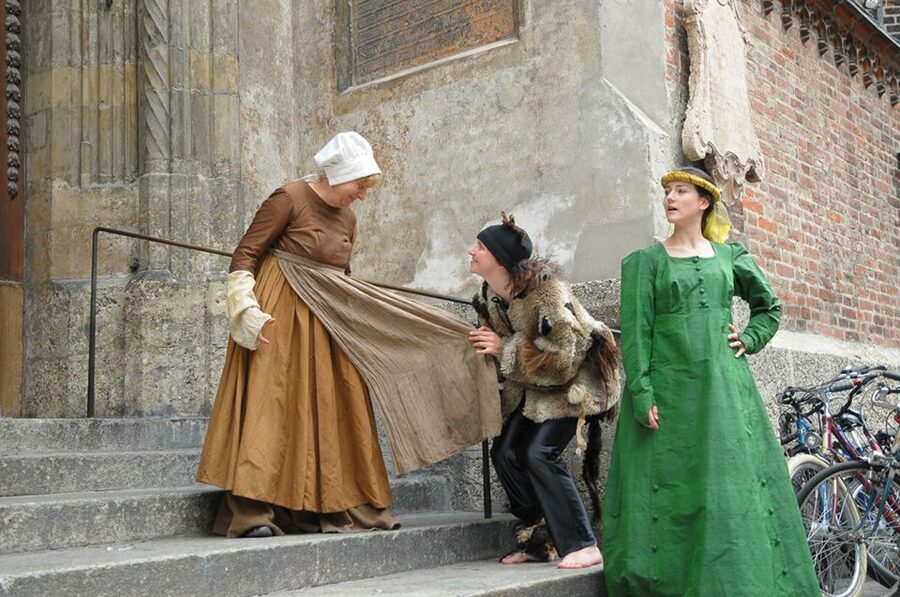
Then you arrive at one of Munich’s most recognizable icons, the Frauenkirche. This is where the tour plays its devil card in a very specific way: you meet the Prince of Darkness himself, and the story includes why the devil helped the master builder construct the church, and why the area is so windy.
And yes, the tour gets delightfully specific about devil shoe size. It is a small detail, but it signals how the tour balances horror with entertainment. You are not stuck in misery the whole time. You get a moment where the absurd becomes the hook for the lesson.
This stop is also a good example of how the tour makes you pay attention to the physical space. Windy corners, street-level angles, and church exteriors become part of the storytelling. It is not just where you stand, it is what you notice while you stand there.
Town Hall yard and Marco Bragadino, alchemy meets persuasion
The walk continues to the yard of the Town Hall, where Marco Bragadino, an alchemist, is waiting in the story. The performance frames him as a kind of self-promoter, trying to warm people to his arts.
This is a key part of the tour if you want more than supernatural fear. It shows how belief can also be tied to claims, technique, and persuasion. When people are scared or impressed, they can be convinced by confident explanations, even when those explanations sound impossible.
It also keeps the tour from becoming one-note. Witch hunts are heavy, torture stories are heavy, but alchemy offers a different kind of cultural “why.” It is still about people trusting narratives, just with a different flavor.
St. Peter’s Church, the hangman’s everyday life
At St. Peter’s Church, the focus turns to the everyday life of a hangman. You hear how he looked, why he was best avoided, and even how someone might obtain a gallows rope, in the tour’s dramatized telling.
This is where the tour gets grounded. Not everything is brooms and potions. There is a real human job involved, and it is presented as feared work tied to the machinery of punishment. The performers make the hangman feel like a person in society, not just a shadowy figure in a history book.
If you are squeamish about violence themes, this is also where you should mentally brace. The tour is built around torture and executions, and St. Peter’s helps you understand those things as part of daily life in the period the tour covers.
Old Town Hall and the former torture chamber
At the Old Town Hall, the tour crosses the former torture chamber in the story’s telling, with gruesome details woven into the performance. This is the point where the title of scary tour makes more sense than it does in marketing.
What I like here is the tour’s insistence on consequences, not just “look how dark.” It frames torture and punishment as a method that left marks on real bodies and real communities. By the end of this segment, you understand why the tour spends time on superstition earlier. It explains how a society could justify brutal acts while still believing it was acting responsibly.
Do not expect a sanitized walkthrough. If you are the kind of traveler who likes light, fluffy city entertainment, skip this one. If you want Munich’s dark side explained through performance and place, this is one of the strongest sections.
The Platzl, red light history, and why it changed after 1972
The story also uses Platzl as a way to talk about Munich’s red light district history, explaining that it was home to the area until the Olympic Games in 1972. The tour references cultural memory too, including what the Spider Murphy Gang sang about in Skandal im Sperrbezirk, and it brings in the character Rosi and her colleagues.
This matters because it shows the tour’s broader method. The tour is not only about supernatural horror. It also looks at how laws and public attitudes can reshape what is tolerated in a city center.
If you are sensitive to themes of prostitution, the tour does not hide that topic. It treats it as part of the historical story it is presenting, and it connects it to why certain groups were blamed and punished.
The acting and storytelling, why this feels more than a walk
The best part of this tour is the combo of professional actors plus a guide who keeps the story moving. The performances break the monotony that can happen on standard walking tours, where you hear facts and do your best to stay awake.
Here, the actors are not just standing and acting at each stop. They reenact scenarios with traditional costumes, and they use you in the moment at times. That sounds like a gimmick, but in practice it helps you stay engaged, especially when topics are intense.
This is why the tour’s rating is so strong. With a 4.7 rating from 59 reviews, the most common praise is consistent: the acting scenes are gripping, the tour is informative, and the price feels fair for what you get in 90 minutes.
Price and logistics: is $46 per person a good deal
At about $46 per person for 90 minutes, this is not the cheapest walking tour in Munich. But it is also not trying to be. You are paying for two things that most budget tours do not include: stage-style acting and a tightly organized route through major landmarks.
If you enjoy tours where history is performed, not just spoken, then the value makes sense. You get multiple stops across the old center, plus a full narrative arc that keeps changing tone, devil folklore to church stories to the hangman’s daily world.
Where it might not feel worth it is if you prefer quiet, low-drama city walks. This is a show. Even the educational parts are delivered through performance.
German-only is another value factor. If you do not speak German well, the tour could feel like it is out of reach, and you might end up paying for something you cannot fully follow.
Who should book this Munich scary tour
This fits best if you want:
- A theatrical walking experience tied to recognizable Munich landmarks
- German-language storytelling with actors in costume
- A tour that mixes folklore, punishment, and social history rather than sticking to one topic
- An evening plan that keeps you moving and engaged for 90 minutes
It might be a poor fit if:
- You want only upbeat sights and simple history
- You need an English-language tour
- You are extremely uncomfortable with topics like executions, torture, and prostitution
If you are open-minded and like learning through story, this is a standout way to see Munich’s center after dark.
Should you book it? My straightforward take
Book it if you like your city history with characters, costume, and a strong narrative thread. I like that you stand at famous places like Neuhauser Tor, St. Michaelis Church, Frauenkirche, the Town Hall area, St. Peter’s, and the Old Town Hall, then hear why those spots connect to fear, blame, and belief.
Pass if you want a calm, purely factual walk. Also consider language first. This one runs in German, and you will get the most out of it when you can follow the dialogue.
FAQ
What language is the tour in?
The live tour guide speaks German.
Where is the meeting point in Munich?
Meet at Karlsplatz/Stachus, under the archway of the Karlstor. The guide will be wearing a BIG BLUE BAG with the white words Weis(s)er Stadtvogel.
How long does the tour last?
The tour lasts 90 minutes.
Does the tour run in bad weather?
Yes, it takes place rain or shine.
Is the tour wheelchair accessible?
Yes, the tour is listed as wheelchair accessible.
What topics does the tour focus on?
It centers on witch hunts, prostitution, torture, and executions, with stories and reenactments that connect these themes to various Munich locations.
How much does it cost?
The price is $46 per person.
Is it refundable, and can I reserve without paying yet?
Cancellation is free up to 24 hours in advance for a full refund, and you can reserve now and pay later.
Everything else we filed on Munich
- Munich Beer and Bavarian Bites Private Tour
★ 5.0 · 11 reviews - Private Day Trip from Munich to Neuschwanstein and Linderhof
★ 4.0 · 11 reviews - Private Munich Old Town Walking Tour – with optional Breakfast
★ 5.0 · 11 reviews - Festive Concert in the All-Saints Court Church
★ 4.6 · 11 reviews - Private Castle Tour from Munich: Neuschwanstein, Hohenschwangau, and Linderhof
★ 4.5 · 12 reviews - Munich: Oktoberfest Big Beer Tent Evening including table reservation
★ 4.8 · 12 reviews
Tours, side by side.
 ★ 4.7Berlin: Reichstag, Dome and Government District Guided TourFrom $1818,288 reviews
 ★ 4.3Berlin: 1-Hour City Tour by Boat with Guaranteed SeatingFrom $2516,993 reviews
 ★ 4.7Hamburg: Sex and Crime in St. Pauli Tour for Ages 18+From $29515,447 reviews
 ★ 4.7Dresden: Semperoper Tickets and Guided TourFrom $1812,102 reviews
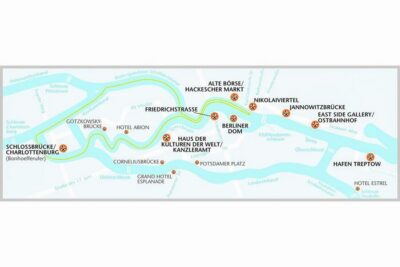 ★ 4.4Berlin: Boat Tour Along the River SpreeFrom $3411,252 reviews
 ★ 5.0Discover Berlin Half-Day Walking TourFrom $249,624 reviews
 ★ 4.3Berlin: Hop-on Hop-off Bus Tour with Live CommentaryFrom $228,579 reviews
 ★ 4.7Berlin: Government District around the Reichstag Guided TourFrom $2848,447 reviews