
REVIEW · DACHAU
Munich WWII and Dachau Concentration Camp Private Tour with Licensed Guide
Munich WWII and Dachau hit hard in the real places where they happened. This is a private, guided day that strings together Nazi-era sights across Munich and then moves you to the Dachau Concentration Camp Memorial with a licensed guide.
I like how smoothly it runs, with pickup in a luxury VW or Mercedes minivan (or a small coach for bigger groups) and a chauffeur handling the driving. I also like that the day is structured so you get both street-level context in Munich, including major landmarks and sites connected to the White Rose resistance, then you get time at Dachau for reflection and understanding.
One thing to think about first: it is a long day (about 9 hours 30 minutes), and the Dachau visit can be emotionally heavy, so you’ll want comfy shoes and a calm mindset before you go.
In This Review
- Key things to know before you go
- Price and logistics: what $804.18 buys you
- A private van day across Munich, then Dachau
- Marienplatz to Frauenkirche: starting with the city’s public face
- St. Michael’s barrel vault and the scars of bombing
- Residenz Munich, lions at the entrance, and the idea of power
- Feldherrnhalle and the 1923 putsch turning point
- A memorial-minded stop: Platz der Opfer des Nationalsozialismus
- Ludwig Maximilians University and the White Rose memorial visit
- Schwabing, Hofbräuhaus, and the propaganda connections in daily life
- Nazi-era architecture in Altstadt-Lehel and Haus der Kunst
- Eisbachwelle: a rare pause to breathe
- Hitler addresses around Munich: Bogenhausen, Schwabing notes, and Maxvorstadt
- Königsplatz, Karolinenplatz, and the NSDAP power circle
- Altstadt-Lehel and beyond: Prinzregentenstraße, Ramersdorf, and the planned world
- The White Rose arrests to Stadelheim executions route
- Dachau memorial: what happens when the story becomes real
- Breaks, lunch, and pacing on a 9.5 hour day
- Should you book this Munich WWII and Dachau private tour?
- FAQ
- How long is the Munich WWII and Dachau private tour?
- What is the meeting and pickup time?
- Is the tour private?
- What language is the tour offered in?
- What transportation is provided?
- Is lunch included in the price?
- Does the tour include admission tickets?
- How long do you spend at the Dachau Concentration Camp Memorial?
- Is the Dachau memorial visit suitable for children?
- Is there a mobile ticket?
Key things to know before you go
- Private door-to-door pickup in a VW or Mercedes minivan, with chauffeur driving
- Licensed Munich and Dachau guide who can explain what you are seeing as you move
- A full Munich Nazi-era route, covering everything from power centers to personal addresses
- Dachau memorial time to absorb what you see, typically about 1.5 to 2.5 hours
- Practical comfort touches, including mineral water and a mobile ticket
- A pace built around short stops, so you can see a lot without feeling lost
Further wartime history walks we have written up
- Munich: Third Reich & WWII Walking Tour★ 4.6 · 6,181 reviews
- Third Reich Walking Tour Munich★ 4.5 · 4,291 reviews
- Munich: Birthplace of the Third Reich Guided Walking Tour★ 4.6 · 771 reviews
- Munich World War II Sites Including Dachau Concentration Camp★ 4.5 · 570 reviews
Price and logistics: what $804.18 buys you
At $804.18 per person, this is not a budget tour. You are paying for a true private experience: your own group travels together in a new, comfortable VW or Mercedes vehicle, with a chauffeur and air conditioning.
The other value piece is how much is handled for you. You are not coordinating trains, parking, or navigation across Munich plus Dachau. Instead, you roll from stop to stop, with the guide doing the hard work: connecting symbols on buildings, street locations, and historical images into a single day you can follow.
You should also know what is not priced into it. Lunch is not included, and you will need to plan for a meal break on your own. Tips are also not included. On the plus side, mineral water is provided, and the tour states no hidden costs.
Pickup is flexible. You can choose 8:00 a.m., 9:00 a.m., or 9:30 a.m., or request another time. If you’re arriving at MUC airport or staying outside central Munich, pickup and return can be requested with possible additional costs.
A private van day across Munich, then Dachau
This tour is built around one big idea: you can learn the Nazi story through places that still stand, then you can face the consequences at Dachau with time to process what you’re seeing.
You start in Munich with a drive to Marienplatz, then walk and view major sites with the guide. Some stops are short by design, like 5 to 15 minutes, because you’re moving through a lot of geography. The route also includes multiple Munich districts, so you get a wide view of how power, propaganda, and everyday life overlapped.
Once Munich sightseeing is done, you shift to the Dachau memorial. The experience there is longer and slower, because it needs it. The average stay at the memorial is listed as 1.5 to 2.5 hours, and you’ll tour it alongside your licensed guide.
Marienplatz to Frauenkirche: starting with the city’s public face
The day opens at Marienplatz, Munich’s classic center. Your guide starts you with an old town orientation of about an hour. This matters because you’re about to see Nazi-era interventions on famous civic space, and you’ll understand the contrast more if you first know what the city looks like at ground level.
At Marienplatz itself, the guide points out how the neo-Gothic town hall was dressed in Nazi symbolism, including swastika flags during that period. You also learn about the way the old town hall from the 15th century received an extra-wide passage to handle growing traffic at the time.
From there, you head to Frauenkirche, Munich’s late Gothic cathedral built at the end of the 15th century in about 20 years. This stop is not just architecture. You’ll use historical images to see destruction from Allied bombings and changes during reconstruction. If you have ever looked at a restored building and wondered what was lost underneath, this is where the guide turns that question into something concrete.
St. Michael’s barrel vault and the scars of bombing
Next up is St. Michael, known for having the second largest barrel vault in the world. The church was built about 100 years after Frauenkirche, in a Mannerist style. It’s a great reminder that Munich’s skyline did not pause for 20th-century politics.
Here again, the focus is on the human cost made visible in the built environment. You’ll see historical images tied to bombing raids and also hear about reconstruction changes. It’s a useful pairing with Frauenkirche, because you get two religious buildings that showcase different eras, both with the same wartime reality layered into them.
If you are sensitive to heavy topics, this is still an intense day even before you reach Dachau. But the good part is you are seeing history as physical evidence, not just names in a book.
The other Dachau Memorial visits we reviewed
Residenz Munich, lions at the entrance, and the idea of power
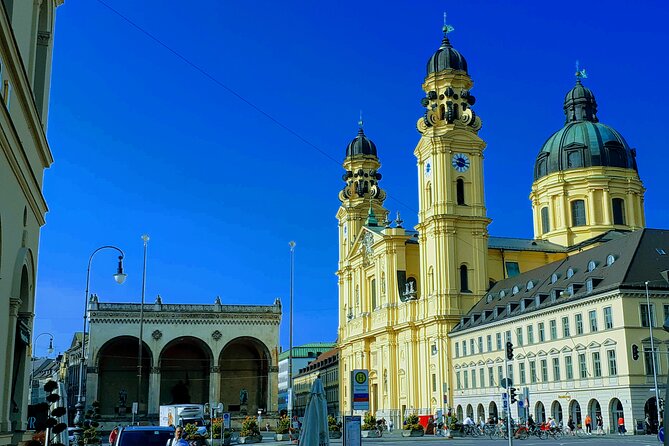
Then you move to Residenz München, one of Europe’s largest and most impressive city residences. The tour frames the building as a power symbol in its own right. In 1933, a senior SS leader, Christian Weber, set up his residence there.
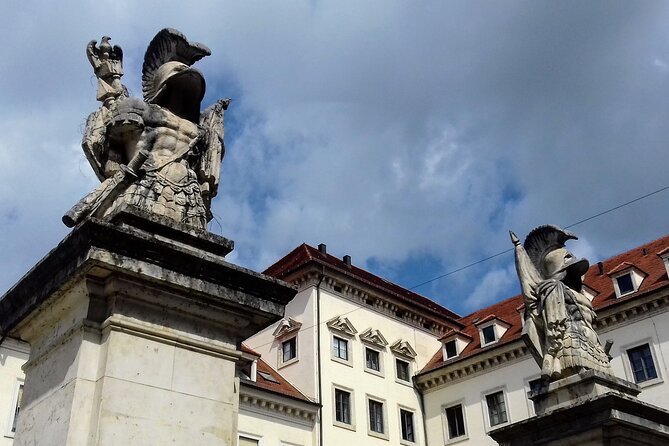
You get to look at the building complex from the outside, including its seven large inner courtyards. Your guide explains different stylistic epochs, and yes, there’s a fun moment built into the story: the guide explains the importance of petting one or all of the lions at side entrances. It’s a tiny human break inside a serious topic, and it helps the day stay alive rather than frozen in sadness.
Feldherrnhalle and the 1923 putsch turning point
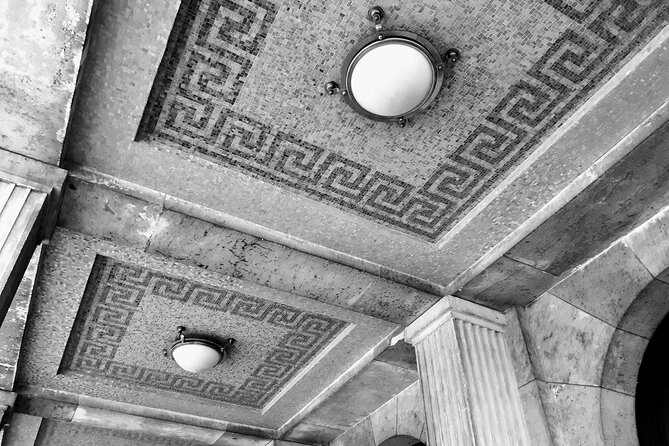
At Feldherrnhalle on the historic Ludwigstrasse, the tour shifts into political drama. This was built on behalf of King Ludwig I, and it’s tightly linked to the attempted Hitler putsch in 1923, which ended in bloodshed.
There’s also practical routing here. Your chauffeur is set to wait for you, while the rest of the sightseeing continues by minivan or coach. That small logistics detail matters. It reduces stress, especially since you are already doing lots of short walking stops.
You’ll also get a sense of place, including how nearby gates and city boundaries have changed over the last couple centuries. Even if you don’t plan to memorize dates, you start to feel how propaganda used familiar streets as stages.
A memorial-minded stop: Platz der Opfer des Nationalsozialismus
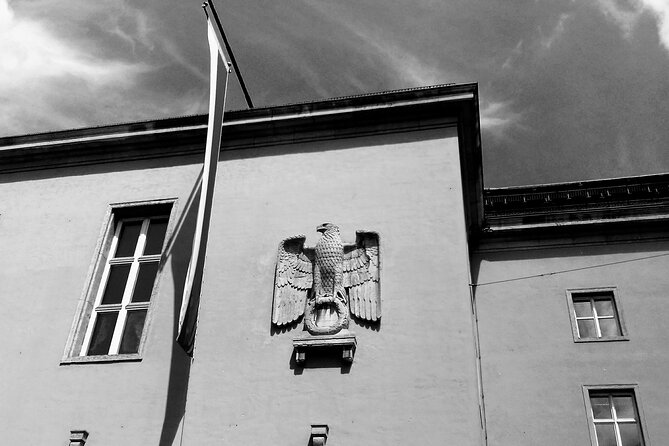
At Platz der Opfer des Nationalsozialismus, you see the site set up in 1985, on the spot of a destroyed memorial to Schiller. There’s an eternal flame as a symbolic reminder of freedom, and it gives your mind a moment to reorient.
This stop works well because it keeps the day from becoming only about perpetrators and aesthetics. You’re reminded that the story is also about victims and what came after.
Ludwig Maximilians University and the White Rose memorial visit
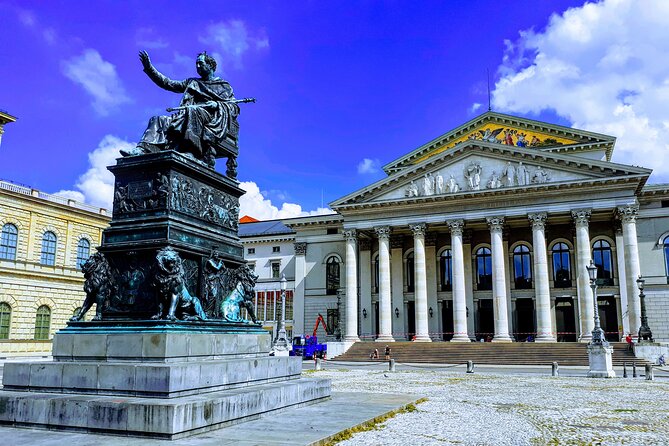
The tour then reaches Ludwig Maximilians University, where the guide takes you into the White Rose resistance story. The White Rose formed after moving from Ingolstadt to Munich in 1826. The key names are laid out clearly: Hans and Sophie Scholl, Christoph Probst, Alexander Schmorell, and Willi Graf, along with Professor Kurt Huber.
Your time here includes a visit to the memorial with your guide. This part of the day is valuable because it shows resistance as organized thinking and moral action, not only as tragedy. It also balances the heavy Nazi architecture with people who pushed back from within the system.
Schwabing, Hofbräuhaus, and the propaganda connections in daily life
Next comes Schwabing, once an artists’ quarter. The tour links the area to Hitler’s routines and to the publishing infrastructure around Nazi ideology. You learn about the Osteria Italiana that still exists today, where Hitler liked to stop. The guide also points out the presence of major Nazi media: the editorial house Völkischer Beobachter and the Heinrich Hoffmann Verlag National Socialist Pictures.
The tour even connects Schwabing to Hitler’s personal life. In 1929, Hitler met his future wife Eva Braun at the later Photohaus Hoffmann location. That doesn’t make the story nicer, but it does make it clearer. You get a sense of how ideology, money, and everyday scenes fed each other.
A stop at the State-owned Hofbräuhaus (Staatliches Hofbräuhaus) follows. The guide tells you that Hitler and his entourage favored meeting there, including a niche on the first floor. You also get practical lunch advice (not included), like eating on the ground floor in the Schwemme or in the inner courtyard if the weather allows.
Even if you skip lunch, you still get something useful: seeing how a place can be famous for beer and also tied to dark decisions.
Nazi-era architecture in Altstadt-Lehel and Haus der Kunst
In Altstadt-Lehel, you see a monumental Nazi-era building connected to Hermann Göring’s aviation ministry. Built in 1937 for a Luftgaukommando V unit, the guide points out details like swastikas on window grilles and steel helmets on house walls. These are not subtle symbols. You do not have to guess what the message was.
Then the tour moves to Haus der Kunst (House of Art). This is described as the first representative Nazi building in Munich, sometimes nicknamed Weißwurst-Allee because of its bright granite columns. In Hitler’s time it was called the House of German Art and featured artists aligned with the Nazi regime.
The guide helps you see why this is uncomfortable today, including the presence of Nazi decorative elements still visible. It’s an important reminder that the “style” of a period can be part of how power sells itself.
Eisbachwelle: a rare pause to breathe
Right near these heavy stops, you get a small mental reset at Eisbachwelle, where you can watch the famous inner-city surfers tackling an artificially generated wave. The guide frames it as a chance to forget the horrors for a moment, using the contrast of everyday recreation.
This is not a distraction from history. It is a controlled breath inside a long, serious day. If you are prone to getting overwhelmed, this tiny break can help you return to the story with steadier focus.
Hitler addresses around Munich: Bogenhausen, Schwabing notes, and Maxvorstadt
The route continues with more specific connections to Hitler’s residence and the Nazi lifestyle around him.
In Bogenhausen, you visit the house associated with Adolf Hitler. It’s in the city’s noblest district, and the guide notes that it is now the police station, so you can only view from the outside. The tour also discusses nearby context: Eva Braun lived in a villa since 1936, and that house was demolished a few years ago, so what you can see today is limited.
Later you reach Maxvorstadt, where the guide points you to the renovated apartment house connected to Hitler living in Munich in 1913. The story includes that he shared a shabby room with Austrian Rudolf Häusler after moving from Vienna. It also covers Hitler’s planned mausoleum concept, including references to a Hall of the Party. The guide mentions the inspiration Hitler took after a 1940 visit to Paris, when he saw Napoleon’s sarcophagus in the Invalides.
These details can feel surreal. That is the point. You’re looking at a normal-looking neighborhood with an extraordinary weight of consequences attached to it.
Königsplatz, Karolinenplatz, and the NSDAP power circle
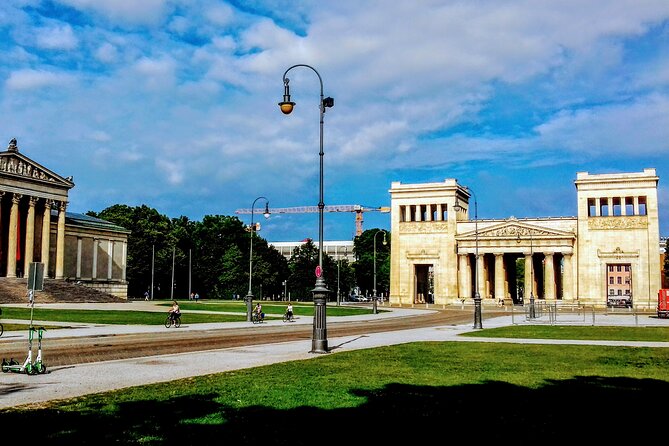
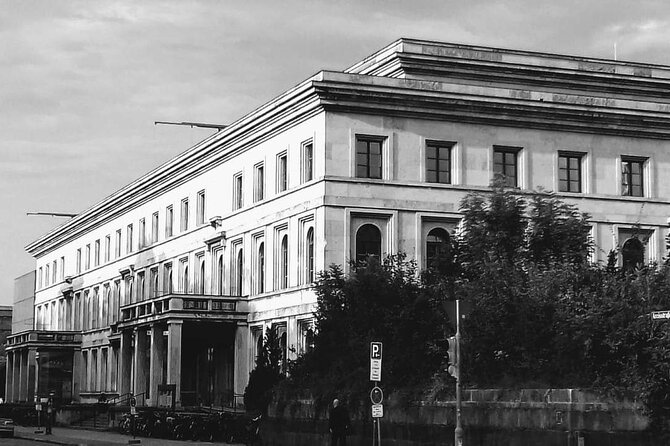
The tour then moves through the core party-area atmosphere at Königsplatz. The historical zone between Karolinenplatz and Königsplatz became the party center of the NSDAP, including administrative buildings and the Führerbau. You’re told that almost all Nazi buildings survived the bombing attacks unscathed.
You’ll also visit the NS Documentation Center, opened in 2015 and built on the site of the destroyed Brown House. This is where the day becomes more “museum-like” in the way you absorb evidence, rather than just spotting symbols on street corners.
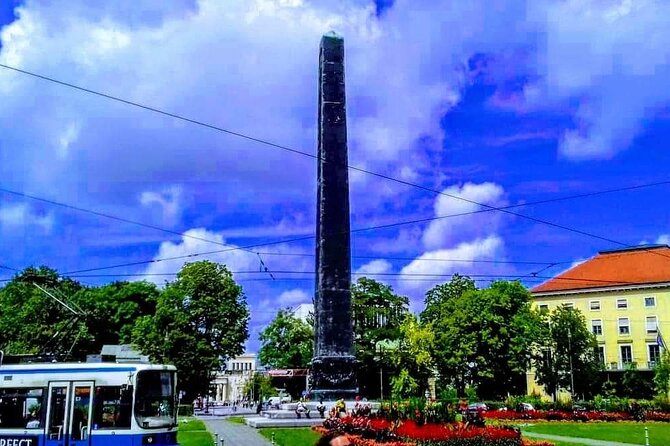
Then there’s Karolinenplatz, where, exactly 100 years later, the center of power was built around an obelisk ordered by King Ludwig I in 1833. Even if you only catch it for about 10 minutes, you’ll understand the physical language of power: lines, scale, placement, and repetition.
Altstadt-Lehel and beyond: Prinzregentenstraße, Ramersdorf, and the planned world
After the central sites, the route continues with Nazi-influenced buildings and planned communities.
At Prinzregentenstraße, you see a curious apartment building designed for the National Socialist upper class, including flanking air raid shelters. The guide explains it was intended as a model for similar buildings, though war prevented most of that plan. It’s the kind of design detail that helps you understand how preparation for violence was baked into daily life.
In Ramersdorf, the tour shows a Nazi model settlement built in 1934. Nearly 200 settlement houses with their own gardens were built for German national comrades. Today it’s a listed building, which means the state recognizes its historical significance even when the intent behind it was horrifying.
The White Rose arrests to Stadelheim executions route
One of the darkest stops in Munich is near Stadelheimer Straße. The guide explains that in 1943, members of the White Rose, including Hans and Sophie Scholl, Christoph Probst, Alexander Schmorell, Willi Graf, and Professor Kurt Huber, were guillotined in the penal institution in Stadelheim.
You also learn that their graves are located in a nearby cemetery in the Perlacher Forest. This gives closure in a practical way. It is not only about what happened inside a facility, but also where the story rests in the landscape.
Dachau memorial: what happens when the story becomes real
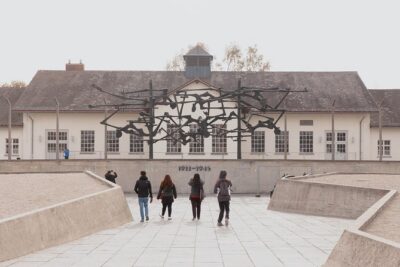
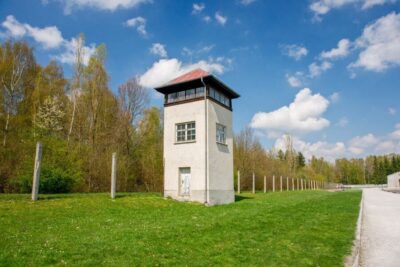
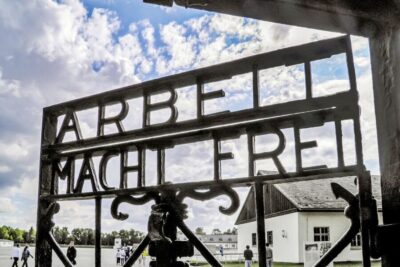
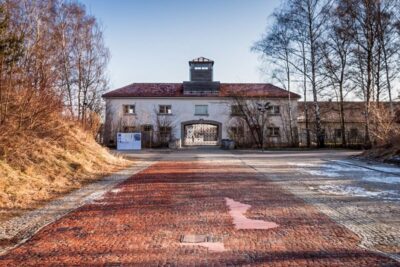
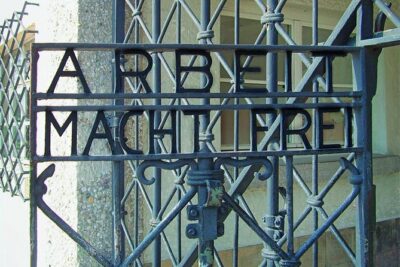
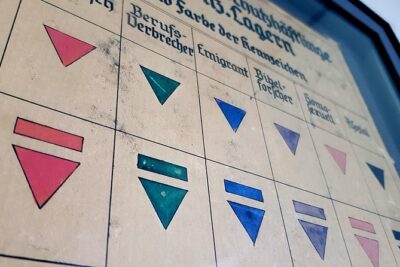
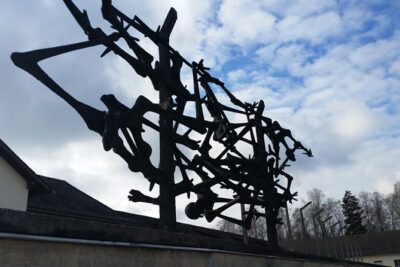
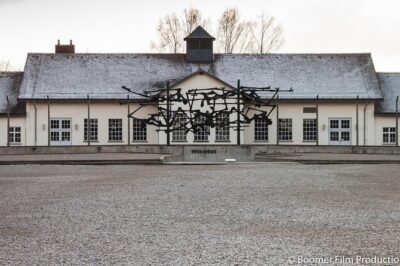
Finally, you arrive at the Dachau Concentration Camp Memorial Site. This part of the tour is not light. The tour description is explicit that visiting alongside a licensed guide will go beyond anything you might expect.
You also get key facts to anchor your visit. Over the camp’s 12 years of operation, more than 200,000 people were imprisoned there, and 41,500 were murdered. The memorial is tied to how quickly the system expanded after Hitler was appointed chancellor, with Dachau opened about 6 weeks afterward.
Before you start the main memorial walking, the tour includes a stop to show you luxurious villas on the former SS grounds. This is one of the hardest contrasts, because it underlines how the oppressors lived in comfort while others suffered. You need a guide here, because it’s too easy to reduce these places to shocking photos unless someone helps you understand what you are seeing.
Plan for time. The average stay at the memorial is 1.5 to 2.5 hours, and that’s usually long enough to see the main site with meaning, not just rush through it.
Also prepare your body. Some footpaths have coarse pebbles, so wear suitable footwear.
This stop is also not recommended for children under 12.
Breaks, lunch, and pacing on a 9.5 hour day
With so many short stops, the tour can feel efficient, and that is the point. You’re not trying to do one building deeply for hours. Instead, the guide builds a chain of evidence across many places.
Still, you should treat this like a long walking day. You will have breaks between major sights, plus time at the memorial, but you should expect to move. Bring water (you get mineral water), and plan lunch on your own. If you want a strong food stop, the Hofbräuhaus area is suggested as a possible lunch choice during the Munich portion.
If you’re the kind of person who likes to take photos constantly, I’d urge you to balance that with time to look without your camera. Several stops rely on historical images. Those only hit if you pause and focus on what the guide is showing you.
Should you book this Munich WWII and Dachau private tour?
Yes, if you want a guided, private, full-day path through Munich’s Nazi-era sites that ends with a serious, time-based visit to Dachau.
This is especially worth it if:
- You care about understanding what you see, not just collecting landmarks
- You want the structure of a licensed guide for both Munich symbolism and the Dachau memorial
- You prefer the comfort of door-to-door pickup and a chauffeur-driven schedule
Skip it or reconsider if:
- You are not up for a long, emotionally heavy day
- You want lots of free time to wander without guidance, because the route is built around short, scheduled viewing stops
One last practical note. In the feedback I’m using to shape my expectations, the guide experience is a major reason people feel satisfied. Max is specifically called out for making sure the day covers what you came for, and then some. If guide quality matters to you, this is a tour where it usually does.
FAQ
How long is the Munich WWII and Dachau private tour?
It runs about 9 hours 30 minutes.
What is the meeting and pickup time?
Pickup is offered at 8:00 a.m., 9:00 a.m., or 9:30 a.m. You can also request another pickup time.
Is the tour private?
Yes. It is a private tour/activity, and only your group participates.
What language is the tour offered in?
The tour is offered in English.
What transportation is provided?
You travel in a new luxury VW or Mercedes minivan with air conditioning, or a small coach for groups larger than 7, with a chauffeur.
Is lunch included in the price?
No, lunch is not included.
Does the tour include admission tickets?
Admission tickets are listed as free for the stops included in the tour.
How long do you spend at the Dachau Concentration Camp Memorial?
The average length of stay is about 1.5 to 2.5 hours.
Is the Dachau memorial visit suitable for children?
It is not recommended for people under 12 years of age.
Is there a mobile ticket?
Yes, the tour includes a mobile ticket.
Visiting Dachau Memorial Site
Wartime History Walks We Have Reviewed
Everything else we filed on Munich
- Paul’s Private Tour Munich Highlights
★ 5.0 · 3 reviews - Private Linderhof Castle, Entry-Ticket – optional Toboggan Run
★ 5.0 · 3 reviews - Paul’s Private Tour in the Alte Pinakothek Munich
★ 5.0 · 3 reviews - Private Tour at Neuschwanstein And Linderhof Palaces From Munich
★ 4.5 · 3 reviews - Private Highlights of Munich Bike Tour with Beer Garden Stop
★ 5.0 · 3 reviews - Munich WWII and Dachau Concentration Camp Private Tour with Licensed Guide
★ 5.0 · 3 reviews
Dachau Memorial Site Tours, side by side.
 ★ 4.5Dachau Concentration Camp Memorial Site Tour from Munich by TrainFrom $645,637 reviews
 ★ 4.8From Munich: Dachau Memorial Site Day TourFrom $492,723 reviews
 ★ 4.7From Munich: Dachau Memorial Site Half-Day TripFrom $622,526 reviews
 ★ 4.9From Munich: Dachau Memorial Site Full-Day TourFrom $511,406 reviews
 ★ 4.5Dachau Concentration Camp Memorial Tour with Train from MunichFrom $56955 reviews
 ★ 5.0Early-Start Dachau Memorial Half-Day Tour from MunichFrom $62942 reviews
 ★ 5.0Guided Dachau Concentration Camp Memorial Site Tour with Train from MunichFrom $90920 reviews
 ★ 5.0Full-Day Dachau Concentration Camp Memorial Site Tour from MunichFrom $48897 reviews
Other lists this tour is on