
REVIEW · GUIDED
Munich’s 500 Years of Architecture Guided Tour
Munich’s buildings tell stories for 500 years. This guided tour is a fast, thoughtful way to see how styles changed in Munich, starting at Frauenplatz and moving through churches, royal-era landmarks, and modern contrast, with a tram trip toward the Isar and Christmas market time built in. You’ll get the big picture without feeling like a textbook.
I love the chronological flow that helps the eras make sense as you walk. I also like that you can go inside up to three major buildings, so it is not just outside photos. One drawback to plan for: it is a walking-heavy winter route, and it is not suitable for wheelchair users or people with mobility impairments.
In This Review
- Key highlights you’ll feel in your day
- Munich in 2 hours, from Frauenplatz to a modern museum stop
- Frauenkirche and the Gothic start at Frauenplatz
- St. Michael’s Church and the Renaissance precision moment
- Trinity Church and Theatine Church: where Baroque tells its story
- Bavarian State Opera and Maximilianstraße: power in a straight line
- St. Lukas and Müllersche Volksbad: architecture for real life
- Tram to the Isar River and the Alte Utting focus
- Jugendstil and street art, ending with Sudetendeutsches Museum
- Price and value: why $36 makes sense for this route
- Who should book, and who should pass
- Should you book Philipp’s Munich 500-year architecture tour?
- FAQ
- How long is the Munich’s 500 Years of Architecture Guided Tour?
- What is the price per person?
- Where is the meeting point?
- What is the easiest way to get to the meeting point?
- What languages are available for the tour?
- Does the tour include Christmas markets?
- Is transportation included during the tour?
- Can we go inside any buildings?
- What should I bring and wear?
Key highlights you’ll feel in your day
- Frauenplatz start with the Frauenkirche setting the tone for Munich’s Gothic era
- Inside access option for up to three landmark buildings, which is great value for $36
- Tram to the Isar River for a calmer change of pace, plus stories tied to world-record facts
- Alte Utting getting a nod from The New York Times, right where the tour’s river section comes alive
- Jugendstil meets modern art to end with a clear before-and-after contrast
Undecided? The closest Munich write-ups we have are these.
- From Munich: Neuschwanstein & Linderhof Castle Full-Day Trip★ 4.5 · 12,494 reviews
- Neuschwanstein & Linderhof Castle-Fairytale Day Tour from Munich★ 4.5 · 7,275 reviews
- Munich: Third Reich & WWII Walking Tour★ 4.6 · 6,181 reviews
- Dachau Concentration Camp Memorial Site Tour from Munich by Train★ 4.5 · 5,637 reviews
Munich in 2 hours, from Frauenplatz to a modern museum stop
This is a tightly planned 2-hour walking tour that tries to do something hard: show 500 years of architecture in the real streets where Munich grew up. You start at Frauenplatz, right by the Frauenkirche, then you head through Old Town highlights before turning toward the Isar River by tram. The payoff is that each era is tied to places you can actually stand in front of.
I like that the pace is “enough time to notice, not so long you stall out.” You’ll still want comfortable shoes and warm layers because you’ll be outside for most of it, and winter wind near the river can be sharp. Also note the tour is not designed for people with mobility impairments or wheelchair users.
If you want a tour that gives you structure without killing spontaneity, this one is a good match. It works especially well if you are spending only a day or two in Munich and you want a coherent plan instead of random stops.
Frauenkirche and the Gothic start at Frauenplatz
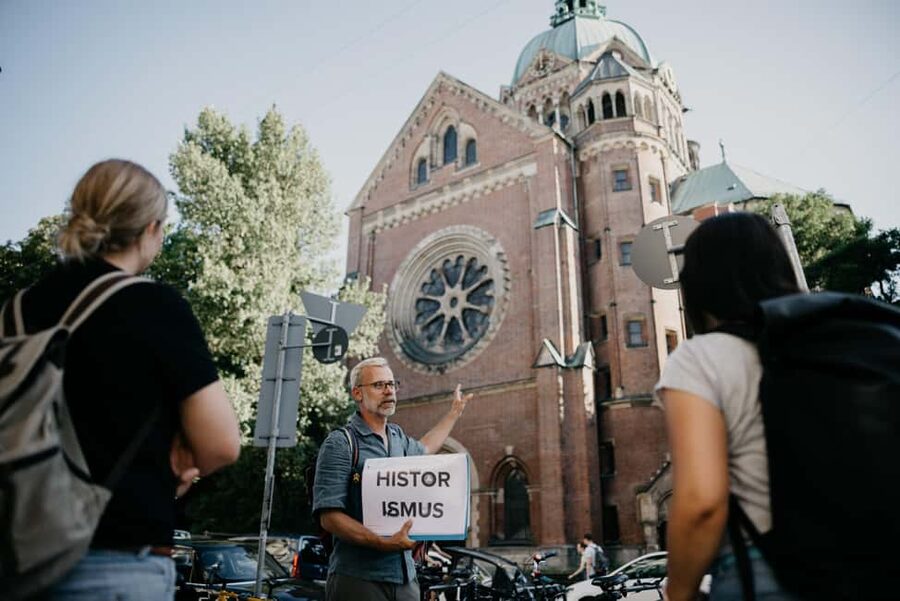
You begin at Frauenplatz 1, meeting your guide outside the main entrance of the Frauenkirche. Your guide, Philipp, is easy to spot with a yellow winter hat, a yellow backpack, and a large blue presentation folder. It sounds small, but in a big square it matters. You can get oriented quickly and not waste your first 10 minutes searching.
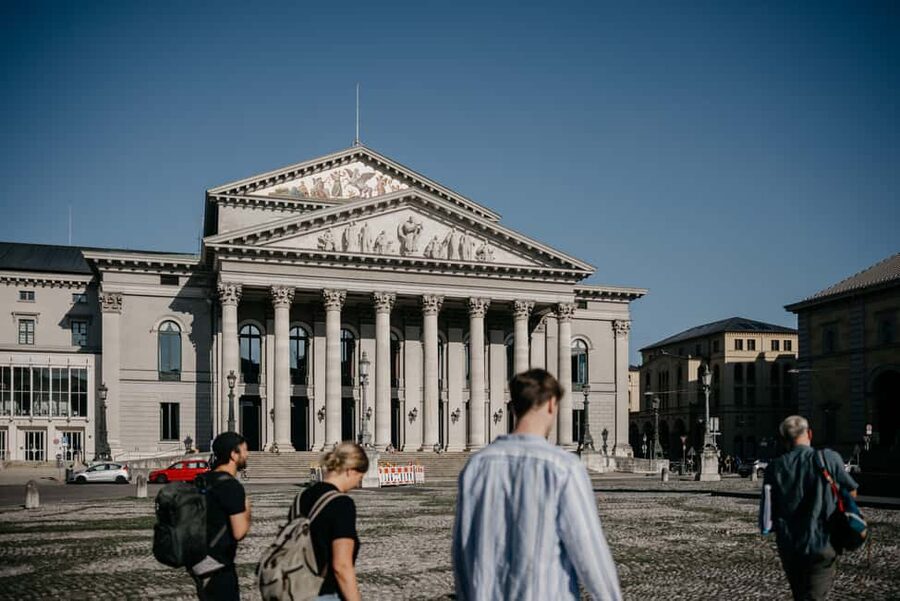
The first big visual lesson is the Gothic look: tall, purposeful forms and details meant to pull your eye upward. The tour frames the Frauenkirche as the late-15th-century starting point for the whole 500-year arc. Even if you are not an architecture nerd, this is helpful. Gothic buildings can feel “pretty” without meaning, and the guide’s storytelling gives you something to hold onto as you move forward.
Practical tip: stand close for your first good view, then step back once so you can get the whole shape. When the guide points out features, you’ll understand them faster because you’ll have both the big silhouette and the detail in your head.
St. Michael’s Church and the Renaissance precision moment
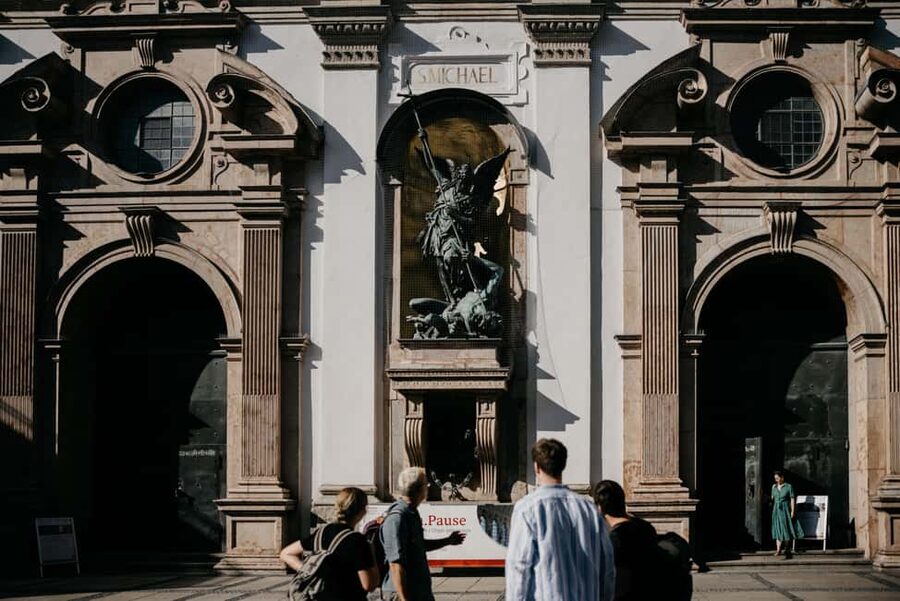
After the Gothic beginning, the tour keeps the momentum moving into the Renaissance. St. Michael’s Church is treated as a standout, described as a world-record-holding masterpiece. That kind of claim can be gimmicky on some tours, but here it is used as a way to focus your attention on craft and design choices you might otherwise miss.
Renaissance architecture is different in feel. Instead of vertical emphasis pulling you skyward, you usually notice balance, order, and careful proportions. This is the era where Munich starts to feel more structured and composed, and the guide’s chronological approach helps you see that shift in a way that clicking pictures alone often fails to do.
If you like a guided “what to look at,” this is a strong stop. When you know what changed from Gothic to Renaissance, you can start spotting the pattern in other buildings around town afterward.
Trinity Church and Theatine Church: where Baroque tells its story
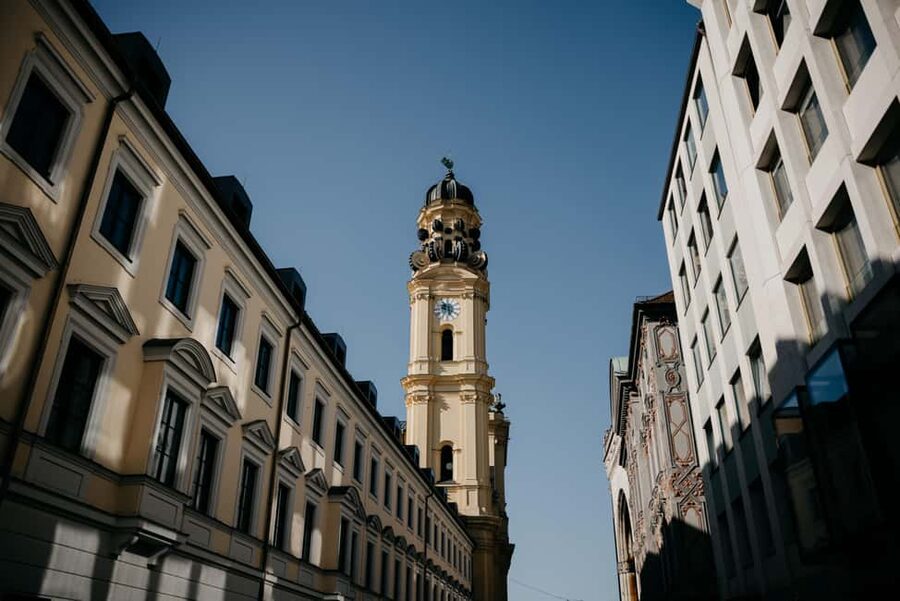
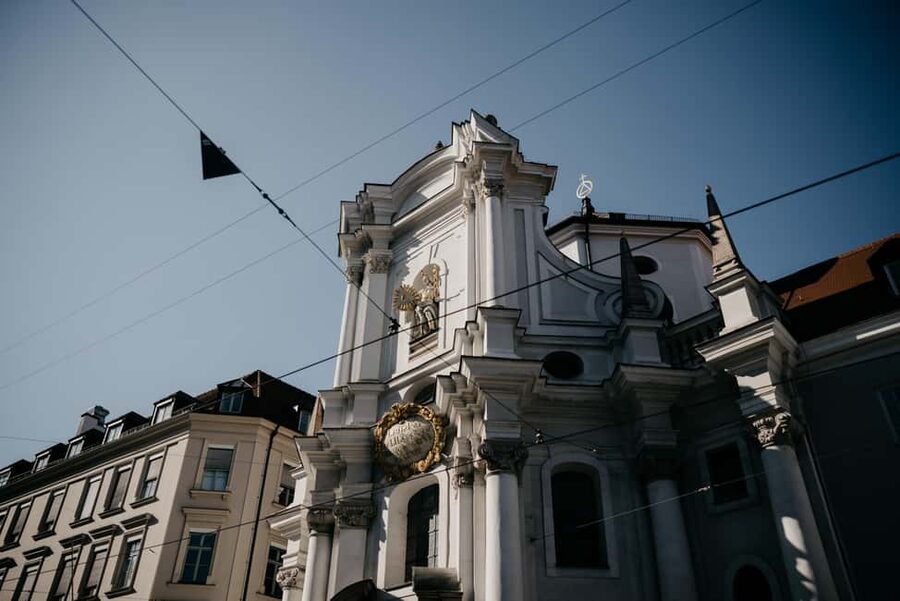
Next you move into churches associated with the Baroque mood, including Trinity Church and Theatine Church. This is where the tour leans into legends and royal tales, and it also brings in the city’s darker chapters. That combination matters because Baroque design often feels dramatic, like it is staged. If you only read the exterior, you might think it is just ornate. With the stories added, the ornament starts to feel purposeful.
Baroque architecture often uses movement, rich surfaces, and visual drama to shape emotion. You can feel that even in short visits. These are also useful stops for learning how styles change across a relatively compact area of Old Town. You are not traveling between far-flung museums. You are walking through eras side by side.
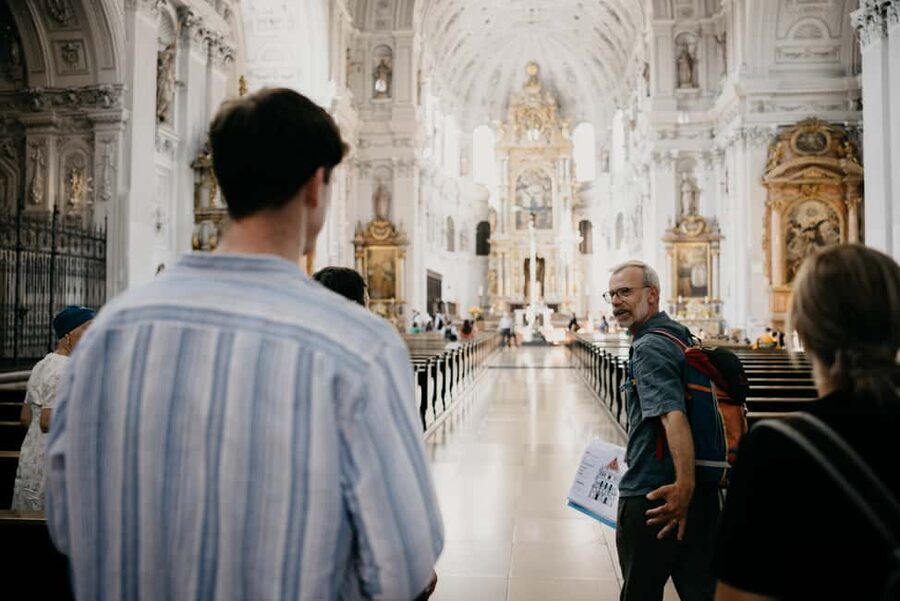
Potential drawback to keep in mind: church interiors can vary based on access, schedules, or opening hours. The tour includes a chance to go inside up to three buildings, but not every stop may be an inside look. If you are building your Munich day around indoor time, wear your patience like a layer, and enjoy the exterior views too.


Bavarian State Opera and Maximilianstraße: power in a straight line
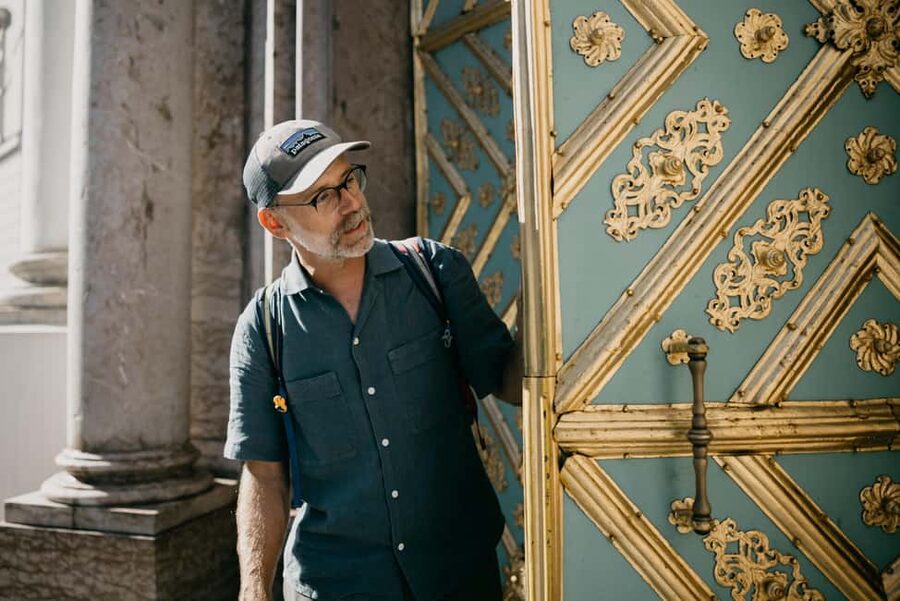
One of the tour’s smartest transitions is heading toward Maximilianstraße and the Bavarian State Opera. This section is guided, so you are not just walking and guessing. Maximilianstraße is the kind of avenue where architecture is saying something political even when it looks decorative.
The Bavarian State Opera stop helps you connect royal-era ambition to the built environment. You start to see how Munich didn’t just grow by building churches. It also grew by building institutions that project culture and status.
When the guide points out what to notice along the street, it becomes a simple exercise: find what changes from building to building, then connect those changes to the era. If you do that during your walk, you’ll leave with a “mental map” of Munich’s architectural vocabulary.
St. Lukas and Müllersche Volksbad: architecture for real life
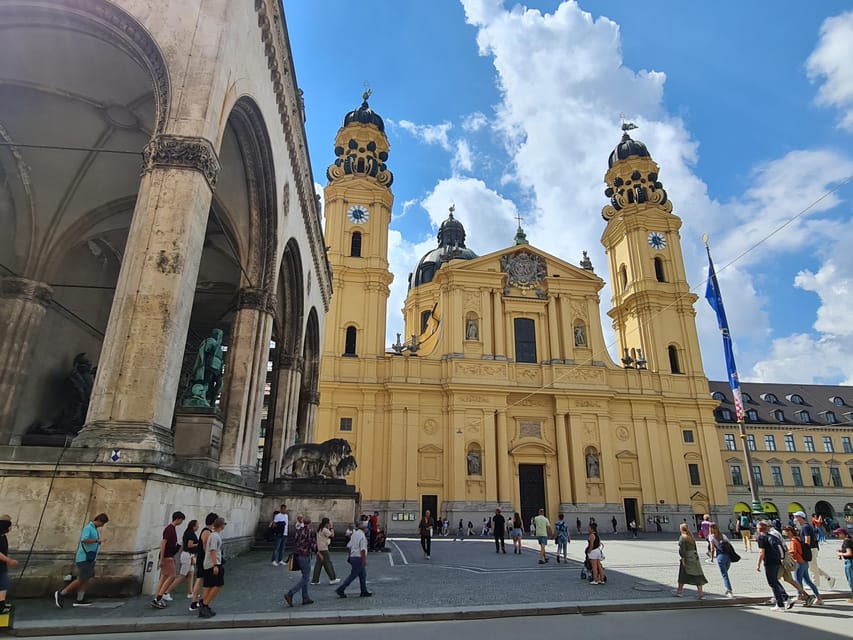
As the tour moves through the middle stretch, it adds two stops that shift the tone. St. Lukas and Müllersche Volksbad are guided in the route, and they feel more human than pure grand monuments.
This is where I like the tour’s balanced approach. You get royalty, legends, and big churches earlier. Then you get everyday architecture tied to community life. Müllersche Volksbad, in particular, is the kind of place that reminds you cities are made of public spaces, not only landmarks on postcards. The guide’s stories help you see how a building’s purpose influences its form.
Practical tip: even if you are short on time elsewhere, don’t skip the “non-famous” stops on an architecture tour. They’re usually the ones that make your understanding stick. Grand buildings can be impressive, but it is the public-use places that explain how architecture affects daily routines.
Tram to the Isar River and the Alte Utting focus
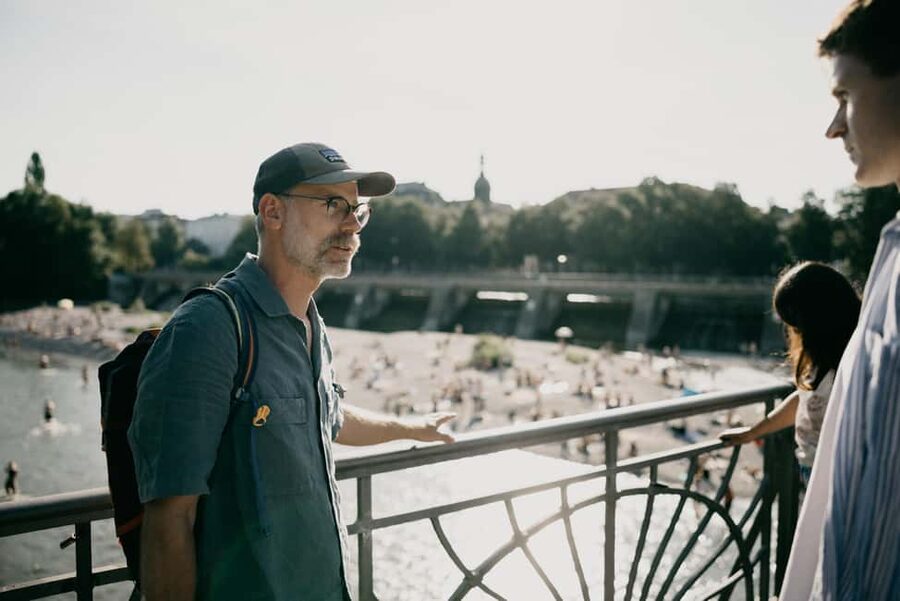
Once the Old Town area and lively Christmas market energy starts to stack up, the tour changes pace with a tram ride to the Isar River. You’re swapping narrow streets for a calmer setting, and that matters. Architecture looks different in different environments, and riverside spaces often help you see the city more holistically.
The guide points out surprising stories and includes references to two world records connected to this part of the route. Even without getting stuck in trivia, the value is that you notice specific details more because you’re given a reason to look.
One highlight is the Alte Utting, praised by The New York Times. That kind of external recommendation is not the main reason to go, but it does signal you are seeing something distinctive. The tour frames it in a way that makes it feel like more than a photo spot.
You also get time that fits the Christmas season theme. The tour includes visits to multiple Christmas markets and specifically includes a unique medieval Christmas market in a magical setting. If you enjoy pairing “street atmosphere” with architecture, this is where the tour becomes more than a list of buildings.
Jugendstil and street art, ending with Sudetendeutsches Museum
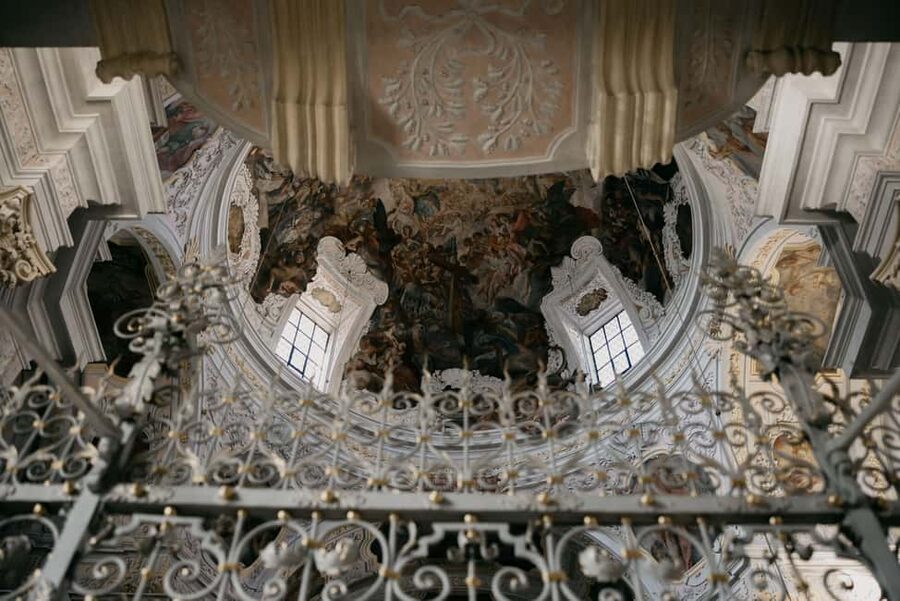
The last stretch is a clever contrast. After centuries of church and royal architecture, the tour shifts into Jugendstil, also called Art Nouveau, which is a real change in design language. Instead of strict structure or Baroque drama, Jugendstil often shows organic lines and a more playful, expressive style. You’ll also see modern street art elements, which helps you connect the idea of style to how Munich speaks today.
Then you finish at the Sudetendeutsches Museum. Ending at a modern museum is a smart move. It gives you a place to land after you’ve been tracking styles across 500 years. You can feel the message the tour is making: history is not behind glass. It affects what you see next.
From a practical perspective, finishing at a museum also helps you handle your timing. After the tour ends back near the meeting point area, you can decide what to do next based on your energy. If you still want more, you’ll know what to look for. If you are done walking, at least you’ll have a clear framework for understanding what you already saw.
Price and value: why $36 makes sense for this route
At $36 per person for about 2 hours, this tour is priced as a budget-friendly guided experience with real added value. You’re not just paying for a guide’s commentary. You are also getting:
- a structured walk through multiple architectural periods (Gothic to Art Nouveau and beyond)
- tram time to the Isar River
- visits to multiple Christmas markets
- a chance to visit up to three buildings from the inside
That combination is what makes the price feel fair. If you were to replicate it on your own, you would likely spend time figuring out what matters and where to go next. Here, the guide gives you the “sequence” that helps the styles stick.
Value also depends on your comfort with walking. If you like to see a lot in a short time and you don’t mind winter weather, the cost is easy to justify. If you want a slower, sit-everywhere kind of day, you may feel rushed.
Who should book, and who should pass
Book this tour if you want a clear overview of Munich architecture without spending a whole day hopping between far-apart sites. It’s especially good for first-timers who want a route that builds from Frauenkirche to later styles, then checks in with the Isar and modern contrast at the end.
I would skip it if you need wheelchair access, have mobility limits, or want mostly indoor time. Also, if cold weather planning stresses you out, just remember you’ll be outside a lot, and the Isar section can feel colder than the center.
Should you book Philipp’s Munich 500-year architecture tour?
I think this is a strong pick when your goal is understanding, not just sightseeing. The chronological structure helps you see connections, the inside access option is a real bonus, and the tour’s mix of churches, royal-era landmarks, Christmas market atmosphere, and Jugendstil-to-modern contrast gives you variety without chaos.
If your travel style is “show me what to notice and why it matters,” you’ll likely enjoy Philipp’s storytelling approach. If your travel style is slow and flexible, consider whether a 2-hour, walking-focused tour fits your day.
FAQ
How long is the Munich’s 500 Years of Architecture Guided Tour?
The duration is 2 hours.
What is the price per person?
The price is $36 per person.
Where is the meeting point?
You meet outside the main entrance to the Frauenkirche, at Frauenplatz 1.
What is the easiest way to get to the meeting point?
It is best to get off at the S-Bahn and subway station U3/6 Marienplatz and walk 5 minutes. From Hauptbahnhof München, it is about a 15-minute walk.
What languages are available for the tour?
The live guide offers English and German.
Does the tour include Christmas markets?
Yes. The tour includes visits to multiple Christmas markets, including a unique medieval Christmas market.
Is transportation included during the tour?
Transportation to and from the meeting point is not included, but the tour itself includes a tram ride to the Isar River.
Can we go inside any buildings?
Yes. You have a chance to visit up to three impressive buildings from the inside.
What should I bring and wear?
Wear comfortable shoes and warm clothing, and bring a camera if you want photos of the sights.
Everything else we filed on Munich
- Paul’s Private Tour Munich Highlights
★ 5.0 · 3 reviews - Private Linderhof Castle, Entry-Ticket – optional Toboggan Run
★ 5.0 · 3 reviews - Paul’s Private Tour in the Alte Pinakothek Munich
★ 5.0 · 3 reviews - Private Tour at Neuschwanstein And Linderhof Palaces From Munich
★ 4.5 · 3 reviews - Private Highlights of Munich Bike Tour with Beer Garden Stop
★ 5.0 · 3 reviews - Munich WWII and Dachau Concentration Camp Private Tour with Licensed Guide
★ 5.0 · 3 reviews
Guided, side by side.
 ★ 4.7Berlin: Reichstag, Dome and Government District Guided TourFrom $1818,288 reviews
 ★ 4.7Dresden: Semperoper Tickets and Guided TourFrom $1812,102 reviews
 ★ 4.7Berlin: Government District around the Reichstag Guided TourFrom $2848,447 reviews
 ★ 4.7Hamburg: Elbphilharmonie Plaza Guided TourFrom $275,882 reviews
 ★ 4.8Berlin: Hidden Backyards Guided Walking TourFrom $235,360 reviews
 ★ 4.7Berlin: 1-Hour Boat Tour with Bilingual Live GuideFrom $223,629 reviews
 ★ 4.6Bamberg: Guided Walking TourFrom $143,202 reviews
 ★ 4.5Bremen: City Center Guided Walking TourFrom $142,709 reviews