
REVIEW · GUIDED
Munich’s Hidden Architecture Guided Tour
Follow the boat, then the city makes sense. This 2-hour winter walk through Munich’s southside trades postcard Munich for architecture stories and real neighborhoods, led by Philipp. I like how he links buildings, street art, and local culture so you notice details you would otherwise skip. I also like that the tour ends with Christmas markets that feel more local than touristy.
One catch: it is a walking tour in winter, and it is not set up for mobility limits. If you need step-free routes, or you get cold easily, plan smart with warm layers and grippy shoes.
In This Review
- Key points worth marking on your map
- Starting at Piazza Zenetti, with easy wayfinding
- Münchner Volkstheater: culture that sets the tone
- Bahnwärter Thiel: the kind of building story you remember
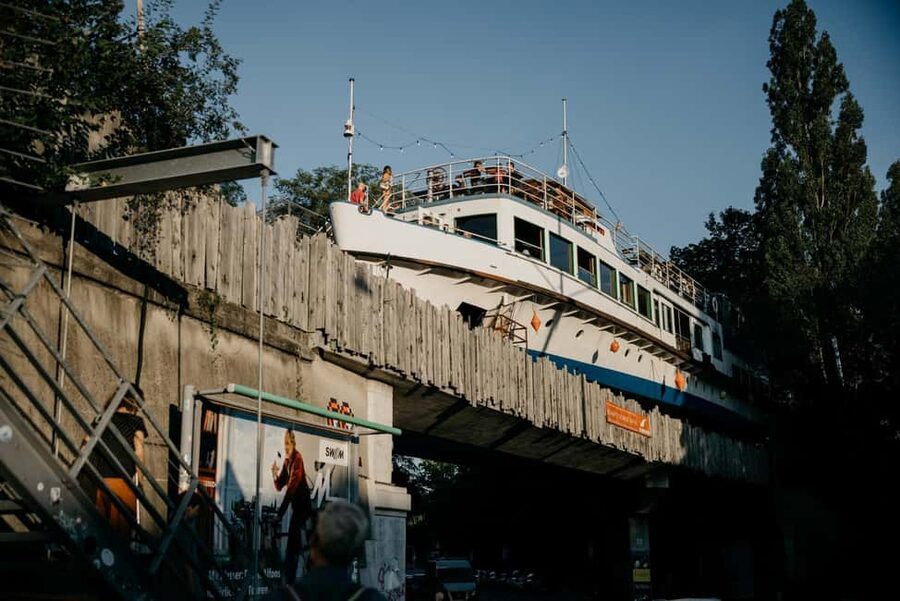
- MS Utting on the bridge: the New York Times boat moment
- Walking the Isar: willow island air and night views
- Claude-Lorrain-Straße: street art and shipping-container culture
- Little Venice and the Giesing vibe you came for
- Christmas markets at the end: what’s included and how to plan
- Price and time: does $36 feel fair for a 2-hour walk?
- Who should book this Munich south architecture tour?
- Simple tips to make the winter walk smoother
- Should you book it?
- FAQ
- Where does the tour start?
- How long is the tour?
- How much does it cost?
- What languages is the guide available in?
- Are food and drinks included?
- What should I bring for winter weather?
- Is the tour suitable for wheelchair users?
Key points worth marking on your map
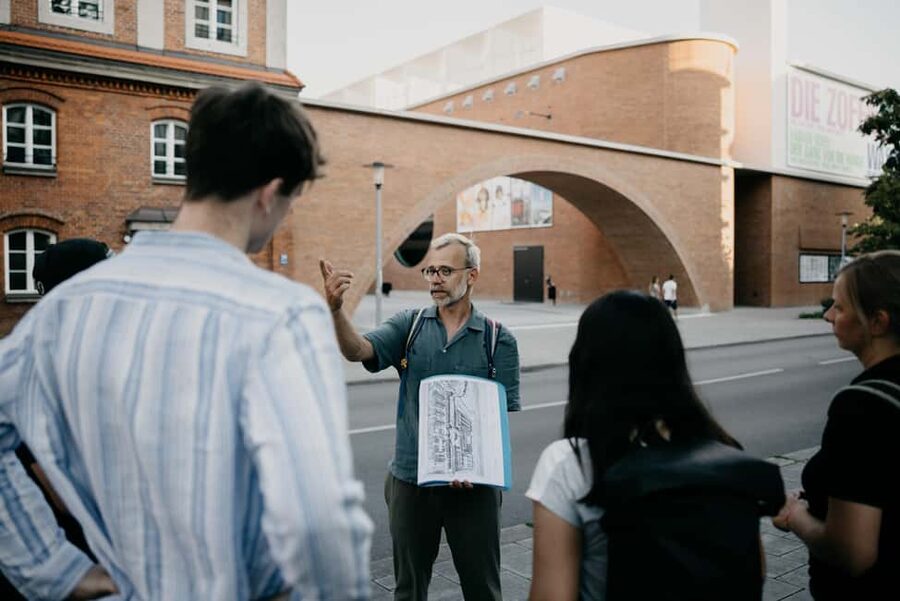
- Philipp the architect-guide who explains what you are seeing in a practical, animated way
- Boat-on-the-bridge moment at MS Utting, highlighted by The New York Times
- Isar River at night with photo-friendly views and a willow-island feel
- Street art plus cultural hubs including shipping-container and wood spaces
- Three alternative Christmas markets as the payoff at the end
- Two hours on foot that rewards people who like moving and looking closely
Undecided? The closest Munich write-ups we have are these.
- From Munich: Neuschwanstein & Linderhof Castle Full-Day Trip★ 4.5 · 12,494 reviews
- Neuschwanstein & Linderhof Castle-Fairytale Day Tour from Munich★ 4.5 · 7,275 reviews
- Munich: Third Reich & WWII Walking Tour★ 4.6 · 6,181 reviews
- Dachau Concentration Camp Memorial Site Tour from Munich by Train★ 4.5 · 5,637 reviews
Starting at Piazza Zenetti, with easy wayfinding
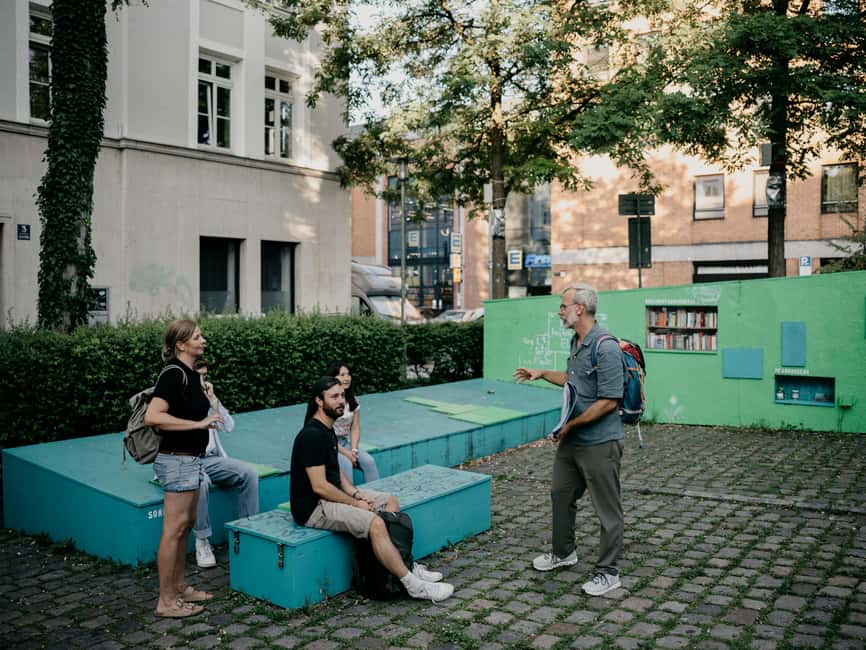
The tour begins at Piazza Zenetti, right where Tumblingerstrasse and Zenettistrasse meet. This is a helpful start because the meeting spot is visually specific, with turquoise and green outdoor furniture plus small trees in boxed planters. You will also recognize Philipp by his colorful backpack and a blue folder.
Getting there is straightforward. From the subway station U3/U6 Goetheplatz, it is a roughly 10-minute walk to Zenettiplatz. In winter, I like making that approach in daylight if you can, then you are not juggling cold fingers while locating the group.
A small but real benefit of a clear meeting point: you can focus on the first stop instead of running late, circling blocks, and trying to look casual (a challenge in Munich winter).
Münchner Volkstheater: culture that sets the tone
The first named stop is Münchner Volkstheater, and it works as a strong warm-up. You are not starting with a random facade, you are starting with a place that says Munich has an everyday cultural engine, not just big-city sightseeing.
This is where you start training your eyes. Philipp tends to point out what matters in the structure and setting, so you start asking better questions while you walk: Why is this here? What does the design suggest? How did the neighborhood’s purpose shape what you see?
If you love theater buildings, this pause is for you. If you do not, it still helps because it gets you into the mindset for the rest of the route, which is all about reading the city like a design document.
Bahnwärter Thiel: the kind of building story you remember
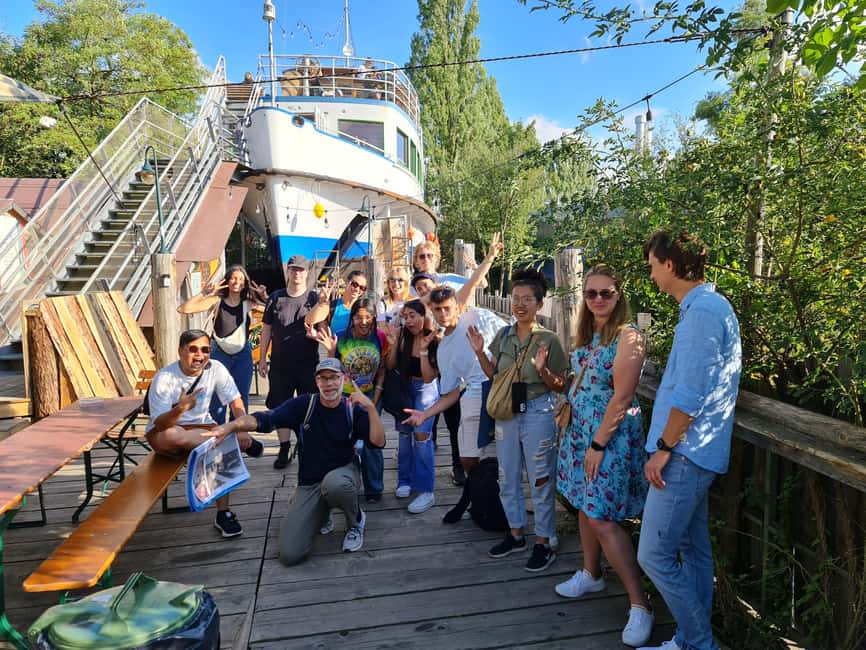
Next up is Bahnwärter Thiel, another stop that signals this tour is about architecture, not just photo points. You get guided context so the site does not feel like a random name on a map.
What I like about stops like this is how they change your pace. Instead of simply passing by, you slow down and watch. You start seeing the edges, the rhythm of lines, and how a building fits into everyday street life.
Practical note: winter light can make details tricky. Bring a camera you know how to use quickly, and be ready for bright reflections near open areas and water.
MS Utting on the bridge: the New York Times boat moment
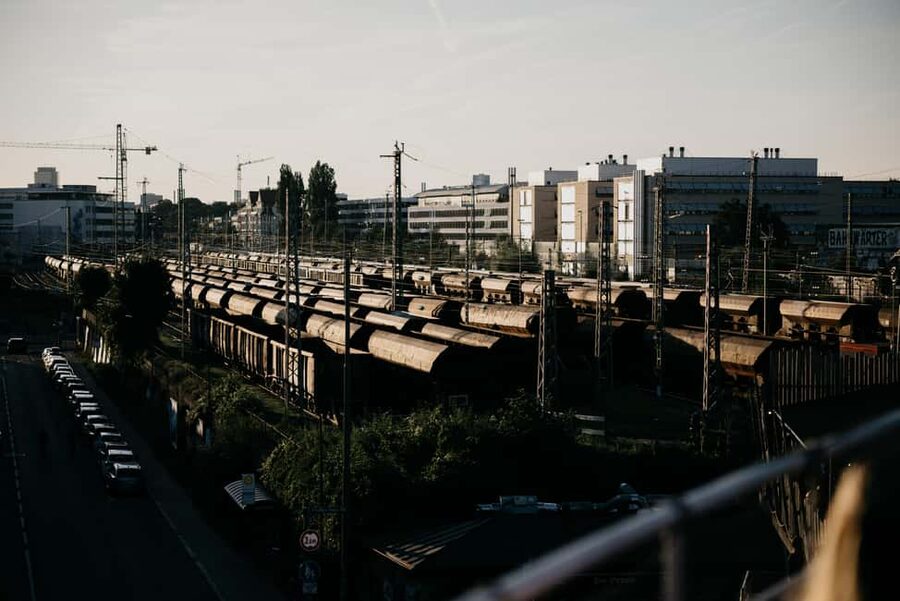
Then comes the headline stop: MS Utting on the bridge along Lagerhausstrasse. This is where the tour earns its second identity, architecture plus a wink at the city’s humor.
Even The New York Times used this line: IS MUNICH GETTING COOL? LOOK FOR THE BOAT ON THE BRIDGE. That makes more sense once you are standing where you can actually see it from the bridge, because the whole setup reads like a local inside joke that somehow became iconic.
How to make it worth your time:
- Look from the bridge position first, then shift slightly for a different angle.
- Capture one wide shot and one detail shot, so you have both the scene and the design.
- If it is dark, stabilize your hands and shoot in bursts rather than one shaky frame.
If you only remember one moment from this tour, make it this one. It is fun, it is distinctive, and it anchors the rest of your understanding of the area.


Walking the Isar: willow island air and night views
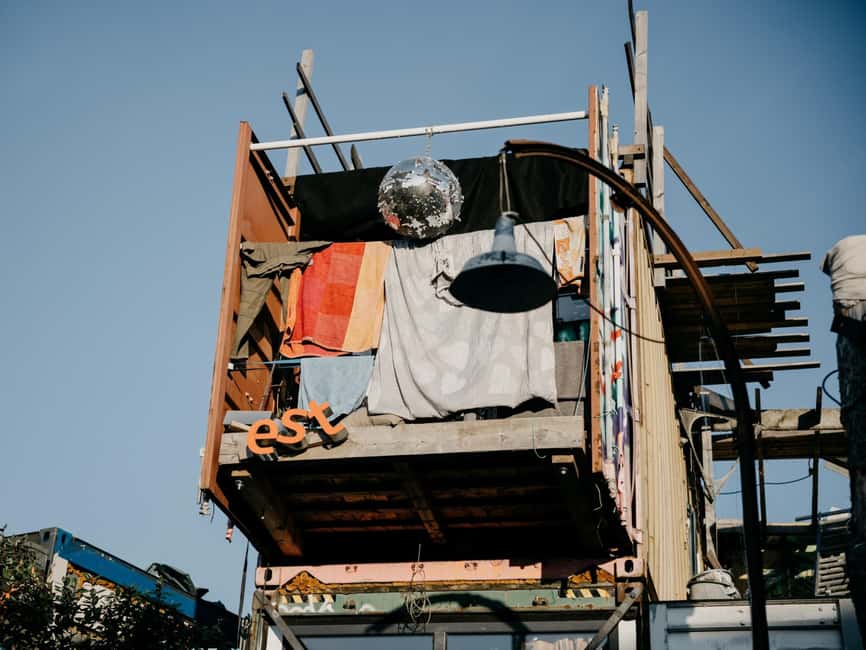
After the boat, the route follows the Isar River. The highlight here is that you see the city with water in the frame, which turns Munich’s “street level” into something calmer and more cinematic.
You will hit several guided street and bridge moments, including Dreimühlenstraße and Wittelsbacherbrücke. The river does the work for you: winter light, dark reflections, and the way bridges cut the scene make even short segments feel like a proper viewpoint.
The tour also includes nature along the way, including the willow island. In winter, you might not get lush greenery, but you do get shape and texture. It is a reminder that the Isar is not just a channel, it is part of neighborhood life.
This is also the stretch that rewards good winter posture. Keep moving, stay warm, and pause only when the guide tells you to, because the best angles can disappear quickly as you walk onward.
Claude-Lorrain-Straße: street art and shipping-container culture

A big part of why people do alternative walking tours in Munich is the energy of creative spaces. Here, you spend time along Claude-Lorrain-Straße, with an emphasis on street art and cultural hubs made of shipping containers and wood.
This is one of the tour’s most practical themes. Architecture is not only old and formal, it is also how communities build spaces for everyday creativity. Philipp’s explanations help you connect what you see to what it means, so the art and structures feel intentional instead of random.
One thing I appreciate: the route stays respectful of the neighborhood. You are looking at local expression from the sidewalk, not treating it like a theme park exhibit. That mindset helps you enjoy it more and keeps the vibe relaxed.
If you are a photographer, consider packing extra battery. Cold weather can drain phones fast, and you will want to capture both the artwork and the way it sits in the streetscape.
Little Venice and the Giesing vibe you came for
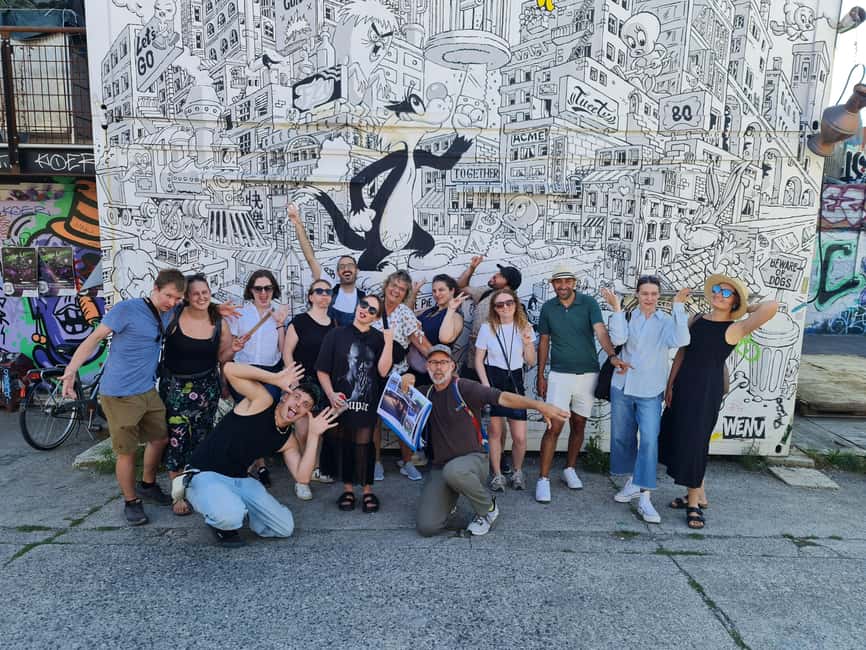
The tour’s “where did Munich learn this trick?” moment continues at Little Venice. You might not expect that name in Germany, but seeing the water and the geometry in the right place makes it click.
From there, you enter Giesing, described as one of the last authentic neighborhood-feel areas south of the city center. For me, Giesing is where the tour shifts from sights to atmosphere. It is where the street art themes start to feel like a natural extension of daily life.
The tour finishes at Gans Woanders. After that, you should expect to return back toward the starting area since the tour’s end is aligned with the original meeting spot. If you want extra time in the neighborhood, this is the moment to ask Philipp what is worth a quick follow-up walk.
Christmas markets at the end: what’s included and how to plan
The real payoff comes near the end: you visit three alternative Christmas markets. This is not just one stall strip. You get a sequence of market stops, which helps you compare vibes and find what actually fits your tastes.
A key detail for planning: food and drinks are not included. That is normal, but it means you should budget a little extra if you want to try snacks or hot drinks. I like arriving with room for at least one treat, because you will likely want to linger for photos and a quick wander.
The tour framing also matters. Since the evening component includes the city and the Isar by night, you get that winter glow where lights reflect off the river air. Even if the markets are busy, the guide’s route keeps you moving so you still see more than just the first crowded corner.
If you hate long waits, pick one market to sample from and use the other two for browsing and atmosphere. You still get the full “three stops” experience without turning this into a snack marathon.
Price and time: does $36 feel fair for a 2-hour walk?
$36 per person is the right kind of price for what you get here: a guided architectural walk that includes multiple named stops, street art context, and three Christmas market visits. The duration is also realistic. Two hours is long enough to learn something and take photos, but short enough that you are not stuck in a slow-moving group all night.
Where the value shifts slightly is what is not included. You pay for the guided experience and market time, but transportation, food, and drinks are on you. That said, the meeting point is easy to reach via the subway, and it is a winter walk, so your main “extra cost” is usually whatever you choose to eat.
Overall, this price makes sense if you want more than a casual wander. It is especially good value for people who like design and context, because Philipp’s guidance adds meaning fast.
Who should book this Munich south architecture tour?
This tour is a good match if you like any of these:
- Street art plus architecture in the same day
- Winter walking with a payoff at the Christmas markets
- Seeing Munich beyond the center and into neighborhoods like Giesing
- People who enjoy photo stops tied to real explanations
It is not a match if you need a wheelchair-friendly route or step-free mobility. The tour is clearly described as not suitable for wheelchair users and people with mobility impairments. It is also not suited for people over 95 years.
Age aside, I would also flag winter stamina. Even fit walkers feel it when cold air turns every stop into “one more layer, please.” If that is you, dress warm, keep your pace steady, and use the guided pauses wisely.
Simple tips to make the winter walk smoother
You do not need special gear, just smart winter basics:
- Wear comfortable shoes with grip. Bridges and river paths can be slick.
- Dress in warm layers. You will be outside the whole time.
- Bring a camera. The boat-on-bridge and river-night views are the kind you will want to keep.
- Keep moving. The route is designed to cover a lot without turning into a long stop-and-go crawl.
- Plan water and snacks around your own budget since food and drinks are not included.
Also, smoking is not allowed, so if anyone in your group plans for a break, remind them in advance.
Should you book it?
I think you should book this tour if you want Munich that feels more lived-in than museum-hallway. You get a strong guide, Philipp’s architecture-focused storytelling, and a route that blends Isar night views, street art, and three alternative Christmas markets.
If you hate winter walking or need mobility-friendly routes, skip it and pick a sit-down option instead. But if you can handle a cold, scenic, city-reading stroll, this is a fun way to see south Munich with purpose.
FAQ
Where does the tour start?
The tour meets at Piazza Zenetti, at the intersection of Tumblingerstrasse and Zenettistrasse. The guide, Philipp, will be wearing a colorful backpack and holding a blue folder.
How long is the tour?
It lasts about 2 hours. Starting times depend on availability.
How much does it cost?
The price is $36 per person.
What languages is the guide available in?
The live tour guide offers English and German.
Are food and drinks included?
No. Food and drinks are not included.
What should I bring for winter weather?
Bring comfortable shoes and warm clothing. A camera can help for the sights and night views.
Is the tour suitable for wheelchair users?
No. The tour is not suitable for wheelchair users and not suitable for people with mobility impairments.
Everything else we filed on Munich
- Munich Beer and Bavarian Bites Private Tour
★ 5.0 · 11 reviews - Private Day Trip from Munich to Neuschwanstein and Linderhof
★ 4.0 · 11 reviews - Private Munich Old Town Walking Tour – with optional Breakfast
★ 5.0 · 11 reviews - Festive Concert in the All-Saints Court Church
★ 4.6 · 11 reviews - Private Castle Tour from Munich: Neuschwanstein, Hohenschwangau, and Linderhof
★ 4.5 · 12 reviews - Munich: Oktoberfest Big Beer Tent Evening including table reservation
★ 4.8 · 12 reviews
Guided, side by side.
 ★ 4.7Berlin: Reichstag, Dome and Government District Guided TourFrom $1818,288 reviews
 ★ 4.7Dresden: Semperoper Tickets and Guided TourFrom $1812,102 reviews
 ★ 4.7Berlin: Government District around the Reichstag Guided TourFrom $2848,447 reviews
 ★ 4.7Hamburg: Elbphilharmonie Plaza Guided TourFrom $275,882 reviews
 ★ 4.8Berlin: Hidden Backyards Guided Walking TourFrom $235,360 reviews
 ★ 4.7Berlin: 1-Hour Boat Tour with Bilingual Live GuideFrom $223,629 reviews
 ★ 4.6Bamberg: Guided Walking TourFrom $143,202 reviews
 ★ 4.5Bremen: City Center Guided Walking TourFrom $142,709 reviews